





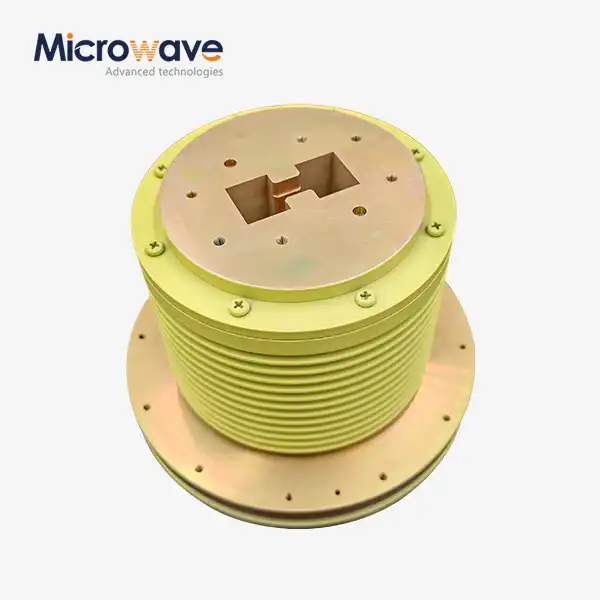
Double Ridge Waveguide Rotary Joint
Double Ridge Waveguide Rotary Joint for Wideband RF Systems
Advanced Microwave Technologies designs the Double Ridge Waveguide Rotary Joint to transfer broadband RF signals between a fixed transmission line and a rotating assembly. An internal ridge loading structure lowers the cutoff frequency and extends operational bandwidth to multi-octave ranges — covering configurations such as 6–18 GHz or 18–40 GHz within a single channel. Supported WRD sizes include WRD-750, WRD-650, and WRD-180, with typical VSWR below 1.5:1 and insertion loss under 0.5 dB across full 360° continuous rotation.
Why the Double Ridge Structure Matters for Double Ridge Waveguide Rotary Joint?
Standard rectangular waveguide rotary joints operate within a narrow frequency band — typically less than 50% bandwidth. That limitation is acceptable for single-band systems, but it creates a real constraint in wideband applications where a single joint must cover multiple operating frequencies.
The double ridge structure introduces metal ridges inside the waveguide geometry. This lowers the cutoff frequency and expands bandwidth to ratios of 2.4:1, 3:1, or 3.6:1, enabling multi-octave coverage through one joint rather than stacking multiple narrowband components. It also reduces moding problems common in coax-to-waveguide transitions at higher frequencies — a practical benefit in space-constrained installations.

Key Technical Specifications
Parameter | Specification |
Supported WRD Sizes | WRD-180, WRD-650, WRD-750 |
Bandwidth Ratio | Up to 3:1 (multi-octave) |
Typical VSWR | < 1.5:1 |
Insertion Loss | < 0.5 dB |
VSWR Wow (rotation fluctuation) | < 0.05 |
Rotation | Continuous 360° |
Power Handling | High peak and average (pressurization-capable) |
Pressurization Media | Dry air, Nitrogen, SF6 |
Operating Temperature | -55°C to +85°C |
Material — Body | Aluminum alloy 6061-T6 |
Material — Contacts | Copper-beryllium |
Surface Treatment | Alodine or Silver plating |
Flange Options | Cover, choke, or flat — customizable |
Life Expectancy | 5–10 million+ rotations (precision bearing / choke design) |
Quality Standards | MIL-DTL-3928, MIL-E-5400, MIL-STD-810 |
Core Performance Features
Stable RF performance over the whole rotational range. Double ridge waveguide rotary joint VSWR Wow measures how much VSWR fluctuates as the joint completes a 360° rotation. Signal amplitude and phase can change a lot, which can lead to data errors in communications or false target returns in radar. It has been tested that these joints can keep VSWR Wow at or below 0.05. This means they can be used for radar tracking and EW tasks that need to keep signals stable.
Managing a lot of power and supporting pressurisation.Voltage breakdown inside the waveguide is a known risk at high power levels. Through built-in O-ring pressure seals, these joints can be pressurised with dry air, nitrogen, or SF6. Before being sent out, each unit is tested for leaks.
Small form factor compared to bandwidth.The ridge-loaded geometry lets it cover multiple octaves within a small physical envelope compared to its wavelength range. This is useful for antenna pedestals, airborne pods, and naval terminals that don't have a lot of room for installation.
Picking the right materials for electrical and structural efficiency.The 6061-T6 aluminium frame makes it lighter while still keeping its shape when it's under mechanical stress. Copper-beryllium contacts can handle the electrical demands of spinning all the time. Adding alodine or silver plating protects against rust and keeps the surface conductive over time.
Typical Application Scenarios
Airborne Electronic Warfare and Countermeasures
When military planes use jamming pods, the antenna has to keep turning while sending strong signals over a wide frequency range. A product handles the whole multi-octave jamming band through a single channel, so there's no need for several narrowband waveguide lines running in parallel.
Broadband SATCOM on the Move
Mobile satellite terminals that are attached to ships or vehicles on the ground need constant mechanical steering to keep their satellite connections while they move. These joints allow high-bandwidth transfer through the pedestal rotation axis even when exposed to vibration and salt fog.
Industrial Microwave Processing
In rotating microwave processing or plasma generation chambers where uniform energy distribution is required, the double ridge waveguide rotary joint provides the RF energy path into pressurized, high-temperature rotating vessels.
Quality Control and Testing Protocol
Each unit goes through a defined QC process before shipment.
VNA Testing (Dynamic): Vector network analyzer sweeps verify VSWR and insertion loss across the full operating bandwidth. Tests are also performed during active rotation to measure VSWR Wow and Insertion Loss Wow under representative operating conditions.
High-Power Testing: Breakdown voltage verification and thermal performance testing under continuous wave and peak power loads are conducted to confirm power handling capability.
Mechanical and Seal Testing: Pressure seal integrity is verified through leak testing at rated psi values. Torque measurement confirms that rotational friction remains within specification.
Environmental Stress Screening: Per MIL-STD-810, units go through thermal cycling from -55°C to +85°C, vibration profiles, and salt spray exposure to validate performance under field conditions.
Customization and Engineering Support
For the WRD-750, WRD-650, and WRD-180, standard internal geometry is based on WRD dimensions. For certain antenna pedestals or slip ring assemblies, the bolt patterns and external flange shape (cover, choke, or flat) can be changed.
The ADM engineering team can work straight from your technical specifications for systems that have special size or interface needs. ADM has been designing microwave parts for more than 20 years and has a dedicated research and development lab with test powers from 0.5 GHz to 110 GHz, including a 24 m microwave darkroom.
FAQ
Q: What makes this joint different from a normal rectangular waveguide rotating joint?
A: Standard rectangular joints can only handle about half of the bandwidth. The double ridge structure lowers the cutoff frequency, which lets the device work at bandwidth ratios of 2.4:1, 3.6:1, or similar, which is needed for wideband EW and broadband radar measurement systems.
Q: How long do you think the service will last if it is rotated all the time?
A: Units with precision bearings and choke designs that don't touch each other are guarantyd to last 5 to 10 million rotations or more. How long something actually lasts depends on how fast it rotates and how much weight is on it. For ultra-wideband low-frequency uses, contacting-element designs may need to be serviced every so often.
Q: Can the joint work with gas that is under pressure?
A: Yes. Dry air, nitrogen, or SF6 can be used in high-power situations that need to be pressurised to stop arcing. Before being sent out, these joints are tested for leaks up to the rated psi levels using O-ring pressure seals that are built right in.
Q: What level do you test to, and why does VSWR Wow matter?
A: The VSWR Wow is the change in VSWR seen during a full 360° turn. Signal amplitude and phase can change a lot, which can lead to data errors in communications lines or false returns in radar systems. Every unit is checked by ADM to make sure that VSWR Wow stays at or below 0.05.
Q: Can the configurations of the flanges be changed?
A: Yes. The internal shape of the WRD stays the same, but the mounting style and bolt patterns on the outside flange are often changed to fit different pedestal or slip ring assembly interfaces.
Q: How well does this product protect the environment?
A: For shock and vibration, units are made and tested to MIL-DTL-3928 and MIL-E-5400. Environmental screening is based on MIL-STD-810 and includes thermal cycling, vibration, and exposure to salt spray.
Contact Us
For specifications, custom configurations, or technical consultation regarding double ridge waveguide rotary joint, reach the ADM team at craig@admicrowave.com.
YOU MAY LIKE
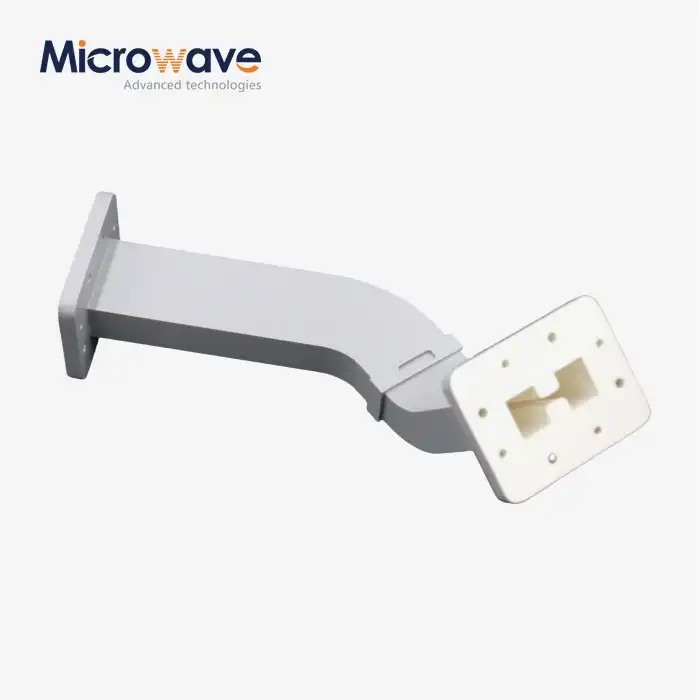 VIEW MOREDouble Ridge Waveguide Bend
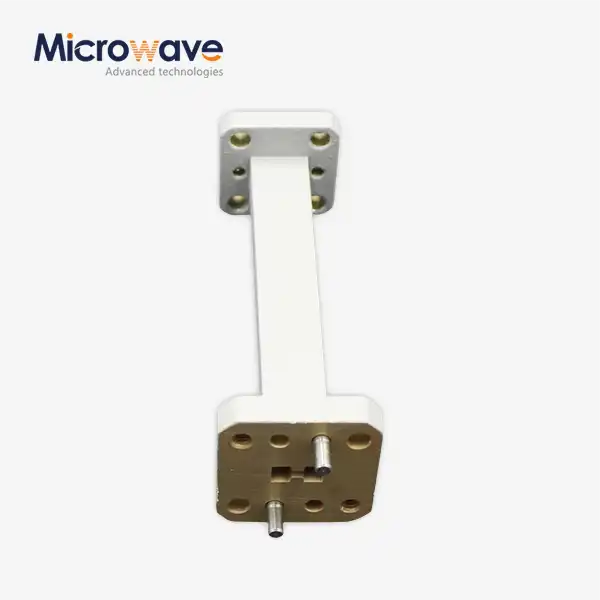 VIEW MOREDouble Ridge Waveguide Transition
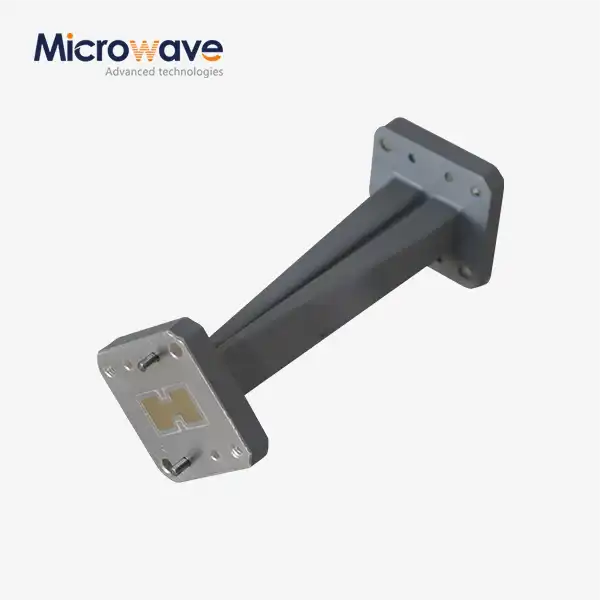 VIEW MOREDouble Ridge Twist Waveguide
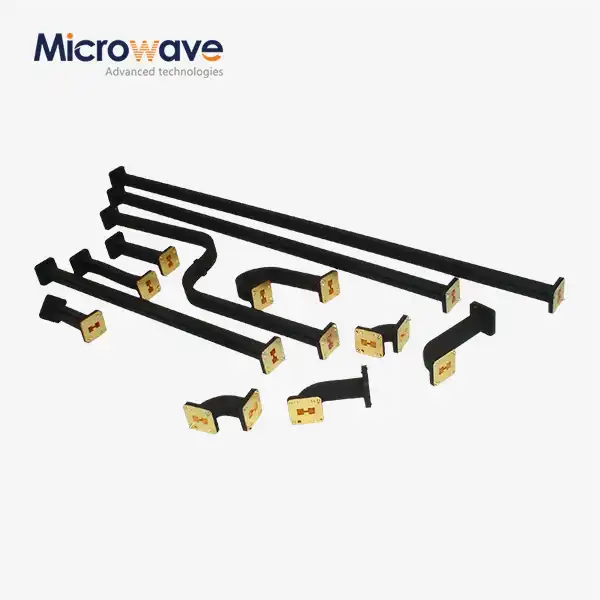 VIEW MOREDouble Ridged Flexible Waveguide
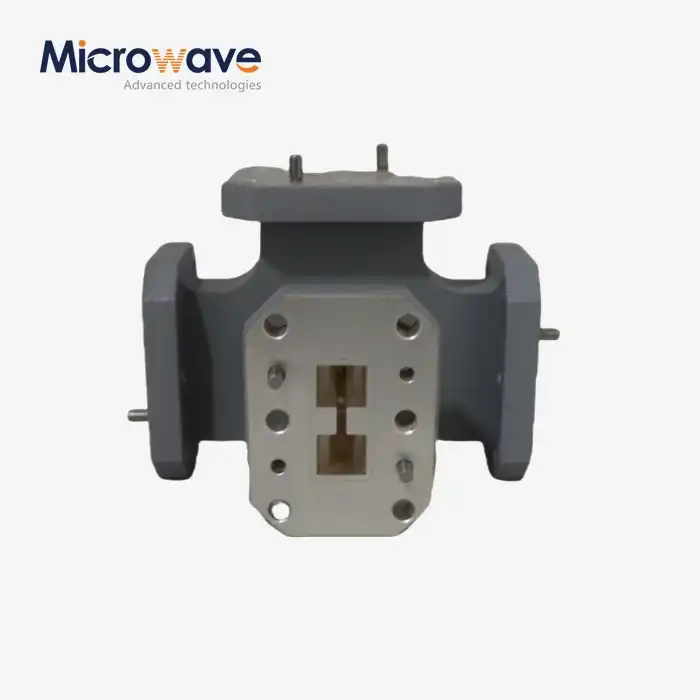 VIEW MOREDouble-Ridged Waveguide Magic Tee
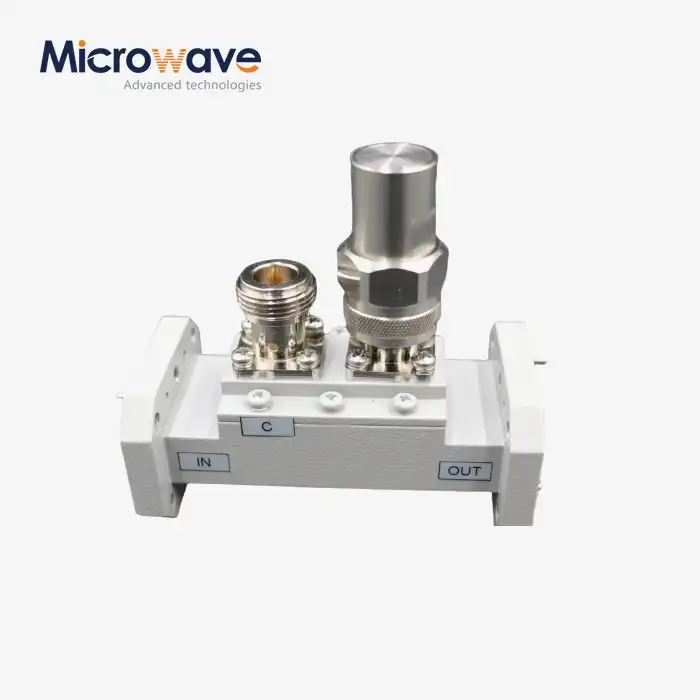 VIEW MOREDouble-Ridged Waveguide Loop Coupler
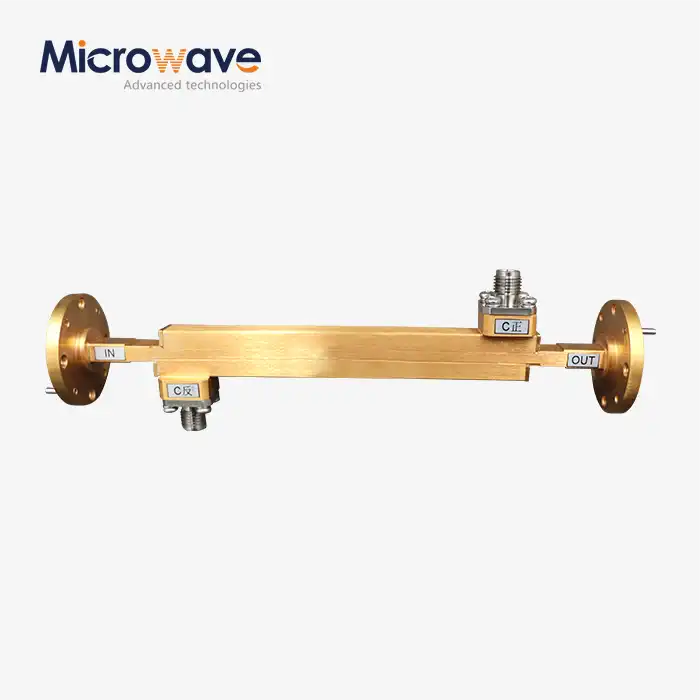 VIEW MOREDouble-Ridged Waveguide Broadwall Directional Coupler
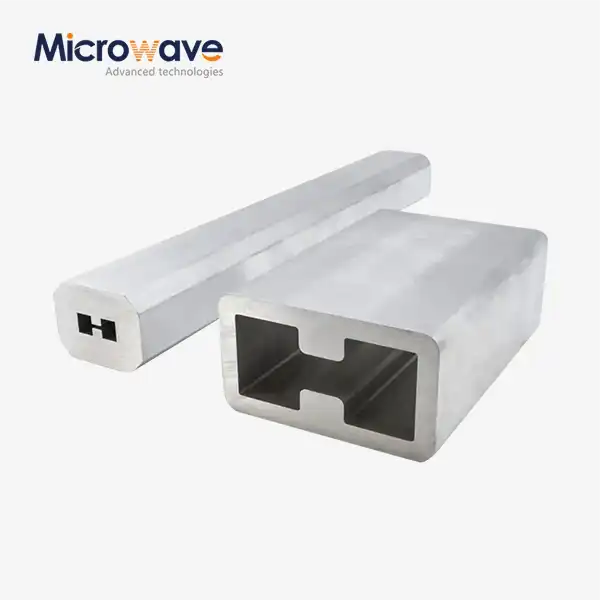 VIEW MOREDouble Ridge Waveguide Tube