





What Is Waveguide Bandpass Filter in Automotive Workshop?
A waveguide bandpass filter is a precision-engineered RF component designed around hollow metallic transmission structures to permit specific frequency ranges while rejecting unwanted signals. In automotive workshop contexts, these filters play an increasingly vital role in testing and calibrating advanced driver assistance systems (ADAS), collision avoidance radar, and vehicle-to-everything (V2X) communication modules. The technology leverages high Q-factor resonant cavities to deliver exceptionally low insertion loss and superior power handling, making them indispensable for workshop environments where measurement accuracy directly impacts safety certification and system validation.
Understanding Waveguide Bandpass Filters and Their Role in Automotive Workshops
These days, automotive workshops do more than just fix cars' technical problems. With the rise of radar-based safety systems and wireless communication units in cars, workshops need to be able to measure RF signals in more complex ways. Procurement teams and technical managers need to understand how Waveguide Bandpass Filter technology helps with these troubleshooting and calibration jobs.
Core Components and Operating Principles
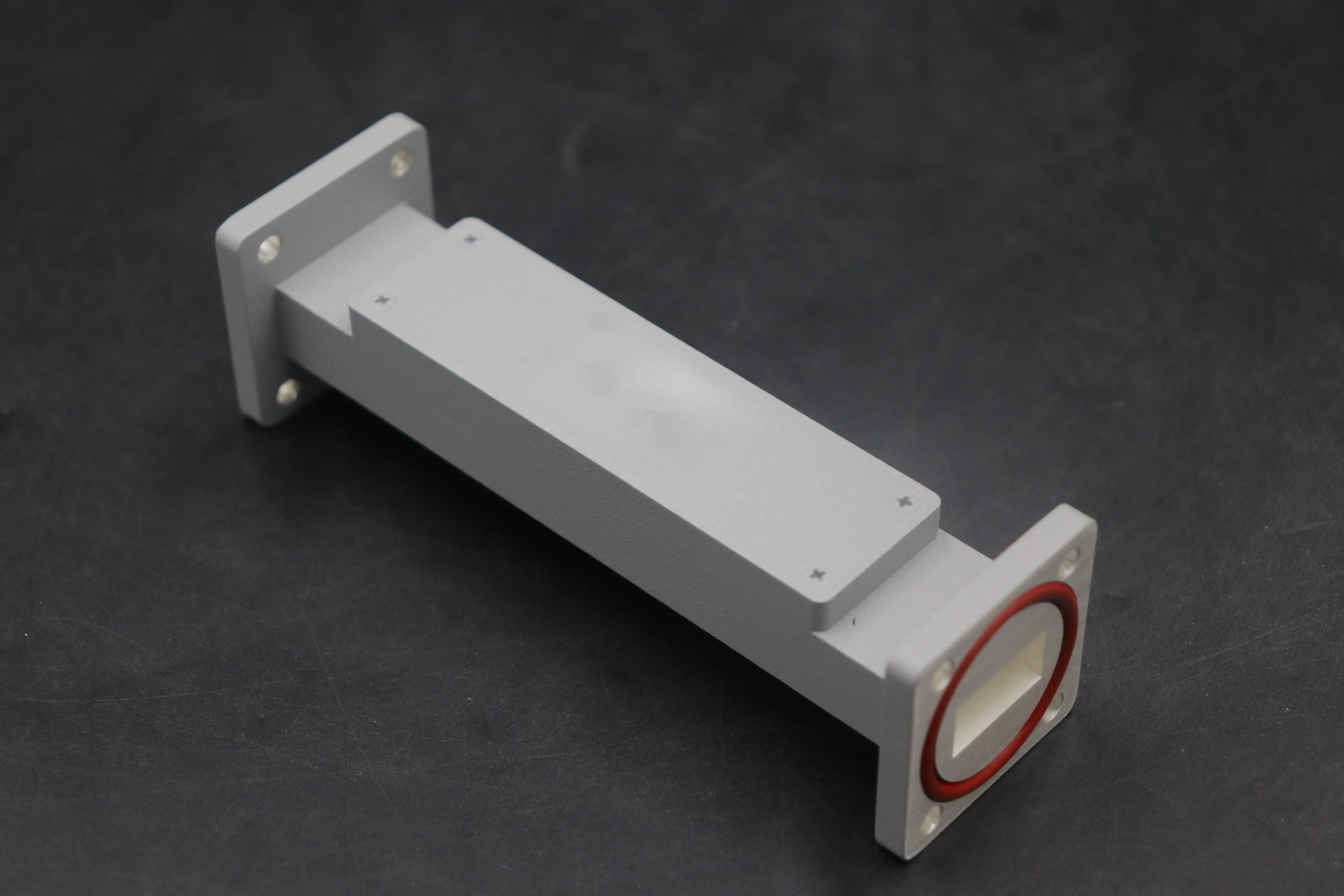
Thin rectangular or circular metal tubes form the waveguide construction. These tubes are generally aluminum 6061 or oxygen-free copper. These materials transmit electricity well and retain form when heated. Internal surfaces are frequently silver-plated to maximize skin depth efficiency. This reduces passband resistance losses to below 0.3 dB in well-designed systems.
Irises or induction posts join resonant holes, creating the bandpass feature. Electromagnetic radiation entering the waveguide can only travel at the opening frequencies. Signals outside the desired passband bounce back toward the source due to excessive resistance. This basic electromagnetic concept helps workshop workers separate radar bands, including the 76–81 GHz range utilized in automotive collision avoidance systems, while preventing harmonics and other emissions that might skew readings.
Critical Performance Metrics for Workshop Applications
Procurement professionals should consider several standards when evaluating these items. Quality units have less than 0.5 dB passband insertion loss. Return loss, or VSWR, indicates how well the filter matches system impedance. Below 1.3:1, the signal is reflected as little as possible. Industrial applications generally require stopband rejection depths beyond 60 dB to attenuate undesirable frequencies.
In weather-prone automobile workshops, thermal stability is crucial. Conventional aluminum construction has a frequency drift of 25 ppm/°C, which may not seem like much, but it accumulates up to many megahertz across vast temperature ranges. When testing radar systems for -40°C to +85°C temperatures, this drift might create measurement errors that degrade certification accuracy.
Technical Fundamentals and Design Principles
Waveguide Bandpass Filter solutions behave electromagnetically in a very different way than other RF filtering methods. Knowing these differences helps workshop managers make smart choices about what to buy that are in line with testing needs.
Electromagnetic Wave Propagation in Waveguides
Coaxial lines operate in transverse electromagnetic (TEM) modes, while waveguides operate in TE or TM modes. Transmission is prohibited below the primary TE10 mode's cutoff frequency in rectangular waveguides. This cutoff system offers high-pass filtering, unlike coaxial topologies.
The operating frequency bands are determined by physical measurements. The WR-90 standard 0.9-by-0.4-inch X-band waveguide can handle 8.2–12.4 GHz bands. Auto radar systems at 24 GHz need K-band waveguides with lower cross-sections. Choosing the correct material impacts performance. Copper conducts electricity better but weighs more. However, portable workshop tools function best with aluminum.
Comparison with Alternative Filter Technologies
Workshop acquisition teams compare waveguides, coaxial cavities, and microstrip filters. Coaxial filters are appropriate for compact spaces and frequencies below 6 GHz. At millimeter-wave frequencies, their insulating materials reduce signal clarity. A coaxial filter may have 2–3 dB insertion loss at 77 GHz, while a waveguide version may have 0.4 dB.
Microstrip and stripline filters work well for flat integration in embedded systems, but can't manage the high power levels of radar transmitter testing. A typical automobile radar module generates over 100 watts during transmission cycles. Waveguide designs can withstand continuous wave power up to kilowatts without performance loss, but microstrip filters lose insulation and overheat.
Middle cavity filters. They manage power better than microstrips yet cost less than precision-machined waveguides. Their mechanical tuning screws must be calibrated often, which increases maintenance costs and renders them unsuitable for high-throughput workshop operations.
Manufacturing and Quality Assurance Standards
Advanced simulation tools like HFSS and CST Microwave Studio help engineers optimize filter designs before prototyping. These tools solve Maxwell's equations in three dimensions and accurately forecast insertion loss, return loss, and group delay. At Advanced Microwave Technologies Co., Ltd., we employ these modeling tools throughout the design process to ensure that the first samples fulfill requirements without expensive iteration cycles.
Precision in production affects filter performance. CNC cutting maintains tolerances of ±0.001 inches, ensuring frequency precision throughout manufacturing runs. Surface finish impacts resistive losses. Mirror-polished, electroplated silver-covered internal surfaces lose 15-20% less skin effect than machined finishes.
Network analyzers are evaluated across all working bandwidths for quality control to ensure they meet insertion loss, return loss, and rejection factors. Environmental stress screening simulates automotive workshop temperature and vibration. This reveals issues with unit production before deployment.
Selecting the Right Waveguide Bandpass Filter for Your Automotive Workshop
To pick the right screening options, you have to balance the needs for technical performance with the needs for practical procurement. To make sure long-term business success, workshop managers have to look at a number of factors that are all linked to the Waveguide Bandpass Filter selection.
Frequency Band Compatibility and System Integration
Automotive radar systems employ 24 GHz for short-range radar, 77 GHz for long-range adaptive cruise control, and 79 GHz for modern ultra-wideband systems. Waveguide filters must follow certain principles for each frequency range. To prevent interference from adjacent bands, a 77 GHz bandpass filter rejects frequencies between 76 and 81 GHz, ranging below 74 GHz and above 83 GHz.
To satisfy various automakers, workshop test benches need several filters. European and Asian automakers may pick various middle frequencies within the same theoretical range. Finding the correct mix between inventory flexibility and cheap buying costs might be simpler with suppliers that provide several goods.
Power Handling and Thermal Management
High-power bursts are supplied over monitoring chains for radar calibration. Depending on the radar modulation, peak output can reach several hundred watts, and duty cycles can be 10% to 50%. The waveguide filter must remove energy without overheating to avoid changing resonant cavity tuning and affecting measurements.
Continuous wave power ratings estimate heat capacity. A 200-watt continuous filter can sustain 500-watt peak spikes at 20% duty cycle without overheating junctions. Aluminum housings naturally cool by convection, although high-test areas may need forced air cooling.
Evaluating Supplier Credentials and Certifications
Workshop managers should ensure international quality requirements are met while buying precision RF parts. ISO 9001:2015 certifies systematic quality management, while ISO 14001:2015 certifies environmentally friendly production. RoHS compliance ensures items satisfy EU hazardous substance regulations. This matters more when automotive technology faces rigorous environmental regulations.
Various providers have various lead times. Standard shop items ship in two weeks, while custom designs take four to six weeks for engineering modeling, CNC manufacturing, and silver plating. Clearly communicating output plans during workshop growth helps prevent workflow issues.
Minimum order quantities make buying difficult, especially for smaller study or workshop facilities. Some manufacturers offer 10–50-unit MOQs, which is fine for production-scale integration but too large for special usage. ADM understands that our clients have diverse demands and can handle modest purchases without compromising our skilled service or delivery.
Custom versus Off-the-Shelf Solutions
Many workshop activities benefit from standard waveguide filters. A WR-90 bandpass filter with 0.5 dB insertion loss spans 9.5 to 10.5 GHz and meets most X-band radar testing demands. However, specific rejection notches or tighter passband limitations may be needed to eliminate interference or settle near frequency channels.
Procurement teams and source specialists discuss specifications before customizing. Center frequency (with tolerance), 3 dB bandwidth, offset frequency rejection, power handling, and physical envelope constraints are necessary. Computer models allow designers to make inexpensive adjustments by checking if something is conceivable before doing it.
From specification to delivery, customization takes six to eight weeks. Electromagnetic models, mechanical design, CNC programming, manufacturing, silver plating, tuning, and final testing are completed. To minimize delays, workshops installing new equipment should consider these lead periods in their project planning.
Procurement Best Practices for Automotive Workshops
Strategic methods for buying meet both short-term practical needs and long-term relationship value goals. When workshop managers use these methods, the total cost of ownership for each Waveguide Bandpass Filter goes down, and measurement accuracy goes up.
Datasheet Verification and Technical Documentation
Online shopping is convenient, but there are risks that the product will not meet your needs. Teams in charge of buying things should ask for detailed datasheets that show measured S-parameter data across all working frequencies, power handling rates that include temperature conditions, and mechanical models with tolerance callouts. Reliable providers give test data for each serial number, which makes it possible to track equipment throughout its entire lifetime.
Watch out for datasheets that only show virtual performance and don't include any tests to back them up. Even though electromagnetic models are very good at predicting how things should behave in an ideal world, differences in manufacturing lead to errors that measurement confirmation finds. Suppliers who are sure of the quality of their products are happy to share real test results that show compliance gaps above and beyond the minimum requirements.
Negotiation Strategies for Volume Procurement
Volume pricing structures help workshops that are updating a lot of test units or standardizing equipment across facility networks. Many sellers give discounts that get deeper at 10, 25, and 50 units. The discounts start at five units and get deeper at those levels. These saves can be unlocked by combining purchases into single orders instead of buying things one at a time. This also makes transportation and inventory management easier.
Buying deals that last a year gives you more power. By committing to how much you think you will use over the next twelve months, you can get better prices and still have options for delivery through planned drops. This method works especially well for workshop chains with multiple locations because it lets centralized buying arrange good terms that help the whole organization.
When negotiating, you should also pay attention to the terms of payment. Standard terms of net-30 or net-60 days are in line with how often bills need to be paid. Some suppliers give small discounts for early or faster payment, but workshops should compare the impact on their cash flow to the amount of money they can save.
Lead Time Management and Inventory Strategies
When you use just-in-time buying, you don't have to keep as much capital in inventory, but you are more likely to be affected by supply problems. Because they are precisely made, waveguide filters can't be found quickly in an emergency. Workshops that help with important safety certification tasks should keep enough strategic supplies to last for 60 to 90 days.
When figuring out buffer stock, you should take into account both normal usage and expected demand jumps. When a car model year changes, testing often gets sped up while makers confirm new radar setups. By building up inventory before these yearly high points, you can avoid bottlenecks that could cause certification plans to slip and hurt your relationships with customers.
Average lead time isn't as important as how consistent the supplier's lead time is. If your seller consistently delivers within four weeks, you can plan your purchases accurately. On the other hand, if their delivery times vary between two and eight weeks, you have to keep extra stock on hand just in case. When evaluating a seller, ask for data on on-time delivery and examples from other customers who have used the same procurement methods.
Building Strategic Supplier Partnerships
Transactional relationships that only care about unit price miss chances to create value through working together on technology. The best workshops build relationships with providers that understand how their needs change over time and come up with answers on their own.
Suppliers can predict changes in demand and allocate production capacity properly when they have regular contact lines. Sharing predictions three to six months in advance helps sellers buy materials and plan production runs, which cuts down on lead times and makes deliveries more reliable. When the industry is short-staffed, workshops get more work done than other units.
Technical advice goes beyond the initial buying requirements. As radar technology for cars moves toward higher frequencies and bigger bandwidths, experts from suppliers can help with new filter designs that meet the needs of next-generation testing. By adopting advanced measurement tools early on, this forward-looking view helps groups stay ahead of the competition.
The level of after-sales help is what sets great suppliers apart from average ones. Responding to expert support during installation, calibration advice, and fixing helps get the most out of equipment purchases. Suppliers who care about their customers' success see delivering the goods as the start of the business relationship, not the end.
Conclusion
Waveguide Bandpass Filter solutions are important pieces of equipment for modern car shops that are preparing for the move toward vehicles with radar and communication systems. Understanding their technical bases, selection criteria, and the best ways to buy them gives workshop managers the power to make smart choices that improve measurement accuracy and operating efficiency. Investing in workforce growth and keeping good ties with capable suppliers are two ways to make sure that workshops are always ready to test vehicles with more complex systems.
FAQ
Q1: How do I select the correct frequency range for automotive radar testing?
Automotive radar systems mostly work in three bands: 24 GHz for short-range tasks, 77 GHz (specifically, 76–81 GHz) for adaptive cruise control and avoiding collisions, and new 79 GHz ultra-wideband systems. The Waveguide Bandpass Filter you choose should be right for the radar technology you're trying, with the passband centered on the operational frequency and the rejection features turning off bands that are next to it. Check the vehicle's manufacturer's specs to find out the exact frequency assignments.
Q2: What distinguishes waveguide filters from coaxial alternatives in workshop applications?
At millimeter-wave frequencies, waveguide filters have insertion loss that is much lower than coaxial designs, which is often less than 0.5 dB. They can handle a lot more power without breaking down, which is important for testing radar transmitters. Since there are no center wires or dielectric materials, there are no usual failure causes in coaxial designs. When the frequency goes above 20 GHz, these benefits become very important because cable losses make measurements less accurate.
Q3: Can waveguide bandpass filters be customized for specialized diagnostic applications?
Customization is one of ADM's main strengths. Our engineering team uses HFSS and CST modeling tools to make filters that meet particular rejection needs, physical envelope limits, and power handling needs. Center frequency, bandwidth, stopband attenuation at specific offset frequencies, and flange types are some of the most common tuning factors. From acceptance of the specifications to delivery, custom projects usually take six to eight weeks. This includes validating the design, CNC production, silver plating, and thorough testing.
Partner with ADM for Precision Waveguide Bandpass Filter Solutions
When it comes to designing and making waveguide components, Advanced Microwave Technologies Co., Ltd has more than 20 years of experience making the best products. With the help of our cutting-edge 24-meter microwave darkroom and modern monitoring tools, we can work with frequencies ranging from 0.5 GHz to 110 GHz. We are a Waveguide Bandpass Filter maker with ISO 9001:2015, ISO 14001:2015, and RoHS certifications. This means we can give your car workshop the quality guarantee it needs. Our engineering team offers full OEM customization services with clear lead times and a range of minimum order numbers. Our technical experts are ready to turn your needs into precisely built solutions, whether you need standard store items or designs that are made to fit your unique needs. Get in touch with craig@admicrowave.com right away to talk about the details of your project and find out how our efficient supply chain and low prices can help your workshop succeed.
References
1. Pozar, David M. Microwave Engineering, Fourth Edition. Hoboken: John Wiley & Sons, 2011.
2. Matthaei, George L., Leo Young, and E.M.T. Jones. Microwave Filters, Impedance-Matching Networks, and Coupling Structures. Norwood: Artech House, 1980.
3. Levy, Ralph. "Filters for Satellite Communications." IEEE Transactions on Microwave Theory and Techniques 32, no. 9 (1984): 1025-1034.
4. Hasch, Jürgen, Erich Topak, Reinhard Schnabel, Thomas Zwick, Robert Weigel, and Christian Waldschmidt. "Millimeter-Wave Technology for Automotive Radar Sensors in the 77 GHz Frequency Band." IEEE Transactions on Microwave Theory and Techniques 60, no. 3 (2012): 845-860.
5. Cameron, Richard J., Chandra M. Kudsia, and Raafat R. Mansour. Microwave Filters for Communication Systems: Fundamentals, Design, and Applications. Hoboken: John Wiley & Sons, 2007.
6. Hunter, Ian C. Theory and Design of Microwave Filters. London: The Institution of Engineering and Technology, 2001.
YOU MAY LIKE
 VIEW MORERight Angle Double Ridged WG To Coaxial Adapter
 VIEW MOREEnd Launch Double Ridged WG To Coaxial Adapter
 VIEW MORERight Angle Waveguide to Microstrip Adapter
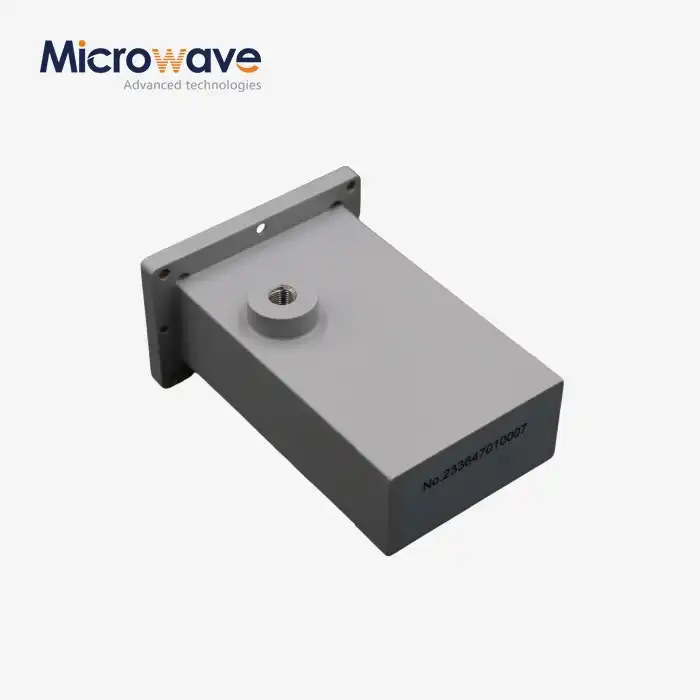 VIEW MOREWG Termination
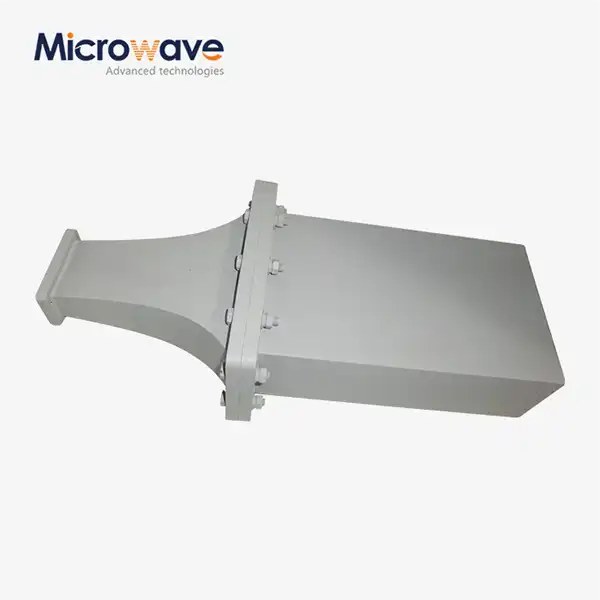 VIEW MOREDouble Ridge Waveguide Termination
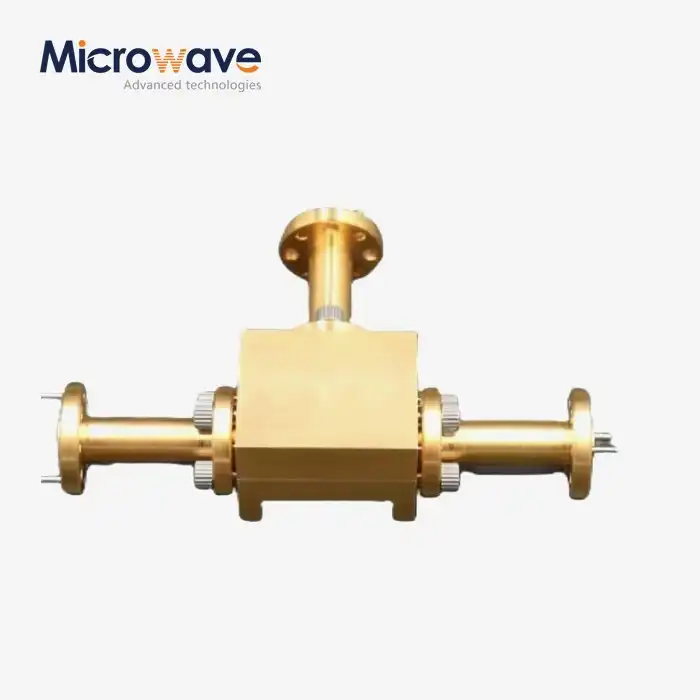 VIEW MOREWaveguide Power Divider
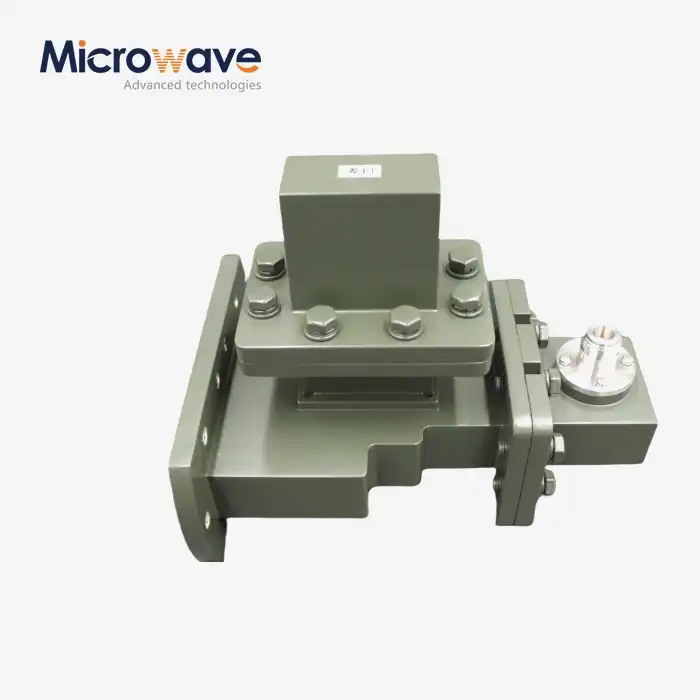 VIEW MOREE-Plane Tee
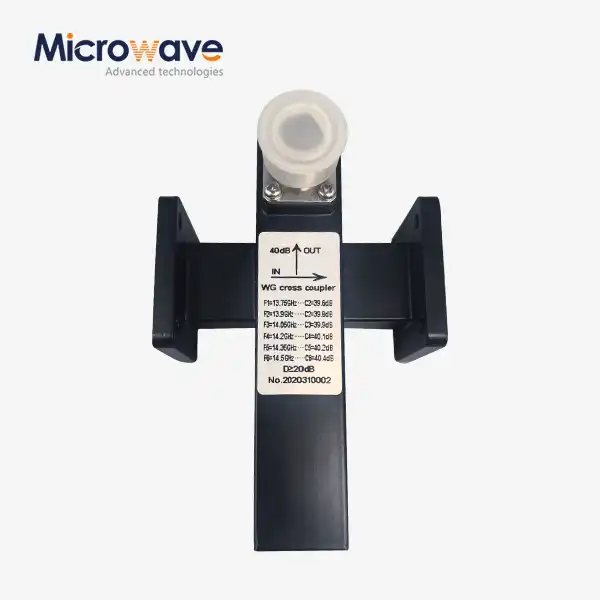 VIEW MORECrossguide Directional Coupler