




What is the principle of phase shifter?
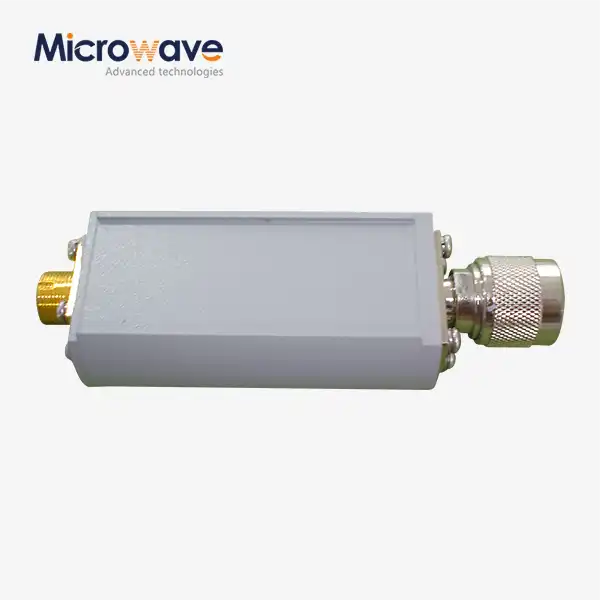
Imagine your satellite communication system failing to lock onto signals during critical operations, or your radar system unable to accurately track multiple targets simultaneously. These scenarios highlight a fundamental challenge in RF engineering: maintaining precise phase control across complex microwave systems. A phase shifter operates by introducing a controlled time delay or phase difference to an incoming electromagnetic signal without significantly altering its amplitude, enabling critical applications from phased array antennas to advanced beamforming systems. At the heart of modern phase control technology lies the Voltage Controlled Phase Shifter, a device that translates voltage variations into precise phase adjustments, making it indispensable for satellite communications, aerospace navigation, defense radar systems, and next-generation wireless networks where signal integrity and directional control determine system performance.
Understanding the Core Operating Principle of Phase Shifters
The fundamental working principle of a phase shifter centers on deliberately manipulating the temporal relationship between input and output signals in the electromagnetic spectrum. When an RF or microwave signal propagates through a phase shifter, the device introduces a specific time delay that manifests as a measurable phase difference between the input and output waveforms. This phase manipulation occurs without substantially modifying the signal's amplitude or frequency characteristics, which distinguishes phase shifters from other signal processing components like filters or amplifiers. The Voltage Controlled Phase Shifter achieves this through sophisticated electronic architectures that respond dynamically to applied control voltages, enabling real-time phase adjustments critical for adaptive systems. The physics underlying phase shift generation involves several complementary mechanisms depending on the implementation technology. Transmission line-based approaches exploit the relationship between electrical length and phase delay, where signals traveling through longer paths naturally experience greater phase lag compared to shorter routes. By electronically switching between transmission paths of different lengths or by varying the effective electrical length through reactive components, engineers can achieve precise phase control. Alternative implementations employ reflection-based techniques, where signals encounter controlled impedance discontinuities that introduce phase shifts upon reflection. More advanced Voltage Controlled Phase Shifter designs utilize variable capacitance elements such as varactor diodes or ferroelectric materials whose electromagnetic properties change in response to applied bias voltages, enabling continuous analog phase tuning across the operational frequency range.
The mathematical representation of phase shift relates directly to the time delay introduced by the device. For a sinusoidal signal, the phase angle expressed in degrees or radians quantifies the temporal offset between two waveforms. In practical microwave systems operating across broad frequency ranges from 500 MHz to 40 GHz and beyond, maintaining consistent phase shift performance requires careful engineering of dispersive effects and frequency-dependent behavior. Advanced Voltage Controlled Phase Shifter implementations from manufacturers like Advanced Microwave Technologies Co., Ltd achieve remarkable linearity in their voltage-to-phase transfer characteristics, enabling predictable system behavior essential for phased array calibration and beam steering applications where multiple elements must maintain precise phase relationships.
Voltage Controlled Phase Shifter Technology and Implementation
Voltage Controlled Phase Shifter devices represent a sophisticated evolution in phase control technology, offering dynamic tunability essential for modern adaptive systems. These components translate applied control voltages, typically ranging from 0V to 20V, into corresponding phase shifts that can span the full 360-degree range. The underlying mechanism most commonly employs voltage-variable capacitance elements integrated into transmission line structures or resonant circuits. As the control voltage changes, the capacitance variation alters the effective electrical length or impedance characteristics of the signal path, directly modulating the phase delay experienced by propagating electromagnetic waves. This voltage-to-phase relationship exhibits highly linear characteristics in well-designed implementations, facilitating straightforward system calibration and control algorithms. The architecture of modern Voltage Controlled Phase Shifter products incorporates multiple design considerations to optimize performance across key metrics. Insertion loss, representing the signal attenuation through the device, must be minimized to preserve system sensitivity and power efficiency. Advanced implementations achieve insertion loss values below 2 dB even at high microwave frequencies by employing low-loss dielectric materials, optimized electrode geometries, and high-quality semiconductor junctions. Return loss specifications exceeding 18 dB ensure excellent impedance matching to standard 50-ohm transmission systems, preventing signal reflections that would degrade system performance. The frequency range coverage from DC to 40 GHz accommodates diverse applications from legacy communication bands through emerging millimeter-wave systems for 5G infrastructure and beyond.
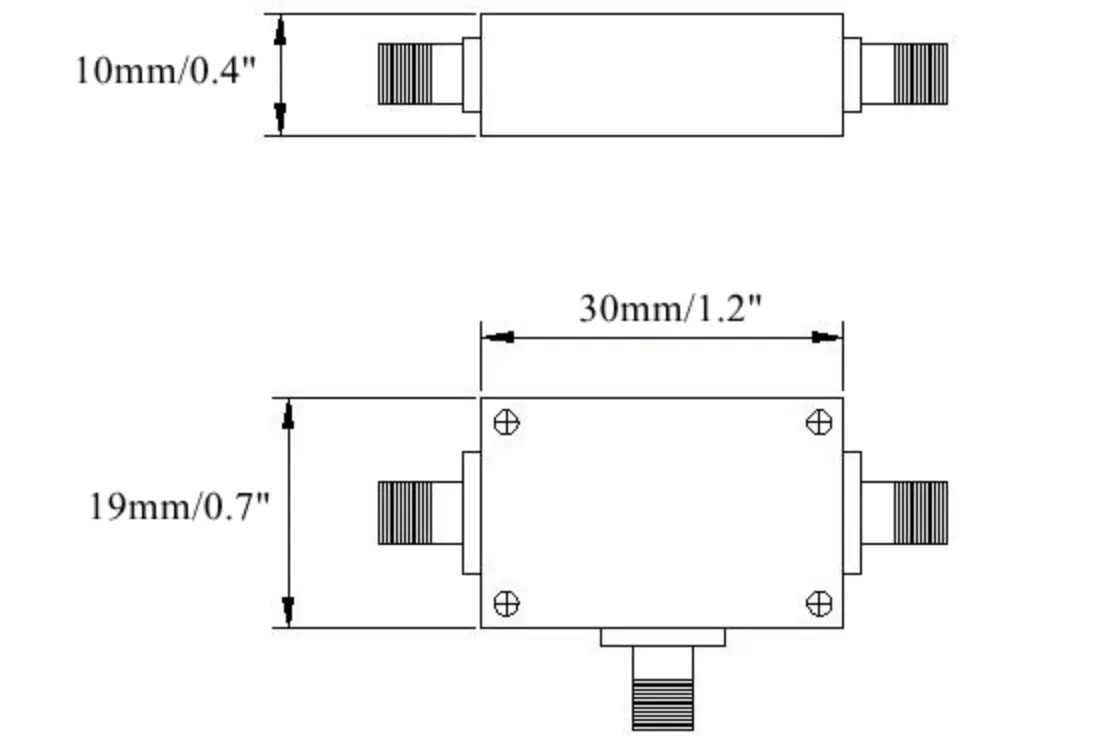
Power handling capability represents another critical specification for Voltage Controlled Phase Shifter components, particularly in transmit-side applications where significant RF power levels must traverse the device. Implementations capable of handling up to 2 watts continuous power enable integration into radar transmitters, satellite uplink systems, and base station equipment without requiring external power division or signal routing complexity. Temperature stability across operating ranges from -40°C to +85°C ensures reliable performance in harsh environmental conditions encountered in aerospace, military, and outdoor infrastructure deployments. The combination of wide frequency coverage, low insertion loss, excellent linearity, and robust environmental performance makes Voltage Controlled Phase Shifter technology from specialized manufacturers like Advanced Microwave Technologies Co., Ltd the preferred solution for demanding phase control applications.
Advanced Design Considerations for Optimal Performance
Achieving optimal Voltage Controlled Phase Shifter performance requires addressing multiple interdependent design parameters. The phase shift range and resolution determine the granularity of beam steering or signal cancellation achievable in system applications. While continuous analog control enables infinite resolution within the operating range, practical considerations including control voltage noise, temperature drift, and device manufacturing tolerances establish effective resolution limits typically in the range of 1-5 degrees. Digital control interfaces can be incorporated alongside analog voltage control to facilitate microprocessor-based system integration, enabling sophisticated phase management algorithms that compensate for environmental variations and component aging effects. Group delay flatness across the operational frequency band represents an often-overlooked specification with significant implications for wideband systems. Non-uniform group delay introduces frequency-dependent phase distortion that can degrade modulated signal fidelity, increase bit error rates in digital communication links, or introduce spurious responses in radar systems. Advanced Voltage Controlled Phase Shifter designs employ equalization techniques and carefully optimized transmission line geometries to minimize group delay variation, maintaining signal integrity across multi-octave bandwidths. These engineering refinements distinguish professional-grade components suitable for demanding satellite communication and aerospace applications from consumer-grade alternatives.
The control voltage interface itself requires careful consideration regarding drive impedance, voltage regulation, and transient response characteristics. High-impedance control inputs minimize loading on digital-to-analog converters or voltage reference sources, simplifying system interface design. However, capacitive loading from the Voltage Controlled Phase Shifter varactor elements introduces bandwidth limitations that can restrict phase switching speeds. Applications requiring rapid beam steering, such as airborne radar or electronic warfare systems, necessitate careful analysis of control bandwidth and slew rate limitations. Advanced Microwave Technologies Co., Ltd addresses these requirements through optimized driver circuits and control interface designs validated across the full operating frequency range in their 24m Microwave Darkroom facility, ensuring specified performance under realistic operating conditions.
Practical Applications Driving Phase Shifter Technology Advancement
Phased array antenna systems represent perhaps the most demanding application for Voltage Controlled Phase Shifter technology, requiring precise phase control across potentially hundreds or thousands of individual radiating elements. In satellite communication ground stations, electronically steerable antennas eliminate the mechanical complexity and pointing delays associated with traditional dish positioning systems, enabling rapid beam acquisition and tracking of multiple satellites simultaneously. Each array element incorporates a dedicated Voltage Controlled Phase Shifter controlled by centralized beam steering computers that calculate required phase distributions to form desired radiation patterns. The phase accuracy, stability, and repeatability of these components directly impact antenna gain, sidelobe levels, and ultimately communication link quality for high-definition video transmission, broadband data services, and mission-critical voice communications. Radar systems for air traffic control, weather monitoring, and defense applications leverage Voltage Controlled Phase Shifter technology to achieve unprecedented operational capabilities. Active electronically scanned array radars can instantaneously redirect transmitted beams without mechanical antenna motion, enabling simultaneous tracking of multiple targets, rapid threat assessment, and adaptive waveform management. The ultra-sharp beamforming enabled by precise phase control improves angular resolution for accurate aircraft positioning even during adverse weather conditions with heavy precipitation or atmospheric turbulence. Military surveillance applications exploit the rapid beam steering capabilities to detect and classify threats across wide angular sectors while maintaining the ability to focus resources on high-priority targets. The combination of low insertion loss and high power handling in professional-grade Voltage Controlled Phase Shifter components ensures maximum system sensitivity and transmitted power on target.
Telecommunications infrastructure represents an expanding application domain as 5G and future 6G networks increasingly rely on beamforming and massive MIMO techniques to achieve targeted coverage and spectral efficiency improvements. Base station equipment incorporates arrays of Voltage Controlled Phase Shifter elements to dynamically shape transmitted and received beams, directing energy toward specific user equipment while minimizing interference to other subscribers. This targeted signal delivery extends coverage to challenging rural areas and enables higher capacity density in urban environments. The industrial Internet of Things applications particularly benefit from optimized long-distance signal propagation enabled by adaptive beamforming, connecting remote sensors and machinery that would be unreachable with conventional omni-directional transmission approaches.
Emerging Applications and Future Technology Trends
Navigation systems for aircraft, spacecraft, and precision positioning applications increasingly incorporate Voltage Controlled Phase Shifter components to maintain accuracy and reliability under challenging conditions. GPS and GNSS receivers employ controlled reception array nulling, using phase shifters to electronically steer antenna pattern nulls toward interference sources while preserving sensitivity toward satellite signals. This interference mitigation capability proves essential for aviation safety, autonomous vehicle navigation, and precision agriculture applications where position accuracy directly impacts operational safety and economic efficiency. Military platforms facing intentional jamming threats rely on similar adaptive nulling techniques enabled by rapidly reconfigurable Voltage Controlled Phase Shifter arrays to maintain navigation capability in contested electromagnetic environments. Test and measurement equipment represents another significant application category where Voltage Controlled Phase Shifter components enable advanced characterization capabilities. Vector network analyzers, antenna measurement systems, and radar cross-section facilities incorporate precision phase shifters for calibration, measurement uncertainty reduction, and specialized testing configurations. The 24m Microwave Darkroom facility at Advanced Microwave Technologies Co., Ltd exemplifies this application, utilizing precision phase shifters within the Antenna Plane Near and Far Field Measuring Recombination Chamber to enable accurate antenna pattern measurements across the full 0.5-110 GHz frequency range. This measurement capability supports development of next-generation communication systems, radar sensors, and electromagnetic compatibility validation for aerospace systems.
Emerging applications in medical imaging, wireless power transfer, and quantum communication systems present new requirements and opportunities for Voltage Controlled Phase Shifter technology advancement. Millimeter-wave imaging systems for security screening and medical diagnostics employ phase shifter arrays to synthesize focused beams that scan across target volumes without mechanical motion. Wireless power transfer systems utilize phase control to create constructive interference patterns at receiver locations while minimizing energy deposition in unintended areas. These diverse applications drive continued innovation in phase shifter performance metrics including lower loss, wider bandwidth, faster switching speeds, higher power handling, and improved integration density. Advanced Microwave Technologies Co., Ltd maintains active research programs exploring novel materials, innovative circuit topologies, and advanced packaging technologies to address evolving market requirements across this expanding application landscape.
Technical Specifications and Performance Optimization
Insertion loss characteristics fundamentally limit the cascaded system performance achievable in applications employing multiple Voltage Controlled Phase Shifter stages. Each decibel of insertion loss directly reduces receiver sensitivity or transmitted power reaching intended targets, translating into decreased system range or coverage area. Low-loss designs achieving less than 2 dB insertion loss across broad frequency bands from 500 MHz to 40 GHz require careful material selection, optimized transmission line geometries, and high-quality semiconductor junction fabrication. Advanced Voltage Controlled Phase Shifter implementations from specialized manufacturers employ silver-plated copper conductors, low-loss PTFE-based dielectric substrates, and carefully characterized varactor diodes selected for minimal series resistance and optimal voltage-capacitance characteristics. These engineering refinements accumulate to deliver industry-leading insertion loss performance that maximizes system effectiveness.
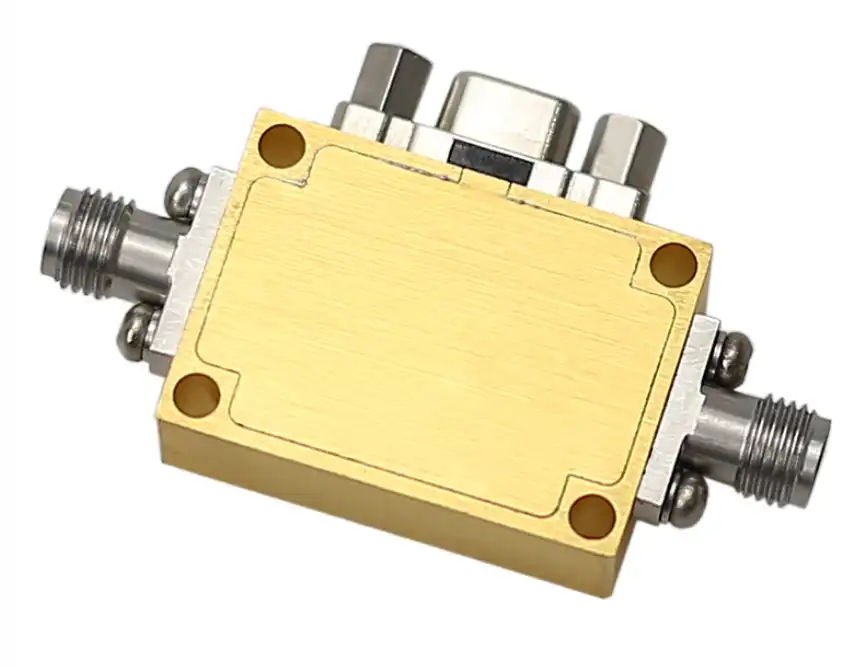
Phase shift linearity with respect to control voltage dramatically impacts system calibration complexity and achievable performance. Highly linear voltage-to-phase transfer functions enable straightforward lookup table implementations or simple polynomial compensation algorithms in digital control systems. Conversely, nonlinear behavior necessitates complex characterization efforts, multi-dimensional calibration tables, and increased computational resources for real-time phase management. Professional-grade Voltage Controlled Phase Shifter products achieve linearity specifications better than ±5 degrees over the full control voltage range through careful device design and rigorous production testing. This performance level enables rapid system integration and simplified calibration procedures that reduce overall program costs and accelerate deployment timelines. Return loss specifications quantify impedance matching quality between the Voltage Controlled Phase Shifter and surrounding transmission system components. Poor impedance matching generates signal reflections that create standing wave patterns, ripple in frequency response, and potential instability in active circuits. Achieving return loss values exceeding 18 dB requires careful RF circuit design, precision manufacturing tolerances, and comprehensive production testing across the full operating frequency and phase shift state combinations. Advanced manufacturing processes at specialized facilities ensure consistent impedance characteristics that simplify system integration and maximize realized performance. The combination of low insertion loss, excellent return loss, and predictable phase behavior positions high-quality Voltage Controlled Phase Shifter components as enabling technologies for next-generation microwave systems.
Environmental Robustness and Reliability Engineering
Operating temperature range specifications define the environmental conditions under which Voltage Controlled Phase Shifter components maintain specified electrical performance. Extreme temperature exposure affects semiconductor junction characteristics, dielectric properties, and dimensional stability of mechanical structures, potentially degrading insertion loss, phase accuracy, and power handling capability. Military and aerospace applications frequently encounter temperature extremes from -40°C to +85°C or beyond, necessitating careful materials selection and thermal design to ensure reliable operation. Advanced Microwave Technologies Co., Ltd validates all Voltage Controlled Phase Shifter products across extended temperature ranges in environmental chambers that simulate mission profiles, ensuring components meet or exceed specified performance under realistic operating conditions. Power handling capacity determines maximum signal levels that Voltage Controlled Phase Shifter components can accommodate without performance degradation or physical damage. Thermal dissipation from insertion loss heating, voltage breakdown in dielectric materials, and current capacity of metalization structures all contribute to overall power limitations. Implementations supporting up to 2 watts continuous power employ robust electrode structures with enhanced current capacity, carefully optimized junction areas that spread thermal loads, and thermal management features that efficiently conduct heat away from critical regions. These engineering enhancements enable integration into transmit-side applications including radar transmitters and satellite uplink equipment where significant RF power levels must traverse the phase control elements.
Mechanical robustness specifications address physical shock, vibration, and mounting stress factors encountered in mobile platforms and harsh operating environments. Aerospace and defense applications subject electronic components to severe mechanical loading during rocket launches, aircraft maneuvers, and transportation over rough terrain. Voltage Controlled Phase Shifter designs for these applications employ reinforced package structures, ruggedized connector interfaces, and validated mounting configurations that survive specified shock and vibration profiles without electrical or mechanical degradation. Comprehensive reliability testing including thermal cycling, mechanical stress screening, and accelerated life testing validates long-term performance and ensures components meet stringent quality requirements for mission-critical applications. The ISO 9001:2015 certified quality management systems at Advanced Microwave Technologies Co., Ltd implement systematic verification and validation processes that deliver components meeting the highest reliability standards demanded by aerospace and defense customers worldwide.
Conclusion
The principle of phase shifter operation centers on controlled signal delay manipulation without amplitude distortion, enabled through sophisticated electronic architectures including Voltage Controlled Phase Shifter technology that provides dynamic tunability essential for modern adaptive systems across satellite communications, radar, aerospace navigation, and emerging 5G infrastructure applications.
Cooperate with Advanced Microwave Technologies Co., Ltd.
Partner with Advanced Microwave Technologies Co., Ltd., a leading China Voltage Controlled Phase Shifter manufacturer, China Voltage Controlled Phase Shifter supplier, and China Voltage Controlled Phase Shifter factory offering China Voltage Controlled Phase Shifter wholesale solutions. Our High Quality Voltage Controlled Phase Shifter products deliver competitive Voltage Controlled Phase Shifter price with Voltage Controlled Phase Shifter for sale globally. With over 20 years of microwave expertise, ISO 9001:2015 certification, advanced 24m Microwave Darkroom testing facilities, and comprehensive OEM customization services, we provide tailored solutions for your specific applications. Contact craig@admicrowave.com today to discuss your phase shifter requirements and discover how our technical excellence and responsive support can accelerate your project success. Bookmark this resource for future reference when selecting optimal phase control components.
References
1. Rebeiz, Gabriel M. "RF MEMS: Theory, Design, and Technology." Wiley-Interscience, 2003.
2. Pozar, David M. "Microwave Engineering, Fourth Edition." John Wiley & Sons, 2011.
3. Balanis, Constantine A. "Antenna Theory: Analysis and Design, Third Edition." John Wiley & Sons, 2005.
4. Skolnik, Merrill I. "Radar Handbook, Third Edition." McGraw-Hill Education, 2008.