




Is AC or DC power better?
When your satellite ground station loses signal strength mid-transmission, or your radar system experiences unexpected power fluctuations during critical operations, the choice between AC and DC power becomes more than just a technical specification—it becomes a mission-critical decision. Whether you're managing telecommunications infrastructure, aerospace defense systems, or advanced microwave applications, understanding which power source delivers optimal performance for your AC Power Amplifier can mean the difference between seamless operation and costly system failures.
Understanding AC and DC Power Fundamentals in Modern Applications
The debate between alternating current and direct current has evolved significantly since the historic "War of the Currents" between Thomas Edison and Nikola Tesla in the late 1880s. Today, both power types serve distinct yet complementary roles in modern technology, particularly in high-frequency applications where AC Power Amplifier systems dominate telecommunications, satellite communications, and defense sectors. Alternating current periodically reverses direction, typically at frequencies of fifty or sixty hertz depending on regional standards. This oscillating characteristic enables AC power to be easily transformed to different voltage levels using transformers, making it exceptionally efficient for long-distance transmission from power generation facilities to end users. The ability to step up voltage for transmission and step down for distribution minimizes power losses across vast electrical grids, which is why AC remains the backbone of global power infrastructure. Direct current, conversely, flows consistently in a single direction with constant polarity. While historically challenging to convert between voltage levels, modern power electronics have largely overcome this limitation. DC power excels in applications requiring stable, consistent voltage delivery, making it indispensable for battery-powered devices, renewable energy systems, and electronic equipment. The steady-state nature of DC eliminates reactive power concerns that plague AC systems with inductive or capacitive loads, resulting in more efficient power delivery in specific scenarios. For industries utilizing AC Power Amplifier technology, understanding these fundamental differences becomes crucial when designing systems that demand precise signal amplification across microwave and millimeter-wave frequencies. The power supply architecture directly impacts amplifier performance, thermal management, and overall system reliability in mission-critical applications.
AC Power Advantages in High-Performance Amplifier Systems
When examining AC Power Amplifier applications in telecommunications and aerospace sectors, alternating current offers several compelling advantages that have solidified its position as the industry standard for power distribution. The inherent ability to transform voltage levels without significant energy losses makes AC particularly suitable for facilities requiring multiple voltage tiers, from high-voltage equipment to low-voltage control systems. Power plants generate alternating current more efficiently through electromagnetic induction using rotating machinery. This generation method produces high-quality sinusoidal waveforms that can be transmitted over extensive distances with minimal degradation. For ground stations and communication facilities spanning large geographic areas, AC infrastructure provides the most economical solution for distributing power to distributed antenna arrays, amplifier chains, and supporting equipment. The standardization of AC power worldwide has created robust supply chains for transformers, distribution equipment, and protective devices. Organizations implementing AC Power Amplifier solutions benefit from readily available components, established safety protocols, and extensive technical expertise within the electrical engineering community. This ecosystem advantage translates to reduced procurement costs, faster installation timelines, and simplified maintenance procedures.
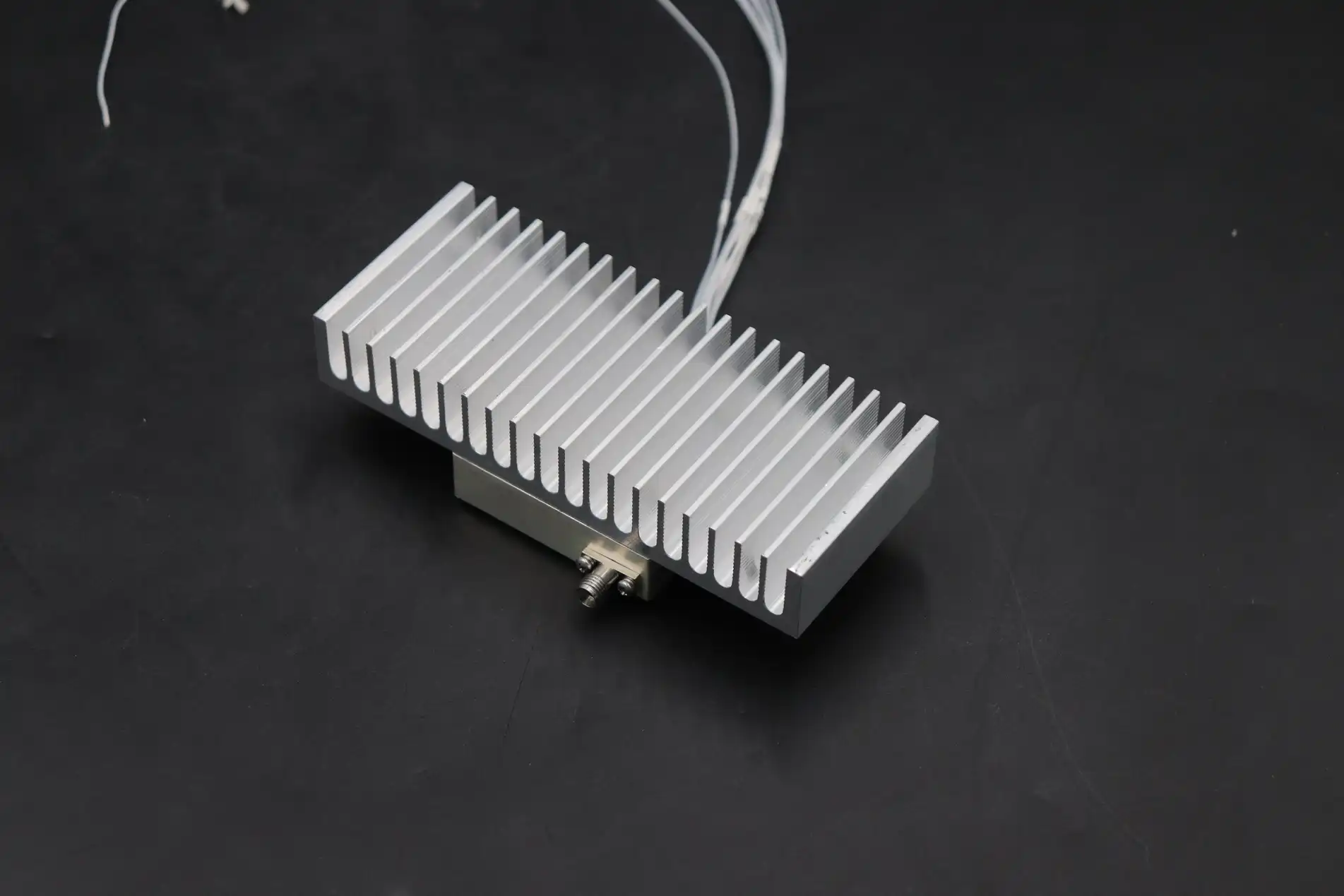
Furthermore, AC systems demonstrate superior fault-clearing characteristics compared to DC equivalents. Circuit breakers designed for alternating current leverage natural current zero-crossings to extinguish arcs, providing reliable protection against short circuits and overcurrent conditions. This safety advantage becomes particularly important in high-power amplifier installations where equipment protection directly impacts operational continuity and personnel safety. Advanced Microwave Technologies Co., Ltd. leverages these AC advantages in designing power delivery systems for their extensive portfolio of microwave components. The company's AC Power Amplifier products harness alternating current's distribution benefits while incorporating sophisticated power conditioning to deliver the clean, stable power required for high-frequency signal amplification across frequency ranges extending from communications bands through millimeter-wave frequencies up to one hundred ten gigahertz.
DC Power Benefits for Specialized Amplification Requirements
While alternating current dominates power distribution, direct current offers distinct advantages for specific AC Power Amplifier applications, particularly those involving renewable energy integration, mobile deployments, and systems requiring exceptional power quality. The elimination of frequency-dependent reactive effects in DC circuits results in more predictable power delivery characteristics, which can be advantageous for amplifiers operating at the edge of their performance envelopes. Battery-backed systems inherently operate on direct current, making DC power supplies a natural choice for applications requiring uninterruptible operation. Mobile radar systems, unmanned aerial vehicle control stations, and portable satellite terminals often incorporate DC power architectures to seamlessly integrate with onboard battery banks. This integration eliminates conversion losses associated with AC-DC-AC transformations, improving overall system efficiency by several percentage points. Solar photovoltaic installations generate direct current natively, creating opportunities for DC-coupled amplifier systems in remote locations where grid connectivity proves challenging or cost-prohibitive. Telecommunications infrastructure in rural areas increasingly adopts hybrid power systems combining solar generation, battery storage, and AC Power Amplifier equipment optimized for DC operation. These installations achieve remarkable reliability while reducing operational expenses associated with diesel generator fuel consumption and maintenance.
The absence of reactive power in steady-state DC circuits simplifies power factor management and reduces harmonic distortion concerns. High-power amplifiers operating from DC supplies can achieve superior linearity characteristics, as the power delivery remains constant rather than following a sinusoidal envelope. This stability becomes particularly valuable in applications requiring stringent spectral purity, such as scientific instrumentation, precision measurement systems, and advanced radar signal processing. Modern DC-DC converter technology has matured dramatically, offering voltage transformation efficiency exceeding ninety-five percent across wide input voltage ranges. Switched-mode power supplies enable compact, lightweight power conditioning for AC Power Amplifier systems while maintaining tight output voltage regulation. These converters can also provide galvanic isolation, protecting sensitive amplifier circuitry from ground loops and transient disturbances that might otherwise compromise signal integrity.
Selecting Optimal Power Solutions for AC Power Amplifier Deployments
The choice between AC and DC power for amplifier systems rarely presents as a binary decision. Instead, successful implementations typically involve hybrid architectures that leverage the strengths of both power types while mitigating their respective limitations. Advanced Microwave Technologies Co., Ltd. recognizes this reality, offering AC Power Amplifier solutions with flexible power input options accommodating diverse deployment scenarios.
Application-Specific Power Considerations
Satellite ground stations typically require AC Power Amplifier systems capable of delivering kilowatt-level output powers for uplink transmission. These facilities connect to utility grids providing three-phase alternating current at medium voltage levels. Transformer-based power distribution steps voltage down to levels appropriate for amplifier equipment while maintaining power quality through harmonic filtering and surge protection. The grid connection provides virtually unlimited power capacity, supporting multiple amplifier chains and redundant systems essential for commercial satellite operations. Conversely, military surveillance radars deployed in forward operating areas may lack reliable grid access, necessitating self-contained power generation. These systems often incorporate diesel generators producing three-phase AC power coupled with battery banks storing energy as direct current. The AC Power Amplifier receives conditioned power through uninterruptible power supply systems that seamlessly transition between generator and battery sources during refueling operations or generator maintenance. This architecture ensures continuous operational readiness in challenging environments. Air traffic control radars installed at remote airports present another unique power challenge. These critical safety systems cannot tolerate any interruption, requiring redundant power feeds from separate utility substations combined with battery backup and standby generators. The AC Power Amplifier design must accommodate voltage variations, frequency deviations, and momentary interruptions while maintaining transmission quality sufficient for accurate aircraft tracking across surveillance volumes extending hundreds of kilometers.
Performance Optimization Through Power Architecture Design
The power conversion chain preceding an AC Power Amplifier significantly influences overall system performance. Multiple conversion stages introduce cumulative efficiency losses, each typically ranging from five to fifteen percent depending on technology and loading. A grid-powered system converting utility AC to DC for internal circuitry achieves higher efficiency than a battery system converting DC to AC for a standard AC-input amplifier. Careful analysis of the complete power path identifies optimization opportunities that reduce operating costs and improve reliability. Thermal management represents another critical consideration interconnected with power architecture decisions. Power losses within conversion stages manifest as heat that must be removed to maintain safe operating temperatures. AC Power Amplifier systems dissipate substantial thermal energy during signal amplification, often requiring forced air cooling or liquid cooling systems. The additional heat from inefficient power conversion compounds cooling requirements, potentially necessitating larger cooling infrastructure with associated cost, space, and power consumption implications. Electromagnetic compatibility concerns also influence power system design. Switched-mode power supplies, while highly efficient, generate broadband electromagnetic interference that can couple into sensitive receiver chains or degrade amplifier linearity through supply voltage modulation. Proper filtering, shielding, and grounding practices mitigate these concerns, but design complexity increases correspondingly. Linear power supplies produce minimal interference but sacrifice efficiency, creating heat management challenges in high-power applications. Advanced Microwave Technologies Co., Ltd. addresses these challenges through comprehensive power system design services accompanying their AC Power Amplifier products. The engineering team analyzes site-specific power quality, environmental conditions, operational requirements, and integration constraints to recommend optimal power architectures. Whether specifying utility interconnection requirements, sizing backup power systems, or designing custom power conditioning equipment, this application engineering support ensures amplifier systems achieve specified performance across their operational envelope.
Advanced Power Amplifier Technology for Critical Applications
Modern AC Power Amplifier technology has evolved dramatically beyond simple signal boosting to encompass sophisticated capabilities addressing the demanding requirements of contemporary telecommunications, aerospace, and defense applications. Advanced Microwave Technologies Co., Ltd. exemplifies this evolution through continuous innovation in amplifier design, manufacturing processes, and quality assurance methodologies refined over more than two decades of industry leadership.
High-Frequency Performance and Broad Bandwidth Capabilities
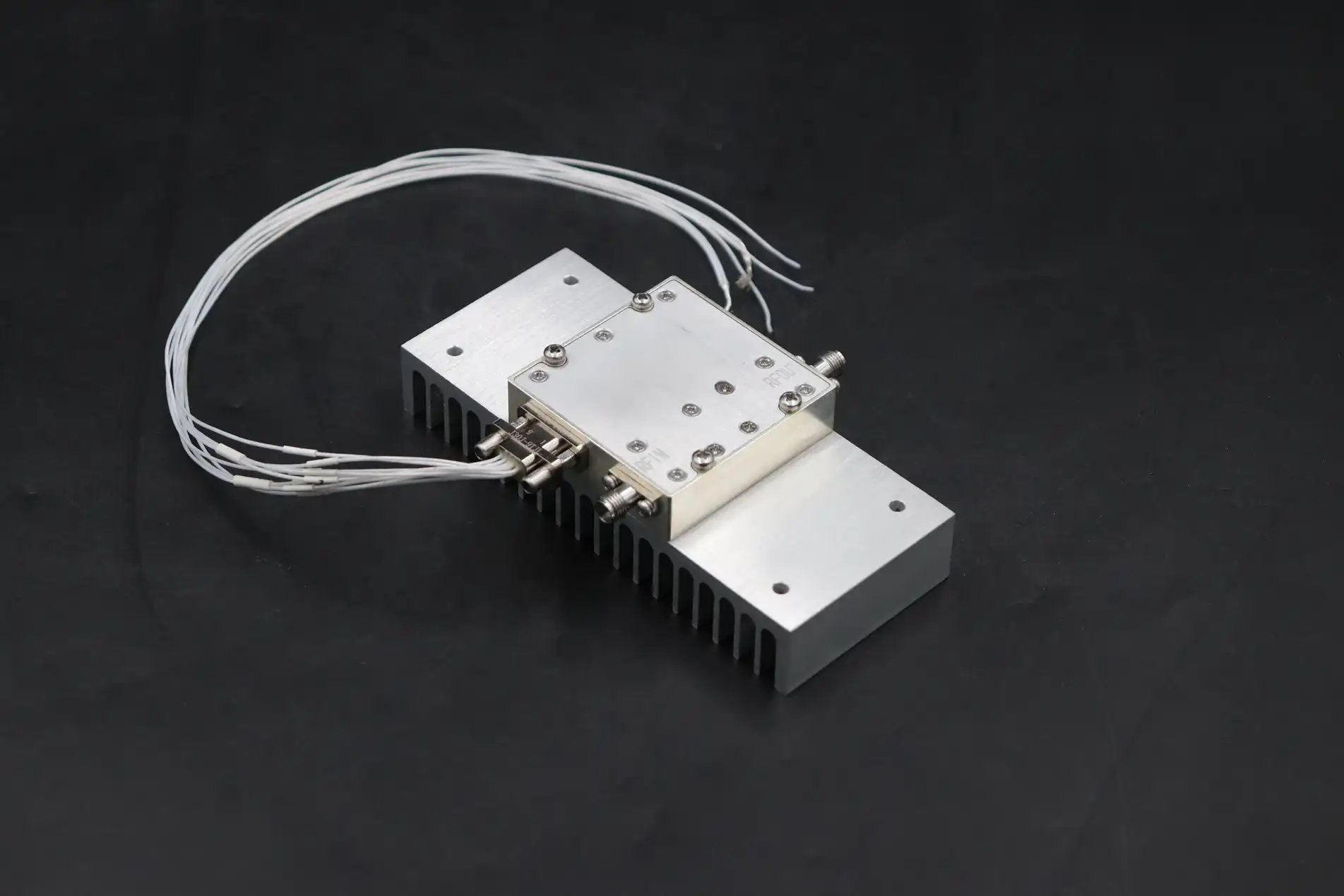
The expanding spectrum allocation for fifth-generation cellular networks, emerging sixth-generation research, and evolving satellite communication architectures demands AC Power Amplifier solutions operating across progressively higher frequencies with exceptional bandwidth. Advanced Microwave designs cover frequency ranges from five hundred megahertz through one hundred ten gigahertz, addressing applications from traditional UHF communications through millimeter-wave bands supporting multi-gigabit data rates. Wide frequency support within individual amplifier models provides deployment flexibility, allowing operators to reconfigure systems for different bands without hardware replacement. This capability proves particularly valuable in defense applications where adaptability to evolving mission requirements provides tactical advantages. Commercial operators benefit through reduced inventory complexity and simplified logistics, as fewer distinct amplifier variants satisfy diverse application needs across their network infrastructure. Achieving high power output across broad bandwidths presents significant engineering challenges. Gain flatness across the operating band must be maintained within tight tolerances to avoid signal distortion, while output power capabilities must satisfy link budget requirements for the longest path distances. Advanced Microwave's AC Power Amplifier designs employ sophisticated impedance matching networks, linearization techniques, and thermal management strategies enabling power outputs ranging from watts to kilowatts depending on frequency and application requirements.
Reliability Engineering for Mission-Critical Operations
Equipment deployed in satellite ground stations, air traffic control radars, and military surveillance systems cannot fail during operations. The consequences of AC Power Amplifier failure range from lost revenue in commercial applications to safety risks in civil aviation to mission compromise in defense scenarios. Advanced Microwave addresses these criticality requirements through comprehensive reliability engineering programs encompassing design, component selection, manufacturing processes, and testing protocols. Every amplifier undergoes stringent acceptance testing verifying performance across its specified operating envelope. Environmental testing subjects equipment to temperature extremes, humidity variations, vibration profiles, and altitude conditions representative of deployment environments. This qualification program identifies potential failure modes before products reach operational status, ensuring only fully validated designs enter production. Component selection emphasizes proven technologies from established suppliers with demonstrated quality records. Military-grade components tolerating extended temperature ranges and enhanced vibration levels find application in amplifiers destined for challenging environments. Derating strategies ensure components operate well within their stress limits, dramatically improving reliability compared to designs pushing component boundaries for marginal performance gains. Manufacturing processes adhere to ISO nine thousand one standards, ensuring consistent quality through documented procedures, trained personnel, and continuous improvement initiatives. Incoming material inspection verifies component authenticity and specifications before assembly. In-process testing catches defects early, preventing defective assemblies from progressing through production stages. Final testing validates every unit against comprehensive performance specifications before shipment to customers.
Conclusion
Neither AC nor DC power emerges as universally superior; each offers distinct advantages for specific applications. The optimal choice depends on deployment environment, performance requirements, and system architecture considerations.
Cooperate with Advanced Microwave Technologies Co., Ltd.
Advanced Microwave Technologies Co., Ltd. stands at the forefront of microwave component innovation with over twenty years of specialized expertise serving satellite communications, defense, aerospace, and navigation sectors globally. Our comprehensive product portfolio spans waveguide assemblies, coaxial and cable assemblies, microwave antennas, feeds and servos, antenna measurement systems, and microwave measurement equipment—all supported by state-of-the-art laboratories equipped with measurement capabilities extending to one hundred ten gigahertz. Our commitment to excellence manifests through internationally recognized certifications including ISO nine thousand one, ISO fourteen thousand one environmental management, and ISO forty-five thousand one occupational health and safety standards. These certifications reflect not merely compliance but fundamental values embedded throughout our organization, ensuring every product, every measurement, every customer interaction upholds the highest standards of quality, environmental responsibility, and workplace safety.
The remarkable twenty-four-meter microwave darkroom facility showcases our technical capabilities, providing unrivaled antenna measurement precision through the Antenna Plane Near and Far Field Measuring Recombination Chamber. This investment in advanced testing infrastructure, combined with our highly trained engineering team, enables us to optimize antenna designs and validate system performance across the full spectrum from legacy communications through emerging six-generation networks. Beyond standard catalog products, we excel in delivering customized solutions tailored precisely to your unique requirements. Our OEM services encompass custom frequency ranges, power outputs, mechanical configurations, and integration support ensuring seamless incorporation into your existing systems. From initial concept through prototyping, production, and technical support, our team collaborates closely with customers to transform specifications into reliable, high-performance reality.
As a China AC Power Amplifier factory, China AC Power Amplifier supplier, and China AC Power Amplifier manufacturer, we offer competitive China AC Power Amplifier wholesale pricing without compromising quality. Our AC Power Amplifier for sale inventory includes solutions across multiple frequency bands and power levels, with AC Power Amplifier price points structured to deliver exceptional value. High Quality AC Power Amplifier products remain our hallmark, backed by comprehensive technical support and responsive customer service. Ready to elevate your system performance with proven AC Power Amplifier technology from a trusted global partner? Contact craig@admicrowave.com today to discuss your application requirements and discover how Advanced Microwave Technologies Co., Ltd. can become your preferred supplier for mission-critical microwave components.
References
1. Hughes, E. (2008). Electrical and Electronic Technology (10th ed.). Pearson Education Limited.
2. Nilsson, J. W., & Riedel, S. A. (2015). Electric Circuits (10th ed.). Pearson.
3. Kassakian, J. G., Schlecht, M. F., & Verghese, G. C. (1991). Principles of Power Electronics. Addison-Wesley Publishing Company.
4. Mohan, N., Undeland, T. M., & Robbins, W. P. (2003). Power Electronics: Converters, Applications, and Design (3rd ed.). John Wiley & Sons.