




What Is an End Launch Waveguide to Coaxial Adapter?
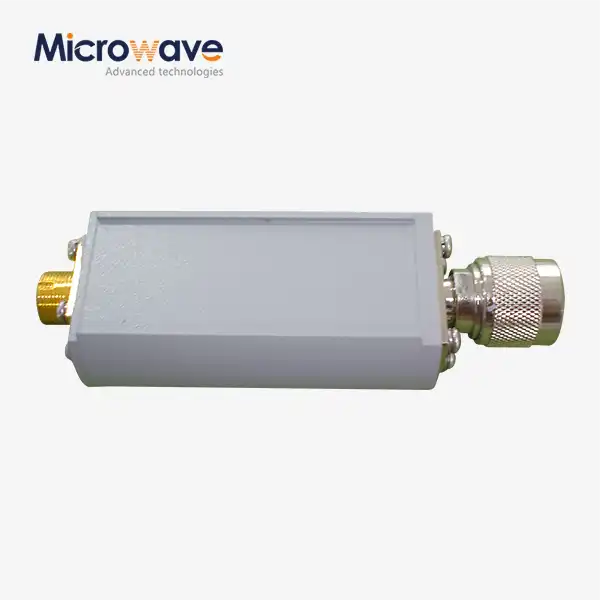
What Is an End Launch Waveguide to Coaxial Adapter? An End Launch Waveguide to Coaxial Adapter is a precision microwave component that seamlessly converts electromagnetic signals between rectangular waveguide transmission systems and coaxial cables. This critical RF transition device maintains signal integrity while enabling efficient connectivity between different transmission mediums. Engineers rely on these adapters for high-frequency applications where maintaining low insertion loss and excellent impedance matching proves essential for optimal system performance.
What Is an End Launch Waveguide to Coaxial Adapter?
Function and Electromagnetic Design of the Adapter
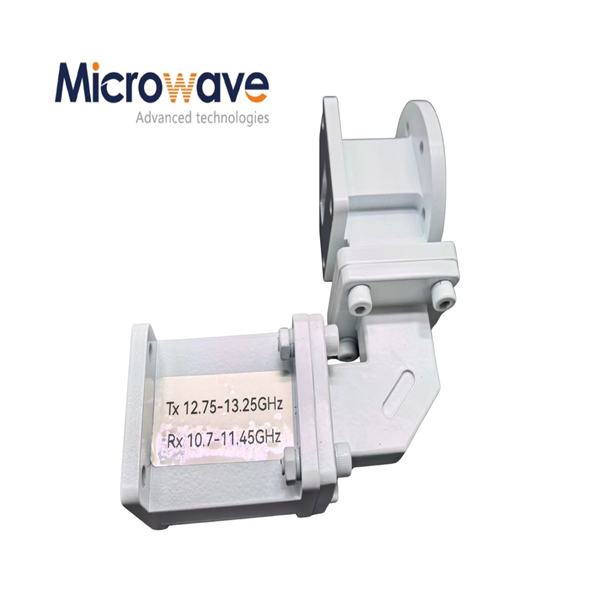
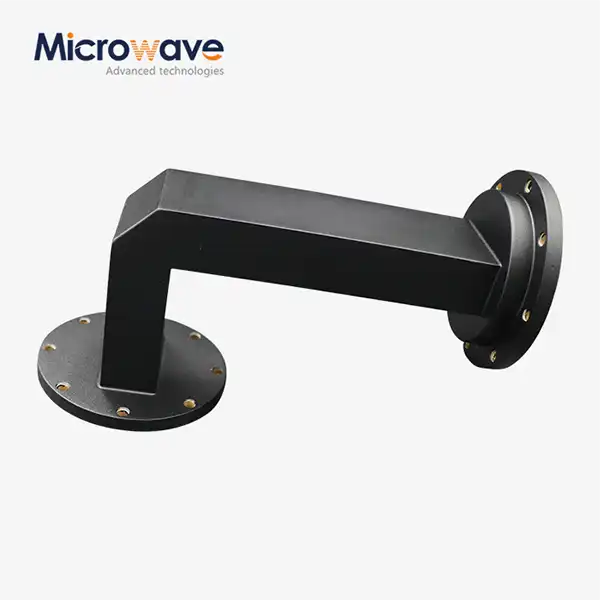
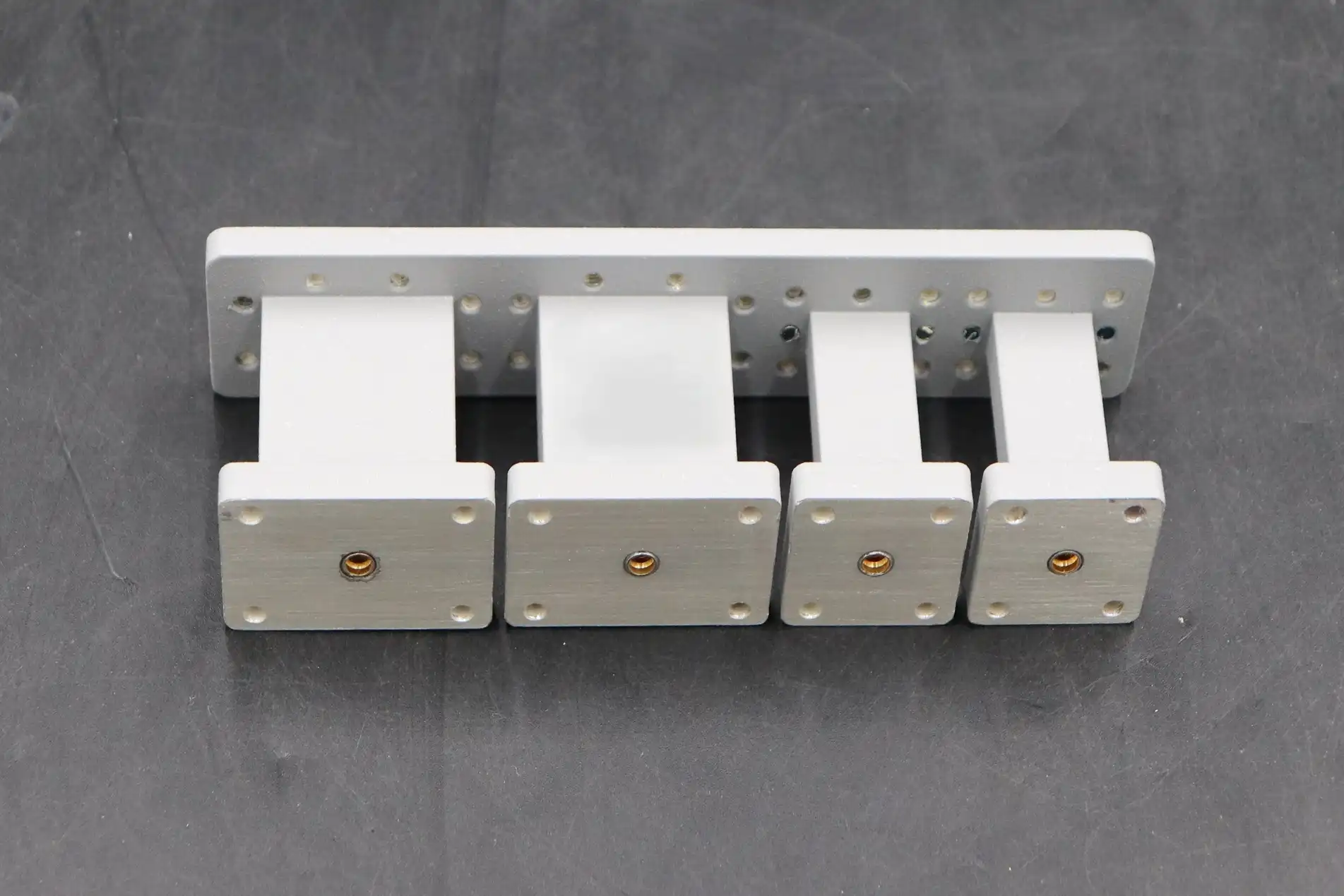
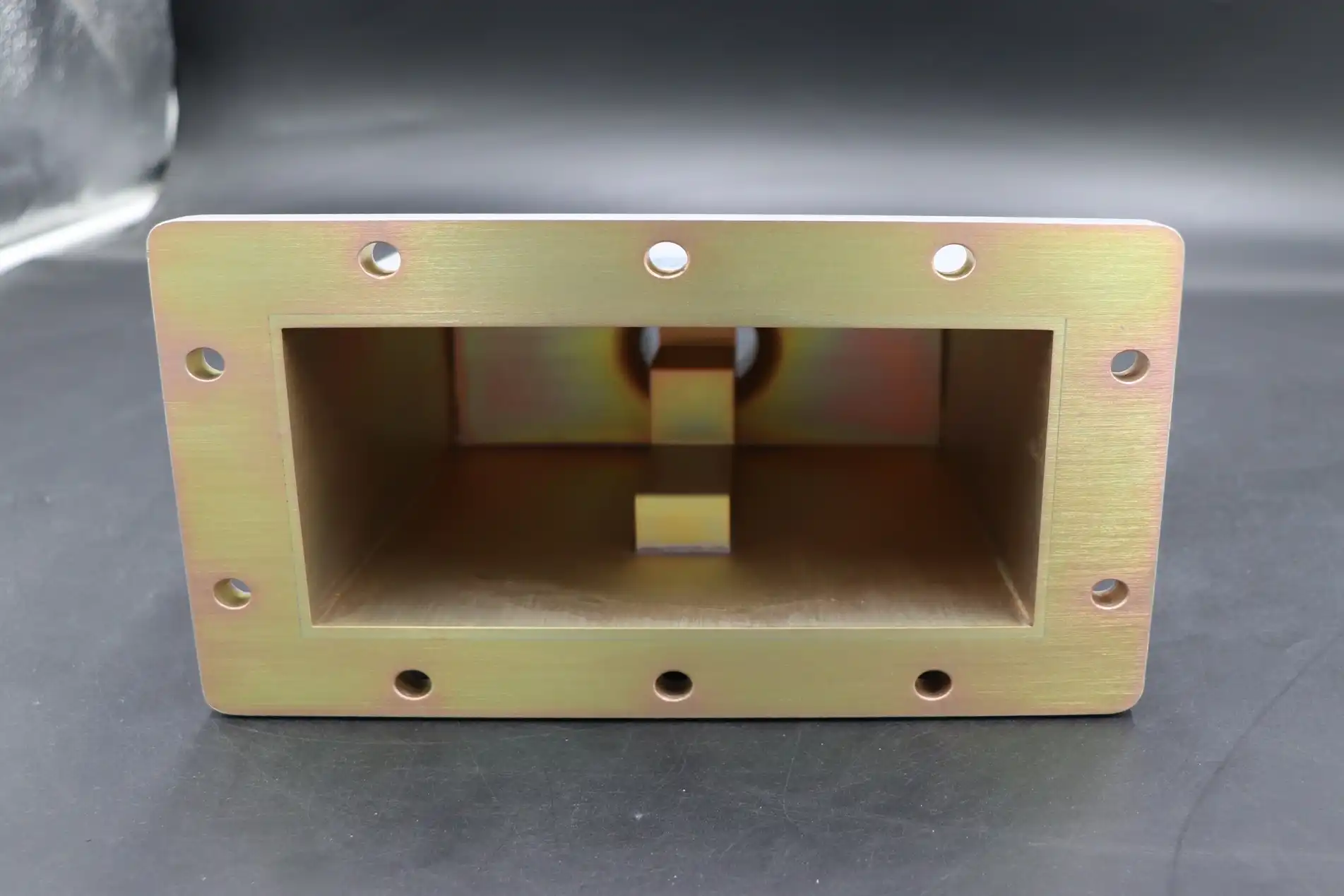
An End Launch Waveguide to Coaxial Adapter speaks to a advanced microwave connector planned to bridge the crevice between two in a general sense distinctive transmission innovations. Rectangular waveguides exceed expectations at taking care of high-power, high-frequency signals with negligible misfortune, whereas coaxial cables offer adaptability and ease of association. The connector combines the best qualities of both frameworks through cautious designing of the electromagnetic field transformation. The "conclusion dispatch" assignment alludes to the particular mounting setup where the coaxial connector joins opposite to the waveguide's wide divider. This plan approach guarantees ideal field coupling between the waveguide's TE10 overwhelming mode and the coaxial cable's TEM mode. The move happens through a absolutely machined test that amplifies into the waveguide depression at a calculated remove from the short-circuit end.
Precision Manufacturing and Performance Optimization
Manufacturing these connectors requires uncommon accuracy in mechanical measurements and surface wraps up. The test length, situating, and breadth must coordinate precisely to accomplish the indicated electrical execution over the expecting recurrence run. Progressed Microwave Innovations Co., Ltd utilizes modern machining procedures and quality control forms to guarantee each connector meets rigid execution standards. The adapter's execution characteristics depend intensely on appropriate impedance coordinating between the 50-ohm coaxial framework and the waveguide's characteristic impedance. This coordinating avoids flag reflections that would debase framework execution and possibly harm delicate hardware. Our building group utilizes progressed electromagnetic reenactment program to optimize each plan for particular recurrence groups and execution requirements.
The Problem It Solves and The Need It Fulfills
Integration Challenges in Modern RF Transmission Systems
Modern RF frameworks frequently require integration between diverse transmission line innovations, making critical designing challenges. Waveguides give predominant control dealing with capabilities and lower misfortune characteristics at microwave frequencies, making them perfect for high-performance applications. Be that as it may, their inflexible structure and huge physical measure constrain their utilize in certain applications where adaptability and compact associations are necessary. Test and estimation hardware regularly utilizes coaxial associations for their comfort and standardization over the industry. When engineers require to test waveguide components or frameworks, they require a solid interface that keeps up estimation precision. The End Launch Waveguide to Coaxial Adapter gives this basic interface, empowering vector arrange analyzers and other test rebellious to precisely characterize waveguide devices.
Applications in Satellite, Aerospace, and Research Environments
Satellite communication frameworks habitually experience this integration challenge. Ground station hardware may utilize waveguide components for the high-power transmission segments whereas requiring coaxial associations for control signals, observing circuits, and test get to focuses. The connector empowers consistent integration between these subsystems without compromising in general framework performance. Aerospace and defense applications request the most noteworthy unwavering quality guidelines, where component disappointment might have disastrous results. These frameworks regularly combine waveguide components for their prevalent control dealing with with coaxial frameworks for their adaptability and ease of support. The connector must keep up reliable execution over extraordinary temperature ranges, vibration conditions, and other natural stressors. Research and improvement research facilities depend intensely on these connectors for characterizing modern microwave components and frameworks. Researchers and engineers require the capacity to rapidly interface diverse sorts of transmission lines amid prototyping and testing stages. The adapter's repeatability and steady execution empower precise estimations that drive development in microwave technology.
Core Features and Functionality Deep Dive
Key Electrical Performance Parameters
The electrical execution of an End Launch Waveguide to Coaxial Adapter centers on a few basic parameters that decide its appropriateness for particular applications. Inclusion misfortune speaks to one of the most imperative characteristics, as it straightforwardly influences framework effectiveness and flag quality. Our connectors accomplish addition misfortune values ordinarily underneath 0.2 dB over their indicated recurrence ranges through cautious optimization of the field move geometry. Voltage Standing Wave Proportion (VSWR) demonstrates how well the connector matches impedances between the two transmission frameworks. Destitute coordinating comes about in flag reflections that can corrupt framework execution and make estimation instabilities. Progressed Microwave Innovations Co., Ltd plans our connectors to accomplish VSWR values of 1.25 or superior over the full working transmission capacity, guaranteeing negligible reflections and greatest control transfer.
Frequency Coverage and Mechanical Precision
Frequency scope speaks to another vital execution viewpoint. Diverse waveguide sizes back particular recurrence ranges, and the connector must keep up reliable execution over the whole band. Our item line covers frequencies from 1.72 GHz to 110 GHz, supporting all standard rectangular waveguide sizes from WR430 down to WR28. This comprehensive scope empowers engineers to select the ideal connector for their particular application requirements. Power taking care of capability decides the greatest flag levels the connector can oblige without harm or execution corruption. The physical measurements of the test and the quality of the coaxial connector straightforwardly impact control dealing with limits. Our connectors regularly handle control levels up to a few hundred watts, depending on the particular demonstrate and working conditions. Mechanical exactness plays an similarly critical part in connector execution. The test situating must be precise to inside thousandths of an inch to keep up electrical details. Our fabricating forms utilize computer-controlled machining gear and comprehensive quality control methods to guarantee each connector meets these requesting resiliences. The waveguide spines accommodate to worldwide measures, guaranteeing compatibility with hardware from numerous manufacturers.
Technology Behind the Design
Electromagnetic Theory and Mode Conversion
The electromagnetic hypothesis overseeing waveguide-to-coaxial moves includes complex field changes that require advanced designing arrangements. Rectangular waveguides back the TE10 mode as their overwhelming engendering mode, characterized by electric areas opposite to the course of proliferation and particular field designs over the waveguide cross-section. Coaxial transmission lines bolster the TEM mode, where electric and attractive areas exist completely in the transverse plane. The move between these modes happens through the carefully situated test that tests the electric field inside the waveguide. The probe's length and breadth must be accurately calculated to accomplish ideal coupling whereas keeping up the wanted impedance change. Computer modeling utilizing limited component investigation and strategy of minutes procedures empowers our engineers to optimize these measurements some time recently fabricating begins.
Materials, Impedance Matching, and Environmental Reliability
Impedance coordinating systems may be joined into the plan to encourage progress execution over wide recurrence groups. These systems can take the shape of discrete components or dispersed components coordinates into the connector structure. The choice depends on the particular recurrence extend, transmission capacity prerequisites, and execution targets for the specific application. Material determination essentially impacts both electrical and mechanical execution. The waveguide body regularly employments aluminum or brass for lighter weight applications, whereas copper gives predominant electrical conductivity for the most requesting execution prerequisites. All materials get suitable surface medicines to guarantee long-term unwavering quality and steady electrical characteristics. Environmental contemplations impact plan choices for connectors planning for open air or cruel environment applications. Fixing strategies avoid dampness entrance that may debase electrical execution or cause erosion. Temperature coefficient coordinating between diverse materials minimizes mechanical stretch due to warm extension contrasts amid temperature cycling.
Key Advantages and Selling Points
System Integration and Electrical Performance Advantages
The primary advantage of End Launch Waveguide to Coaxial Adapters lies in their ability to seamlessly integrate different transmission line technologies without compromising system performance. This integration capability enables system designers to leverage the strengths of both waveguide and coaxial technologies within a single system architecture. Low insertion loss characteristics ensure that signal quality remains high throughout the system. Every decibel of loss directly impacts system performance, particularly in sensitive receiving applications where noise figure considerations are paramount. Our adapters' superior insertion loss performance helps maintain optimal signal-to-noise ratios in demanding applications. Broad frequency coverage allows engineers to use a single adapter design across multiple frequency bands, reducing inventory requirements and simplifying system design. This versatility proves particularly valuable in multi-band systems or applications where frequency agility is required. The consistent performance across these wide frequency ranges ensures reliable operation regardless of the specific operating frequency.
Mechanical Reliability and Customization Capabilities
Robust mechanical construction ensures long-term reliability even in demanding environmental conditions. The precision-machined components resist wear and maintain their electrical characteristics through thousands of connection cycles. This durability reduces maintenance requirements and improves overall system availability in critical applications. Customization capabilities allow us to tailor adapter designs to meet specific customer requirements. Whether the application demands unusual frequency coverage, special connector types, or unique mechanical configurations, our engineering team can develop custom solutions. This flexibility enables customers to optimize their systems without compromising on the adapter interface.
Potential Limitations and Considerations
Despite their numerous advantages, End Launch Waveguide to Coaxial Adapters do present certain limitations that engineers must consider during system design. Power handling capability, while substantial, may not match that of the waveguide system itself. High-power applications may require careful analysis to ensure the adapter can handle the maximum expected power levels without damage.Frequency limitations exist due to the physical dimensions of the coaxial connector and the waveguide cutoff characteristics. As frequencies increase toward the upper end of the waveguide's operating range, the adapter's performance may begin to degrade. Engineers must carefully consider these frequency limitations when designing systems operating near band edges.
Mechanical precision requirements demand careful handling and proper installation procedures. The tight tolerances necessary for optimal electrical performance mean that physical damage to the connector or waveguide flange can significantly impact performance. Proper torque specifications and handling procedures must be followed to maintain the adapter's performance characteristics.Cost considerations may influence design decisions, particularly in high-volume applications. While the adapter's performance justifies its cost in most applications, system designers must balance performance requirements against budget constraints. Volume pricing and long-term supply agreements can help manage these cost considerations.Environmental sealing requirements may add complexity to the installation in outdoor or harsh environment applications. While sealing solutions exist, they may require additional components and careful attention to installation details to maintain their effectiveness over time.
Competitive Analysis and Market Position
The microwave adapter market includes several established manufacturers, each offering different approaches to waveguide-to-coaxial transitions. Traditional suppliers often focus on standard catalog products with limited customization options. These products may offer acceptable performance for general applications but lack the precision optimization required for demanding systems.High-end specialty manufacturers provide custom solutions but often with extended lead times and premium pricing. Their engineering resources may be limited, restricting their ability to support multiple simultaneous projects or provide rapid prototyping services.
The complexity of their organizations can make technical communication and project coordination challenging.Advanced Microwave Technologies Co., Ltd occupies a unique position in this competitive landscape by combining engineering excellence with manufacturing efficiency. Our ISO 9001:2015 certified quality management system ensures consistent product quality while our experienced engineering team provides the technical expertise necessary for complex custom solutions. The integration of design and manufacturing capabilities enables us to provide rapid prototyping and short production lead times.Our global supply chain and manufacturing capabilities provide cost advantages while maintaining the quality standards demanded by aerospace, defense, and telecommunications applications. The combination of competitive pricing and superior technical performance creates significant value for our customers across all market segments.
Target Audience and Ideal Use Cases
System integrators in the telecommunications industry represent a primary market for End Launch Waveguide to Coaxial Adapters. These professionals design and build complex RF systems that must seamlessly integrate equipment from multiple vendors. The adapter's ability to provide a reliable interface between different transmission line types proves essential for successful system integration.Aerospace and defense contractors require adapters for radar systems, satellite communication equipment, and electronic warfare systems. These applications demand the highest reliability standards and often require custom configurations to meet specific performance requirements. The adapter's proven performance in demanding environments makes it ideal for these critical applications.
Test and measurement engineers rely on these adapters for characterizing microwave components and systems. Laboratory environments require adapters with exceptional repeatability and consistent performance to ensure accurate measurements. The ability to quickly and reliably connect test equipment to waveguide devices proves essential for efficient testing procedures.Research institutions and universities use these adapters in advanced microwave research projects. Graduate students and research engineers need reliable components that enable them to focus on their research objectives rather than struggling with interface issues. The adapter's consistent performance and broad frequency coverage support a wide range of research activities.Original equipment manufacturers in various industries incorporate these adapters into their products. Whether building medical imaging equipment, industrial heating systems, or scientific instruments, these manufacturers need reliable components that will perform consistently throughout their product's operational life.
Conclusion
End Launch Waveguide to Coaxial Adapters serve as essential components in modern microwave systems, enabling seamless integration between waveguide and coaxial transmission technologies. Their ability to maintain signal integrity while providing reliable connectivity makes them indispensable for applications ranging from satellite communications to advanced radar systems. As microwave technology continues advancing toward higher frequencies and more demanding performance requirements, these adapters will play an increasingly important role in system architecture. The combination of proven technology, continuous innovation, and manufacturing excellence ensures that End Launch Waveguide to Coaxial Adapters will remain fundamental components in the microwave engineer's toolkit for years to come.
Frequently Asked Questions
Q1: What frequency ranges do End Launch Waveguide to Coaxial Adapters support?
A: Our adapters cover the complete microwave spectrum from 1.72 GHz to 110 GHz, supporting all standard rectangular waveguide sizes from WR430 to WR28. Each adapter model is optimized for specific waveguide bands to ensure optimal performance across its designated frequency range. Custom frequency coverage can be developed for special applications requiring non-standard operating bands.
Q2: How do I select the right adapter for my application?
A: Adapter selection depends on several factors including operating frequency, power levels, connector requirements, and environmental conditions. Our technical team can assist with the selection process by analyzing your specific requirements and recommending the optimal solution. We consider factors such as insertion loss requirements, VSWR specifications, and mechanical constraints during the selection process.
Q3: Can these adapters handle high-power applications?
A: Yes, our adapters are designed to handle substantial power levels, typically several hundred watts depending on the specific model and operating conditions. The exact power handling capability varies with frequency, connector type, and environmental factors. We can provide detailed power handling specifications for specific applications and operating conditions.
Partner with ADM for Superior End Launch Waveguide to Coaxial Adapter Solutions
ADM combines over two decades of microwave engineering expertise with advanced manufacturing capabilities to deliver exceptional End Launch Waveguide to Coaxial Adapter solutions. As a trusted supplier in the global marketplace, we understand the critical performance requirements of aerospace, defense, and telecommunications applications. Our ISO-certified quality management system and comprehensive testing capabilities ensure every adapter meets the demanding specifications of mission-critical systems. Whether you need standard catalog products or custom engineered solutions, our experienced team stands ready to support your project from concept through production. Contact us at sales@admicrowave.com" to discuss your specific requirements and experience the ADM advantage.
References
1. Pozar, David M. "Microwave Engineering, 4th Edition." John Wiley & Sons, 2012.
2. Collin, Robert E. "Foundations for Microwave Engineering, 2nd Edition." IEEE Press, 2001.
3. Ragan, George L. "Microwave Transmission Circuits: Volume 9 Radiation Laboratory Series." McGraw-Hill Book Company, 1948.
4. Marcuvitz, Nathan. "Waveguide Handbook: Volume 10 Radiation Laboratory Series." McGraw-Hill Book Company, 1951.
5. Silver, Samuel. "Microwave Antenna Theory and Design: Volume 12 Radiation Laboratory Series." McGraw-Hill Book Company, 1949.
6. Bahl, Inder J. "Lumped Elements for RF and Microwave Circuits." Artech House, 2003.