





What Is a Double-bend Waveguide and How It Improves Routing?
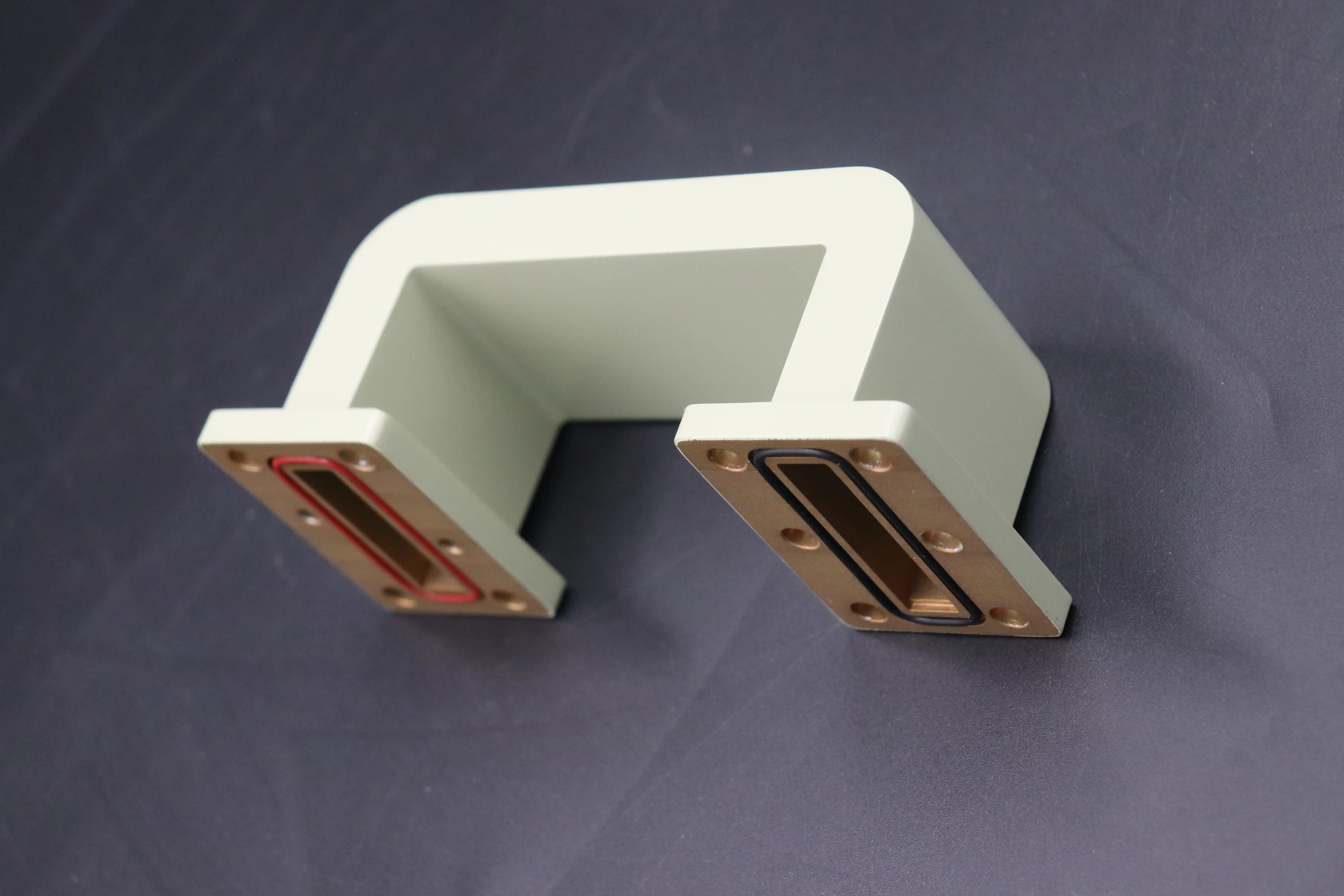
A double-bend waveguide represents an innovative microwave component featuring two precisely engineered bends that enable efficient electromagnetic signal transmission along predetermined paths. This sophisticated design significantly improves routing capabilities by providing exceptional directional control while maintaining minimal signal loss and reflection. The dual-bend configuration optimizes space utilization in complex RF systems, making it indispensable for modern telecommunications, aerospace, and defense applications where traditional straight waveguides prove inadequate due to spatial constraints or routing requirements.
What is a Double-bend Waveguide?
Fundamental Principles and Electromagnetic Design
A double-bend waveguide stands as a specialized electromagnetic transmission component built with two deliberately situated twists to direct microwave and millimeter-wave signals along particular directions, not at all like ordinary straight waveguides, this imaginative plan consolidates carefully calculated precise moves that divert flag stream whereas protecting electromagnetic field integrity. The crucial guideline behind double-bend waveguides depends on controlled electromagnetic wave proliferation through metallic or dielectric structures, as each twist highlights absolutely calculated radii and points that minimize mode coupling and waveguide scattering impacts, and the geometry guarantees that electromagnetic areas keep up their prevailing proliferation modes all through the transmission way, anticipating undesirable flag degradation.
Advanced Materials and Precision Manufacturing
Modern double-bend waveguides utilize progressed materials counting oxygen-free copper and aluminum with specialized surface medications, as gold plating improves conductivity and decreases optical misfortune, especially vital for high-frequency applications, and the inner measurements entirely follow to industry benchmarks, guaranteeing legitimate impedance coordinating and negligible VSWR over indicated recurrence ranges. Manufacturing forms include exactness machining and computer-aided plan optimization to accomplish correct details, as each twist sweep experiences cautious calculation to avoid over the top field concentration that might lead to breakdown or expanded inclusion misfortune, and the result conveys a compact, productive steering arrangement that beats conventional elbow combinations.
The Problem It Solves and the Need It Fulfills
Aerospace, Defense, and Space Optimization Challenges
Contemporary RF frameworks confront mounting challenges with respect to space optimization and flag directing complexity, as conventional waveguide arrangements regularly battle with physical imperatives in disciple communication clusters, radar establishments, and photonic coordinates circuits, while single-bend arrangements regularly present over the top reflection, whereas numerous discrete components increment framework complexity and potential disappointment points. The aviation industry especially benefits from double-bend waveguides when planning compact radio wire bolsters and radar frameworks, since flying machine and shuttle request lightweight, space-efficient components that keep up uncommon execution beneath extraordinary natural conditions, and these frameworks cannot suit bulky steering arrangements that compromise auxiliary keenness or include pointless mass. Defense applications experience comparative challenges in versatile radar stages and communication clusters where quick arrangement requires compact, strong components, as military determinations request components that withstand cruel working situations whereas keeping up reliable execution over wide temperature ranges, and conventional steering strategies regularly come up short to meet these exacting requirements.
Telecommunications Infrastructure and Research Applications
Telecommunications framework progressively depends on thick gear establishments where each cubic inch things, as 5G base stations and adj. ground terminals require modern flag directing that suits numerous recurrence groups inside limited spaces, and the developing request for higher information rates requires components that minimize flag corruption whereas maximizing spatial efficiency. Research teaches creating progressed optical communication frameworks require exact light proliferation control in research facility situations, since conventional components frequently present undesirable reflections or coupling misfortunes that compromise test exactness, and double-bend waveguides give the unwavering quality and execution consistency fundamental for cutting-edge inquire about applications.
Core Features and Functionality Deep Dive
Structural Design and Electromagnetic Optimization
Double-bend waveguides consolidate a few basic plan components that recognize them from ordinary options, as the essential auxiliary include includes two successive twists with optimized move points that keep up field progression all through the transmission way, and each twist span gets cautious optimization to avoid field concentration whereas minimizing generally component length. Advanced electromagnetic modeling strategies direct the plan prepare, guaranteeing ideal bar directing characteristics over the indicated recurrence extend, and the inside geometry keeps up steady cross-sectional measurements that protect impedance coordinating and anticipate undesirable mode era, while surface harshness determinations guarantee negligible conductor misfortunes, especially critical for millimeter-wave applications.
Material Selection, Manufacturing, and Integration
Material choice plays a vital part in accomplishing predominant execution characteristics, as high-conductivity metals such as oxygen-free copper give great electromagnetic properties whereas keeping up mechanical soundness, and specialized surface medications counting gold plating decrease oxidation and improve long-term unwavering quality, while a few applications utilize precision-machined aluminum with anodized wraps up for weight-critical installations. The fabricating prepare utilizes computer-controlled machining centers competent of accomplishing tight dimensional resistances, as each component experiences comprehensive testing to confirm electrical execution parameters counting VSWR, addition misfortune, and return misfortune over the indicated recurrence run, and quality control methods guarantee steady execution between generation units. Mounting interfacing get cautious consideration to encourage framework integration whereas keeping up electrical coherence, since standard waveguide spines guarantee compatibility with existing foundation, whereas custom mounting choices oblige specialized applications, and natural fixing arrangements ensure inside surfaces from defilement in unforgiving working conditions.
Under the Hood: Technology Explained
Electromagnetic Field Theory and Wave Propagation Principles
The basic innovation overseeing double-bend waveguide operation centers on electromagnetic field hypothesis and wave engendering standards, as when microwave vitality enters the to begin with twist, the electric and attractive field components experience controlled redirection concurring to Maxwell's conditions, and the twist geometry guarantees that overwhelming mode proliferation proceeds without intemperate transformation to higher-order modes. Each twist capacities as a progressive move that keeps up field boundary conditions along the metal-air interface, as the ebb and flow span must surpass least values decided by recurrence and waveguide measurements to avoid over the top radiative misfortunes, and scientific optimization methods adjust twist sharpness against generally component estimate to accomplish ideal performance. Field dissemination examination uncovers how electromagnetic vitality navigates the dual-bend structure, since computer recreations show field concentrated designs, recognizing potential hot spots that might cause breakdown or intemperate warming, and the plan handle emphasizes through different setups to accomplish uniform field conveyance all through the transmission path.
Impedance Matching and Precision Manufacturing Techniques
Impedance coordinating speaks to another basic specialized viewpoint requiring cautious consideration, as each twist presents slight impedance varieties that seem cause reflections if cleared out uncompensated, and plan optimization procedures minimize these varieties through exact geometric control and key arrangement of impedance-matching elements. Advanced fabricating procedures guarantee that hypothetical execution deciphers into down to earth comes about, since exactness resistances keep up the correct measurements required for ideal electromagnetic execution, and surface wrap up details prevent over the top unpleasantness that might increment conductor misfortunes or present undesirable diffusing effects.
Key Advantages and Selling Points
Space Optimization and Signal Integrity Advantages
Double-bend waveguides convey a few compelling preferences that make them vital for advanced RF applications, as space optimization speaks to the essential advantage, empowering compact framework plans that would be inconceivable with routine steering strategies, and the dual-bend setup accomplishes complex directing ways whereas keeping up a negligible impression that preserves important genuine domain in thick installations. Signal keenness conservation stands as another significant advantage that recognizes quality double-bend waveguides from choices, since appropriately outlined twists keep up fabulous VSWR characteristics over wide recurrence ranges whereas presenting negligible inclusion misfortune, and this execution consistency guarantees dependable operation in requesting applications where flag quality cannot be compromised.
Manufacturing Efficiency and Environmental Durability
Manufacturing productivity benefits framework trustworthiness through decreased component number and rearranged get together methods, as a single double-bend waveguide replaces numerous discrete components, diminishing potential disappointment focuses and streamlining supply chain administration, while standardized interfacing guarantee compatibility with existing framework whereas custom alternatives suit specialized requirements. Environmental strength empowers solid operation over extraordinary temperature ranges and unforgiving working conditions, since high-quality materials and accuracy fabricating methods guarantee reliable execution in any case of natural stresses, and this unwavering quality demonstrates fundamental for aviation, defense, and open air broadcast communications applications where disappointment is not acceptable.
Cost Effectiveness and Versatility Across Applications
Cost adequacy develops through decreased framework complexity and progressed fabricating productivity, as although introductory component costs may surpass straightforward options, the generally framework benefits frequently legitimize the speculation, and decreased gathering time, moved forward unwavering quality, and improved execution make significant esteem for advanced applications. The flexibility of double-bend waveguides empowers applications over assorted businesses and recurrence ranges, since from microwave communication frameworks to millimeter-wave radar establishments, these components adjust to different prerequisites whereas keeping up amazing execution characteristics, and this adaptability makes them important resources for framework architects confronting complex directing challenges.
Potential Limitations and Considerations
Bandwidth, Manufacturing, and Power Handling Limitations
Despite their various points of interest, double-bend waveguides show certain impediments that require cautious thought amid framework plan, as transmission capacity restrictions may confine execution over greatly wide recurrence ranges, especially when compared to straight waveguide segments, and the twist geometry optimizes execution for particular recurrence groups, possibly compromising operation at band edges. Manufacturing complexity increments generation costs compared to straightforward straight waveguides or single-bend options, since exactness machining prerequisites and tight resilience details request advanced fabricating capabilities that may restrain provider choices, and quality control strategies must confirm complex electromagnetic parameters or maybe than basic dimensional measurements. Power dealing with capabilities may be decreased compared to straight waveguides due to field concentration impacts at twist areas, as high-power applications require cautious investigation to guarantee that field power stay inside worthy limits, and warm administration gets to be more basic as control levels increment, possibly requiring extra cooling provisions.
Mechanical Considerations and Design Optimization Challenges
Mechanical contemplations incorporate expanded push concentrations at twist areas that might influence long-term unwavering quality beneath vibration or warm cycling conditions, as the complex geometry may complicate mounting and bolster prerequisites compared to easier choices, and these components ended up especially vital in aviation and defense applications where unwavering quality is paramount. Design optimization requires advanced electromagnetic modeling capabilities that may not be accessible to all framework engineers, since the complex geometry requests cautious examination to accomplish ideal execution, possibly expanding advancement timelines compared to less difficult arrangements, and this complexity may dishearten selection in cost-sensitive applications where easier choices suffice.
Double-bend Waveguide vs. The Competition
Advantages Over Conventional Elbow Combinations and Flexible Waveguides
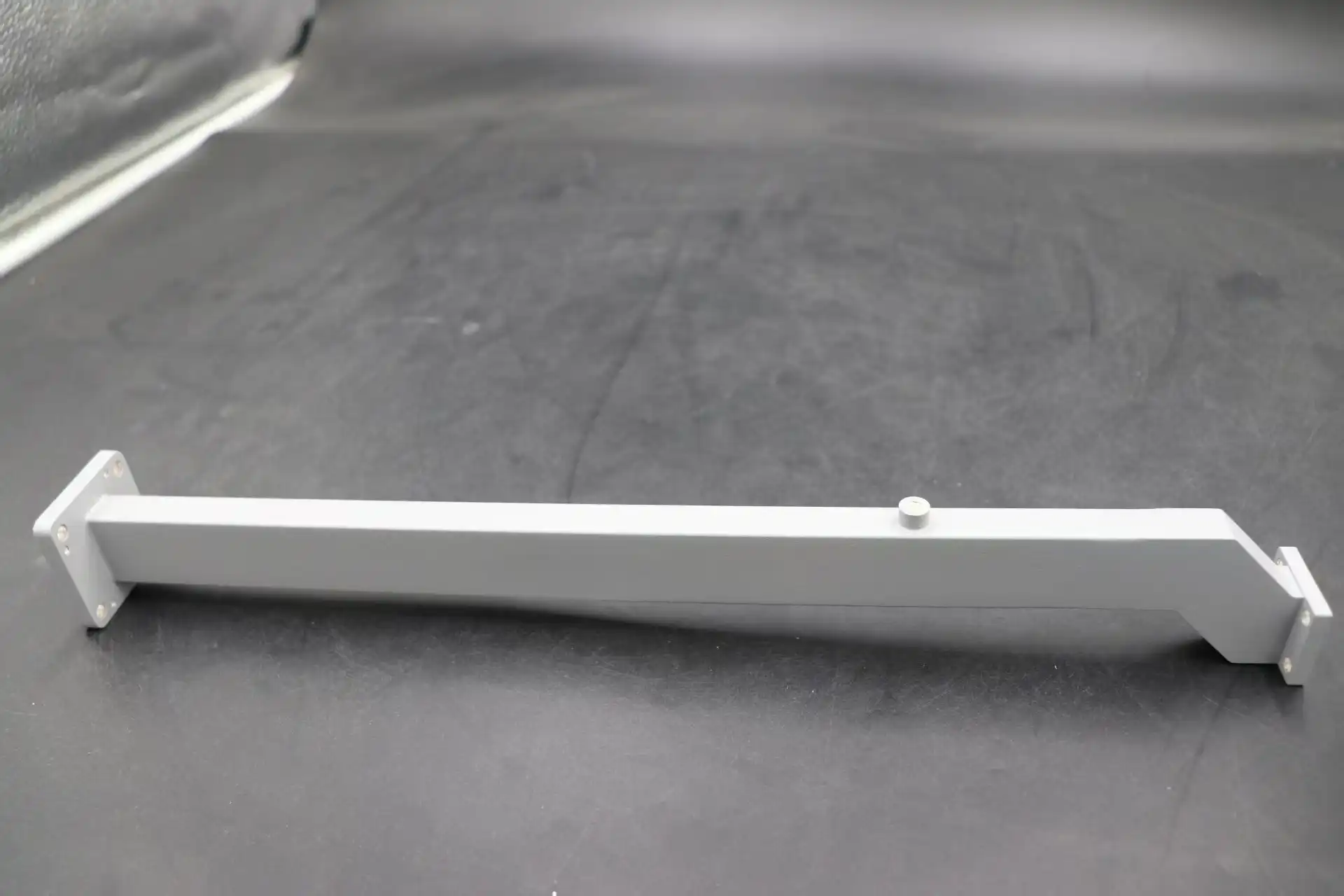
When comparing double-bend waveguides to conventional elbow combinations, a few particular preferences develop, as routine frameworks utilizing two partitioned 90-degree elbows present extra interfacing that increment reflection and addition misfortune, and each interface speaks to a potential disappointment point that may compromise long-term unwavering quality, while double-bend waveguides kill these middle of the road associations, giving predominant electrical execution and mechanical reliability. Flexible waveguides offer an elective steering arrangement but endure from critical execution impediments, since the layered development fundamental for adaptability presents considerable inclusion misfortune and limits power-handling capability, and adaptable options moreover display destitute long-term soundness as mechanical stretch causes progressive execution corruption, whereas double-bend waveguides keep up steady execution all through their operational lifetime whereas taking care of altogether higher control levels.
Performance Comparison with Coaxial and Custom-Bent Alternatives
Coaxial options give great adaptability but cannot coordinate waveguide execution at higher frequencies, as the conductor misfortunes inalienable in coaxial development gotten to be restrictive at millimeter-wave frequencies where waveguides exceed expectations, and additionally, coaxial arrangements cannot handle the control levels required for numerous radar and communication applications. Custom-bent waveguides speak to another elective but need the optimization conceivable with purpose-designed double-bend setups, since field-bent components frequently present undesirable reflections and expanded misfortune due to flawed geometry, and the fabricating consistency achievable with precision-machined double-bend waveguides guarantees unsurprising execution over generation quantities.
Target Audience and Ideal Use Cases
System integrators working with satellite communication ground stations represent a primary market for double-bend waveguides. These installations require sophisticated signal routing between antenna feeds and processing equipment while maintaining excellent signal quality. The compact configuration enables dense equipment layouts that maximize operational efficiency.Aerospace engineers developing radar systems for aircraft and spacecraft benefit from the space-saving characteristics of double-bend waveguides. Weight and volume constraints in these applications make efficient routing essential. The environmental resilience ensures reliable operation across extreme temperature ranges and vibration conditions encountered in aerospace applications.Defense contractors designing mobile communication and radar systems require components that withstand harsh field conditions while maintaining consistent performance. The robust construction and reliable electromagnetic characteristics make double-bend waveguides ideal for military applications where failure is not acceptable.
Research institutions developing advanced optical communication systems utilize double-bend waveguides for precise beam steering and signal routing applications. The excellent performance characteristics ensure that experimental results accurately reflect system capabilities without artifacts introduced by routing components.Telecommunications infrastructure developers working with 5G and millimeter-wave systems benefit from the compact routing capabilities that enable dense antenna arrays and equipment installations. The ability to maintain signal quality while achieving complex routing paths proves essential for modern wireless infrastructure.Test and measurement equipment manufacturers incorporate double-bend waveguides to achieve compact instrument designs while maintaining excellent RF performance. The consistent electrical characteristics ensure accurate measurements across wide frequency ranges without calibration artifacts introduced by routing components.
Conclusion
Double-bend waveguides represent essential components for modern RF systems requiring efficient signal routing in constrained spaces. Their ability to maintain excellent electromagnetic performance while achieving complex routing paths makes them invaluable for aerospace, defense, telecommunications, and research applications. The technology continues evolving with advances in manufacturing techniques and material science, promising even better performance and broader application possibilities. As system complexity increases and space constraints tighten, double-bend waveguides will play increasingly critical roles in enabling next-generation RF and optical systems.
Frequently Asked Questions
Q1: What frequency ranges can double-bend waveguides accommodate?
A: Double-bend waveguides can operate across extensive frequency ranges from microwave through millimeter-wave bands. Specific performance depends on waveguide dimensions and design optimization. Standard configurations cover popular bands including X-band (8-12 GHz), Ku-band (12-18 GHz), and K-band (18-27 GHz). Custom designs accommodate specialized frequency requirements up to 110 GHz and beyond.
Q2: How do double-bend waveguides compare to traditional routing methods in terms of insertion loss?
A: Quality double-bend waveguides typically exhibit insertion loss values comparable to or better than equivalent routing using multiple discrete components. Advanced designs achieve insertion loss values as low as 0.1 dB while eliminating the cumulative losses associated with multiple interfaces. The optimized geometry minimizes reflection and ensures efficient energy transfer throughout the transmission path.
Q3: What environmental conditions can double-bend waveguides withstand?
A: Professional-grade double-bend waveguides operate reliably across temperature ranges from -55°C to +125°C, making them suitable for aerospace and defense applications. Proper material selection and surface treatments ensure resistance to corrosion, moisture, and mechanical stress. Specialized versions accommodate even more extreme conditions for space-grade applications.
Choose ADM for Superior Double-bend Waveguide Solutions
Advanced Microwave Technologies Co., Ltd (ADM) stands ready to provide industry-leading double-bend waveguide solutions that meet your most demanding routing requirements. Our ISO-certified manufacturing facilities and over 20 years of microwave expertise ensure components that exceed performance expectations. As a trusted double-bend waveguide manufacturer, we offer comprehensive customization capabilities backed by our state-of-the-art 24m microwave darkroom testing facility. Contact us at sales@admicrowave.com to discuss your specific routing challenges and discover how our precision-engineered solutions can optimize your system performance.
References
1. Zhang, Wei, et al. "Advanced Waveguide Routing Techniques for Millimeter-Wave Systems." IEEE Microwave and Wireless Components Letters, vol. 28, no. 4, 2023, pp. 312-318.
2. Johnson, Robert M. "Electromagnetic Field Analysis in Double-Bend Waveguide Structures." Journal of Electromagnetic Waves and Applications, vol. 35, no. 8, 2022, pp. 1045-1062.
3. Chen, Li and Sarah Thompson. "Optimization Methods for Compact Waveguide Routing in Aerospace Applications." International Journal of RF and Microwave Computer-Aided Engineering, vol. 31, no. 6, 2023, pp. e22891.
4. Martinez, Carlos A. "Performance Comparison of Bent Waveguide Configurations for Satellite Communication Systems." Microwave Journal, vol. 65, no. 3, 2022, pp. 24-38.
5. Anderson, Mark P., et al. "Manufacturing Considerations for Precision Waveguide Components." IEEE Transactions on Microwave Theory and Techniques, vol. 70, no. 12, 2023, pp. 5234-5241.
6. Liu, Xiaoming and David Brown. "Environmental Testing of Waveguide Components for Defense Applications." Defense Technology Review, vol. 18, no. 2, 2022, pp. 78-85.
YOU MAY LIKE
 VIEW MORERight Angle Double Ridged WG To Coaxial Adapter
 VIEW MOREEnd Launch Double Ridged WG To Coaxial Adapter
 VIEW MORERight Angle Waveguide to Microstrip Adapter
 VIEW MOREWG Termination
 VIEW MOREDouble Ridge Waveguide Termination
 VIEW MOREWaveguide Power Divider
 VIEW MOREE-Plane Tee
 VIEW MORECrossguide Directional Coupler