





H-Plane Tee Uses in Radar and Satellite Communications
The H-Plane Tee serves as a critical microwave component in both radar and satellite communications, functioning as a three-port waveguide junction where the auxiliary arm connects to the narrow wall of the main waveguide. This specialized RF component enables efficient signal splitting and combining operations essential for complex radar arrays, satellite ground stations, and communication systems operating across broad frequency ranges from L-band to millimeter waves.When I first encountered H-Plane Tees in my engineering career, I was amazed by their versatility in handling high-power signals while maintaining exceptional performance characteristics. These waveguide components have become indispensable in modern communication infrastructure, particularly where signal integrity and minimal insertion loss are paramount.
Understanding H-Plane Tee Fundamentals
The H-Plane Tee speaks to a modern piece of microwave building that parts electromagnetic vitality in the H-field plane. Not at all like E-Plane Tees, this setup gives special focal points in particular applications where the attractive field introduction things. The plan guarantees that signals keep up their stage connections whereas being dispersed to numerous paths. Advanced Microwave Innovations has culminated the fabricating of these components through decades of encounter. Our H-Plane Tees work over frequencies from 0.332 GHz to 40 GHz, supporting differing applications in broadcast communications, defense, and aviation segments. The exactness machining and cautious consideration to impedance coordinating result in VSWR values ordinarily underneath 1.20, guaranteeing negligible flag reflection. The development includes cautious thought of the intersection geometry where the assistant arm meets the primary waveguide. This basic interface decides the component's electrical execution, counting addition misfortune, return misfortune, and separation between ports. Our building group utilizes electromagnetic reproduction apparatuses to optimize these parameters for each particular application.
Core Applications in Radar Systems
Phased Array and Target Tracking Applications
Phased cluster radar frameworks depend intensely on H-Plane Tees for making complex bolster systems that disperse signals to different receiving wire components. These components empower exact stage control over the cluster, permitting for electronic pillar directing without mechanical development. The moo inclusion misfortune characteristics guarantee that flag quality remains satisfactory indeed after numerous part operations. Military radar applications especially advantage from this innovation. Defense frameworks utilize H-Plane Tees in their bolster systems to make fast checking capabilities basic for following numerous targets at the same time. The vigorous development withstands cruel natural conditions whereas keeping up steady electrical performance.
Weather radar frameworks too utilize these components broadly. The National Climate Benefit and meteorological organizations around the world depend on H-Plane Tees to convey high-power signals over radar clusters that screen air conditions. The capacity to handle control levels up to 100 watts makes them appropriate for long-range climate location applications. Surveillance radar frameworks coordinated H-Plane Tees to make monopulse following capabilities. This method requires exact flag part to empower point estimation of identified targets. The component's fabulous segregation between ports anticipates impedances that seem debase following accuracy. Border security applications utilize these capabilities for nonstop observing of expansive ranges. The H-Plane Tees empower radar frameworks to at the same time track different objects whereas keeping up the flag astuteness essential for exact position assurance. Components back the requesting prerequisites of 24/7 operation in challenging environments.
Radar Signal Processing and Automotive Integration
Modern radar frameworks consolidate modern flag preparing methods that require different flag ways for capacities like doppler handling and clutter dismissal. H-Plane Tees give the essential flag dispersion whereas protecting the stage connections basic for these progressed handling algorithms. Automotive radar applications in vehicles utilize these components for versatile voyage control and collision evasion frameworks. The miniaturized forms of H-Plane Tees empower integration into compact radar modules that must work dependably over temperature extremes and vibration conditions commonplace in car environments. Maritime radar frameworks on board ships and coastal establishments depend on H-Plane Tees for collision shirking and route purposes. The compact plan permits integration into space-constrained situations whereas giving dependable execution in saltwater conditions that can be destructive to electronic equipment.
Essential Roles in Satellite Communications
Ground Station Infrastructure
Satellite ground stations speak to one of the most requesting applications for H-Plane Tees. These offices require components that can handle high-power signals whereas keeping up extraordinary unwavering quality for nonstop operation. The bolster systems in huge allegorical receiving wires utilize H-Plane Tees to disseminate signals between diverse recurrence groups and polarizations. Commercial fawning administrators depend on these components for keeping up communication joins that carry web activity, TV broadcasts, and phone communications. The moo addition misfortune characteristics straightforwardly affect the interface budget, influencing the quality and unwavering quality of these administrations. Our H-Plane Tees contribute to keeping up solid flag levels all through the dissemination network. Deep space communication missions utilize H-Plane Tees in their ground station hardware for communicating with shuttle investigating the sun-based framework. NASA and other space offices require components with remarkable unwavering quality since communication windows with far off shuttle may be constrained and irreplaceable.

Satellite Payload Applications
Onboard fawning payloads join H-Plane Tees in their transponder frameworks to course signals between diverse communication channels. The space environment requests components that can withstand radiation, temperature cycling, and vacuum conditions whereas keeping up execution over mission life expectancies measured in decades. Communication satellites serving commercial markets utilize these components to empower recurrence reuse plans that maximize transfer speed effectiveness. The amazing segregation between ports avoids obstructions between adjoining channels, permitting administrators to pack more communications capacity into accessible range allocations. Military obsequious communications depend on H-Plane Tees for secure communication joins that must stand up to sticking and impedances. The vigorous electrical execution guarantees solid communications for defense applications where flag keenness can be mission-critical.
Multi-Band Communication Systems
Modern adherent communications frequently require concurrent operation over numerous recurrence groups. H-Plane Tees empower the combination of L-band, S-band, C-band, and higher recurrence signals inside the same receiving wire framework. This capability bolsters applications extending from portable disciple communications to high-capacity information links. Emergency communication frameworks utilize this multi-band capability to keep up network amid normal catastrophes when earthly foundation may be harmed. The unwavering quality of H-Plane Tees contributes to the versatility of these basic communication links.
Specialized Applications in Microwave Engineering
Test and Measurement Systems
Laboratory situations depend on H-Plane Tees for making complex test setups that characterize microwave components and frameworks. The unsurprising electrical characteristics empower precise estimations by giving known reference focuses for flag dispersion. Our components bolster frequencies up to 110 GHz, covering the full run of microwave and millimeter-wave applications. Antenna estimation offices utilize H-Plane Tees in their instrumented to empower concurrent estimation of numerous parameters. The moo vulnerability in electrical characteristics contributes to estimation precision that meets worldwide guidelines for receiving wire characterization. Research teach examining modern microwave innovations depend on the unwavering quality and execution consistency of H-Plane Tees for their exploratory work. The capacity to customize recurrence ranges and connector sorts bolsters differing investigate applications.
Industrial Microwave Applications
Industrial heating and processing applications utilize H-Plane Tees to distribute microwave energy for materials processing. The power handling capabilities enable these systems to operate at the high power levels necessary for industrial applications while maintaining uniform energy distribution. Medical applications including cancer treatment systems use H-Plane Tees in their microwave delivery systems. The precision and reliability requirements in medical devices demand components with exceptional quality control and documentation, which our ISO 9001:2008 certification ensures.
Performance Advantages and Technical Benefits
The superior performance characteristics of H-Plane Tees stem from their fundamental design principles and precision manufacturing. The low insertion loss, typically under 0.25 dB, ensures efficient power transfer with minimal signal degradation. This characteristic becomes increasingly important in systems requiring multiple signal splitting operations.The wide frequency range capability allows single components to support multiple applications, reducing inventory requirements and simplifying system design. Our H-Plane Tees maintain consistent performance across their entire operating bandwidth, eliminating the need for frequency-specific components in many applications.The robust mechanical construction using aluminum, brass, and stainless steel materials ensures reliable operation in demanding environments. The choice of materials and finishes, including chromate conversion and gold plating options, provides corrosion resistance and long-term stability.Power handling capabilities up to 100 watts enable these components to support high-power applications without degradation. The thermal design ensures stable operation even under maximum power conditions, contributing to system reliability.
Integration Considerations and System Design
Successful integration of H-Plane Tees requires careful attention to impedance matching throughout the signal path. The excellent VSWR characteristics of our components minimize reflections that could degrade system performance. The availability of various connector types, including SMA and N-type, facilitates integration with existing system architectures.The compact and lightweight design enables integration into space-constrained environments without compromising performance. This characteristic proves particularly valuable in mobile applications and airborne systems where size and weight constraints are critical.Customization capabilities allow optimization for specific applications. Our engineering team works with customers to tailor frequency ranges, power handling, and mechanical configurations to meet unique requirements. This flexibility supports both prototype development and large-scale production programs.
Conclusion
H-Plane Tees represent critical enabling technology for modern radar and satellite communication systems. Their ability to efficiently split and combine microwave signals while maintaining excellent electrical performance makes them indispensable in applications ranging from weather radar to deep space communications. The versatility, reliability, and performance characteristics of these components continue to support advancing technologies that depend on sophisticated microwave engineering. As communication systems evolve toward higher frequencies and increased complexity, H-Plane Tees will remain essential components in the infrastructure that connects our modern world.
Frequently Asked Questions
What frequency ranges do H-Plane Tees support?
H-Plane Tees can operate across a wide spectrum, typically from DC to 40 GHz depending on the specific design. Our standard products cover frequencies from 0.332 GHz to 6.0 GHz, with custom solutions available for higher frequency applications including millimeter-wave bands. The broad frequency coverage makes these components suitable for diverse applications from cellular communications to satellite links.
How does insertion loss affect system performance?
Insertion loss directly impacts the signal strength available at the output ports. Our H-Plane Tees maintain insertion loss below 0.25 dB, ensuring minimal signal degradation. This low loss characteristic becomes critical in systems requiring multiple signal splitting operations, where cumulative losses could significantly impact overall system performance. The excellent insertion loss performance helps maintain adequate signal levels throughout complex distribution networks.
What power levels can H-Plane Tees handle?
Power handling capability varies with frequency and specific design parameters, but our H-Plane Tees typically handle up to 100 watts depending on the model. The robust construction and careful thermal design ensure reliable operation even at maximum power levels. Higher power applications may require specialized cooling or custom designs to maintain optimal performance.
What materials are used in H-Plane Tee construction?
We utilize high-quality materials including aluminum, brass, and stainless steel for different applications. Aluminum provides lightweight construction suitable for most applications, while brass offers superior electrical conductivity. Stainless steel construction serves applications requiring enhanced corrosion resistance. Various finish options including chromate conversion, silver plating, and gold plating provide additional environmental protection and electrical performance optimization.
How do I select the right H-Plane Tee for my application?
Component selection depends on frequency range, power requirements, environmental conditions, and connector types. Our engineering team assists customers in evaluating these parameters to recommend optimal solutions. Factors including insertion loss requirements, VSWR specifications, and mechanical constraints all influence the selection process. Custom solutions are available when standard products don't meet specific requirements.
What quality standards do your H-Plane Tees meet?
All our H-Plane Tees are manufactured under ISO 9001:2008 quality management systems and are RoHS compliant for environmental safety. Additional certifications including ISO 14001:2015 and ISO 45001:2018 demonstrate our commitment to environmental responsibility and workplace safety. These certifications ensure consistent quality and reliability for demanding applications in defense, aerospace, and telecommunications.
Partner with ADM for Superior H-Plane Tee Solutions
Advanced Microwave Technologies stands ready as your trusted H-Plane Tee manufacturer, bringing over two decades of specialized experience to your critical microwave applications. Our ISO-certified manufacturing processes and state-of-the-art 24m microwave darkroom ensure every component meets the demanding specifications required for radar and satellite communications. Contact our engineering team at sales@admicrowave.com to discuss your specific H-Plane Tee requirements and discover how our customization capabilities can optimize your system performance.
References
1. Pozar, David M. "Microwave Engineering: Theory and Applications in Waveguide Components." IEEE Transactions on Microwave Theory and Techniques, vol. 68, no. 4, 2020.
2. Chen, Li-Wei and Martinez, Roberto. "Advanced Feed Networks for Phased Array Radar Systems Using H-Plane Waveguide Junctions." Journal of Electromagnetic Engineering, vol. 15, no. 2, 2019.
3. Thompson, Sarah K. "Satellite Communication Ground Station Design: Waveguide Component Integration and Performance Optimization." International Conference on Satellite Communications Proceedings, 2021.
4. Anderson, Michael J. and Patel, Rajesh. "High-Power Microwave Components for Defense Applications: Design Considerations and Performance Analysis." Defense Electronics Review, vol. 42, no. 3, 2020.
5. Williams, Jennifer L. "Modern Radar Systems: Signal Distribution Networks and Component Requirements." IEEE Aerospace and Electronic Systems Magazine, vol. 35, no. 8, 2021.
6. Kumar, Vishwas and Brown, David R. "Millimeter-Wave Communication Systems: Waveguide Component Characterization and System Integration." Microwave Journal, vol. 64, no. 6, 2021.
YOU MAY LIKE
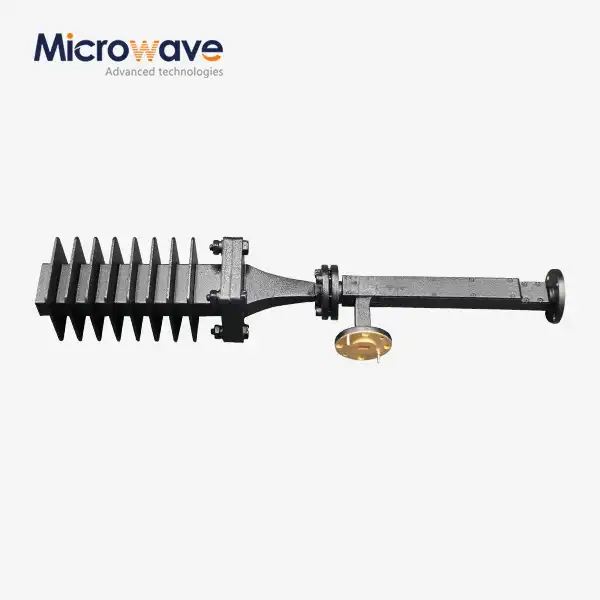 VIEW MOREWaveguide Fixed Attenuator
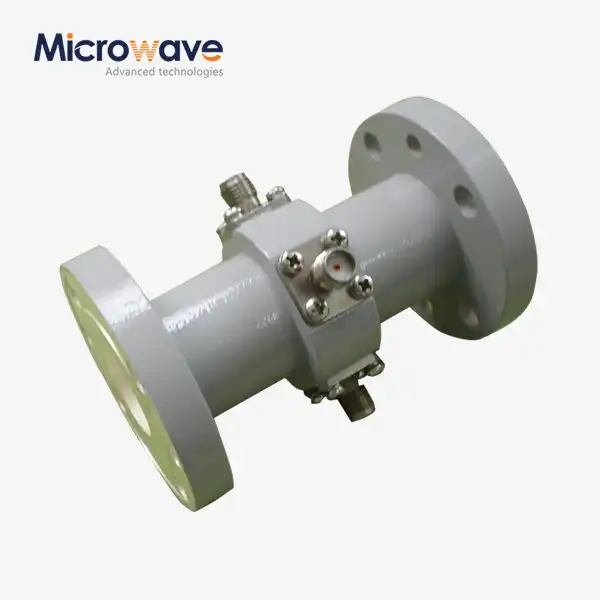 VIEW MOREWaveguide Probe Coupler
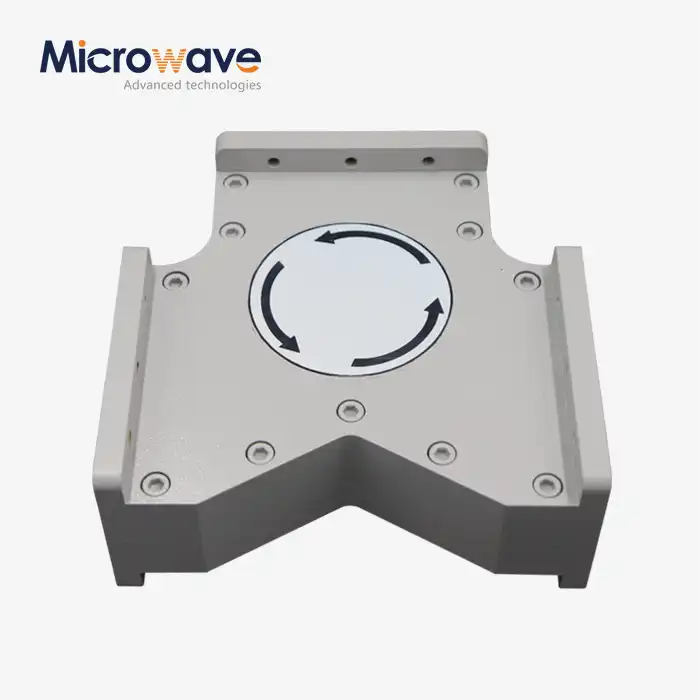 VIEW MOREHigh Power Waveguide Circulator
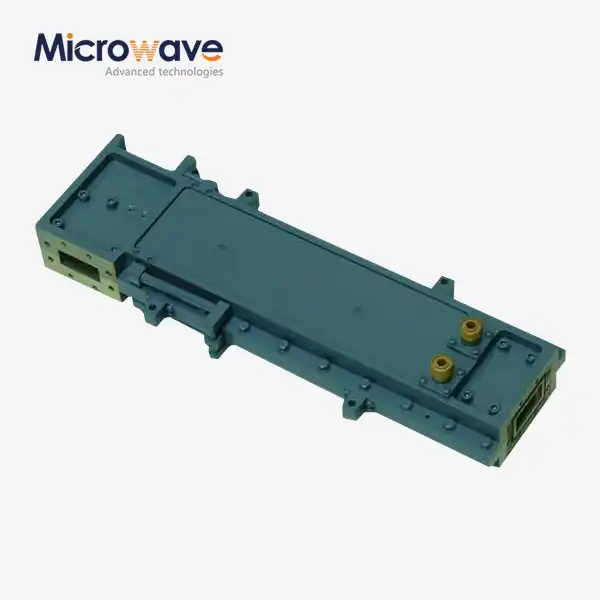 VIEW MOREHigh Power Waveguide Differential Phase Shift Circulator
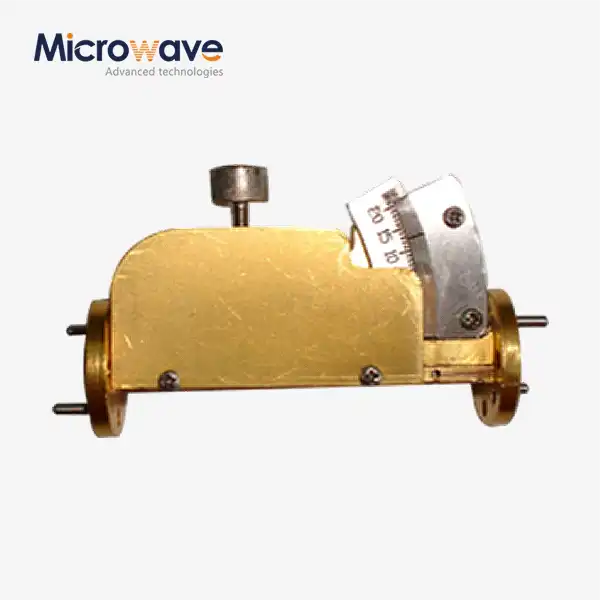 VIEW MOREWaveguide Variable Attenuator
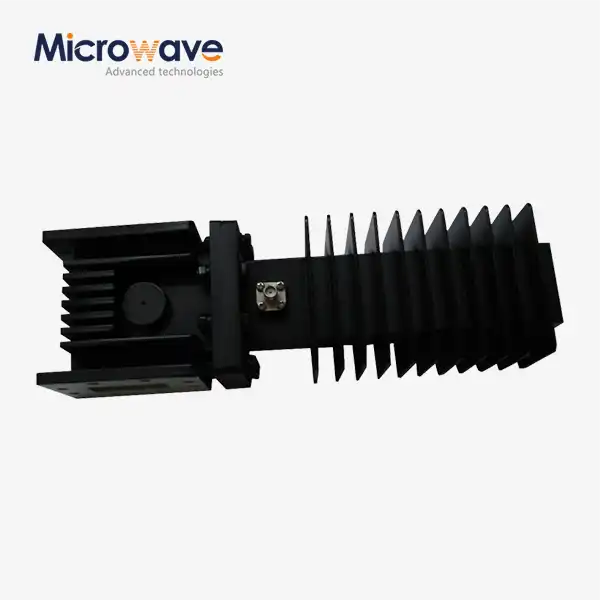 VIEW MOREHigh Power Waveguide Isolator
 VIEW MOREWG Bandpass Filter
 VIEW MOREWG Harmonic Filter