




What Are the Main Types of Waveguide Switch Configurations?
When radar operators lose signal integrity during critical tracking missions or satellite ground stations experience unexpected path failures during data transmission, the culprit often lies in improper waveguide switch configuration. Understanding the main types of waveguide switch configurations—including Single Pole Double Throw (SPDT), Double Pole Double Throw (DPDT), transfer switches, and rotary configurations—is essential for ensuring reliable signal routing in high-frequency RF systems. Waveguide switch technology serves as the backbone of modern microwave communication, enabling flexible signal management while maintaining low insertion loss and high isolation performance across demanding applications in aerospace, defense, and telecommunications.
Understanding Waveguide Switch Fundamentals and Configuration Principles
Waveguide switch systems represent critical infrastructure components in RF microwave networks where electromagnetic wave propagation must be precisely controlled without signal degradation. These sophisticated devices function as intelligent signal gates that determine transmission paths within waveguide systems, allowing operators to redirect microwave energy between multiple ports while preserving signal integrity. The fundamental operating principle relies on either mechanical displacement of conductive elements or solid-state electronic control to open or close specific waveguide paths, thereby enabling seamless switching between different transmission routes. The importance of selecting appropriate waveguide switch configurations cannot be overstated in modern RF applications. In satellite communication ground stations, for instance, operators must frequently switch between redundant high-power amplifiers or low-noise amplifiers to maintain uninterrupted service during equipment maintenance or failure scenarios. Similarly, radar systems require rapid path reconfiguration to alternate between different antenna feeds or processing chains without compromising detection capabilities. The versatility of waveguide switch technology stems from its ability to handle extremely high power levels—often exceeding kilowatt ranges—while maintaining insertion losses as low as 0.1 to 0.8 dB and achieving isolation performance greater than 40 dB between ports. Configuration selection directly impacts system performance, reliability, and operational flexibility. A poorly chosen waveguide switch configuration can introduce excessive signal loss, create unwanted reflections that degrade VSWR performance, or fail to provide adequate isolation between channels, resulting in signal crosstalk and compromised system functionality. Engineers must carefully evaluate factors including the number of required signal paths, switching speed requirements, power handling capabilities, and environmental operating conditions when specifying waveguide switch configurations for their applications.
Port Configuration Classifications in Waveguide Switch Design
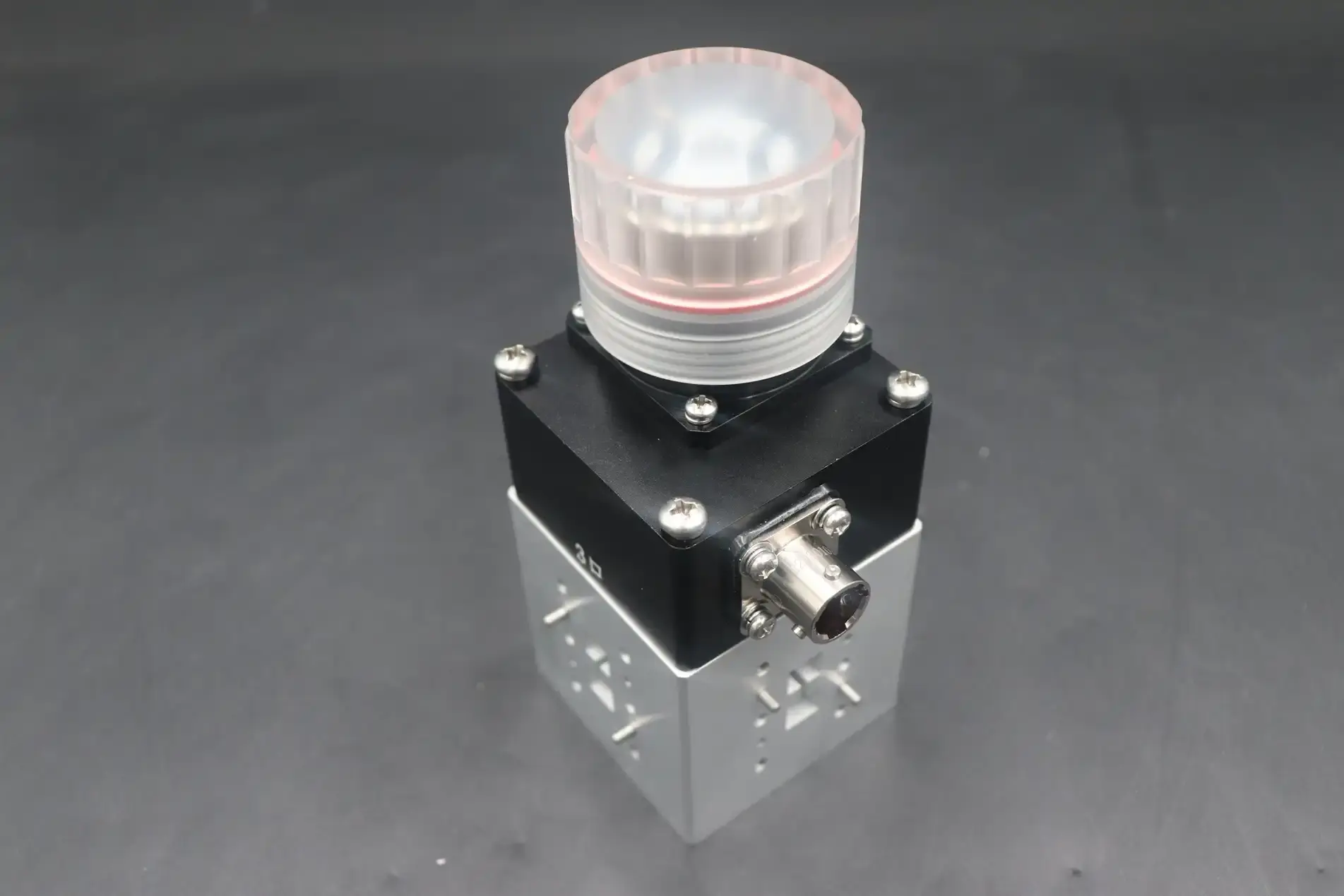
The most fundamental distinction in waveguide switch configurations relates to port arrangement and signal routing capabilities. Single Pole Double Throw (SPDT) configurations represent the most basic and widely deployed topology, featuring one input port and two output ports. This configuration enables operators to select between two possible signal paths, making it ideal for applications requiring backup transmitter switching, antenna diversity systems, or simple path redundancy. SPDT waveguide switches excel in scenarios where a single signal source must be routed to one of two destinations, such as directing transmitter output to either a primary antenna or a backup antenna in broadcast systems. Double Pole Double Throw (DPDT) configurations expand switching capabilities by incorporating two independent input ports and two output ports, essentially combining two SPDT switches into a single integrated unit. This topology proves invaluable in applications requiring simultaneous switching of both transmit and receive paths or in systems where two separate signal sources must be routed to two different destinations in a coordinated manner. DPDT waveguide switches find extensive use in transceiver systems, where both outgoing and incoming signals must be switched synchronously between different antenna ports or processing chains.
Transfer switch configurations represent a specialized subset designed specifically for redundancy applications where continuous operation is paramount. These configurations typically feature one input port connected to either of two output ports, with internal mechanisms ensuring that one path is always active even during switching operations. Transfer waveguide switches are commonly deployed in critical infrastructure applications such as air traffic control radar systems, where even momentary signal interruptions could compromise safety, or in satellite ground stations handling continuous data streams that cannot tolerate service gaps. Multi-port configurations extend beyond basic SPDT and DPDT topologies to accommodate more complex signal routing requirements. Four-port, six-port, and even higher-order configurations enable sophisticated signal distribution networks where a single input must be routed to one of several possible outputs, or where multiple inputs can be selectively connected to multiple outputs. These advanced configurations prove essential in large-scale antenna arrays, phased array radar systems, and telecommunications hub stations managing numerous signal paths simultaneously.
Mechanical Waveguide Switch Configurations and Operating Mechanisms
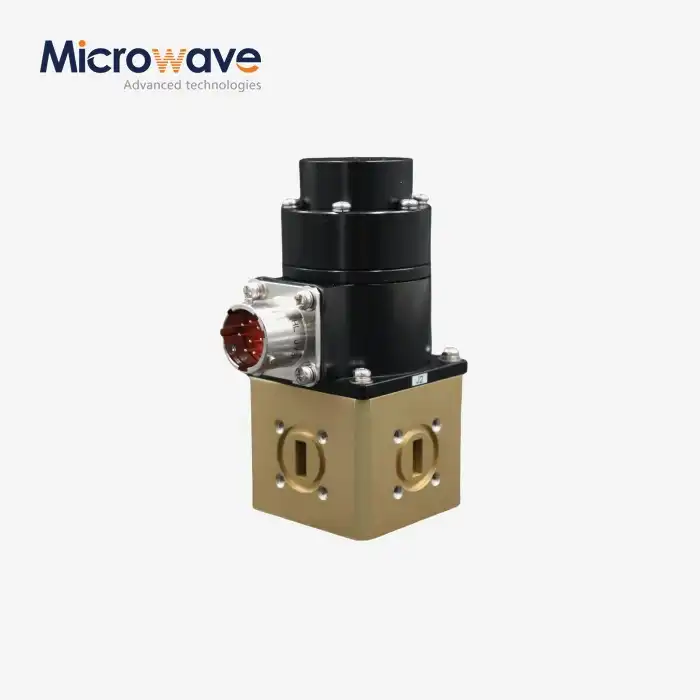
Mechanical waveguide switch configurations rely on physical displacement of conductive elements to establish or interrupt signal paths, offering several distinct advantages including high power handling capability, excellent isolation performance, and reliable long-term operation. The most prevalent mechanical configuration employs linear actuator systems where a movable waveguide section or reflective element translates along a straight path to connect or disconnect signal routes. These linear-motion switches typically feature precision servo motors or electromagnetic solenoids that position conductive components with micron-level accuracy, ensuring consistent RF performance across millions of switching cycles. Rotary waveguide switch configurations utilize rotating elements to direct signal flow between multiple ports arranged in circular patterns around a central axis. The rotary mechanism typically consists of a cylindrical or conical rotating junction that aligns with different fixed waveguide ports as it rotates through discrete angular positions. This configuration offers particular advantages in applications requiring switching between three or more signal paths, as the rotary motion can efficiently accommodate numerous ports arranged radially around the rotation axis. E-plane rotary transfer configurations represent a specialized variant where the rotating element operates in the E-plane of the waveguide, providing smooth transitions between ports while maintaining excellent electrical performance.
Shutter-type waveguide switch configurations employ movable metal plates or barriers that physically block or permit signal propagation through waveguide sections. These shutters typically actuate perpendicular to the direction of signal propagation, sliding into the waveguide cross-section to create a short circuit that reflects all incident energy back toward the source, or withdrawing completely to allow unobstructed signal passage. Shutter configurations excel in personnel protection applications where high-power microwave transmission systems require absolute signal blocking to prevent hazardous radiation exposure during maintenance operations or equipment access procedures. Patch link assembly configurations represent another important mechanical topology where removable waveguide sections physically connect or disconnect signal paths. These manually-operated configurations typically involve precision-machined waveguide segments with standardized flanges that can be installed or removed to reconfigure signal routing. While patch link assemblies lack the rapid switching capabilities of motorized configurations, they offer unmatched reliability for planned, infrequent switching operations where operator intervention is acceptable, such as seasonal antenna reconfiguration or long-term equipment rotation schedules. The mechanical switching process in these configurations involves carefully controlled motion sequences that minimize switching time while preventing internal arcing or mechanical shock that could damage sensitive waveguide surfaces. Advanced mechanical waveguide switch designs incorporate sophisticated position feedback systems, end-of-travel limit switches, and interlocking mechanisms that prevent inadvertent operation during high-power transmission. Switching speeds for mechanical configurations typically range from tens of milliseconds to several hundred milliseconds depending on actuator type, moving mass, and required positioning accuracy.
Solid-State Waveguide Switch Configuration Technologies
Solid-state waveguide switch configurations eliminate moving parts entirely, instead relying on electronic control of semiconductor devices to alter signal propagation characteristics within waveguide structures. These configurations typically employ arrays of PIN diodes or MEMS (Micro-Electro-Mechanical Systems) components strategically positioned within the waveguide to create variable impedance boundaries that either pass or reflect incident microwave energy. The absence of mechanical motion enables extremely rapid switching speeds measured in nanoseconds or microseconds, making solid-state configurations ideal for applications requiring high-speed signal routing such as pulse radar systems, frequency-agile communication links, or real-time adaptive antenna arrays. PIN diode-based waveguide switch configurations utilize the variable resistance properties of PIN semiconductor structures to control signal propagation. When forward-biased, PIN diodes present low impedance that allows signal passage with minimal attenuation, while reverse-bias conditions create high impedance barriers that reflect incident energy. Multiple PIN diodes arranged in series-shunt configurations or balanced bridge networks enable single-pole or multi-pole switching topologies within waveguide structures. The primary advantages of PIN diode configurations include millisecond or sub-millisecond switching speeds, silent operation without acoustic noise, and extended operational lifetimes exceeding 100 million switching cycles without mechanical wear.
MEMS-based waveguide switch configurations represent cutting-edge solid-state technology where microscale mechanical elements fabricated using semiconductor manufacturing techniques provide the switching function. MEMS switches employ tiny movable cantilevers or membrane structures that physically connect or disconnect RF signal paths in response to electrostatic actuation forces. While MEMS elements do involve microscopic mechanical motion, the extremely small mass and short travel distances enable switching speeds approaching those of purely electronic devices. MEMS waveguide switch configurations offer exceptional RF performance including extremely low insertion loss, high isolation, and broad bandwidth operation, though current technology limitations typically restrict power handling to levels below those achievable with traditional mechanical configurations. Hybrid waveguide switch configurations combine mechanical and solid-state technologies to optimize performance across multiple operational parameters. These designs might employ mechanical actuators for coarse positioning combined with solid-state fine-tuning elements, or use solid-state switches for high-speed path selection while mechanical components handle high-power signal routing. Hybrid configurations enable system designers to balance competing requirements such as switching speed, power handling, insertion loss, and operational lifetime by leveraging the strengths of both mechanical and solid-state technologies within a single integrated assembly.
Application-Specific Waveguide Switch Configuration Selection
Selecting optimal waveguide switch configurations requires careful analysis of specific application requirements, operating environments, and system performance objectives. In satellite communication ground stations, redundancy configurations predominate because continuous communication links cannot tolerate interruptions during equipment failures. Transfer-type DPDT waveguide switches enable seamless switching between redundant high-power amplifiers feeding a single antenna, ensuring that signal transmission continues uninterrupted even when primary amplifier systems require maintenance or experience component failures. These configurations typically specify insertion losses below 0.2 dB to minimize signal degradation and isolation performance exceeding 60 dB to prevent feedback between active and standby equipment. Radar system applications impose unique requirements including high power handling for transmit paths, low noise figure preservation for receive paths, and rapid switching speeds for time-multiplexed operations. Weather surveillance radar installations commonly deploy SPDT waveguide switch configurations to alternate between different elevation scanning patterns or to switch between normal weather monitoring modes and severe storm investigation modes requiring different antenna positioning strategies. Military fire-control radar systems may require complex multi-port waveguide switch configurations that rapidly route signals between multiple antenna elements in phased array systems or switch between different frequency bands to counter electronic warfare threats.
Test and measurement applications benefit from manual or low-speed motorized waveguide switch configurations that prioritize RF performance and measurement accuracy over switching speed. Network analyzer test systems frequently incorporate precision waveguide switches to connect measurement ports to various device-under-test configurations without introducing measurement uncertainty. These configurations demand extremely stable insertion loss characteristics, repeatable phase performance, and minimal VSWR degradation to ensure measurement integrity. The availability of manual override capabilities proves essential in laboratory environments where operators may need to reconfigure test setups during power failures or equipment troubleshooting. Aerospace and UAV applications present extreme environmental challenges requiring waveguide switch configurations with exceptional mechanical robustness, wide temperature range operation, and resistance to shock and vibration. Aircraft radar systems typically specify lightweight aluminum or composite construction for waveguide switch assemblies to minimize weight penalties, combined with IP67 or IP68 environmental sealing to prevent moisture ingress during flight through adverse weather conditions. The operating temperature range for aerospace waveguide switches commonly extends from -55°C to +85°C, covering altitudes from sea level to stratospheric flight regimes. Solid-state configurations often prove advantageous in UAV applications due to their immunity to mechanical shock during aircraft maneuvers and their silent operation that avoids acoustic signatures detectable by enemy sensors.
Conclusion
Waveguide switch configurations—spanning SPDT, DPDT, transfer, rotary, mechanical, and solid-state topologies—enable flexible signal routing essential for modern RF systems across aerospace, defense, telecommunications, and industrial applications.
Cooperate with Advanced Microwave Technologies Co., Ltd.
Partner with Advanced Microwave Technologies Co., Ltd., a leading China Waveguide Switch manufacturer, China Waveguide Switch supplier, and China Waveguide Switch factory offering High Quality Waveguide Switch for sale at competitive Waveguide Switch price points. Our China Waveguide Switch wholesale solutions backed by ISO 9001:2015, ISO 14001:2015, and ISO 45001:2018 certifications deliver exceptional performance through our 24m Microwave Darkroom testing capabilities up to 110 GHz. With over 20 years of microwave expertise, comprehensive OEM services, rapid prototyping, and dedicated technical support, we provide customized waveguide switch solutions tailored to your specific requirements. Contact craig@admicrowave.com today to discuss your project and receive expert consultation from our engineering team.
References
1. "Microwave Engineering" by David M. Pozar, 4th Edition - Comprehensive treatment of waveguide theory, switching mechanisms, and configuration design principles for RF microwave systems.
2. "RF and Microwave Switched-Mode Power Amplifiers" by Andrei Grebennikov, Narendra Kumar, and Binboga S. Yarman - Detailed analysis of switching technologies, component selection criteria, and performance optimization in high- frequency systems.
3. "Foundations for Microwave Engineering" by Robert E. Collin, 2nd Edition - Fundamental electromagnetic theory underlying waveguide propagation, switching behavior, and port configuration impacts on system performance.
4. "Microwave Devices and Circuits" by Samuel Y. Liao, 3rd Edition - Practical design guidelines for waveguide components including switches, with emphasis on mechanical and solid-state configuration tradeoffs.
5. IEEE Standard 1785.1-2012 "Rectangular Waveguides - Part 1: General Requirements and Measurement Methods" - Industry standard specifications governing waveguide switch performance parameters, testing procedures, and configuration classifications.