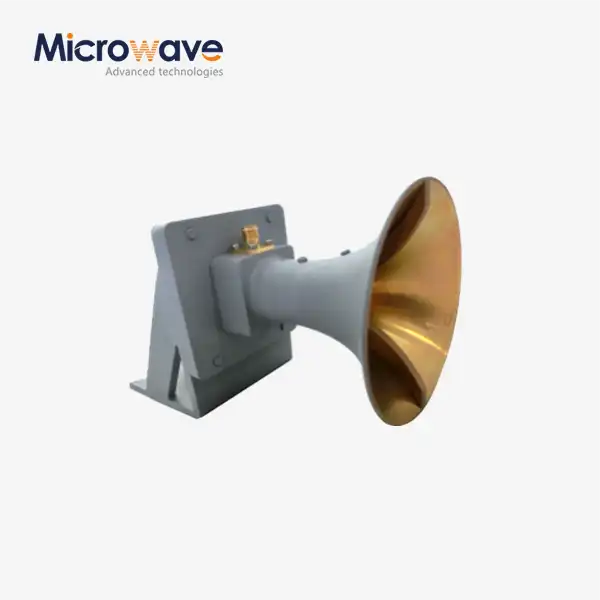





What Are the Main Applications of Twisted Waveguide Technology?
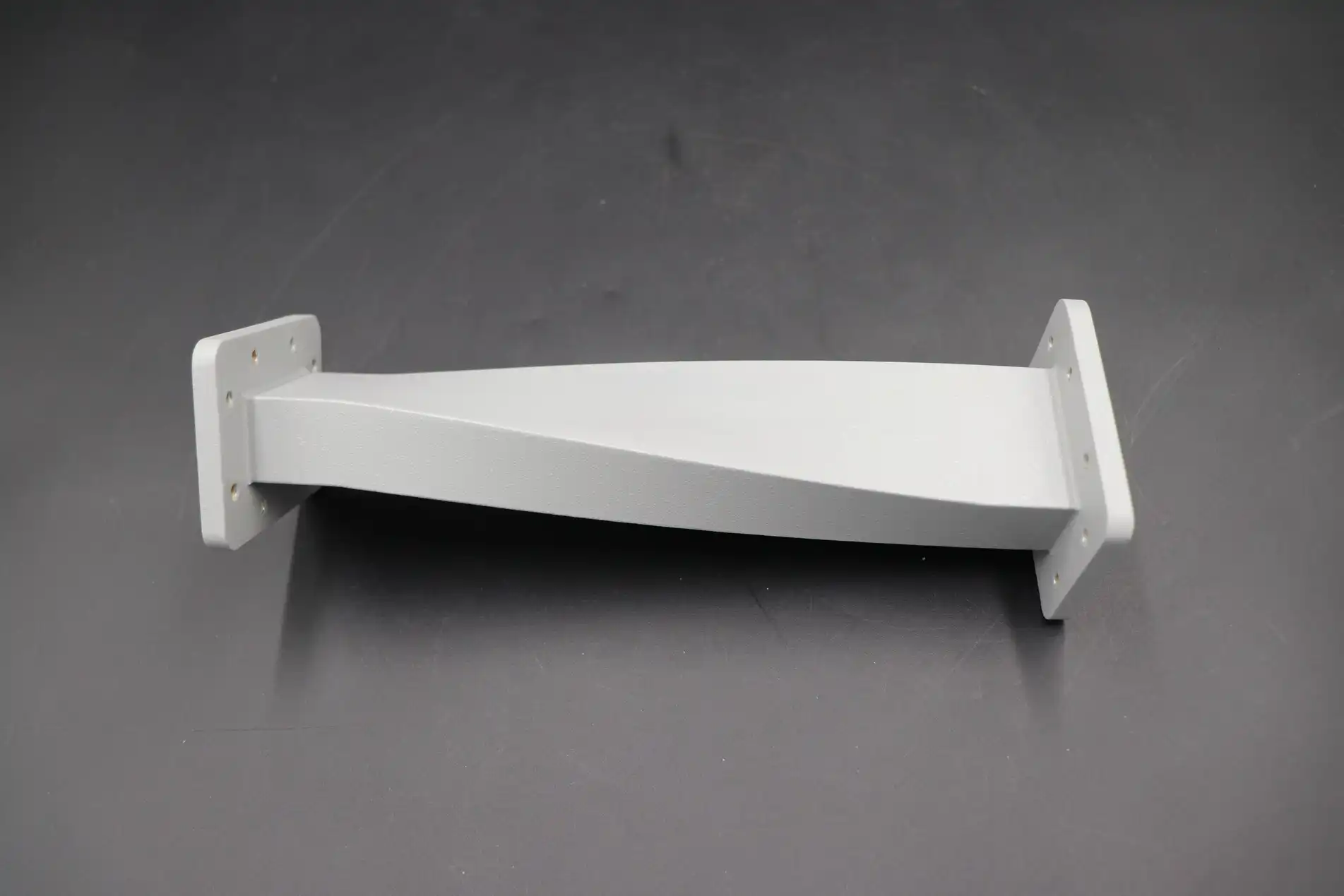
Twisted waveguide technology plays a vital role in modern microwave and RF systems where spatial constraints and complex routing demand both flexibility and precision. The twisted waveguide, often called a flexible twistable waveguide, combines the low-loss characteristics of traditional waveguides with exceptional mechanical adaptability, enabling engineers to bend and twist signal paths without compromising electromagnetic performance. This unique capability makes twisted waveguides indispensable in satellite ground stations, aerospace radar installations, defense communications, and advanced telecommunication networks where signal integrity and installation efficiency are critical.
Understanding Twisted Waveguide Technology
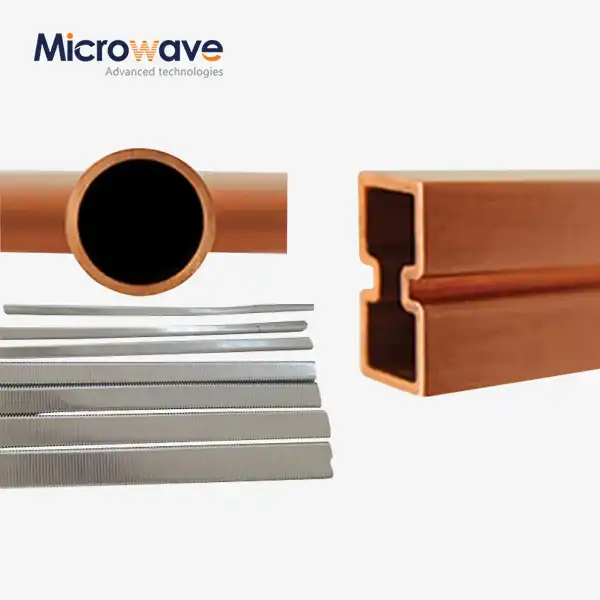
The main new thing about twisted waveguide technology is the way its structure is built. The twisted waveguide is different from rigid rectangular waveguides because it has a corrugated metal construction (usually brass or phosphor bronze) that lets it continuously rotate and bend along its length. Rigid rectangular waveguides need complicated flange systems and elbows to get through tight areas. This mechanical flexibility doesn't hurt the electrical performance; the shape inside keeps the main TE10 mode transmission, which is needed for low insertion loss and little signal bounce.
Material Selection and Performance Trade-offs
Twisted waveguide systems are built to last with high-quality materials. We use metals that don't rust and strict manufacturing tolerances to make sure that the dimensions are correct across frequency bands from 3.22 GHz to over 50 GHz. The standard Neoprene jacket on the outside of our models protects against pressure and the environment, which extends the life of the component in difficult deployment situations like shipboard installations or high-altitude aircraft use.
Design Parameters That Drive Functionality
When engineers look at twisted waveguide options, they pay close attention to a few key details. The Voltage Standing Wave Ratio (VSWR) shows how well the impedance matches. The VSWR numbers for our ADM product line range from 1.10 to 1.45, based on the frequency band, which means that sensitive transmitters receive very little power reflection. In long-distance signal lines, insertion loss per meter has a direct effect on link budget estimates. It ranges from 0.15 dB/m at lower frequencies to 3.00 dB/m in millimeter-wave bands. Installation freedom is based on the maximum twist rate, which is measured in degrees per meter. Our models can handle twist rates ranging from 108 to 530 degrees per meter, so they can handle even the most difficult route needs.
Electromagnetic Advantages Over Conventional Solutions
The twisting shape keeps the phase coherence and absorbs mechanical stress that would otherwise cause tiny cracks in rigid assemblies. This stress absorption is especially useful in places where vibrations are common, like on airplanes or mobile radar stations. The continuous metallic construction gets rid of the need for multiple flange junctions that are present in bent rigid waveguide systems. This cuts down on potential leak points and improves the overall effectiveness of shielding, which is very important in defense applications that need electromagnetic security.
Main Applications of Twisted Waveguides in Industry
Twisted waveguides solve engineering problems in a wide range of difficult fields. Because they are both electrically precise and mechanically flexible, they are the best choice when rigid parts can't meet the needs of installation or operation.
Satellite Communication Ground Stations
Satellite earth stations need waveguide runs to connect transceivers in equipment shelters to feed horns on tracking antennas. The waveguide path has to bend all the time so that phase mistakes and too much loss don't happen as the antennas follow the satellites across the sky. Our bendable, twistable waveguides are great at this because they keep the VSWR below 1.15 even when they are moving all the time. The ADM-70WEL and ADM-84WEL types, which work in frequencies from 5.38 to 9.99 GHz, directly handle C-band and X-band satellite services that are widely used at teleports in North America. Because lengths can be changed, there is no need for multiple rigid sections and rotating joints. This makes installation easier and lowers the cost of maintenance.
Aerospace and Defense Radar Systems
Radar stations in the air and on ships have to deal with very limited room and high levels of vibration. In these situations, rigid waveguide systems need a lot of mounting gear and have a hard time withstanding working stresses. The answer is twisted waveguides, which carry radio waves through small gaps in the aircraft while also dampening vibration and heat expansion. This technology is used by military surveillance radars that work in Ku-band and Ka-band frequencies, like our ADM-120WEL through ADM-260WEL models, to keep finding targets accurately even when the platform moves. We make double-ridged setups that increase bandwidth for broad electronic warfare uses that need to be very flexible with frequency.
Telecommunications Infrastructure Deployment
As 5G networks are put in place and microwave backhaul links are expanded, there is a huge need for RF transmission lines that can be set up quickly and cheaply. To properly build, align flanges, and torque connections on traditional rigid waveguide plumbing, it takes trained workers hours. It takes a lot less time to install flexible twistable waveguides than rigid sections and elbows—just one continuous run is needed instead of a dozen. This efficiency directly leads to lower labor costs and faster activation of the network. Our ADM-180WEL and ADM-220WEL types work with frequency bands between 14.5-26.5 GHz, which are used for fixed wireless access and millimeter-wave cellular backup all over the United States.
Scientific Research and Test Facilities
Radio astronomy stations and advanced measurement labs need waveguide routing that keeps phase relationships tuned while allowing equipment to be moved. Our devices work with frequencies up to 50.1 GHz, which lets researchers use millimeter waves to study things like plasma physics, atmospheric science, and material analysis. The low insertion loss and stable phase performance—even when bent to the minimum radius requirements—ensure consistency of measurements, which is important for scientific data that can be published. Research institutions like ours can customize our products so that special frequency bands and flange types can work with existing equipment.
Comparing Twisted Waveguides with Other Waveguide Types
Knowing the trade-offs in performance between twisted waveguides and other waveguide technologies helps people who work in procurement make smart choices that meet the needs of the project and stay within the budget.
Twisted Waveguides Versus Rigid Rectangular Waveguides
For straight-line runs, rigid rectangular waveguides have the lowest insertion loss and can handle the most power. This makes them perfect for short links in high-power emitters. When routing through tight spaces or when paths need to allow for movement, their inflexibility becomes a problem. Twisted waveguides lose about 0.1 to 0.5 dB per meter when compared to rigid sections of the same length, but they don't have the losses that come from having multiple flanged joints and bends. The cost of installation work goes down by a lot, which often makes up for the small difference in power performance when figuring out the total cost of ownership.
Helical Waveguide Comparisons
Helical or curved waveguides made for circular polarization are useful for certain antenna feed tasks, but they can't be twisted and don't have a small bend radius like our flexible, twistable waveguides can. The curved shapes are also harder to make, which makes the unit costs higher. Our Neoprene-jacketed twisted waveguide systems seal better against the environment and are easier to end in the field, which means installation mistakes are less likely to happen than with more delicate corrugated designs.
Material Durability and Lifecycle Value
The cost of replacements and upkeep must also be taken into account in a lifecycle efficiency study, not just the price of the original component. Our twisted waveguides are made from materials that don't wear out easily and have been tested to withstand millions of flex cycles. This is important for uses where antenna tracking or platform vibration is needed. We use coatings that are resistant to corrosion to make things last longer in maritime and coastal settings where salt spray breaks down less durable materials. To get a real picture of the total cost of ownership and return on investment, buyers should model these durability factors along with electrical specs when figuring out their return on investment.
How to Choose and Procure Twisted Waveguides for Your Business
To choose the best twisted waveguide design, you need to match technical specs to application needs and look at the supplier's skills to make sure the relationship will work in the long run.
Critical Selection Factors for Technical Alignment
The main requirement is frequency range—components must cover working bands with enough room for filter roll-off and temperature shift. Our product line includes twelve standard models that cover frequencies from 3.22 GHz to 50.1 GHz, covering almost all microwave and lower millimeter-wave needs. Power handling ability, which isn't always stated, increases with waveguide size and frequency. Our ADM-40WEL series, with its larger cross-sections, can handle kilowatts of power constantly, while millimeter-wave models are better for uses that need less power but higher data rates.
Dimensional Constraints and Installation Planning
Minimum bend radius and highest twist requirements determine whether or not a fix is possible. With its 102mm E-plane and 204mm H-plane minimum bend radii, the ADM-70WEL model can easily move through the narrow equipment rack paths that are common in telecom shelters. Our ADM-400WEL can twist up to 530 degrees per meter, which lets it do complicated three-dimensional routing without going over the limits of the material's stress. During the quotation phase, procurement teams should give installation drawings to suppliers to make sure they are compatible before committing to large orders.
Custom Manufacturing and OEM Partnership Benefits
Many uses can be met by standard store items, but mission-critical systems often need solutions that are specifically made for them. We make double-ridged versions that have a 30–40% wider bandwidth than single-mode designs. These are useful for wideband signals used in electronic intelligence gathering or spectrum monitoring. Because custom lengths don't require field splicing, they are more reliable and take less time to install. During the design phase, our engineering team works together to find the best waveguide routing, flange choice, and integration with customer assemblies. With this level of support, we go from being a supplier of parts to a strategic partner who cares about the success of your project.
Supplier Evaluation and Quality Assurance
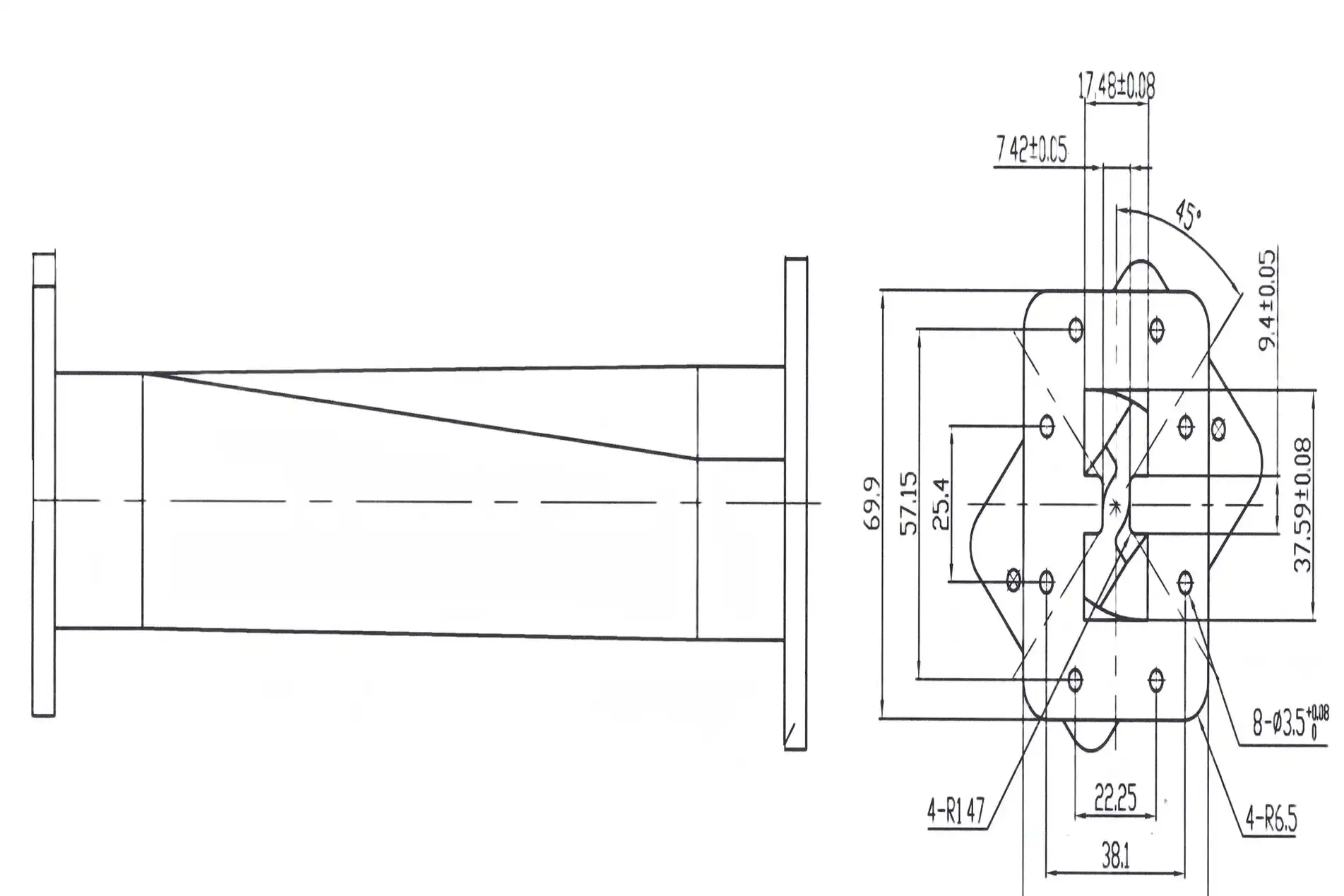
ISO 9001:2015 approval gives you a basic level of trust in the controls of the production process. However, a more thorough review looks at test capabilities and traceability. Our labs keep vector network testers that are calibrated and can work up to 110 GHz. This lets us fully characterize every assembly before it ships by its two-port S-parameters. We give test results that show VSWR, insertion loss, and return loss for the given frequency range. The data can be tracked back to NIST standards. Environmental testing options, such as changing temperatures, vibrations, and exposure to humidity, confirm performance limits for harsh deployment conditions.
Logistics and Lead Time Considerations
When project deadlines are tight, the reliability of the supply chain is just as important as the specs of the parts. We keep standard flange types and common raw materials in stock so that we can make prototypes quickly and turn them around in days instead of weeks. Our vertically integrated manufacturing lets us handle key processes in-house instead of relying on a lot of different partners. This makes it easier to scale up production for large orders. Global shipping logistics: Use our experience exporting to customers in North America, along with the right paperwork for customs clearance and partnerships with freight forwarders that guarantee on-time delivery to your receiving dock.
Future Trends and Innovation in Twisted Waveguide Technology
New wireless technologies and application areas are constantly pushing twisted waveguide design to new heights. This gives early users the chance to gain a competitive edge.
Material Science Advances Enabling Higher Frequencies
As 5G, satellite broadband, and automotive radar move toward millimeter-wave spectrum allocations, operating frequencies move into bands where traditional waveguide materials and manufacturing methods are getting close to their performance limits. Researchers working on new copper alloys and electroforming methods are looking forward to making twisted waveguides that are flexible and have less insertion loss at 60 GHz and higher. These improvements will make it possible for flexible routes in small millimeter-wave phased arrays, which isn't possible now because of strict plumbing that limits antenna designs.
5G and Satellite Megaconstellation Infrastructure Demands
The launch of low-earth-orbit satellite constellations that provide global broadband is creating a demand for ground station equipment that has never been seen before. Each gateway needs more than one radio feed that works at the same time on both Ka-band and V-band channels. Flexible, twistable waveguides that allow for quick installation and field adjustment lower the capital cost per ground station, which speeds up the time it takes to set up a cluster. In the same way, 5G densification—which means that tens of thousands of small cells need microwave backhaul—prefers installation efficiency over small differences in performance, which is good for flexible waveguide technology.
Industrial IoT and Autonomous Systems Applications
New industrial uses for millimeter-wave radar include driverless car awareness, drone navigation, and monitoring of industrial processes. These uses need waveguide components that can handle constant vibration and environmental exposure while still staying calibrated. These needs are met by our Neoprene-jacketed designs, and as we continue to make even more rugged protective coatings, we will be able to use them in more situations. The use of flexible waveguides in self-driving platform designs that don't have a lot of room or easy access for upkeep is a growing market that we're ready to serve with customization options and help from applications engineers.
Conclusion
The main problem with current RF systems is that they have to meet both electrical performance standards and mechanical installation realities. Twisted waveguide technology solves this problem. Flexible, twistable waveguides keep the signal strong while making installation a lot easier and improving long-term dependability. This is true for both satellite ground stations that need to keep tracking their antennas and flying radar installations that are subject to a lot of vibration. Because the frequency coverage, dimensional parameters, and protective coatings can all be changed, these parts can be used in a wide range of demanding situations. Twisted waveguides are becoming more and more important to forward-thinking system designers and OEMs when they are buying new equipment because they are easy to install and last a long time. This is because wireless infrastructure is moving toward higher frequencies and denser deployments.
Frequently Asked Questions About Twisted Waveguide Solutions
What distinguishes a twisted waveguide from standard flexible waveguides?
While standard flexible waveguides primarily address bend radius requirements, twisted waveguides specifically accommodate rotational movement along the signal path axis in addition to bending. This twist feature gets rid of the need for rotary joints in tracking antenna systems and lets cables go through complicated equipment setups without being blocked by cable trays or ducts.
Can you manufacture twisted waveguides for custom frequency bands outside your standard catalog?
As part of our standard work, we often make custom frequency bands for radio astronomy, military electronic warfare, and our own wireless systems. Our engineering team looks at your electrical needs and suggests the best cross-sectional sizes. They then produce the part according to your instructions and make sure it works electrically across the whole band you ask for. For custom designs, the lead time is usually two to three weeks longer than for catalog items.
What information do you need to provide an accurate bulk quote for a defense contractor project?
For full quotes, you need to know the frequency range, the number of pieces, the length of each assembly, the type of joint on both ends, any external testing needs, and when you need the parts. If your application uses secret systems, we can sign the right non-disclosure agreements before we talk about the specifics of the technology. Customers who work for defense contractors also often need Mill Test Reports and material certifications, which we include with all approved orders as standard paperwork.
Partner with a Trusted Twisted Waveguide Manufacturer for Your Next Project
Every project that Advanced Microwave Technologies Co., Ltd. works on is backed by our more than 20 years of experience in waveguide engineering. Our line of flexible twisted waveguides covers frequencies from 3.22 to 50.1 GHz and can be fully customized to meet the specific needs of system designers and original equipment manufacturers (OEMs) in satellite communications, military, defense, and telecommunications. Manufacturing methods that are ISO 9001-certified and thorough testing up to 110 GHz make sure that every part meets strict requirements before it is shipped. Our technical team is ready to help you with any needs you have, whether you need rapid prototyping to test a new design, custom frequency bands for specific uses, or mass production with tight delivery dates. Contact craig@admicrowave.com right away to talk to one of our applications engineers about your twisted waveguide needs and find out how our supplier partnership can help you finish your project faster and for less money overall.
References
1. Pozar, David M. Microwave Engineering, 4th Edition. Hoboken: John Wiley & Sons, 2012.
2. Marcuvitz, Nathan. Waveguide Handbook. London: Peter Peregrinus Ltd., 1986.
3. IEEE Standard 1785-2013. IEEE Standard for Rectangular Metallic Waveguides and Their Interfaces for Frequencies of 110 GHz and Above. New York: Institute of Electrical and Electronics Engineers, 2013.
4. Collin, Robert E. Foundations for Microwave Engineering, 2nd Edition. New York: McGraw-Hill, 1992.
5. Saad, Theodore S. Microwave Engineers' Handbook, Volume 1. Dedham: Artech House, 1971.
6. Kumar, Arun and Sharma, Pradeep. Flexible Waveguide Technology: Design and Applications in Modern Communication Systems. Singapore: Springer Nature, 2019.

_1733809032116.webp)