





Precision Phase Shifters for Advanced Antenna Design
Precision phase shifters serve as critical building blocks for modern antenna systems, delivering the phase control necessary for beam steering, signal shaping, and directional gain optimization. In radar, satellite communications, 5G infrastructure, and aerospace applications, these components enable electronically scanned arrays to track moving targets, adapt to changing environments, and maximize link quality without mechanical rotation. We've spent over two decades engineering high-frequency RF components, and we've witnessed how phase shifter technology transforms antenna performance across defense, telecom, and industrial sectors.
Understanding Precision Phase Shifters and Their Role in Antenna Design
What Are Precision Phase Shifters?
A phase shifter changes the phase angle of an RF signal without changing its amplitude or frequency much. This lets antenna designers electronically direct the pattern of radiation. Precision phase shifters keep very tight tolerances—usually within ±2 degrees—across a large range of frequency bands. This makes sure that beam positioning in phased array antennas is always the same. Analog types, like voltage-controlled or ferrite-loaded shifters, change the phase all the time by using reactive elements that can change. Digital versions, like switched-line or loaded-line designs, use solid-state switches to choose specific phase states. These switches are very fast and can be programmed, which makes them perfect for beamforming that changes quickly.
Operational Principles and Critical Parameters
Phase shifters work by changing the reactive impedance of signal paths or adding differential time delays. Insertion loss, or the power that is lost when phase changing, has a direct effect on how well the system works and how sensitive the receiver is. Phase resolution tells you the smallest increase that can be made; finer resolution makes beam direction more accurate. The frequency range tells you which application bands will work with it, from L-band satellite links to Ka-band 5G backhaul. Power handling tells you the highest amount of input that can be used before it gets distorted or breaks down. This is very important for radar emitters and high-power satellite ground stations. Waveguide phase shifters are better for high-power situations because they have lower insertion loss and higher power limits than coaxial peers. This makes them essential for military radars and space-grade systems.
Applications Across Cutting-Edge Technologies
Active Electronically Scanned Arrays (AESA) use thousands of digitally controlled precision phase shifter units inside radar elements to track multiple supersonic targets at the same time without having to turn the radar around mechanically. This is a huge benefit for defense aerospace. In 5G massive MIMO base stations, these shifters do beamforming by sending millimeter-wave energy directly to user devices. This increases spectrum efficiency and reduces interference in crowded cities. Real-time phase alignment corrections are needed for mobile satellite communication to stay stable and connect to geostationary or low-Earth orbit (LEO) satellites, even if the orientation of the ship or plane changes quickly. Precision phase shifters are used by industrial measurement systems and research institutions to calibrate antenna patterns, characterize impedance, and test beamforming algorithms while prototypes are being made.
Key Performance Parameters and Calibration Methods for Precision Phase Shifters
Frequency Range and Phase Accuracy
Depending on its operating bandwidth, a phase shifter can be used for either narrowband military communications or wideband 5G infrastructure. Our industrial knowledge ranges from 0.5 GHz to 110 GHz, so we can work with both old systems and new mmWave technologies. Beam-pointing error is controlled by phase accuracy. For example, aerospace applications need ±1-degree accuracy to keep the target locked at long ranges, while telecom systems can handle ±3 degrees for handset connectivity. In outdoor ground stations, temperature stability is important because thermal drift can hurt phase accuracy if it isn't fixed by testing or choosing the right materials.
Insertion Loss and Power Handling
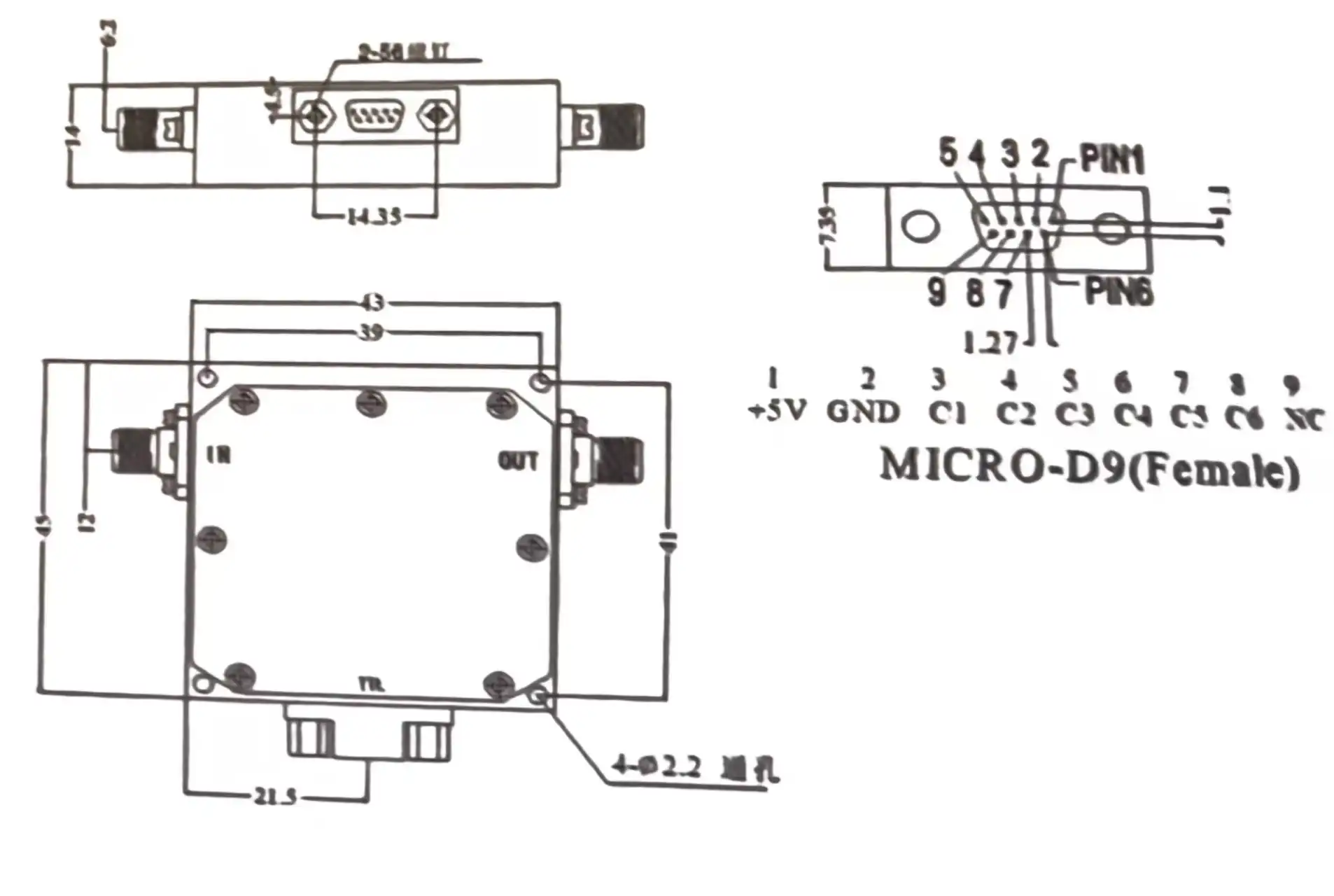
Signal strength is kept high through cascaded antenna feed networks when insertion loss is low. Waveguide phase shifters usually have a loss of 0.3 to 1.0 dB, while coaxial types have a loss of 1.5 to 4 dB, based on the frequency. To stop arcing or multipaction effects, high-power radar transmitters need breakdown thresholds higher than 500 watts. As part of our quality control, we use High-Power Testing to make sure that these margins hold up under practical stress. This keeps mission-critical missions safe.
Calibration Procedures for Industrial Production
Vector Network Analysis (VNA) is the basis of precision phase shifter inspection. It finds problems by measuring S-parameters (S11 Return Loss, S21 Insertion Loss) across all frequency bands. To make sure that the shifts that were ordered fit the angles that were recorded, phase linearity tests are done. Thermal cycling from -40°C to +85°C and salt spray corrosion testing according to ASTM B117 are part of Environmental Stress Screening (ESS), which proves reliability in maritime and aerospace environments. Inspections of the flange tolerance make sure that waveguide assemblies fit together airtightly, which stops signal leakage and passive intermodulation. Our labs have high-tech measuring tools that can go up to 110 GHz. This lets us do the thorough checks that are needed to keep our ISO 9001:2015 certification and RoHS compliance. These protocols give procurement teams confidence that devices will work reliably for a long time and perform the same way every time in production settings.
Comparing Precision Phase Shifters: Analog vs Digital and Top Market Solutions
Analog Versus Digital Technologies
Voltage-controlled precision phase shifters let you tune continuously, which makes them perfect for situations where you need to fine-tune beam steering or adjustable null placement. They are great at Electronically Scanned Arrays and high-speed clock synchronization, where changes made in real time fix problems with PCB trace mismatches or moving targets. Analog designs usually have less insertion loss and easier control interfaces, but they need stable bias sources and may only have a small phase range.
Digitally controlled precision phase shifters have clear, repeatable states and fast switching speeds—often less than 100 nanoseconds—that let you quickly change frequencies and shape beams using time division. Through digital logic control, they make system integration easier and can handle changes in supply better than analog counterparts. But digital designs have quantization errors that are equal to the bit resolution. For example, 5-bit shifters can make increments of 11.25 degrees, while 8-bit versions can make precisions of less than a degree. The cost and difficulty go up with the number of bits, which makes analog solutions appealing for projects that need to be accurate but don't need to be very accurate.
Market Landscape and Brand Perspectives
Mini-Circuits leads the coaxial market with small, surface-mount digital phase changers that work from DC to 40 GHz. These are popular in telecom and test equipment. Analog Devices streamlines 5G beamforming front ends by putting phase shifters, amps, and mixers on a single chip called a transceiver. GaN technology is used by Qorvo to make high-power, high-frequency solutions for defense radar and satellite payloads. Performance, price, and availability are all balanced in different ways by each brand. Procurement teams have to weigh technical specs against wait times, minimum order quantities, and the ability to make changes.
Discrete Versus Integrated Modules
Discrete precision phase shifters work well in custom feed networks where exact impedance matching, thermal management, or mechanical integration is needed. Integrated modules cut down on the number of parts needed and make qualification easier, but they limit the design options. When it comes to radar emitters, waveguide discrete units handle power better and have less insertion loss than integrated options. On the other hand, integrated GaAs or SiGe modules speed up time-to-market for business 5G base stations. The best design for a project depends on its goals, such as reducing costs, improving speed, or meeting deadlines.
Procurement Guide: How to Select and Purchase Precision Phase Shifters
Essential Criteria for Purchasing Decisions
System-level error budgets tell us how accurate we need to be, and radar target precision needs tighter phase margins than mobile backhaul. Aligning the frequency band makes sure that it works with both current and future RF links. Insertion loss has a direct effect on link budgets. To maximize uplink margins, satellite ground stations prioritize low-loss waveguide designs. Lead times depend on the vendor and the level of customization. Catalog items that are already made can be shipped within weeks, but custom waveguide assemblies may take 8–12 weeks. Minimum order numbers (MOQs) affect prototyping plans; sellers with low MOQs allow testing before committing to large volumes at a low cost.
Balancing Cost and Performance Within Budget Constraints
Standard stock parts have stable prices and are easy to find, making them good for modest production volumes. Custom manufacturing lets you get the best performance, like customized phase resolution, ruggedized packaging, or specialized connectors, but it costs more per unit and takes longer to complete. Buying in bulk gets you discounts and keeps supply chains stable, which is very important for defense programs that have production runs that last for years. To check the accuracy of seller claims and lower technical risk, procurement professionals should ask for parametric data, third-party test results, and approval documents.
Ordering Methods and Distribution Channels
If you work directly with manufacturers like us, you can be sure that you'll have access to engineering support, custom OEM services, and quick prototypes. Authorized distributors keep catalog lines in stock, which speeds up the fulfillment of standard needs. For global transportation reasons, like controlling the sale of defense-grade parts and making the best use of freight for heavy waveguide assemblies, procurement, compliance, and supply chain teams need to work together. The production, research and development departments at Advanced Microwave Technologies Co., Ltd. (ADM) work together in ISO-certified ways to make waveguide assemblies, coaxial components, and microwave antennas that can be tracked and are of high quality. Our 24-meter Microwave Darkroom lets us measure antennas from 0.5 GHz to 110 GHz, which lets us make sure that phase shifters work well with whole systems. We have been in the satellite communications, defense, aerospace, and navigation industries for more than 20 years. We can tailor our feed networks and precision phase shifter solutions to your exact needs and offer fast delivery, reasonable prices, and strong after-sales support.
Future Trends and Innovations in Precision Phase Shifters for Antenna Systems
Emerging Technologies and Performance Enhancements
Higher frequency support goes beyond W-band and into the next generation of satellite constellations and 6G test networks. Advanced semiconductor materials, like GaN-on-SiC for power uses and InP for low-noise analog designs, lower insertion loss, which makes the system work better. Miniaturization uses MMIC integration to make panels that can be placed on UAVs and communication devices that can be worn smaller and lighter. Low phase noise amplifiers and precision phase shifters keep the spectral purity of atomic clock references and quantum computing control pulses. Jitter, on the other hand, makes coherence times and Allan Variance stability worse.
Shaping Procurement Strategies for Future-Proof Designs
As 5G, IoT, and LEO satellite megaconstellations grow, so does the need for precision phase shifters that can be scaled up and down easily and are cheap enough to work with automated manufacturing. Purchasing managers need to look at provider roadmaps to make sure they have access to new technologies as standards change. Innovation cycles are sped up when engineers, procurement teams, and suppliers work together as partners. Getting involved early in the design process aligns component specifications with system architectures, which cuts down on rework and qualification delays. Environmental certifications, like ISO 14001:2015 for sustainability and ISO 45001:2018 for workplace safety, show how mature and long-lasting a supplier is, which is important for defense programs and infrastructure projects that last for decades. To stay relevant, businesses need to use agile sourcing models that combine cost, performance, and the ability to change to quickly changing technologies.
Conclusion
Precision phase shifters are used in the most demanding antenna systems, such as AESA radars that track threats at high speeds and 5G base stations that serve millions of users. To be successful, you need to choose parts that meet the needs of the application in terms of phase accuracy, insertion loss, power handling, and frequency range. You should also work with providers that offer customization, strict quality control, and quick technical support. As rates rise and system complexity grows, procurement professionals have to weigh the pros and cons of analog vs. digital, look at the market leaders, and put in place calibration procedures that guarantee long-term dependability. We are still dedicated to making microwave component technology better by using ISO-certified factories, cutting-edge test labs, and the application knowledge we've gained over the past 20 years. Innovation will continue to be driven by engineers working together with procurement specialists and trusted suppliers to make antenna systems that can adapt to changing mission profiles and competitive landscapes.
FAQ
What factors most significantly affect phase shifter accuracy?
The accuracy of the phase depends on how well the parts were made, how stable the temperature is, and how linear the control voltage or switching is. Deviations are kept to a minimum with good substrates, precise metallization, and well-calibrated bias networks. Environmental Stress Screening and VNA testing make sure that the device works well across all operational ranges, which makes sure that it can be used again and again in the field.
How do I decide between analog and digital phase shifters?
For tasks like adaptive beamforming or clock de-skewing that need constant tuning and low quantization error, analog shifters are the best choice. Digital shifters are great for tasks that need to be able to switch quickly, be controlled by code, and have separate states that can be repeated, like radar frequency hopping or MIMO beamforming. To help you choose, think about how complicated the system is, how much it costs, and how clear the images need to be.
What should I consider regarding lead times and MOQ during bulk orders?
Catalog items ship quickly and have a variable MOQ, which makes them great for testing. Custom waveguide assemblies take longer to make, but they work better for production. To keep prices and supply lines stable, talk about bulk discounts and make long-term deals. To speed up the buying process and lower technical risk, ask for approval data early on.
Partner with ADM for Tailored Precision Phase Shifters
Advanced Microwave Technologies Co., Ltd (ADM) delivers customized phase shifter solutions engineered for your mission-critical applications. Whether you're sourcing waveguide assemblies for defense radar, digitally controlled phase shifters for satellite ground stations, or voltage-controlled units for 5G infrastructure, our technical team provides expert consultations, rapid prototyping, and OEM services aligned with your specifications. Reach out to us at craig@admicrowave.com to discuss your requirements, request quotations, or explore our comprehensive product catalogs. As a trusted precision phase shifters supplier with ISO certifications, global logistics capabilities, and over 20 years of microwave expertise, we're ready to support your procurement objectives with quality, speed, and reliability.
References
1. Pozar, David M. Microwave Engineering, 4th Edition. Wiley, 2011.
2. Hansen, Robert C. Phased Array Antennas, 2nd Edition. Wiley-IEEE Press, 2009.
3. Ellinger, Frank. Radio Frequency Integrated Circuits and Technologies, 2nd Edition. Springer, 2008.
4. Mailloux, Robert J. Phased Array Antenna Handbook, 3rd Edition. Artech House, 2017.
5. Skolnik, Merrill I. Radar Handbook, 3rd Edition. McGraw-Hill Education, 2008.
6. Balanis, Constantine A. Antenna Theory: Analysis and Design, 4th Edition. Wiley, 2016.
YOU MAY LIKE
 VIEW MOREMiter Bend Waveguide
 VIEW MOREBroadband Coaxial Circulator
 VIEW MORECustom WG to Coaxial Adapter
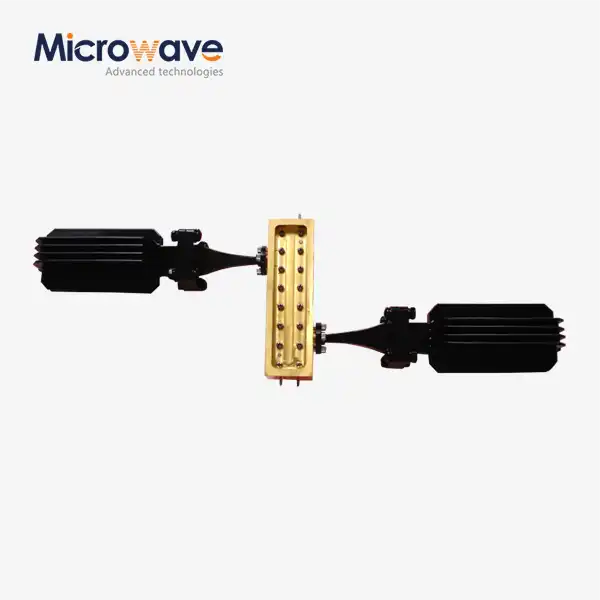 VIEW MOREWaveguide Coupling Fixed Attenuator
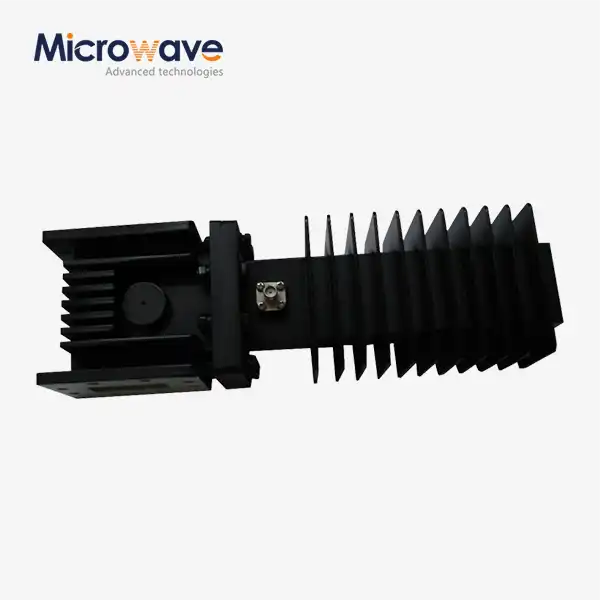 VIEW MOREHigh Power Waveguide Isolator
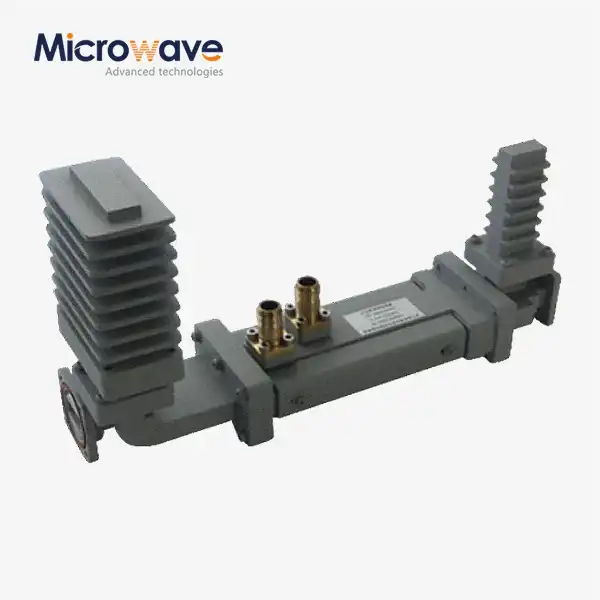 VIEW MOREHigh Power Waveguide Differential Phase Shift Isolator
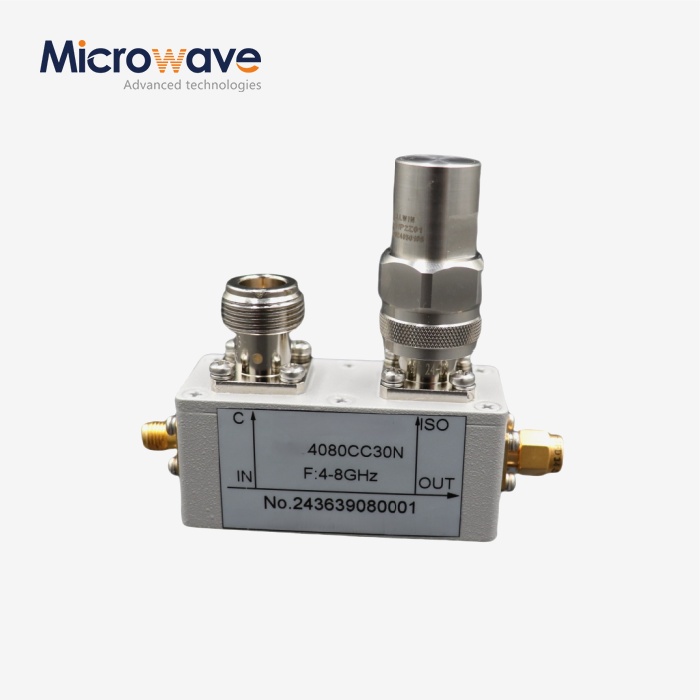 VIEW MORECoaxial Directional Coupler
 VIEW MORECorrugated Horn and Multimode Horn Antenna