





Waveguide Bandpass Filter Design for Automotive Workshop
The main goal of Waveguide Bandpass Filter design for auto shops is to get accurate frequency selection in the current cars' mission-critical radar and radio systems. For advanced driver assistance systems (ADAS), collision avoidance radar, and vehicle-to-everything (V2X) transmission modules, these hollow metallic structures let signals within set passbands pass through with little loss while blocking unwanted interference. Waveguide implementations are better at handling power and staying cool than traditional coaxial or microstrip options. They can handle the harsh electromagnetic conditions found in car testing and integration facilities. During the development and production steps, workshop engineers use these filters to check the performance of RF subsystems, make sure they meet regulatory requirements, and fix problems with signal integrity.
Understanding Waveguide Bandpass Filters in Automotive Applications
Radar devices in 24 GHz, 77 GHz, and the new 79 GHz bands enable adaptive cruise control, blind-spot identification, and self-navigation in modern cars. These frequency ranges require parts that maintain signal integrity while suppressing harmonics and other undesirable signals that might reduce system accuracy. Waveguide Bandpass Filter solutions perform effectively in these scenarios because electromagnetic energy passes through holes filled with air or an insulating substance and is surrounded by conducting walls composed of aluminum 6061 or copper alloys. Dielectric loss processes in coaxial systems are eliminated in this design. In narrow bandwidths, insertion losses are generally less than 0.3 dB.
In cars, materials affect electrical performance and mechanical stability. Silver-plated aluminum alloys are lightweight and conductivity-rich. This makes them useful for weight-sensitive situations where automobiles must fulfill rigorous fuel efficiency regulations. Copper metals carry electricity and power better, but they add weight, which isn't a problem on a workshop test bench. If the housing materials and mounting structures have different coefficients of thermal expansion (CTE), increasing the temperature from -40°C to +125°C, as in automotive qualification testing, might affect the resonance frequencies. Engineers utilize Invar plugs or temperature-compensated cavity geometries to maintain frequency stability within ±0.05% throughout all operating levels.
Working Principles and Frequency Response Characteristics
Transfer functions are established via waveguide resonators using iris apertures or inductive posts. Butterworth topologies emphasize passband flatness for phase-sensitive radar waveforms, while Chebyshev designs exclude interference from neighboring channels with high roll-off. In air-filled environments, the unloaded quality factor (Q) is frequently above 5,000, indicating strong skirt discrimination and 80 dB out-of-band rejection. This capacity is crucial for automobile radar to distinguish genuine objects from multipath reflections in congested cities.
Comparative Evaluation Against Alternative Filter Technologies
Waveguides, cavity coaxial, dielectric resonator, and planar microstrip filters are available to purchasing teams. Cavity coaxial filters are a good compromise between size and performance. They function well below 6 GHz when waveguide diameters become too large. High-permittivity ceramics reduce cavity widths in dielectric resonator filters, but they can't tolerate more power—above 10 watts of average power, thermal runaway occurs. Assembly costs are reduced by placing microstrip filters on printed circuit boards. Substrate losses and wire skin effects generate insertion losses of above 2 dB at millimeter-wave frequencies.
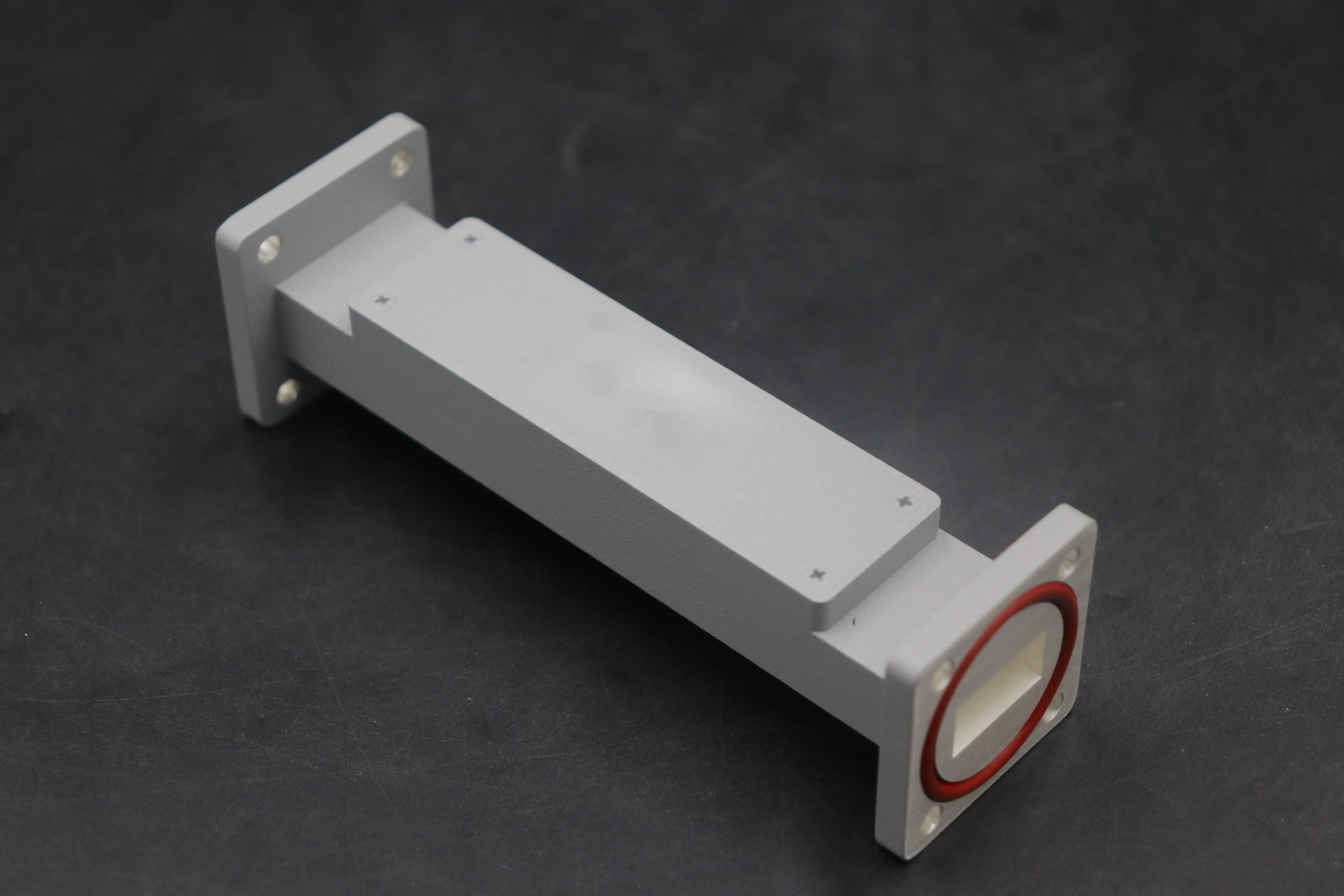
When they need to withstand more than 50 watts of continuous output or less than 0.5 dB insertion loss, waveguide designs are preferable. Automotive workshops do expedited life testing with greater signals on radar equipment. Waveguide thermal management prevents drifting observations. A WR-10 waveguide at 77 GHz measures 2.54 mm x 1.27 mm inside, requiring accurate CNC machining to meet bandwidth and return loss requirements within ±0.01 mm.
Core Design Principles for Automotive Waveguide Bandpass Filters
The first step in making a good Waveguide Bandpass Filter is to list system-level needs that come from radar specs for cars. To stop false target generation, a standard 77 GHz long-range radar needs a 1 GHz frequency centered at 76.5 GHz, insertion loss below 0.4 dB, return loss above 20 dB, and third-order intermodulation rejection better than 60 dBc. During the electromagnetic simulation process, these factors directly affect the choice of filter topology and the size of the cavities.
The planning process moves through several stages that rely on each other and balance electrical performance with the limitations of how the product can be made. Based on the goal center frequency and desirable bandwidth, the first calculations set the waveguide cutoff frequencies and dominant mode propagation characteristics. Iterative optimization with full-wave electromagnetic solvers is needed to connect apertures between resonant sections. Software programs like Ansys HFSS or CST Microwave Studio compute S-parameters across changes in temperature and tolerance, revealing dimensional sensitivities before committing to fabrication.
Material Selection and Thermal Considerations
Vehicles must run in temperatures that modify the metal structural size to achieve automotive qualification criteria. When the temperature changes by 100°C, aluminum expands by 2.3 PPM. This will shift a 77 GHz filter's center frequency by 180 MHz if uncorrected. Workshop engineers use bimetallic construction techniques or Invar metals with CTE values < 2 ppm/°C for high-temperature safety. The suggested silver coating thickness is 3–5 microns. Too high thickness can produce internal tension that delaminates when heated and cooled, yet too low allows skin deep penetration into lossy base metals.
Step-by-Step Design Process
Resonator measurements establish the passband center frequency; thus, planning begins with these. Reverberating rectangular holes have an even number of half-wavelengths at the appropriate frequency. Fringing field effects near coupling irises modify this. Holes of exact diameters link adjacent resonators. Smaller apertures have narrower bandwidths and better selectivity, whereas larger apertures have broader passbands and lower shape factors.
Simulations of electromagnetic fields support theory and demonstrate higher-order mode interactions that cannot be anticipated by hand. Parasitic resonances occur at harmonic frequencies, requiring absorptive loading or cascaded lowpass sections. Manufacturing tolerances are studied using Monte Carlo models. Simulations vary measurements within a ±0.025 mm range for conventional CNC milling. Too-sensitive designs require stricter tolerances, which adds production costs, or replaceable screws to modify features after production.
Comparative Analysis for Procurement: Selecting the Best Waveguide Bandpass Filter
It's hard for procurement managers to make decisions when they have to balance technology requirements with the facts of the supply chain. Leading global providers keep huge inventories of standard waveguide components. For example, Amphenol Procom sells WR-10 Waveguide Bandpass Filter units that can cover frequencies from 75 to 110 GHz and have bandwidths that can be customized. Pasternack, on the other hand, has WR-12 versions that are optimized for car radar bands. To evaluate these, you need to know what the catalog says—for example, an insertion loss of 0.5 dB usually means performance at room temperature recorded at the center frequency; however, measurements taken in the workshop may show 0.7 dB when run at -20°C due to changes in the material's properties.
Minimum order amounts have a big effect on the economics of a project. Standard stock items usually only come in one unit and have lead times of two weeks, which is good for testing. Custom designs with certain types of flanges, temperature compensation, or ruggedized packages come with one-time planning costs of $5,000 to $15,000 that are spread out over the production numbers. Due to electromagnetic modeling, prototype manufacturing, and iterative tuning processes, lead times are now 8 to 12 weeks.
Technical Support and Documentation Requirements
Automotive workshop integration needs more than just basic datasheets and expert help. Teams in charge of buying things should make sure that suppliers can give them STEP mechanical models that can be used with CAD, Touchstone S-parameter files for a range of temperatures, and material certifications that show they are RoHS compliant. If a supplier offers on-site application engineering support, they can help with impedance matching problems and suggest waveguide-to-coaxial changes that work with current test equipment.
Cost Structure and Volume Pricing Dynamics
Prices for standard WR-12 bandpass filters vary by unit, from $800 to $2,500, based on the required bandwidth and rejection. Custom models that are approved for use in cars and come with vibration-resistant mounting options cost more than $4,000 per unit when they are bought in small quantities. Tier-based price cuts of 25–40% are available for orders of more than 100 units per year, but costs change every three months because copper and silver prices change. Budget uncertainty can be reduced by using long-term contracts with price increase terms that are linked to commodity trends in procurement strategies.
Practical Applications and Performance Optimization in Automotive Workshops
Waveguide Bandpass Filter components are used in automotive workshops for environmental certification, electromagnetic compatibility testing, and system integration proof. The filter is usually placed between a radar transceiver module and an antenna array in a climate chamber. At different temperatures, engineers can evaluate broadcast spectral purity and sensitivity. Baseline data provides a reasonable performance baseline for comparing design versions or source alternatives.
Actual case studies demonstrate that using filters correctly may yield quantifiable advantages. FCC Part 15 prohibits emissions at 158 GHz, the second harmonic of the fundamental frequency, from an automobile tier-one source using a 79 GHz imaging radar. By adding a waveguide bandpass filter that blocks 80 dB of harmonic frequencies, emissions were reduced by 35 dB. This satisfied regulations without rethinking the power amplifier step. With a 0.35 dB insertion loss, the filter reduced radar detection range by less than 8%. Redesigning the transmission was another possibility, but this was better.
Addressing Common Workshop Challenges
When it comes to car radar links, insertion loss budgets are very tight—every extra 0.1 dB lowers the maximum detecting range by about 1.5% because the signal travels in both directions. Workshop engineers fight cumulative losses by keeping connectors in good shape and using accurate measuring methods. Waveguide flange contacts need to be perfectly lined up and torqued to a certain level; an error of just 0.1 mm can cause 0.5 dB of mismatch loss. Reference-grade torque tools that are set to the manufacturer's specs make sure that the assembly can be done again and again.
When the government divides the spectrum used by car radar into small bands, it creates bandwidth problems. European ETSI standards set aside 76–77 GHz for long-range car radar with a bandwidth of 1 GHz. This means that filters must have very little group delay change over this range. When there are changes in delay that are bigger than 2 nanoseconds, they mess up the regularity of frequency-modulated continuous wave (FMCW), which lowers the range resolution. Workshop teams use vector network monitors that can do time-domain gating to separate filter inputs from test fixtures in the surrounding area to check that the group delay is flat.
Optimization Strategies for Enhanced Performance
Performance improvement is more than just choosing the right filters; it also includes the design of the whole signal chain. When a waveguide changes to a coaxial or flat transmission medium, echoes happen that lower the system return loss if they are not carefully planned. The VSWR that commercial transition adapters define is around 1.3:1. This is fine for many uses, but it can be a problem in high-dynamic-range devices where reflected signals cause intermodulation products. VSWR below 1.15:1 is reached with custom-designed transitions that use tapered impedance changes. This keeps the receiver's sensitivity in settings with a lot of signals.
Procurement Strategy: How to Source the Right Waveguide Bandpass Filter?
A successful buying process combines technical proof with commercial negotiation to get Waveguide Bandpass Filter parts that meet both engineering needs and budget limits. Before asking questions, you should look at thorough specification sheets that list the center frequency, bandwidth, insertion loss limits, return loss minimums, and working temperature ranges. Including mechanical interface requirements like flange standards, mounting hole patterns, and general envelope dimensions can help avoid expensive redesign processes that happen when new parts don't work with current test fixtures.
When evaluating a supplier, more than just the main requirements are looked at. For example, manufacturing quality systems and tracking procedures are also looked at. ISO 9001 certification gives basic assurance of quality management processes, and AS9100 approval shows practices that are suitable for use in safety-critical car uses. Ask for sample test results that show insertion loss and center frequency are consistent from lot to lot. Differences of more than ±50 MHz or ±0.2 dB are signs of poor process controls that could lower production yields.
Documentation and Certification Requirements
In automotive workshops, strict configuration management rules make sure that fake or low-quality parts don't get into production systems. This is done by keeping track of each component. Material certifications that list base metal alloys and plating formulas should be included in procurement packages, along with S-parameter data files that let you simulate circuits and calibration certificates that can be traced back to national measurement institutes. RoHS compliance paperwork is necessary for car users going to European markets, where lead-free building rules have banned the use of traditional tin-lead solders in assembly processes.
Establishing Strategic Supplier Partnerships
Long-term supply security is a good reason to put money into building relationships with suppliers that go beyond simple buying models. Annual volume agreements give suppliers a clear picture of demand, which helps them plan their capacity and get the best prices on raw materials. During times of high demand, this is often mirrored in the form of better prices and shorter wait times. Technical collaboration programs give early access to new products, so automakers can have a say in how filters are made while they are still being developed, instead of having to make expensive changes to current products to fit their needs.
Suppliers who offer consignment inventory programs that put extra stock at customer sites or nearby shipping centers are good for workshops. This approach reduces the risk of wait times while keeping capital from being stuck in too much inventory. This is especially helpful when a new product is being introduced, and design changes can make consumption patterns unpredictable.
Conclusion
Waveguide Bandpass Filter design for car shops needs to pay close attention to electrical performance, thermal stability, and the operations of the supply chain. These parts allow the frequency selectivity that is needed for current radar and transmission systems, and they can also handle the harsh conditions that are used for qualification testing. Instead of just looking at unit price, procurement teams need to look at providers' technical skills, factory quality systems, and how flexible they are as a partner. The dependability of the system, compliance with regulations, and, finally, the safety and performance of new car technologies that hit global markets are all directly affected by the filters that are chosen and used.
FAQ
Q1: What frequency bands require waveguide implementations in automotive applications?
Most automotive radar systems work at 24 GHz for short-range, 77 GHz for medium- and long-range, and the new 79 GHz frequency for high-resolution images. Above 40 GHz, Waveguide Bandpass Filter implementations are useful because coaxial cable losses are more than 3 dB per meter, and managing heat can make reliability worse. For most workshop uses below 20 GHz, cavity coaxial filters are the best choice because they are smaller and work better.
Q2: How does temperature affect the way filters work when they are being tested in a workshop?
As the temperature rises, the center frequency moves down because of metallic expansion—about 25 ppm/°C for aluminum structures. If you don't use Invar metals or bimetallic designs to fix it, a 77 GHz filter may move 200 MHz over a 100°C temperature change. To get consistent results, workshop processes should heat-stability screens for 30 minutes before measuring.
Q3: Can standard catalog filters meet the conditions for automotive use?
Standard workplace filters don't always have the temperature adjustment and vibration-resistant mounting features that are needed for use in cars. Custom versions with these features usually cost 40 to 60 percent more than standard versions, but they are necessary to pass the AEC-Q200 testing procedures for durability. Catalog items can still be used for prototyping, but final versions need to meet automotive-grade standards.
Partner with ADM for Precision Waveguide Bandpass Filter Solutions
With more than 20 years of experience in high-precision microwave parts, Advanced Microwave Technologies Co., Ltd. (ADM) is ready to meet the needs of your car shop. Our engineering team works together with RF experts and car procurement managers to create custom Waveguide Bandpass Filter solutions that meet the strict requirements of the automobile industry. We offer full technical support from the initial requirements all the way through to production delivery. This includes validating electromagnetic simulations, testing prototypes in our ISO 9001-certified facilities, and providing detailed S-parameter documents. As a reliable manufacturer, ADM offers flexible minimum order numbers that can be used for both developing prototypes and mass production, and wait times that can be adjusted to fit your project's needs. Our OEM services make sure that our products work well with existing test infrastructure, and our global operations support delivering products to car shops all over the world just in time. Contact craig@admicrowave.com right away to talk about your unique needs and find out how ADM's track record in defense, aerospace, and telecommunications can help you find reliable, high-performance options for tough automotive uses.
References
1. Matthaei, G.L., Young, L., and Jones, E.M.T. (2019). Microwave Filters, Impedance-Matching Networks, and Coupling Structures. Norwood: Artech House Publishers.
2. Pozar, D.M. (2021). Microwave Engineering, 5th Edition. Hoboken: John Wiley & Sons.
3. Cameron, R.J., Kudsia, C.M., and Mansour, R.R. (2018). Microwave Filters for Communication Systems: Fundamentals, Design, and Applications, 2nd Edition. Hoboken: John Wiley & Sons.
4. Rohde, U.L. and Rudolph, M. (2020). RF/Microwave Circuit Design for Wireless Applications. Hoboken: John Wiley & Sons.
5. Hong, J.S. and Lancaster, M.J. (2017). Microstrip Filters for RF/Microwave Applications, 2nd Edition. Hoboken: John Wiley & Sons.
6. Levy, R. and Cohn, S.B. (2016). "A History of Microwave Filter Research, Design, and Development," IEEE Transactions on Microwave Theory and Techniques, vol. 32, no. 9, pp. 1055-1067.
YOU MAY LIKE
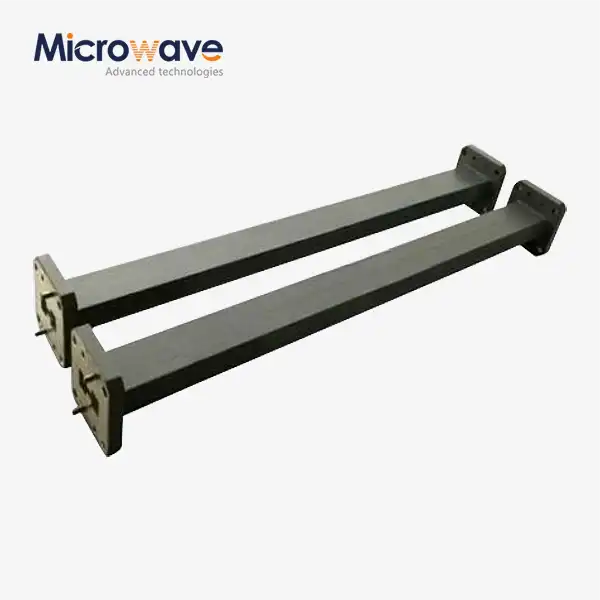 VIEW MOREDouble Ridge Straight Waveguide
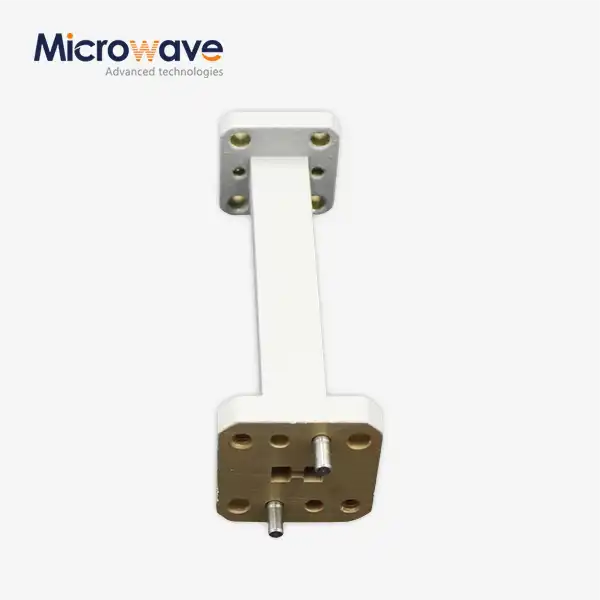 VIEW MOREDouble Ridge Waveguide Transition
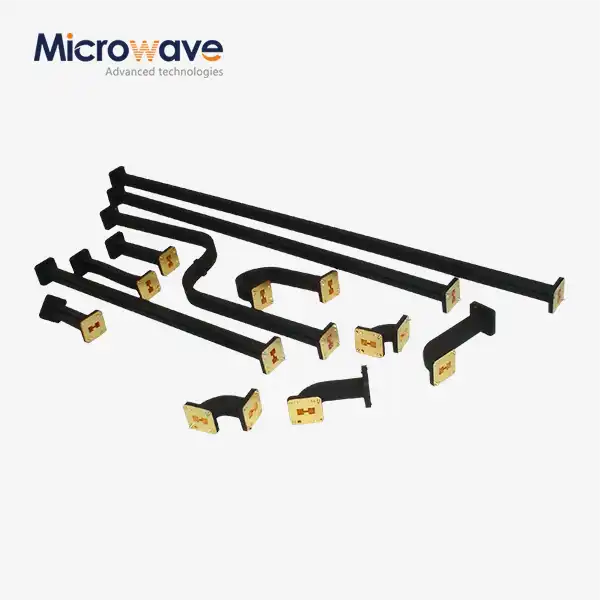 VIEW MOREDouble Ridged Flexible Waveguide
 VIEW MOREDouble Ridge Waveguide Load
 VIEW MOREDouble Ridge Waveguide Rotary Joint
 VIEW MOREDouble-Ridged Waveguide Broadwall Directional Coupler
 VIEW MOREWaveguide Flange Gasket
 VIEW MOREWaveguide Adjustable Support
