





Waveguide Bandpass Filter Advantages in Industrial Systems
When industrial systems demand precision signal transmission across high-frequency microwave and millimeter-wave spectrums, waveguide bandpass filters deliver unmatched performance. These specialized RF components permit specific frequency bands to pass through while rejecting unwanted signals, ensuring electromagnetic integrity in mission-critical applications. Built from high-conductivity metals and leveraging air-dielectric waveguide structures, these filters achieve exceptionally low insertion loss, high power handling, and thermal stability—characteristics that coaxial or planar alternatives cannot replicate. Across aerospace radar, satellite ground infrastructure, and 5G backhaul networks, waveguide filtering technology remains the gold standard where reliability and signal purity define operational success.
Understanding Waveguide Bandpass Filters and Their Industrial Role
Depending on the need for thermal expansion, Waveguide Bandpass Filters can be made from aluminum alloy, copper, or Invar. They act as precise guards in RF data chains. Instead of using microstrip or lumped-element designs, these filters take advantage of the natural resonance qualities of hollow metallic structures. In many commercial designs, they can achieve Q-factors above 5,000 and insertion losses below 0.3 dB. They work mostly between 1 GHz and 110 GHz and can handle both continuous wave and high-peak-pulse power without the risk of dielectric breakdown.
Industrial Application Domains
These filters clean point-to-point E-band and V-band backup pathways for much of the telecom infrastructure. Even slight phase shifts or interference from adjacent channels can delay data transmission in modulation techniques like 256 QAM, which require complete signal integrity. Waveguide filters remove unwanted harmonics and emissions, lowering connection costs across several kilometers.
Waveguide filters are used in ship radar stations with multiple transmit and receive chains in defense and aerospace systems. Filters eliminate ghost signals and transmitter noise that might cause misleading target detection. Electronic warfare sets a block on friendly radar signals with band-reject versions. This helps ESM receivers detect adversary emissions without being overloaded.
Satellite earth stations utilize waveguide filters for uplink and downstream. On the broadcast side, filters remove amplification harmonics that might disrupt nearby satellite transponders. When they receive, they extract narrow frequency assignments from broadband noise to maintain carrier-to-noise ratios for error-free data retrieval. Their all-metal construction makes them excellent for space packaging since they function in a vacuum and withstand radiation. Plastic dielectrics leak gas or degrade in UV radiation.
Performance Parameters Driving Industrial Adoption
Insertion loss affects system gain funds. Any 0.5 dB loss in 500-watt uplink signals amplified at a satellite ground station increases power demand and heat management. Air as the moving medium eliminates dielectric losses, and high-conductivity silver plating reduces resistance losses in waveguide filters.
The return loss criteria show how much data returns to the source. Load variations can cause industrial receivers' solid-state power amplifiers to malfunction or fail early. Waveguide filters typically have VSWR ≤ 1.2:1 across all passbands. This maximizes power to downstream parts and protects them.
Broadband digital transmission methods need group delay flatness. When frequency sections of a modulated signal have distinct time delays, intersymbol interference disrupts the demodulated bitstream. Precision-tuned waveguide filters maintain signal integrity beyond gigahertz bandwidths by limiting group delay change to a few nanoseconds.
Core Advantages of Waveguide Bandpass Filters Over Alternative Technologies
Waveguide Bandpass Filter propagation has benefits that other filter technologies can't match in difficult industry settings because of the way it works physically. By understanding these differences in performance, procurement engineers can use lifetime value to defend the higher initial prices.
Superior Power Handling and Thermal Management
When PTFE or ceramic dielectrics are used in coaxial cavity filters, the breakdown voltages are so high that constant power can only reach kilowatt levels. When waveguide structures are only filled with air or vacuum, they can handle tens of kilowatts of power all the time and peak powers of megawatts in burst radar uses. Waveguide walls have a lot of surface area, which effectively moves heat away from resonant structures. This keeps the tuning fixed even when they are running at high power for a long time.
Unmatched Insertion Loss Performance
At X-band frequencies, a standard waveguide bandpass filter has an insertion loss of 0.2 to 0.4 dB, while similar microstrip designs have an insertion loss of 1.5 to 3 dB because of wire and dielectric dissipation. These gaps get much bigger when you use a cascaded RF chain with many filtering steps. Because waveguide resonators have a high empty Q-factor (often between 8,000 and 12,000), they can filter out narrow bands without losing passband flatness.
Environmental Ruggedness and Stability
RF parts are exposed to shaking, temperature changes, humidity, and electromagnetic pollution in industrial settings. Waveguide filters made from a single billet of metal are mechanically rigid, so shocks and vibrations can't change the tune. The tightly sealed design keeps wetness out of the internal resonators, which would change the resonant frequencies or damage the tuning elements if it got in. Temperature effects can be controlled by using Invar construction or bimetallic adjustment. The center frequency stays stable within ±5 MHz from -40°C to +85°C.
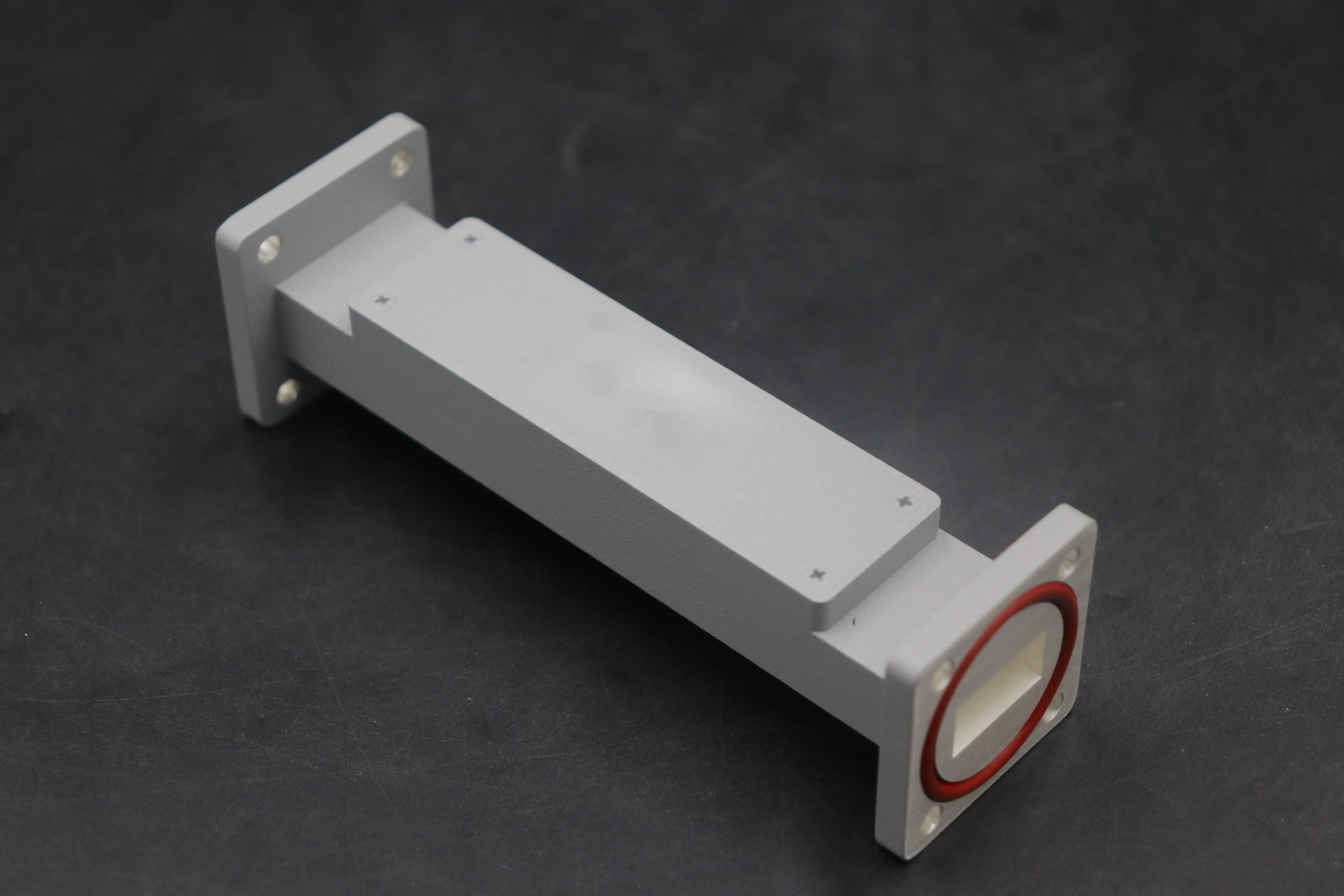
Because of these features, the average time between failures is significantly longer than with planar options. Waveguide filters can keep their specs without needing to be recalibrated or replaced. This is helpful for naval radar systems that work in salt spray and for mobile satellite stations that have to deal with extreme temperatures in the desert.
Comparison with Alternative Filter Technologies
Cavity filters with circular resonators have small sizes, but they lose Q-factor and the ability to handle power. Because they are dielectrically loaded, they are sensitive to temperature and can multipair in high-power situations. Dielectric resonator filters can be made smaller so they can be used in business wireless infrastructure, but they can't handle the high power levels or harsh environments found in defense and military systems.
Microstrip and stripline filters make it possible to combine flat circuits and MMIC components, which lowers the cost of putting together mass-produced electronics. They can't be used for long-distance communication or sensitive sensor front-ends where noise figure limits are measured in tenths of decibels because the wire and substrate lose a lot of power at millimeter-wave frequencies.
Design and Customization Principles for Optimized Industrial Systems
To successfully integrate a Waveguide Bandpass Filter, the electrical performance requirements must be matched to the mechanical limitations and the surrounding conditions. Catalog items that are already made can be used for a wide range of tasks, but mission-critical systems work much better with designs that are specifically tailored to their needs.
Material Selection and Fabrication Methods
For most commercial waveguide filters, Aluminum 6061 is the best combination of being easy to machine, light, and good at conducting RF waves. CNC cutting can get dimensions to within ±0.025 mm, which is very important for keeping the resonance frequency accurate. On the inside, areas are coated with a chemical conversion layer and then electroplated with silver to improve conductivity and reduce oxidation over the span of the device.
Invar is used for resonator devices in situations where high temperature stability is needed. The almost-zero thermal expansion rate keeps the frequency stable over a wide range of temperatures, where metal filters would shift by tens of megahertz. Special vacuum-compatible materials and gluing methods are used in space-qualified filters to stop outgassing and keep hermeticity even when there is a strong vacuum.
Electromagnetic Simulation and Performance Optimization
Modern 3D electromagnetic modeling tools enable virtual prototyping. This greatly reduces development time. Engineering models filter systems with flange connections, tuning screws, and manufacturing tolerances before cutting metal to test filter performance. Parametric optimization methods automatically modify coupling iris and resonator sizes to get filter responses like Butterworth for passband flatness or Chebyshev for optimum selectivity.
Measured performance matches expectations within 1% to 2% for frequency, insertion loss, and rejection due to enhanced simulation accuracy. This capability allows rapid alterations to unique designs for odd frequency assignments, asymmetric rejection, or current waveguide runs.
OEM Partnership Value in Custom Development
Early involvement with experienced waveguide filter producers in design offers benefits beyond merely procuring components. Our engineers have spent decades balancing electrical performance, mechanical packing, temperature management, and manufacturing simplicity. We've helped military industries develop compact filter units that fit many passbands into small radome volumes, and satellite operators make ground terminal filters that meet their orbital slot frequency plans.
A telecom equipment manufacturer requested filters for a new E-band relay radio. Standard stock goods satisfied electricity needs but exceeded size budget. Together, we created a bent waveguide structure that lowered filter length by 40% while maintaining insertion loss below 0.6 dB. An adapter assembly was eliminated by the unique flange link, saving weight and cost. Compared to iterative sampling of off-the-shelf parts, our collaborative strategy lowered development time by eight weeks.
How to Choose the Right Waveguide Bandpass Filter for Your Industrial System
When choosing where to buy Waveguide Bandpass Filters, you need to do more than just match the frequency specifications. A methodical evaluation process makes sure that the chosen parts meet current needs while also leaving room for future system improvements.
Frequency Band and Bandwidth Requirements
Find the operating frequency with enough accuracy to take into account Doppler shifts, local oscillator errors, and channel assignments next to it. When defining bandwidth, it's important to include guard bands that can handle modulation sidebands and take into account how filters skirt roll off. When bandwidths are too small, signal energy can be clipped, and when bandwidths are too big, noise is allowed in.
Insertion Loss and Return Loss Budgets
Make link budgets for the whole system, making sure that each part has an acceptable amount of loss. Keep in mind that insertion loss takes away straight from the send effective radiated power or the receiver's sensitivity. When filter steps are cascaded, losses build up, and contact points get worse, which could lower the dynamic range. Specifications for return loss keep power amps safe from echoes that could cause damage or instability.
Power Handling and Thermal Constraints
Give both the average and peak power levels, taking into account the duty cycles and pulse patterns of the modulation. For continuous wave uses, thermal research is needed to make sure that the filter wall temperatures stay below the point at which the silver plating starts to break down. Pulsed systems need to avoid voltage breakdown and multipaction, which can happen at high peak powers even when the average power seems low.
Environmental Qualification Requirements
MIL-STD-810 tests for shock, vibration, thermal cycling, humidity, and salt fog must be met for military and aircraft uses. More and more, commercial satellite ground systems require the same kind of environmental tests to make sure they work well in outdoor sites that are left alone. For space-qualified filters to meet NASA or ESA standards for vacuum compatibility, radiation tolerance, and paperwork tracking, they need to go through more tests.
Supplier Evaluation Criteria
In addition to technical specs, you should also look at the manufacturer's ISO 9001 quality systems, the ability to track measurement tools back to national standards bodies, and how quickly engineering support can respond. Look at case studies that show how similar applications have been used before, especially when it comes to managing the change from pilot to production and being able to make changes quickly. Custom designs usually take between 4 and 8 weeks to make, based on how complicated they are, so it's best to start working with suppliers early in the system development process.
Global logistics skills are important when working on foreign projects or keeping track of goods in several locations. Manufacturers that offer regional warehouse and expert field support lower the risks of buying and speed up the process of fixing problems during the system integration phases.
Future Trends and Innovations in Waveguide Bandpass Filters in Industrial Systems
The microwave component business keeps improving Waveguide Bandpass Filter technology by researching new materials, coming up with new ways to make things, and coming up with new topological designs. These changes look like they will lead to better performance and new ways to use them in many different industries.
Low-Loss Material Advancements
Researchers looking into high-temperature superconductor surfaces have found that their empty Q-factors are higher than 100,000 at very low temperatures. Specialized radio astronomy and quantum computing are the only areas where the technology can be used right now, but it proves basic ideas that could one day be used in industry. Nanocrystalline silver plating and graphene-enhanced wires are two technologies that will help room-temperature systems lose less power in the near future.
Miniaturization Through Ridge and Finline Structures
At millimeter-wave bands, it's hard to package traditional rectangular waveguides because their sizes change backwards with frequency. Ridge waveguide designs focus electromagnetic fields in areas with smaller cross-sections, which makes it possible to reduce the size of filters by 40–60% compared to a normal waveguide. While finline and substrate-integrated waveguide methods allow for even smaller designs and mixed integration with planar circuits, they do come with a loss in insertion performance.
Tunable and Reconfigurable Filter Technologies
Filters whose properties change based on shifting operating needs are helpful for industrial IoT and software-defined radio systems. Electronic frequency can be changed without mechanical movers using ferroelectric varactors, MEMS-actuated tuning elements, and magnetostatic loading methods. At the moment, reconfigurability comes at a cost of some insertion loss and power handling, but these performance gaps are getting smaller as work continues.
Additive Manufacturing and Rapid Prototyping
Metal 3D printing technologies can now make surfaces and measurements that are almost as accurate as those made by CNC machines for waveguides. Additive manufacturing makes it possible to make complex internal shapes that aren't possible with traditional cutting. This could lead to new ways of connecting parts and managing heat. As the conductivity of materials and the repeatability of the process get better, 3D-printed filters may be a cheaper way to make unique patterns in small quantities.
Increased Demand for Application-Specific Solutions
One-size-fits-all filter solutions don't work for more specialized industrial systems, like radar for self-driving cars, sensors for precision farming, or tracking systems for industrial processes. Companies that put money into flexible design tools, infrastructure for fast prototyping, and application experts will get a bigger part of the market. Premium providers are different from commodity component vendors because they can work with customers to create custom solutions that meet their specific frequency plans, mechanical connections, and environmental requirements.
Conclusion
Waveguide Bandpass Filters are still very important parts of industrial systems that need to keep signals safe, handle power, and work well in harsh environments. Because they are naturally better at insertion loss, temperature stability, and electromagnetic performance, they are specified in high-stakes aircraft, defense, telecommunications, and satellite infrastructure uses. To choose the best filters, you need to look at a lot of factors, including electricity features, environmental requirements, and the supplier's abilities. As technology moves toward higher frequencies and flexible systems, waveguide filters continue to change through new materials and ways of making them. However, they still have basic performance benefits that come from the way transmission lines work.
FAQ
Q1: What frequency ranges do waveguide bandpass filters cover?
In general, Waveguide Bandpass Filters work well from about 1 GHz up to millimeter-wave frequencies higher than 110 GHz. Below 1 GHz, waveguide diameters get too big to be useful, so coaxial methods are better. Various waveguide standards, such as WR-430, WR-90, WR-28, and others, cover particular frequency ranges that work best.
Q2: How does temperature affect waveguide filter performance?
When metals heat up, they cause resonant frequency changes, which are usually between -25 and -50 ppm/°C for aluminum. This is lowered to less than -5 ppm/°C by systems that use Invar. For locations outside and in space, the materials need to be able to handle temperature changes or be thermally stable so they can keep working in temperatures of 100°C or higher.
Q3: Can waveguide filters be customized for unique frequency requirements?
One of the best things about waveguide technology is that it can be customized. Manufacturers regularly create filters for non-standard frequency assignments, uneven rejection requirements, and unique mechanical connections. Lead times for custom designs are usually 4 to 8 weeks longer than for catalog goods because they need electromagnetic modeling, prototype manufacturing, and human tuning.
Partner with ADM for Precision Waveguide Bandpass Filter Solutions
Advanced Microwave Technologies Co., Ltd has been creating and making Waveguide Bandpass Filters for mission-critical industry uses for more than twenty years. Our ISO 9001-certified factories and testing tools that can go up to 110 GHz make sure that every part meets strict performance requirements. Our engineering team works closely with procurement professionals and system designers throughout the development process, whether you need a list of goods that can be put into use quickly or fully customized solutions that are made to fit your specific system needs. We provide defense companies, satellite operators, telecommunications providers, and research institutions with parts that have been tested and shown to work reliably in the toughest conditions. As a reliable waveguide bandpass filter seller, we keep up with global logistics to make sure that our customers get their orders on time and get full expert support. Email our applications engineering team at craig@admicrowave.com to talk about your unique filtering needs and find out how our high-quality production and application knowledge can improve the performance of your industrial system.
References
1. Matthaei, G.L., Young, L., and Jones, E.M.T. (1980). Microwave Filters, Impedance-Matching Networks, and Coupling Structures. Artech House.
2. Levy, R. (1976). "Filters for Communications Satellites," IEEE Transactions on Microwave Theory and Techniques, vol. 24, no. 6.
3. Cameron, R.J., Kudsia, C.M., and Mansour, R.R. (2007). Microwave Filters for Communication Systems: Fundamentals, Design, and Applications. Wiley-Interscience.
4. Rhodes, J.D. (1976). Theory of Electrical Filters. John Wiley & Sons.
5. Hunter, I.C. (2001). Theory and Design of Microwave Filters. Institution of Engineering and Technology.
6. Snyder, R.V. (2007). "New Application of Evanescent Mode Waveguide to Filter Design," IEEE Transactions on Microwave Theory and Techniques, vol. 25, no. 12.
YOU MAY LIKE
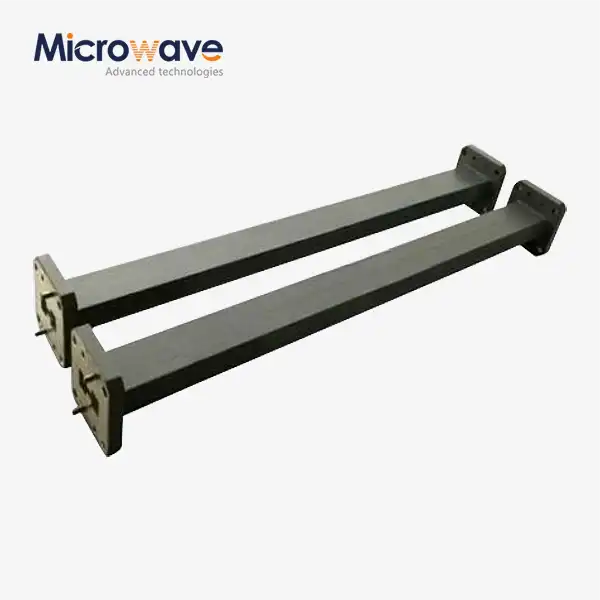 VIEW MOREDouble Ridge Straight Waveguide
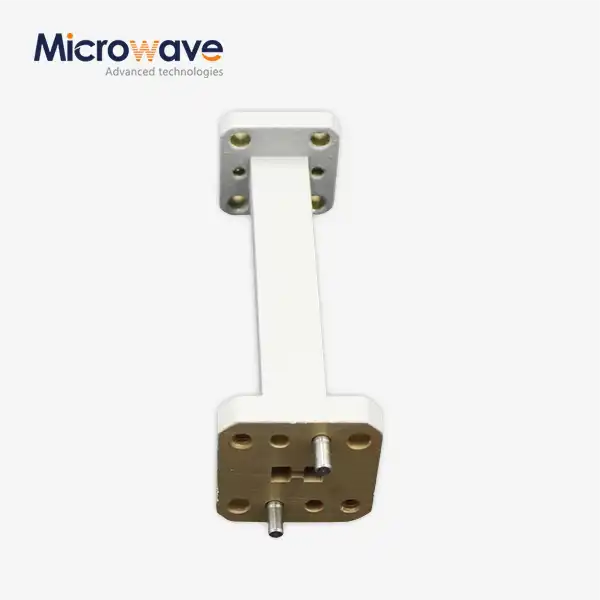 VIEW MOREDouble Ridge Waveguide Transition
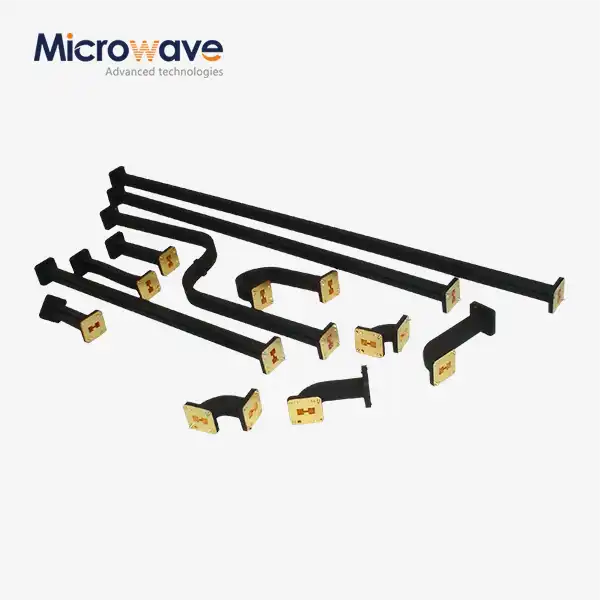 VIEW MOREDouble Ridged Flexible Waveguide
 VIEW MOREDouble Ridge Waveguide Load
 VIEW MOREDouble Ridge Waveguide Rotary Joint
 VIEW MOREDouble-Ridged Waveguide Broadwall Directional Coupler
 VIEW MOREWaveguide Flange Gasket
 VIEW MOREWaveguide Adjustable Support