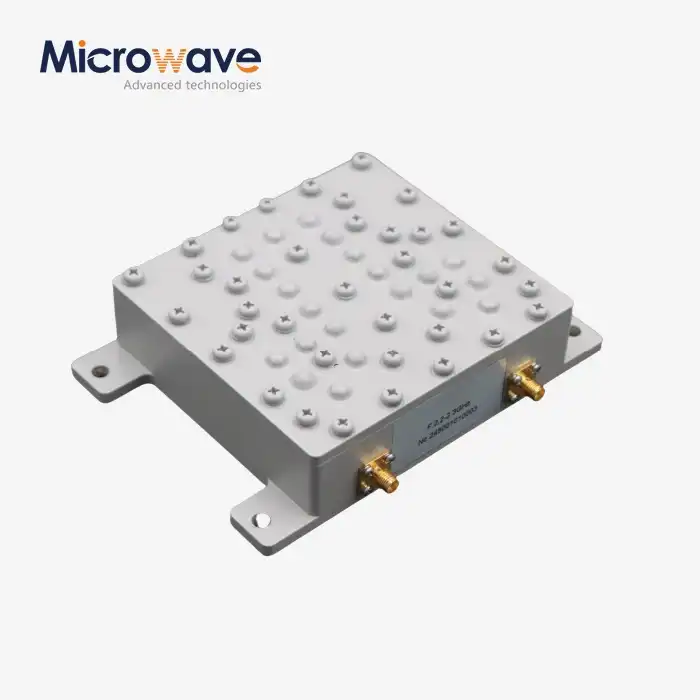
Waveguide Harmonic Filter Design for Automotive Workshop
Modern automotive systems increasingly demand precise RF signal management as vehicles transition into mobile communication hubs. A waveguide harmonic filter serves as a specialized passive component that suppresses unwanted harmonic frequencies while allowing fundamental signals to pass cleanly—critical for maintaining signal integrity in emerging automotive applications like vehicle-to-everything (V2X) communication, advanced driver-assistance systems (ADAS), and satellite-based connectivity. These filters leverage the unique cutoff properties of waveguide structures to achieve superior harmonic rejection compared to traditional coaxial designs, making them indispensable for automotive workshops integrating next-generation RF systems.
Understanding Waveguide Harmonic Filters in Automotive Applications
There have been huge changes in the car industry over the last ten years. Radar devices that work at 24 GHz and 77 GHz, cellular modems that connect to 5G networks, GPS readers, satellite communication terminals, and wireless charging systems are all now built into vehicles. This dense electromagnetic environment causes a lot of problems. For example, high-power amplifiers cause harmonic effects that can mess up nearby frequency bands, which could damage important safety systems or break rules about emissions.
Fundamental physics are used by Waveguide Harmonic Filters to solve these problems. Instead of using resonance structures like coaxial or cavity filters do, waveguide designs use the way waves propagate through hollow metal channels. Electromagnetic waves can't travel below a certain frequency set by the waveguide's cross-sectional dimensions. They weaken rapidly below that frequency. Because of this feature, engineers can make filters that work very well in the stopband and often reject more than 60 dB of harmonic frequencies.
What Makes Waveguide Filters Distinct?
Connecting cavity filter resonant holes creates bandpass or bandstop responses. Their size and tuning need great attention, but they function. Dielectric filters employ high-dielectric constant ceramics to shrink resonant structures, but they can only tolerate so much power. Coaxial screens are compact and easy to use, but excessive power and heat can damage them.
In automotive contexts, Waveguide Harmonic Filters can withstand high peak power without dielectric breakdown hazards, perform at high temperatures (-40°C to +85°C is usual), and maintain their electrical qualities over time. Without internal dielectrics, there are no moisture absorption issues like with conventional filters when wet.
Critical Technical Specifications for Automotive Integration
Car shop purchasing specialists should consider several aspects while buying Waveguide Harmonic Filters. For new satellite connections, Ka-band (26.5-40 GHz) or millimeter-wave bands for 6G research are suitable. Well-designed waveguide filters may achieve an insertion loss < 0.15 dB, which affects system performance. Return loss (typically over 20 dB) limits the source amplifier return. Size matters when deploying cars in tight places, when every cubic centimeter counts.
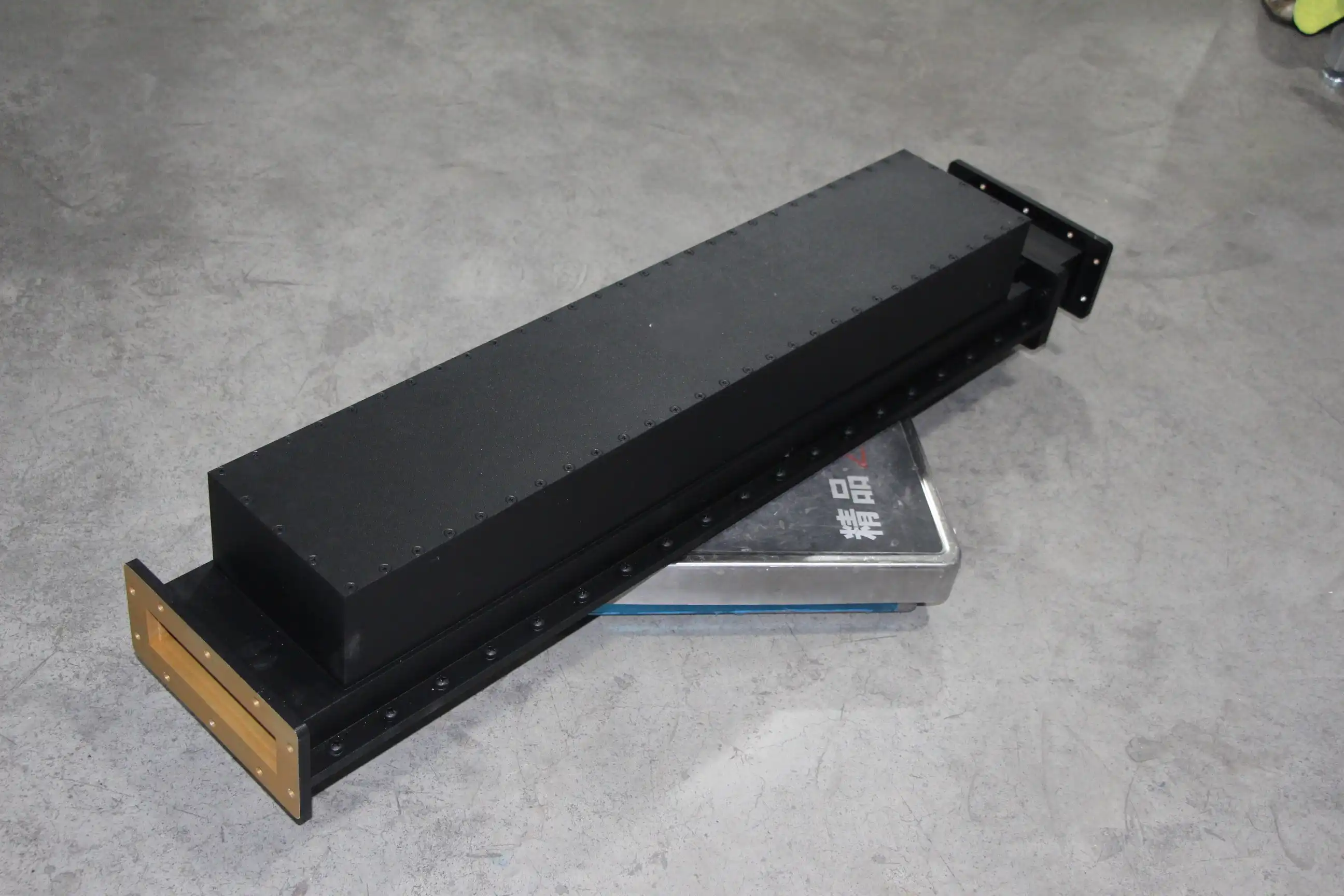
Material choice influences performance and durability. Heat transmission, low weight, and ease of workability make 6061-T6 aluminum alloy a good choice. Copper conducts power better but costs more and weighs more. Internal surface treatments, preferably with silver plating, minimize resistance losses and provide device stability. Connectors and flanges must meet automotive shaking requirements, and gaskets must be chosen to assure RF sealing over temperature fluctuations.
Design Principles and Methodologies for Automotive Workshops
When making Waveguide Harmonic Filters for cars, you have to find the right balance between electromagnetic performance, mechanical robustness, and the ability to make the filters. The first step is to define the system's needs: what basic frequency must be able to pass with the least amount of loss? What sounds need to be squelched? In what ranges of power does the filter need to work? What kinds of stresses will it have to deal with?
Engineers can make models of waveguide structures before making a real prototype with electromagnetic modeling tools like CST Microwave Studio or ANSYS HFSS. By using numbers to solve Maxwell's equations, these tools can predict how electromagnetic fields will move through complicated shapes. Internal structures that are corrugated or "waffle-iron" shape stopbands that are spread out and successfully catch harmonic energy, turning it into heat that escapes through the waveguide walls.
Optimization Techniques for Low-Loss Performance
To obtain an insertion loss below 0.1 dB, pay attention to every aspect. Smoother interior surfaces reduce resistance losses. The as-built filter matches the modeled performance due to precision CNC cutting with tolerances of ±0.025 mm. Rounded interior corners prevent current from combining, increasing resistance. Split-block architecture, where the waveguide divides along the E-plane, simplifies manufacture but requires flatness and alignment to prevent leaks.
Thermal management is crucial for filters near high-power amps. In car shops, transmission powers range from 10W to 100W, with 10–20% harmonic content. Fixing flanges or heat sinks can prevent temperatures from increasing and harming neighboring parts or making them less effective.
Case Study: Filter Design for 5G Vehicle Connectivity
Real-life examples include building a Waveguide Harmonic Filter for a 28 GHz 5G base station atop a city automobile for mobile connection. The system uses 50W amplifiers. Its high second harmonic content at 56 GHz might affect other millimeter-wave systems. The WR-28 waveguide, with an internal dimension of 7.11 mm × 3.556 mm and a passband of 27.5 to 40 GHz, was the starting point for our ADM design
Simulating the three-section waffle iron frame improved it. An insertion loss of 0.08 dB, return loss of more than 25 dB, and 2nd harmonic rejection of above 70 dB at 56 GHz were recorded at 28 GHz. Vibration testing confirmed mechanical stability per MIL-STD-810. The filter's 65 mm length allowed it to be used with the vehicle's RF unit without rebuilding.
Addressing Automotive-Specific Challenges
The automotive environment is problematic. Mechanical parts can be stressed, and metals expand at various rates while moving from arctic to desert temperatures. The interior and exterior must withstand engine and traffic vibrations. Electrical interference from ignition systems, motors, and power electronics creates a loud RF backdrop. This is why clean filtering matters.
Modular design offers several automobile system possibilities. Various filters for various frequency bands can be mounted in the same locations by uniformizing flange surfaces and physical regions. This versatility helps businesses that operate on different car types keep their inventory simple while maintaining fleet performance.
Comparison and Selection: Waveguide Harmonic Filter vs Alternative Technologies
When choosing RF filtering options, automotive buying managers have to make hard choices. Budget constraints and performance standards are at odds with each other. Limited room and maintenance issues add to the complexity. Knowing the pros and cons of Waveguide Harmonic Filters and other technologies lets you make smart decisions that maximize long-term worth.
Performance Metrics Under Automotive Operating Conditions
Cavity bandstop filters can target harmonic frequencies for narrowband rejection. However, passband insertion loss is frequently 0.3 to 0.5 dB greater than in waveguide systems. Stability at low temperatures is difficult without pricey Invar construction. Even though these tuning screws allow post-production tweaks, they create weak places that might break when the temperature changes.
Dielectric filters compress well, making them ideal for small tasks. They are only suitable for receiver systems or low-power emitters since they can only withstand less than 10W average power. Automotive shops using high-power radar or satellite transmission systems may only use waveguide or cavity solutions for endurance.
Cost Implications and Lifecycle Considerations
The original purchase price is only a portion of the overall ownership cost. Waveguide Harmonic Filters cost more because they need accuracy. Custom vehicle waveguide filters can cost $800 to $2,500, depending on complexity and quantity. Similar coaxial filters cost $200–$600. Waveguides don't need maintenance and may last over 15 years without losing function. This improves lifespan cost estimates.
Workshops should examine dependability and failure reasons. Because they contain no moving parts or biological materials, waveguide filters are dependable. Over 500,000 hours pass between failures. Mission-critical automotive usage requires this reliability since system downtime reduces productivity and safety.
Waveguide Harmonic Filters are chosen for superior dependability, power handling, and long-term performance. These are ideal for sophisticated vehicle communication system-supporting automotive garages.
Procurement and Supplier Guidance for Automotive Workshop Needs
If you want to buy specialized RF components, you need to know about both the technical standards and the business issues that come up. When auto shops install or upgrade communication systems, they can get more out of their strategic supplier relationships than just buying things. These relationships include professional collaboration and long-term help.
Custom vs. Standard Product Options
Standard catalog filters have faster wait times (usually two to four weeks) and lower unit costs, so they can be used when system needs match off-the-shelf specs. Custom designs give the best performance for certain car uses, but they take 8 to 12 weeks for engineering, testing, and approval. Workshops should decide if the benefits of customization—like exact frequency alignment, built-in mounting features, or better form factors—are worth the extra money and time.
Different providers have very different minimum order amounts. Large makers might need 50 to 100 units for unique designs, which might be more than what a small workshop could handle. We at Advanced Microwave Technologies Co., Ltd. understand this problem and offer variable MOQ structures, such as prototype numbers as low as 5–10 units for testing before committing to large production volumes.
Evaluating Supplier Capabilities and Certifications
Quality badges are objective proof that a seller can be trusted. Getting ISO 9001:2015 approval shows that you have strong quality management systems that cover the planning, making, and checking processes. For automotive applications, workshops should make sure that suppliers keep up-to-date occupational health standards (ISO 45001:2018) and environmental certifications (ISO 14001:2015), which show that they are committed to safe working conditions for their employees. These are factors that indirectly show how mature and reliable an organization is.
Technical knowledge is what sets capable providers apart from makers. Look for companies that have their own RF engineering teams, advanced measurement tools (like vector network testers that work with your frequency range), and testing facilities for outdoor factors (like thermal rooms and vibration tables). We have monitoring tools at ADM that can work up to 110 GHz in our labs. This lets us fully test millimeter-wave parts that are important for new car uses.
Warranty Terms and After-Sales Support
Waveguide part warranties typically extend 12–24 months and cover manufacturing defects. Explain warranty failures, misuse, or outside damage that isn't covered. System integration benefits from after-sales technical assistance. Suppliers who provide application engineering, measuring, and fixing services provide value to the product.
Price approaches should be examined thoroughly. Discounts for bulk purchases start at 10 units and decrease at 25, 50, and 100 units. For overseas imports, global logistics planning is crucial. Suppliers who use precision instrument freight forwarders ensure timely delivery. ADM's export-focused operations simplify customs paperwork and enable you to track your deliveries, so you can shop with confidence.
Future Trends and Innovation in Waveguide Harmonic Filters for Automotive Workshops
Connectivity and self-driving cars are about to bring about huge changes in the auto business. These changes in technology open up more possibilities for companies that sell RF components and workshops that are quick to adapt to new needs.
Materials Science and Miniaturization Advances
The study of additive manufacturing (3D printing) of metal RF parts could completely change the way waveguides are made. Direct metal laser sintering (DMLS) makes it possible to create complicated internal geometries that aren't possible with traditional machining. This could lead to filters that are lighter, smaller, and work better. At millimeter-wave frequencies, current technology has trouble getting the surface finish needed for low-loss waveguides. However, ongoing research says that production will be possible within 3–5 years.
New surface processes that go beyond silver plating are starting to appear. Coatings made of graphene are very good at conducting electricity and resisting oxidation. Engineered hybrid materials with electromagnetic qualities not found in nature are called metamaterial-inspired structures. They allow for unprecedented control over wave propagation, which could lead to Waveguide Harmonic Filters that are half the size of current designs but work just as well.
Integration with 5G and Satellite Communication Systems
High-performance filtering at mid-band (3.5 GHz) and millimeter-wave (24–47 GHz) bands is in high demand as 5G networks are used in more cars. For connected cars to work, they need to be able to easily switch between cellular, Wi-Fi, and satellite networks, each of which has its own filtering needs. Workshops that work with fleet cars, emergency response systems, or mobile command centers need to set up the infrastructure for these multi-band communication designs.
Low Earth orbit (LEO) satellite systems from companies like Starlink and OneWeb join devices all over the world, even those in mobile vehicles. These systems work at Ka-band (20/30 GHz) and Ku-band (12/14 GHz), which means they need precise harmonic filters to keep them from interfering with services on the ground. As the use of satellites grows, workshops that market themselves as sources of knowledge in integrating satellites into vehicles gain a competitive edge.
Strategic Guidance for Proactive System Upgrades
Automotive shops should compare their current RF equipment to what is needed in the future. Does the test gear we already have work with millimeter-wave frequencies? Have workers been trained in how to install and test waveguides? By adding these skills, workshops will be able to meet the growing demand for installing and maintaining new car communication systems.
You can get access to cutting-edge solutions as technologies improve if you work with providers who invest in research and development. Our 24m Microwave Darkroom, which can measure up to 110 GHz, shows that Advanced Microwave Technologies Co., Ltd is dedicated to constant innovation. This makes us a forward-looking partner for workshops that are planning long-term capability development.
Conclusion
Waveguide Harmonic Filters are important technologies that make it possible for car shops to support next-generation vehicle communication systems. They are the best choice for challenging RF uses because they can handle more power, reject harmonics better, and are reliable over time, even though they cost more at first than other technologies. To do good buying, you need to compare technical specs to what the application needs, check the skills and credentials of the suppliers, and know the total costs over the whole product's life, not just the unit price. As car systems become more connected and self-driving, workshops that actively build waveguide knowledge and supplier relationships will be able to take advantage of growing market possibilities in this fast-paced technology world.
FAQ
Q1: Can waveguide harmonic filters withstand automotive vibration environments?
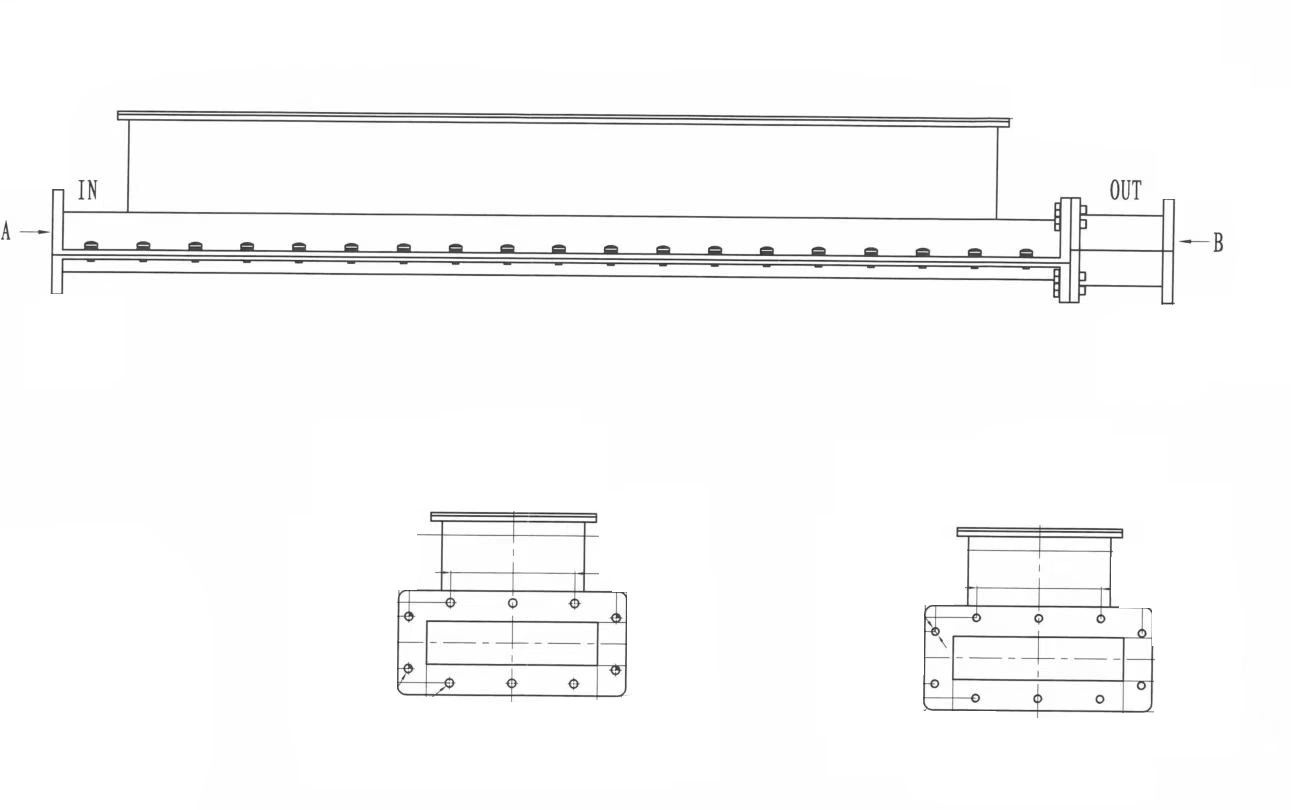
When properly built, Waveguide Harmonic Filters go beyond what is needed for vehicle vibration. Precision-machined split blocks with multiple screws spaced along the seam, along with strong flange connections, are used in construction to make units that keep their electrical performance through MIL-STD-810 vibration testing. We suggest asking for vibration tests during the buying process to make sure the product is suitable for mobile installations.
Q2: How do I determine the correct waveguide size for my application?
The working frequency affects the waveguide size you choose. Each standard waveguide name (WR-28, WR-90, etc.) has a frequency band where it should only transmit the basic TE10 mode. The best result is achieved by operating close to the middle of this band. At ADM, our engineering team helps customers choose the right waveguide based on the needs of their system. This makes sure that the mode control is correct and that there is minimal loss.
Q3: What maintenance do waveguide harmonic filters require?
Waveguide filters require essentially zero maintenance under normal operating conditions. For most setups, an eye check of the flange connections and mounting tools every so often is enough. In automotive settings, it may be necessary to check the tightness of gaskets and clean the outside of them of any dirt or debris that has built up. Long-term dependability is very high because there are no moving parts or materials that can break down inside.
Partner with ADM for Your Waveguide Harmonic Filter Requirements
Advanced Microwave Technologies Co., Ltd has been making precision waveguide assemblies, coaxial components, and microwave systems for over 20 years. These systems are used in defense, aerospace, satellite communication, and new car uses. Our ISO 9001:2015-certified production methods and state-of-the-art testing facilities, such as our 24m Microwave Darkroom that can measure up to 110 GHz, make sure that every Waveguide Harmonic Filter meets the strictest technical requirements. Our expert team works with you from the first specification to production delivery, whether you need regular catalog items or solutions that are specifically designed to work best in a car workshop. As a reliable waveguide harmonic filter maker with experience exporting to over 100 countries, we offer low prices, adjustable minimum order quantities, and full support after the sale. Email craig@admicrowave.com to talk about your project needs and find out how our experience can help you speed up the merging of your car RF system.
References
1. Matthaei, G. L., Young, L., & Jones, E. M. T. (2019). Microwave Filters, Impedance-Matching Networks, and Coupling Structures. Norwood: Artech House Publishers.
2. Pozar, D. M. (2021). Microwave Engineering, 5th Edition. Hoboken: John Wiley & Sons, Inc.
3. Cameron, R. J., Kudsia, C. M., & Mansour, R. R. (2018). Microwave Filters for Communication Systems: Fundamentals, Design, and Applications, 2nd Edition. Hoboken: John Wiley & Sons, Inc.
4. Zhang, Q. J. & Gupta, K. C. (2020). Neural Networks for RF and Microwave Design. Boston: Artech House Publishers.
5. Saad, T. S. (2017). Microwave Engineers' Handbook, Volume 1 and 2. Norwood: Artech House Publishers.
6. Rao, S. K. (2022). Automotive Radar Technology: Principles, Systems, and Applications. Singapore: Springer Nature Singapore.
_1733738410152.webp)