





Variable Attenuator in Microwave Signal Testing
Precision signal power control is essential for high-frequency communication systems to perform properly and produce accurate results. A variable attenuator in microwave applications adjusts signal strength without impacting frequency or phase stability. These devices replicate real-world situations and enhance system behaviour for radar part testing, satellite ground station adjustment, and 5G infrastructure validation. Our handbook covers microwave variable attenuators' technical details, practical applications, and procurement issues, equipping engineers and buying managers to make educated decisions based on decades of manufacturing knowledge.
Understanding Variable Attenuators in Microwave Systems
Microwave engineers use precision variable attenuators to dynamically regulate signal power levels over a frequency band. In contexts that demand measurement flexibility and reproducibility, these components are essential because they adapt to changing test requirements.
Fundamental Operation and Core Technologies
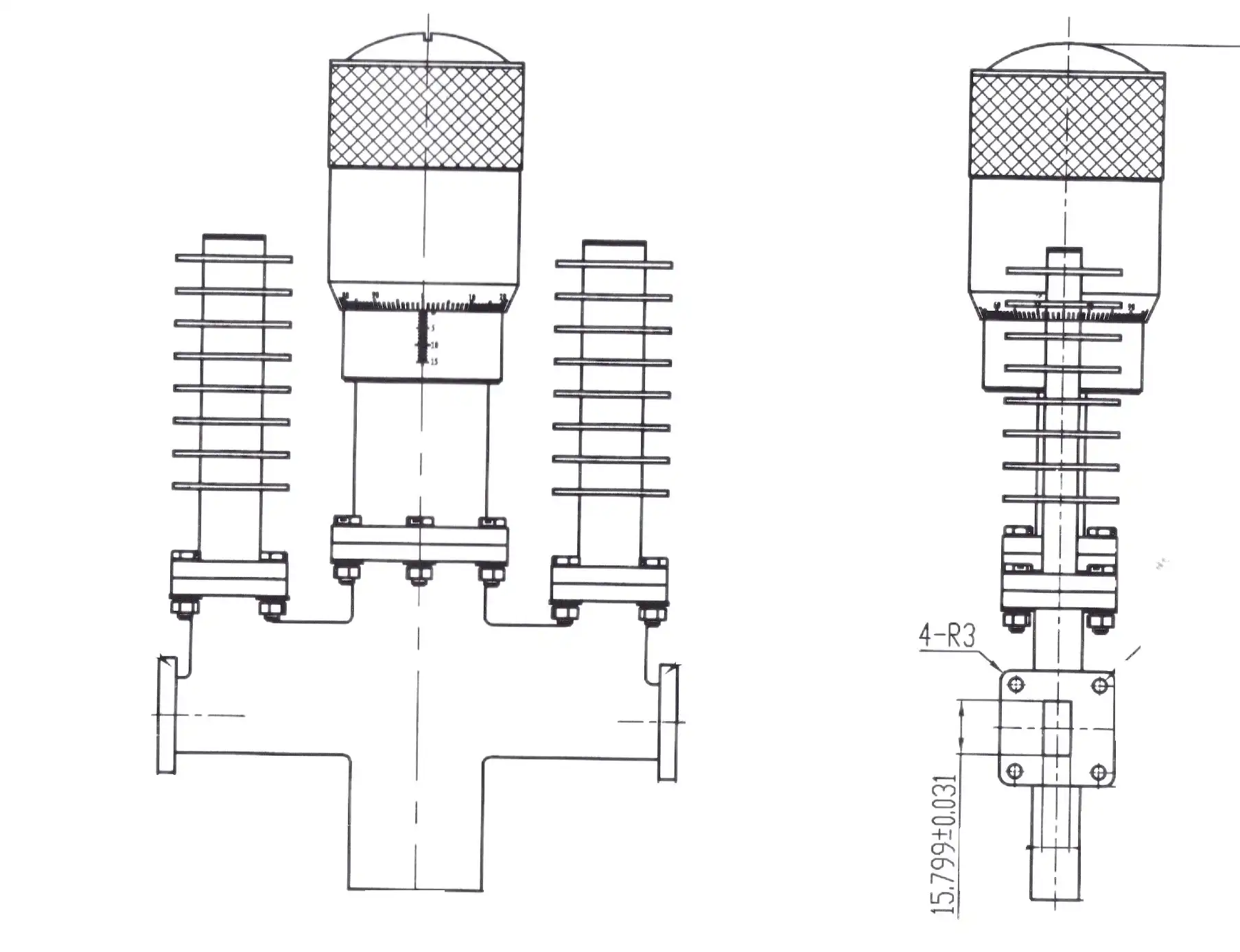
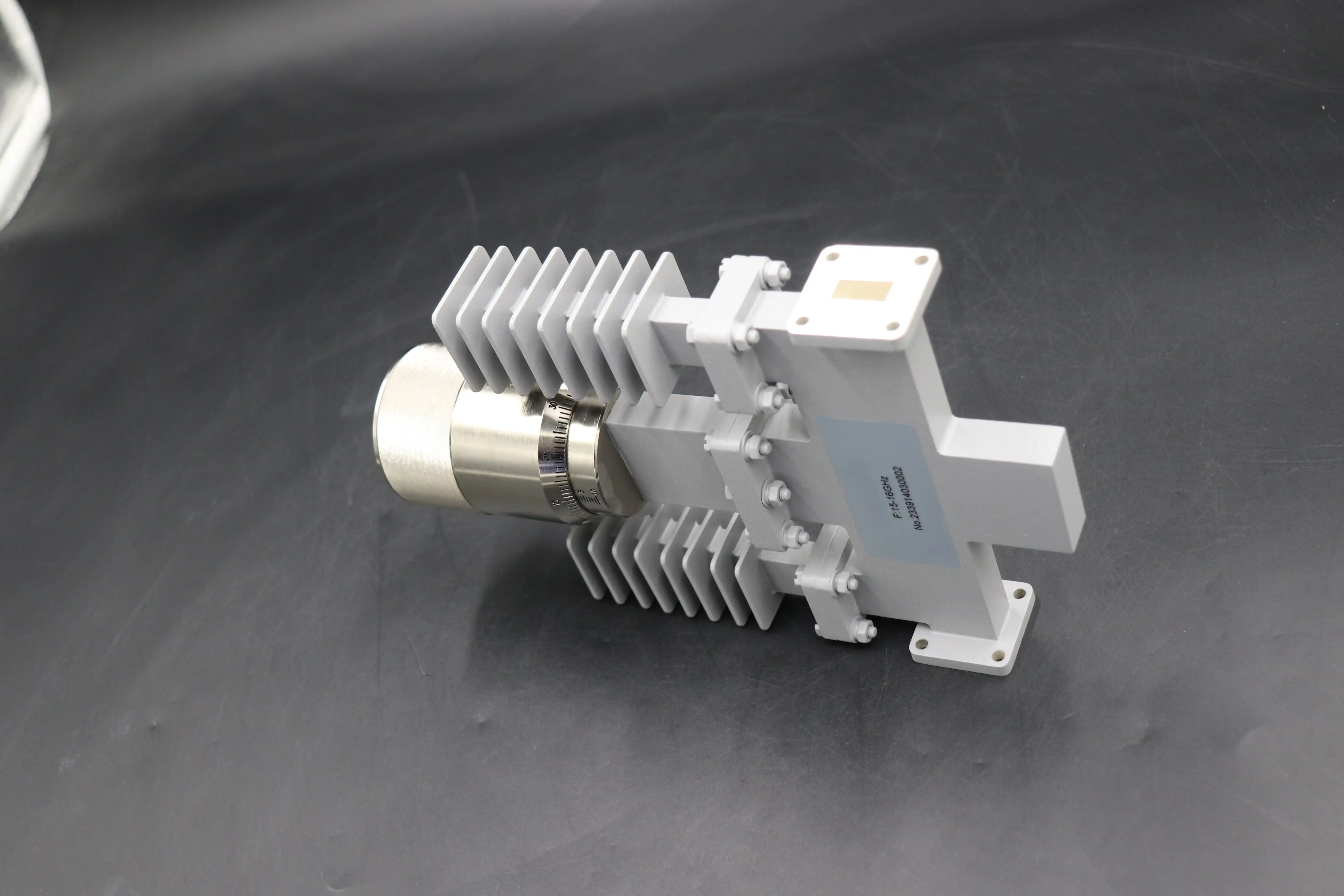
An attenuator in microwave reduces signal intensity by adding controlled loss to the transmission route. Electronic designs use PIN diode attenuators or RF MEMS devices for quick, programmable control, while mechanical designs use resistive vanes or absorbing elements that move to change attenuation levels. MEMS components thrive in low-loss, high-linearity applications where phase stability is essential, whereas PIN diode versions dominate rapid switching rates and moderate power management. Mechanical rotary vane attenuators are common in high-power waveguide systems due to their power management and low zero insertion loss.
Critical Performance Parameters
When evaluating a variable attenuator in microwave, numerous technical parameters must be considered. DC to 18 GHz devices are suitable for older systems, whereas millimetre-wave variants up to 110 GHz handle 5G and beyond applications. The voltage standing wave ratio (VSWR) shows impedance matching quality. Values below 1.20:1 minimise signal reflection and safeguard upstream sources. High-quality units have an insertion loss of ≤ 0.5 dB at zero attenuation, indicating device loss. Power rating determines safe continuous and peak power levels for transmitter testing and high-power radar calibration. Procurement teams may match component capabilities with application requirements to ensure mission-critical dependability by understanding these criteria.
Applications and Benefits of Variable Attenuators in Microwave Signal Testing
Using a variable attenuator in microwave test settings can overcome difficulties that fixed components cannot. Engineers can easily simulate varied operating situations, analyse system margins, and solve performance abnormalities by adjusting signal levels on demand.
Key Application Scenarios
Automation test equipment calibration is a main application case. Technicians modify input power levels to map gain compression curves, assess noise, and define linearity thresholds for characterising amplifiers, mixers, and receivers. A variable attenuator in microwave satellite communication systems replicates atmospheric route loss changes, allowing operators to evaluate link budget margins and modem performance under stress. In radar system integration, engineers regulate transmitted power during subsystem testing to safeguard sensitive measuring equipment and validate transmitter linearity and receiver dynamic range. Defence contractors use these devices to simulate jamming to keep communication networks working during electronic warfare.
Advantages Over Fixed Attenuators
Cost savings and operational efficiency result from variable design flexibility. A single variable attenuator in microwave reduces inventory costs and simplifies test setups. Dynamic adjustment speeds development cycles and manufacturing throughput by eliminating component change pauses. Precision control improves calibration resolution, characterisation accuracy, and production tolerances. B2B clients value these capabilities—OEM manufacturers expedite product validation, telecom integrators optimise network rollout, and research institutes confidently execute high-frequency experiments.
How to Choose the Right Microwave Variable Attenuator for Your Needs?
Technical performance and business realities must be balanced while choosing the best variable attenuator in microwave. Understanding application-specific needs, comparing technologies, and assessing supplier capabilities across several dimensions drive procurement decisions.
Technical Selection Criteria
Frequency compatibility matters most. Your system's operational bandwidth must be covered by devices—5G millimetre-wave testing requires models reaching 40 GHz or more, whereas traditional satellite systems can function below 18 GHz. Insufficient power handling capability risks component failure and costly downtime. Lower insertion loss preserves signal integrity and reduces measurement uncertainty. Mechanical attenuators handle power well and have little insertion loss, although they are slower than electronic ones. PIN diode models have microsecond switching speeds for automated test sequences, whereas RF MEMS devices provide high linearity and minimal phase drift for vector network analysis.
Supplier Evaluation and Procurement Considerations
Beyond technical standards, supplier reputation and support infrastructure greatly impact long-term satisfaction. ISO 9001 and RoHS-compliant manufacturers exhibit quality and environmental responsibility. System modelling and risk evaluation are easier with transparent datasheets including performance curves, temperature coefficients, and reliability data. Integration issues and time-to-market are reduced by technical support, including installation, calibration, and troubleshooting. OEM manufacturers can customise connection types, attenuation ranges, and mechanical form factors for specific applications. The evaluation approach includes lead times, bulk price flexibility, and worldwide logistics assistance to ensure procurement meets project deadlines and budgets.
Practical Guide: Using and Calibrating Microwave Variable Attenuators
The utility of a variable attenuator in microwave systems is maximised by correct installation, calibration, and maintenance. These methods improve measurement accuracy and component longevity in harsh industrial conditions.
Installation Best Practices
Successful integration starts with connector compatibility. Mismatched connections increase loss, VSWR, and mechanical damage. Coaxial designs use SMA, N-type, and 2.92mm connections, whereas waveguide attenuators use WR-90 or WR-28 flanges. Proper torque parameters avoid centre conductor damage and intermittent connections from over- or under-tightening. High-power applications benefit from vertical mounting for natural convection cooling. Temperature extremes change resistive element properties, requiring thermal stabilisation or correction in precise measurements.
Calibration Procedures and Maintenance
Measurement findings are traceable and reliable with calibration. Connecting the attenuator to a reliable RF source and a calibrated power meter, then stepping across the range and recording real against suggested values, is normal. Drift outside specified limits requires correction or replacement. Quarterly calibration works for production applications, whereas annual cycles work for infrequent lab use. VSWR degradation from dirty connections may be fixed using isopropyl alcohol and lint-free swabs. Lubrication and mechanical inspection can reduce mechanical design hysteresis or backlash. Detecting progressive insertion loss deterioration prompts proactive replacement before measurement validity is compromised.
Future Trends and Innovations in Microwave Variable Attenuators
With manufacturers targeting improved integration, intelligence, and sustainability, wireless technology's rapid growth continues to drive innovation in variable attenuator in microwave design.
Technological Advancements
RF MEMS technology, which has near-zero DC power consumption and high linearity, is becoming popular. Material science advancements allow greater temperatures and reliability—silicon carbide substrates tolerate hostile conditions and preserve electrical characteristics. In response to industrial requests, chip-scale packages integrate attenuator functionality directly into PCBs, lowering footprint and simplifying assembly for small test equipment and portable field instruments.
Smart Attenuators and Digital Integration
A variable attenuator in microwave systems is transformed into an intelligent system component by embedding digital control interfaces. USB, Ethernet, or SPI interface allows remote operation and automated test framework integration, decreasing manual involvement and speeding measurement. Non-intervention calibration factors are stored in onboard memory to adjust for temperature drift and ageing. Based on power sensor inputs, closed-loop control algorithms modify attenuation in real time to sustain signal levels despite source or environmental changes.
Sustainability and Agile Manufacturing
Environmental consciousness influences product creation as much as technology. Reduced electromagnetic emissions promote regulatory compliance and reduce interference in congested test settings using low-noise designs. Energy-efficient electronic attenuators use microwatts in standby mode, making labs greener. Rapid prototyping allows tailored low-volume manufacturing for niche research projects and OEM integration without high tooling costs or lead times. B2B clients with unclear demand predictions and changing technical standards appreciate this flexibility.
Conclusion
Variable attenuators in microwave signal testing infrastructure provide precise power control for accurate measurements and system optimisation. Engineers can define components that meet technical requirements by understanding operating principles, performance characteristics, and application subtleties. Procurement meets quality, customisation, and commercial requirements after careful supplier research. Correct installation, calibration, and maintenance maintain measurement integrity throughout the component lifespan. New technologies offer improved functionality, intelligence, and sustainability for 5G rollout, defence modernisation, and cutting-edge research. We support microwave testing with established knowledge, innovative production, and customer-focused service.
FAQ
Q1: What distinguishes variable attenuators from fixed attenuators in practical applications?
Variable attenuators in microwave systems provide adjustable attenuation levels, eliminating the need for multiple fixed components and enabling dynamic testing scenarios. Fixed attenuators offer specific attenuation values with superior calibration stability and ruggedness, ideal for establishing reference levels in static configurations. The choice depends on whether flexibility or repeatability dominates application priorities.
Q2: How should I select the frequency range for 5G millimetre-wave testing?
5G millimetre-wave bands span 24 GHz to 40 GHz and beyond. Select variable attenuators in microwave covering your target frequencies plus margin—a device rated to 45 GHz accommodates future spectrum expansion. Verify flatness specifications across the band to ensure consistent performance throughout the operational range.
Q3: Can attenuators be customised for specific power ratings or connector types?
Many manufacturers offer OEM services tailoring attenuation range, power handling, connector interfaces, and mechanical form factors. Customisation typically requires modest minimum order quantities and extended lead times but delivers components optimised for specialised integration requirements.
Partner with ADM for Superior Microwave Variable Attenuator Solutions
Advanced Microwave Technologies Co., Ltd brings over two decades of manufacturing excellence to your microwave signal testing challenges. As a trusted variable attenuator in microwave supplier, we deliver precision-engineered components meeting stringent ISO 9001 and RoHS standards. Our extensive product portfolio spans coaxial and waveguide configurations covering DC to 110 GHz, with customisation capabilities addressing unique application requirements. Expert technical support guides you through specification selection, installation procedures, and calibration protocols, ensuring seamless integration into your test infrastructure. Competitive volume pricing and flexible global logistics support streamline procurement for both prototype projects and full-scale production. Contact craig@admicrowave.com today to discuss your specific requirements, request detailed datasheets, or obtain a tailored quotation. Let our proven expertise and commitment to quality elevate your microwave testing capabilities.
References
1. Pozar, David M. Microwave Engineering, 4th Edition. Wiley, 2011.
2. Gupta, K.C., Garg, Ramesh, and Bahl, Inder. Microstrip Lines and Slotlines, 3rd Edition. Artech House, 2013.
3. Rizzi, Peter A. Microwave Engineering: Passive Circuits. Prentice Hall, 1988.
4. IEEE Standard 100-2000. The Authoritative Dictionary of IEEE Standards Terms, 7th Edition. IEEE Press, 2000.
5. Vendelin, George D., Pavio, Anthony M., and Rohde, Ulrich L. Microwave Circuit Design Using Linear and Nonlinear Techniques, 2nd Edition. Wiley-Interscience, 2005.
6. Collin, Robert E. Foundations for Microwave Engineering, 2nd Edition. Wiley-IEEE Press, 2001.
YOU MAY LIKE
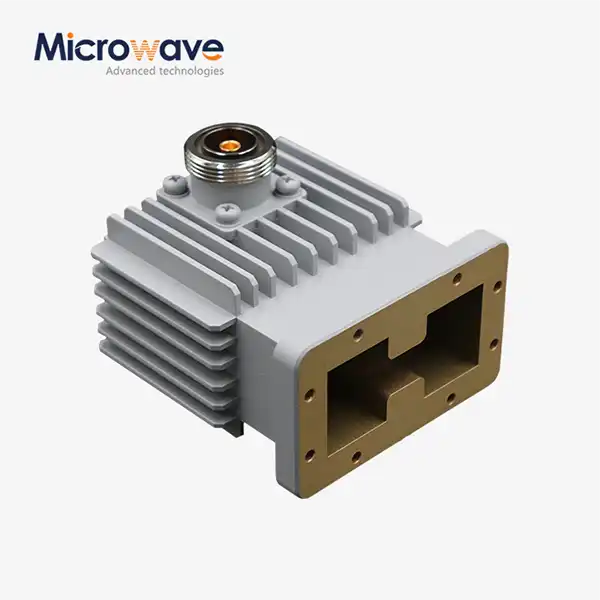 VIEW MOREHigh Power Waveguide to Coaxial Adapter
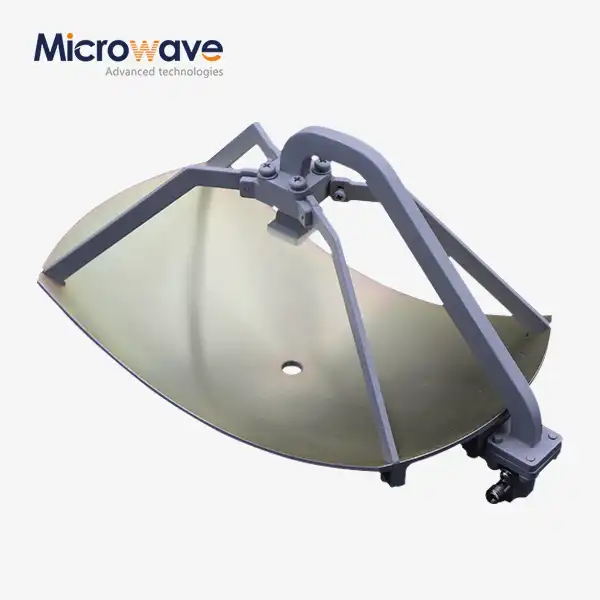 VIEW MOREParabolic Antenna
 VIEW MOREMiter Bend Waveguide
 VIEW MORECircular Waveguide To Coaxial Adapter
 VIEW MOREWaveguide Sliding Termination
 VIEW MOREConical Horn Lens Antenna
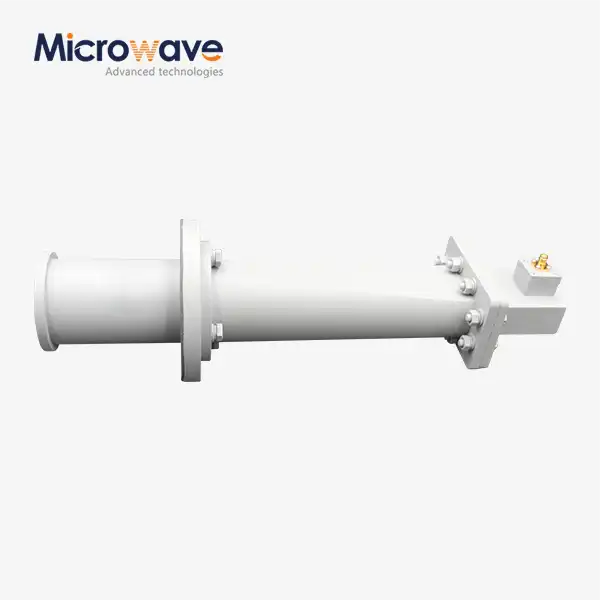 VIEW MORECorrugated Horn and Multimode Horn Antenna
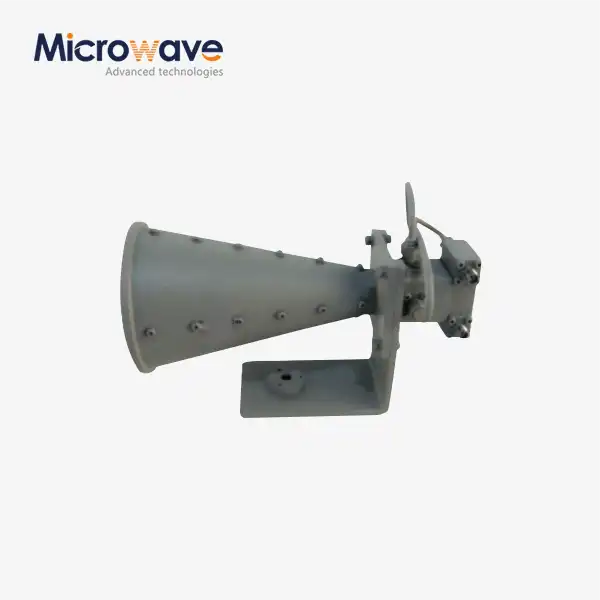 VIEW MOREDual Linear Broadband Dual Circular Polarization Horn Antenna