




Comparing High Power Waveguide Circulators for RF Amplifiers
To safeguard RF amplifiers and mission-critical communications, the correct high power waveguide circulator is crucial. They transfer microwave radiation through ports one after another while safeguarding sensitive areas from echoes. In radar, satellite ground stations, and industrial heaters, impedance mismatches cause reflected radiation to damage amplifiers or cause frequency instability. An appropriately constructed circulator distributes this additional power to a matching load. In critical defence, aerospace, and telecoms environments, this preserves tens of thousands of dollars of equipment and ensures uptime. The optimal circulator for your RF amplifier depends on its power, frequency range, insertion loss, separation performance, and temperature management. For almost 20 years, Advanced Microwave Technologies Co., Ltd. has worked with procurement engineers and system designers to match circulators to challenging assignments. The knowledge in this tutorial will help you make faster judgments and improve the system.
Understanding High Power Waveguide Circulators
What Makes Waveguide Circulators Essential in RF Systems
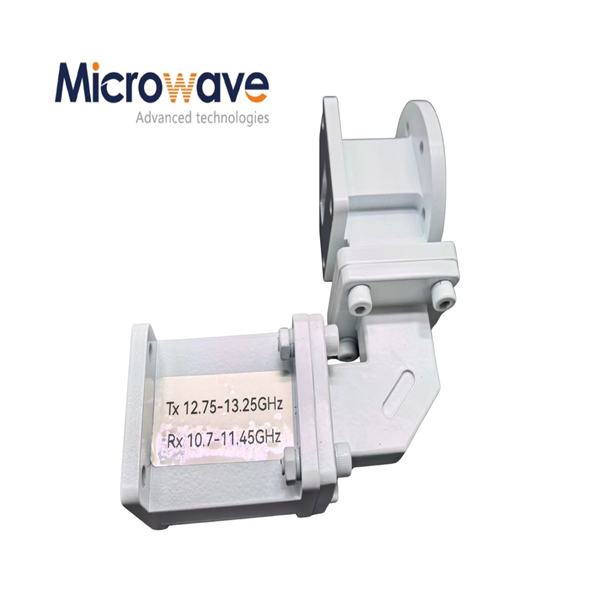
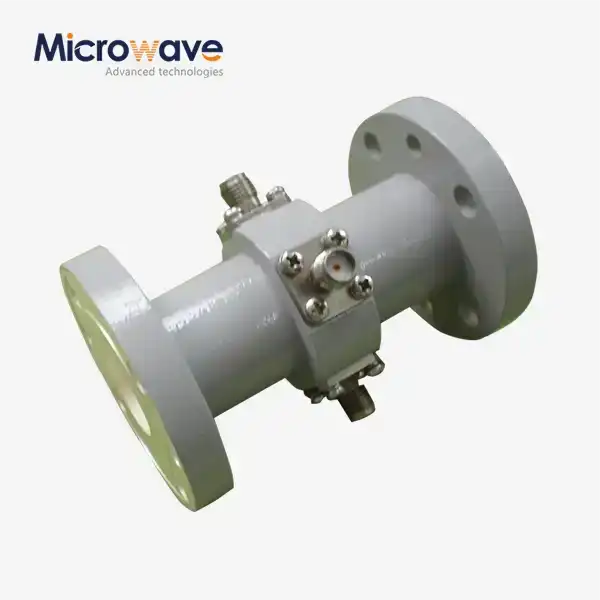
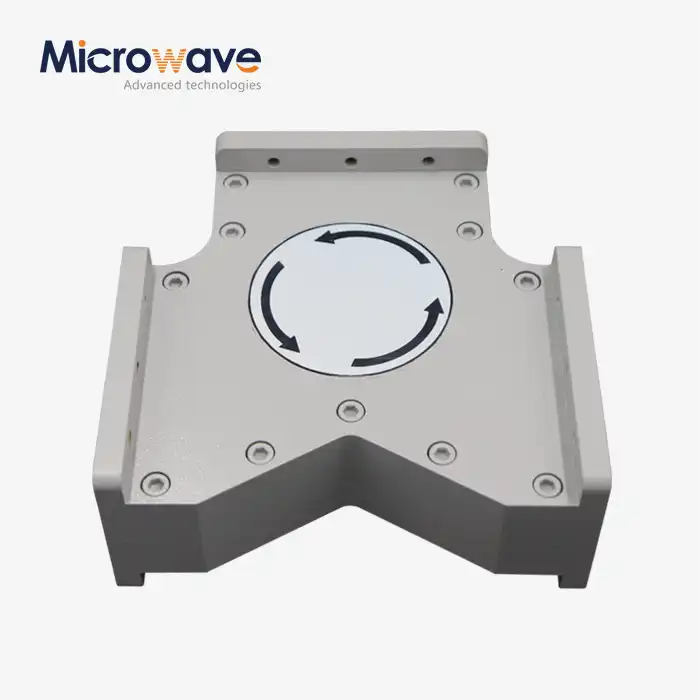
There are three ports on a high power waveguide circulator, and it uses ferromagnetic resonance to control the flow of microwave signals. When energy comes in through port one, it leaves through port two with little loss. When energy comes in through port two, it goes to port three instead of back to port one. The non-reciprocal behaviour is caused by ferrite materials interacting with a biasing magnetic field. This field turns the polarisation plane of electromagnetic waves as they travel through the waveguide structure. Waveguide circulators are needed for high-energy receivers because they can handle kilowatts to megawatts of power, while cable isolators can only handle small amounts of power. They have low insertion loss (usually 0.2 to 0.5 dB), high isolation (20 to 30 dB or more), and great VSWR to keep the amplifier's efficiency and protect it from changes in the load.
Frequency Ranges and Real-World Usage Scenarios
Waveguide circulators work with a range of frequency bands that are tailored to specific tasks. Weather radar stations use S-band units (2 to 4 GHz) to keep them safe. On the other hand, military fire control and air traffic control radars use X-band devices (8 to 12 GHz). At 915 MHz and 2.45 GHz, industrial microwave heating systems depend on circulators to keep magnetron generators stable even when the load dielectrics change. Medical linear accelerators (LINACs) and particle accelerators use waveguide circulators to connect radio frequency (RF) power to resonant chambers while blocking echoes that would otherwise make the source out of tune. These parts are used by satellite ground stations that work in C-band and Ku-band to protect high-power amplifiers (HPAs) while signals are being sent and to fix antenna mismatches that happen because of things like weather or mistakes in mechanical pointing.
Key Comparison Factors When Choosing High Power Waveguide Circulators
Power Ratings and Performance Parameters
Power handling tells you if a device is right for your amplifier. Continuous wave (CW) average power ratings are between a few hundred watts and several hundred kilowatts, while peak power ratings can handle burst radar patterns that are more than a megawatt. Insertion loss has a direct effect on how well an amplifier works. For example, a 0.3 dB loss means that about 7% of the forward power is lost as heat. Isolation decides how well mirrored energy is sent away from the amplifier. If isolation isn't good enough, damaging power can come back, which could cause thermal runaway or a catastrophic failure. A VSWR less than 1.2:1 ensures that there isn't much difference between the input and output of the circulator. This keeps the signal intact and the system stable. To avoid underperforming or over-specification, buyers must make sure that these specs match the output power, duty cycle, and accepted efficiency gaps of the amplifier.
Design Differences: Ferrite Materials and Thermal Management
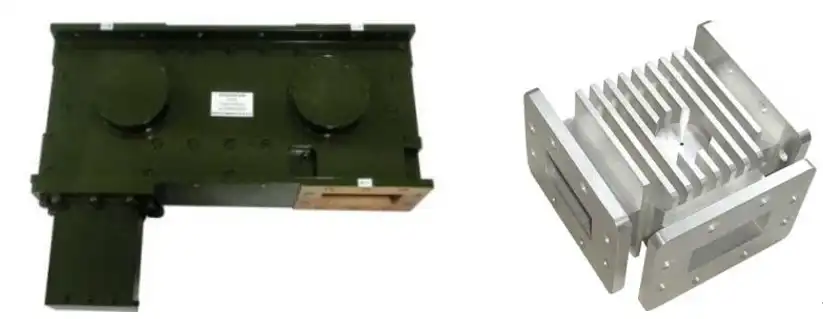
Junction circulators use small ferrite elements that are centred inside the waveguide. They have a smaller bandwidth but are lighter. Differential phase shift designs put ferrite along the walls of the waveguide, which makes the bandwidth wider and the heat reduction better at higher power levels. The makeup of ferrite affects both the Curie temperature (the temperature at which magnetic qualities disappear) and the dielectric loss slope, which controls the generation of heat. When circulators have an average power of more than one kilowatt, they usually have water-cooling lines cut into the frame next to the ferrite elements. Coolant flow rate and temperature monitoring keep ferrite from getting too hot, which hurts separation and can crack the material. To raise the breakdown voltage limits and stop arcing, some high-altitude or space uses need to be pressurised with SF6 or nitrogen gas. Material choice and temperature design have a big effect on how reliable something is and how often it needs to be maintained.
Frequency Compatibility and Certification Standards
Broadband or multi-band systems need high power waveguide circulators that can handle a wide range of frequencies without having to retune. Broadband designs give up peak separation for practical freedom, while narrowband units work best in certain radar or transmission bands. Frequency tolerance is very important. For example, a circulator designed for 9.0 to 9.5 GHz won't work right if your amplifier runs at 10.2 GHz. Buyers should check that the manufacturer's datasheets show tested performance over the whole frequency range that the product is meant to work with. Certifications like ISO 9001 make sure that the quality of the products is always the same, and RoHS approval shows that the companies are responsible for the environment. For buying things for defence and space, you have to follow MIL-STD tests (shock, pressure, and humidity) and keep track of your purchases. Long-term operations are less risky when they come from trusted sources who offer full test data, material certificates, and third-party validation.
Practical Guidance for Selecting the Right High Power Waveguide Circulator for Your RF Amplifier
Defining RF System Needs and Specifications
First, write down the output power, frequency range, modulation type, and duty cycle of your amplifier. Pulsed radar systems need high power waveguide circulators that can handle a lot of peak power and still have enough thermal mass to handle average power loss. Continuous wave receivers need to be able to handle a lot of power and get rid of heat quickly. Figure out how much reasonable insertion loss there is. Every tenth of a decibel lowers the effective emitted power and raises the cost of operation. Figure out the isolation needs based on the changing VSWR of the load. Antennas that scan across wide angles or industrial loads with changing dielectric constants cause more reflections, so you need bigger isolation gaps. The environment also plays a role. For example, outdoor sites have to deal with changes in temperature and humidity, while accelerators work in vacuum or radiation-hardened conditions. A clear definition grid makes it possible to precisely match the capabilities of the circulator and avoids mistakes that cost a lot of money.
Cost-Performance Trade-Offs and Customisation Options
Depending on power, frequency range, bandwidth, and customisation, high-power waveguide circulators are expensive. Stock units are cheaper and faster to construct, but they may not fit your system. Design options include flange types (WR-90, WR-112, etc.), mounting, cooling channels, and frequency modifications. Professional OEM producers like ADM may provide unique solutions that save money without losing performance. Consider the overall cost of ownership before buying. Over their lifespan, cheaper devices with higher insertion loss consume more power and cost more energy. Order minimums vary. Smaller prototype quantities aid R&D, whereas higher volumes aid economies of scale. Special ferrite machining and magnetic tuning might increase delivery delays, so know the wait periods beforehand. When short-term budgets are matched with long-term reliability, purchase outcomes improve.
Proactive Circulator Maintenance to Extend Life
Monitored inspections and tracking keep circulators running longer and prevent unexpected failures. For early detection of ferrite deterioration and mechanical defects, vector network testers assess insertion loss and isolation every three months. Check water-cooled unit coolant filters and flow meters monthly. Scale and polluted coolant reduce thermal performance. To maintain breakdown voltage gaps, pressurised circulators must be inspected annually for leaks and gas purity. Cleaning ferrite magnet surfaces of dust and other electrical debris can prevent fires. Environmental covering quality should be verified annually for outdoor systems. Record all data and maintenance actions to build baselines and notice trends. Maintenance planning is easier with manufacturers that give experienced guidance and testing. Preventative maintenance lowers emergency repair costs and boosts RF component value.
Performance and Reliability Evaluation
Real-World Data and Case Studies
High power waveguide circulators operate well under stress, as evidenced by field performance data. A seashore weather radar user reported that salt spray corrosion caused a typical junction circulator to lose insertion strength after 18 months. Changing to a sealed, stainless steel differential phase shift type fixed the issue. Two X-band circulators with 0.3 and 0.5 dB insertion loss were examined by a satellite ground station builder. Lowering the amplifier's heat loss by 12% enhanced the average time between failures and lowered cooling costs by 8%. While modelling antenna scanning with quick VSWR variations, a defence contractor isolated. Below 22 dB isolation circulators let reflected power render the emitter unstable, whereas above 26 dB units ran nicely. These case studies highlight how crucial it is to select parts that fit the job and context.
Warranty, After-Sales, and Service
Manufacturer guarantees indicate faith in the product's reliability and protect you financially if it breaks down early. Standard warranties cover product and work faults for 1–3 years. For mission-critical equipment, longer warranties and service contracts provide peace of mind. Quality after-sales assistance varies—responsive specialist teams aid with mending, advise on replacements, and rapidly provide solutions. When manufacturers establish worldwide service networks, international purchasers wait less for goods. With supplementary ferrite systems, cooling parts, and tuning tools, repairs are easier and lead times are shorter. Carefully reviewing the assurance conditions ensures coverage meets application severity. Some guarantees exclude damage from misuse, overpressure, or overpowering. Buyers should favour providers with explicit service agreements and timely after-sales service.
Sustainability under harsh environmental and RF stress
Temperature, stress, vibration, and high and low humidity affect defence and industrial circulators. The correct ferrite material affects its temperature performance. While some formulations maintain magnetic properties from -40°C to +85°C, others limit the working range. When ferrite, waveguide housing, and glue expand and contract differently, mechanical stress fractures can form after repeated cycles. Units that pass MIL-STD-810 outside testing can endure ship vibrations, flight path modifications, and ground vehicles. Industrial microwave circulators are exposed to harmful chemical fumes and particle pollution; they need coatings. IEC safety and electromagnetic compatibility (EMC) guidelines reduce the danger of international operations. High-temperature ferrites and oxygen-free copper waveguides can prolong life under difficult conditions. Quality assurance and third-party verification support lifespan claims and aid purchase decisions.
Procurement Process and Supplier Engagement
Sourcing Channels and Pricing Structures
High power waveguide circulators are available from the manufacturer, licensed dealers, and B2B websites. Working with manufacturers allows for more customisation, technical collaboration, and reduced pricing for bulk orders. Distributors speed up regular unit delivery and combine purchases for multi-provider systems. Online platforms provide price comparison but may lack expert assistance. There are several pricing methods. Regular stock items have established pricing, while innovative designs require special estimates. Volume pricing is normally available for orders of 10 or more. Your savings increase as you buy more. Unit cost, unique design tooling expenses, and delivery are included in clear pricing. Buyers should request specifics and know if credentials, testing papers, and measurements are included or extra.
Logistics Planning, Shipping, and Lead Times
Operations must be planned to buy waveguide circulators worldwide. Special designs can take twelve weeks or more to create the ferrite, tune the magnets, and test them. Standard units ship in four to eight weeks. Contacting producers early to schedule bulk purchases with manufacturing capacity prevents delays. Shipping internationally involves freight handling, customs documentation, and import fees. To determine who pays what and where risk is transmitted, buyers should verify Incoterms (FOB, CIF, DDP). High-value ferrite elements are protected from shock during transportation by specialised foam plugs and crating. Air freight delivers promptly but costs more for urgent assignments. In particular, cross-border importers should verify export permissions for defence items subject to ITAR or EAR. Prior logistics planning keeps projects on track and within budget.
Checking Datasheets and Certifications
You must review the datasheet to ensure the circulator works and the merchant is trustworthy. Frequency, insertion loss, isolation, VSWR, power handling (average and peak), operating temperature, cooling demands, and compactness are significant characteristics. Measured performance charts indicate frequency better than single-point specs at band boundaries. Certification documents include ISO 9001 quality certifications, RoHS compliance declarations, MIL-STD test reports, and material tracking records that demonstrate compliance and product quality. Trustworthy third-party lab test results increase credibility. Buyers should request calibration data for insertion loss and isolation procedures to ensure national standards compliance. Review the guarantee, return policy, and intellectual property regulations in the purchase agreement. A thorough review of all documentation reduces purchase risks, clarifies contracts, and defines acceptance testing performance requirements.
Conclusion
Find the finest high power waveguide circulator for your RF amplifier by balancing technical performance, cost, and source reliability. How power is handled, insertion loss, separation, and temperature control affect amplifier lifespan and system performance. Material type, frequency performance, and durability determine defence, aviation, satellite, and industry usage. Working with competent producers early on lets you make cost-effective improvements without sacrificing quality. Maintenance and datasheet review prevent costly failures and safeguard investments. We hope this advice helps your buying and engineering teams make sensible choices to improve RF system performance and reliability.
FAQ
Q1: What distinguishes waveguide circulators from coaxial circulators in high-power applications?
Waveguide circulators can handle a lot more power (kilowatts to megawatts) than coaxial versions, which can only handle a few hundred watts. Waveguide structures offer superior heat dissipation through larger surface areas and enable direct integration of water-cooling channels. They have less insertion loss at microwave frequencies, which keeps the efficiency of amplifiers in high-power emitters. Coaxial circulators are smaller and less expensive for low-power systems, but they can't handle the heat and radio frequency stresses that happen in radar, industrial heaters, or particle accelerators, where high power waveguide circulators are required.
Q2: How does insertion loss affect overall RF amplifier performance and system efficiency?
Insertion loss is the amount of forward power that is lost as heat in the circulator, which lowers the useful output of the amplifier. A loss of 0.3 dB means that 7% of the power is lost, which means that the amplifier has to run harder and use more energy to send out the required amount of power. When multiple parts lose power, it lowers the budget for links in communication systems and the range of radars that can find things. Keeping insertion loss as low as possible increases the efficiency of amplifiers, lowers the need for cooling, increases component life, and lowers running costs. This makes it an important factor in designing high-power RF systems.
Q3: Can high power waveguide circulators be customised for specific frequency bands or power requirements?
Customisation is common for purposes that are specific. For multi-band systems, manufacturers change the shape of the waveguide, the size of the ferrite, and the magnetic bias to get the best performance in narrow frequency bands or to cover more frequencies. Power handling can be scaled up or down by choosing the right ferrite makeup, building a cooling system, and applying pressure. Custom flange types, mounting connections, and weather seals can be made to fit the needs of each application. Working with original equipment makers (OEMs) like ADM lets you get solutions that are made to fit your exact needs. This makes sure that they work well with your RF amplifier system and meet all performance and legal requirements.
Partner with ADM for High-Performance Circulators and Tailored RF Solutions
Advanced Microwave Technologies Co., Ltd. makes high power waveguide circulators that are carefully built to keep your RF amplifiers safe and increase system efficiency. Our manufacturing processes are ISO 9001-certified, and we have more than 20 years of experience making sure that our goods meet strict standards in defence, aircraft, and industry. We offer full OEM services, from fast development to full-scale production, and our testing labs are set up to 110 GHz to back them up. Our expert engineering team works closely with your purchasing and technical staff to make sure you get the right products for the frequency bands and power needs you have. They can be ordered from our store or made to order. Email craig@admicrowave.com to talk about the details of your project, get full datasheets, and get prices that are affordable. We are a reliable manufacturer. To make sure your investment lasts and works well, we offer global shipping support, detailed paperwork, and quick after-sales service.
References
1. Helszajn, Joseph. The Stripline Circulator: Theory and Practice. Wiley-IEEE Press, 2008.
2. Linkhart, Douglas K. Microwave Circulator Design, Second Edition. Artech House, 2014.
3. Pozar, David M. Microwave Engineering, Fourth Edition. Wiley, 2011.
4. Baden Fuller, A. J. Ferrites at Microwave Frequencies. IET, 1987.
5. Ishii, Thomas Koryu. Handbook of Microwave Technology, Volume 2: Applications. Academic Press, 1995.
6. Collin, Robert E. Foundations for Microwave Engineering, Second Edition. Wiley-IEEE Press, 2000.