




Twisted Waveguide vs Conventional Waveguide: Key Differences
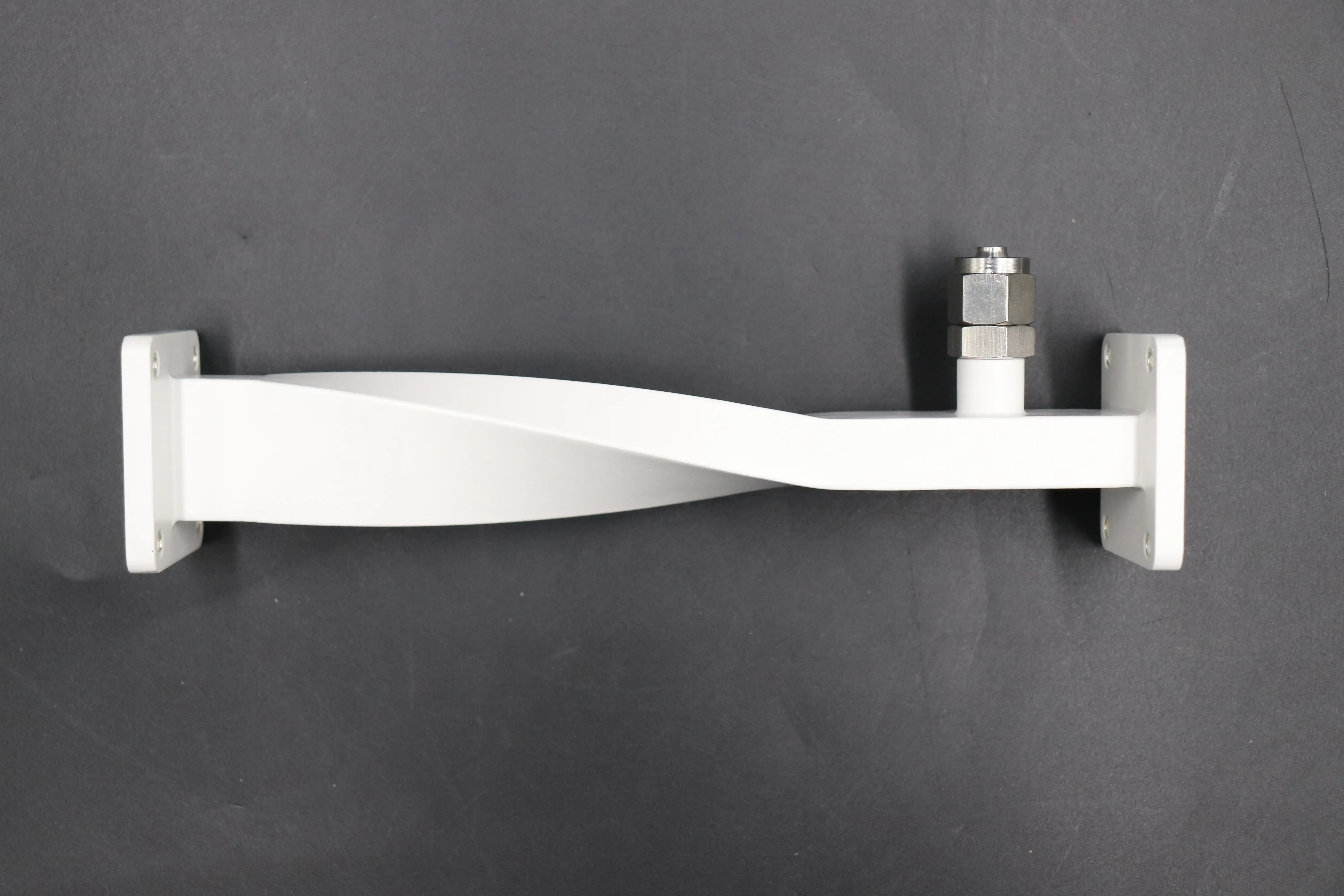
When we talk about the distinction between a twisted waveguide and a conventional waveguide, we're examining two fundamentally different approaches to guiding high-frequency electromagnetic signals. A twisted waveguide incorporates deliberate geometric rotation along its length, enabling it to accommodate complex spatial routing while maintaining signal integrity. Conventional waveguides, by contrast, feature fixed cross-sections—typically rectangular or circular—with rigid structural characteristics. The twisted design provides mechanical flexibility and adaptability for installations requiring both bending and angular displacement, making it indispensable for satellite ground stations, radar systems, and aerospace applications where space constraints and movement tolerance are critical considerations.
Understanding Twisted Waveguides and Conventional Waveguides
Microwave transmission needs parts that balance how well they work electrically with how easy they are to install. Conventional waveguides have been used in the RF business for many years and have been dependable. They work reliably because they are made from aluminum or copper and have standard shapes. These hard structures work best in controlled settings where they can be mounted in a fixed way and routed in a simple way. Engineers like that they have a history of building stable industrial sites, telecoms infrastructure, and testing labs.
Conventional Waveguide Architecture
Conventional rectangular waveguides work based on well-known electromagnetic principles, allowing the main TE10 mode to propagate with little loss in certain frequency ranges. The methods used to make these parts are well-developed, which lets a lot of them be made with very tight tolerances on size. The wide availability of standard flange interfaces, like the UG, CPR, and UBR types, is appreciated by procurement teams because it makes system integration and replacement planning easier. Traditional designs are rigid, which means they can't be used in all situations. This is especially true when there are physical barriers, thermal expansion, or vibration separation to consider.
Flexible Twisted Waveguide Innovation
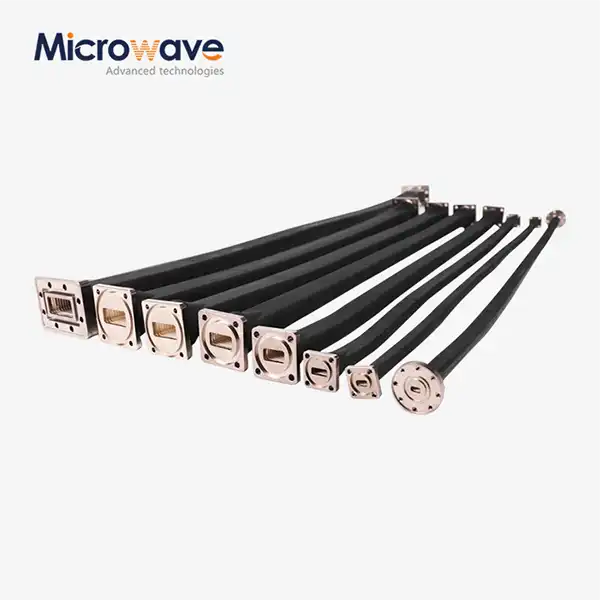
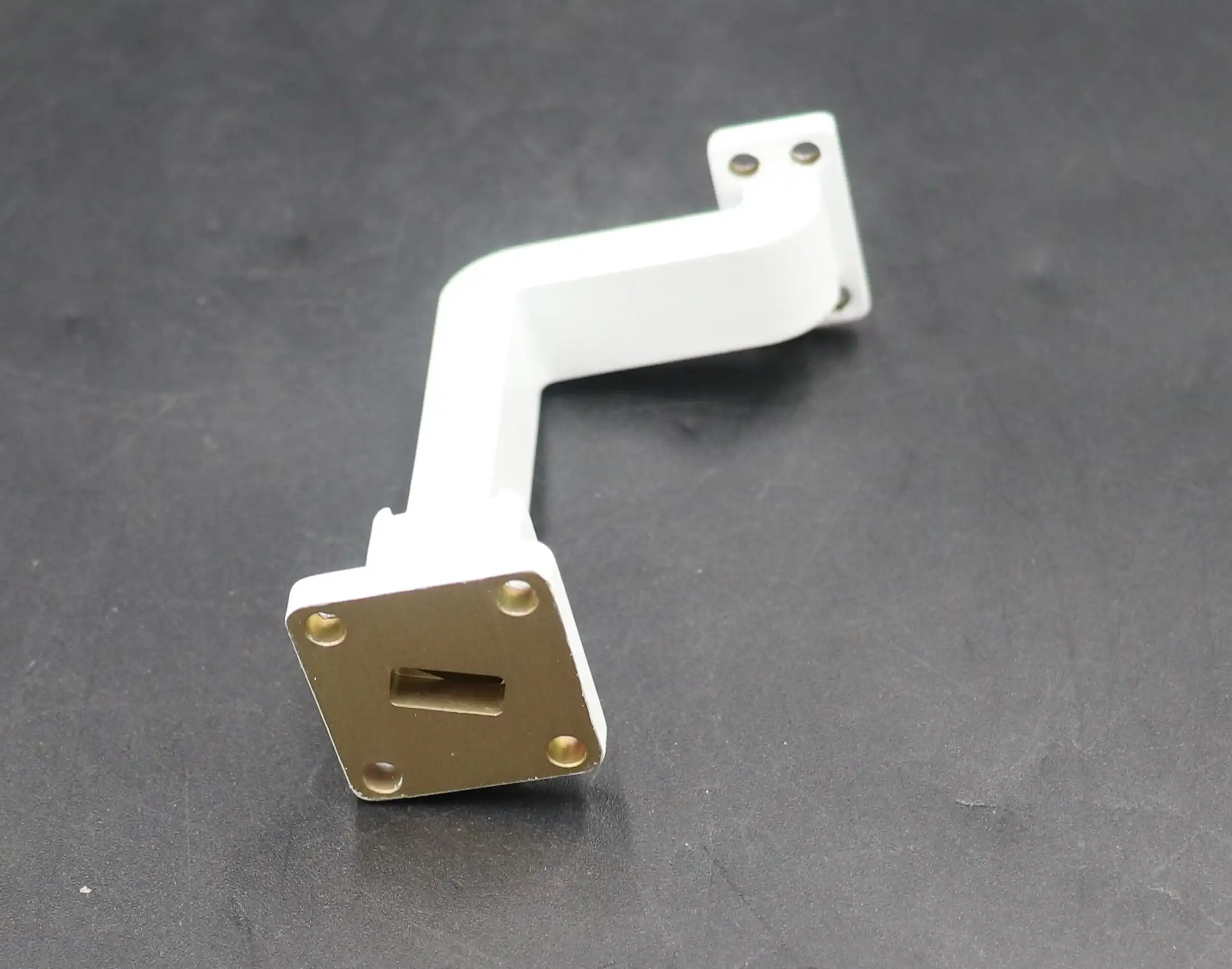
Advance Microwave Technologies Co., Ltd.'s rectangular waveguides may be bent and curved for different locations. These carefully designed transmission lines have curved or spirally wrapped copper cores that may be bent and twisted without affecting RF performance. Neoprene jackets normally protect structures and maintain pressure in bad weather. The geometric complexity of military, aerospace, and satellite communication systems, where equipment spacing and alignment alter over time, makes our twisted waveguide products better than rigid ones.
Our flexible twisted waveguides work from 3.22 to 50.1 GHz. The ADM-100WEL series works at 8.20-12.40 GHz with VSWR ≤1.15 and insertion loss ≤0.40 dB/m. The ADM-260WEL can rotate 510 degrees per metre at 21.7–33.0 GHz with a 35-mm radius. Mechanical flexibility forces system developers to rethink RF routing. The system is simpler and less likely to fail without stiff components connected by rotating joints.
Key Differences Between Twisted and Conventional Waveguides
When procurement professionals know the technical and operational differences between these waveguide categories, they can make smart sourcing choices that meet project requirements and stay within budget.
Mechanical Flexibility and Installation Adaptability
Standard waveguides have strict space requirements. To get around obstacles, installation teams have to carefully line up flanged sections, which often means making special offset pieces or complicated elbow assemblies. If the connection points aren't lined up correctly, reflection losses and mechanical stress could happen. When rearranging equipment requires taking apart rigid waveguide runs, maintenance tasks become more difficult and take more time.
Twisted waveguide designs change this way of thinking. Instead of several stiff pieces and rotary joints, there is now just one continuous flexible section. Our ADM-140WEL model, which works from 11.9 to 18.0 GHz, can bend at a minimum of 54 mm in the E-plane and twist up to 350 degrees per meter. This adaptability cuts installation time and labor costs by a huge amount, especially in places where routing paths can't go in a straight line, like shipboard radar systems, aircraft antenna feeds, and telecom shelters with a lot of people.
Electrical Performance Characteristics
Radio system design still prioritises signal security. Good rectangular waveguides have insertion loss of less than 0.1 dB/m and steady phase response over their operating bandwidth. Because they're stiff, mechanical deformation won't affect electrical properties. This makes them ideal for high-power transmission and precision measurement that requires consistency.
Mechanical flexibility and electrical characteristics of flexible twisted waveguides are regulated. The inner surface is corrugated, and joint mechanisms include tiny gaps that increase insertion loss compared to rigid choices. This penalty is less severe due to modern production technologies. The ADM-220WEL offers a low insertion loss of 1.30 dB/m from 17.6 to 26.5 GHz and several choices. For most radar and communication workloads, this performance matches system link budgets and offers installation advantages rigid waveguides can't match.
Material Composition and Environmental Resilience
Product longevity and electrical performance depend on material choice. Standard waveguides are electroplated copper or metal to prevent corrosion. Although stiff and excellent at transmitting electricity, these materials may be destroyed by galvanic corrosion in marine situations and break when vibrated.
Our flexible, twisted waveguides are comprised of durable conductive materials. The Neoprene cover keeps the metal core dry, chemical-free, and pressure-free. Offshore platforms, military vehicle stations, and outdoor telecom sites are severe working environments where temperature, humidity, and physical stress damage strong waveguide couplings, making this design advantageous. ISO 9001:2015 accreditation ensures quality and traceability in our manufacturing operations. This satisfies mission-critical dependability procurement guidelines.
Advantages of Twisted Waveguides Over Conventional Versions
When making a purchase decision, people weigh the initial costs against the total value over the product's life. Flexible twisted waveguides have many benefits that go beyond their low cost. These benefits affect how well they are installed, how reliable the system is, and how flexible they can be used.
Space Optimization and System Integration Benefits
Modern RF systems have tighter space constraints. Small routing solutions are required for 5G base station equipment cabinets, UAV antenna assembly, and navy ship radar installations. Flexible twisted waveguides operate better than fixed ones in these scenarios due to their lack of physical limits. A normal design may need three elbows and two straight sections with flange connections and failure points. However, a single twisted waveguide piece may route continuously. Merging reduces parts, simplifies inventory, and simplifies field maintenance.
This is shown by our ADM-84WEL series, which operates at 6.57–9.99 GHz with a minimum bend radius of 76 mm and a twist capacity of 210 degrees per metre. System integrators can route signal lines around buildings, account for equipment heat expansion, and separate emitters and antenna feeds from vibrations without impacting electrical performance. This produces smaller, stronger, and easier-to-upgrade designs.
Enhanced Signal Integrity in Dynamic Environments
Applications that use mechanical movement or shaking have their own set of problems to solve. Dynamic stress is put on waveguide assemblies by phased array radars that scan mechanically, satellite earth stations that track moving satellites, and communication systems in the air that have to deal with flight loads. When rigid waveguides are linked by rotary joints, they can wear out, back up, and have irregular electrical contact problems that lower the signal quality over time.
Instead of concentrating joint movement, flexible twisted waveguides take in mechanical stress by deforming in a controlled way. This spread-out stress distribution makes the service life longer and keeps the electrical parameters constant during operating cycles. Our designs use low-loss materials that keep signal strength high even when bent or twisted past their limits. This makes sure that communication links work well even in tough working conditions.
Procurement Efficiency and Supply Chain Advantages
Working with well-known brands simplifies shopping. Since it has been creating microwaves for over 20 years, Advanced Microwave Technologies Co., Ltd. has great production capability. Our supply chain can handle tiny R&D prototype batches and big deployment program numbers. U.S. defence contractors and aircraft OEMs who must follow rigorous material limitations may acquire foreign goods with RoHS compliance and ISO 14001:2015 environmental certification.
Customisation boosts purchasing value. Our standard product range covers most frequency bands and performance needs. OEM services allow us to customise solutions for unique applications. Custom lengths, flanges, environmental security, and frequency band optimisation are available to engineering teams. Our technical support team installs and troubleshoots, reducing integration risk and speeding up projects. These services are crucial when delivery deadlines and performance assurances are at risk.
How to Choose Between Twisted and Conventional Waveguides for Your Business
To choose the right waveguide technology, you need to carefully look at the technical needs, installation limitations, and long-term issues. Purchasing decisions should be based on a few important factors.
Application Requirements Analysis
Start by describing the electrical requirements of your system. The frequency range affects the basic size and construction of the waveguide. The ability to handle power affects the thickness of the wall and the need for heat control. VSWR limits and insertion loss costs make it hard to choose which components to use. For a given frequency band, conventional waveguides usually have the lowest loss and best power handling. This makes them the best choice for high-power radar emitters and precise measurement systems where electrical performance is the most important factor.
Flexible twisted waveguides should be seriously considered if your application has to deal with limited space, mechanical movement, or frequent reconfiguration. The flexibility of these parts makes them useful for satellite ground stations that track LEO constellations, mobile radar sites that need to be set up quickly, and aerospace platforms where weight and space are valuable resources. Check to see if the small rise in insertion loss compared to rigid options fits within your link budget. In most communication systems, the cost isn't worth it compared to other loss factors like antenna mismatch and atmospheric attenuation.
Environmental and Mechanical Constraints
The operating environment has a big effect on how long a component lasts. Outdoor sites that are subject to high temperatures, moisture, and UV rays need to be built with strong materials. With their visible metal flanges and gasket seals, conventional waveguide joints need to be inspected and maintained on a frequent basis to stop corrosion and signal loss. Flexible twisted waveguides with protective jackets naturally seal out the environment, making maintenance easier and service intervals longer.
Vibration and shock loads are also things to think about. Systems in the air, on vehicles, and near rotating machinery are all subject to constant mechanical stress. Over time, rigid waveguide joints can come loose, but flexible designs can handle vibrations without damaging the electrical connections. Our ADM-400WEL model, which works from 32.9 to 50.1 GHz, shows this resilience with a build that keeps working well even when there are mechanical problems that would weaken hard parts.
Supplier Evaluation and Partnership Criteria
While specifications matter, supplier performance affects program success. Evaluate manufacturers using several criteria. ISO 45001:2018 for workplace safety and ISO 9001:2015 for quality management are mature and consistent. RoHS compliance meets worldwide environmental requirements, facilitating export permits and other regulatory approvals.
Delivery and customisation depend on manufacture. CNC, automated assembly, and rigorous testing are used in Advanced Microwave Technologies' high-tech manufacturing. We can measure 0.5–110 GHz antennas and waveguides in the 24-meter microwave lab. Performance evaluation may be objective for quality and acceptability. By investing in measuring methods, complex program manufacturers may differentiate themselves from part suppliers.
Integration risk demands technical assistance. Engineers manage and repair projects. Technical assistance speeds up and lowers the cost of flange selection, environmental protection, and test analysis. Supplier cooperation accelerates development.
Case Studies and Real-World Applications
Twisted and conventional waveguides may help you decide. A leading satellite ground station provider renovated several US broadband earth stations. Early installations used strong waveguide cables to link equipment rooms to antenna feeds. Vertical tower climb and antenna tracking required complex elbow and rotating joint systems. Maintenance workers said antenna tension and temperature loosen joints often.
All new radio lines require flexible twisted waveguides to enhance. The ADM-100WEL series allows continuous, flexible linkages from equipment below deck to antenna connection locations in C-band frequencies. Installation was 40% quicker than rigid waveguide construction, and electrical performance matched link budgets. Two years of use increased repair intervals but not joint concerns. Future operator networks will save money and be more reliable using flexible twisted waveguides.
Military high-power radar transmitters use rectangular waveguides. Because its S-band monitoring radar has 1 megawatt peak power, waveguide components must withstand field strengths without arcing or warping owing to heat. Traditional waveguide power and stability depend on stiffness, large walls, and flange connections. Flexible routing may meet certain needs, but old designs' performance gaps and durability make them worth retaining in this crucial high-power business.
Both cases show how application priorities affect component selection. Stretchable twisted waveguides fit narrow spaces, mechanical flexibility, and installations. Power transfer, electrical performance, and exact measurement are best with traditional solid waveguides.
Conclusion
In the end, the choice between twisted and conventional waveguides depends on the needs of the application, the limitations of the installation, and the priorities of operations. Conventional solid waveguides are still the best way to send large amounts of power, measure accurately, and use electricity in situations where efficiency is the most important thing. When space complexity, mechanical flexibility, and installation efficiency are important factors in design choices, flexible twisted waveguides have become strong options. This analysis talks about technical trade-offs, operational benefits, and procurement issues. By understanding these, system architects and procurement professionals can choose the right parts that balance performance, cost, and reliability. As radio frequency (RF) systems keep getting better by using higher frequencies, tighter integration, and harsher working conditions, working with seasoned companies that make both rigid and flexible waveguide technologies is the best way to make sure you can find the best solutions for all your needs.
FAQ
1. What industries benefit most from twisted waveguide technology?
Because of strict space and weight limits, the aerospace and defense industries find flexible twisted waveguides to be very useful. The route freedom these parts offer is used by aircraft antenna systems, UAV communication lines, and radar sites on ships. Twisted waveguides are being used by satellite communication ground stations more and more to make antenna feed systems easier and more reliable. Installation efficiency and environmental resilience are good for telecommunications infrastructure, especially mobile cell sites and distributed antenna systems. Flexible waveguides are used in testing setups that need to be changed often in scientific research facilities.
2. Can twisted waveguides be customized for specific frequency ranges?
Advanced Microwave Technologies lets you make a lot of changes to meet your frequency-specific needs. Our standard product line covers common frequency ranges from 3.22 GHz to 50.1 GHz. However, we also design and build custom solutions that work best with specific frequency ranges. In addition to frequency response, customization can include different types of flanges, better environmental protection, and changes to the size. During the specification phase, our engineering team works with customers to make sure that plans meet the needs for both electrical performance and mechanical assembly. For uses that need more bandwidth than normal rectangular shapes can provide, double-ridged designs are available.
3. How do the prices and delivery times of different suppliers stack up?
Lead times change a lot depending on how many items you order and how you want them customized. Standard catalog items from well-known companies like ADM usually ship in two to four weeks for sample amounts. Lead times are longer for large orders for deployment projects. They are usually six to twelve weeks, but can be longer based on production schedules and inspection needs. For first orders, custom designs take twelve to sixteen weeks to deliver because they require engineering, prototyping, and tooling. The price includes not only the cost of the materials, but also the difficulty of the tests, the paperwork for certification, and professional help. Commodity suppliers may have lower unit prices, but the total cost of ownership includes things like installation labor, failure rates, and support throughout the product's life. This is where quality manufacturers really shine.
Partner with ADM for Superior Twisted Waveguide Solutions
Advanced Microwave Technologies can help you with the development of your next RF system by providing you with well-designed, adjustable twisted waveguide parts that have been shown to work. Our wide range of products, from 3.22 GHz to 50.1 GHz, and the ability to customize them across the entire microwave band, means that you'll be able to find options that meet all of your needs. As a twisted waveguide manufacturer with more than 20 years of experience in microwave engineering, we offer both in-depth technical knowledge and quick customer service. Our ISO-certified production facilities and strict testing procedures, such as checking the quality in our 24-meter microwave lab, make sure that the quality always meets the high standards of aerospace, defense, and telecoms. Our supply chain infrastructure and OEM customization skills give you a competitive edge whether you need fast prototyping for R&D validation or mass production for deployment projects. Get in touch with our team at craig@admicrowave.com to talk about your application needs and find out how our flexible waveguide solutions can help your system work better while making installation easier and lowering costs over its lifetime.
References
1. Pozar, David M. Microwave Engineering, 4th Edition. Hoboken: John Wiley & Sons, 2011.
2. Collin, Robert E. Foundations for Microwave Engineering, 2nd Edition. Piscataway: IEEE Press, 2001.
3. Saad, Theodore S. Microwave Engineers' Handbook, Volume 1: Components and Circuits. Norwood: Artech House, 1988.
4. Montgomery, C. George, Robert H. Dicke, and Edward M. Purcell. Principles of Microwave Circuits. Stevenage: Peter Peregrinus Ltd., 1987.
5. Ragan, G.L. Microwave Transmission Circuits (MIT Radiation Laboratory Series, Volume 9). London: McGraw-Hill, 1948.
6. Sangster, Andrew J. Compact Multifunctional Antennas for Wireless Systems. Chichester: John Wiley & Sons, 2015.