




Why Use Precision Phase Shifters in Modern Radar Systems?
Modern radar systems demand components that deliver unwavering accuracy and reliability under the most challenging conditions. Precision phase shifters have become indispensable in these applications because they enable exact control over signal phase, which directly translates to superior beam steering, enhanced target resolution, and improved overall system performance. Unlike conventional phase shifting devices, precision models maintain phase accuracy within ±2 degrees across wide frequency ranges, ensuring that radar systems can distinguish between closely spaced targets, track fast-moving objects, and operate effectively in cluttered electromagnetic environments where every degree of phase error can mean the difference between mission success and failure.
Understanding Precision Phase Shifters and Their Importance in Radar Systems
In the last twenty years, radar technology has changed a lot. At the heart of this change is a part that manages how electromagnetic waves interact with each other in the system. These gadgets change the phase relationship of RF signals, which lets radar stations automatically steer beams without moving. This feature has completely changed defense, aerospace, and telecommunications uses.
What Makes a Phase Shifter "Precision"?
Standard and precision-grade devices are mostly different in how well they work and how stable they are in different environments. Standard phase shifters usually have phase accuracy of ±5 to ±10 degrees, which is fine for basic data links but not good enough for radar uses that need to be very accurate. Precision phase shifters, on the other hand, keep the phase accuracy to within a few degrees across their working span, even when they are heated or cooled to temperatures as low as -40°C or as high as +85°C. This level of control makes sure that phased array radars can focus their beams on a single target while reducing side bands that could show where the radar is or cause false returns.
When we work with defense contractors and aerospace integrators, we see that procurement teams ask for devices that have clear phase linearity requirements written down. This metric shows how consistently the phase shift responds to control voltage or digital commands across the whole tuning range. This is important for calibrating big arrays with tens of thousands or hundreds of thousands of radiating elements.
Operational Mechanisms Across Different Technologies
There are several technological ways to do phase changing, and each has its own benefits. Varactor diodes or PIN diodes are used in voltage-controlled devices to change the length of the electrical lines that carry signals. This allows for very fast tuning, with times measured in nanoseconds. These traditional methods work great for tasks that need to change the phase all the time, like tracking radars that keep track of an airplane's path in real time. Digital phase shifters, on the other hand, use switched-line or loaded-line topologies that are controlled by digital words with multiple bits. They offer discrete phase states that are very repeatable. When it comes to providing parts for active electronically scanned arrays (AESA), digitally controlled phase shifters have become the best option because they work well with modern digital beamforming processors and provide better long-term stability without drift.
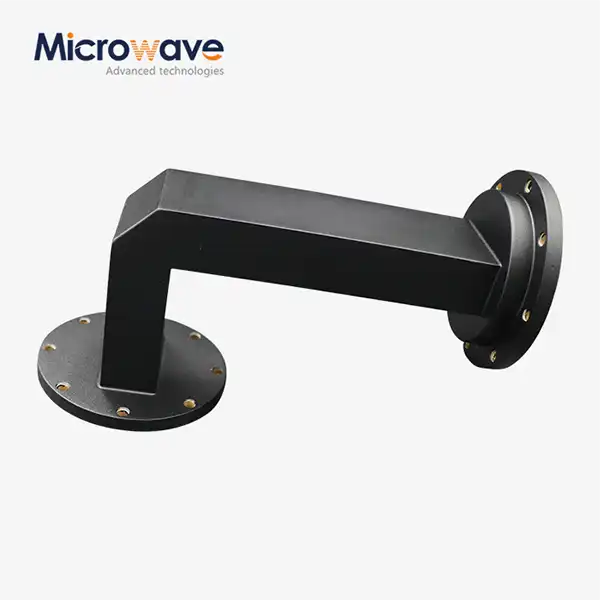
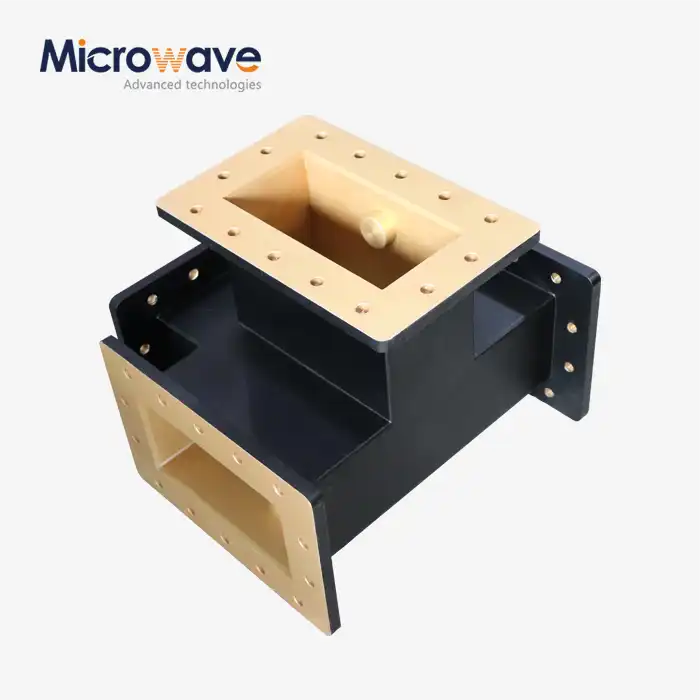
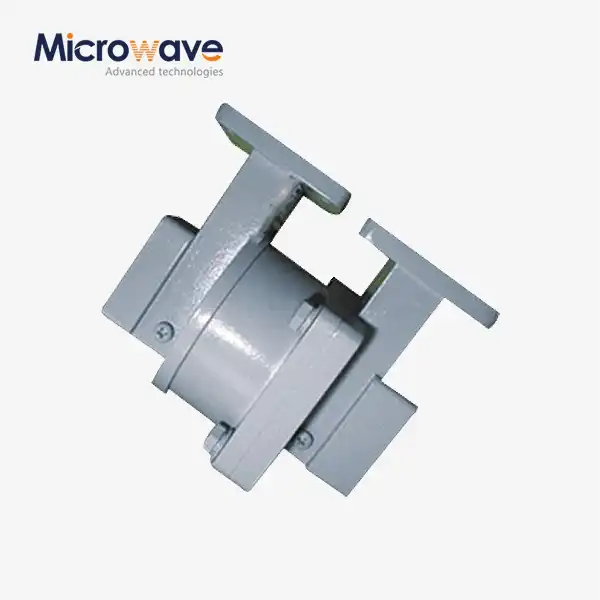
Waveguide phase shifters are a different type of device that is useful for high-power radar systems that work above 10 GHz. These gadgets use mechanical motors or ferrite materials to change how waves travel through a waveguide structure. They can handle kilowatts of RF power without breaking down, which is something that solid-state gadgets have trouble with at higher frequencies.
Frequency Band Considerations and Radar Resolution
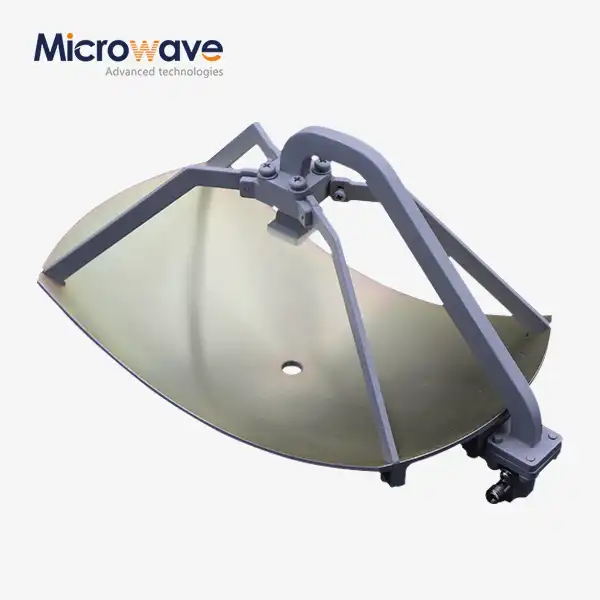
Different radar uses work on different frequency bands, and each one presents its own problems for designing phase shifters. X-band radars (8–12 GHz) are commonly used for marine spying and air traffic control. They work better with precision phase shifters that keep insertion loss low (usually below 1.5 dB) and cover all 360 degrees of phase. Our special X-band feed networks have phase shifters that are made to handle the shaking and changing temperatures that happen in outdoor sites, where mechanical reliability has a direct effect on system uptime.
When frequencies get higher, like in the Ka-band (26.5-40 GHz) used for satellite signals and car radar, it's very important to make parts smaller. In this case, precision phase shifters need to be able to fit inside small transceiver modules while still providing the necessary phase accuracy for very high-resolution imaging. There is a clear link between phase accuracy and radar resolution. For example, an array with 1000 elements and phase accuracy of ±2 degrees has about 10 times better angular resolution than an array with phase accuracy of ±10 degrees, assuming that the antenna aperture size is the same.
Why Precision Phase Shifters Are Critical in Modern Radar Systems
Traditional methods of phase shifting, especially those that use mechanical gimbals or set delay lines, have big problems that can't be fixed by current radar needs. Knowing about these limitations helps explain why procurement engineers at defense contractors and aerospace OEMs now make precision electronic phase shifters standard features instead of high-end options.
Overcoming Legacy Technology Limitations
Mechanical scanning radars have basic speed limits. To cover an area of interest, the beams have to be physically rotated. A 15 RPM spinning antenna does one full scan every four seconds, which is a very long time when trying to track supersonic rockets or coordinate reactions to multiple threats at the same time. Electronic beam steering, which changes radar energy in microseconds, is made possible by phase shifters. This means that a single radar aperture can handle dozens of tracking missions at the same time. Because of this feature, air defense systems have changed. Now, a single AESA radar with precision phase shifters can replace several mechanically scanned systems, which lowers the cost of acquisition and makes operations simpler.
Another important benefit is that the signal integrity. Cumulative insertion loss and phase dispersion make the system less sensitive when RF signals travel long wire runs to antenna elements that are far away, like in standard distributed arrays. Putting phase shifters right behind each radiating element cuts down on these losses and makes sure that phase relationships stay perfectly controlled across the whole array opening.
Addressing Real-World Engineering Challenges
When designing radar systems, engineers have to deal with a lot of problems. Precision phase shifters are a beautiful way to solve these problems. Environmental robustness is the most important of these issues, especially for sites that are in harsh circumstances. Naval radars have to work consistently even when there is corrosion from salt spray, changes in temperature, and steady shaking from machinery on board. In order to meet the requirements of ASTM B117, our waveguide phase shifters go through strict environmental stress screening (ESS), which includes being exposed to thermal cycling and salt spray.
Electromagnetic interference (EMI) is another problem that keeps coming up. In places where electronic warfare is common and many radars and transmission systems are in use at the same time, it is essential to keep the signals pure. When you pair low phase noise amplifiers with precision phase shifters, you get transmit and receive chains with very pure spectral signals. This lets radar processors pick out weak target returns from strong background noise. The radar's ability to find low-speed targets is directly related to how well it handles phase noise in the local oscillator chain, which is enhanced and spread through phase shifter networks. This is what makes modern systems different from older ones.
Best Practices for Optimal Integration
There are a few best ways to add precision phase shifters to radar architectures that have been developed over the past 20 years through direct collaboration with system integrators and manufacturing experience. It's important to pay close attention to thermal management because phase shifters produce heat when they work, and if it's not properly removed, it can change their calibration state. Putting devices on thermally conductive surfaces that have enough heat loss keeps the temperature stable, which keeps the phase accuracy over long periods of operation.
Another important thing to think about is the calibration method. Large phased arrays need to be recalibrated from time to time to account for environmental drift and parts that are getting old. By building radar systems with built-in calibration networks that send out known reference signals, operators can change the phase correction tables without having to take the system out of service. When we send out phase shifters, we always include calibration data and characterization reports. These show how well the devices work at different temperatures and frequencies so that these correction methods can work.
How to Choose the Right Precision Phase Shifter for Your Radar System
To choose the right phase-changing technology, you need to carefully look at the system requirements, working limitations, and long-term support issues. When making this choice, procurement professionals at aerospace OEMs and defense contractors weigh technical performance against cost, delivery schedules, and the supplier's abilities.
Critical Technical Parameters
The main thing that narrows down the list of possible devices is their frequency compatibility. A phase shifter made for X-band frequencies can't be used with a radar that works at 35 GHz because the dielectric materials and physical dimensions are too different. In addition to frequency coverage, the amount of transmit power that hits the antenna and the amount of received information that gets to the radar processor are both affected by the band's insertion loss characteristics. Devices with a flat insertion loss response (less than 0.5 dB change across the band) make it easier to calibrate arrays and get the most power out of them.
The requirements for phase precision must match the requirements for beamforming. As a general rule, phase mistakes shouldn't be more than one-eighth of the desired angular precision in the radar engineering field. An AESA radar with a 1-degree beamwidth should use phase shifters that are more accurate than 0.125 degrees. This requirement forces suppliers to find the most precise devices they can find. It's also important to look closely at return loss (S11 parameter), because bad impedance matching can cause standing waves that mess up array patterns and lower efficiency.
Analog Versus Digital: A Detailed Comparison
Choosing between digital stepped devices and analog voltage-controlled phase shifters has a big effect on how the system is built. Because they can continuously tune the phase and usually use less DC power, analog devices are good for battery-powered platforms like robotic aerial vehicles (UAVs). But their control electronics need precise digital-to-analog translators and careful routing of control lines to keep noise coupling to a minimum.
Digital phase shifters make control interfaces easier to use by letting beamforming computers send them digital orders directly in parallel or serial. They naturally provide repeatable phase states that don't change with temperature or as parts age, which makes calibration easier. A 5-bit digital phase shifter only gives you 32 discrete phase states across 360 degrees, which means that there are quantization side lobes in the array pattern. For uses that need very low sidelobes, like surveillance radars that work in places with a lot of electromagnetic activity, resolutions of 6 bits or higher are needed, even tho they are more expensive and complicated.
Cost-Benefit Analysis and Supplier Evaluation
In addition to the base price, the total cost of ownership includes things like help for customization, the reliability of delivery, and the quality of expert documentation. For complex projects, suppliers who offer turnkey solutions, such as mechanical design adaptation, environmental testing, and application-specific calibration, offer value that justifies higher prices. Standard catalog products, on the other hand, are better for high-volume uses where quick deployment is more important than design flexibility.
Lead times are very different depending on the technology used and the level of customization. Coaxial phase shifters that are already made might be sent out within a few weeks, but custom waveguide kits with specific flange configurations and power handling needs can take 12 to 16 weeks from the time they are ordered until they are delivered. During the whole manufacturing process, we stay in close touch with the procurement teams, giving them regular updates and being able to make changes to the schedule when program deadlines change. This level of flexibility is what sets responsive suppliers apart from commodity vendors.
Streamlining Procurement: Where and How to Buy Precision Phase Shifters
To find RF components quickly, you need to know how the microwave supply chain works and choose methods of procurement that balance price, expert help, and delivery certainty for precision phase shifters. Satellite ground station builders and companies that make telecommunications equipment have honed methods that lower both the costs of acquisition and the risks of integration.
Available Buying Channels and Their Advantages
Authorized distributors offer a wide range of products and usually keep stock in their own regions to speed up delivery, but their expert help may not include deep application engineering. When you work directly with original equipment manufacturers (OEMs), as our team does, you can get customization options and technical advice from design engineers who know both the specifications of the parts and the systems they're used in. This is especially helpful when changing standard products to fit different mounting options or environmental needs that aren't covered by the catalog.
Online sellers have become a popular way to buy common parts because they offer reasonable prices by cutting down on costs. In exchange, there isn't a lot of technical support, and it's not always clear where parts came from, which is a big problem for defense applications that need to track the supply chain and stop fakes. To meet these buying needs, we offer full documentation chains that include certifications for raw materials and final test results.
Bulk Purchasing Strategies and Supply Chain Management
Volume agreements let you get better prices and make sure you have enough production capacity when supplies are low. Setting up blanket purchase orders with planned releases lets procurement teams lock in prices while keeping supplies flexible. This works especially well for radar projects that last more than one year and have predictable production ramps. Our manufacturing planning systems can handle these arrangements by setting aside production times and keeping extra parts on hand to meet customer needs.
Since recent problems with semiconductor availability, making the supply chain more resilient has become a top priority. When it's possible, dual-sourcing methods protect against being dependent on a single provider. However, for highly specialized parts, the work needed to qualify different phase shifter sources often outweighs the risk reduction benefit. Engaging with suppliers early on during the design phase is a more practical method. This lets makers get long-lead parts and build up strategic inventory before production orders come in.
Technical Resources That Accelerate Integration
Full datasheets that show S-parameters at different temperatures and frequencies allow for accurate system modeling before building prototypes, which cuts down on the number of times that the development process has to be redone. We give system engineers full two-port S-parameter files in Touchstone format that work with standard RF simulation tools. This lets them guess how well the array will work before they actually build the hardware.
Installation instructions and testing steps speed up the merging process even more. Waveguide phase shifters need the right amount of torque on the flange bolts to make sure that the RF seal is maintained without putting too much mechanical stress on the surfaces, which could damage highly precise machines. Our installation manuals explain these steps in detail, including the torque values and assembly order that we've learned from years of experience in the field. As part of calibration support, suggested test equipment setups and measurement methods are provided to make sure that devices meet specifications in their actual working environment, not just in the lab.
Maximizing the Value of Precision Phase Shifters: Best Practices and Maintenance
Performance at the component level doesn't always mean success at the system level. If radar systems are installed correctly, calibrated regularly, and maintained proactively, they should stay in good working order for their entire service lifetimes, which in defense uses are usually between 15 and 20 years.
Calibration Procedures and Recommended Tools
Vector network analyzers (VNAs) are the main tools used for calibrating phase shifters. They measure S-parameters that describe insertion loss, return loss, and phase accuracy across the working band. Modern VNAs that can pick up frequencies up to 110 GHz make it possible to characterize millimeter-wave phase shifters that are used in high-tech radar and satellite transmission systems. Setting up reference planes using precise calibration standards is the first step in the calibration process. The next step is to test the phase shifter's performance in all control states so that correction tables can be made that account for differences between devices.
Testing in a temperature room shows how phase accuracy changes across working temperature ranges. This information helps compensation algorithms that change control signals based on the temperatures that are being tracked. During production, we do this characterization and give customers temperature coefficient data that radar control systems use to keep pointing accurately even when the environment changes. This proactive approach stops beam pointing mistakes that make radar less sensitive and less accurate at tracking.
Troubleshooting Common Operational Challenges
When phase shifters are used in places with a lot of vibration, they sometimes stop working for short periods of time. This is because of mechanical resonances that put stress on solder joints or connector interfaces. These types of failure can be lessened by using ruggedized mounting methods, such as potting compounds and strengthened connection backshells. To find faulty phase shifters when array-level performance starts to drop, you need to test each element's phase response and insertion loss in a planned way and compare the results to baseline data from when the system was first set up.
Multipaction breakdown is a type of failure that only happens in high-power waveguide phase shifters that work in vacuum or low-pressure environments, like on satellite payloads. This effect happens when RF electric fields speed up free electrons that hit waveguide surfaces and free up more electrons, starting a spiraling discharge. Fielding devices that can fail in this way are kept from failing by proper power handling tests during qualification. This keeps radar systems from being severely damaged during high-power transfer.
Emerging Trends and Future-Proofing Strategies
Chip-scale devices that combine phase shifting functions, control logic, and amplification into millimeter-scale packages are another example of how miniaturization is driving phase shifter development. These system-in-package options cut down on size, weight, and power use, all of which are important for radar bases in the air and space, where every gram and watt costs more. Adopting modular designs that can handle these new technologies lets radar projects add new technologies without having to rethink whole antenna arrays.
Digital integration is another step forward; phase shifters now have direct digital control interfaces that get rid of the need for external control boards and make the system simpler. Some more advanced designs have self-testing features that send diagnostic data to system health monitoring functions. This lets predictive maintenance plans replace parts before they break instead of having to fix problems after they happen.
Conclusion
The change from mechanical scanning to electronic beam steering has completely changed what radar can do. Precision phase shifters are the technology that made this change possible. They are very useful for many things, from air defense to satellite communications, because they can keep exact phase relationships across large antenna arrays, work reliably in harsh conditions, and fit in perfectly with modern digital beamforming architectures. If procurement teams understand the technical parameters, evaluate suppliers based on both the quality of the parts they offer and their ability to provide support, and follow the right integration and maintenance procedures, they will get the most out of their radar system investments and ensure mission-critical reliability.
FAQ
What frequency ranges do precision phase shifters support?
Phase shifters can be made to work with almost any microwave frequency, from L-band (1-2 GHz) to millimeter-wave bands above 110 GHz. The frequency range depends on the technology used. Coaxial designs usually work with lower frequencies up to 40 GHz, while waveguide designs work with higher frequencies where low loss and power handling are important. Custom designs can focus on narrow bands to get the best performance or offer wideband coverage across many octaves for a variety of uses.
Should I choose analog or digital phase shifters for my radar application?
This decision hinges on your beamforming design and how important speed is to you. Digital phase shifters are great for big AESA radars with hundreds of parts that need to work the same way in all temperatures because they are more stable and repeatable. For uses where smooth beam scanning and battery life are important, analog devices are better because they can be tuned continuously and use less power. The decision also affects how complicated the control system is and how often it needs to be calibrated.
What lead times should I expect for custom phase shifter orders?
Standard stock items usually ship within 4 to 6 weeks. Custom designs that include specific mounting options, environmental requirements, or performance requirements usually take 10 to 16 weeks from the time the order is confirmed until it is delivered. By getting involved early in the design phase, we can start getting long-term materials and reserving manufacturing capacity, which could shorten these times for urgent program needs.
Partner with Advanced Microwave Technologies for Your Phase Shifter Requirements
Advanced Microwave Technologies Co., Ltd (ADM) has been creating and making accurate precision phase shifters and RF components for over 20 years. These parts are used in defense, military, and satellite communication applications and must meet strict requirements. Our manufacturing processes are ISO 9001:2015-certified, and we have a 24-meter microwave darkroom with measurement coverage up to 110 GHz. This makes sure that every part we send you meets the exact phase accuracy and environmental resilience requirements your radar systems need. If you need waveguide phase shifters for high-power applications, digitally controlled units for AESA integration, or custom feed networks made to fit your frequency and mounting needs, our engineering team can help. They can also help with technical advice and rapid prototyping, which speeds up the development process. Get in touch with our team at craig@admicrowave.com to talk about your precision phase shifter needs with a reputable maker and seller who knows how complicated mission-critical RF systems can be.
References
1. Skolnik, M. I. (2008). Radar Handbook, Third Edition. McGraw-Hill Education.
2. Mailloux, R. J. (2017). Phased Array Antenna Handbook, Third Edition. Artech House.
3. Visser, H. J. (2005). Array and Phased Array Antenna Basics. John Wiley & Sons.
4. Balanis, C. A. (2016). Antenna Theory: Analysis and Design, Fourth Edition. John Wiley & Sons.
5. Brookner, E. (2016). "Phased Array Radars: Past, Present and Future." Proceedings of the IEEE International Symposium on Phased Array Systems and Technology.
6. Pozar, D. M. (2011). Microwave Engineering, Fourth Edition. John Wiley & Sons.