




Selecting a Variable Attenuator in Microwave RF
Technical specs, operating conditions, and long-term dependability must all be carefully considered when choosing a variable attenuator in microwave uses. These passive RF parts let you change the signal's intensity on the fly without changing its frequency or phase too much. It's important to know the differences between designs that are manually or electronically controlled, their power handling limits, and their frequency response flatness, whether you're putting them into radar calibration sets, satellite ground stations, or automatic test equipment. To get the best performance in mission-critical communication and measurement applications, you need to find a solution that strikes a good mix between precision attenuation range, insertion loss features, and compatibility with your system design.
Understanding Microwave Variable Attenuators
Adjusting the strength of signals in the radio frequency (RF) and microwave ranges is impossible without a variable attenuator in microwave. Fixed attenuators only lower the sound level to a certain level. Variable versions, on the other hand, let you change the level in real time, anywhere from 0 dB to 60 dB or more, based on the model. This versatility is very helpful for figuring out the linearity of an amplifier, modeling path loss in communication links, or keeping sensitive devices safe from overloading situations.
Core Operating Principles and Technologies
Depending on how they were built, a variable attenuator in microwave changes the level of a sound in different ways. PIN diode-based attenuators use semiconductor junctions whose resistance changes when a DC bias current is applied. This lets them switch quickly, making them good for automatic test systems. These electronic versions work especially well in situations where they need to be controlled from a distance and connected to software-defined measurement systems. Some mechanical designs, like rotary vane waveguide attenuators, use the movement of resistant or absorbent parts in the signal path. Even though they take longer to adjust, they can handle much higher power levels and are very consistent even when the temperature changes.
Frequency Coverage and Performance Parameters
The frequency range of action has a direct effect on the choice of attenuation. Coaxial designs usually work from DC to 67 GHz and are used in standard radio communications, radar systems, and lab equipment. Waveguide-based variable attenuator in microwave work in millimeter-wave bands above 110 GHz, which is important for testing satellite uplinks, researching the atmosphere, and building new 5G backup networks. A very important parameter is insertion loss, which is the signal loss at the lowest attenuation setting. Insertion loss should be less than 0.5 dB at the zero point in high-quality units to keep the system noise figure and total link budget. When the Voltage Standing Wave Ratio (VSWR) is less than 1.20:1, there isn't much signal bounce that could mess up readings or damage parts further upstream.
Comparing Variable, Fixed, and Step Attenuator Architectures
Each type of damper meets a different set of practical needs. Fixed attenuators offer stable attenuation values that don't change, making them perfect for constant gain leveling or impedance matching. Step attenuators give you precise reduction levels in measured amounts, usually in 1 dB or 10 dB steps. This makes them perfect for repeating for production testing. Variable types give up some absolute accuracy in exchange for the ability to make changes all the time. This makes them better for tuning system response or taking sweep measures. When buying, teams understand these trade-offs, and they can choose the right component design for their program.
Key Considerations When Selecting a Variable Attenuator
Technical buyers need to look at a number of factors that are all linked to make sure that the variable attenuator in the microwave they choose works well with their RF system. When component specs don't match up with system requirements, it can affect the accuracy of measurements, add noise that isn't needed, or cause components to fail early under operational stress.
Defining System-Specific Requirements
Start by making a picture of your exact frequency range. Choosing an attenuator with too much bandwidth could add cost that is unnecessary, and choosing one with too little coverage can leave tests or signal management with dark spots. Power handling ability needs to be carefully thought out, especially when using a high-power radar or emitter. Peak pulse power capabilities are very different from continuous wave (CW) power values. A waveguide attenuator working in the X-band could handle several kilowatts of CW power, but a similar coaxial unit can only handle tens of watts because it needs to cool down first. How precisely and clearly you can change signal levels is based on attenuation accuracy and clarity. For readings of antenna patterns, the change needs to be smooth and continuous. For faster processing, 0.5 dB step precision might be fine for production tests.
Impact on System Noise Figure and Insertion Loss
Every inactive component that is added to the signal line lowers the total system noise figure. This degradation is made worse by the insertion loss at zero attenuation. For receiver front-end uses, low-loss designs are better. Even an extra 0.3 dB of loss can make the link buffer smaller in satellite ground stations that handle weak downlink data. On the other hand, applications on the emitter side can handle higher insertion loss because the output power usually exceeds the needs by large amounts. By checking the overall impact of all inactive parts, like attenuators, filters, and couplers, the whole chain is sure to meet the required sensitivity levels.
Manual Versus Electronic Control Interfaces
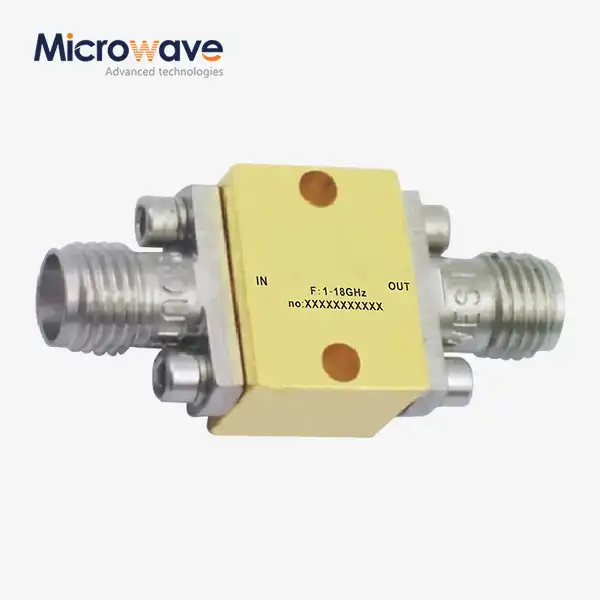
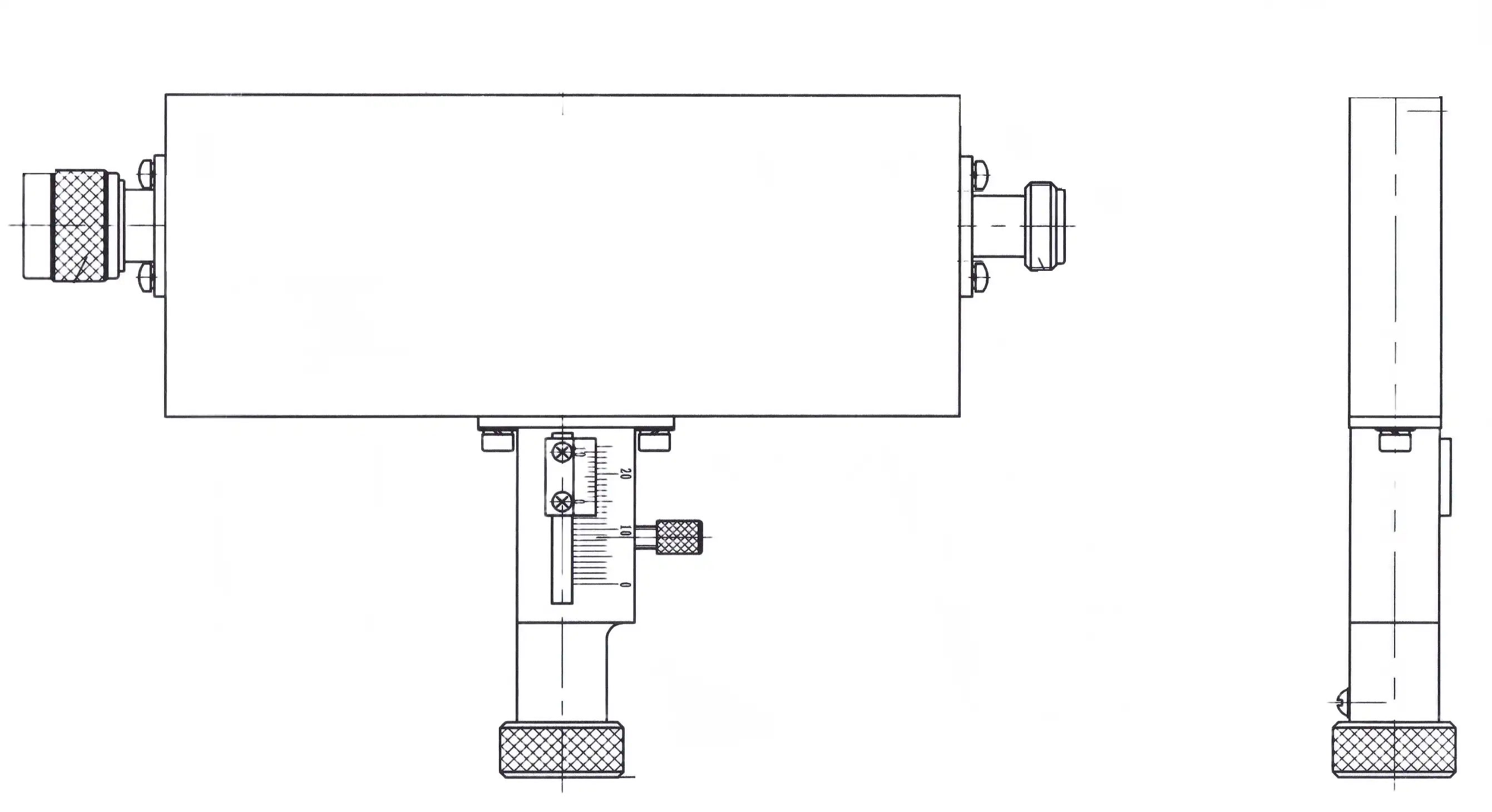
Adjusting manual attenuators is done with regulated buttons or knobs, which provide physical input and eliminate the need for external control electronics. They work well for testing on a bench, where the user can make changes in real time while watching the results of the measurements. Electronic attenuators can connect to USB, Ethernet, or GPIB ports and accept DC voltage or digital orders. This lets them be used in automatic test routines. Their reaction times are microseconds, which makes them useful for apps that need to make quick changes, like antenna beamforming or adaptive equalization. The control method you use relies on whether you need human review or computer control for your operations, especially when using a variable attenuator in microwave applications.
Interpreting Datasheets and Verifying Specifications
The manufacturer's datasheets show the specs under certain test settings that might be different from the ones you use in your work. The accuracy of the attenuation might be stated at room temperature with a ±25°C range, but your application works at -40°C in an open shelter. Temperature coefficients of attenuation show how much the nominal number changes as the temperature changes from one end to the other. It is important to check the VSWR specs across the whole frequency range, not just at spot frequencies. Power handling rates differentiate between normal, peak, and pulse situations. Make sure that your job cycle matches these descriptions. Before agreeing to bulk purchases, getting test data or sample units to evaluate in real-world settings can boost trust.
Top Microwave Variable Attenuators for 2026: Market Leaders and Trends
Microwave variable attenuator in microwave systems are becoming more and more competitive as semiconductor materials, reduction methods, and digital control integration get better. Established companies use their decades of RF engineering knowledge, while younger companies come up with new ways to meet the needs of new applications in 5G infrastructure and millimeter-wave tests.
Key Manufacturers and Their Flagship Offerings
Keysight Technologies has a strong presence with electronically controlled attenuators that work from DC to 50 GHz and have USB and Ethernet connections so they can be easily added to automatic test systems. In their designs, they put a lot of emphasis on having fast setting times (less than 50 microseconds) and tuning accuracy better than ±0.3 dB. Pasternack has a large selection of coaxial manual variable attenuator in microwave that are built to last and can be used in the field. These attenuators cover frequency ranges up to 40 GHz and can handle up to 5 Watts of power on average. Mini-Circuits makes small, connectorized attenuators that work best in high-volume production settings. They offer low-cost options that can be controlled by a computer using SPI or I2C protocols. Radiall makes waveguide attenuators for millimeter-wave bands so that they can be used in radar and satellite transmission systems where coaxial parts can't meet the frequency or power density needs.
Performance Criteria for Emerging Applications
As 5G New Radios that work in FR2 bands (24-52 GHz) become more common, there is a need for attenuators that are very flat across multi-gigahertz bandwidths. In order to test base stations, the attenuation range must be greater than 40 dB in order to describe beamforming arrays and keep the VSWR below 1.15:1 so that over-the-air readings are not messed up. Advanced driver-assistance systems (ADAS) that use 77–81 GHz car radar bands need attenuators that can work in temperatures ranging from -40°C to +125°C without losing any performance. Attenuators with low passive intermodulation (PIM) performance help satellite communication ground segment equipment work better by stopping the production of unwanted signals that mess up signals from transponders nearby.
Market Trends and Integration Developments
Variable attenuator in microwave designs are still changing because of miniaturization. For example, surface-mount devices now take up less than 4 mm² of circuit board space but still work at 30 GHz. This makes it possible to add it to dense RF front-end units in smartphones and Internet of Things (IoT) devices. Manufacturers offer Python and MATLAB tools for quick test automation development, and software-defined control interfaces are quickly becoming the norm. Some more advanced models now have calibration data built in and saved in non-volatile memory. This lets test software automatically account for changes in components and effects of temperature. As research into 6G moves toward higher frequencies, attenuators that work above 140 GHz are being made. These attenuators use advanced waveguide manufacturing and exact mechanical standards that can only be achieved with photolithographic methods.
Conclusion
To choose the right variable attenuator in microwave, you need to know a lot about the technical needs, working surroundings, and long-term dependability standards of your system. Choosing between coaxial and waveguide designs, manual or electrical control, and different attenuation levels has a direct effect on the accuracy of measurements, the amount of power that can be handled, and the complexity of the integration. Procurement teams can find parts that work consistently throughout the lifetime of a product by carefully checking specs like frequency coverage, insertion loss, VSWR, and the credibility of the seller. Working with skilled makers that offer full technical support, the ability to customize products, and well-documented quality systems will make sure that your RF infrastructure meets both current requirements and the needs for future growth.
FAQ
Q1: What frequency range do most variable attenuators cover?
Most coaxial variable attenuators in microwave work from DC to 67 GHz, which makes them useful for wireless communications, radar tests, and lab equipment. For satellite transfer systems and weather studies, waveguide designs let them work in millimeter-wave bands above 110 GHz. The frequency ranges depend on the type of connection and the waveguide band name.
Q2: How do you determine the appropriate attenuation range for your application?
Find the highest signal level that can enter your gadget and the lowest level that it can handle before it becomes saturated. The gap shows how much reduction you need at the very least. Adding a 10-15 dB cushion allows for changes that were not expected and affects of getting older. Attenuation levels higher than 50 dB may be needed for testing situations that mimic signal fade.
Q3: Can variable attenuators reduce signal noise in high-frequency systems?
The signal-to-noise ratio stays the same when variable attenuators in microwave lower the power of both the data and the noise. They keep sensitive parts from getting too hot, but they don't make the noise function better. To get the best total noise figure, low-noise amplifiers should be put before attenuators in a well-designed system.
Procurement Insights: How and Where to Buy Microwave Variable Attenuators?
The supply line for the variable attenuator in microwave and RF uses is complicated. It's not enough to just compare datasheets; the choice also takes into account how reliable the provider is, how well they can help with technical issues, and how well the shipping plans match up with the project timelines.
We at Advanced Microwave Technologies Co., Ltd. have been making microwave parts for more than twenty years and can help you with your most difficult RF uses. Our wide range of products includes coaxial and waveguide variable attenuator in microwave that work with frequencies from 500 MHz to 110 GHz. They are all made in ISO 9001:2015-certified facilities that include our advanced 24-meter microwave lab for exact performance testing. We know that defense companies, satellite system developers, and research institutions need more than just off-the-shelf parts. They need partners who can give them unique solutions backed by strict quality control and quick expert support. Our engineering team works directly with your purchasing and design teams to find attenuators that work with the specific frequency bands, power needs, and weather conditions. Our flexible OEM services and efficient supply chain make sure that parts get to you when they're needed, whether your project needs a few prototypes to be tested and approved or a lot of parts to be manufactured and delivered on time. Please get in touch with our team at craig@admicrowave.com to talk about your unique variable attenuator in microwave needs. As a reliable variable attenuator in microwave providers, we offer thorough datasheets, application notes, and expert support to help you make smart purchasing choices that improve system performance and keep projects on schedule.
References
1. Pozar, David M. Microwave Engineering, 4th Edition. Hoboken: John Wiley & Sons, 2011.
2. Collin, Robert E. Foundations for Microwave Engineering, 2nd Edition. New York: IEEE Press, 2001.
3. Vendelin, George D., Pavio, Anthony M., and Rohde, Ulrich L. Microwave Circuit Design Using Linear and Nonlinear Techniques. Hoboken: John Wiley & Sons, 2005.
4. Rizzi, Peter A. Microwave Engineering: Passive Circuits. Englewood Cliffs: Prentice Hall, 1988.
5. Larson, Lawrence E. RF and Microwave Circuit Design for Wireless Communications. Boston: Artech House, 1996.
6. Golio, Mike and Golio, Janet. RF and Microwave Passive and Active Technologies. Boca Raton: CRC Press, 2008.
_1733809032116.webp)