





Waveguide Gasket for Aerospace and Radar Equipment
Maintaining signal security while avoiding electromagnetic interference is a must in aircraft and radar systems. Additionally, waveguide gaskets are important contact parts at flange joints because they do two things: they keep the electricity flowing to prevent RF leaks and keep out wetness, dust, and changes in pressure. These unique parts are very different from regular industrial gaskets because they can work with microwave frequencies ranging from 1 GHz to more than 100 GHz and can handle the highs and lows of temperature, shaking, and the harsh conditions that are common in aircraft applications.
Understanding Waveguide Gaskets: Function, Types, and Benefits
Core Functions in High-Frequency Systems
Waveguide gaskets solve problems with joint irregularity when tiny holes between metal plates let radiation travel in ways that weren't meant to. These gaps make the Voltage Standing Wave Ratio (VSWR) and insertion loss worse, which hurts the performance of the system. Gaskets keep the signal line clean all the way through the transmission chain by making sure that the contact resistance between fitting surfaces is low. In sealed waveguide setups, like those used in high-power satellite uplinks where dry nitrogen stops voltage arcing, these parts seal the waveguides completely, keeping the internal dielectrics safe from damage from the atmosphere.
Material Selection and Performance Characteristics
Material engineering has a direct effect on how long something works and how well it works with electric fields. Conductive elastomers with silver-aluminum fillers are great at blocking electromagnetic interference (EMI) and galvanic rusting when used with aluminum flanges, which is common in aircraft radar systems. Fluorosilicone-based versions can handle jet fuel, hydraulic fluids, and huge temperature changes from -55°C to +125°C. This makes them essential for aircraft platforms that have to change altitude quickly. When used in naval settings where salt-spray rust could damage systems, expanded PTFE with electrical holes makes them more durable.
When picking a material, you have to balance the need for conductivity with the need for protection of the surroundings. Silver-copper alloys work better electrically, but you need to be careful about which metals work well with each other to avoid electrolytic reactions. Nickel-graphite choices have a modest level of conductivity and better chemical protection, making them good for industrial measurement systems that work in a lab setting.
Critical Applications Across Defense and Communication Sectors
Waveguide gasket sealing is needed for aerospace tracking systems to keep radar accuracy even when flight patterns change. These parts are used at every flange joint in ground-based satellite terminals along the RF signal path, from high-power amplifier connections to feed horn sections. Military surveillance arrays on navy ships need gaskets that keep their EMI shields working even when they are exposed to salt fog and mechanical vibrations from the ship's engine systems all the time. Weather tracking systems that are placed on uncovered towers benefit from gasket formulations that are resistant to UV light, which keeps them from breaking down over ten-year service intervals.

Comparing Waveguide Gaskets with Other Gasket Types: Making the Right Choice
Technical Differentiation from Standard Sealing Solutions
Standard industrial gaskets focus on keeping fluids inside, while waveguide-specific versions improve electromagnetic performance measures. Standard EMI gaskets are meant to protect structures over a wide range of frequencies, while waveguide gaskets are meant to optimize narrow bands that match specific transmission frequencies. For technical reasons, straight replacement is not possible because RF gaskets made for coaxial connections work at different impedance levels than those made for waveguide flange uses.
It's important to make the difference between gaskets and seals clear. Using a distributed bolt force to squeeze gaskets between flat flange faces creates controlled distortion that fills in surface flaws. Seals, like O-rings in some waveguide choke flange designs, protect against the environment by radial compression within holes, but they don't put electrical continuity across the contact first.
Evaluating Material Trade-offs for Mission-Critical Applications
Cost factors include more than just the original purchase price; they also include results over the entire lifecycle. Silicone-based gaskets are very stable at low temperatures and are a cheap option for safe installs inside. Aerospace procurement managers often choose fluorosilicone even though it costs more per unit because it lasts longer and needs less upkeep, which cancels out the original cost. Checking the amount of valuable metals in materials is often required by military standards. This forces material choices toward supply lines that can be tracked and recorded.
Testing for environmental stress protection shows changes in performance that aren't shown in datasheets. To figure out how reliable something will be in the field, accelerated aging methods that simulate years of temperature cycling, UV exposure, and chemical contact are used. Measurements of the compression set, which is the lasting displacement left over after a steady pressing force, show if gaskets keep closing well after many heat expansion cycles.
Installation, Maintenance, and Performance Optimization of Waveguide Gaskets
Pre-Installation Surface Preparation Protocols
To get the best waveguide gasket performance, the flange surface must be carefully prepared. Impedance gaps caused by residual rust, machine grease, or pieces of old gasket material make EMI protection less effective. To get surface finishes better than 32 microinches RMS, we suggest cleaning with a solvent and then sanding with fine abrasives. Using precision straightedges to check the flatness of a surface stops stress points from forming that speed up gasket failure.
Sequences of torque application have a big effect on how regular the closing is. Using measured torque tools to tighten in a star-pattern makes sure that the compression is even, which stops the gasket from pushing into the waveguide opening, which is a common fitting mistake that can cause VSWR jumps that aren't expected. Too much torque breaks electrical particles inside the rubber matrix, which makes shields less effective. On the other hand, not enough tightening leaves holes that let RF leak through.
Routine Inspection and Predictive Maintenance Strategies
System dependability is maintained by setting review times based on how important the process is. When airborne platforms are in places with a lot of shaking, they need to be visually checked every three months for gasket compression set and edge deterioration. Ground sites in climate-controlled buildings may be able to stretch evaluation periods to once a year without affecting the guarantee of performance.
Visual signs that a waveguide gasket is about to fail include a compression set that is more than 15%, surface cracks from UV damage, or coloring that suggests a chemical attack. VSWR readings taken across flange joints can find performance loss before it leads to a catastrophic failure. By comparing these measures over time, you can find the standard performance and see trends of slow degradation that let you plan for replacements ahead of time.
During repair rounds, cleaning procedures must not use harsh solvents that break down elastomers. Isopropyl alcohol gets rid of contaminants without harming most gasket materials, but it's still a good idea to make sure the materials are compatible. We want to stress that using the same waveguide gasket after separating the flanges creates doubt because the compression set changes the dimensions, which means that past torque specs can't be relied on to meet performance requirements.
Performance Enhancement Through Application-Specific Selection
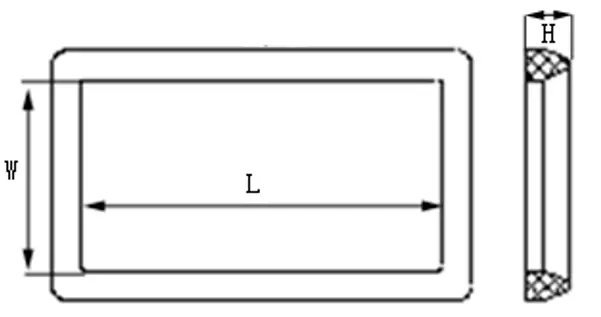
Matching the thickness of the waveguide gasket to the limits on the flange surface improves both the mechanical and electrical performance. Thinner gaskets allow for more accurate cutting but need a flat surface, while thicker ones make up for differences in making but add a little to the length of the electrical path. Standard widths of 0.027 inches are the best solution for most aircraft uses, but special specs can be made to fit the specifics of an installation.
Frequency-specific gasket designs make narrow-band uses work better. By matching the operating frequency ranges to the conductive filler amounts and rubber durometer, it is possible to reduce insertion loss while keeping mechanical durability. Using gradient-density designs with changeable conductivity zones that improve performance across the spectrum is best for systems that work with a wide range of frequencies.
Procurement Guide: How to Select and Buy Waveguide Gaskets for Your Aerospace and Radar Projects?
Critical Specification Parameters for Technical Evaluation
Buying choices depend on how well the waveguide gasket specs match the needs of the system. Frequency range compatibility makes sure that the gasket keeps the electricity flowing across all working bandwidths. For example, the filler amounts needed for a Ka-band satellite terminal are different from those needed for an L-band radar assembly. Impedance matching properties stop echoes at the flange contact, and good gaskets can get VSWR below 1.15:1 across certain bands.
Environmental approval testing makes sure that the performance will work as expected in the business environment. Thermal shock, salt fog exposure, and shaking protection are all part of the MIL-STD-810 testing procedures. These are important standards for defense uses. RoHS compliance and material tracking documents meet government rules and allow qualification checks to happen all along supply lines.
Ratings of a material's longevity tell you how long it will last under certain natural stresses. Compression set resistance measures how well something can seal for a long time, while outgassing properties are very important for mission-critical and space-qualified uses where volatile chemicals can damage optical surfaces or make vacuum conditions less stable.
Strategic Sourcing Considerations for B2B Procurement Teams
It's not enough to just look at a supplier's prices in a catalog; you also need to look at their professional help and supply chain stability. Application engineering help is available from well-known makers, who can help you choose the best waveguide gasket designs for complicated installs. Prototyping services let you test performance before committing to large-scale production, which lowers the risk of qualification for custom aerospace programs.
Managing lead time is very important for keeping to the program plans. Standard store items usually ship within days, but custom formulas need rounds of material mixing and hardening that can take weeks. Supply problems can be lessened by keeping strategic stocking backups on hand. However, materials must still be stored properly to keep their properties, which means keeping the temperature and humidity under control and protecting them from UV light.
Price designs show more than just the cost of materials. For non-standard flange shapes, custom equipment requires an initial investment that is spread out over a number of production runs. People who commit to buying in bulk often get better prices, but the minimum order amounts need to be in line with how fast the product is used up and how long it can last. We keep our manufacturing options open so that we can do both fast development for research projects and large-scale production for ongoing projects.
Partnership Value Beyond Transactional Supply
Long-term ties with suppliers have benefits that go beyond individual orders. Technical teamwork during the planning process improves waveguide gasket specs so they can be made more easily while still meeting performance standards. Integrating the quality system, which includes first-article checks and statistical process control, makes sure that all production lots work the same way.
Material certifications, measurement inspection records, and performance test data are some of the things that are included in documentation packages that support aircraft quality systems. When traceability goes all the way down to the lot numbers of raw materials, it's possible to find the root cause of problems in the field. These services that add value set strategic suppliers apart from basic sellers. This is especially true for mission-critical uses where failure can cause more than just equipment damage and could even be dangerous.
Conclusion
Waveguide gaskets are seemingly simple parts that have a big effect on how well systems work in radar and aircraft uses when they are chosen and put together correctly. When electric needs, weather stresses, and mechanical limitations all work together, you need to be very careful when writing specifications that are in line with how things actually work. Improvements in material science keep making performance bands bigger. This lets next-generation systems work at higher frequencies, higher power levels, and harsher conditions. Buying strategies that focus on technical relationships instead of transactional buying open up chances to improve performance while lowering the supply chain risks that come with using specialized parts.
FAQ
Q1: What determines the optimal waveguide gasket choice for microwave applications?
The choice is based on the frequency range that will be used, the surroundings, and the fit of the joint material. X-band radar systems usually use silver-aluminum-filled silicone because it has good conductivity and doesn't rust. On the other hand, millimeter-wave uses benefit from smaller shapes that cut down on the length of the electrical path. Base rubber choice is based on high temperatures. Standard silicone works well in safe settings, while fluorosilicone can handle fuels and hydraulic fluids that are common near airplane engines.
Q2: How do waveguide gaskets achieve noise reduction and EMI control?
Waveguide gaskets create continuous electrical lines across flange surfaces, which gets rid of the effects of tiny gaps on slot antennas. Even if the surface isn't smooth, conductive gaps make many electrical contact points. This keeps the contact resistance low, which sends electromagnetic energy to ground instead of spreading to other areas. This process works especially well in the microwave range, where wavelengths are getting close to gap dimensions.
Q3: Can custom waveguide gaskets be manufactured for unique aerospace requirements?
Of course. Custom formulations are used to solve specific problems, like providing better radiation protection for satellite uses, creating unique shapes for non-standard flange profiles, or creating mixed materials that have more than one performance trait. With prototyping, you can test the performance before committing to production. This makes sure that the standards match the tested results in real installs.
Partner with ADM for Precision Waveguide Gasket Solutions
Advanced Microwave Technologies Co., Ltd has been making waveguide components for more than 20 years and has a lot of experience with precision-engineered sealing solutions for difficult aircraft and radar uses. Our engineering team works with our sourcing team to find the best waveguide gasket setups for your system, whether you need normal store items or designs that are unique. As a waveguide gasket maker with a long history, ISO 9001:2015 approval, and production methods that are in line with RoHS, we offer consistent quality backed by detailed technical documentation.
Contact craig@admicrowave.com to talk about your unique application needs and get thorough technical advice that fits your project's boundaries. We offer both fast development for testing and scaling production for ongoing projects, so your supply chain stays connected throughout the span of your product.
References
1. Balanis, C. A. (2016). Antenna Theory: Analysis and Design (4th ed.). Hoboken: John Wiley & Sons.
2. Collin, R. E. (2001). Foundations for Microwave Engineering (2nd ed.). New York: IEEE Press.
3. Pozar, D. M. (2012). Microwave Engineering (4th ed.). Hoboken: John Wiley & Sons.
4. Saad, T. S. (Ed.). (1971). Microwave Engineers' Handbook (Vols. 1-2). Dedham: Artech House.
5. United States Department of Defense. (2019). MIL-STD-810H: Environmental Engineering Considerations and Laboratory Tests. Washington: Defense Technical Information Center.
6. Whitaker, J. C. (2018). The RF Transmission Systems Handbook (2nd ed.). Boca Raton: CRC Press.
YOU MAY LIKE
 VIEW MOREWaveguide Loop Coupler
 VIEW MOREHigh Power Waveguide Circulator
 VIEW MOREHigh Power Waveguide Differential Phase Shift Isolator
 VIEW MOREWaveguide Cable Assembly
 VIEW MOREWaveguide Adjustable Support
 VIEW MOREMini Wideband Double-ridged Horn Antenna
 VIEW MORELadder Membrane Square Dual Circular Polarization Horn Antenna
 VIEW MOREAntenna Near Field Measurement Probe
