




Precision Waveguide Tube Manufacturing Explained
The most advanced microwave transmission technology is precision waveguide tube manufacturing, in which hollow metal structures guide electromagnetic waves very well. A waveguide tube is a special kind of transmission line that sends radio frequency energy through carefully controlled internal shapes instead of regular wires. These precision-engineered parts work better than coaxial lines above 1 GHz because they use air or special gases as the insulating medium. This makes them work better in the Super High Frequency and Extremely High Frequency bands. To meet the high standards needed for defense, aerospace, satellite communication, and industrial research uses where signal integrity must not be compromised, the manufacturing process needs very precise specs, high-tech materials, and very good quality control.
Understanding Waveguide Tubes and Their Manufacturing Fundamentals
Knowing how waveguide tubes are created is crucial. Waveguide technology uses electromagnetic waves to traverse through tight metal boundaries. The operating frequency and tube shape determine whether microwave radiation enters the tube as TE (Transverse Electric) or TM (Transverse Magnetic). Traditional cables can't eliminate dielectric loss to keep signals strong over long distances, handle kilowatt to megawatt power levels without breaking, or protect electromagnetic fields in noisy areas.
Rectangular vs. Circular Waveguide Designs
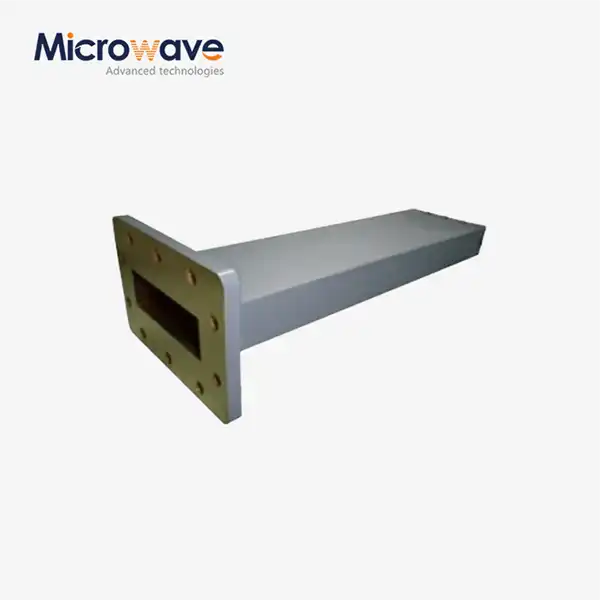
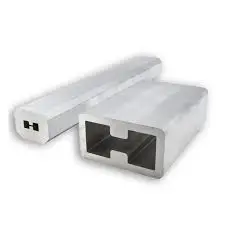
Because they maintain signal polarisation and dominant mode transmission (TE10) across bandwidths, rectangular waveguides are most popular in industry. The WR series represents industrial standards. Precise measurement ratios maintain cutoff frequencies and resistance characteristics. Circular waveguides are beneficial in rotating joints and radio feed systems despite spinning motions. Shape affects how hard to make. Rectangular corners must be accurate, and circular tube walls must have the same width.
Material Selection and Conductivity Requirements
Copper is the ideal material for low-loss applications due to its high electrical conductivity (5.96 107 S/m), minimising ohmic losses during signal transmission. Aluminium weighs roughly a third of steel and is lighter. This is ideal for airborne radar and satellite ground equipment that has to be light. Brass and bronze are utilised in saline environments to fight corrosion. Advanced Microwave Technologies Co., Ltd. chooses materials based on their purpose, such as thermal stability for high-power radar systems or mechanical durability for harsh settings.
Critical Dimensional Tolerances in Precision Manufacturing
Waveguide efficiency requires micron-level physical uniformity. For millimeter-wave frequencies, maintain device width and height within ±0.025mm to prevent mode shift and excessive return loss. Surface polish standards recommend Ra values below 0.8 micrometres. Roughness creates microscopic crevices that distribute electromagnetic radiation and reduce transmission efficiency. Even wall thickness impacts construction strength and heat transmission. High-power continuous wave usage requires this because uneven heating might cause persistent distortion.
Challenges in Traditional Waveguide Tube Manufacturing and How Precision Manufacturing Overcomes Them
Traditional ways of making waveguide tubes the old-fashioned way had problems with regularity, which had a direct effect on how well they worked electrically. Older casting methods caused differences in size along the lengths of tubes, which led to impedance mismatches that made the VSWR (Voltage Standing Wave Ratio) too high. Surface imperfections like holes, scratches, and tool marks were created by hand-forming, and they served as spreading sites for microwave energy. These flaws were especially annoying at higher frequencies, where wavelengths get close to the size of surface flaws.
Advanced CNC Machining for Dimensional Precision
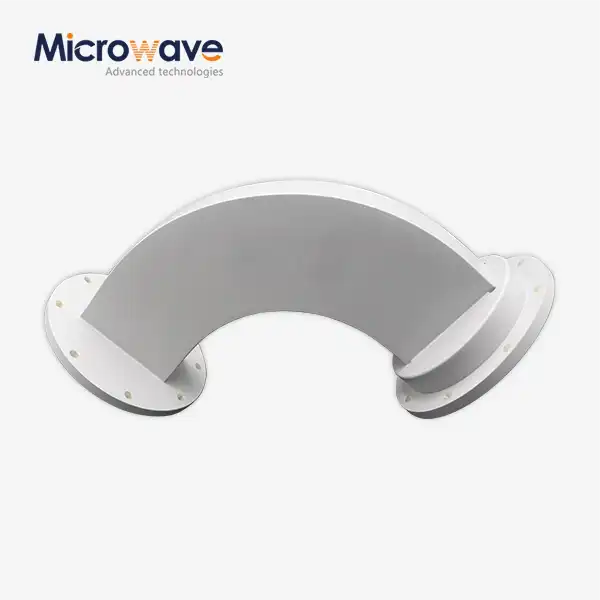
CNC machining made waveguides constant in quality across production runs. Five-axis CNC mills can create mathematically precise E- and H-plane bends. This eliminates impedance gaps in bending parts constructed the traditional way. Our facilities employ adaptive toolpath technologies to account for material characteristics and temperature expansion during machining. This preserves tolerances when cutting tools wear out. Real-time measurement feedback loops compare measurements to CAD models and indicate discrepancies before they affect subsequent production runs.
Electroforming and Surface Treatment Technologies
Electrochemical casting of metal onto precise mandrels creates waveguide sections with atom-smooth surfaces. This technology allows surface finishing as smooth as 0.4 micrometres Ra while remaining faithful to the master shape. After cutting, chemical cleaning removes minor scratches, and expensive metal plating, generally silver or gold, lowers resistance losses further. Our ISO 9001:2015-certified locations utilise regulated rust preventative layers to maintain long-term performance without electrical issues.
Integrated Quality Control and Metrology Systems
Modern precision manufacturing employs machines to inspect work throughout production. Sub-micron Coordinate Measuring Machines (CMMs) compare interior shapes to requirements and indicate discrepancies for process optimisation. Our 24-meter Microwave Darkroom's Antenna Plane Near and Far Field Measuring Recombination Chamber tests electrical performance from 0.5 to 110 GHz. We may link production variables to insertion loss, return loss, and power handling features with this comprehensive variety of testing choices. We can keep increasing manufacturing parameters.
Advanced Microwave Technologies Co., Ltd. has stringent production processes. They use spectrographic analysis to check the materials, precisely form them in a controlled environment, treat them in multiple stages with written instructions, laser weld them together to seal them, and make sure the electrical work meets customer requirements. From raw material clearances to final test results, we retain detailed records. This fulfils rigorous defence and aerospace procurement documentation requirements.
Case Study: High-Frequency Performance Improvement
Old waveguide lines that weren't carefully manufactured caused signal loss in a satellite ground station's Ka-band uplink system. When we replaced them with precision-machined parts from our facility, insertion loss dropped 0.3 dB per metre. This was a major upgrade that restored several dB of transmission line system margin. Better surface quality eliminated spurious mode production, which caused antenna far-field radiation interference. This proves that correct manufacturing pays benefits in real life.
Comparing Waveguide Tubes with Alternative Solutions — Helping You Make Informed Procurement Decisions
Compare waveguide tubes to other choices to make wise purchases. When evaluating RF transmission choices, procurement teams must pick between many technologies with varied performance and cost profiles. Knowing these distinctions lets you design for technology and money.
Coaxial cables are flexible and easy to install, but they lose signal strength quickly above the X-band. Normal low-loss coaxial cables lose 1-2 dB/meter at 10 GHz, hence they can't be utilised for microwave communication routes more than a few meters. Waveguides minimise insertion losses below 0.05 dB/meter in similar frequency ranges. This allows signals to reach tens of meters without regeneration. Another key difference is power handling. Waveguides can withstand many kilowatts of continuous power and several megawatts of peak surges, which would arc coaxial dielectrics fast.
Fibre optic systems carry baseband data well, but they need frequency converters to work with radio waves. This delays and complicates. For direct RF transmission without modulation, waveguides are essential for radar phase coherence and medical linear accelerator time synchronisation. Due to its inherent resistance to electromagnetic pollution, it doesn't need to be filtered or protected like cable-based systems in low-electricity areas.
Material Selection, Economics, and Performance Balance
Choose from copper, aluminium, and exotic metals based on electrical performance, weight, cost, and environmental durability. Copper waveguides ensure the highest transmission efficiency for long ground station runs, when every tenth-dB loss reduces link budget reserves. Aluminium reduces antenna positioner and aircraft installation structural stresses by 70% over copper. In weight-sensitive usage, significantly increased insertion loss is acceptable. Brass metals make salt-sprayed maritime radar systems more rust-resistant despite tiny ohmic losses. This prolongs system life.
Rigid vs. Flexible Waveguide Implementation Trade-offs
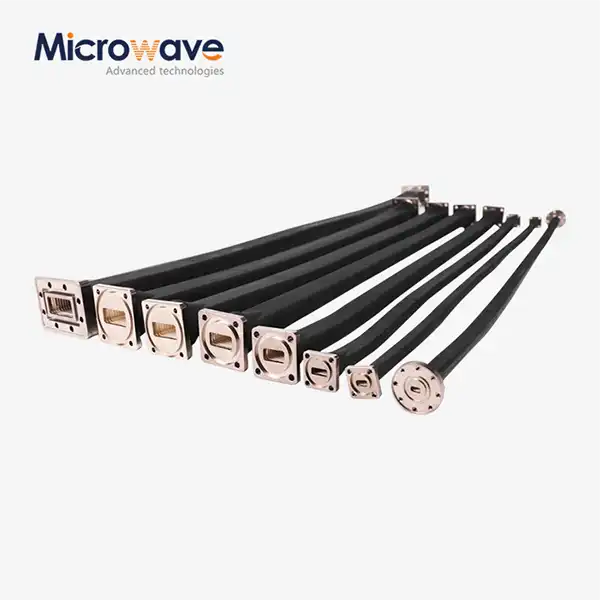
Carefully regulated forms and minimal fractures provide rigid waveguide systems with the optimum electrical performance. Pre-assembled sections with factory-installed flanges are ready to connect, reducing field effort and ensuring consistent electrical qualities. The stiff path must be carefully considered during system design, and unique bend angles and offsets may be needed to avoid structural obstructions. Flexible waveguide sections, comprised of curved metal tubes that can only be bent so far, are more expensive and have higher insertion loss, while making installation more flexible. We advise mixed solutions with firm runs for main gearbox lines and short, movable pieces for last-minute position adjustments.
Procurement Insights: How to Source Precision Waveguide Tubes for Your Projects?
To have a successful buying process, you must first clearly define all of your needs, including both electricity requirements and operating limitations, when sourcing high-quality waveguide tubes for your projects. Set frequency ranges that are just outside of the normal working ranges to allow for setting changes and future system updates. It is important to list the power handling needs for both average steady power and peak pulse power, as managing heat and voltage breakdown are two different design issues. Operating temperature ranges, altitude effects on pressure, shaking patterns, and humidity exposure are some of the environmental factors that affect the choice of material and the closing requirements.
Evaluating Supplier Capabilities and Certifications
When evaluating suppliers, proven custom manufacturing skills should be given more weight than just the availability of stock products. Ask for records of similar projects that have been done in the past that show frequency ranges, power levels, and levels of complexity that are similar to your needs. Check that the current ISO 9001 quality management certification and RoHS compliance documents are still valid. This is necessary for integrating the aircraft and military supply chains. When figuring out production capacity, it's important to look at wait times, especially for sample numbers that support development plans versus production amounts. We've been making waveguide systems for satellite communication, defense, and aircraft uses for 20 years, which gives buying teams confidence in our track record.
Negotiating Terms for Bulk Orders and Custom Solutions
Volume purchasing can lead to better price models while still meeting quality standards. Set up outline deals that spell out technical requirements, factors for accepting quality, and price levels for different order numbers. Include ways for engineers to help during the integration stages, keeping in mind that the performance of the waveguide system depends on how well the flanges are aligned, the pressure requirements, and the sealing to the environment. When planning for international logistics, you should think about the paperwork that is needed for customs, especially for defense-related uses that need an export license. At Advanced Microwave Technologies Co., Ltd., we offer full expert help from writing the specifications to fixing problems after delivery, which ensures that the projects are completed successfully.
OEM Partnership Success Stories
A defense firm working on the next generation of phased array radar needed special waveguide power divider networks that had to meet strict requirements for amplitude and phase balance. During the planning process, our engineering team worked together to make sure that the shapes were the best they could be for making the product while still meeting electrical goals. We were able to test prototypes at 110 GHz, which led to production designs that had 0.2 dB amplitude balance and 3 degrees of phase tracking across a 2 GHz immediate bandwidth. By combining our knowledge of production with the customer's knowledge of their system, this partnership method sped up development times while providing better technical performance.
Future Trends and Innovations in Waveguide Tube Manufacturing
The microwave business is still changing as it moves toward higher frequencies, more dense integration, and more efficient production. 5G infrastructure and millimeter-wave communications are driving miniaturization trends that need waveguide components with smaller and smaller cross-sections while still meeting performance standards. Waveguide tube manufacturing trends and new ideas for the future are driven by the adoption of more advanced manufacturing methods.
Additive manufacturing, also called 3D printing, can make parts with complex internal shapes that aren't possible with traditional cutting. Direct metal laser sintering makes multi-channel structures that are combined and have internal filters and mode converters. This makes it possible to combine parts that used to need to be made separately and connected with flanges. Surface finish is still a problem that needs to be fixed after the fact, but quick repetition for developing prototypes is very helpful during the study phase. As material science and process control get better, we keep a close eye on these new powers and decide when they are ready to be used in production.
High-temperature alloys and specialized treatments that increase operating limits are at the center of new material research. In supersonic vehicle uses, silicon carbide waveguides can handle high temperature changes. For space-based systems where mechanical resonances affect antenna pointing stability, beryllium metals offer the best stiffness-to-weight ratios. Metamaterial surface techniques change the boundary conditions to get unusual transmission properties, which could allow bandwidth growth beyond the usual geometric limits.
The merging of Industry 4.0 brings digital manufacturing ideas that change the way production works. Automated process tracking records cutting forces, temperature ranges, and sound signs in real time, which lets predictive maintenance stop problems before they happen. Virtual models of industrial processes are created by digital twin simulations. Parameters are optimized through computer analysis before they are made in real life. These methods are based on data and improve regularity while cutting down on development times and waste. As part of our dedication to technological progress, we keep investing in automation infrastructure and measurement tools to keep us at the top of our field.
Instead of just doing business with suppliers, procurement plans should focus on partnerships with suppliers that have shown they can adopt new ideas. Sharing technical roadmaps as part of collaborative development deals makes sure that your supplier's skills match your changing needs and that you can use new technologies as they become available. Specification approaches that are flexible, like performance-based standards instead of hard measurement callouts, let makers use new techniques that get better results through new methods.
Conclusion
Precision waveguide tube manufacturing uses metalworking skills, advanced machine tools, and strict quality control to make parts that meet the exact needs of current radio frequency (RF) systems. Material choice, measurement tolerancing, surface treatment, and full electrical validation are some of the technical issues that need to be thought about. All of these things play a part in making sure that signals are sent reliably in mission-critical situations. Microwave technology keeps getting better as it moves toward higher frequencies and more integration. New ideas in production keep making it work better while keeping the low cost that is needed for wide use. To be successful in procurement, you need to work with skilled providers who can offer both tried-and-true industrial skills and cutting-edge technology development.
FAQ
Q1: Why choose rectangular waveguides over circular designs?
It is important for coordinated radar systems and data lines that rectangular waveguide tubes keep dominant mode transmission (TE10) stable across specific frequency bands while keeping signal polarization. Mode rotation happens in circular waveguides unless they are specially fixed, which makes system design more difficult. Compared to circle shapes, the rectangular shape also makes it easier to create flanges and line assemblies.
Q2: What causes high VSWR in waveguide assemblies?
Elevated Voltage Standing Wave Ratio usually happens because of physical damage, like dents that change the internal shape, foreign objects that make gaps, or bad flange alignment that makes links with different impedances. Each contact is a possible reflection point that needs careful control of the assembly force and surface preparation.
Q3: Can waveguides be field-bent during installation?
Rigid waveguide sections can't be bent on-site because they would collapse the inside dimensions and cause major electrical gaps. All turns must be made in a workshop using precise tools that keep the right shape. Flexible waveguide parts let you make some changes to the path as long as you don't go beyond a certain minimum bend radius, which is usually 10 to 15 times the waveguide width.
Q4: How do copper and aluminum waveguides compare?
Copper is best for long transmission runs where signal fading needs to be kept to a minimum because it has the lowest insertion loss. Aluminum is much lighter than copper (about one-third as dense), which makes it better for flying uses, even though it loses a little more. When it comes to cost, aluminum is usually better for setups that need to be light, while copper is better for performance-critical ground-based systems.
Partner with Advanced Microwave Technologies Co., Ltd for Your Precision Waveguide Tube Requirements
With more than 20 years of experience making unique products, Advanced Microwave Technologies Co., Ltd is ready to help you with your most difficult waveguide tube uses. Our ISO 9001:2015-certified facilities mix traditional, precise machining with cutting-edge measurement. For example, our 24-meter Microwave Darkroom is the best in the business and can test across the 0.5–110 GHz frequency range. Whether you need standard rectangular waveguides, special flexible structures, or complicated feed networks for phased array systems, our expert team can help you with all of your engineering needs, from the first request to delivery of the finished product. We provide OEM-ready parts that meet strict quality standards to defense companies, satellite communication providers, aircraft developers, and research institutions. If you need a precision waveguide tube, get in touch with our engineering team at craig@admicrowave.com to talk about your project needs with a reputable manufacturer that is dedicated to providing technical greatness and a trustworthy relationship.
References
1. Pozar, David M. Microwave Engineering, 4th Edition. Wiley, 2012.
2. Collin, Robert E. Foundations for Microwave Engineering, 2nd Edition. IEEE Press, 2001.
3. Clarricoats, P.J.B. and Olver, A.D. Corrugated Horns for Microwave Antennas. Peter Peregrinus Ltd., 1984.
4. Saad, Theodore S. Microwave Engineers' Handbook, Volume 1. Artech House, 1971.
5. Marcuvitz, Nathan. Waveguide Handbook. McGraw-Hill, 1951. Reissued by IET, 1986.
6. IEEE Standard 1785-2012. IEEE Standard for Rectangular Metallic Waveguides and Their Interfaces for Frequencies of 110 GHz and Below. Institute of Electrical and Electronics Engineers, 2013.