




Quadrifilar Helix Antenna Design and Performance Guide
When sourcing advanced antenna solutions for mission-critical communication systems, quadrifilar helix antennas consistently emerge as a preferred choice among procurement engineers and technical teams. These specialized antennas deliver exceptional circular polarization, omnidirectional coverage, and robust signal integrity—qualities essential for satellite communications, GPS navigation, LTE networks, and aerospace applications. Understanding their design principles, performance characteristics, and procurement considerations empowers B2B buyers to make informed decisions that align with stringent technical requirements and operational objectives.
Understanding Quadrifilar Helix Antenna Design Principles
Structural Characteristics and Electromagnetic Operation
The quadrifilar helix antenna is different because it has a special structure made up of four helical radiating elements that are grouped evenly around a center axis. A phase difference of 90 degrees is applied to each part, which makes the circular polarization stable over a wide range of frequencies. This design makes a radiation pattern that is almost hemispherical, so signals can be received and sent the same way no matter which way the antenna is facing the signal source.
Traditional dipole or patch antennas have linear polarization. The four-helix structure, on the other hand, automatically creates either right-hand or left-hand circular polarization, based on the direction of the twisting. This feature makes multipath fading and polarization mismatch losses much less of a problem. These are problems that often happen in mobile satellite stations, GPS receivers placed on vehicles, and UAV communication systems. The antenna's small vertical profile makes it perfect for installations with limited space where coverage in all directions is very important.
Frequency Ranges and Performance Metrics
Our quadrifilar helix antenna designs at Advanced Microwave Technologies Co., Ltd. can handle frequencies from 1 GHz to 40 GHz, so they can be used for a wide range of purposes, from old GPS L-band systems to new 5G millimeter-wave systems. The wide frequency range means that a single antenna base can serve more than one transmission band. This makes systems simpler and lowers the cost of integration for original equipment makers.
One important performance statistic is axial ratio, which shows how pure the circular polarization is—in our precision-engineered models, it's usually better than 3 dB across the working bandwidth. Depending on how well the design is optimized, the gain ranges from 0 dBi to 5 dBi. The voltage standing wave ratio (VSWR) stays below 2:1 across certain frequency bands. These specs have a direct effect on how much the link costs and how reliable the system is, so they are very important when the system is being bought.
Design Parameters Affecting Performance
The antenna's effectiveness is affected by its size, the width of the conductor, the pitch angle, and the radius of the helix. When the pitch angle is small, the beamwidth is wider, but the gain is lower. When the pitch angle is big, the energy is focused toward the zenith. The choice of material affects how long something will last and how stable it is in different environments. For example, our designs use corrosion-resistant alloys and weather-sealed radomes that have been tested to MIL-STD-810 standards. This makes sure that they will work reliably in harsh aerospace and defense environments where temperature changes, vibrations, and salt spray are common problems.
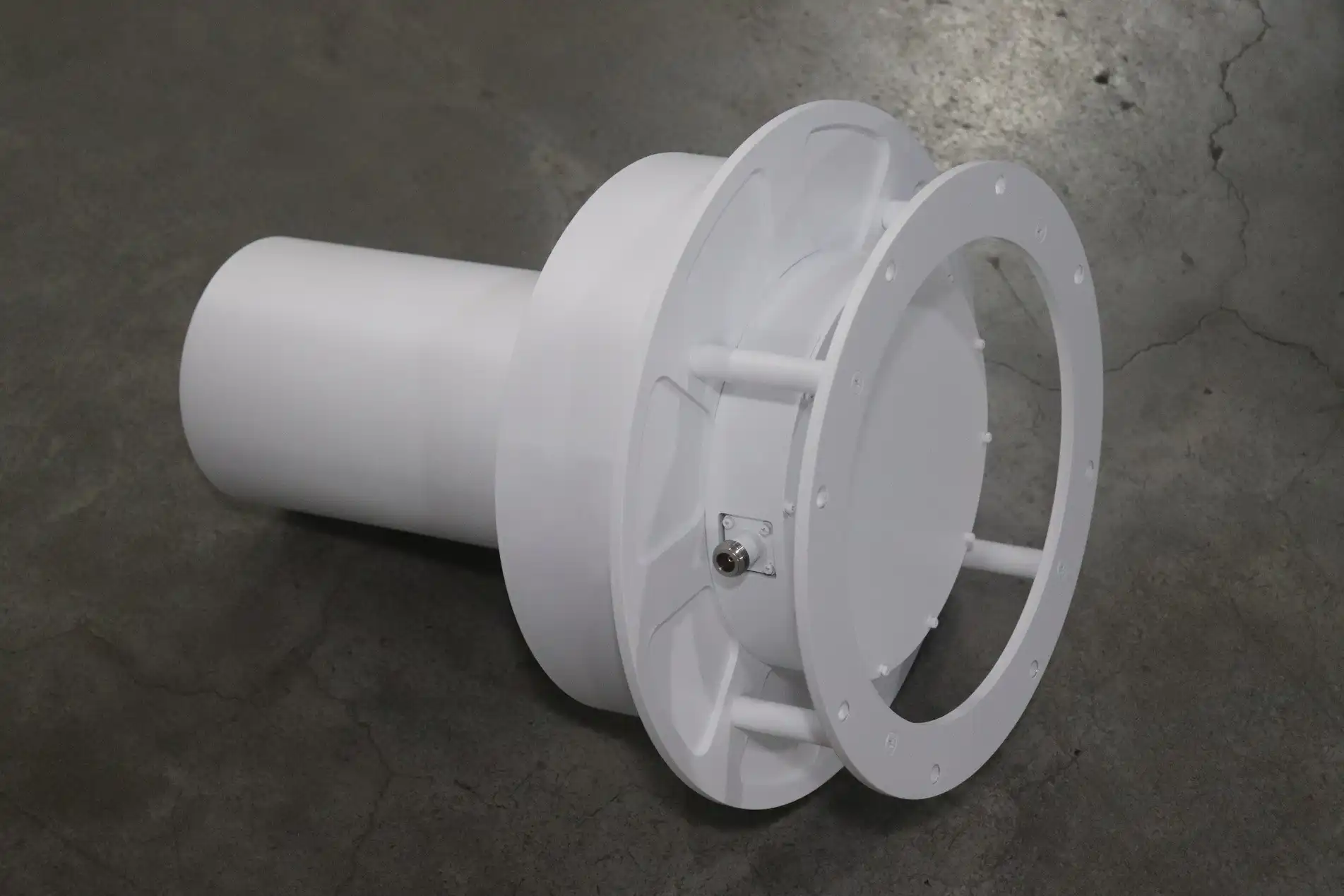
Comparing Quadrifilar Helix Antennas with Alternative Solutions
Performance Benchmarks Against Conventional Designs
Procurement teams have to look at more than just gain specifications when they are evaluating antenna technologies. Patch antennas come in small sizes and are easy to integrate into PCBs, but they usually have a smaller bandwidth and coverage that is hemispherical instead of panoramic. Yagi antennas have a higher directional gain, but they need to be pointed very precisely, which makes them useless for mobile devices or satellite tracking apps where the signal source is always moving.
Monopole and dipole antennas are easy to install and cheaper, but their linear polarization makes them vulnerable to signal losses that depend on the antenna's direction. Microstrip designs work great for low-profile uses but have trouble keeping the circular polarization pure over a wide frequency range. The quadrifilar helix architecture gets around these problems by combining omnidirectional coverage, circular polarization, and good gain in a small package. This is why it is so popular in satellite phone terminals, marine GPS systems, and communication gear used in the air.
For B2B buyers, these comparison advantages directly mean better business operations. Because of less precise pointing needs, expensive steerable mounts can be thrown out, and the ability to work with satellite transponders in circular polarization makes signals more reliable when the vehicle is moving or when the weather is bad. Integrators use quadrifilar helix antennas because their consistent impedance and predictable radiation patterns across operational frequencies make the RF front-end design easier.
Application-Specific Selection Criteria
The antenna can lock on to multiple satellite signals at the same time across the upper hemisphere, which is helpful for GPS systems. For even lighting at cell sites, LTE base station applications use omnidirectional coverage, and IoT sensor networks use the small form factor for integrated installs. Defense contractors choose quadrifilar designs for tactical communication systems that need to be able to handle harsh environments and circular polarization that doesn't jam. Our ISO 9001:2015-certified manufacturing processes and extensive field testing protocols prove that these features are possible.
Applications and Benefits of Quadrifilar Helix Antennas in B2B Markets
Satellite Communications Infrastructure
Low-earth-orbit (LEO) satellite arrays are a market that is growing quickly, and quadrifilar helix antennas work really well in these situations. Because LEO systems use continuous overhead passes, they need antennas that can keep the link open at all elevation angles, from the horizon to the zenith. Our designs work the same way across this whole range, so data can be sent without any problems for remote sensing platforms, tracking sea vessels, and emergency contact networks.
Ground station operators like how the antenna can reject multiple signals at once, which keeps the signal quality high in places near the installation site where there are reflective surfaces. The standard for right-hand circular polarization in satellite communication systems fits the polarization of our antenna. This means that we don't have to deal with the 3 dB polarization loss that comes with linear antenna options. All of these things work together to improve link margin, lower the amount of send power needed, and make batteries last longer in portable terminal uses.
Aerospace and Defense Systems
A lot of the time, military procurement standards call for MIL-STD compliance, RoHS compliance, and traceable supply chain paperwork. Our quality control systems make sure that these requirements are always met. Quadrifilar antennas are used in aircraft navigation systems, missile guiding platforms, and handheld communication devices for soldiers because they can withstand shocks, stay stable at low temperatures, and not pick up electromagnetic interference. Our engineering team has made custom solutions that meet the needs of defense contractors and are in line with ITAR regulations. These solutions include special radome materials that reduce radar signatures.
The antenna's omnidirectional pattern gets rid of null zones that could make it hard to talk to each other during tactical moves. We tested the performance in a 24-meter microwave lab that can measure both near-field and far-field signals up to 110 GHz. The conditions were designed to be like those that would be encountered in real-life deployment situations. This thorough checking process gives procurement teams written proof that the goods they receive will work regularly for as long as they are in use.
Telecommunications and Wireless Networks
Demand for small, multi-band antennas that can be used in small cells is driven by the growth of cellular networks. When compared to separate antenna installations, quadrifilar designs that allow GPS timing reference and LTE backhaul transmission at the same time make towers lighter and lower lease costs. Single-antenna architectures are liked by telecom system integrators because they make cable routing easier and lower the risk of passive intermodulation (PIM).
The antenna's low-profile mounting choices and uniform coverage patterns make it easier to plan wireless sensor networks. Our antennas provide strong signal performance even in electrically noisy areas with lots of metal structures and RF interference sources. This is important for industrial IoT applications in factories, tracking systems for farms, and smart city infrastructure.
Procuring Quadrifilar Helix Antennas: Key Considerations for B2B Buyers
Supplier Evaluation and Market Landscape
Advanced Microwave Technologies Co., Ltd. has been working with aircraft, defense, and telecommunications companies around the world for more than 20 years, building a name for high-quality work and on-time delivery. When looking at quadrifilar helix antenna providers, buyers should make sure they are ISO 9001 certified, check to see if they can do testing in-house, and read case studies that show how good the program was. The advanced measuring tools at our facility give us objective proof of performance, and our ISO 14001:2015 environmental certification and ISO 45001:2018 workplace safety standards show that we operate in a completely excellent way.
Minimum order quantities (MOQs) depend on how the product is configured. Standard catalogue items usually have lower MOQs that are good for prototype development and small production runs. However, fully customized designs may need large orders to justify the cost of the tools. Clear price models that split one-time engineering costs from unit production costs make it possible to accurately plan projects and look at their lifecycle costs. When buyers come to us, our procurement specialists work directly with them to make deals that meet delivery deadlines and minimize the total cost of ownership.
Custom Solutions vs. Standard Products
Standard antenna models are ready to ship right away and have performance characteristics that can be predicted based on a lot of field deployment history. These ready-to-use options work well for uses that need standard frequency ranges and mechanical interfaces. When projects need specific frequency coverage, unique mounting arrangements, or environmental safety that goes above and beyond standard ratings, custom designs such as quadrifilar helix antennas are needed.
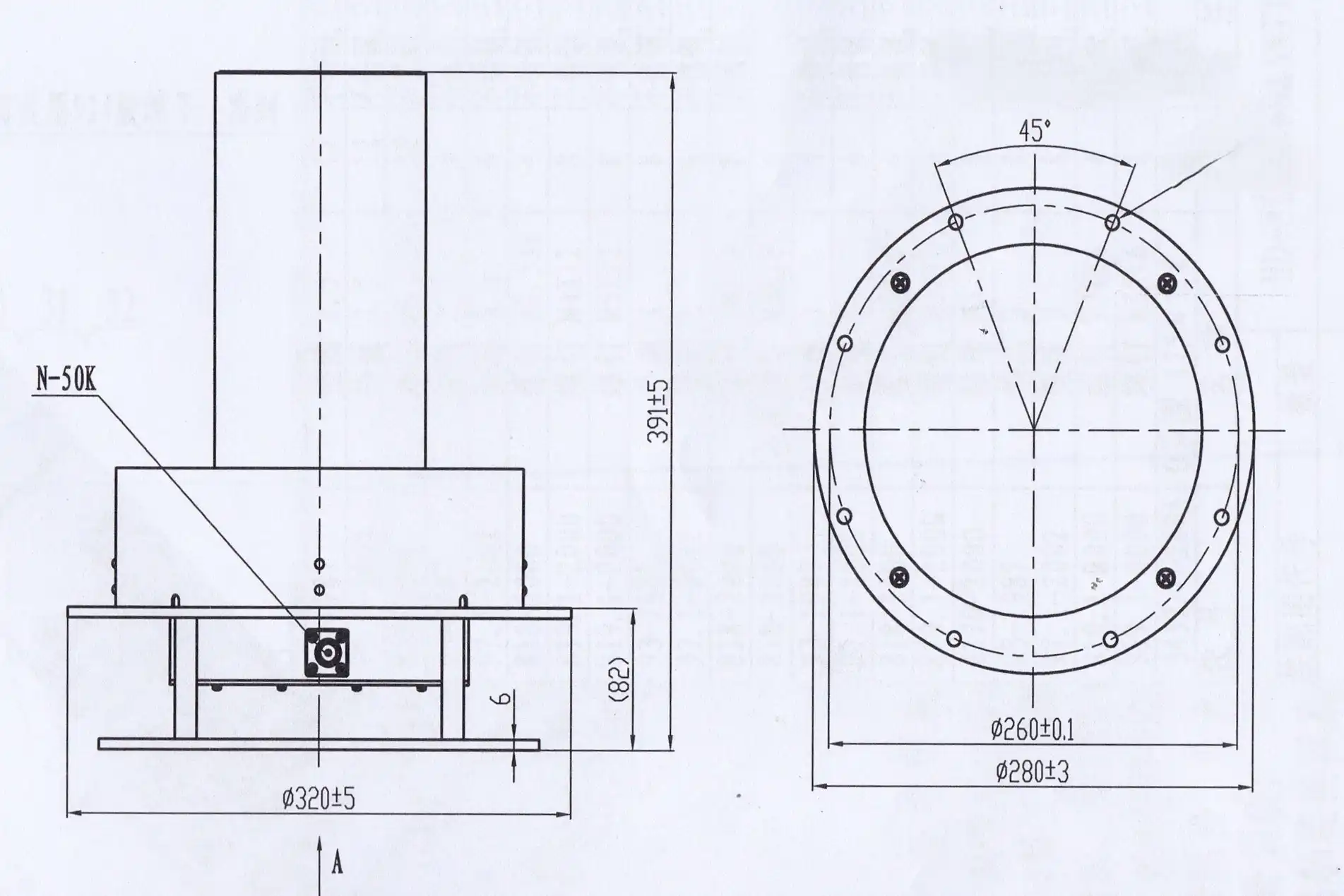
Our OEM services include custom frequency range optimization, material selection based on specific operating environments, and mechanical integration to help make sure that our products fit into customer assemblies without any problems. Rapid prototyping services let you test your design before committing to large-scale production, which lowers the technical risk during the product development stages. Full technical support includes initial design consultation, installation guidance, and troubleshooting after deployment, giving buyers a full partnership throughout the program's execution.
Quality Assurance and After-Sales Support
Warranty terms that show the maker trusts the product's dependability are a good way to lower the risk. Our standard warranty covers flaws in the manufacturing process and meeting performance standards. For critical applications, we offer options for longer coverage. After-sales support includes a technical helpline, failure analysis in the field, and fast replacement programs that keep operational systems running as much as possible.
Quality paperwork packages that come with delivered goods include dimensional inspection records, material approvals that show RoHS compliance, and test results that can be traced back to calibrated measurement standards. Customers in the defense and aerospace industries get extra paperwork that meets the standards of AS9100. This includes first article inspection reports and proof of conformance statements. This all-around quality assurance method gives buying teams records that are ready for an audit, which helps with legal compliance and internal quality management systems.
Optimizing Quadrifilar Helix Antenna Performance in Your Systems
Installation Best Practices
The performance of a machine is greatly affected by how well the antenna is mounted. Ground plane effects, metal buildings close, and the way cables are routed can all change radiation patterns and impedance matching. The installation instructions that come with our products list the minimum distances of clearance, the recommended ground plane dimensions, and the cable dress requirements that keep the pattern from distorting. Technical help during site surveys helps find possible sources of interference and find the best places to put things for the best coverage.
The quality of the connectors and the assembly of the cables directly affect the stability of the signal. For example, low-quality coaxial cables cause insertion loss and VSWR degradation, which hurt link budgets. We offer matched cable kits that have been tried as fully functional systems. This gets rid of any concerns about connectivity and makes sure that performance specs stay the same all the way from the antenna feed point to the receiver input.
Performance Validation and Testing
Key factors like resonant frequency, VSWR, gain, axial ratio, and radiation pattern should be checked as part of acceptance testing procedures. Our measuring tools let us give a full description that can be traced back to national standards. This gives us objective performance baselines that we can compare to system requirements. Field testing in real-world situations confirms the quality of the installation and finds environmental factors that affect performance.
Iterative optimization based on feedback from deployments improves how antennas, including quadrifilar helix antennas, are chosen and installed for future uses. Our applications engineering team looks at performance data from the field and suggests changes that will help with problems that are unique to each spot. This way of working together helps clients get the most out of their infrastructure investments while also building institutional knowledge that makes future procurement decisions better.
Conclusion
Quadrifilar helix antennas are very useful for satellite communication, GPS navigation, and wireless network uses that need circular polarization, coverage in all directions, and small sizes. Knowing about design principles, performance traits, and procurement issues helps you make smart sourcing choices that meet technical needs and practical goals. Advanced Microwave Technologies Co., Ltd. has been making products for 20 years and has ISO-certified quality systems and full testing capabilities. They offer reliable antenna solutions to B2B clients, along with quick technical support and customization services to meet a wide range of application needs.
FAQ
1. What advantages do quadrifilar helix antennas offer compared to patch antennas for GPS applications?
Quadrifilar designs offer better multipath rejection thanks to circular polarization and wider elevation angle coverage. They also keep the signal locked even when the vehicle pitches and rolls, which can lower the performance of patch antennas. The circular design gets rid of orientation sensitivity, which is helpful for mobile devices where the antenna can't be moved. Bandwidth characteristics allow for multiple GPS frequency bands to work with a single small antenna assembly.
2. Can quadrifilar helix antennas be customized for specific frequency ranges or environmental conditions?
We often change the designs of antennas to work best with frequency ranges from 1 to 40 GHz, which improves electrical performance for certain communication bands. Specialized radome materials that offer better UV resistance, safety from salt spray, and temperature stability are examples of environmental adaptations. Material choices, connection specs, and mechanical interfaces are all based on what the customer wants. Prototyping and testing services help make sure the performance is good before committing to production.
Partner with ADM for Your Quadrifilar Helix Antenna Needs
Advanced Microwave Technologies Co., Ltd. is ready to help you with your antenna needs by providing high-quality quadrifilar helix antenna options that are carefully designed and made. Our skilled engineers offer full technical support, custom design services, and the ability to make quick prototypes. They are backed by state-of-the-art testing facilities and ISO certifications. As a reliable company that makes quadrifilar helix antennas for the aircraft, defense, and telecommunications markets around the world, we offer low prices, flexible minimum order quantities, and quick customer service after the sale. Email our experts at craig@admicrowave.com to talk about your unique application needs and find out how our knowledge can help your system work better.
References
1. Kilgus, C.C., "Resonant Quadrifilar Helix Design," Microwave Journal, Vol. 13, 1970, pp. 49-54.
2. Tranquilla, J.M. and Best, S.R., "A Study of the Quadrifilar Helix Antenna for Global Positioning System Applications," IEEE Transactions on Antennas and Propagation, Vol. 38, No. 10, 1990.
3. Rabemanantsoa, J. and Sharaiha, A., "Size Reduced Multi-Band Printed Quadrifilar Helical Antenna," IEEE Transactions on Antennas and Propagation, Vol. 59, No. 9, 2011.
4. Leisten, O. and Vardaxoglou, J.C., "Miniature Dielectrically-Loaded Quadrifilar Antenna for Global Positioning System and Satellite Communications," Electronics Letters, Vol. 34, No. 21, 1998.
5. Chen, X. and Liu, G., "Broadband Circularly Polarized Quadrifilar Helix Antenna Design and Analysis," International Journal of Antennas and Propagation, Vol. 2015, Article ID 329465.
6. Nakano, H. et al., "Low-Profile Helical Array Antenna Fed from a Radial Waveguide," IEEE Transactions on Antennas and Propagation, Vol. 39, No. 6, 1991.