




Precision AC Signal Amplifier Selection Considerations
Selecting the right AC signal amplifier demands careful technical assessment and an understanding of how amplification systems integrate into mission-critical RF and microwave applications. Whether your organization develops satellite ground systems, aerospace communication platforms, or precision instrumentation, an amplifier's performance directly influences signal fidelity, system reliability, and operational efficiency. This guide clarifies the technical specifications, compatibility requirements, and evaluation frameworks that procurement teams need to make informed decisions aligned with their specific application demands.
Understanding Precision AC Signal Amplifiers and Their Core Functions
AC signal amplifiers are important parts of RF and microwave systems because they boost alternating current signals while keeping the waveform's purity over certain frequency ranges. AC amplification works with signals that change over time, like those found in communication lines, radar systems, and test instruments. DC amplifiers work with voltage or current levels that stay the same.
What Sets Precision AC Amplifiers Apart?
Even when working with complex modulated data, these devices are very good at keeping phase stability and reducing distortion. They put a lot of thought into making sure they have low noise, a flat frequency response, and great uniformity. These are all things that stock boosters often skimp on to make things easier or cheaper. As we've seen at Advanced Microwave Technologies Co., Ltd., precision-grade amplification always works better than standard commercial options for applications that need signal-to-noise ratios above 60 dB.
Core Applications Driving B2B Demand
These amplifiers keep the signal strong over long coaxial cables and waveguide assemblies, which are important for telecommunications infrastructure. Ground stations for satellite transmission use precise amplification steps between low-noise block downconverters and receivers to make sure that signals are sent clearly even when downlink budgets are low. For defence purposes, amplifiers need to work reliably even when temperatures are very high or very low and there is electromagnetic interference. Precision amplifiers are used in spectrum analysis, antenna pattern measurement, and materials characterization systems at research institutions. Stable, repeatable amplification is needed for these systems to work accurately.
Amplifier Types and Frequency Considerations
Low-noise amps try to add as little noise as possible, which makes them perfect for receiver front ends and sensitive measuring tools. High-gain versions give signals a big boost, which is useful for driving long cable assemblies or making up for passive component losses. Broadband designs cover a large range of frequencies, which makes multi-band systems more flexible. Narrowband designs, on the other hand, improve performance within narrow operational ranges. From 0.5 GHz to 110 GHz, Advanced Microwave Technologies Co., Ltd. creates unique amplifier solutions for a wide range of applications, from old L-band systems to cutting-edge millimeter-wave ones.
Critical Factors for Selecting Precision AC Signal Amplifiers
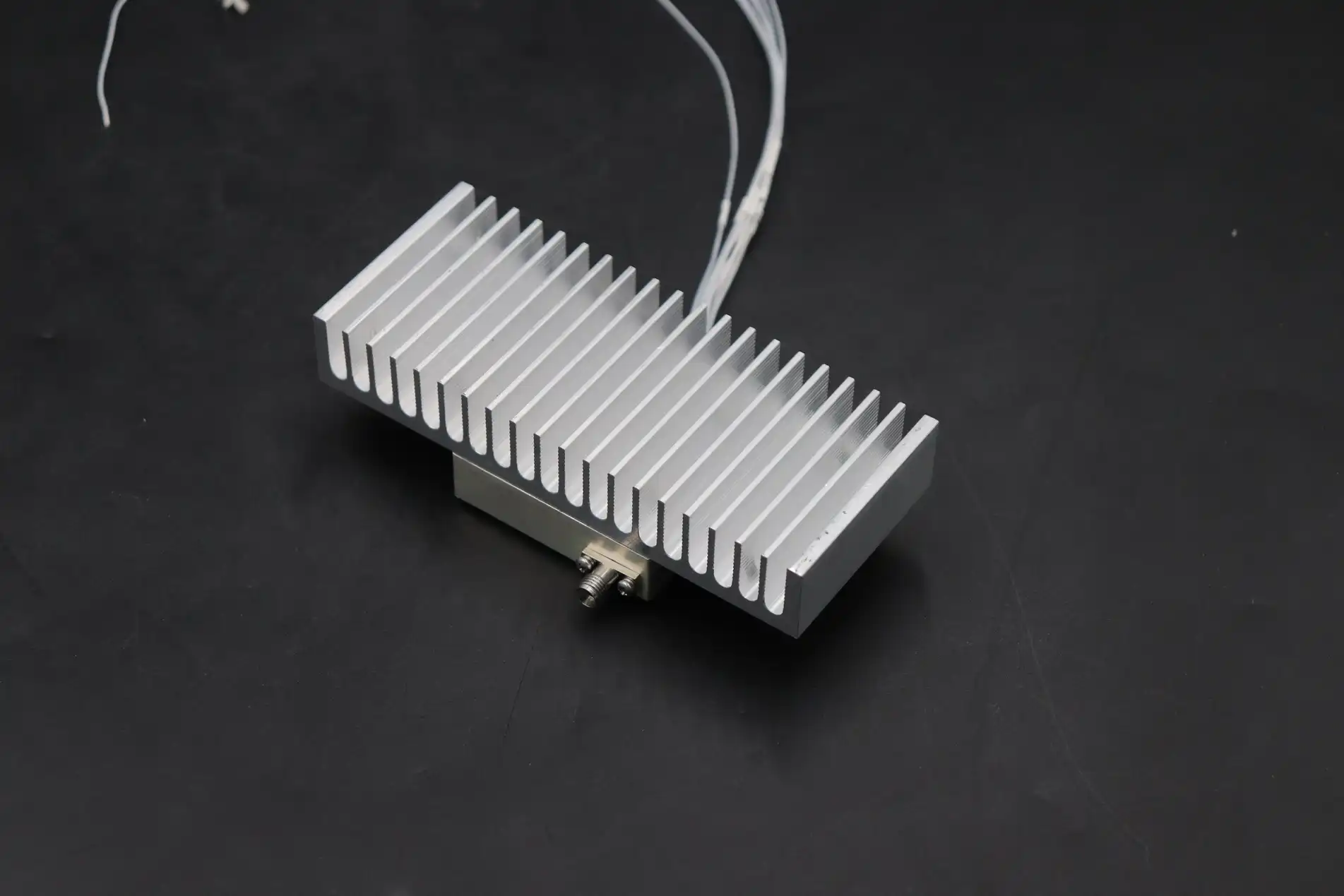
A lot of technical factors must be looked at by procurement teams to see if an AC signal amplifier meets the needs of the application. Gain specs, which are usually given in decibels, show how much a signal can be boosted. The noise figure tells you how much noise the amplifier adds to the signal line. Weaker signals are better preserved at lower numbers. Linearity characteristics, which can be found using factors like the third-order intercept point, show how well the device handles multiple signals at the same time without making any unwanted products. Bandwidth tells you the range of frequencies that the amplifier can keep up a certain level of performance.
Performance Metrics That Matter
These specs affect how well the system works as a whole by interacting with each other. Even though it has less gain, an AC signal amplifier with 40 dB gain and 2 dB noise figure works better in most receiver applications than one with 45 dB gain and 5 dB noise figure. Procurement managers can avoid choosing devices based on missing specs if they understand these trade-offs. In our ISO 9001:2015-certified facilities, we test every performance claim thoroughly in our 24-meter microwave darkroom. This makes sure that specifications reflect real-world behavior instead of theoretical maximums.
Hardware Compatibility and System Integration
Signal boosters need to work well with the equipment that is already in place. The difficulty of integration is affected by the type of connectors used, the impedance matching needs, and the power source requirements. If you don't change the voltage correctly, an amplifier made for 50-ohm coaxial systems won't work as well in 75-ohm cable TV systems. As systems get better at remote tracking and automatically adjusting gain, digital control interfaces become more important. We often work with customers to make sure that the amplifiers they choose work well with their waveguide systems, antenna lines, and receiver designs.
Environmental Durability Requirements
The operating setting has a big effect on how reliable and long-lasting an AC signal amplifier is. Temperature changes, water getting in, and UV light are all problems that outdoor setups never have to deal with. For military and aerospace uses, parts need to be able to handle shock, vibration, and changes in altitude while still meeting performance standards. Our environmental testing procedures and production processes that are compliant with RoHS make sure that amplifiers work the same way whether they are placed in climate-controlled workshops or harsh field sites.
How to Evaluate and Compare Signal Amplifiers: A Decision Support Framework?
Clearly defining practical needs is the first step to successful buying. In what frequency range does the system need to work? What is the lowest signal-to-noise ratio that will still work? Does the application require constant running or duty cycles that come and go? These questions set minimum requirements that can be used to judge potential amplifiers.
Structured Needs Assessment
When defense contractors buy amplifiers for radar systems, they put durability and the average time between failures ahead of lowering costs as much as possible. Telecommunications companies weigh the amount of power used against how well the system works because the costs of running it add up over time. For research institutions, customisation options and detailed documentation are often more important than off-the-shelf availability. Procurement teams can make better evaluation criteria that match technical specifications with business goals by dividing requirements into groups based on industry vertical, signal characteristics, and performance thresholds.
Cost-Performance Analysis Beyond Purchase Price
The initial cost of buying something is only one part of the total cost of ownership. A cheap speaker that needs to be replaced every two years ends up costing more than a high-quality one that lasts ten years. The length of downtime when problems happen is affected by the quality of service and assistance. The terms of the warranty show that the manufacturer trusts the product to work well. We've seen that clients who get the most long-term value don't just compare prices, but also look at measures for stability, expert support, and the track record of the seller. Advanced Microwave Technologies Co., Ltd offers full after-sales support based on more than 20 years of experience working with microwave components. This helps clients get the most out of their amplifiers' performance and lifespan.
Vendor Selection Criteria
Getting certifications like ISO 9001 from manufacturers shows that they are committed to process control and ongoing growth. Companies that have been around for a long time in demanding industries like aerospace, defence, and satellite communications tend to have higher manufacturing standards than companies that focus on selling to consumers. Customer comments from similar apps give you an idea of how well the app will work in the real world and help with quality. Authorised sellers with local help can get new units and technical advice faster than makers from far away who don't have a strong presence in the area.
Installation Best Practices and Troubleshooting for Precision AC Signal Amplifiers
Whether or not an AC signal amplifier performs as expected depends on how well it is installed. When used incorrectly, even high-end parts don't work as well as they should. Common problems that slow down systems or cause them to fail early can be avoided by planning strategically before installation.
Step-by-Step Installation Guidelines
By starting the installation process with a thorough checklist, you can be sure that no important step is missed. Checking the voltage and current of the power source stops damage from happening when the power is too little or too much. When you check a connector, you can find broken or dirty connections before they mess up the signal. Strategically placing amplifiers cuts down on wire losses while still making them easy to reach for service and tracking. Secure placement keeps wires and circuit boards from being stressed mechanically. We suggest writing down the setup details, like where the cables go and how they are grounded, so it's easier to fix problems and make changes to the system in the future.
Common Operational Challenges and Solutions
Most of the time, noise interference is caused by poor grounding or inadequate shielding, not by problems with the AC signal amplifier itself. Most interference problems can be fixed by using the right grounding techniques and making sure the cable shield stays connected. Signal loss could be a sign of corroded connectors, especially in outdoor setups. Regular inspections and preventative maintenance make connections more reliable. Temperature effects on parts that are working close to their limits can sometimes cause gain changes that aren't expected. Knowing these types of failure makes it easier for support teams to quickly figure out what's wrong and fix it. Our technical support team helps clients all over the world solve operational problems by drawing on years of experience in a wide range of deployment environments.
Long-Term Maintenance Recommendations
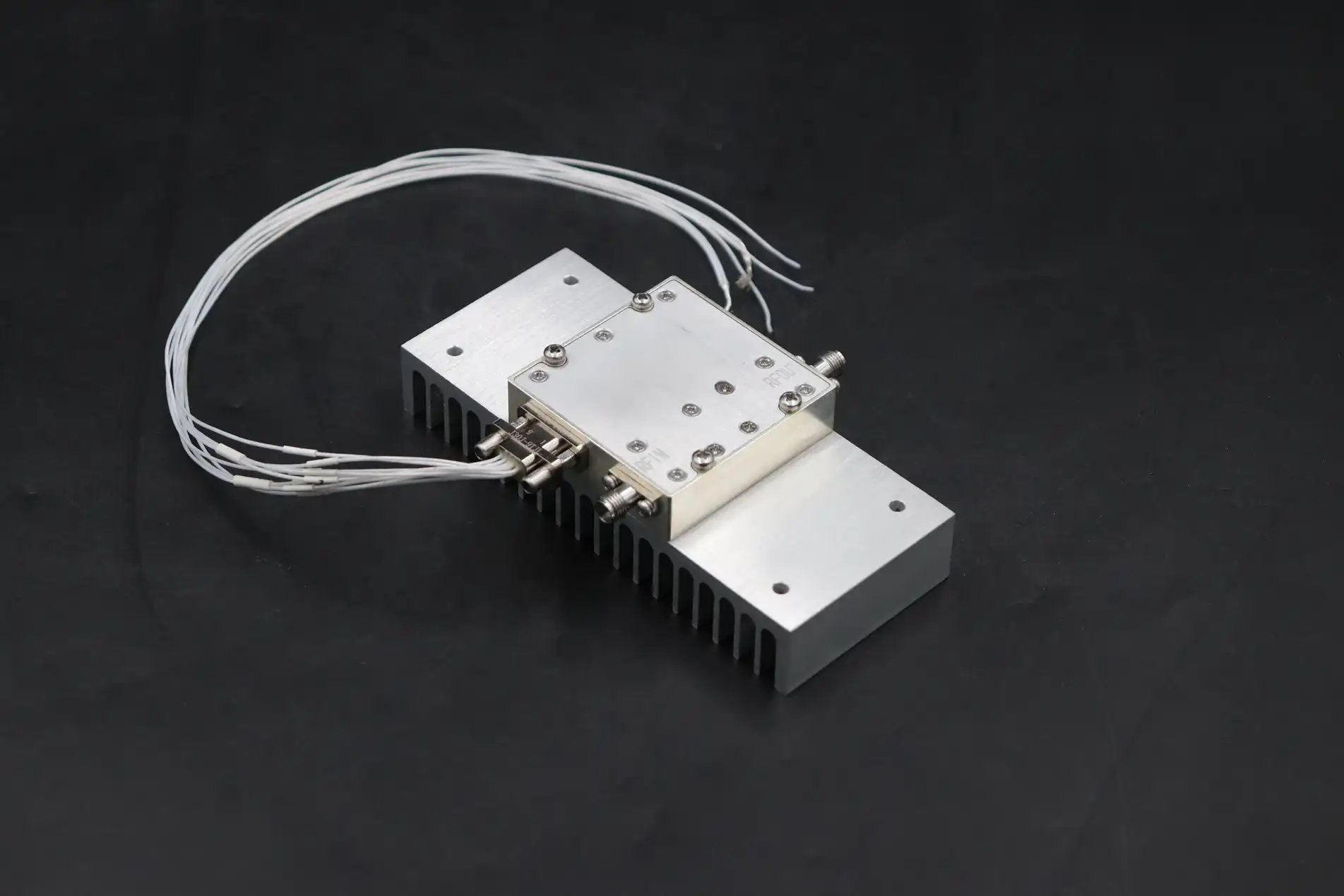
Periodic performance verification finds slow loss of speed before it changes how the system works. Cleaning and inspecting connectors on a regular basis stops rust and contact problems before they happen. Keeping the right amount of airflow and temperature control in place can make parts last longer, especially high-gain amps that produce a lot of heat. Keeping records of maintenance tasks and performance checks is a good way to get useful information for figuring out future problems. These practices keep unplanned downtime to a minimum and get the most out of investments in amplifiers over the course of their useful lives.
Trends and Innovations in AC Signal Amplifier Technology
The powers and uses of AC signal amplifiers are always changing as technology advances. By keeping up with new developments, businesses can make purchasing decisions that will still be useful as system needs change.
Digital and Hybrid Amplification Approaches
Digital control and monitoring functions are being added to more and more traditional analog AC signal amplifier designs. Adjusting the gain remotely, controlling the level automatically, and checking the health in real time give you practical freedom that you can't get with only analogue implementations. Hybrid architectures combine digital intelligence with analog signal paths. This allows for more precise amplification and smart system integration. These features are especially helpful for distributed setups where centralised tracking lowers the cost of upkeep and raises the availability of the system.
Impact of Emerging Communication Standards
The design of amplifiers has to meet strict standards for 5G networks and future 6G systems. For higher frequencies, wider bandwidths, and more complicated modulation methods to work, amplifiers need to be able to keep their linearity and phase accuracy over a wider range of working conditions. As more Internet of Things devices are put in place, they need low-power amplifiers to support sensors and edge computer nodes that run on batteries. As satellite communication moves to higher frequency bands, it gets harder to design amplifiers that work well. To keep up with these changing needs, Advanced Microwave Technologies Co., Ltd. keeps putting money into research and development and measurement infrastructure, such as our advanced antenna measurement systems.
Future-Proofing Procurement Strategies
By choosing AC signal amplifiers with extra space for future upgrades, you can avoid having to update the whole system. Working with manufacturers who keep their research and development (R&D) projects going guarantees access to new technologies and skills for the next generation. Obsolescence caused by changes in regulations is avoided by following changing environmental and quality standards. Strategic connections with vendors allow for continuation as technologies change, which lowers the cost of integration and keeps the supply chain reliable.
Conclusion
When choosing precision AC signal amplifiers, you have to balance technical performance requirements with deployment issues and the need for long-term support. For successful procurement, the attention should be on matching the characteristics of the amplifier to the needs of the application, rather than going for the highest specs no matter what. Businesses buy amplification solutions that work well for a long time by checking out features like gain, noise figure, linearity, bandwidth, compatibility, suitability for the environment, and vendor capabilities. Putting time and money into careful selection and implementation pays off in the form of better system performance and lower lifecycle costs.
FAQ
1. What distinguishes precision AC signal amplifiers from generic signal boosters?
Generic boosters don't have to meet strict requirements for noise figure, linearity, and frequency response smoothness, but precision AC signal amplifiers do. These controlled characteristics are very important in systems that need to reproduce signals accurately, like measurement systems and sensitive receivers.
2. How do I determine the appropriate frequency range for my application?
Find the highest and lowest frequencies that your system needs to be able to handle. Then, choose boosters that have a bandwidth that is at least 10% wider than these frequencies. This makes sure that the performance is the same across the whole working range, so you don't have to depend on the amplifier responding at its limits.
3. Should amplifiers be installed near signal sources or receivers?
Placement rests on the details of the application. Low-noise AC signal amplifiers are usually put close to antennas or signal sources to boost weak signals before they get lost in the cable. Usually, high-gain amplifiers are put closer to receivers, where the signal levels are already higher than the noise levels.
4. What maintenance do precision amplifiers require?
Regular checks of the connectors' condition, performance, and heat management keep the system running at its best. When installing equipment outside, you need to pay more attention to covering it against the elements and stopping rust than when installing equipment inside.
Partner with ADM for Your Precision Amplification Needs
Advanced Microwave Technologies Co., Ltd has been working with microwave parts for more than 20 years and brings that experience to every job. Precision AC signal amplifier solutions that meet your exact needs are made in our ISO-certified factories and tested in our state-of-the-art 24-meter microwave lab, among other places. Our expert team gives mission-critical applications the engineering support and high-quality products they need, whether they need off-the-shelf parts or plans that are made just for them. We provide defense companies, satellite operators, and research institutions around the world with dependable supply lines, low prices, and quick customer service after the sale. Email craig@admicrowave.com to talk to our engineering team about your amplification needs and find out how our precision RF components can improve the performance of your system.
References
1. Johnson, R.C., & Jasik, H. (2019). Antenna Engineering Handbook, Fifth Edition. McGraw-Hill Education.
2. Ludwig, R., & Bogdanov, G. (2021). RF Circuit Design: Theory and Applications, Third Edition. Pearson Education.
3. Pozar, D.M. (2020). Microwave Engineering, Fifth Edition. John Wiley & Sons.
4. IEEE Microwave Theory and Techniques Society. (2022). "Standards for Microwave Components and Systems." IEEE Standards Association.
5. Silver, S. (2018). Microwave Antenna Theory and Design, Revised Edition. Institution of Engineering and Technology.
6. Vendelin, G.D., Pavio, A.M., & Rohde, U.L. (2020). Microwave Circuit Design Using Linear and Nonlinear Techniques, Third Edition. John Wiley & Sons.