





Parabolic Antenna Applications in Space, Marine, and IoT
When deep-space probes fail to communicate with Earth, when maritime vessels lose critical navigation data mid-ocean, or when IoT networks cannot maintain connectivity across vast industrial complexes, the culprit is often inadequate antenna performance. These real-world scenarios demand a solution that delivers unwavering signal integrity across extreme distances and challenging environments. Parabolic Antenna technology stands as the definitive answer to these connectivity challenges, offering unmatched gain, directivity, and reliability where conventional antennas simply cannot perform.
Space Applications of Parabolic Antennas
The hostile environment of space presents extraordinary communication challenges that demand exceptional antenna performance. Parabolic Antenna systems have become indispensable for satellite communications, deep-space missions, and orbital data transmission. The fundamental advantage lies in their ability to concentrate electromagnetic energy into highly focused beams, enabling signal transmission across millions of kilometers with minimal power consumption and maximum data integrity. In satellite ground stations, parabolic reflector antennas serve as the critical link between orbiting spacecraft and terrestrial control centers. These installations typically feature aperture diameters ranging from several meters to over twelve meters, depending on mission requirements. Advanced Microwave Technologies offers customizable parabolic antennas with aperture diameters from thirty centimeters to twelve meters, engineered specifically for satellite communications applications. The parabolic geometry ensures that incoming radio waves from distant satellites are reflected and concentrated at the focal point where the feed antenna is positioned, maximizing signal collection efficiency even when dealing with extremely weak transmissions from geostationary or deep-space sources. Deep-space exploration missions rely heavily on high-gain parabolic antenna arrays to maintain contact with spacecraft operating at the outer reaches of our solar system. These antennas must achieve gains of up to sixty decibels to detect and decode telemetry data from probes traveling billions of kilometers from Earth. The parabolic reflector design delivers exceptional gain performance through its precisely engineered curved surface, which focuses radio waves with remarkable accuracy. When combined with ultra-sensitive feed systems operating across frequency ranges from one gigahertz to one hundred ten gigahertz, these antennas enable scientists to receive detailed scientific data, high-resolution imagery, and critical spacecraft health information from missions exploring distant planets and beyond.
Advanced Features for Space-Grade Performance
Modern space communication systems demand parabolic antennas that can operate reliably in the extreme thermal and radiation environments encountered in orbit and on planetary surfaces. Materials selection becomes paramount, with aluminum, steel, and advanced composite reflectors offering different advantages for specific mission profiles. Advanced Microwave Technologies manufactures parabolic antennas using premium materials that are ISO nine thousand one certified and RoHS compliant, ensuring they meet stringent space-grade quality standards. The reflector surface accuracy must be maintained within fractions of a wavelength to preserve antenna performance, particularly when operating at higher millimeter-wave frequencies where even minor surface irregularities can significantly degrade gain and introduce unwanted sidelobes. Polarization flexibility represents another critical capability for space applications. Parabolic Antenna systems support both linear and circular polarization configurations, allowing them to adapt to different satellite transponder architectures and mitigate signal fading caused by atmospheric effects or Faraday rotation in the ionosphere. Circular polarization proves particularly valuable for mobile satellite communications and GPS applications, where the orientation between transmitting and receiving antennas cannot be precisely controlled. The ability to customize polarization characteristics, combined with wide frequency range coverage and adjustable mounting solutions, makes parabolic antennas the preferred choice for diverse space communication scenarios ranging from low Earth orbit satellites to interplanetary spacecraft.
Marine Applications of Parabolic Antennas
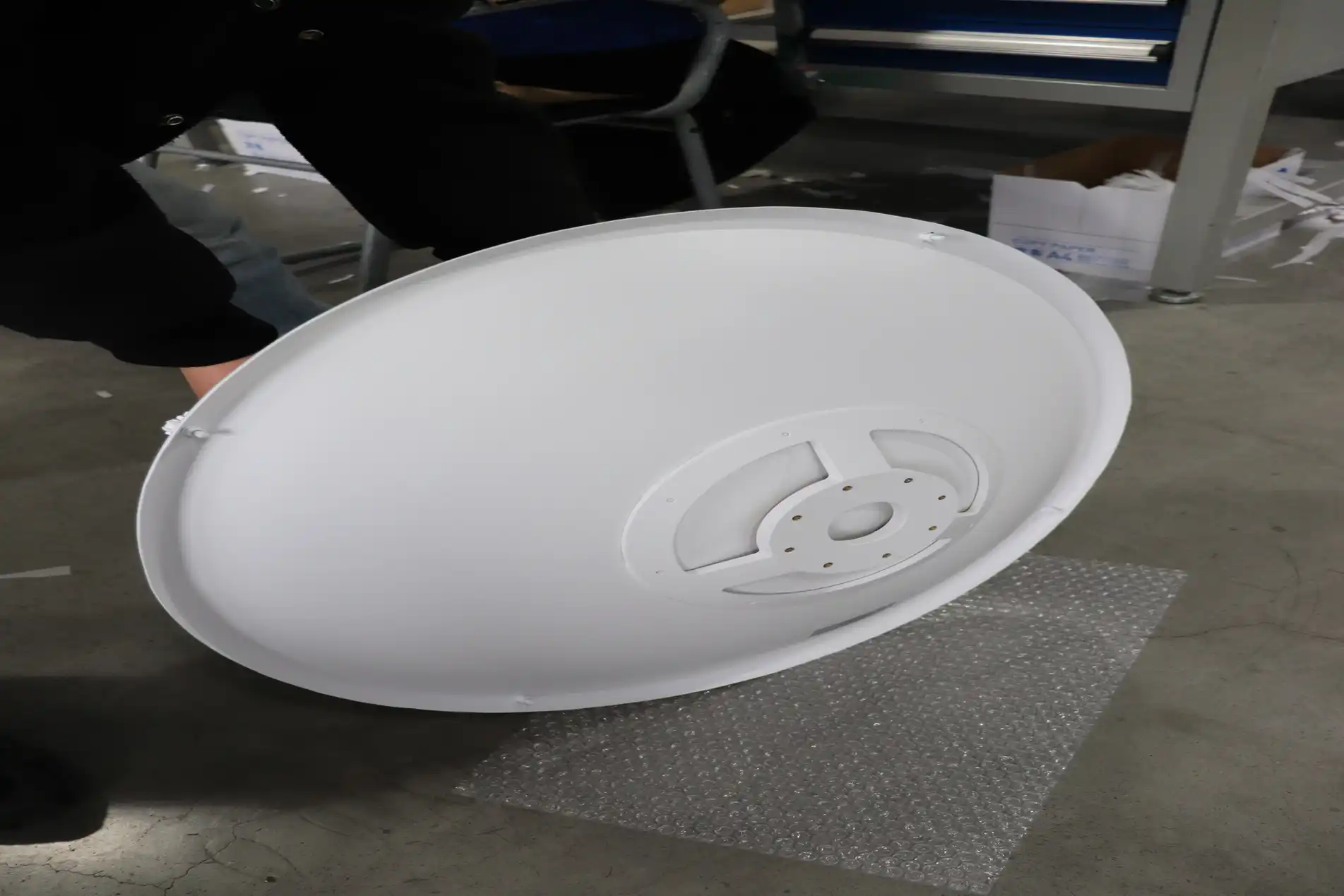
Maritime environments present unique challenges for communication systems, combining the need for long-range connectivity with the harsh realities of saltwater corrosion, constant motion, and limited installation space. Parabolic Antenna technology has proven essential for modern marine operations, enabling reliable satellite communications for vessels operating in remote ocean regions far beyond the reach of terrestrial networks. These antenna systems provide critical connectivity for navigation safety, weather monitoring, cargo tracking, emergency communications, and crew welfare services. Maritime VSAT systems employ stabilized parabolic dish antennas mounted on gyroscopic platforms that automatically compensate for ship motion in three axes. Even as vessels pitch, roll, and yaw through rough seas, the antenna maintains precise alignment with geostationary communication satellites, ensuring uninterrupted broadband connectivity. Advanced Microwave Technologies offers parabolic reflector antennas engineered for demanding marine applications, with robust construction using corrosion-resistant materials designed to withstand the punishing saltwater environment. The high gain characteristics of parabolic antennas prove particularly valuable in marine settings, where signal path losses are exacerbated by the low-elevation angles typical of satellite communications at high latitudes and the additional atmospheric attenuation encountered over open water.
Commercial shipping operations increasingly depend on reliable satellite communications for operational efficiency and regulatory compliance. Parabolic antennas enable real-time fleet management systems, electronic chart updates, weather routing services, and crew communications that were impossible just decades ago. The narrow beamwidth provided by parabolic reflector geometry ensures efficient use of satellite transponder capacity while minimizing interference with adjacent satellite systems. For offshore platforms, research vessels, and specialized maritime operations, customizable parabolic antenna solutions allow system designers to optimize performance parameters including frequency range coverage from one gigahertz to one hundred ten gigahertz, reflector diameter up to twelve meters for specialized installations, and mounting configurations adapted to specific vessel characteristics and operational requirements.
Integration with Maritime Safety and Navigation Systems
Modern marine safety regulations increasingly mandate reliable long-range communication capabilities, and parabolic antenna systems play a central role in meeting these requirements. Global Maritime Distress and Safety System implementations utilize parabolic antennas for satellite emergency communications, providing maritime rescue coordination centers with precise vessel location data and distress alerts even in the most remote ocean regions. The directional characteristics of parabolic antennas enhance the reliability of these life-critical communications by focusing transmission power toward the satellite while rejecting interference from other sources. Autonomous and remotely operated maritime vehicles represent an emerging application area where parabolic antenna performance becomes decisive. Unmanned surface vessels and underwater vehicles require robust data links for remote control, sensor data transmission, and real-time video streaming. The high-gain, low-noise characteristics of properly designed parabolic antennas enable these systems to maintain connectivity over extended ranges while operating with limited onboard power budgets. Advanced Microwave Technologies provides customizable antenna solutions with impedance matching optimized for maritime communication equipment, ensuring maximum power transfer efficiency and system performance. Whether supporting commercial shipping operations, offshore energy production, scientific research, or naval defense applications, parabolic antennas deliver the performance reliability that marine communication systems demand.
IoT Applications of Parabolic Antennas
The explosive growth of Internet of Things deployments has created unprecedented demand for wireless connectivity solutions that can support massive device populations distributed across vast geographical areas. Parabolic Antenna technology addresses these challenges by enabling long-range, high-capacity wireless backhaul links that interconnect IoT gateways, cellular base stations, and network operations centers. In industrial IoT scenarios spanning mining operations, agricultural monitoring, pipeline inspection, and smart city infrastructure, parabolic antennas provide the critical connectivity backbone that makes large-scale sensor networks practical and economically viable. Point-to-point microwave links using parabolic dish antennas offer compelling advantages for IoT network architectures. These systems deliver fiber-optic equivalent bandwidth without the prohibitive costs and deployment timelines associated with trenching cables across difficult terrain. Operating across frequency bands from sub-six gigahertz cellular frequencies through millimeter-wave spectrum allocations, parabolic antennas enable network designers to establish high-capacity data pipes linking remote IoT clusters to central processing facilities. The high directivity inherent in parabolic reflector designs minimizes interference with other wireless systems while maximizing spectrum efficiency, critical considerations in increasingly crowded radio frequency environments where IoT devices must coexist with cellular networks, Wi-Fi systems, and legacy communication services.
Agricultural IoT represents a particularly compelling use case for parabolic antenna infrastructure. Precision agriculture deployments monitor soil moisture, weather conditions, crop health, and equipment status across thousands of hectares, generating continuous streams of sensor data that must be reliably transmitted to farm management systems. Parabolic antennas mounted on elevated structures provide wide-area coverage for these distributed sensor networks, with their high gain compensating for the limited transmission power of battery-operated field devices. Advanced Microwave Technologies offers parabolic antenna solutions with customizable frequency ranges and gain characteristics optimized for agricultural IoT applications, ensuring reliable connectivity even in rural areas lacking conventional telecommunications infrastructure.
Industrial IoT Connectivity Challenges
Manufacturing facilities, chemical plants, refineries, and other industrial complexes present unique wireless connectivity challenges that parabolic antenna systems are ideally suited to address. These environments often combine large physical footprints spanning multiple square kilometers with harsh conditions including electromagnetic interference from heavy machinery, physical obstructions from process equipment and buildings, and restricted access areas where cable installation proves impractical or dangerous. Parabolic antennas enable wireless infrastructure that overcomes these obstacles, establishing reliable point-to-point and point-to-multipoint links that interconnect distributed control systems, safety monitoring networks, and operational technology platforms. The narrow beamwidth characteristic of parabolic reflector antennas proves particularly valuable in industrial settings where multiple wireless systems must operate in close proximity without mutual interference. By concentrating radio frequency energy into tightly focused beams, parabolic antennas minimize the potential for unintended coupling between adjacent communication links while maximizing the useful signal power delivered to intended receivers. This directional selectivity enhances both link reliability and spectrum efficiency, allowing network designers to deploy dense clusters of wireless connections supporting thousands of IoT endpoints within a single facility. Advanced Microwave Technologies provides parabolic antenna solutions engineered for industrial environments, with robust mechanical construction, wide temperature operating ranges, and materials selected for resistance to chemical exposure and environmental contamination.
Smart infrastructure deployments for utilities, transportation systems, and municipal services increasingly rely on wireless networks built around parabolic antenna backhaul links. Electric grid modernization initiatives employ sensor networks monitoring transformer loading, line conditions, and power quality across distribution systems spanning urban and rural service territories. Water and wastewater utilities use IoT devices to detect leaks, monitor pump stations, and optimize treatment processes. Traffic management systems collect real-time data from intersection controllers, variable message signs, and vehicle detection sensors. In each case, parabolic antennas provide the high-performance wireless connectivity required to aggregate data from distributed edge devices and deliver it to central management systems, enabling the operational intelligence that defines truly smart cities.
Technical Specifications and Performance Optimization
Selecting the appropriate parabolic antenna for specific applications requires careful consideration of multiple performance parameters and their interdependencies. Frequency range constitutes perhaps the most fundamental specification, as it determines which communication bands the antenna can support. Advanced Microwave Technologies offers parabolic antenna solutions covering an exceptionally broad spectrum from one gigahertz through one hundred ten gigahertz, with customization available to optimize performance for specific frequency allocations. Lower frequency designs typically feature larger physical apertures to achieve comparable gain performance, while millimeter-wave antennas can deliver high directivity with more compact reflector diameters, facilitating installation in space-constrained environments. Antenna gain directly impacts communication range and system performance, with higher gain enabling longer-distance links or reduced transmitter power requirements for a given range. Parabolic reflector designs can achieve gains up to sixty decibels, far exceeding what is practical with other antenna architectures. However, this exceptional gain comes with correspondingly narrow beamwidths that demand precise mechanical alignment and stable mounting structures. The relationship between reflector diameter, operating frequency, and achievable gain follows well-established physical principles, with larger apertures and higher frequencies yielding greater directivity. Advanced Microwave Technologies provides engineering support to help customers select optimal antenna specifications balancing performance requirements against practical constraints including available mounting locations, structural loading limits, and installation budget considerations.
Mechanical Design and Environmental Considerations
The physical construction of parabolic antennas significantly influences their long-term performance and operational reliability. Reflector material selection involves tradeoffs between weight, structural rigidity, thermal stability, and environmental resistance. Aluminum offers excellent electrical conductivity with low weight, making it popular for moderate-sized antennas where precise surface accuracy must be maintained across temperature variations. Steel provides superior strength for very large installations but requires careful corrosion protection, particularly in marine and industrial environments. Advanced composite materials combine the advantages of both, delivering high strength-to-weight ratios with excellent environmental resistance, though typically at higher initial cost. Advanced Microwave Technologies offers reflector construction in aluminum, steel, and composite materials, allowing customers to optimize their antenna systems for specific operational requirements and environmental conditions.
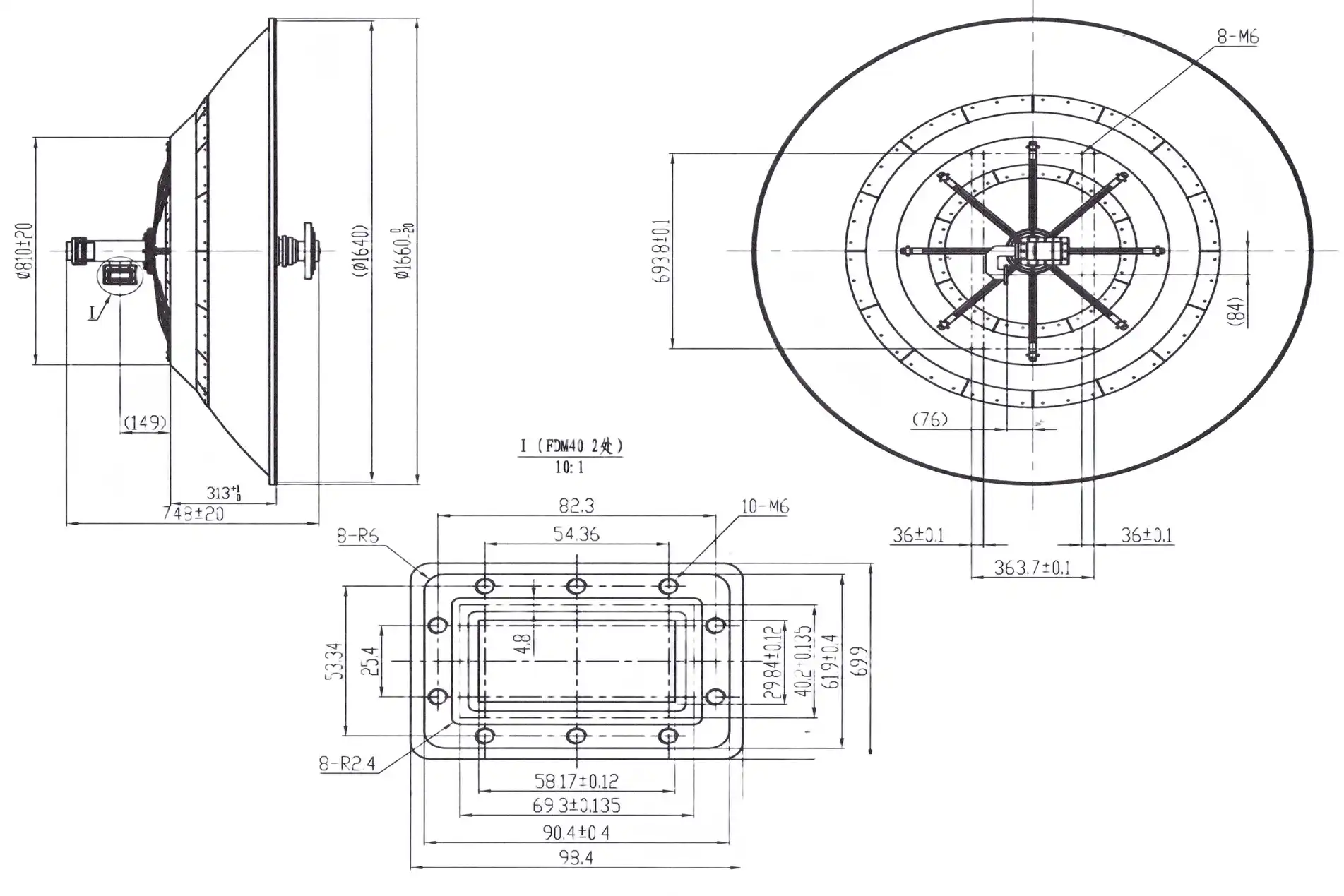
Mounting configurations must accommodate both the static loading of the antenna assembly and dynamic forces from wind, ice accumulation, and for marine applications, vehicle motion. Fixed mounting provides the simplest and most economical installation for permanent point-to-point links where antenna orientation can be precisely aligned during installation and requires no subsequent adjustment. Adjustable mounting systems enable field optimization of antenna pointing angles and facilitate reorientation if communication requirements change. For demanding applications requiring remote pointing control or automatic satellite tracking, sophisticated positioner systems integrate azimuth and elevation drive mechanisms with control electronics, though at significantly increased system complexity and cost. In all cases, mechanical stability proves critical to maintaining antenna alignment within the stringent tolerances required for high-frequency, narrow-beam operation. Environmental compliance has become increasingly important for antenna installations across all application domains. Advanced Microwave Technologies manufactures parabolic antennas that are RoHS compliant, meeting restrictions on hazardous substances that apply to electrical and electronic equipment marketed globally. ISO nine thousand one certification demonstrates systematic quality management throughout the design, manufacturing, and testing processes, providing customers confidence that delivered products will meet specifications and perform reliably throughout their operational lifetime. For space and defense applications, additional qualification testing may be required to verify performance under extreme temperature cycling, vibration, shock, and radiation exposure conditions that exceed what commercial-grade equipment must withstand.
Customization and OEM Services
Recognizing that standard catalog products cannot address every application requirement, Advanced Microwave Technologies provides comprehensive OEM services enabling customers to obtain parabolic antenna solutions precisely tailored to their specific needs. Design customization encompasses all critical performance parameters including frequency range optimization for specific communication bands, aperture diameter selection balancing gain requirements against size and weight constraints, polarization configuration matched to system architecture, and feed network design optimized for particular coverage patterns or multi-band operation. This flexibility proves particularly valuable for applications involving proprietary communication protocols, non-standard frequency allocations, or operational environments presenting unusual mechanical or environmental challenges. Material options extend beyond standard reflector construction to include specialized coatings for enhanced environmental protection, low-observable treatments for defense applications, and lightweight composite structures for aerospace applications where every gram matters. Feed system customization allows integration of customer-specified feed horns, multi-band combiners, polarization switching networks, and low-noise amplifier packages, delivering complete antenna assemblies ready for system integration rather than requiring extensive field assembly and alignment. Mounting solution tailoring addresses specific installation constraints including mast diameter compatibility, adjustment range requirements, and interface provisions for remote positioning control or monitoring systems.
Advanced Microwave Technologies maintains sophisticated antenna measurement facilities including a twenty-four meter microwave darkroom equipped with antenna plane near and far field measuring recombination chambers. This state-of-the-art facility enables complete characterization of antenna radiation patterns, gain, cross-polarization performance, and impedance characteristics across the full operating frequency range. Test capabilities extend from five hundred megahertz through one hundred ten gigahertz, providing verification that custom antenna designs meet specifications before delivery. Rapid prototyping services allow customers to evaluate antenna performance in their specific application environment, gathering empirical data to validate system designs before committing to full-scale production. This iterative development approach minimizes technical risk and ensures that delivered antenna systems will perform as required in actual operational conditions.
Conclusion
Parabolic Antenna technology delivers unmatched performance for space communications, maritime connectivity, and IoT network infrastructure through its fundamental advantages in gain, directivity, and signal integrity. These capabilities prove essential across applications demanding reliable long-range wireless communications.
Cooperate with Advanced Microwave Technologies Co., Ltd.
Advanced Microwave Technologies Co., Ltd. stands ready to support your parabolic antenna requirements with over twenty years of specialized expertise in microwave products. As a leading China Parabolic Antenna manufacturer, China Parabolic Antenna supplier, and China Parabolic Antenna factory, we deliver High Quality Parabolic Antenna solutions at competitive Parabolic Antenna price points with China Parabolic Antenna wholesale options available. Our ISO certified facilities produce premium Parabolic Antenna for sale backed by comprehensive technical support. Contact craig@admicrowave.com to discuss your specific requirements and discover how our customized antenna solutions can enhance your communication systems. Our expert engineering team provides rapid prototyping, technical consultation, and ongoing support ensuring your project success. Bookmark this resource for future reference as you evaluate antenna solutions for your critical communication applications.
References
1. "High-Performance Parabolic Antenna Reflectors," Journal of Spacecraft and Rockets, American Institute of Aeronautics and Astronautics
2. Kalra, S., et al., "Design of Shape Memory Alloy Actuated Intelligent Parabolic Antenna for Space Applications," Research Gate, 2017
3. Hand, Thomas, "Wide Angle ESA Fed Reflector Antenna Development," Lockheed Martin Space Division, 2021
4. "Applications Technology Satellite 6 Parabolic Antenna Systems," NASA Technical Documentation, Smithsonian National Air and Space Museum Archives
5. "Marine VSAT Antenna Systems for Satellite Communications," International Maritime Organization Technical Standards, 2024
YOU MAY LIKE
 VIEW MOREDouble Ridge Straight Waveguide
 VIEW MOREDouble Ridge Waveguide Transition
 VIEW MOREDouble Ridged Flexible Waveguide
 VIEW MOREDouble Ridge Waveguide Load
 VIEW MOREDouble Ridge Waveguide Rotary Joint
 VIEW MOREDouble-Ridged Waveguide Broadwall Directional Coupler
 VIEW MOREWaveguide Flange Gasket
 VIEW MOREWaveguide Adjustable Support