




Coaxial Load Cooling Methods: Air vs Convection vs Liquid
When your high-power RF system overheats and fails during critical testing, the culprit is often inadequate thermal management of your coaxial load. Understanding the differences between air, convection, and liquid cooling methods can prevent costly equipment damage, ensure measurement accuracy, and extend the operational life of your coaxial load components in demanding applications from satellite communications to defense radar systems.
Understanding Thermal Challenges in Coaxial Load Applications
In modern RF and microwave systems, coaxial loads serve as critical termination components that absorb significant amounts of electromagnetic energy and convert it to heat. When handling power levels ranging from a few watts to hundreds of watts across frequencies from DC to 110 GHz, thermal management becomes paramount. The challenge intensifies in applications such as transmitter testing, antenna system measurements, and high-power radar operations where coaxial load components must dissipate substantial thermal energy while maintaining stable electrical performance. Without proper cooling, excessive temperatures can degrade the resistive elements, compromise VSWR specifications, alter impedance matching characteristics, and ultimately lead to complete component failure. The selection of an appropriate cooling method directly impacts system reliability, measurement precision, and equipment longevity in demanding environments including aerospace, defense, and telecommunications infrastructure.
Heat Dissipation Requirements for Different Power Levels
Coaxial load thermal requirements vary dramatically based on power handling specifications and operational duty cycles. Low-power applications below 10 watts typically generate manageable heat that can often be addressed through natural convection or passive thermal transfer to surrounding structures. Medium-power coaxial loads handling 10 to 100 watts require more deliberate thermal design, often incorporating enhanced surface areas, heat-conductive mounting interfaces, or forced airflow to maintain safe operating temperatures. High-power applications exceeding 100 watts, particularly those approaching the 500-watt capability of Advanced Microwave's CL series coaxial loads, demand sophisticated cooling strategies. At these power levels, the thermal energy generated can rapidly elevate component temperatures beyond safe limits, potentially causing permanent damage to internal resistive elements, degrading dielectric materials, and compromising connector integrity. The thermal challenge is further compounded in continuous-wave operations compared to pulsed applications, as average power dissipation determines steady-state temperature rise. Understanding these power-dependent thermal requirements is essential for selecting appropriate cooling technologies that ensure reliable performance across the operational spectrum.
Air Cooling Methods for Coaxial Load Applications
Air cooling represents the most economical and straightforward approach to thermal management for coaxial load components, leveraging the natural or forced movement of air to transfer heat away from hot surfaces. This method encompasses both passive natural convection, where density differences in heated air create circulatory flow patterns, and active forced-air systems utilizing fans or blowers to enhance heat transfer rates. The fundamental principle relies on the relatively low thermal conductivity of air, which, while limiting compared to liquid coolants, proves sufficient for many moderate-power applications when properly implemented. Air cooling systems for coaxial loads typically incorporate finned heat sinks or extended surface areas to maximize the interface between the hot component and the cooling medium. The effectiveness of air cooling depends critically on ambient temperature conditions, available airflow paths, and the specific geometry of the coaxial load housing. In laboratory environments with controlled climate conditions and adequate ventilation, air-cooled coaxial loads can reliably handle power levels up to approximately 50-100 watts, depending on connector type, frequency range, and VSWR specifications.
Natural Convection Air Cooling
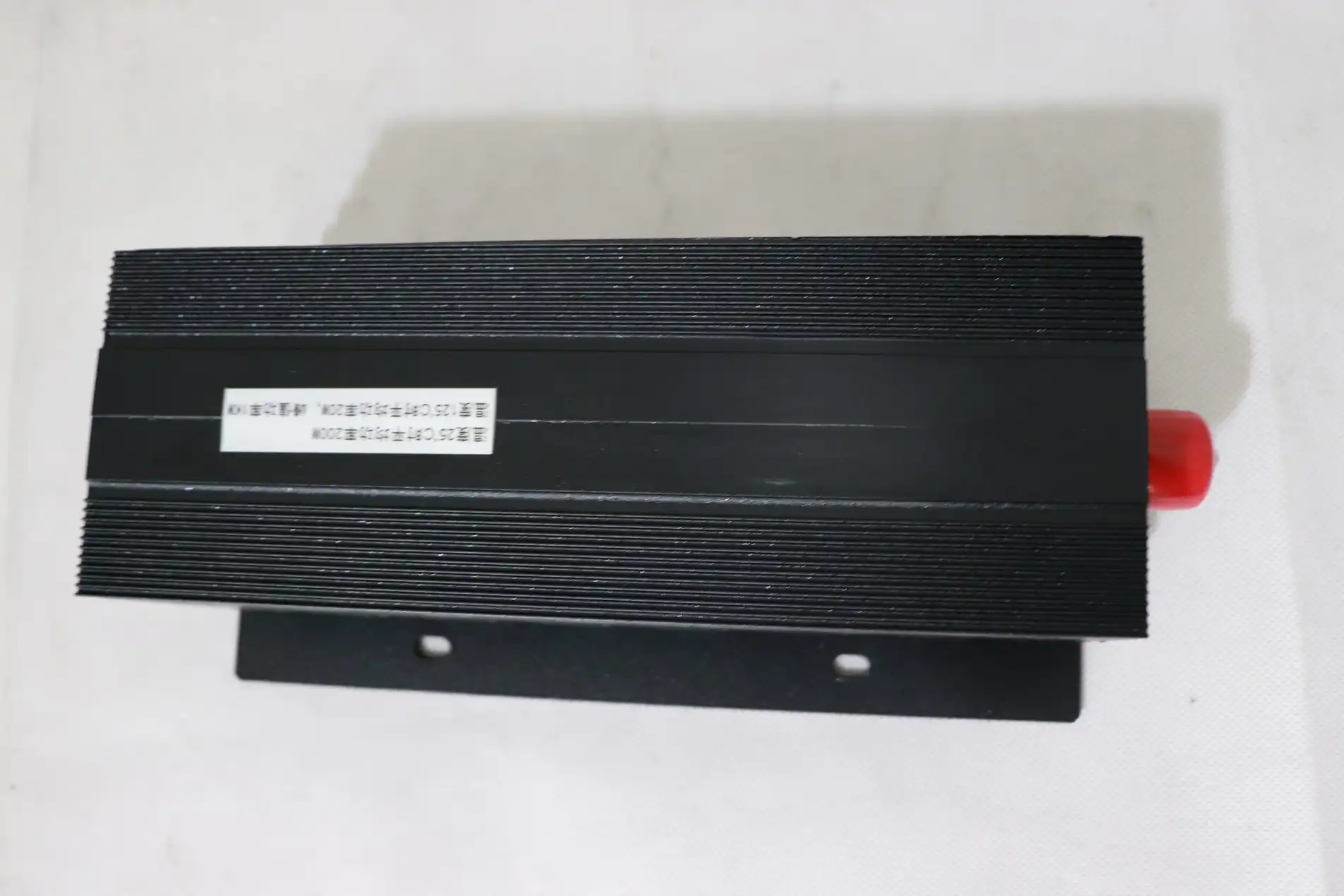
Natural convection cooling operates without any powered air-moving components, relying instead on buoyancy-driven airflow generated by temperature gradients around the heated coaxial load surface. As the air in direct contact with the hot load absorbs thermal energy, its density decreases, causing it to rise and be replaced by cooler, denser air from below. This continuous circulation creates a passive cooling mechanism that requires no electrical power, produces no acoustic noise, and has no moving parts to fail over time. For coaxial load applications, natural convection proves most effective when the component is oriented vertically or mounted with adequate clearance on all sides to permit unrestricted air circulation. The heat transfer coefficient for natural convection in air typically ranges from 5 to 25 watts per square meter per degree Kelvin, which limits the power handling capability to relatively modest levels. Advanced Microwave's coaxial loads designed for natural convection incorporate optimized housing geometries that maximize surface area exposure while maintaining compact dimensions suitable for benchtop laboratory use. The operating temperature range of -55°C to +125°C ensures these components function reliably across diverse environmental conditions, though the upper ambient temperature significantly affects the maximum sustainable power dissipation. Natural convection air cooling is ideal for low-duty-cycle measurements, intermittent testing scenarios, and applications where the simplicity and reliability of passive thermal management outweigh the limitations in power handling capacity.
Forced Air Cooling Systems
Forced air cooling substantially improves thermal performance by actively propelling air across the coaxial load surface using fans, blowers, or compressed air sources. This approach can increase the effective heat transfer coefficient by a factor of three to ten compared to natural convection, enabling coaxial loads to handle significantly higher power levels while maintaining acceptable operating temperatures. The enhanced cooling derives from both increased air velocity across heat transfer surfaces and the continuous replacement of heated air with cooler ambient air, preventing the formation of stagnant thermal boundary layers that impede heat dissipation. In practical implementations, forced air cooling systems for coaxial loads may incorporate internal fans integrated into custom housings, external cooling fans positioned to direct airflow across the component, or facility-level air handling systems that maintain specified volumetric flow rates through equipment racks. The cooling effectiveness depends on several factors including air velocity (typically measured in cubic feet per minute), the fin geometry and surface area of any attached heat sinks, and the temperature differential between the coaxial load surface and the incoming air stream. Advanced Microwave's coaxial loads can be integrated into forced air cooling configurations for applications requiring sustained power dissipation in the 50 to 150-watt range, particularly in telecommunications base stations, transmitter testing facilities, and production test environments. However, forced air systems introduce additional considerations including fan noise levels, potential for dust and particle contamination requiring filtration, increased electrical power consumption for air-moving equipment, and maintenance requirements for fan replacement over the system operational lifetime.
Convection Cooling Techniques
Convection cooling, while technically a subset of air cooling methodologies, deserves distinct consideration due to its specific implementation approaches and performance characteristics in coaxial load applications. The term convection in thermal engineering specifically refers to heat transfer through the combined mechanisms of conduction within a fluid medium and the bulk motion of that fluid, whether gas or liquid. In the context of coaxial loads, convection cooling typically implies optimized enclosure designs, strategic ventilation pathways, and thermal management architectures that maximize natural or low-velocity forced airflow patterns without requiring high-power fans or complex air handling infrastructure. This approach occupies a middle ground between purely passive natural convection and aggressive forced air cooling, offering improved performance over the former while maintaining much of the simplicity and reliability benefits compared to the latter. Convection-cooled coaxial load designs often feature carefully engineered ventilation slots, chimney-effect housings that promote upward airflow, and thermal interfaces that facilitate conductive heat transfer to mounting surfaces which then dissipate heat through convective processes. The effectiveness of convection cooling depends heavily on the installation environment, mounting orientation, and proximity to other heat-generating equipment that might compromise the local thermal gradient driving the convective airflow.
Optimized Enclosure Ventilation
Effective convection cooling for coaxial loads requires thoughtful enclosure design that facilitates efficient air circulation while protecting sensitive internal components from environmental contamination. Strategic placement of ventilation apertures at different elevations within the housing creates natural airflow paths where cool air enters near the base of the coaxial load, absorbs heat as it flows upward past hot surfaces, and exits through upper vents. This chimney effect can be enhanced through careful sizing of inlet and outlet openings, with computational fluid dynamics analysis increasingly employed to optimize vent geometries for maximum convective heat transfer. The coaxial load housing material selection also influences convection cooling performance, with aluminum alloy enclosures offering excellent thermal conductivity to spread heat across larger surface areas while maintaining the lightweight characteristics essential for portable test equipment and aerospace applications. Advanced Microwave engineers coaxial loads with precision CNC-machined housings that balance thermal performance, electromagnetic shielding effectiveness, and mechanical robustness. The RoHS-compliant materials and ISO 9001:2015 quality standards ensure these convection-cooled designs deliver consistent thermal performance across production units. In typical laboratory and field deployment scenarios, well-designed convection cooling can extend the continuous power handling of coaxial loads to the 30 to 80-watt range, depending on ambient conditions and installation configuration.
Thermal Interface Considerations
The thermal interface between a coaxial load and its mounting surface plays a crucial role in convection cooling effectiveness, as this connection pathway enables conductive heat transfer from the load into larger thermal masses that can then dissipate heat through convective processes. High-quality thermal interface materials, including conductive pastes, phase-change compounds, and thermally-optimized mounting gaskets, minimize the contact resistance that can otherwise impede heat flow across mating surfaces. When a coaxial load is mounted to a metal equipment chassis, rack panel, or dedicated heat sink, the expanded surface area available for convective cooling can dramatically improve overall thermal performance. The challenge lies in ensuring adequate mechanical pressure across the thermal interface to eliminate air gaps while accommodating thermal expansion differences between dissimilar materials. Advanced Microwave's coaxial loads feature flat mounting surfaces with tight geometric tolerances to maximize thermal contact area and minimize interface resistance when properly installed. The 50-ohm impedance and low VSWR specifications below 1.2:1 are maintained across the full operating temperature range, demonstrating the thermal stability of the internal resistive elements even under varying thermal load conditions. For applications demanding higher power handling within convection-cooled architectures, custom coaxial load designs can incorporate integrated mounting flanges, extended heat spreaders, and optimized connector orientations that facilitate both electrical performance and thermal management objectives.
Liquid Cooling Solutions for High-Power Applications
Liquid cooling represents the most thermally efficient method for managing heat in high-power coaxial load applications, leveraging the superior thermal properties of water and specialized coolants to achieve heat transfer rates that far exceed air-based approaches. Water possesses a thermal conductivity approximately 24 times greater than air and a volumetric heat capacity roughly 3,500 times higher, enabling liquid cooling systems to absorb and transport vast amounts of thermal energy through relatively small coolant flow rates. This makes liquid cooling the preferred solution for coaxial loads operating at continuous power levels exceeding 150 watts, and essential for applications approaching or surpassing 500 watts where air cooling becomes impractical due to size, weight, or performance constraints. Liquid-cooled coaxial load implementations typically incorporate internal coolant passages machined into thermally conductive housing materials, bringing the cooling medium into close proximity with heat-generating resistive elements. The circulating coolant absorbs heat through convective transfer at the fluid-solid interface, then carries this thermal energy to remote heat exchangers or radiators where it can be dissipated to the environment. While liquid cooling systems introduce additional complexity including pumps, fluid management components, leak prevention measures, and environmental sealing requirements, the dramatic improvement in thermal performance often justifies these tradeoffs in demanding applications such as high-power transmitter testing, satellite ground station operations, and advanced radar system development.
Closed-Loop Liquid Cooling Systems
Closed-loop liquid cooling architectures circulate a fixed volume of coolant through a sealed circuit that includes the coaxial load cold plate, connection tubing, a pump, and a heat exchanger. This approach offers several advantages including contamination prevention, precise coolant chemistry control, and the ability to use specialized dielectric fluids with optimized thermal properties. The coolant flows through channels machined or embedded within the coaxial load housing, absorbing heat through forced convection at flow rates typically ranging from 0.5 to 5 liters per minute depending on the power dissipation requirements. The heated coolant then passes to a liquid-to-air heat exchanger where cooling fans remove the thermal energy, or to a liquid-to-liquid heat exchanger interfacing with facility chilled water systems. Closed-loop systems maintain consistent thermal performance independent of ambient air temperature, making them ideal for coaxial loads in climate-controlled telecommunications facilities, defense installations, and aerospace testing laboratories. The thermal isolation provided by liquid cooling also prevents the coaxial load from heating adjacent equipment in densely packed rack installations, a critical consideration in modern communication systems where space constraints drive higher component integration densities. Advanced Microwave can provide custom liquid-cooled coaxial load designs incorporating quick-disconnect fluid couplings compatible with standard coolant distribution systems, integrated temperature sensors for thermal monitoring, and pressure ratings suitable for both low-pressure facility cooling loops and higher-pressure compact cooling systems.
Thermal Performance Advantages
The thermal performance advantages of liquid cooling become increasingly compelling as coaxial load power levels escalate beyond the practical limits of air-based thermal management approaches. While forced air cooling typically achieves heat transfer coefficients in the range of 50 to 250 watts per square meter per degree Kelvin, liquid cooling systems readily attain coefficients exceeding 1,000 to 10,000 watts per square meter per degree Kelvin depending on coolant properties, flow velocity, and channel geometry. This dramatic improvement translates directly to lower operating temperatures for any given power dissipation level, or alternatively, permits substantially higher power handling within acceptable temperature limits. The reduced thermal resistance pathway enables coaxial loads to maintain stable electrical characteristics including consistent impedance, minimal VSWR variation with temperature, and reliable connector performance even during extended high-power operation. For Advanced Microwave's coaxial loads specified for power handling up to 500 watts, liquid cooling represents the most reliable thermal management solution, ensuring the precision-engineered resistive elements operate well within their thermal design limits. The broad frequency coverage from DC to 110 GHz requires careful attention to electromagnetic considerations in liquid cooling system design, with coolant passages positioned to avoid resonances or parasitic coupling that could degrade RF performance. The result is a comprehensive thermal solution that maintains the superior electrical specifications users expect from high-quality coaxial loads while enabling operation in the most demanding high-power applications across communications, defense systems, aerospace, and test and measurement applications.

Selecting the Right Cooling Method for Your Application
Choosing the optimal cooling approach for coaxial load applications requires careful evaluation of multiple technical and practical factors including power dissipation requirements, duty cycle characteristics, environmental conditions, space constraints, cost considerations, and system integration requirements. A systematic selection process begins with accurately determining the maximum continuous power that the coaxial load must absorb, accounting for both average power in continuous wave applications and peak power with appropriate duty cycle derating for pulsed operations. This power requirement must then be evaluated against the ambient temperature conditions under which the system will operate, recognizing that higher ambient temperatures reduce the available thermal gradient for heat dissipation and may necessitate more aggressive cooling approaches. The physical installation environment also influences cooling method selection, with considerations including available mounting space for heat sinks or cooling equipment, accessibility of facility cooling water or conditioned air supplies, acoustic noise tolerance, and electromagnetic compatibility requirements. Budget constraints affect the decision, as liquid cooling systems typically involve higher initial capital costs but may offer lower operating costs and longer component lifetimes compared to forced air systems requiring periodic fan replacement and consuming electrical power for air movement.
Application-Specific Recommendations
For laboratory test and measurement environments where coaxial loads experience intermittent use during antenna characterization, transmitter performance verification, or device impedance measurements, natural convection air cooling often provides an economical and reliable solution for power levels below 25 watts. The silent operation, zero maintenance requirements, and elimination of moving parts make naturally-cooled coaxial loads ideal for benchtop applications where the component may sit idle for extended periods between measurement sessions. Base station installations and telecommunications infrastructure applications typically operate coaxial loads at moderate continuous power levels in the 25 to 100-watt range, where forced air cooling or optimized convection cooling delivers the necessary thermal performance while leveraging existing equipment rack ventilation systems. The compact and durable design of Advanced Microwave's coaxial loads enables straightforward integration into standard 19-inch rack enclosures with appropriate attention to airflow paths and thermal clearances. Defense and aerospace applications, particularly those involving high-power radar systems, electronic warfare equipment, or satellite communication ground stations, frequently require coaxial loads capable of continuous operation at 100 to 500 watts, necessitating liquid cooling solutions. The operating temperature range of -55°C to +125°C specified for Advanced Microwave coaxial loads ensures reliable performance across the extreme environmental conditions encountered in military vehicles, aircraft, and remote installations. Broadcasting applications demand consistent performance in high-power transmission systems, where liquid-cooled coaxial loads provide the thermal stability essential for minimizing signal loss and maintaining output quality. The broad frequency coverage and low VSWR characteristics remain stable across the thermal cycling inherent in these demanding continuous-duty applications.
Integration with Advanced Microwave's CL Series
Advanced Microwave Technologies' CL series coaxial loads are engineered to accommodate all three primary cooling methodologies through thoughtful mechanical and thermal design that provides flexibility for diverse application requirements. The precision-engineered housing serves as an effective heat spreader for natural and forced convection cooling while incorporating flat mounting surfaces and threaded attachment points that facilitate integration with external heat sinks or conductive cooling interfaces. For customers requiring liquid cooling, Advanced Microwave offers OEM services to customize coaxial load designs with integrated coolant passages, optimized thermal interface geometries, and application-specific connector configurations. The stringent quality control processes ensure every unit meets rigorous thermal and electrical specifications, with comprehensive testing validating performance across the specified operating temperature range. The customization options extend to modifying power ratings for specific thermal management architectures, selecting connector types that optimize both RF performance and thermal interface requirements, and tailoring physical dimensions to meet space-constrained installation needs. With over 20 years of experience in microwave technology and advanced measurement capabilities up to 110 GHz in the state-of-the-art 24-meter microwave darkroom, Advanced Microwave possesses the expertise to guide customers through the cooling method selection process and deliver coaxial load solutions that excel in their specific applications. The ISO 9001:2015, ISO 14001:2015, and ISO 45001:2018 certifications demonstrate the company's commitment to quality, environmental responsibility, and workplace safety throughout the design, manufacturing, and delivery processes.
Conclusion
Selecting between air, convection, and liquid cooling methods for coaxial loads ultimately depends on your specific power handling requirements, operational environment, and performance objectives, with each approach offering distinct advantages for different application scenarios.
Cooperate with Advanced Microwave Technologies Co., Ltd.
Partner with Advanced Microwave Technologies Co., Ltd., a leading China Coaxial Load manufacturer, China Coaxial Load supplier, and China Coaxial Load factory offering high-quality Coaxial Load for sale at competitive Coaxial Load prices. With over 20 years of expertise, our China Coaxial Load wholesale solutions deliver superior thermal management across air, convection, and liquid cooling configurations. Our ISO-certified facilities ensure every High Quality Coaxial Load meets international standards for communications, defense, aerospace, and testing applications. Contact us at craig@admicrowave.com to discuss your specific requirements and discover how our OEM services can provide customized coaxial load solutions perfectly matched to your thermal management needs.
References
1 .Incropera, Frank P., DeWitt, David P., Bergman, Theodore L., and Lavine, Adrienne S. "Fundamentals of Heat and Mass Transfer." John Wiley & Sons, 2007.
2. Kraus, Allan D. and Bar-Cohen, Avram. "Design and Analysis of Heat Sinks." John Wiley & Sons, 1995.
3. Steinberg, Dave S. "Cooling Techniques for Electronic Equipment." John Wiley & Sons, 1991.
4. Ellison, G. N. "Thermal Computations for Electronics: Conductive, Radiative, and Convective Air Cooling." CRC Press, 2010.
5. Shabany, Younes. "Heat Transfer: Thermal Management of Electronics." CRC Press, 2009.
_1733738410152.webp)