AC vs. DC Current: What's the Difference?
In the world of modern microwave systems and high-frequency applications, engineers constantly face a critical challenge: selecting the right power infrastructure to drive sensitive RF equipment without introducing noise, distortion, or signal degradation. Understanding the fundamental differences between alternating current and direct current becomes essential when designing satellite communication networks, radar installations, or aerospace navigation systems that demand precision and reliability. The distinction impacts not only how power is transmitted across facilities but also how critical components like Ac Power Amplifier systems interface with broader electrical infrastructure to deliver clean, stable amplification for mission-critical applications.
Understanding the Fundamentals of Alternating and Direct Current
The primary distinction between these two forms of electrical current lies in the directional behavior of electron flow through conductors. Alternating current periodically reverses its direction, creating a sinusoidal waveform that oscillates at specific frequencies, typically at sixty hertz in North American systems or fifty hertz in most international standards. This oscillating characteristic allows voltage levels to be efficiently transformed using electromagnetic induction principles, making AC the dominant choice for large-scale power distribution from generation facilities to end users across vast geographical distances. Direct current maintains a unidirectional flow where electrons move consistently from areas of high potential to low potential without changing polarity. This steady-state characteristic provides stable voltage levels that remain constant over time, represented graphically as a flat horizontal line rather than the wave pattern associated with alternating systems. The consistency of DC makes it indispensable for electronic devices requiring precise voltage regulation, including digital circuits, microprocessors, and sensitive measurement equipment found throughout modern technology applications. The behavioral differences extend beyond simple directional flow to encompass how each current type interacts with circuit components. In alternating systems containing capacitive or inductive elements, phase relationships develop between voltage and current waveforms, creating reactive power that oscillates without performing useful work. Direct current circuits, once initial transient conditions stabilize, exhibit straightforward resistive behavior where capacitors function as open circuits and inductors as short circuits, eliminating ongoing phase shift concerns that complicate AC system analysis and design.
The Role of Ac Power Amplifier Technology in Modern Signal Processing
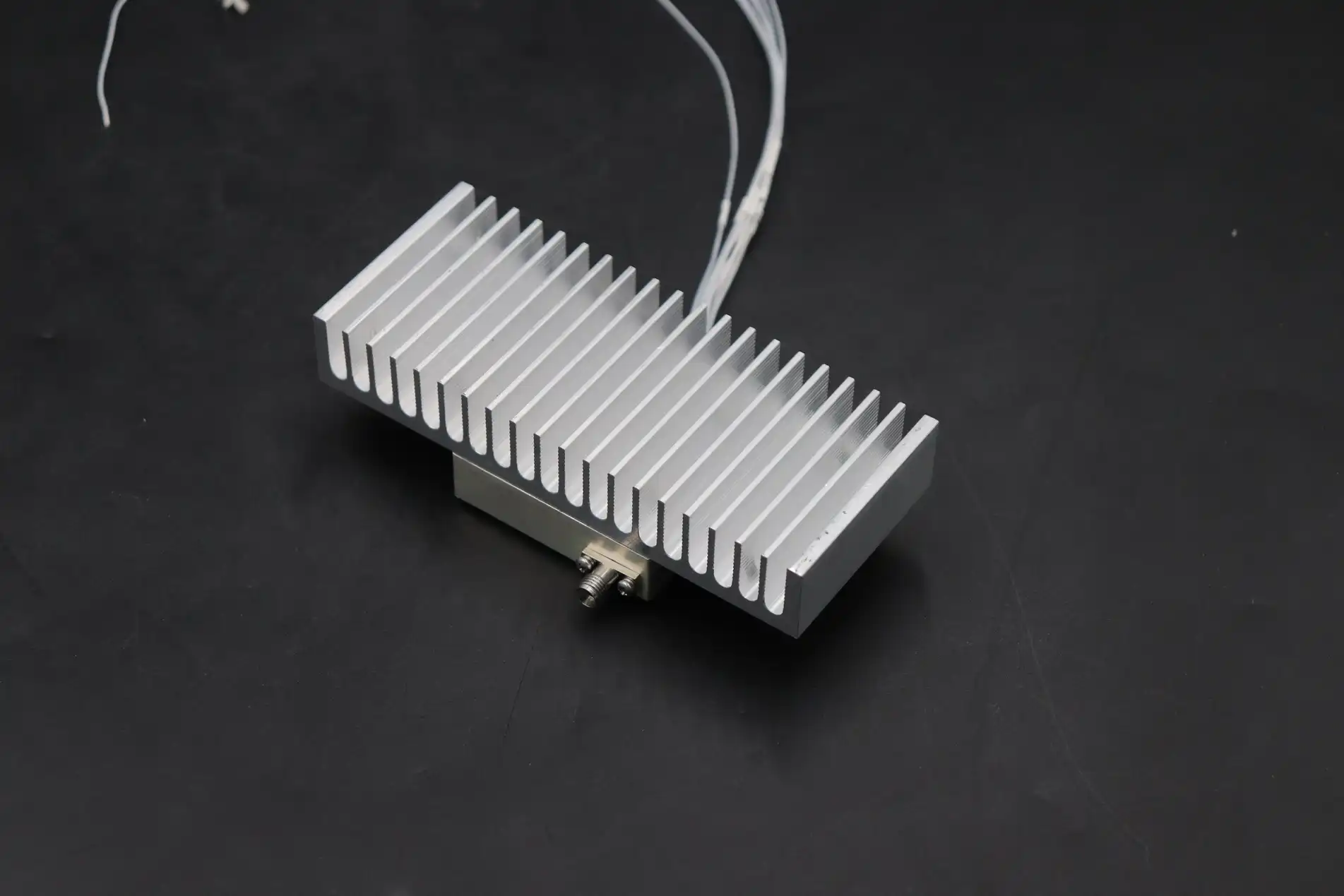
High-performance Ac Power Amplifier systems serve as critical interface components in applications where alternating current infrastructure must drive radio frequency equipment with exceptional fidelity. These specialized amplifiers accept standard AC input from utility sources and condition this power to drive antenna systems, transmitter chains, and test equipment operating across frequency ranges from hundreds of megahertz to beyond one hundred gigahertz. The engineering challenge involves maintaining signal integrity while managing the harmonic content and noise characteristics inherent in alternating current supplies. Advanced Microwave Technologies Co., Ltd. has developed Ac Power Amplifier solutions that address the unique requirements of satellite ground stations, aerospace radar installations, and defense communication networks. These amplifiers incorporate sophisticated filtering and regulation circuitry to isolate sensitive RF stages from power line disturbances while delivering substantial output power across broad frequency bands. The design accommodates the periodic voltage variations characteristic of AC supplies while ensuring that amplified signals maintain phase coherence and spectral purity essential for accurate data transmission and reception. The integration of Ac Power Amplifier technology into larger microwave systems requires careful attention to grounding schemes, shielding effectiveness, and thermal management strategies. Alternating current systems generate electromagnetic fields at power line frequencies that can couple into sensitive RF pathways if proper isolation measures are not implemented. High-quality amplifier designs employ advanced cooling mechanisms, including forced air circulation systems, to maintain optimal operating temperatures during sustained high-power operation while preventing thermal noise from degrading signal quality in adjacent receiver stages.
Technical Specifications and Performance Characteristics
Modern Ac Power Amplifier implementations feature wide dynamic range capabilities spanning from low-level signal conditioning to multi-watt output stages suitable for driving high-gain antenna arrays. The frequency response extends from sub-gigahertz bands through millimeter-wave regions, accommodating legacy communication protocols operating at lower frequencies while supporting emerging fifth-generation wireless systems and future sixth-generation technologies that leverage spectrum allocations above twenty-four gigahertz. This versatility allows single amplifier platforms to serve multiple applications across telecommunications, aerospace, and defense sectors. Efficiency metrics represent critical performance parameters, particularly in applications where power consumption directly impacts operational costs or thermal budgets in space-constrained installations. Advanced amplifier architectures achieve high efficiency through careful impedance matching, optimal bias point selection, and the use of wide-bandgap semiconductor technologies that minimize resistive losses during power conversion. These design considerations become particularly important in satellite communication ground stations where continuous operation demands reliable performance with minimal energy waste and reduced cooling infrastructure requirements. Noise figure specifications determine how much an Ac Power Amplifier degrades the signal-to-noise ratio of weak incoming signals, making this parameter crucial for receiver applications in radio astronomy, deep space communication, and electronic warfare systems. Premium amplifier designs maintain noise figures below specified thresholds across their entire operating bandwidth through careful component selection, optimal circuit topology, and rigorous manufacturing quality control. The combination of low noise and high gain enables detection of extremely weak signals buried in thermal noise backgrounds, extending communication range and improving system sensitivity.
Practical Implementation in Aerospace and Defense Applications
Military surveillance radar systems depend on robust Ac Power Amplifier technology to generate the substantial radio frequency power required for long-range target detection and tracking. These amplifiers must operate reliably in challenging environmental conditions, including temperature extremes, vibration, shock loads, and electromagnetic interference from nearby transmitters and electronic countermeasure systems. Ruggedized designs incorporate hermetically sealed enclosures, conformal coating on circuit boards, and military-grade connectors to ensure performance integrity under operational stress. Satellite ground station installations utilize Ac Power Amplifier systems to boost uplink signals to power levels sufficient for reliable communication with orbiting spacecraft across vast distances. The amplifiers must maintain linear operation to prevent intermodulation distortion that would introduce spurious emissions into adjacent frequency channels, potentially causing interference with other satellite services. Advanced linearization techniques, including feedforward correction and digital predistortion, enable these amplifiers to meet stringent spectral mask requirements imposed by international telecommunications regulations while maximizing power output. Navigation equipment for commercial aviation and maritime applications incorporates Ac Power Amplifier stages within instrument landing systems, distance measuring equipment, and automatic identification systems. These applications demand exceptional reliability as they directly impact safety of life, requiring amplifiers with comprehensive built-in test capabilities, redundant power supplies, and fail-safe operating modes. The amplifiers must continue functioning despite fluctuations in primary AC power quality, accommodating voltage sags, frequency deviations, and transient disturbances that occur in vehicle electrical systems.
Transmission Efficiency and Voltage Transformation Capabilities
The ability to efficiently transform voltage levels represents one of alternating current's most significant advantages over direct current in power distribution applications. Transformers exploit electromagnetic induction principles to step voltages up or down with minimal energy loss, enabling electricity generated at moderate voltages to be transmitted at hundreds of thousands of volts across power grids before being stepped down to safe levels for end-use applications. This voltage transformation capability dramatically reduces resistive losses in transmission lines, making long-distance power delivery economically viable for serving dispersed populations and industrial facilities. Direct current transmission has historically faced challenges with voltage transformation, as simple transformer technology does not function with unidirectional current flow. However, modern power electronics have enabled high-voltage direct current transmission systems that convert AC to DC for long-distance transmission, then invert back to AC for distribution. These HVDC systems offer advantages for specific applications including underwater cable links, asynchronous grid interconnections, and extremely long-distance transmission where the cost of power electronic converters is justified by reduced transmission losses compared to equivalent AC systems. The selection between AC and DC infrastructure depends on application-specific requirements including transmission distance, power levels, load characteristics, and existing infrastructure. Microwave laboratories and test facilities often require both current types, using AC for primary facility power while generating precisely regulated DC supplies for sensitive measurement equipment. The Ac Power Amplifier serves as a critical bridge component, accepting standard alternating current inputs while providing conditioned power suitable for driving radio frequency circuits that may internally operate on DC bias voltages.
Historical Context and the Evolution of Power Systems
The late nineteenth century witnessed intense competition between proponents of direct current and alternating current for dominance in electrical power distribution, a period known as the War of the Currents. Thomas Edison championed direct current systems based on his existing patents and infrastructure investments, implementing DC power stations in major cities throughout the United States. Nikola Tesla and George Westinghouse advocated for alternating current, recognizing its superior characteristics for long-distance transmission and voltage transformation using relatively simple and efficient transformer technology. The Chicago World's Fair of eighteen ninety-three served as a pivotal demonstration of alternating current's capabilities, with the Westinghouse company winning the contract to illuminate the exposition using AC power. This high-profile success was followed by the Niagara Falls power generation project, where Tesla's polyphase AC induction motors and Westinghouse's generation equipment proved capable of transmitting substantial power to Buffalo, New York, over considerable distances with acceptable efficiency. These achievements effectively settled the technical debate in favor of AC for utility-scale power generation and distribution. Despite alternating current's dominance in power grids, direct current has experienced a renaissance in recent decades driven by the proliferation of electronic devices, electric vehicles, solar photovoltaic systems, and LED lighting that all operate internally on DC. Modern facilities increasingly incorporate hybrid power architectures that maintain AC distribution while providing local DC conversion for electronic loads, potentially improving overall efficiency by reducing multiple AC-to-DC conversion stages. The Ac Power Amplifier technology continues evolving to support these hybrid environments, providing flexible interfaces between traditional power infrastructure and advanced microwave systems.
Application Considerations for Microwave and RF Systems
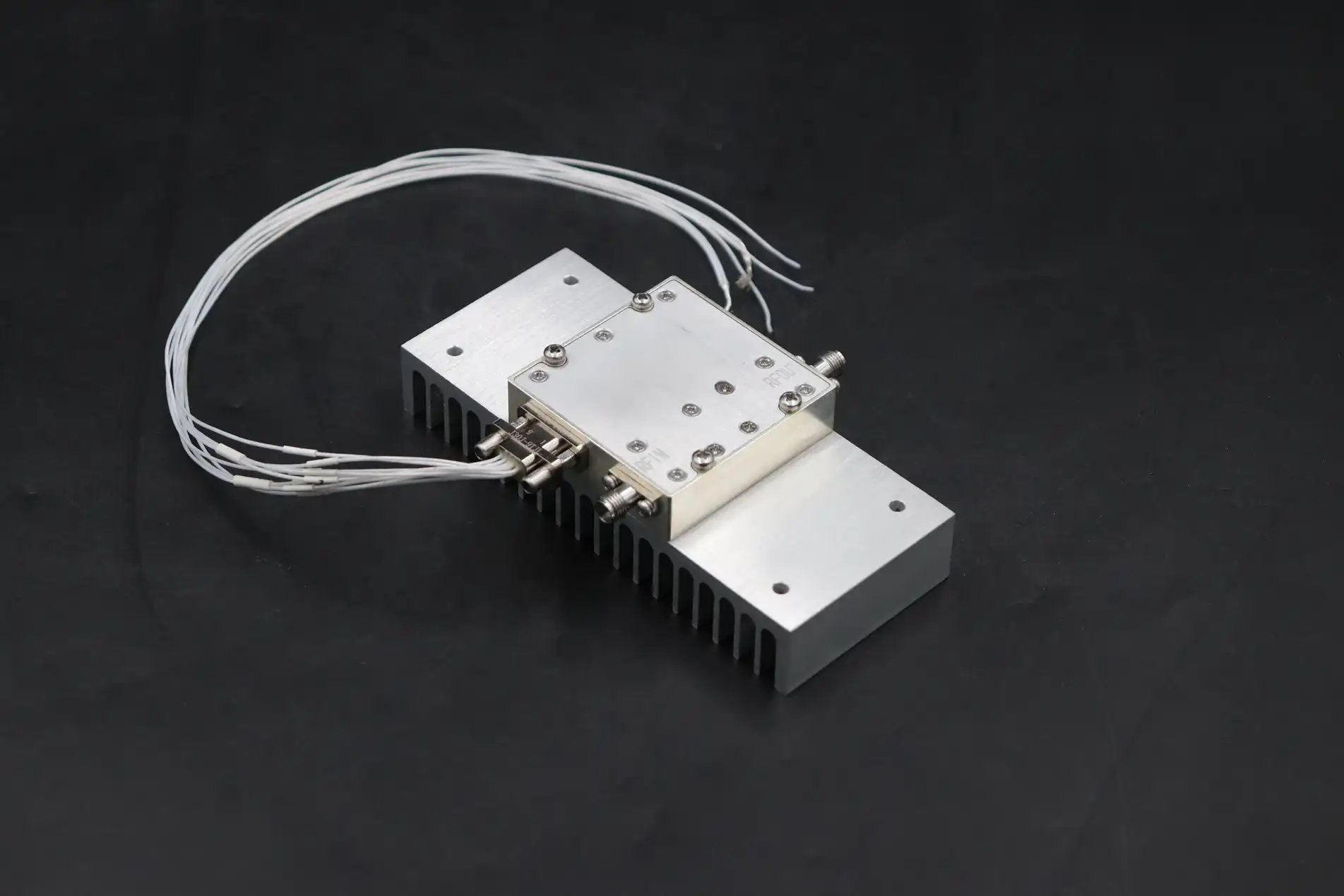
High-frequency amplification systems require careful consideration of how power supply characteristics influence radio frequency performance. Alternating current supplies can introduce harmonic distortion, conducted emissions, and magnetic field coupling that degrade signal quality if not properly addressed through filtering, shielding, and grounding design. Ac Power Amplifier implementations specifically designed for microwave applications incorporate extensive EMI mitigation measures including multi-stage filtering, isolated ground planes, and shielded compartments that prevent power-related interference from reaching sensitive RF signal paths. The broad frequency support provided by advanced Ac Power Amplifier designs enables single equipment platforms to serve diverse applications across communications, radar, and electronic warfare spectrums. A satellite communication ground station might require amplification from C-band frequencies around four to eight gigahertz up through Ka-band regions exceeding thirty gigahertz, while military surveillance radar could operate in X-band from eight to twelve gigahertz. Designing amplifiers with sufficient bandwidth to accommodate these varied requirements while maintaining consistent gain flatness and phase linearity across the full operating range presents substantial engineering challenges. Compact design considerations become critical in space-constrained installations including aircraft, shipboard systems, and unmanned aerial vehicles where weight and volume directly impact platform performance. Modern Ac Power Amplifier architectures designed for nineteen-inch rackmount installation provide maximum power density while incorporating necessary cooling infrastructure to manage thermal dissipation. The combination of high efficiency operation and advanced thermal management enables these amplifiers to deliver substantial output power from relatively small enclosures suitable for integration into existing equipment racks without requiring extensive facility modifications.
Conclusion
Understanding the fundamental differences between alternating and direct current remains essential for engineers designing microwave systems where power infrastructure directly impacts radio frequency performance and signal integrity throughout critical communication and radar applications.
Cooperate with Advanced Microwave Technologies Co., Ltd.
As a leading China Ac Power Amplifier manufacturer and China Ac Power Amplifier supplier, Advanced Microwave Technologies Co., Ltd. brings over twenty years of specialized expertise in microwave component design and production. Our China Ac Power Amplifier factory maintains ISO certification standards including ISO 9001:2015 for quality management, ISO 14001:2015 for environmental responsibility, and ISO 45001:2018 for occupational safety, ensuring every product meets stringent international requirements. We offer competitive Ac Power Amplifier price options with China Ac Power Amplifier wholesale opportunities for volume customers seeking High Quality Ac Power Amplifier solutions and Ac Power Amplifier for sale that deliver exceptional performance across telecommunications, aerospace, defense, and research applications. Our state-of-the-art 24-meter microwave darkroom facility enables comprehensive testing across 0.5 to 110 GHz frequency ranges, validating amplifier performance under realistic operating conditions before delivery. Contact our technical team at craig@admicrowave.com to discuss your specific requirements and discover how our customized OEM services can provide tailored frequency ranges, output power levels, and integration features that seamlessly fit your existing systems while delivering unmatched reliability and performance.
References
1. Berggren, Karl K. "What's the Difference Between AC and DC?" MIT School of Engineering. Massachusetts Institute of Technology.
2. Lantero, Allison. "The War of the Currents: AC vs. DC Power." Office of Public Affairs. United States Department of Energy.
3. Matsusada Precision Inc. "Technical Explanation of DC Power Supply and AC Power Supply: Difference Between DC and AC Power." Matsusada Precision Technical Column Series.
4. SparkFun Electronics. "Alternating Current (AC) vs. Direct Current (DC)." SparkFun Learn Engineering Essentials Educational Resources.