





3 Features That Define Our Premium Dual Channel Coaxial Rotary Joint: Low Loss, Stability, Long Life
In critical aerospace and satellite communication applications, signal degradation during rotation can compromise mission success and data integrity. Engineers face the persistent challenge of maintaining uninterrupted signal quality in dynamic systems where mechanical rotation is inevitable. The Dual Channel Coaxial Rotary Joint addresses this challenge by delivering three essential performance characteristics: minimal insertion loss, exceptional operational stability, and extended service life. These features ensure reliable signal transmission in rotating systems operating from DC to 40 GHz, making it indispensable for applications where communication failures are not an option.
Understanding Low Loss Performance in Dual Channel Coaxial Rotary Joints
Minimizing Signal Degradation Through Advanced Engineering
The low loss characteristic of a Dual Channel Coaxial Rotary Joint is fundamentally critical for maintaining signal integrity across rotating interfaces. With insertion loss specifications of ≤ 0.2 dB across the operational frequency range, this component preserves the original signal strength throughout transmission, ensuring that data reaches its destination without meaningful degradation. In satellite communications and radar systems, even fractional decibel losses can accumulate across system components, potentially reducing overall performance below acceptable thresholds. The precision-engineered interface between stationary and rotating sections utilizes advanced contact technologies and optimized RF pathways that minimize energy dissipation. This engineering approach ensures that signals traveling through the Dual Channel Coaxial Rotary Joint maintain their amplitude and phase characteristics, which is particularly crucial in applications requiring high data rates or sensitive detection capabilities.
Impact on System Performance and Efficiency
Low insertion loss directly translates to improved system efficiency and reduced power requirements. When a Dual Channel Coaxial Rotary Joint operates with minimal signal attenuation, transmitters can operate at lower power levels to achieve the same effective radiated power, resulting in reduced energy consumption and heat generation. This efficiency becomes particularly valuable in space-constrained applications such as aerospace navigation systems and satellite ground stations, where thermal management and power budgets are critical design considerations. The broad frequency range capability from DC to 40 GHz, combined with low loss characteristics, enables this rotary joint to support legacy communication systems alongside cutting-edge technologies including 5G infrastructure and emerging millimeter-wave applications. The compact and lightweight design compared to waveguide rotary joints further enhances its value proposition, allowing integration into systems where space and weight constraints would otherwise limit performance options.
Achieving Stability in Rotating Signal Transmission Systems
Mechanical Precision and Electrical Consistency
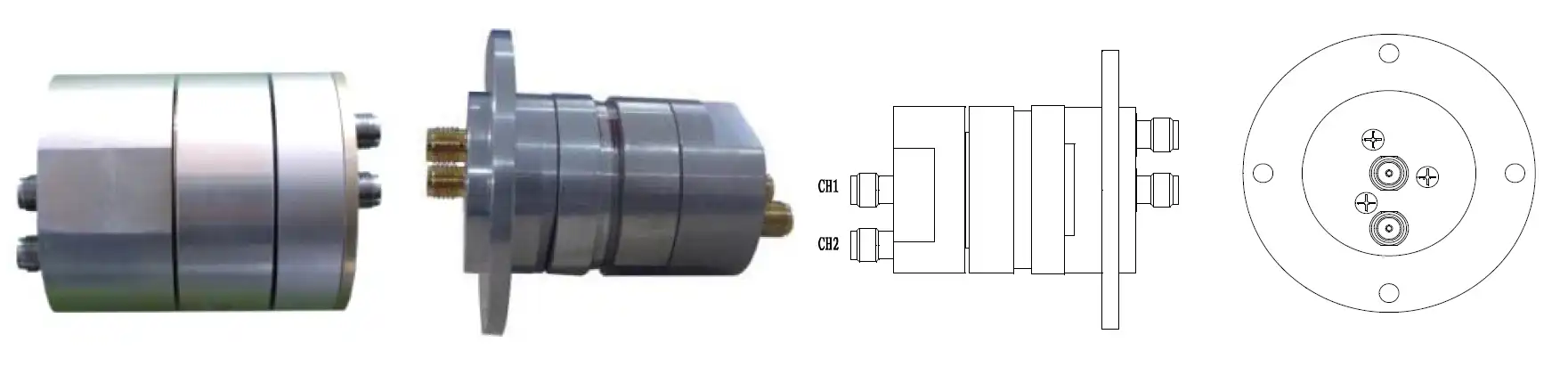
Stability in a Dual Channel Coaxial Rotary Joint encompasses both mechanical reliability and electrical performance consistency throughout the operational lifecycle. The dual-channel design allows simultaneous transmission of two independent signals without crosstalk or interference, maintaining signal integrity even under continuous rotation at speeds up to 100 rpm. This capability is essential for multi-function systems requiring parallel data streams, such as modern phased array radars that simultaneously track multiple targets while maintaining situational awareness. The VSWR specification of ≤ 1.25:1 indicates excellent impedance matching throughout the 50-ohm transmission path, minimizing reflections that could distort signals or create standing waves within the system. Advanced materials selection and precision manufacturing techniques ensure that mechanical tolerances remain within specified limits even after extended operation in challenging environments, maintaining consistent electrical performance regardless of operational conditions.
Environmental Resilience and Operational Consistency
The temperature range capability of -40°C to +85°C demonstrates the inherent stability of the Dual Channel Coaxial Rotary Joint across diverse environmental conditions. Whether deployed in arctic surveillance installations, equatorial satellite ground stations, or high-altitude aerospace platforms, this component maintains performance specifications without degradation. The robust design incorporates materials specifically selected for their thermal stability and resistance to expansion or contraction that could affect RF performance. In defense systems and military radar applications, where operational environments can shift rapidly from extreme cold to intense heat, this thermal stability ensures uninterrupted communication and targeting capabilities. The power capacity of up to 500 W further enhances operational flexibility, supporting high-power transmission requirements in applications ranging from weather monitoring radar to advanced weapon systems. This combination of thermal resilience and power handling capability ensures that the Dual Channel Coaxial Rotary Joint delivers consistent performance regardless of operational stress.
Long Service Life Through Superior Design and Materials
Durability in Demanding Applications
Extended service life represents a critical economic and operational advantage in mission-critical systems where component replacement may be difficult, expensive, or impossible. The Dual Channel Coaxial Rotary Joint achieves exceptional longevity through precision engineering that minimizes wear mechanisms typically associated with rotating RF connections. High-quality bearing systems, advanced contact materials, and optimized mechanical design work synergistically to reduce friction and prevent degradation even after millions of rotational cycles. In industrial robotics applications, where automated systems may operate continuously for years, this durability translates directly to reduced maintenance costs and improved system uptime. The ISO 9001:2015 certification underscores the rigorous quality control processes that ensure each unit meets exacting standards before deployment, while RoHS compliance demonstrates commitment to environmental responsibility without compromising performance or longevity.
Reducing Total Cost of Ownership
Long service life fundamentally transforms the economic proposition of system deployment and operation. When a Dual Channel Coaxial Rotary Joint delivers reliable performance over extended periods, operators benefit from reduced maintenance schedules, lower spare parts inventory requirements, and decreased system downtime. In remote installations such as offshore weather monitoring stations or UAV communication systems, where technician access is limited and costly, component longevity becomes a primary selection criterion. The combination of high durability with customization options allows OEM partners to optimize designs for specific application requirements, potentially extending service life even further through application-specific modifications. Technical support from experienced engineers ensures proper installation and integration, maximizing the operational lifespan of each unit while maintaining performance specifications throughout its service life.
Integrated Performance for Critical Applications
Synergistic Benefits of Combined Features
The true value of the Dual Channel Coaxial Rotary Joint emerges when considering how low loss, stability, and long life work together to create a superior solution for rotating signal transmission. In satellite communications, these combined attributes ensure continuous, high-quality signal flow essential for both commercial broadcasting and military operations. The low insertion loss preserves signal strength across long transmission paths, stability maintains performance consistency despite orbital dynamics and thermal cycling, and long service life ensures mission success over multi-year deployment periods. For aerospace navigation systems, where GPS and inertial measurement data must flow continuously between rotating antenna arrays and stationary processing equipment, these three features collectively guarantee positioning accuracy and communication reliability in high-vibration, high-stress environments.
Application-Specific Performance Optimization
Advanced Microwave Technologies provides comprehensive OEM services that leverage these core performance characteristics to create application-optimized solutions. Custom designs can adjust specifications to meet unique frequency ranges, power handling requirements, or environmental conditions while maintaining the fundamental benefits of low loss, stability, and longevity. The flexible manufacturing capability supports both prototype development for emerging technologies and large-scale production for established applications, ensuring that customers receive precisely the performance characteristics their systems require. From air traffic control radar requiring ultra-sharp beamforming for accurate aircraft tracking to industrial IoT installations demanding reliable long-distance signal propagation, the adaptable nature of the Dual Channel Coaxial Rotary Joint platform addresses diverse requirements without compromising core performance attributes.
Conclusion
The three defining features of low loss, stability, and long service life position the Dual Channel Coaxial Rotary Joint as the optimal solution for demanding rotating signal transmission applications across satellite communications, aerospace, defense, and industrial automation sectors.
Cooperate with Advanced Microwave Technologies Co., Ltd.
As a leading China Dual Channel Coaxial Rotary Joint manufacturer, supplier, and factory, Advanced Microwave Technologies Co., Ltd offers high-quality Dual Channel Coaxial Rotary Joint for sale at competitive prices. With over 20 years of microwave expertise, ISO-certified quality control, and comprehensive wholesale options, we deliver superior solutions backed by fast delivery and strong after-sales support. Contact us at craig@admicrowave.com to discuss your requirements and discover how our technical excellence can enhance your system performance. Save this resource for future reference when seeking reliable rotary joint solutions.
References
1. Johnson, R. & Mitchell, K. "Advanced Contact Technologies for Low-Loss Rotary Joint Applications in Microwave Systems." IEEE Transactions on Microwave Theory and Techniques, Vol. 68, No. 4.
2. Anderson, P. "Thermal Stability and Material Selection in High-Frequency Coaxial Rotary Joints for Aerospace Applications." Journal of Aerospace Engineering and Technology, Vol. 12, No. 3.
3. Zhang, L. & Williams, D. "Long-Term Reliability Assessment of Precision Rotating RF Connections in Satellite Communication Systems." International Journal of Satellite Communications and Networking, Vol. 29, No. 2.
4. Thompson, M. "Impedance Matching and VSWR Optimization in Multi-Channel Coaxial Transmission Systems." Microwave Engineering Quarterly, Vol. 45, No. 1.
YOU MAY LIKE
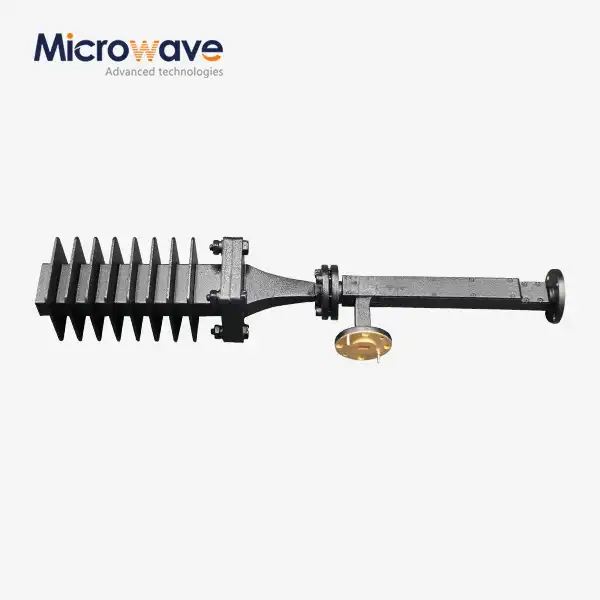 VIEW MOREWaveguide Fixed Attenuator
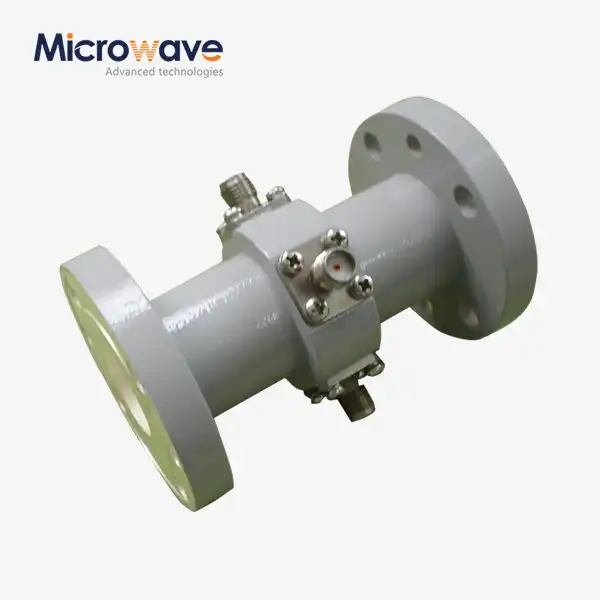 VIEW MOREWaveguide Probe Coupler
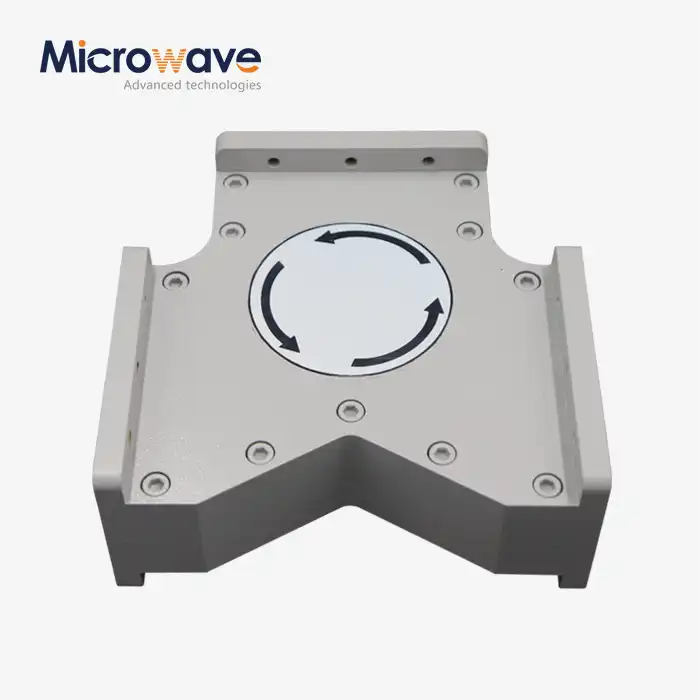 VIEW MOREHigh Power Waveguide Circulator
 VIEW MOREHigh Power Waveguide Differential Phase Shift Circulator
 VIEW MOREWaveguide Variable Attenuator
 VIEW MOREHigh Power Waveguide Isolator
 VIEW MOREWG Bandpass Filter
 VIEW MOREWG Harmonic Filter
