




What does an AC amplifier do?
In satellite communications, radar systems, and high-frequency applications, signal degradation over long distances can cripple mission-critical operations. An AC power amplifier solves this challenge by boosting alternating current signals to usable power levels, ensuring reliable transmission across telecommunications networks, aerospace navigation systems, and defense infrastructure. These specialized devices convert low-power AC signals into high-power outputs while maintaining signal integrity, making them indispensable for applications ranging from 5G base stations to military surveillance radar. Understanding what an AC amplifier does and how it functions is essential for engineers and system designers working in RF communications, satellite ground stations, and advanced radar installations.
Understanding the Core Function of AC Power Amplifiers
An AC power amplifier fundamentally transforms weak alternating current signals into amplified versions with sufficient power to drive demanding loads. Unlike DC amplifiers that work with steady-state voltages, AC power amplifiers operate on time-varying signals across specific frequency ranges, making them critical for RF and microwave applications. The amplification process involves taking input signals that may measure in milliwatts and producing output signals in the range of watts or even kilowatts, depending on the application requirements. In telecommunications infrastructure, AC power amplifiers ensure that signals traveling through coaxial cables, waveguides, or free space maintain adequate strength to overcome path loss and atmospheric attenuation. For satellite ground stations handling HD video transmission and voice communications, these amplifiers bridge the gap between received weak signals and the power levels required for successful demodulation and processing. The operational principle centers on controlling larger power sources with smaller input signals, achieved through semiconductor devices such as transistors or vacuum tubes in legacy systems. Modern AC power amplifiers utilize advanced solid-state technology, incorporating gallium nitride or gallium arsenide semiconductors that offer superior efficiency and frequency response compared to traditional silicon-based designs. The amplifier's gain, defined as the ratio of output power to input power, typically ranges from 10 dB to over 60 dB in multi-stage configurations. Advanced Microwave Technologies Co., Ltd. manufactures AC power amplifiers specifically engineered to deliver stable, high-gain performance across frequency ranges from hundreds of megahertz to 110 GHz, supporting both legacy communication systems and cutting-edge 5G and future 6G networks.
Key Performance Characteristics
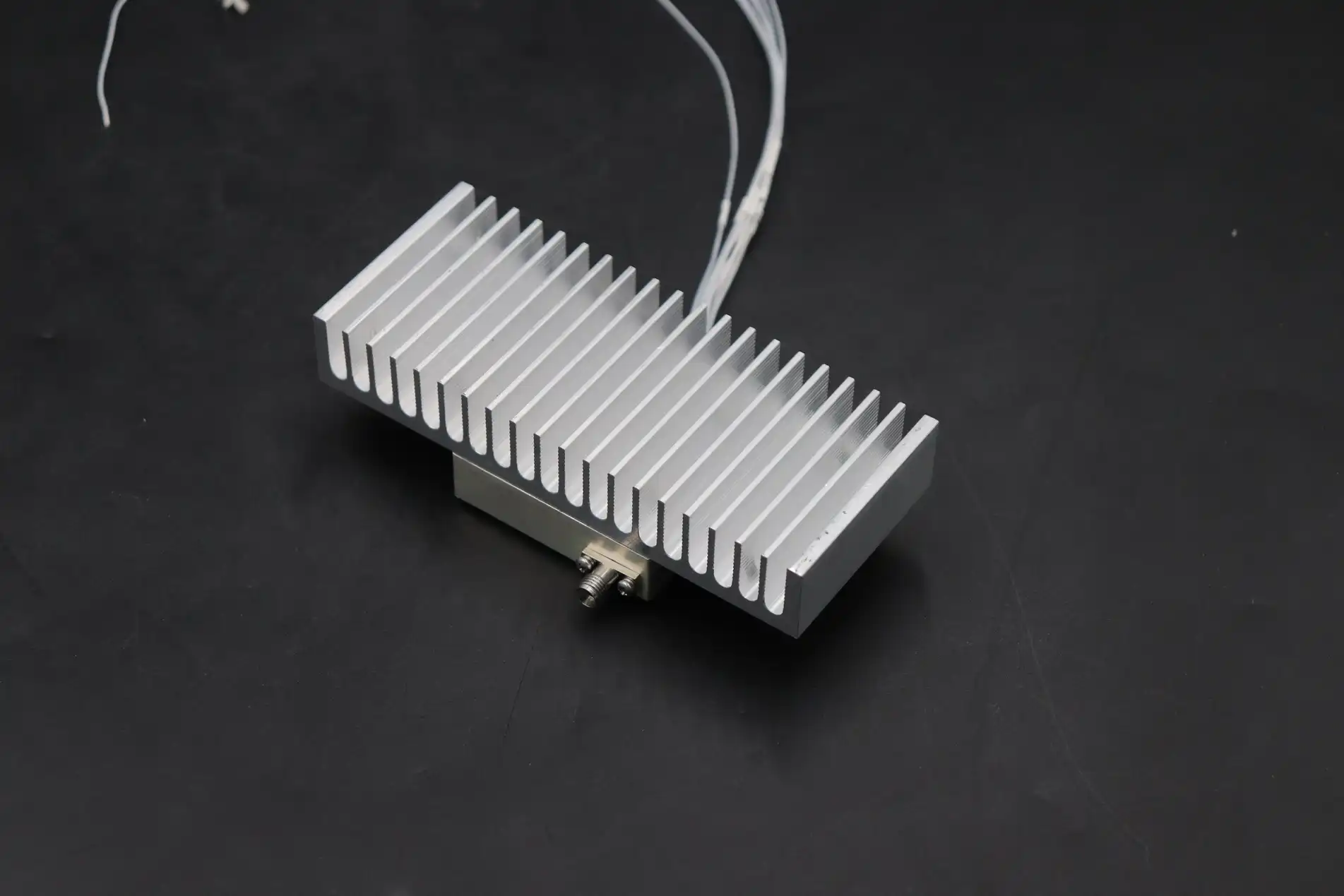
AC power amplifiers must maintain several critical performance parameters to function effectively in professional applications. Linearity ensures that the output signal remains a faithful reproduction of the input without introducing harmonic distortion or intermodulation products that can interfere with adjacent frequency channels. Efficiency, measured as the ratio of RF output power to DC input power, directly impacts operational costs and thermal management requirements. High-quality AC power amplifiers achieve efficiency ratings exceeding 50 percent in Class AB operation, with some specialized designs reaching 70 percent or higher through advanced Class D or E topologies. Bandwidth determines the range of frequencies the amplifier can handle simultaneously, with broadband designs supporting multi-octave operation for versatile deployment across different communication bands. Noise figure represents another crucial specification, quantifying the additional noise the amplifier introduces to the signal chain. In sensitive receiving applications or low-level signal amplification stages, minimizing noise figure preserves signal-to-noise ratio and maintains communication link quality. Advanced Microwave Technologies Co., Ltd. designs its AC power amplifiers with careful attention to noise performance, implementing low-noise input stages and optimized bias networks to achieve industry-leading specifications. The company's amplifiers also incorporate advanced cooling mechanisms, including forced air systems, to dissipate heat generated during high-power operation and prevent thermal runaway that could damage semiconductor junctions or degrade long-term reliability.

Technical Architecture and Design Considerations
Circuit Topology and Signal Processing
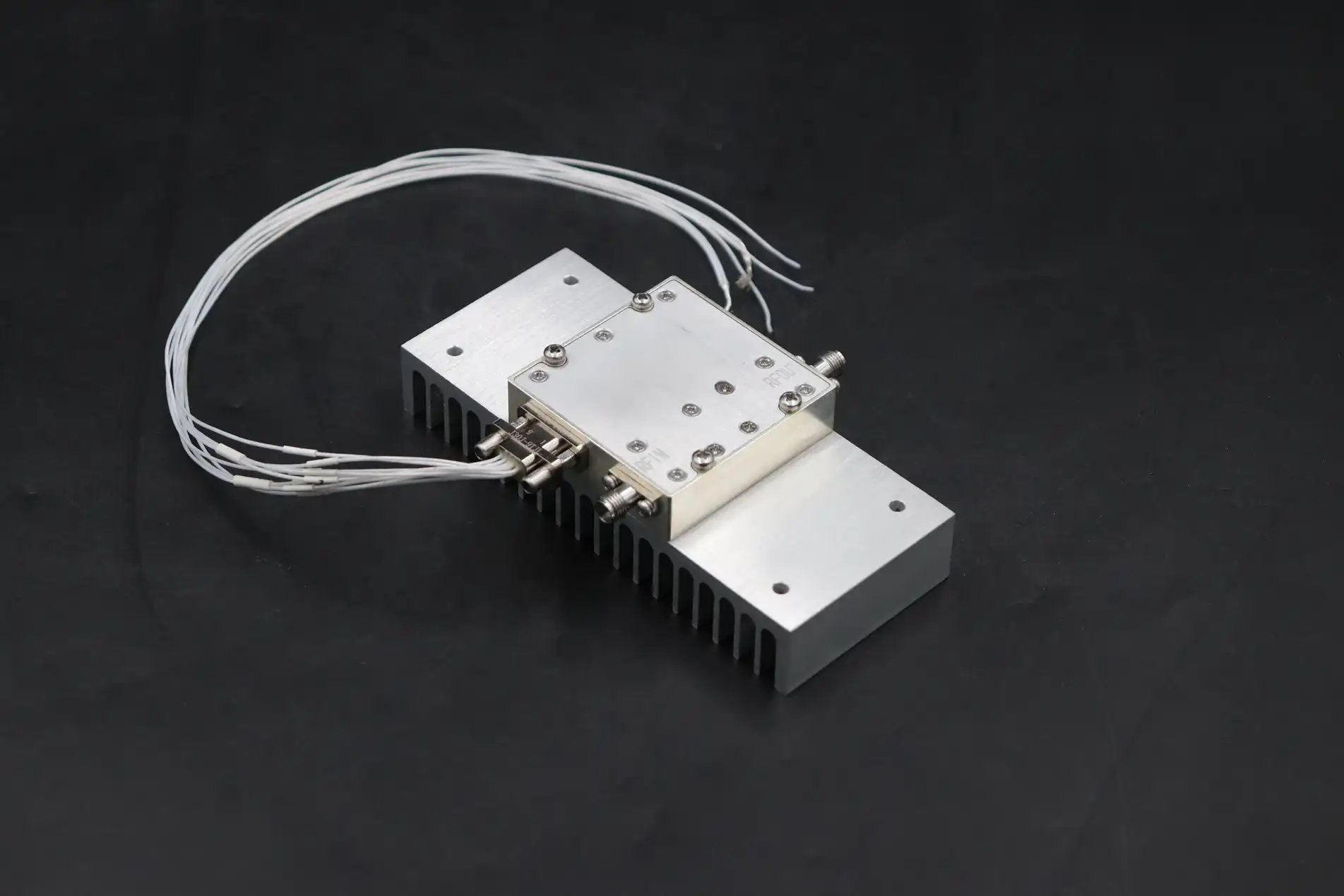
The internal architecture of an AC power amplifier comprises multiple functional blocks working in concert to achieve desired performance goals. The input matching network ensures maximum power transfer from the source to the amplifier's first stage, typically implemented with capacitors and inductors arranged in configurations that transform source impedance to the optimal value for the active device. Pre-driver and driver stages provide intermediate amplification, progressively increasing signal levels while maintaining linearity and minimizing distortion. The final output stage handles the highest power levels, employing robust transistors or power modules capable of delivering kilowatts of RF power into matched loads such as antennas or transmission lines. Bias networks supply the DC operating voltages and currents that establish the quiescent operating point for each amplifier stage. Proper biasing ensures the amplifier operates in the desired class of operation—whether Class A for maximum linearity, Class AB for a balance between efficiency and distortion, or Class C for high-efficiency applications tolerant of nonlinear operation. Advanced Microwave Technologies Co., Ltd. implements sophisticated bias control systems in its AC power amplifiers, allowing dynamic adjustment of operating parameters to optimize performance across varying load conditions and input signal levels. These systems may include temperature compensation to maintain stable performance as ambient conditions change, particularly important for outdoor installations or aerospace applications experiencing extreme temperature swings. The output matching network transforms the amplifier's output impedance to the standard 50-ohm system impedance used throughout RF and microwave systems. This network also incorporates harmonic filters that suppress unwanted frequency components generated by the amplifier's nonlinear operation, ensuring compliance with regulatory requirements and preventing interference with other communication services. Advanced designs may include adaptive matching networks that automatically tune to maintain optimal performance as load conditions vary, particularly valuable in antenna systems where impedance changes with environmental factors or when serving multiple frequency bands.
Frequency Range and Bandwidth Optimization
AC power amplifiers must be carefully designed to operate effectively across their specified frequency range, with particular attention to gain flatness and phase linearity. Narrowband amplifiers optimize performance over limited frequency spans, achieving maximum efficiency and output power for single-frequency or narrow-channel applications. These designs find extensive use in radar transmitters, point-to-point communication links, and dedicated satellite communication terminals. Broadband amplifiers sacrifice some peak performance to maintain consistent operation across wide frequency ranges, enabling single amplifier solutions to support multiple communication bands or frequency-agile systems that rapidly switch between operating frequencies. The 0.5 to 110 GHz frequency range supported by Advanced Microwave Technologies Co., Ltd.'s test facilities encompasses virtually all commercial and military communication bands, from UHF television and mobile radio through millimeter-wave 5G and satellite communications. Lower frequencies below 1 GHz support long-distance terrestrial communications, maritime radio, and aviation systems where propagation characteristics favor longer wavelengths. Microwave frequencies from 1 to 40 GHz dominate satellite communications, terrestrial microwave links, and weather radar applications, offering balance between antenna size, atmospheric propagation, and available bandwidth. Millimeter-wave frequencies above 40 GHz enable massive bandwidth availability for high-data-rate communications and provide fine angular resolution for imaging radar and security scanning systems.
Applications Across Critical Industries
Telecommunications and Satellite Communications
In modern telecommunications infrastructure, AC power amplifiers serve as essential components in base station transmitters, repeaters, and satellite ground terminals. Cellular base stations deploy high-power amplifiers to ensure adequate coverage across designated service areas, with output power levels carefully calibrated to balance coverage radius against interference to adjacent cells. The transition to 5G networks introduces additional complexity, requiring amplifiers that can handle multiple-input multiple-output antenna configurations and maintain linearity across wide bandwidths to support advanced modulation schemes that pack more data into available spectrum. AC power amplifiers designed for these applications must achieve exceptional linearity to prevent spectral regrowth that would violate regulatory mask requirements and interfere with adjacent frequency allocations. Satellite ground stations represent another demanding application where AC power amplifiers must deliver kilowatts of RF power to overcome the enormous path loss between Earth and spacecraft in geostationary or low-Earth orbit. These amplifiers enable reliable uplink transmission of commands, telemetry, and high-bandwidth data to satellites serving telecommunications, broadcasting, and internet connectivity services. Advanced Microwave Technologies Co., Ltd. specializes in providing AC power amplifiers optimized for satellite communication applications, with designs that maintain stable operation during the rapid power level transitions required by modern satellite access protocols. The company's amplifiers incorporate protection circuitry to prevent damage from load mismatches that can occur when antenna systems experience ice accumulation or physical damage.
Aerospace and Defense Systems
Military and aerospace applications impose stringent requirements on AC power amplifiers, demanding operation under extreme environmental conditions while maintaining consistent performance. Radar systems rely on high-power amplifiers to generate the transmitted pulses that illuminate targets at long ranges, with peak power levels reaching megawatts in some long-range surveillance systems. The ability to detect and track aircraft, missiles, ships, and ground vehicles depends critically on the radar's transmitted power and the amplifier's efficiency in converting DC power to RF output. Advanced Microwave Technologies Co., Ltd. provides AC power amplifiers specifically designed for radar applications, incorporating fast switching capability to support pulse-Doppler and synthetic aperture radar modes that require precise timing and phase control. Electronic warfare systems employ AC power amplifiers in jamming transmitters designed to disrupt enemy communications and radar systems through high-power interference signals. These applications demand wide-band operation to cover multiple threat frequencies simultaneously, combined with rapid frequency agility to counter frequency-hopping communication systems. Navigation systems, including instrument landing systems for aircraft and precision approach radar, depend on AC power amplifiers to generate the reference signals that guide aircraft during critical approach and landing phases. The reliability and stability of these amplifiers directly impact flight safety, necessitating redundant designs and continuous monitoring systems that detect incipient failures before they compromise mission success.
Industrial and Scientific Applications
Beyond communications and defense, AC power amplifiers enable numerous industrial and scientific applications requiring high-power RF energy. Plasma generation systems for semiconductor manufacturing and materials processing employ RF amplifiers to sustain the electromagnetic fields that ionize process gases and create the reactive environments necessary for thin-film deposition and surface treatment. Industrial heating applications use RF power amplifiers to generate electromagnetic fields that induce currents in conductive materials, enabling rapid and uniform heating for processes such as metal hardening, plastic welding, and food pasteurization. These applications value the amplifier's efficiency and controllability, as operating costs scale directly with electrical power consumption and process quality depends on precise power delivery. Scientific instruments including nuclear magnetic resonance spectrometers, particle accelerators, and plasma physics research reactors incorporate specialized AC power amplifiers designed for laboratory environments. Research institutions exploring new communication technologies, including next-generation wireless systems and quantum communication networks, depend on flexible amplifier solutions that support experimentation across wide frequency ranges. Advanced Microwave Technologies Co., Ltd. collaborates with research organizations worldwide, providing customized AC power amplifiers that meet unique experimental requirements while maintaining the performance standards necessary for publishable research results. The company's 24m Microwave Darkroom facility enables comprehensive characterization of amplifier performance under controlled conditions, ensuring that delivered products meet or exceed specified performance parameters.
Technical Specifications and Performance Metrics
Power Output and Efficiency Considerations
Power output capability represents the primary specification for AC power amplifiers, typically expressed in watts or dBm (decibels referenced to one milliwatt). Applications range from milliwatt-level pre-amplifiers in receiver front-ends to kilowatt-class transmitters powering long-distance communication links. The required output power depends on factors including transmission distance, receiver sensitivity, antenna gain, and propagation losses along the signal path. System designers must carefully calculate link budgets to determine appropriate amplifier output power, avoiding both insufficient power that compromises communication reliability and excessive power that wastes energy and may violate regulatory limits. Efficiency directly impacts operational costs and system design complexity, particularly for high-power applications where dissipated heat necessitates substantial cooling infrastructure. Advanced Microwave Technologies Co., Ltd.'s AC power amplifiers achieve high efficiency through careful selection of semiconductor devices, optimized matching networks, and appropriate selection of amplifier class. Class AB amplifiers, commonly used in linear communication applications, typically achieve 40 to 60 percent efficiency, while Class C amplifiers used in constant-envelope applications such as FM broadcasting can exceed 70 percent efficiency. Emerging technologies including envelope tracking and Doherty amplifier architectures promise further efficiency improvements, particularly valuable for mobile base stations where operational expenses include significant electricity costs.
Gain Flatness and Phase Linearity
Gain flatness across the operating bandwidth ensures consistent amplification for all frequency components within a modulated signal, preventing distortion that would degrade communication quality. High-quality AC power amplifiers maintain gain variation within ±0.5 dB across their specified bandwidth, achieved through careful design of matching networks and compensation techniques that counteract the natural frequency-dependent characteristics of active devices. Phase linearity, measuring the constancy of signal delay across the operating bandwidth, becomes particularly important for applications employing complex modulation schemes where phase information carries data. Nonlinear phase response introduces group delay distortion that causes different frequency components to arrive at different times, smearing signal transitions and increasing error rates in digital communication systems. Advanced Microwave Technologies Co., Ltd. employs sophisticated design techniques to optimize both gain flatness and phase linearity in its AC power amplifiers. The company's engineering team utilizes advanced simulation software to model amplifier performance before physical prototyping, identifying potential issues and implementing compensation networks that flatten frequency response. Fabricated amplifiers undergo comprehensive testing in the company's laboratories, with measurements extending across the full operating bandwidth and power range to verify compliance with specifications. The company's ISO 9001:2015 certification ensures consistent quality control throughout the design, manufacturing, and testing process, giving customers confidence that delivered products will perform as specified in their mission-critical applications.
Conclusion
AC power amplifiers serve as fundamental building blocks in modern communication systems, radar installations, and advanced scientific instruments, boosting signal strength while maintaining fidelity across demanding frequency ranges and operating conditions. Their role in enabling reliable long-distance communications and precise sensing capabilities makes them indispensable across telecommunications, aerospace, defense, and research sectors.
Cooperate with Advanced Microwave Technologies Co., Ltd.
Partner with Advanced Microwave Technologies Co., Ltd., a premier China AC power amplifier factory, supplier, and manufacturer offering over 20 years of expertise in microwave technology. Our ISO-certified facilities produce high-quality AC power amplifiers for sale at competitive prices, backed by comprehensive OEM services including customization, prototyping, and technical support. Whether sourcing China AC power amplifier wholesale solutions or seeking specialized designs for satellite communications, radar systems, or telecommunications infrastructure, our team delivers reliable performance from 0.5 to 110 GHz. Contact craig@admicrowave.com today for quotations and discover why global leaders trust our waveguide assemblies, coaxial components, and antenna systems for mission-critical applications across aviation, aerospace, defense, and commercial sectors.
References
1. Cripps, Steve C. "RF Power Amplifiers for Wireless Communications." Second Edition. Artech House Publishers, 2006.
2. Kenington, Peter B. "High-Linearity RF Amplifier Design." Artech House Publishers, 2000.
3. Grebennikov, Andrei. "RF and Microwave Power Amplifier Design." McGraw-Hill Education, 2015.
4. Pozar, David M. "Microwave Engineering." Fourth Edition. John Wiley & Sons, 2011.