





Why Choose a Log Periodic Antenna for Multi-Band Coverage?
In today's rapidly evolving communication landscape, system engineers and telecommunications managers face a persistent challenge: how to maintain reliable signal coverage across multiple frequency bands without deploying numerous specialized antennas. This operational complexity drives up costs, complicates installations, and creates maintenance headaches. The Log Periodic Antenna emerges as a transformative solution, offering seamless multi-band operation that eliminates the need for constant retuning or equipment replacement as frequency requirements evolve.
Understanding Log Periodic Antenna Technology for Wideband Applications
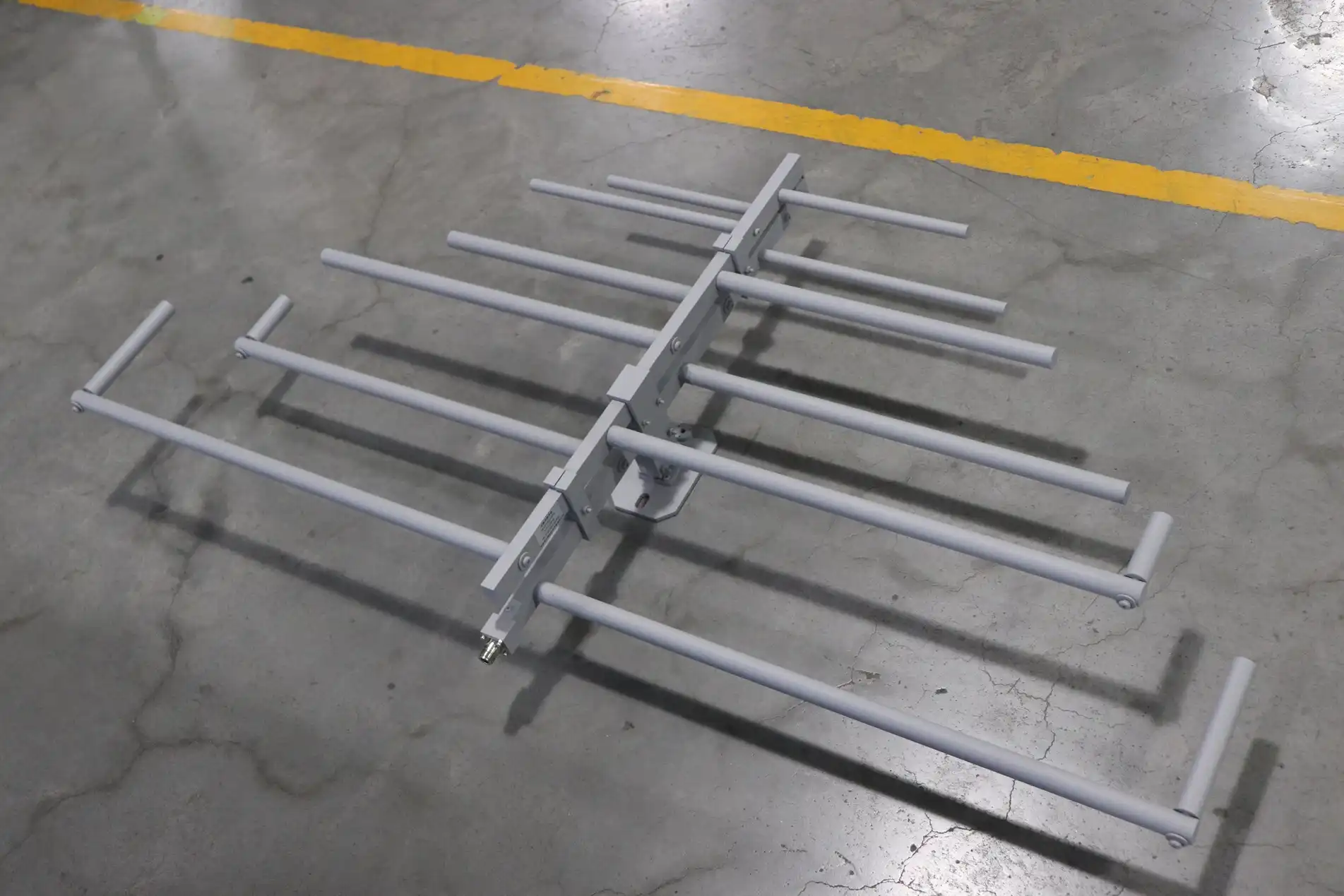
The Log Periodic Antenna represents a sophisticated engineering achievement in the field of microwave and RF communications. Unlike conventional single-frequency antennas that require precise tuning to specific wavelengths, this antenna architecture employs a series of dipole elements arranged in a logarithmically scaled pattern. Each element becomes resonant at different frequencies, creating a continuous operating bandwidth that can span from several hundred megahertz to tens of gigahertz. This fundamental design principle enables the antenna to maintain consistent performance characteristics across its entire frequency range, making it indispensable for applications requiring frequency agility. The logarithmic spacing between elements ensures that as operating frequency changes, different portions of the antenna structure become electrically active, seamlessly transitioning coverage across the spectrum. Advanced Microwave Technologies Co., Ltd manufactures Log Periodic Antenna solutions with frequency coverage from 300 MHz to 10 GHz, incorporating both linear and circular polarization options to meet diverse application requirements. The circular polarization ultra-wideband logarithmic spiral antenna series offers exceptional heat dissipation characteristics through its spiral-wound configuration, while the circular polarization capability enables rapid identification of electromagnetic radiation sources across the frequency spectrum.
The Engineering Principles Behind Multi-Band Coverage
The multi-band capability of Log Periodic Antenna systems stems from their self-similar geometric structure, where the physical dimensions of successive antenna elements maintain constant ratios. This mathematical relationship creates frequency-independent behavior over wide bandwidths, typically achieving coverage ratios of 10:1 or greater between the highest and lowest operating frequencies. When electromagnetic energy is fed to the antenna, it propagates along the transmission line connecting the dipole elements, with each element responding most strongly when its length approximates half the wavelength at the operating frequency. Elements shorter than resonance act as directors, focusing energy forward, while longer elements function as reflectors, enhancing directional gain. This distributed operation across multiple elements simultaneously provides superior bandwidth compared to parasitic element arrays like Yagi antennas, which rely on a single driven element. The phase relationship between adjacent elements in the Log Periodic Antenna creates constructive interference patterns that maintain consistent radiation characteristics as frequency varies, ensuring predictable performance for satellite communications, radar systems, and telecommunications infrastructure. Testing facilities equipped with advanced measurement capabilities, such as the 24m Microwave Darkroom at Advanced Microwave Technologies Co., Ltd, enable precise characterization of antenna far-field behavior across the entire 0.5-110 GHz test frequency range, validating multi-band performance through rigorous near-field and far-field measurement protocols.
Key Performance Advantages Over Single-Band Solutions
Deploying Log Periodic Antenna technology delivers substantial operational and economic benefits compared to installing multiple single-band antennas. The primary advantage lies in frequency versatility, eliminating the need for physical antenna changes when communication requirements shift between bands. For telecommunications operators managing cellular base stations that must support legacy 2G, 3G, 4G LTE, and emerging 5G services simultaneously, a single broadband Log Periodic Antenna can replace four or more narrowband antennas, dramatically simplifying tower infrastructure and reducing wind loading. This consolidation also minimizes installation complexity, as fewer mounting structures, feed lines, and weatherproofing systems are required. The consistent gain characteristics across the operating bandwidth ensure predictable link budgets for system planners, typically delivering 8-18 dB of directional gain depending on the specific design implementation. Advanced Microwave Technologies Co., Ltd produces Log Periodic Antenna models with gain ranging from 8 dB to 18 dB, impedance standardized at 50 ohms for seamless integration with existing RF infrastructure, and power handling capabilities up to 100 watts to support both transmit and receive applications. The compact design philosophy employed in modern Log Periodic Antenna engineering ensures that despite wide frequency coverage, physical dimensions remain manageable for practical installations. Construction using high-grade materials including aluminum, copper, and stainless steel provides exceptional durability against environmental stressors, with IP65 environmental ratings ensuring reliable operation in harsh outdoor conditions including extreme temperatures, precipitation, and UV exposure.
Applications Driving Log Periodic Antenna Adoption
The versatility of Log Periodic Antenna technology has made it the preferred solution across numerous critical communication sectors. In satellite communications infrastructure, ground stations utilize these antennas for both uplink transmission and downlink reception, where the ability to operate across C-band, X-band, and Ku-band frequencies with a single antenna system reduces facility complexity. The directional radiation pattern focuses energy toward the satellite, minimizing interference with adjacent systems while maximizing signal strength for high-definition video, data, and voice communications. Defense and aerospace applications demand the frequency agility that Log Periodic Antenna designs inherently provide, enabling radar systems to sweep across wide bandwidths for target detection and tracking, while military communication networks exploit multi-band capability to maintain operational security through frequency hopping. Advanced Microwave Technologies Co., Ltd serves aviation and aerospace customers requiring precise antenna performance for navigation systems, shipboard communication platforms operating in maritime environments, weather monitoring stations that must receive signals across meteorological satellite bands, security screening systems at transportation hubs, unmanned aerial vehicle (UAV) control links, and direction-finding applications for signal intelligence. The X-Band Feed Network capabilities offered by Advanced Microwave Technologies Co., Ltd demonstrate specialized expertise in critical frequency ranges, providing ultra-sharp beamforming for air traffic control radar that maintains accurate aircraft tracking even during adverse weather conditions, optimizing signal propagation for telecommunications networks serving rural areas, and supporting industrial IoT deployments requiring long-distance connectivity.
Telecommunications Infrastructure and Wireless Networks
Modern telecommunications networks represent one of the largest application domains for Log Periodic Antenna technology, driven by the need to support multiple radio access technologies simultaneously. Base station manufacturers integrate these antennas to provide coverage for frequency division duplex (FDD) and time division duplex (TDD) bands spanning from 698 MHz low-band spectrum through mid-band frequencies at 2.6 GHz and extending into millimeter-wave ranges approaching 6 GHz for 5G New Radio deployments. The Log Periodic Antenna's ability to maintain consistent radiation patterns across this wide range ensures uniform coverage characteristics, critical for maintaining quality of service as users move through the network. Wireless internet service providers (WISPs) particularly value the multi-band coverage for point-to-point and point-to-multipoint backhaul links, where a single Log Periodic Antenna can support licensed microwave bands, unlicensed 5 GHz spectrum, and emerging 6 GHz Wi-Fi 6E services. The directional nature of the antenna provides high front-to-back ratio, typically exceeding 20 dB, which minimizes interference from unwanted directions while concentrating radiated power toward the intended coverage area. Advanced Microwave Technologies Co., Ltd manufactures Log Periodic Antenna systems specifically optimized for telecommunications applications, with beamwidth specifications ranging from 30 to 50 degrees to balance coverage area with directional gain. These antennas support both linear and circular polarization modes, enabling system designers to select the optimal configuration for their specific propagation environment and interference mitigation requirements.
Test and Measurement Environments
Research laboratories, electromagnetic compatibility (EMC) test facilities, and field measurement teams rely extensively on Log Periodic Antenna equipment for broadband RF characterization and compliance testing. The wide frequency coverage eliminates the need to swap antennas during frequency sweeps, accelerating test procedures and improving measurement consistency. EMC compliance testing for electronic equipment requires antenna systems that can accurately characterize radiated emissions from 30 MHz through several gigahertz, a range perfectly matched to Log Periodic Antenna capabilities. The known gain and radiation pattern characteristics across the operating bandwidth enable precise field strength calculations, essential for demonstrating compliance with regulatory limits established by agencies such as the FCC and international standards bodies. Antenna measurement ranges, including the sophisticated 24m Microwave Darkroom at Advanced Microwave Technologies Co., Ltd, employ Log Periodic Antenna systems as both transmit and receive elements for characterizing other antenna designs through pattern measurements, gain determination, and polarization analysis. The Antenna Plane Near and Far Field Measuring Recombination Chamber enables expert engineering teams to transition fluidly between near-field and far-field measurement techniques, extracting detailed information about radiation patterns, gain values, and impedance characteristics across frequency. Advanced Microwave Technologies Co., Ltd maintains ISO 9001:2015 certification ensuring that measurement equipment and procedures adhere to the strictest quality control standards, providing customers confidence that test results meet and often exceed industry benchmarks for accuracy and repeatability.
Technical Specifications and Customization Options
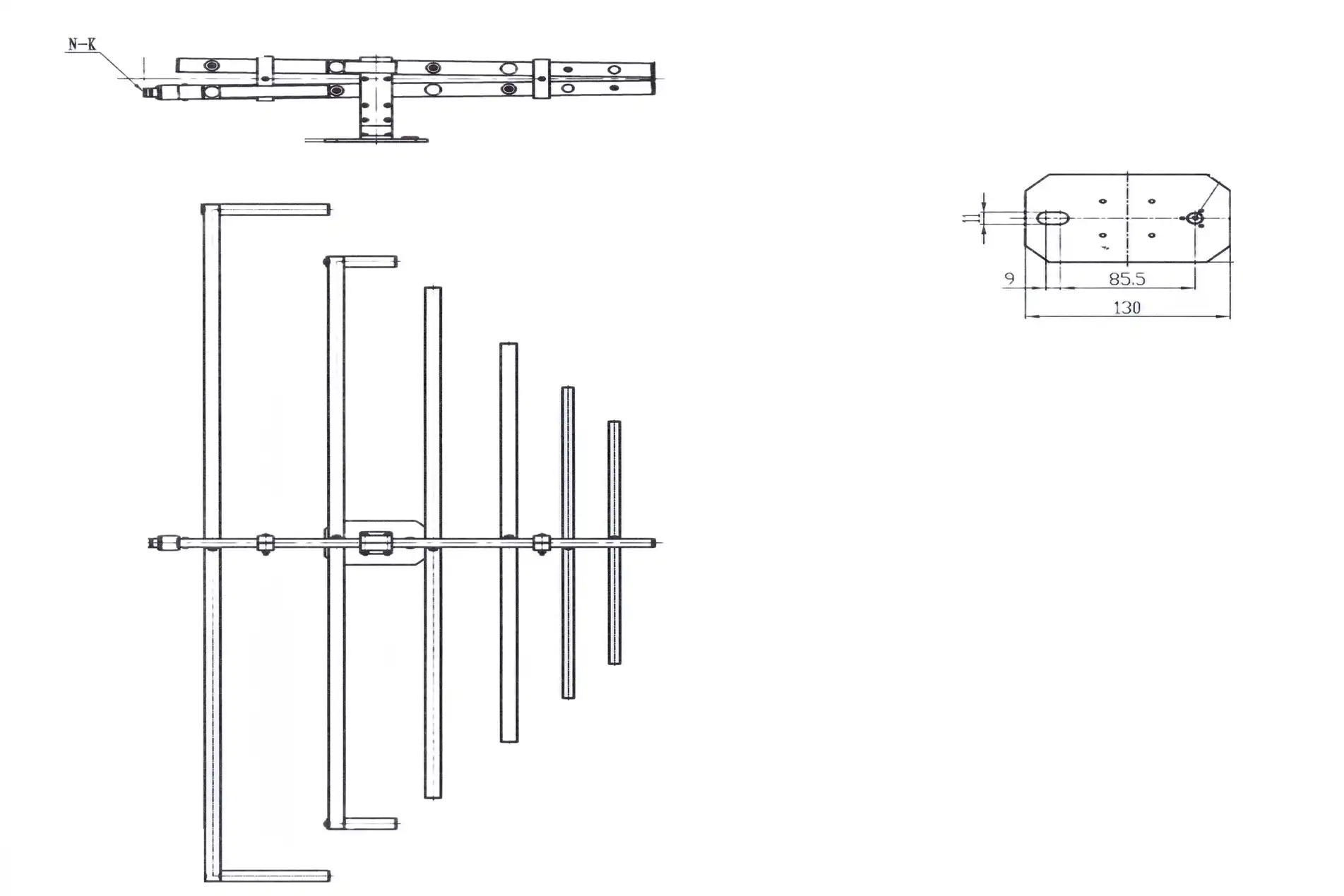
The performance envelope of Log Periodic Antenna systems encompasses numerous parameters that system engineers must evaluate during the selection process. Frequency range represents the most fundamental specification, defining the lowest and highest operating frequencies over which the antenna maintains acceptable performance. Advanced Microwave Technologies Co., Ltd offers standard Log Periodic Antenna models covering 300 MHz to 10 GHz, though custom designs can extend coverage to millimeter-wave frequencies approaching 110 GHz through specialized element configurations and precision manufacturing techniques. Gain specifications indicate the directional advantage compared to an isotropic radiator, with typical Log Periodic Antenna implementations achieving 8-18 dB depending on the number of elements and overall aperture size. Higher gain generally requires longer boom lengths to accommodate additional elements, creating design tradeoffs between portability and performance. Polarization options include linear (vertical or horizontal) and circular (right-hand or left-hand) configurations, selected based on application requirements. Satellite communications often employ circular polarization to mitigate Faraday rotation effects in the ionosphere, while terrestrial wireless systems typically use linear polarization for simplicity. The voltage standing wave ratio (VSWR) quantifies impedance matching quality, with values below 2:1 considered excellent across the operating bandwidth. Advanced Microwave Technologies Co., Ltd designs achieve low return loss through careful impedance transformation networks, ensuring efficient power transfer between transmission lines and radiating elements while minimizing signal reflections that degrade system performance.
Material Selection and Environmental Protection
Construction materials profoundly impact both electrical performance and long-term reliability of Log Periodic Antenna installations. Aluminum alloys provide an optimal balance of electrical conductivity, mechanical strength, and corrosion resistance, making them the primary choice for dipole elements and boom structures in most designs. Copper elements offer superior conductivity but require protective coatings to prevent oxidation in outdoor environments. Stainless steel hardware ensures mechanical integrity under high wind loads and temperature cycling, while maintaining corrosion resistance in marine and industrial atmospheres. Advanced Microwave Technologies Co., Ltd employs aerospace-grade materials throughout Log Periodic Antenna construction, with surface treatments and coatings selected to withstand harsh environmental conditions encountered in satellite ground stations, mountaintop relay sites, and maritime installations. Environmental ratings such as IP65 indicate protection against dust ingress and water jets from any direction, essential for maintaining reliable operation during severe weather events. The spiral-wound configuration in circular polarization ultra-wideband logarithmic spiral antenna designs provides inherent structural benefits beyond electrical performance, creating excellent heat dissipation conditions that prevent thermal buildup during high-power transmission operations. Connector selections including N-type, SMA, and TNC interfaces ensure compatibility with existing cable assemblies and equipment, while custom connector options accommodate specialized system requirements. All materials and manufacturing processes comply with RoHS directives limiting hazardous substances, demonstrating environmental responsibility alongside technical excellence.
Customization Through OEM Services
Recognizing that standardized antenna products cannot address every application requirement, Advanced Microwave Technologies Co., Ltd provides comprehensive OEM services enabling customers to obtain Log Periodic Antenna solutions precisely tailored to their specific needs. The customization process begins with detailed consultation between the customer's engineering team and Advanced Microwave's expert designers, establishing exact frequency range requirements, gain targets, physical size constraints, and environmental specifications. Prototype development follows, with rapid turnaround enabling testing and evaluation before committing to full-scale production. The state-of-the-art facilities at Advanced Microwave Technologies Co., Ltd, including the 24m Microwave Darkroom with its Antenna Plane Near and Far Field Measuring Recombination Chamber, support comprehensive characterization of prototype designs across the entire 0.5-110 GHz capability range. Measurement data validates that custom Log Periodic Antenna designs meet specified performance parameters, with detailed documentation supporting customer integration efforts. Production scaling leverages Advanced Microwave's established supply chain systems and rich manufacturing experience accumulated over more than 20 years in the microwave products industry. ISO 14001:2015 environmental management certification ensures manufacturing processes minimize ecological impact through waste management, energy conservation, and emissions reduction, while ISO 45001:2018 occupational health and safety standards protect the skilled technicians and engineers who fabricate these precision components. The professional technical R&D team maintains expertise across waveguide assemblies, coaxial and cable assemblies, microwave antennas and feeds, and measurement systems, enabling comprehensive support throughout the design and production process to ensure customer specifications are met with precision.
Conclusion
Log Periodic Antenna technology delivers unmatched frequency versatility for modern multi-band communication systems, eliminating infrastructure complexity while maintaining consistent high performance across wide bandwidths that single-frequency solutions cannot match.
Cooperate with Advanced Microwave Technologies Co., Ltd.
Partner with Advanced Microwave Technologies Co., Ltd, a leading China Log Periodic Antenna manufacturer, supplier, and factory offering High Quality Log Periodic Antenna for sale at competitive Log Periodic Antenna price points with China Log Periodic Antenna wholesale options. Our ISO-certified facilities produce customized solutions backed by comprehensive technical support, fast delivery through our perfect supply chain system, and strong after-sales capability ensuring your success. Contact our team today at craig@admicrowave.com to discuss your specific requirements and discover how our 20+ years of expertise can deliver the ideal antenna solution for your application.
References
1. "Log-Periodic Antennas for Wideband Applications" by Chen, Z.N., Antenna Engineering Handbook, Fourth Edition
2. "Broadband Antenna Design Principles" by Isbell, D.E., IRE Transactions on Antennas and Propagation
3. "Modern Antenna Systems for Satellite Communications" by Rao, S.K., IEEE Communications Magazine
4. "Frequency Independent Antenna Theory and Applications" by DuHamel, R.H., Proceedings of the IEEE
5. "Multi-Band Antenna Technologies for 5G Networks" by Wong, K.L., Microwave Journal
YOU MAY LIKE
 VIEW MOREHigh Power Waveguide to Coaxial Adapter
 VIEW MOREWaveguide Loop Coupler
 VIEW MOREEnd Launch Double Ridged WG To Coaxial Adapter
 VIEW MOREEnd Launch Waveguide to Microstrip Adapter
 VIEW MOREWaveguide Sliding Termination
 VIEW MOREWaveguide Unmatched Termination
 VIEW MOREMagic Hybrid Tee
 VIEW MOREH-Plane Tee