




Moisture Sealing and EMI Waveguide Gaskets — Dual Function Trade-Offs
One of the trickiest things to do when buying things for high-frequency RF uses is picking the right EMI waveguide gaskets that can block electromagnetic fields and keep out moisture. To balance these two purposes, you have to figure out how to balance the material's conductivity, its ability to withstand external stress, its compression properties, and its cost structures. To get solid performance across the full working envelope of radar, satellite, telecommunications, and defence systems, procurement engineers need to know that improving one function may hurt the other. This is why careful selection and installation are so important.
Understanding Waveguide Gasket Fundamentals and Moisture Protection Principles
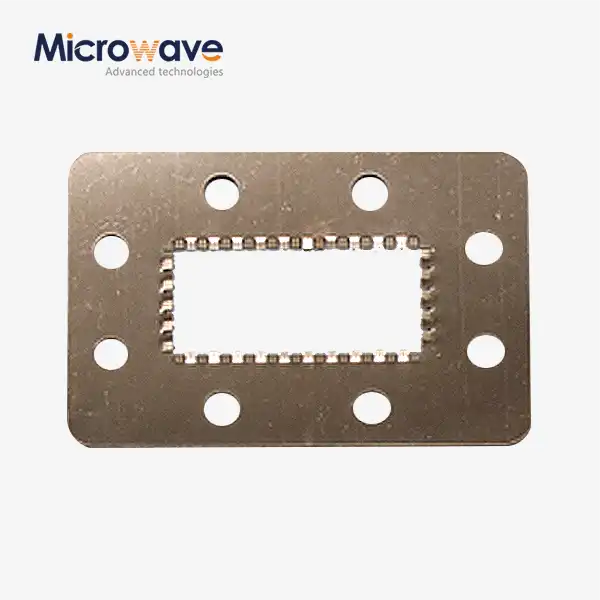
Learning the basics of EMI waveguide gaskets and how to protect against moisture. RF waveguide systems that work between 1 GHz and more than 110 GHz need special sealing solutions that keep signals from leaking and keep outside elements out. Standard EMI waveguide gaskets are very important at the points where two surfaces meet. They keep the electricity flowing and keep out air and other particles.
How EMI Shielding Performance Relates to Design
Controlling electromagnetic interference starts at the flange contact and works well. Slot antenna effects are caused by tiny gaps between the metal waveguide flanges. These gaps send out valuable signal energy and raise insertion loss. Through conductive particles inserted within elastomeric structures, a properly designed EMI waveguide gasket gets rid of these gaps. Materials like silver-plated aluminium or copper particles mixed in with silicone make safe electrical lines that keep the contact resistance low, often reaching less than 0.010 ohm-cm for the volume resistivity. This low resistance makes sure that shielding works better than 100 dB at plane wave frequencies around 10 GHz. This keeps sensitive communications safe from outside interference and stops internal signal radiation that could threaten system security or legal compliance.
Moisture Ingress Risks and Environmental Sealing Requirements
Waveguides that are used in spacecraft platforms, outdoor phone lines, or radar systems on ships are constantly being attacked by the environment. When moisture gets into pressurised waveguide systems, the dielectric breaks down, there is internal rust, and catastrophic arcing happens. EMI waveguide gaskets protect against these problems by keeping water, dust, salt spray, and other contaminants from getting to internal areas. They do this by having an IP67 or IP68 rating. Pressurised waveguides, which are often filled with dry nitrogen to keep the voltage from dropping, depend on the stability of the EMI waveguide gaskets to keep the atmosphere inside stable. The EMI waveguide gasket has to be able to handle changes in pressure, temperature (from -55°C to +160°C), and mechanical vibrations without losing its ability to close or RF performance.
Application-Specific Demands Across Industries
Defence companies need EMI waveguide gaskets that can withstand high shocks, vibrations, and sudden changes in temperature, all while keeping their MIL-STD standards and tracked materials. Outdoor locations for satellite ground stations need to be reliable for a long time. UV light, temperature changes, and changes in humidity test the durability of EMI waveguide gaskets over decades. Telecommunications system integrators look for options that meet performance standards without being too precise. For experimental flange setups and non-standard frequency bands, research schools need to be able to customise things in a number of ways. Knowing about these different needs helps buying teams come up with technical specs that work with the way things work and the budget they have.
Navigating Material Trade-Offs Between Conductivity and Sealing Performance
Choosing the right EMI waveguide gasket materials means combining qualities that don't work well together. Conductive fillers make shields work better, but they may also make the material harder, which makes it less flexible when it comes to fixing flaws on the surface. Softer elastomers are better at protecting against the environment, but they might not work as well with electromagnetic fields or last as long mechanically.
Comparative Analysis of Common Gasket Materials
Nickel-plated conducting fabrics are very flexible and don't do much to block electromagnetic fields, but they do a good job of covering up flange imperfections. Their downside is that they don't carry electricity as well as noble metals, but this makes them good for uses below 40 GHz, where protection is allowed. Silver-plated copper particle EMI waveguide gaskets offer better conductivity and blocking performance than 120 dB across a wide frequency range. However, silver migration and galvanic rust become problems in tough naval or industrial settings, especially when metals that are not the same touch the flange. Beryllium copper spring finger EMI waveguide gaskets are very flexible and don't compress easily, so they keep the contact pressure even after thousands of joining cycles. Because they are rigid, they can be hard to close against moisture in uneven areas without precise machining and controlled pressure application. Silicone EMI waveguide gaskets that are filled with conductive particles are a good compromise between keeping out the environment and working well with electromagnetic fields. Shore A hardness between 65 and 85 lets the material be compressed enough while still keeping its shape under pressure. These mixtures can stand up to high temperatures and chemicals, which makes them useful in aircraft thermal cycling conditions. Foam-filled EMI waveguide gaskets have conductive outer layers and flexible cores. They can easily conform to uneven surfaces while still providing enough protection. In exchange, they seem to be less durable when compressed over and over again, and the foam core may absorb water after being exposed to it for a long time.
Cost-Performance Considerations for Procurement
Every choice about where to get something is affected by the budget. It costs more per unit to buy premium materials like silver-plated setups, but they last longer and work better in mission-critical situations where system downtime costs a lot of money or time. For business telephony uses where replacements happen at the same time as planned maintenance, mid-range options made of nickel-graphite formulations work well enough. Understanding the total cost of ownership, which includes installation labour, replacement frequency, and effects on system dependability, often shows that the original cost of materials is only a small part of the total costs that will be incurred over the course of the system's life.
Installation Best Practices for Optimal Dual-Function Performance
Even the best EMI waveguide gasket won't work if it's not put correctly. People who work in procurement should make sure that expert teams know how to put things in a way that protects against electromagnetic fields and the surroundings.
Surface Preparation and Flange Compatibility
It is necessary for the matching areas to be clean and flat. Micro-gaps are made when corrosion, paint, anodising, or surface contamination happens. These gaps affect both electrical connection and moisture sealing. It is important to check that the flange areas are flat enough to meet the manufacturer's requirements, which are usually within 0.002 inches across the closing surface. Chemical cleaning gets rid of grease and residues without hurting the EMI waveguide gasket or flange's conductive coats. Compatibility verification checks that the EMI waveguide gasket's measurements match the shape of the flange gap, taking into account the needed compression range and frequency band.
Torque Application and Compression Control
When bolt pressure is just right, tension is spread out evenly around the EMI waveguide gasket's edge. Under-torquing creates holes that let signals and moisture through, while over-torquing breaks conductive particles, making shields less effective and possibly permanently deforming the EMI waveguide gasket. Manufacturer specs give force values that are measured to get the best compression, which is usually between 25% and 40% of the thickness of the original EMI waveguide gasket. By using measured torque tools and tightening in a star design, you can keep things from warping and loading unevenly. We have seen setups where systematic torque control made shielding 15 dB more effective than finger-tight building methods.
Common Installation Errors and Their Consequences
If the flanges aren't lined up correctly, shear forces are introduced that tear EMI waveguide gaskets when they are compressed. When you reuse single-use EMI waveguide gaskets, they lose their ability to close and block because the compression set stops them from returning to their original size. Fingerprints, cutting fluids, or trash from the surroundings can contaminate something and create conductive barriers or moisture paths. Each of these mistakes slowly hurts the system's performance, and the problems usually show up in spurts that are hard to figure out. These risks are greatly reduced by keeping records of the right way to put things and giving field workers training programs.
Procurement Framework for B2B Buyers Evaluating Sealing Solutions
When looking for EMI waveguide gaskets that meet both electromagnetic and environmental needs, technical buyers have to make hard choices. A structured review method makes it easier to choose a seller and makes sure that they meet the requirements of the system.
Key Performance Criteria for Supplier Evaluation
The main electromagnetic metric is the efficiency of the shielding across the operating frequency range. Make sure that the supplier's specifications list the real test results at the frequencies of your system, not numbers that were extrapolated from other systems. Ratings for moisture protection should include IP classification, pressure differences, and temperature ranges that are appropriate for the place where the product will be used. Long-term dependability can be seen in the lifecycle standards for thermal cycles, vibration, and compression. Quality certifications, such as ISO 9001, RoHS compliance, and material tracking, make sure that production standards are always met and that regulations are followed. Performance claims can be trusted when testing methods are in line with MIL-STD or business standards.
Comparing Rigid Versus Flexible Gasket Architectures
When repeated joining cycles are needed, rigid spring finger designs work best because they keep the contact pressure through mechanical strength instead of elastomeric compression. Their electromagnetic performance stays the same at all temperatures, but how well they seal against moisture depends on how flat the ring is and how well it was machined. Flexible elastomeric EMI waveguide gaskets can adapt to uneven surfaces, closing better against the environment with less work on the surface. Because they may lose their electromagnetic performance more quickly with thermal ageing or compression set, they work best in fixed installations or controlled settings.
Supply Chain Considerations for Global Procurement
Lead times vary a lot depending on how customised the product needs to be. Standard catalogue items usually ship within a few weeks, but it could take up to 12 weeks for custom formulas or specialised shapes to be made and tested. Most of the time, volume savings start when you buy more than 100 units, and the way prices are set makes annual agreements more appealing so that sellers can plan their material purchases and production schedules more efficiently. Customisation is what sets top sellers apart. For example, we've made EMI waveguide gaskets for non-standard frequency bands, irregular flange shapes, and unique environmental needs that off-the-shelf goods couldn't meet. Knowing how much a provider can do, if they offer technical support, and how long it takes to make a prototype, helps buying teams build strong supply lines that can support both current production and future product development.
Emerging Technologies Reshaping Dual-Function Gasket Solutions
New discoveries in material science keep making EMI waveguide gaskets work better, which lets designers make designs that don't have to choose between shielding and closing as much as they used to.
Advanced Composite Materials and Coating Technologies
New technologies for coatings and composite materials. Nano-structured conductive layers put on elastomeric surfaces make shields work better without reducing their flexibility or ability to withstand harsh conditions. Multi-layer designs have conductive layers on the outside and moisture protection on the inside, with each layer working best for its own purpose. Formulations that care about the environment change traditional materials with long-lasting ones that keep working well while lowering the amount of harmful chemicals they contain. This meets the needs of more and more regulations and companies that care about the environment. These new ideas are especially helpful for outdoor telecommunications infrastructure and green energy installations that are exposed to harsh environments and are hard to reach for upkeep.
Lifecycle Cost Reduction Through Design Innovation
EMI waveguide gaskets that are made to last longer mean that they don't need to be replaced as often, which lowers the total cost of ownership and keeps the system running as smoothly as possible. Field dependability is improved by self-healing formulations that keep the integrity of the seal even after small mechanical damage. Labour costs and mistakes during installation are cut down by designs that make it easier to install, like those with alignment features or pre-applied glue. In key infrastructure uses, we think that condition monitoring tools built into EMI waveguide gaskets—sensors that show wear and tear before they fail—will make predictive maintenance strategies possible.
Strategic Supply Chain Preparation
Leaders in procurement should build relationships with sellers who can work with new tools. Partnership deals that are flexible enough to adapt to changing needs and the development of prototypes encourage new ideas while keeping risks low. Planning ahead for changes in technology and managing failure throughout a product's lifecycle keeps supplies from being interrupted. When you involve suppliers early on in the development process, you can work with them to improve the performance of the whole system instead of just selecting parts that fit into current designs.
Conclusion
When buying an EMI waveguide gasket, you need to carefully weigh the pros and cons of electromagnetic protection and weather sealing. The reliability of these important parts over the course of their missions depends on the materials used, how they are installed, and the skills of the suppliers. When purchasing, professionals know about technical details like volume resistance, compression set, IP ratings, and thermal cycling endurance; they can make smart choices that balance performance needs with budget limitations. As material technologies improve and application needs grow, it becomes more useful to work with experienced suppliers who can offer customisation, technical support, and quality assurance. This is especially true when handling complex global supply chains.
FAQ
1. How effective are anti-leak gaskets at preventing moisture ingress?
If you choose and place EMI waveguide gaskets correctly, they will protect against moisture, dust, and pressure differences up to IP67 or IP68. The EMI waveguide gasket material, how well the flange surface is prepared, and how well tension is controlled during fitting all affect how well it works. Tests in the lab and real-life experience in the field show that good EMI waveguide gaskets keep external seals for decades when they are put according to the manufacturer's instructions and are matched to the needs of the application.
2. Can these gaskets handle high-frequency applications above 40 GHz?
Technical data sheets from the seller and test records from a third party are needed to make sure that the product is suitable for high-frequency uses. At millimeter-wave frequencies, efficiency is affected by the thickness of the EMI waveguide gasket, the spread of conductive particles, and the material's permittivity. Manufacturers usually give frequency-specific estimates of how well filtering works. Talking to technical experts will help you choose a seal that fits your frequency band and insertion loss budget.
3. What lead times should we expect for custom gasket orders?
EMI waveguide gaskets from a standard catalogue usually ship in two to four weeks. Lead times can be eight to twelve weeks if there are custom formulations, non-standard shapes, or specific performance standards. This includes making prototypes, getting materials, and qualifying them. Early involvement of suppliers in the development stages of a product keeps schedules from being impacted and gives time for performance optimisation tweaks.
Partner with Advanced Microwave Technologies for Reliable EMI Waveguide Gasket Solutions
Advanced Microwave Technologies Co., Ltd has been a reliable maker of EMI waveguide gaskets for over 20 years, and their products are used in research, defence, aircraft, and telecommunications. Our facilities are ISO 9001:2015 qualified and make precise waveguide systems and custom EMI waveguide gasket solutions. These are tested in our 24m microwave darkroom at frequencies of up to 110 GHz. Our engineering team can help you with technical questions, fast prototyping, and global logistics, whether you need catalogue parts or unique designs for harsh environments. You can talk about your unique needs at craig@admicrowave.com, ask for performance figures for your frequency bands, or get quotes for prototypes or production quantities. As a provider of EMI waveguide gaskets, we offer the quality, customisation options, and quick customer service that procurement workers need.
References
1. Anderson, R. T., & Chen, M. L. (2021). Electromagnetic Interference Shielding in Microwave Systems: Materials and Design Principles. IEEE Press Technical Monographs.
2. Blackwell, J. K. (2019). Environmental Sealing Technologies for Harsh-Environment Electronics. Journal of Electronic Packaging and Thermal Management, 45(3), 287-304.
3. Defense Logistics Agency (2020). MIL-STD-454 Standard General Requirements for Electronic Equipment: Gasket and Sealing Applications. U.S. Department of Defense.
4. Foster, D. P., & Kumar, S. (2022). Material Trade-Offs in Conductive Elastomeric Gaskets for RF Applications. Microwave Journal, 65(8), 52-68.
5. International Electrotechnical Commission (2018). IEC 60529: Degrees of Protection Provided by Enclosures (IP Code). IEC Standards Publication.
6. Thompson, W. R., Martinez, L. E., & Singh, A. (2023). Lifecycle Cost Analysis of EMI Shielding Components in Aerospace Systems. Aerospace Engineering and Technology Review, 38(2), 112-129.