





Miter Bend Waveguide Guide: Structure, Materials, and Industrial Uses
A big problem in engineering high-frequency microwave systems is getting electromagnetic signals to go around corners without losing any of their strength. The miter bend waveguide is a well-thought-out solution that uses a unique 45-degree reflective plane at sharp corners to efficiently reroute microwave energy. Instead of sweeping bends, Miter Bend Waveguide, which takes up a lot of room, these small waveguide parts work with limited space in places like defense radar, satellite payloads, and telecommunications infrastructure, where every centimeter counts. Our detailed guide breaks down the structural engineering, material science, and industrial use of these important RF components. It gives procurement engineers and technical decision-makers useful information for finding and integrating these parts.
Understanding Miter Bend Waveguides: Structure and Operating Principles
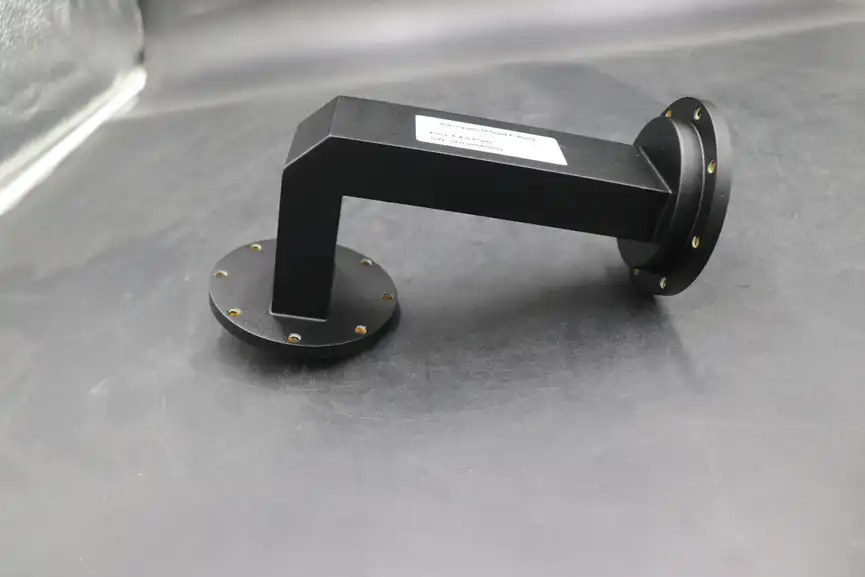
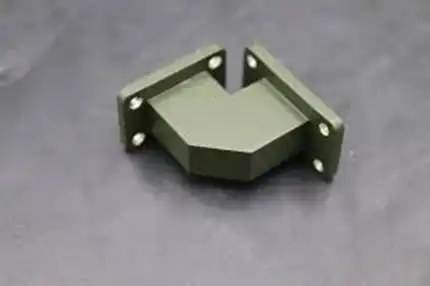
The basic structure of these miter-bend waveguide parts is very different from the more common curved ones. Instead of slowly bending the waveguide path, the mitered method uses a sharp 90-degree corner along with a perfectly angled reflective surface, usually set at 45 degrees, that acts as an impedance transformer. This optical-style reflection principle makes sure that electromagnetic waves move smoothly through the change in direction without major mode disruption.
Geometric Design Parameters
A number of important dimensions affect the core structure. How electromagnetic fields interact at the corner junction is based on the angle of the mitered surface. For E-plane and H-plane bends, a 45-degree miter is the standard setting, but some specific uses need angles that are changed between 30 and 60 degrees. To balance out the capacitive reactances that happen at the discontinuity, more advanced designs use impedance-matching elements, such as inductive steps or rounded internal corners. Manufacturing tolerances of ±0.01mm make sure that the electromagnetic field is spread out evenly, which has a direct effect on how well the insertion loss works.
Electromagnetic Wave Behavior
Figuring out how microwave energy acts at the mitered junction helps explain how well the part works. When electromagnetic waves hit the sharp corner, the precisely machined reflective plane sends the energy in a different direction, away from the original path. For microwave frequencies, the miter works mostly like a flat mirror, keeping the main TE10 mode and blocking higher-order modes that would mess up the signal. This mechanism has a transmission efficiency of more than 95% across certain frequency bands, which is about the same as bulkier curved options but takes up a lot less space.
Material and Surface Finish Requirements
Performance optimization starts with materials that conduct Miter Bend Waveguide electricity well. Conductor losses are kept to a minimum by oxygen-free copper (OFC) bodies, and insertion loss is directly related to surface resistivity. Adding silver or gold plating is an option that lowers surface resistance even more while improving corrosion resistance. This is especially useful for marine radar installations or satellite ground stations that are in harsh environments. Surface finish quality affects the ability to handle power because tiny flaws can cause localized field concentrations that cause high-power applications to break down.
Advantages and Industrial Applications of Miter Bend Waveguides
These precise miter bend waveguide components offer measurable performance benefits that procurement specialists in charge of integrating complex systems can relate to. The engineering benefits directly lead to more efficient operations in a number of high-stakes fields.
Core Performance Advantages
The main benefit is that a lot of space is saved. The mitered design gets rid of the need for a large turning radius that comes with curved options. This cuts the volume of the parts by 30 to 50 percent in most installations. This small size is very helpful for airborne fire-control radars that are mounted in the nose cones of fighter jets, where every cubic centimeter has to compete with other mission-critical electronics. Even though the footprint is small, the insertion loss is the same as or higher than that of curved bends, and properly compensated designs can get VSWR values below 1.05 across certain frequency ranges. Standard configurations can handle up to 5kW of continuous wave power, and there are also high-power versions with built-in heat dissipation features for demanding industrial processing tasks.
Defense and Aerospace Deployments
One main area of use for these systems is military surveillance. These parts are used by naval radar systems on destroyers and frigates to send high-power signals from equipment cabinets below deck to antenna arrays above deck. The tough design can handle constant shaking, being exposed to salt spray, and temperature changes from -45°C to +85°C. In aerospace, mass reduction directly affects launch costs, as seen in satellite communication transponders. A single satellite could have dozens of these waveguide parts. The lightweight aluminum construction and small size make the payload more efficient overall.
Telecommunications Infrastructure
Satellite communication terminals on the ground need these parts to connect feed networks to parabolic reflectors. The low insertion loss protects link budgets when sending data over long distances, like when providing broadband internet to areas that don't have it or when allowing secure government communications. Millimeter-wave 5G base stations are using these designs more and more to handle signal routing in small spaces, where traditional curved bends would physically get in the way of positioning antenna arrays.
Research and Industrial RF Systems
For university research labs that do high-frequency electromagnetic experiments, they need waveguide assemblies that can be changed to fit their needs. Standard flange interfaces make it easy to change the configuration of these parts, which makes rapid prototyping of test setups possible. Industrial microwave heating systems, such as plasma generators and advanced material processing equipment, use the high power handling and energy efficiency to get the most work done in the least amount of time. The part's ability to keep the signal strong at kilowatt power levels directly affects how efficiently things are made in factories.
Procuring Miter Bend Waveguides: Supplier Selection and Buying Guide
In mission-critical applications, the long-term success of a project depends on its strategic partnerships with suppliers of miter bend waveguide components. It's not enough to just compare prices when looking at potential manufacturers. You also need to look at their technical skills, quality systems, and logistics infrastructure.
Supplier Qualification Criteria
International certifications are a basic way to make sure that a company is competent at making things. ISO 9001:2015 certification shows that quality management processes have been documented, and ISO 14001:2015 certification shows a commitment to environmental stewardship, which is becoming more and more important for companies that want to be more environmentally friendly. Defense contractors need suppliers with AS9100 aerospace quality certifications to make sure that parts can be tracked and that the configuration is right for military use. RoHS compliance checks the management of restricted substances, which is necessary for getting into the European market.
Technical Capabilities Assessment
Infrastructure for manufacturing has a direct effect on the performance of the delivered product. Suppliers with 24-meter microwave darkrooms that can measure both near- and far-field can make sure that parts work well across the whole frequency range of 0.5GHz to 110GHz. Instead of relying only on theoretical models, this testing infrastructure makes sure that delivered products meet the requirements listed in the datasheet. When engineers know how to use industry-standard software to simulate electromagnetic fields, they can make custom designs that work best with certain integration problems. This gives them more value than just catalog components.
Customization and Engineering Support
Standard catalog items rarely meet all of an application's needs. Leading suppliers, such as Advanced Microwave Technologies Co., Ltd, offer full OEM services that include customizing frequency ranges, power handling specs, and flange interfaces to fit the architectures of each customer's system. This customization goes beyond changing the size; it also includes different plating options for environments that are corrosive and built-in thermal management features for high-power models. Before committing to production tools, pre-sales electromagnetic simulation services check how well signals work in customer systems. This lowers the risk of integration failure.
Pricing Structure and Lead Times
Understanding what causes costs is important for making good budget plans. Standard waveguide sizes from WR-10 to WR-2300 are usually kept in stock, and lead times are less than four weeks. Depending on the complexity of the design, custom configurations that need custom tools may push back delivery dates to 8 to 12 weeks. Different suppliers have different minimum order quantities, which can be as low as one prototype unit or as high as 100 production lots. At quantity breaks, volume pricing tiers often offer 15–30% cost reductions. This makes predicting early production volume profitable.
Global Logistics Capabilities
For international business to be successful, the shipping infrastructure must be reliable. Suppliers with a lot of experience keep in touch with specialized freight forwarders who know how to handle RF components properly and what paperwork is needed. High-value shipments are kept safe during international transit by full insurance coverage. Some manufacturers run regional distribution centers that speed up delivery times for urgent needs and make the customs process easier.
Conclusion
These precisely manufactured miter bend waveguide components are important building blocks for modern high-frequency systems that depend on signal integrity and space efficiency to work well. The mitered design approach has measurable benefits, such as a huge reduction in volume, comparable electrical performance to bulkier alternatives, and strong environmental durability. These benefits directly address procurement priorities in the defense, aerospace, telecommunications, and industrial sectors. Strategically choosing a supplier based on their manufacturing capabilities, quality certifications, and engineering support infrastructure helps make sure that parts meet strict requirements and the system works reliably for a long time. As microwave technology keeps getting better at higher frequencies and smaller sizes, these waveguide solutions will remain essential for efficiently routing signals in applications with limited space.
FAQ
1. What frequency ranges work best with these waveguide components?
The best frequency for operation depends on the cross-sectional area of the waveguide. The cutoff frequency needs to stay below the lowest operating frequency, and at the highest frequency, the waveguide stays single-mode. Our miter bend waveguide products cover frequencies from 0.3GHz to 110GHz and come in a range of standard waveguide sizes, from WR-2300 to WR-10. The specifications for the purchase should match the waveguide size to the frequency band that is being used. For broadband applications that span multiple octaves, engineering advice should be available to help make the best choice.
2. How do insertion loss characteristics compare with curved alternatives?
Modern designs that are properly compensated get insertion loss below 0.1dB, which is pretty much the same as curved bend performance, even though they have a smaller footprint. Older versions that weren't compensated had higher losses because of impedance mismatches at the corner discontinuity. But modern manufacturing methods and impedance optimization get rid of this performance gap. The downside is that their bandwidth is slightly smaller than curved options, but this doesn't really affect single-band applications that are common in radar and satellite systems.
3. Can these components handle high-power applications?
Standard configurations can safely handle continuous wave power up to 5kW. The voltage breakdown is based on the quality of the surface finish and the gradients inside the electric field. Because the electric fields are better positioned relative to the conductor surfaces, H-plane configurations can usually handle higher power levels than E-plane variants. Specialized high-power versions have better thermal management features, like copper heat sinks or ceramic thermal pads, that get rid of kilowatt-level heat without going over the safe operating temperature range. To keep multipactor or corona discharge from happening in pulsed power applications, peak power levels and duty cycles need to be looked at in more detail.
Partner with ADM for Your Waveguide Component Needs
Advanced Microwave Technologies Co., Ltd. can help with mission-critical miter bend waveguide procurement problems because it has more than 20 years of experience in specialized manufacturing. Our production facilities are ISO 9001:2015 certified and have measurement tools that can reach up to 110GHz. This makes sure that every part meets the strict performance requirements before it is shipped. Our engineering team is here to help you with everything from reviewing Miter Bend Waveguide specifications to providing technical support after the delivery, whether your project needs standard catalog configurations or fully customized solutions that are made to fit your specific integration needs.
We know that procurement professionals need more than just parts. You need reliable manufacturing partnerships with well-documented quality systems and quick global logistics. Our OEM services allow us to customize parameters, create non-standard interfaces, and add special environmental protections for harsh deployment conditions. Email our technical team at craig@admicrowave.com to talk about your specific needs. You can get detailed datasheets, help with electromagnetic simulations, or sample quotes to see how our miter bend waveguide solutions can improve the performance of your system while still staying within your tight budget and time frame. Find out why ADM is the trusted supplier of waveguide components to top aerospace companies, satellite operators, and defense system integrators.
References
1. Marcuvitz, Nathan. Waveguide Handbook: Electromagnetic Theory and Applications in Microwave Engineering. Institution of Electrical Engineers, 1986.
2. Pozar, David M. Microwave Engineering, Fourth Edition. Wiley Publications, 2011.
3. Saad, Theodore S. Microwave Engineers' Handbook: Volumes 1 and 2. Artech House Publishers, 1971.
4. Collin, Robert E. Foundations for Microwave Engineering, Second Edition. IEEE Press Series on Electromagnetic Wave Theory, 2001.
5. Montgomery, Carol Gray, Robert Henry Dicke, and Edward Mills Purcell. Principles of Microwave Circuits. MIT Radiation Laboratory Series, Volume 8, 1948.
6. Balanis, Constantine A. Advanced Engineering Electromagnetics. Wiley Publications, 2012.
YOU MAY LIKE
 VIEW MOREAc Power Amplifier
 VIEW MOREVoltage Controlled Phase Shifter
 VIEW MOREStandard Horn Antenna
 VIEW MOREConical Horn Lens Antenna
 VIEW MOREPoint Focusing Horn Lens Antenna
 VIEW MORECorrugated Horn and Multimode Horn Antenna
 VIEW MOREMini Wideband Double-ridged Horn Antenna
 VIEW MOREUltra Double-ridged Horn Antenna