





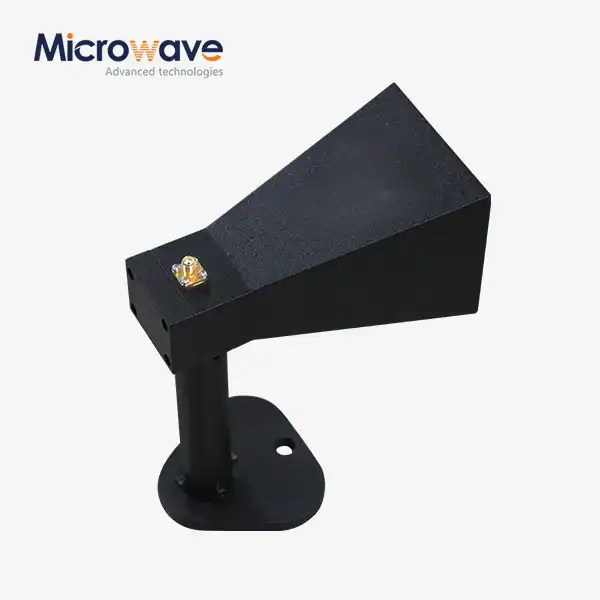
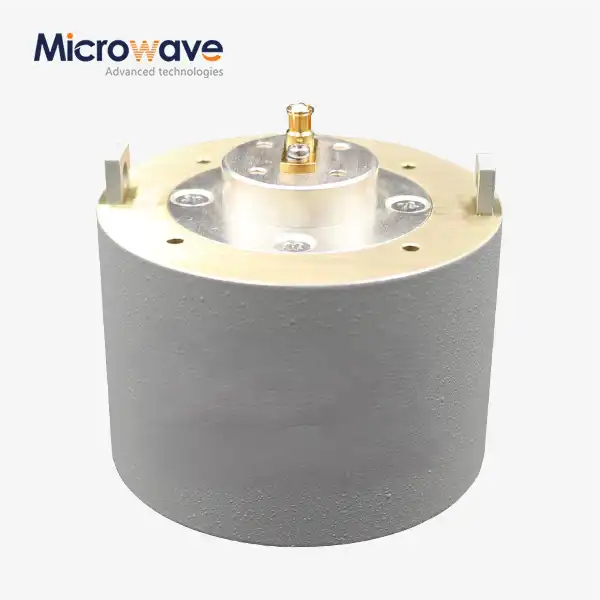
Mini Wideband Double-ridged Horn Antenna
Mini Wideband Double-ridged Horn Antenna – Compact Broadband Directional Antenna for EMC and RF Testing
Advanced Microwave Technologies' (ADM) Mini Wideband Double-ridged Horn Antenna is a small, linearly polarised antenna that works with a wide range of radio frequency (RF) and microwave bands. The internal metallic ridges lower the TE10 mode cutoff frequency, keep the 50-ohm impedance across the operating band, and stop higher-order propagation modes. The structure is built around a double-ridged waveguide. Depending on the model, it can cover frequencies from 1 GHz to 40 GHz, has a gain of 6 to 15 dBi, and has a VSWR of less than 2.0:1. It's also smaller than a normal horn.
Why the Double-Ridged Design Matters for the Mini Wideband Double-ridged Horn Antenna?
For standard pyramidal horn antennas to cover a wide frequency range, it is common to need to keep track of multiple units and switch them out between measurement sweeps. This antenna gets around that problem with a single unit that works all the time across the given band.
The internal ridges make the working bandwidth much wider than what a regular horn can do. They keep the resistance at 50 ohms across the whole band and stop higher-order modes that mess up signals at higher frequencies.
The mix creates a stable phase center, beamwidths that stay the same in the E- and H-planes, and cross-polarization detection of more than 20 dB across a single small aperture.I don't know what to say.
Key Technical Specifications
Parameter | Specification |
Frequency Range | 1–18 GHz / 18–40 GHz (model dependent) |
VSWR | < 2.0:1 (< 1.5:1 in optimized segments) |
Gain | 6 to 15 dBi (increases with frequency) |
Impedance | 50 Ohm |
Polarization | Linear |
Power Handling (CW) | 50W – 300W (frequency dependent) |
Connector Interface | SMA, K, or 2.92mm |
Body Material | Corrosion-resistant aluminum (alodine or powder-coat finish) |
Cross-Polarization Discrimination | > 20 dB |
Construction and Materials
The Mini Wideband Double-ridged Horn Antenna body is machined from corrosion-resistant aluminum with conductive alodine or powder-coat surface finishing. The feed connector — available in SMA, K, or 2.92mm formats — is precision-fitted to ensure correct center pin depth, protecting test cables and measurement equipment during repeated connections.
The "Mini" profile is achieved by shortening the exponential flare length relative to a full-sized horn. This reduces physical footprint while maintaining full wideband operation. The practical trade-off is a slightly higher VSWR and marginally lower gain at the lowest end of the operating band, which is consistent with the physics of reduced aperture size.
Application Scenarios
Testing for EMC and EMI Compliance
In CISPR 25 and ISO 11452 automotive EMC testing, antennas often need to work inside small shielded enclosures or close to the Device Under Test. This antenna's low profile allows it to fit into small chambers at the needed test distance without introducing near-field coupling errors. This makes it useful for testing radar and infotainment systems in vehicles.
5G and mmWave System Calibration
This antenna is used in R&D labs as a source or probe in small antenna test ranges (CATR). The operating band covers a number of 5G FR1 and FR2 frequencies at the same time. This lets engineers test the performance of base stations without having to switch reference antennas between frequency sweeps.
Airborne and Portable Systems
The low wind load and light weight of the construction make it good for UAV integration and portable direction-finding systems. It can be used as a broadband sensor to find signals when size and weight of the payload are the main limitations.
Quality Control Process
Before being sent out, each antenna is swept by a Vector Network Analyser (VNA) to make sure that the return loss stays below -10 dB across the whole frequency band that was specified. Any change in VSWR signals a mistake in the assembly or a misaligned ridge, which leads to rejection.
The most important mechanical dimension is the gap between the internal ridges. To keep tolerances within microns, ADM uses laser metrology and precision gauges. This is because differences this small change impedance matching at high frequencies and affect the accuracy of measurements.
Instead of generic datasheet values, each unit comes with its own gain calibration data that is based on traceable metrology standards. This helps with compliance processes like those needed by ANSI C63.5 and SAE ARP 958.
ADM's Testing Infrastructure
ADM operates a 24-meter Microwave Darkroom equipped for both near-field and far-field antenna measurement for the Mini Wideband Double-ridged Horn Antenna. The facility lets you easily switch between measurement modes to check the performance of an antenna.
The testing frequency ranges from 0.5 GHz to 110 GHz, so it can be used for everything from standard communication band validation to millimeter-wave applications.
FAQ
Q: What does the phase center do as the frequency range changes?
A: As the frequency changes, the phase center moves along the antenna axis. This is a known property of wideband ridged horn forms. To get accurate readings close up, use the calibration data that came with your unit to take this positional shift at each frequency point into account.
Q: Can this antenna be used for high-power tasks like testing for immunity?
A: Yes, as long as the power limits are followed. At higher frequencies, mini versions with SMA or K connectors can usually handle 50–100W CW. Figure out the expected field strength and compare it to the ratings for the connector before you start using it.
Q: Why does the gain drop off at the low frequencies?
A: The aperture is electrically small compared to the wavelength at the lowest operating frequencies. This makes directivity lower. Because of the way the horn is built, gain automatically goes up as frequency goes up and electrical aperture size goes up.
Q: Do you think this antenna can be used outside?
A: The aluminium body can handle stress from the environment, but the open hole lets dust and moisture get to the ridges and feed point. To keep the antenna from detuning, a radio-transparent radome cover should be used for fixed outdoor installation.
Q: What is the main difference between a full-sized double-ridged horn and a Mini?
A: The Mini cuts down on the length of the flare to save room. It still works across a wide frequency range, but the VSWR at the lowest limit frequency might be a little higher and the low-frequency gain might be a little lower than with a full-sized horn. However, this trade-off is usually fine for most EMC and 5G test lab uses.
Q: Can ADM offer different frequency ranges or types of connectors?
A: The engineering team at ADM can support custom configurations that include connector interface, frequency sub-band optimisation, and finish needs. Talk to ADM directly about the project's requirements.
Contact Us
For specifications, calibration data, or a custom quote for the Mini Wideband Double-ridged Horn Antenna, reach the ADM engineering team at craig@admicrowave.com.YOU MAY LIKE
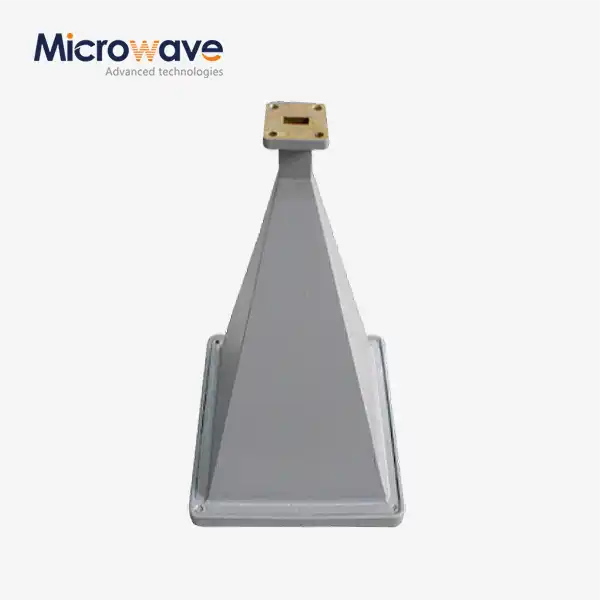 VIEW MOREPyramid Horn Lens Antenna
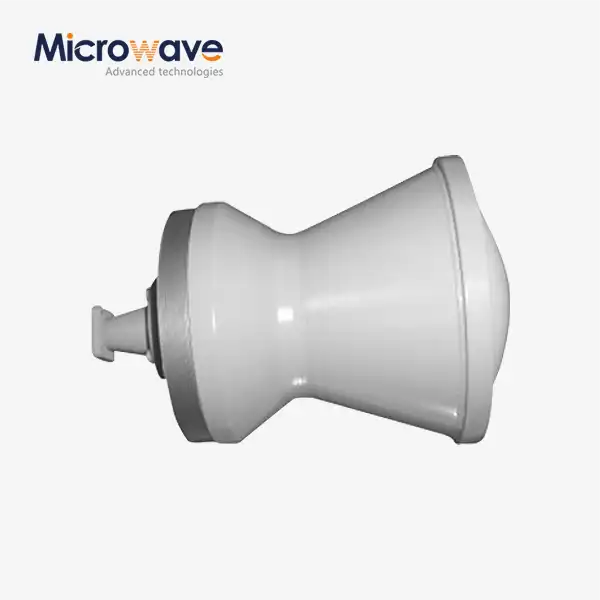 VIEW MOREPoint Focusing Horn Lens Antenna
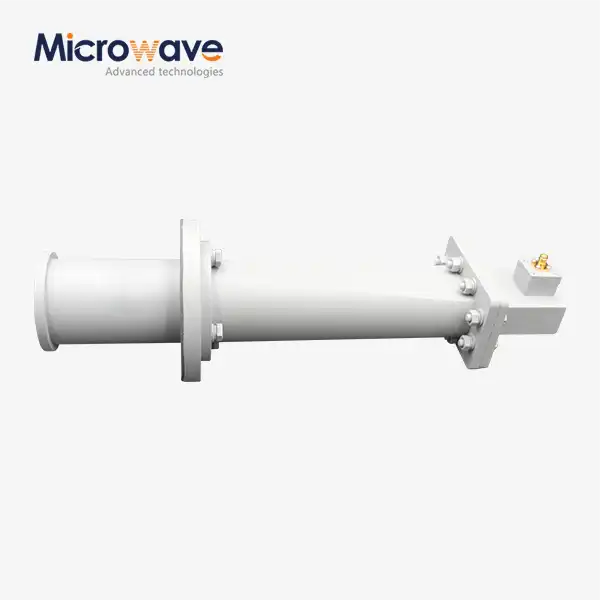 VIEW MORECorrugated Horn and Multimode Horn Antenna
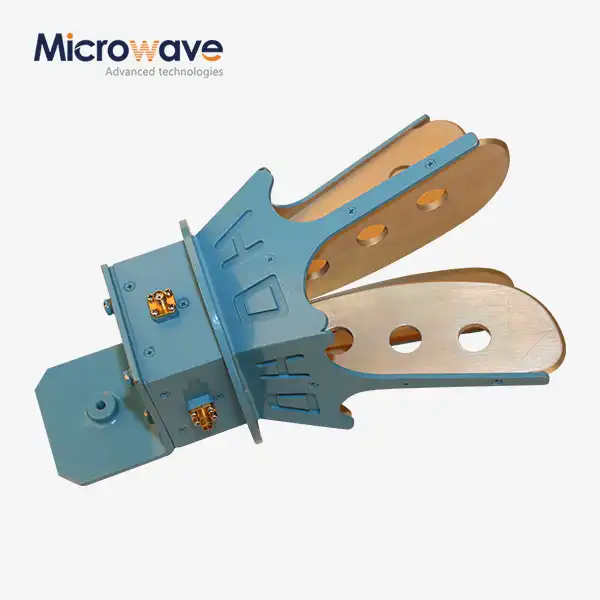 VIEW MOREOpen Boundary Dual Linear Polarization Four Ridged Horn Antenna
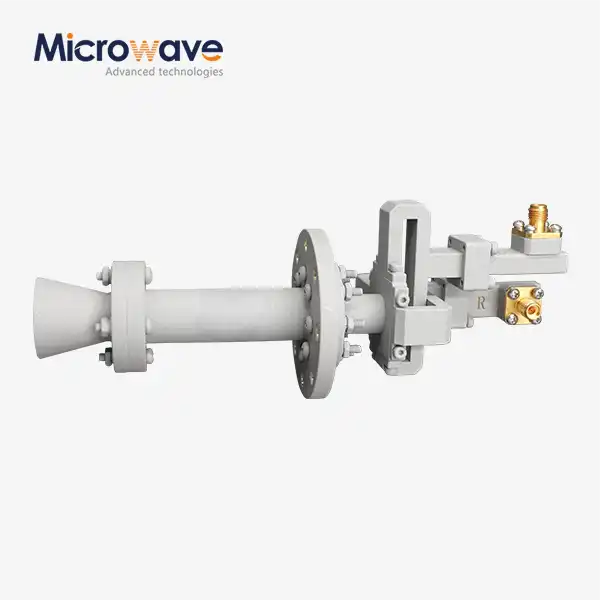 VIEW MOREConical Dual circular Polarization Horn Antenna
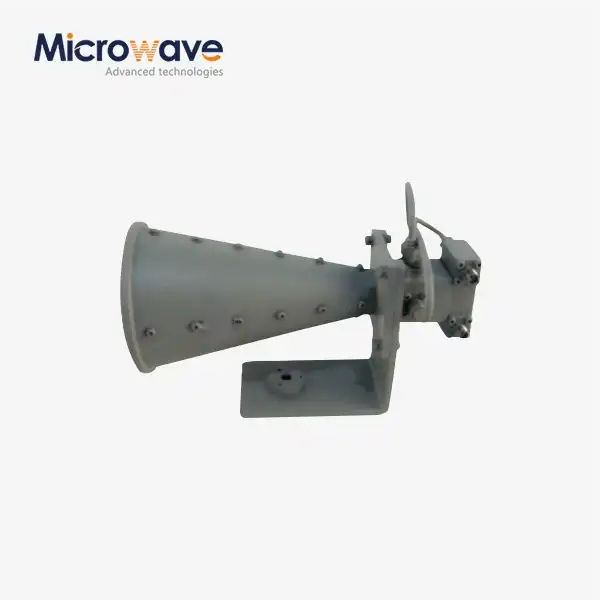 VIEW MOREDual Linear Broadband Dual Circular Polarization Horn Antenna
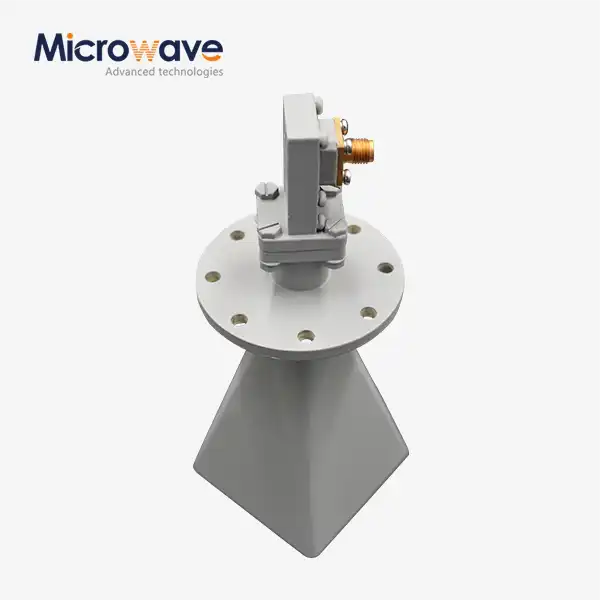 VIEW MORELow Side Lobe Diagonal Linear Polarization Horn Antenna
 VIEW MOREPlanar Spiral Antenna