





How to optimize the performance of an antenna diplexer?
To get the most out of an antenna diplexer, you need to carefully choose the parts, install them correctly, and keep an eye on the whole system. When working with things like the Low Ku Band Diplexer, Low Ku Band Diplexer which works at frequencies between 10.7 GHz and 12.75 GHz, it's important to keep insertion loss as low as possible (ideally ≤0.5 dB), port-to-port isolation as high as possible (≥70 dB), and impedance matching across the whole operating bandwidth. Thermal management is also very important, especially for systems that handle up to 200W of power, since changes in temperature from -40°C to +85°C can change the way filters work. Regular testing with vector network analyzers and following strict installation procedures greatly increases the life of diplexers while keeping the integrity of signals in radar and satellite communication applications.
Understanding Low Ku Band Diplexers and Their Key Performance Factors
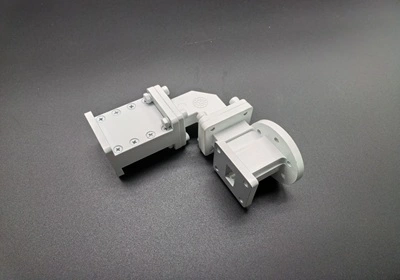
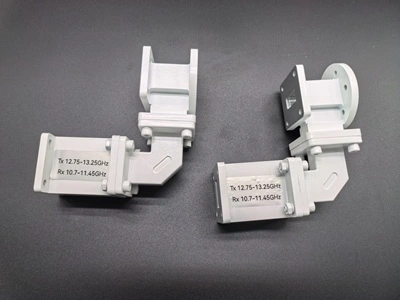
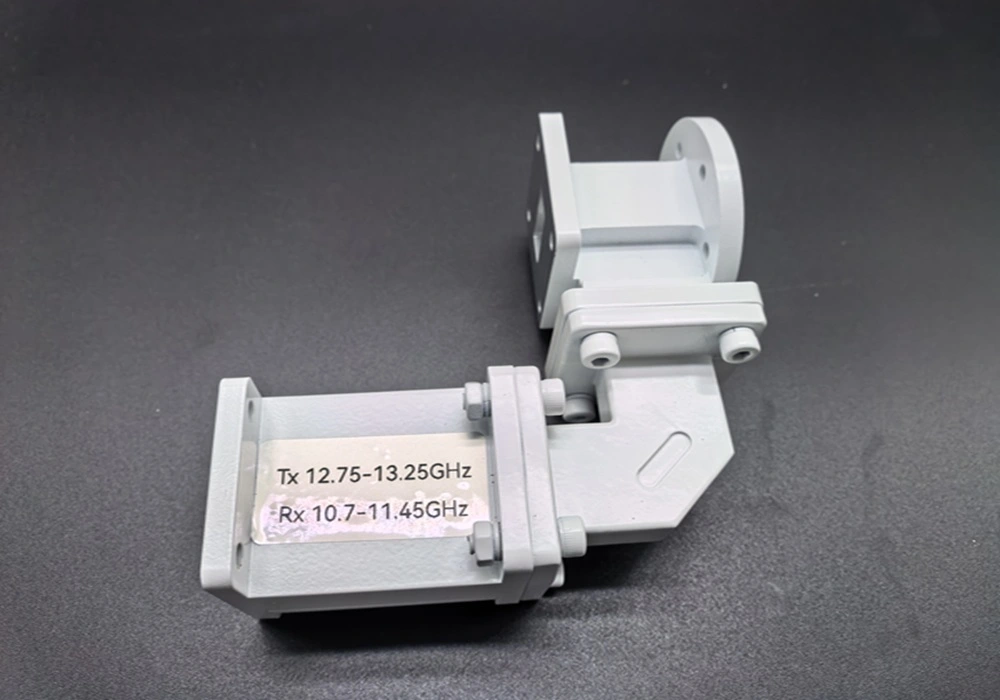
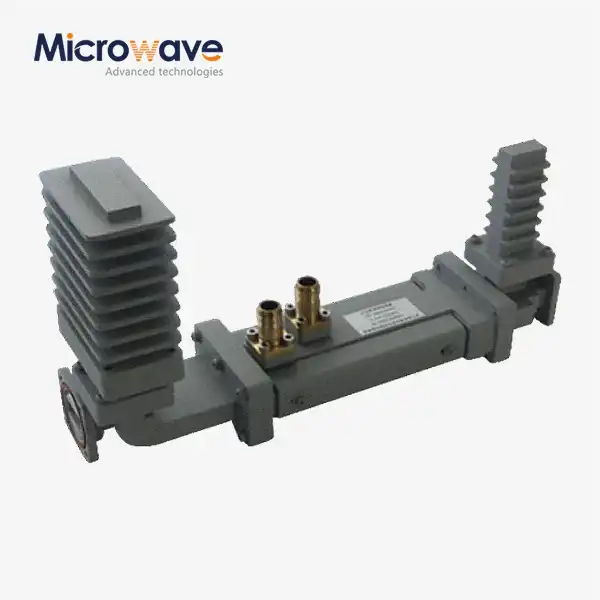
Antenna diplexers work like frequency-selective switches, so a single antenna can send and receive signals at different frequency bands at the same time without any problems. In telecommunications infrastructure and satellite ground stations, these passive microwave parts separate the uplink and downlink channels so that full-duplex communication can happen. This feature is shown by the Low Ku Band Diplexer from Advanced Microwave Technologies Co., Ltd. It was made to work with the 10.7–12.75 GHz range that is commonly used in VSAT networks and direct broadcast satellite services.
Core Operating Principles
A diplexer is made up of two bandpass filters, one for the receive path and one for the transmit path. These filters are connected to the same antenna port. The receive filter lets downlink frequencies through while blocking energy in the transmit band, and the other way around. This frequency division multiplexing keeps the sensitive low-noise block downconverter on the receive side from being overloaded by the strong transmit signal. The hard part for engineers is getting sharp filter roll-off characteristics without adding too much insertion loss or group delay distortion.
Critical Performance Metrics
Insertion Loss has a direct effect on how the link budget is calculated. Every decibel of loss lowers the effective power that is sent and raises the sensitivity of the receiver. The ADM Low Ku Band Diplexer keeps insertion loss below 0.5 dB throughout its working range. This is possible with low-loss dielectric materials and waveguide interfaces that are precisely machined. In long-distance satellite links, where even small signal losses add up to a lot, this performance keeps the signal strength. Cross-talk that lowers the signal-to-noise ratio can't happen because the transmit and receive ports are separate. The minimum isolation requirement of 70 dB makes sure that there is almost no transmit power leakage into the receive path. This is very important when a 200W transmitter is only centimeters away from a receiver that handles microwatt-level signals. This isolation is achieved with advanced filter topologies that use resonant cavities and cross-coupling techniques, all without affecting the passband flatness. Return Loss and VSWR show how well the impedance matching works. When there isn't enough matching, standing waves form and reflect power back toward the source. This lowers efficiency and could damage power amplifiers. Specifications that are higher than 18 dB return loss (1.28:1 VSWR) make sure that there aren't many reflections across the whole bandwidth.
Environmental Stability
Changes in temperature make it hard for diplexers to work properly. When metal cavities heat up, they move resonant frequencies around, which could make isolation at band edges worse. The Low Ku Band Diplexer uses temperature-aware mechanical designs and low-expansion materials like Invar to keep its electrical properties stable from -40°C to +85°C. This stability is very important for outdoor installations that have to deal with changes in temperature and light throughout the day.
Identifying and Overcoming Common Performance Bottlenecks
Problems at the system level can make even well-designed Low Ku Band Diplexers not work as well as they should. Finding these bottlenecks speeds up troubleshooting and keeps mission-critical applications from going down for long periods of time, which costs a lot of money. The Low Ku Band Diplexer requires precise system integration to avoid these common issues.
Installation-Related Degradation
Most of the time, field failures are caused by contaminated connector interfaces. When dust, moisture, or oxidation builds up on waveguide flanges, they cause resistive losses to rise and PIM products to be made. It's possible to avoid these problems by inspecting and cleaning regularly with lint-free wipes and isopropyl alcohol, and tightening flange bolts to the manufacturer's specifications. Because silver-plated interfaces don't oxidize as quickly as bare copper, premium diplexers use this plating. Mechanical stress occurs when waveguide walls are mounted incorrectly; they can become deformed, which changes the impedance and lowers performance. When used in mobile settings like shipboard systems or portable ground stations, dividers should be attached to rigid structures using hardware that stops vibrations. The small size of ADM's structure keeps it mechanically sound while reducing weight. This makes mounting points less stressed.
Troubleshooting Signal Degradation
When the performance of a link drops, systematic measurements are used to figure out what went wrong. Measure the S-parameters across the frequency range of the diplexer using a vector network analyzer. If the insertion loss goes up, it means that there is internal arcing, moisture getting in, or component degradation. Filter detuning or physical damage has been lowered at isolation points. Movements in the center frequency show that the temperature is changing or the structure is changing.
Practical Diagnostic Steps:
• Use time-domain reflectometry to find impedance discontinuities in coaxial cables connecting the diplexer and transceivers to make sure they are working properly.
• Check the temperature of the diplexer while it's running at full power; too much heat means that the temperature isn't being managed properly or there is an internal arcing.
• Check the grounding resistance to make sure that the RF ground paths stay intact; floating grounds cause common-mode currents that weaken isolation.
• Check for physical damage that could affect electrical performance, such as waveguide walls that are dented, fasteners that are loose, or plating that has corroded.
Advanced Optimization Techniques
Putting impedance-matching networks in front of the diplexer evens out the antenna VSWR, which lowers the reflections that would otherwise put stress on the diplexer. Standing waves are kept to a minimum with stub tuners or quarter-wave transformers that are custom-made for each antenna. Managing noise figures in the receive chain means paying close attention to how the parts are put together. Putting a low-noise amplifier with enough gain right after the diplexer's receive port gets rid of the diplexer's insertion loss before the signals hit noisy active components further down the line. The 0.5 dB insertion loss specification keeps the overall system noise figure the same by reducing this effect as much as possible. Out-of-band emissions can't get to the diplexer because of harmonic filtering. Harmonics are produced by transmitters at integer multiples of the carrier frequency. If these unwanted signals are not filtered properly, they can weaken isolation or even damage diplexer parts. In high-power situations, this problem can be fixed with external bandpass filters or built-in harmonic traps. All of these technical approaches improve the efficiency of the diplexer and make it last longer. When implemented correctly, bit error rates, throughput, and link availability all get better, which has a direct effect on the return on investment for satellite ground infrastructure.
Selecting the Right Low Ku Band Diplexer for Your Application
Buying decisions depend on how well the specifications of the Low Ku Band Diplexer match the needs of the system. The Low Ku Band Diplexer is a special kind of RF component that can't be used with other parts because they have their own limits and abilities.
Component Comparison
Bandpass Filters are very good at selectively blocking signals, but they don't have the two-port functionality that diplexers do. Using different filters for the send and receive paths requires switch matrices or separate antennas, which makes the system more complicated and costs more. Integrated design makes diplexers a beautiful way to solve this problem. Time-division duplexing is possible with RF switches. This means that transmitting and receiving happen one after the other instead of at the same time. For half-duplex uses like push-to-talk systems, switches work fine, but they add switching time delays that aren't acceptable for full-duplex satellite links. Diplexers allow two-way communication to go on continuously and without any delays. Frequency mixers change signals between frequency bands, but they add noise and need oscillator sources close by. Diplexers passively separate frequencies without using active parts. This makes them more reliable and gets rid of the need for DC power.
Evaluation Criteria
Frequency Coverage Accuracy: The passband of the diplexer must cover your system's operating frequencies with enough room to spare. Standard satellite downlink ranges are in the 10.7–12.75 GHz range of the Low Ku Band Diplexer. Make sure that your uplink frequencies are within the transmit port specifications of a compatible diplexer to make sure that the whole system is covered. Isolation Needs: Figure out how much isolation you need by using the transmit power and receiver sensitivity. To find out how much isolation is needed, divide the transmit power (in dBm) by the receiver damage threshold. The 70 dB standard protects receivers that deal with signals that are 10 million times weaker than the power being sent. This level of protection is good for most commercial satellite applications. For military systems with higher transmit powers, custom designs with better isolation may be needed.Power Handling Capacity: The 200W rating is enough for most VSAT terminal power levels. Higher-power uses, like TV broadcast uplinks, need diplexers that can handle kilowatts of power, which means that the waveguides need to be bigger and cooler. Matching power ratings keeps parts from breaking and makes sure the system works reliably. Environmental Ruggedness: The conditions of deployment determine what needs to be built. For lab use inside, lighter enclosures are fine, but for outdoor use, weatherproof housings with sealed interfaces are needed. Most places on Earth are within the temperature range of -40°C to +85°C. For space applications, wider temperature ranges and parts that can withstand radiation are needed.
Identifying Reputable Suppliers
Supply chain risk is kept to a minimum by choosing manufacturers with a history of success. Advanced Microwave Technologies Co., Ltd has been making precise microwave parts for more than twenty years. Getting ISO 9001:2008 certification shows that you care about quality management systems, and RoHS compliance shows that you care about the environment. The company's 24-meter microwave darkroom lets them thoroughly test performance across the frequency range of 0.5 to 110 GHz, which gives customers confidence in the published specs. Ask for technical data packages that include measured S-parameters across temperature and frequency ranges when you are evaluating vendors. Find out the statistics on the mean time between failure (MTBF) and the terms of the warranty. Reliable suppliers provide a lot of paperwork to support the traceability needs that are very important in defense and aerospace applications.
Procurement and Cost Considerations for Low Ku Band Diplexers
Strategic buying decisions make sure that performance needs are met while also keeping costs low and making sure that supply chains are reliable. Understanding how costs work and the best ways to buy things is important for getting the most out of business-to-business deals.
Market Pricing Structures
Catalog diplexers with common frequency ranges and power ratings usually cost between $800 and $3,500 each for commercial-grade parts. Versions that meet military standards and pass MIL-STD environmental tests cost 50–200% more than commercial versions that meet the same requirements. The price of custom-made diplexers with specific frequency plans, better power handling, or unique interface configurations ranges from $5,000 to $25,000, depending on how complicated they Low Ku Band Diplexer are and how many are being made. Different prices are caused by a number of things. Cost is directly related to frequency range; higher frequencies need tighter manufacturing tolerances and more unusual materials. Power handling decreases with physical size. For example, higher-power diplexers need waveguides that are bigger, which takes more material and more time to machine. For isolation levels above 80 dB, you need more filter poles, which makes things more complicated and costs more.
Bulk Purchasing Advantages
Ordering in bulk can save you a lot of money. Manufacturers spread out one-time engineering costs and tooling investments over larger production runs, which lowers the cost per unit. When buying 50 diplexers, you might get 15–25% off the price of a single unit, and when you buy more than 100 units, you can get 30–40% off. Setting up blanket purchase orders with scheduled releases lets you be flexible with your inventory while keeping the volume pricing the same. Strategic partnerships with well-known manufacturers offer more benefits than just direct cost savings. Priority assignment during shortages of parts, faster delivery for urgent needs, and easy access to engineering support all improve operational efficiency. Rapid prototyping and customization are made easier by ADM's integrated production and research and development (R&D) capabilities.
Initiating Procurement Inquiries
Quote processes go faster when technical communication is done well. Write down the conditions that must be met, including the frequency ranges, power levels, types of interfaces (waveguide flange standards or coaxial connector types), the environment, and the quality certifications that are required. Include the amount you need and when you'd like it delivered. Before committing to production orders, ask for sample units to be tested to make sure they meet the requirements. Bench testing in your real system configuration confirms performance in the real world and finds early integration problems. ADM has quick turnaround times for its prototyping services that help with evaluation programs. Talk about the options for customization when you first contact them. Standard products offer the fastest delivery and lowest prices, but designs that are specifically made for an application may be necessary. Changing the frequency ranges, interface types, or mechanical configurations of parameters makes system integration better. ADM's OEM services include customizing parameters, adapting interfaces, and changing the way things look, including adding your own branding, so they can fit right into your existing product lines.
Conclusion
To get the best performance out of an antenna diplexer, you need to pay attention to how it is installed, the specifications of the parts, and how the whole system works together. Advanced Microwave Technologies' Low Ku Band Diplexer has low insertion loss, high isolation, and strong environmental stability. It meets important needs in satellite communication and telecommunications infrastructure. The right selection criteria, like frequency coverage, power handling, and suitability for the environment, help with buying decisions. Strategic supplier relationships and bulk buying help keep costs low. As new materials and manufacturing techniques make technology better, choosing experienced partners ensures that you can access new features that protect your communication investments for the future. In mission-critical situations, the success of a system depends on how well it works technically, how reliable it is, and how cheap it is.
FAQ
1. What frequency range does a Low Ku Band Diplexer cover?
Standard Low Ku Band Diplexers work between 10.7 and 12.75 GHz for receiving signals, which is the same range of frequencies used for direct broadcast and VSAT services. Transmit diplexers cover uplink bands that are complementary. Ranges depend on regional frequency allocations and application needs, so it's important to check them against your system's frequency plan.
2. How does proper installation affect satellite reception quality?
The quality of the installation has a huge effect on performance. For electrical contact, waveguide flanges must be torqued to the specifications. If they are under-torqued, air gaps form that weaken isolation, and if they are over-torqued, mechanical damage can happen. Common-mode interference can't happen if the grounding is right. Resistive losses and passive intermodulation are taken care of by keeping the connectors clean. If you follow the manufacturer's installation instructions, the performance levels will stay at the same level for the whole life of the system.
3. What distinguishes diplexers from RF switches?
Diplexers separate the frequency domain so that different frequencies can be sent and received at the same time through a single antenna. Switches separate time domains by switching back and forth between transmit and receive modes. Switches work best for half-duplex applications, while multiplexers allow full-duplex continuous communication without switching delays. Which one you choose depends on whether your system needs two-way communication at the same time.
Partner with ADM for Reliable Low Ku Band Diplexer Solutions
With high-performance diplexer solutions, Advanced Microwave Technologies Co., Ltd is ready to help you with your satellite communication and telecommunications Low Ku Band Diplexer infrastructure projects. Our Low Ku Band Diplexer for sale is made with over 20 years of manufacturing experience and quality management that is ISO 9001:2008 certified. It gives your mission-critical applications the insertion loss, isolation, and environmental stability they need. Our integrated R&D and production capabilities shorten project timelines while keeping prices low, whether you need standard catalog products that can be sent out right away or OEM designs that are made to your exact specifications. Email our technical team at craig@admicrowave.com to talk about your specific needs, ask for performance data, or start evaluation programs for prototypes. We provide full support, including application engineering advice, discounted prices for large orders, and faster production schedules. Let our track record in the defense, aerospace, and commercial satellite industries give your systems the dependability they need.
References
1. Kumar, R. & Zhang, W. (2022). Advanced Filter Design for Microwave Diplexers: Theory and Practice. Artech House Publishers.
2. Satellite Communications Industry Association. (2023). Ku-Band Ground Station Equipment Performance Standards. Technical Report SCIA-2023-14.
3. Henderson, T.L. (2021). "Temperature Compensation Techniques in High-Frequency Passive Components," IEEE Transactions on Microwave Theory and Techniques, vol. 69, no. 8, pp. 3845-3856.
4. International Telecommunication Union. (2024). Radio Regulations: Article 5 Frequency Allocations. ITU Publications.
5. Morgan, D.P. & Simmons, R.K. (2023). Satellite Ground Segment Engineering Handbook, 4th Edition. John Wiley & Sons.
6. Defense Standardization Program Office. (2022). MIL-STD-188-164C: Interoperability Standard for Single-Access 5-kHz and 25-kHz UHF Satellite Communications Channels. Department of Defense.
YOU MAY LIKE
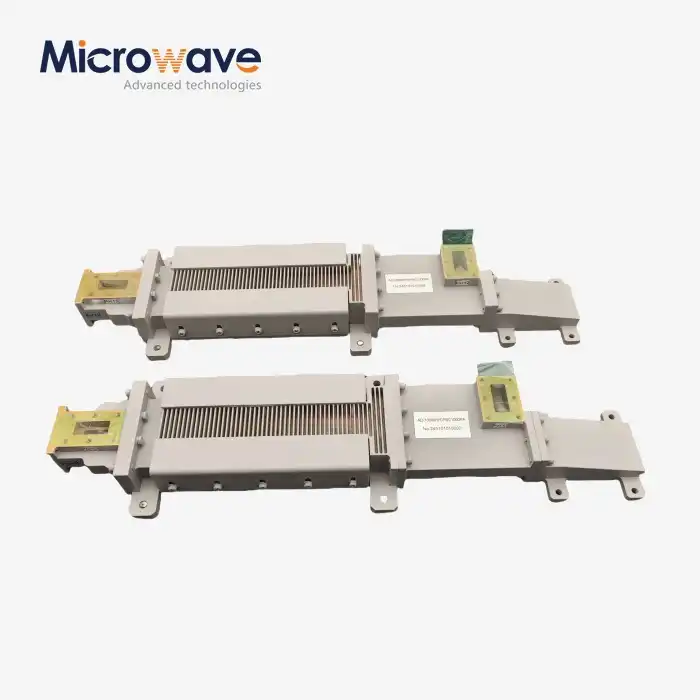
 VIEW MOREBroadwall Directional Coupler
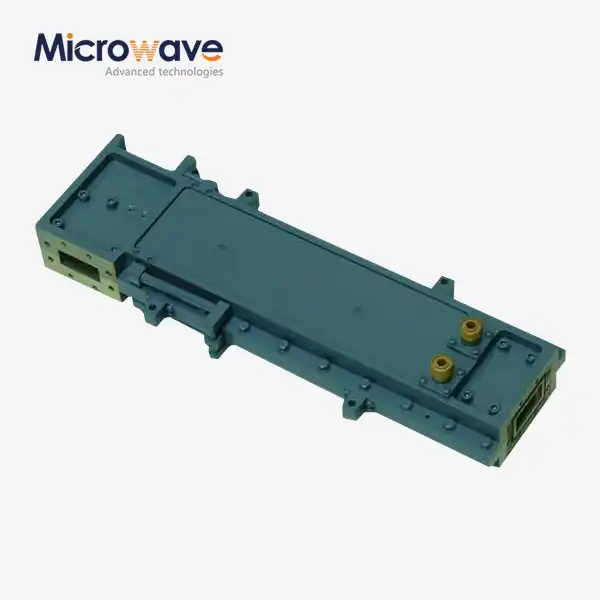
 VIEW MOREWG Circulator
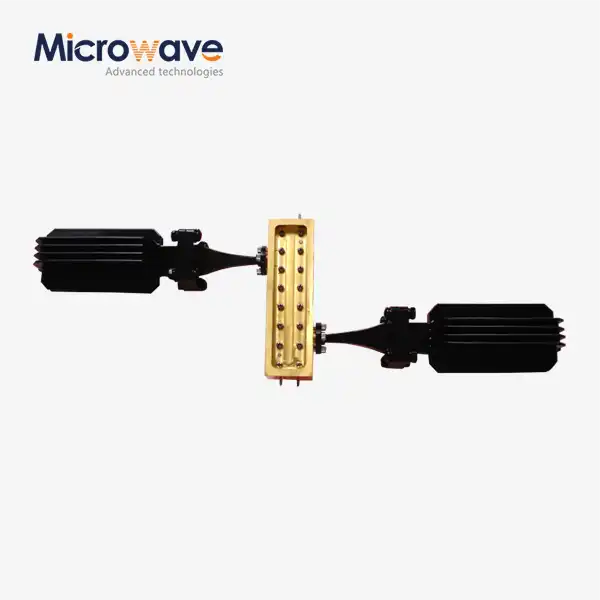
 VIEW MOREHigh Power Waveguide Differential Phase Shift Circulator
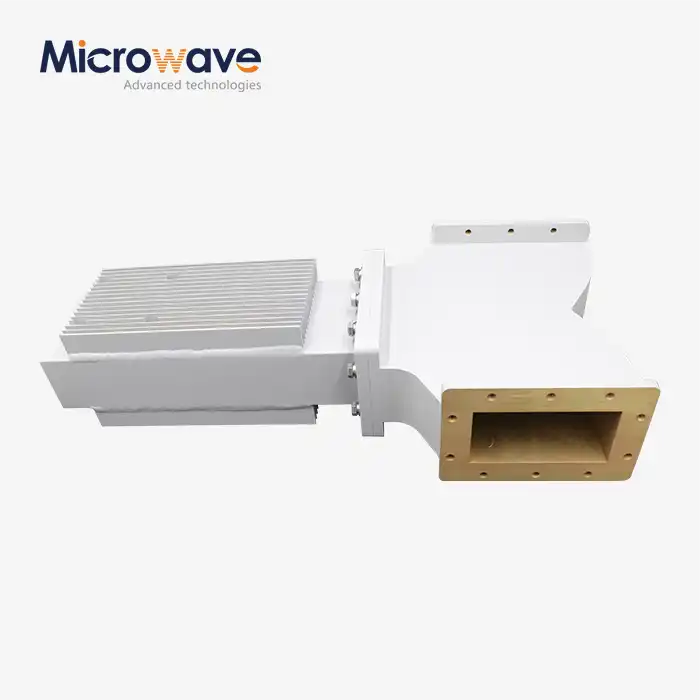
 VIEW MOREWaveguide Coupling Fixed Attenuator
 VIEW MOREWG Isolator
 VIEW MOREHigh Power Waveguide Differential Phase Shift Isolator
 VIEW MOREWG Band Stop Filter
 VIEW MOREWG Low Pass Filter