




How to Select the Right Broadband Circulator for Your Project?
When choosing a broadband mixer, you need to carefully look at the technical specs, working needs, and provider skills. A broadband circulator is a three-port nonreciprocal device that sends RF signals in a single direction over a wide frequency range, usually from DC to 40 GHz, while keeping the ports separate from each other. Instead of narrowband versions that can only work with certain frequencies, these parts let system builders cover multiple bands without having to update any devices. This makes RF construction easier in areas like military radar, test instruments, and telephones. Matching the frequency coverage, power handling, insertion loss, and weather resistance to the needs of your application is a big part of the selection process. You should also look at the supplier's licenses and after-sales support to make sure the product will work for a long time.
Understanding Broadband Circulators: Fundamentals and Applications
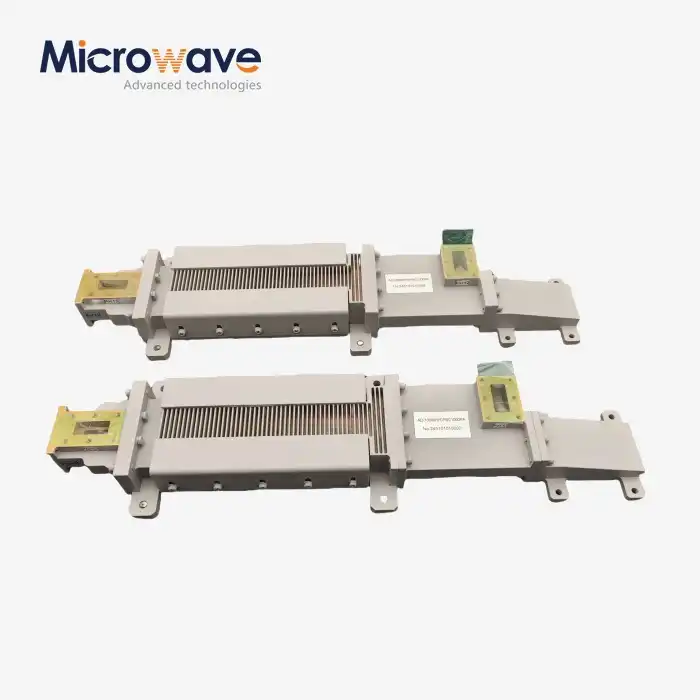
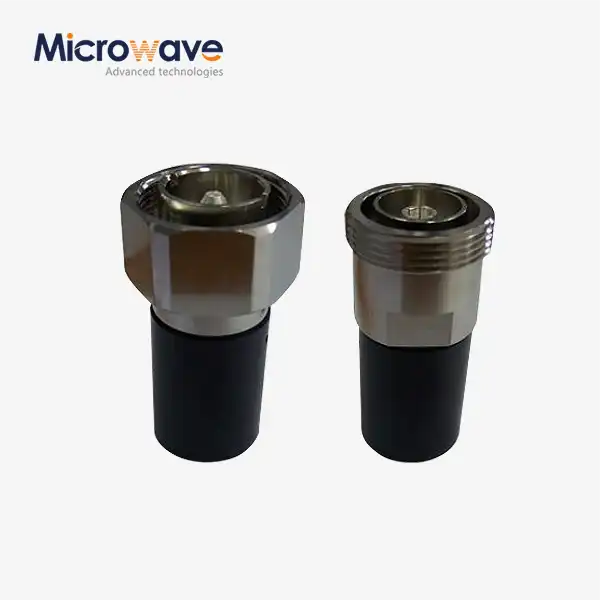
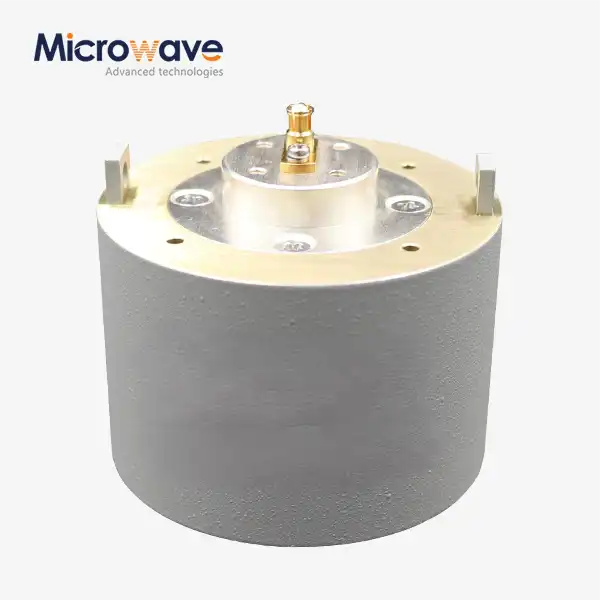
A coaxial broadband circulator works by using the qualities of ferrite material under magnetic stress to send electromagnetic energy through its ports in a certain order. Signals going into Port 1 leave through Port 2. Port 2 goes to Port 3, and Port 3 goes back to Port 1, with high loss on the return line. This behavior that doesn't work the other way around saves sensitive receivers from emitter leaks and lets the send and receive chains share antennas.
Core Operating Principles
To keep performance fixed across multiple octave bandwidths, broadband systems use complex ferrite mixtures and impedance matching networks. Oxygen-free copper holes that are precisely cut reduce circuit loss, and permanent magnets that are temperature-compensated keep the magnetic field strength constant even when the environment changes. In contrast, narrowband circulators depend on resonance at a single frequency. For frequency-agile systems to work, wideband units are a must.
Critical Applications Across Industries
These parts are very important to modern telecom systems. They are used by base stations to separate the send and receive routes so that high-power TX messages don't dull users' reception. Megawatt-level bursts are safely sent by radar systems, which protect sensitive low-noise amplifiers. They are used in test labs to sort signals that come in and signals that bounce back, which improves the accuracy of vector network analyzers. Ground stations for satellites need to be able to handle continuous wave power and keep the purity of the signal across Ku and Ka bands.
Advantages Over Narrowband Solutions
When you use wideband, you don't need flipped filter banks, which makes the system simpler and stops insertion loss from building up. Aerospace-grade models can handle high temperatures from -45°C to +85°C, vibration stress according to MIL-STD-202, and humidity without losing any of their performance. It is possible to cover the L, S, C, X, and Ku bands at the same time in a single package because the ferrite cores have low magnetic loss slope and high saturation flux density.
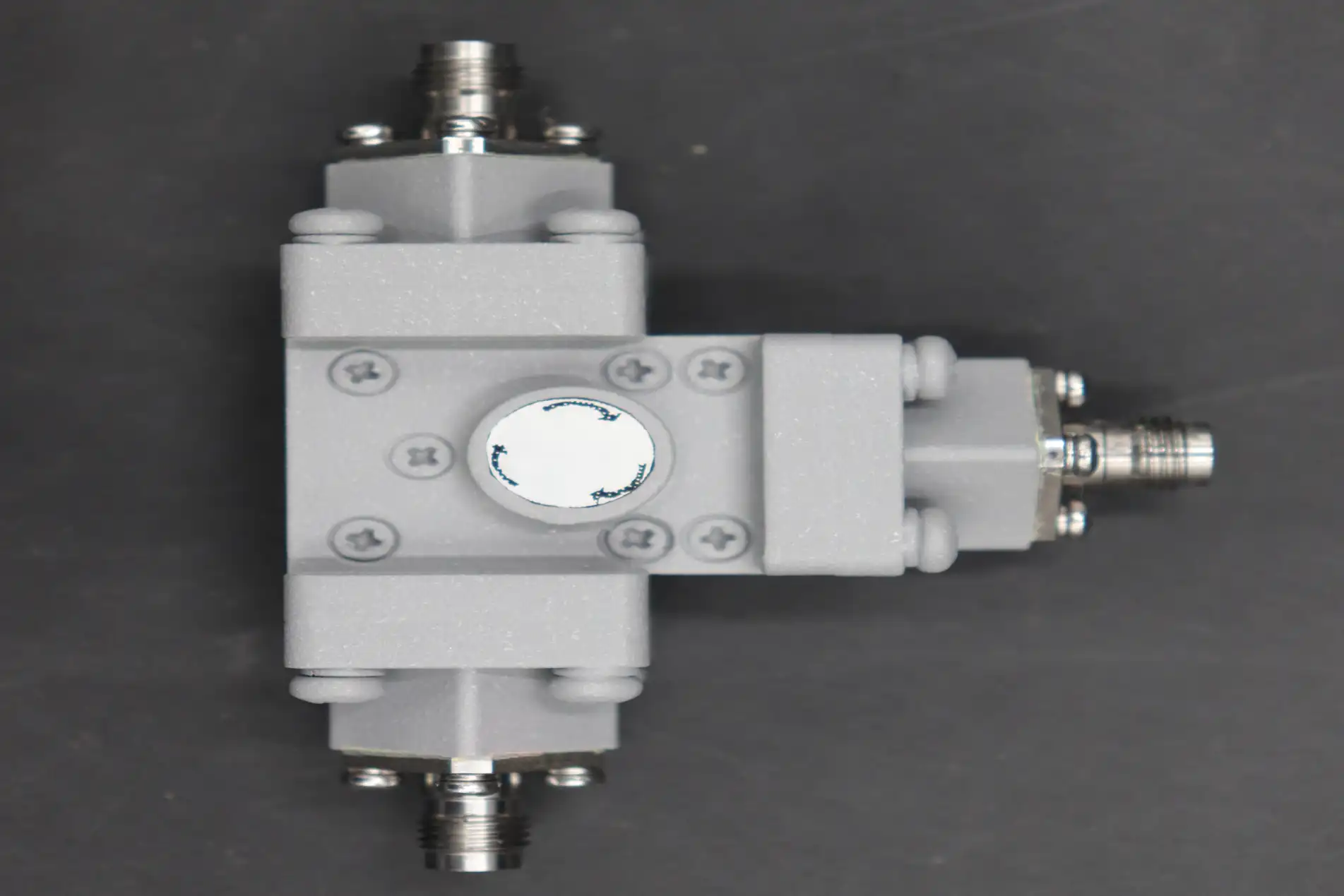
Key Criteria to Consider When Selecting a Broadband Circulator
When making procurement choices, you have to weigh a lot of technical factors against time and money limits. Knowing how each standard affects the performance of a system helps keep redesigns from being too expensive.
Frequency Range and Bandwidth Compatibility
The coverage you need is based on your RF system's operating spectrum. A 2-18 GHz unit is good for electronic warfare, and DC-6 GHz types are good for 5G infrastructure below 6 GHz. Check that the circulator's S-parameter performance stays the same across the whole band. Signal quality can be affected by sudden increases in insertion loss or decreases in isolation at band ends. Through complicated ferrite matching networks, modern designs achieve insertion loss of ≤0.5dB and separation of ≥20dB over a decade of bandwidths.
Power Handling and Thermal Management
From milliwatt-level test signals to kilowatt radar bursts, broadband circulator devices can be used for many things. Power ranges for continuous waves from 0.5W to 500W cover a range of situations. For burst systems, peak power limits are also important. Copper heat sinks or clay heat-spreading layers are built into high-power models to get rid of the heat that is generated while they are working. When you go over the maximum power, the ferrite loses its magnetic properties, or the connection breaks, which forever lowers performance.
Material Quality and Environmental Resilience
A ruggedized building is needed for industrial and defense uses. In marine environments, gold-plated socket pins keep them from rusting, and in electrically noisy factories, double-layer electromagnetic shielding keeps interference at bay. European and North American environmental laws are in line with production that is RoHS-compliant and uses lead-free solders. Temperature-stable ferrites keep their magnetic qualities across all working ranges. This stops center frequency shift, which would make isolation less effective.
When buying, teams know these factors; they can choose parts that meet instant technical needs and will last for a long time in harsh settings. Specifications that don't match up are often found only during integration testing, which slows down the project and costs more than expected.
Comparing Broadband Circulators with Alternative Solutions
Engineers sometimes debate whether circulators, isolators, or duplexers best serve specific applications. Clarifying functional differences prevents specification errors.
Broadband vs. Narrowband Circulators
When it comes to single frequencies, narrowband devices have better insertion loss and separation (often ≤0.2dB and ≥25 dB, respectively), but they stop working when the frequency range drops below 5 to 10 percent. Broadband types have a little more loss (≤ 0.5 dB), but they cover an entire octave, so you don't have to tune them. When systems work across multiple bands, cost analysis shows that wideband units are better because the price of three narrowband circulators plus switching logic is higher than the price of one broadband component.
Circulators vs. Isolators vs. Duplexers
Isolators are two-port devices that are made by connecting a matching load to the third port of a circulator. They only allow one-way communication. Duplexers split bands using frequency-selective filtering, while circulators send all frequencies in the same direction. Since directional couplers only sample signal power and don't completely separate it, they can't protect amps from high mirrored power.
Material and Supplier Considerations
The makeup of ferrite has a big effect on performance. Yttrium-iron-garnet (YIG) elements have the least amount of loss, but they need to be kept at a very exact temperature. Garnet ferrites are a good mix of efficiency and stability in harsh environments. Mini-Circuits, MACOM, and Pasternack are some of the well-known companies that release thorough S-parameter data and power derating curves that make it possible to model systems accurately. Lead times are affected by how different suppliers are. For example, known sellers keep stock of standard models, but unique designs may take 8–12 weeks.
These similarities help buying teams find solutions that are the best in terms of both technical performance and total cost of ownership. This way, they don't have to worry about over-specification, which can blow up budgets, or under-specification, which can make things less useful.
How to Evaluate and Choose Your Broadband Circulator Supplier?
Supplier selection extends beyond component specifications to encompass quality systems, technical support, and logistics capabilities. Strategic partnerships reduce risk in complex projects.
Certifications and Quality Standards
ISO 9001:2015 certification indicates documented quality management systems covering design, manufacturing, and testing. Defense contractors often require AS9100 certification for aerospace-grade components. Request test reports showing full-band S-parameter sweeps, power handling validation, and environmental stress screening results. Passive intermodulation (PIM) testing below -150 dBc ensures the device won't generate spurious signals in communication systems.
Technical Support and Customization Capabilities
Complex RF systems benefit from supplier engineering assistance. Advanced Microwave Technologies Co., Ltd. provides design consultation, prototype development, and application-specific optimization for broadband circulators backed by over two decades of microwave expertise. Custom flange patterns, connector types, or frequency bands address unique integration challenges that off-the-shelf products cannot accommodate. Responsive technical support reduces troubleshooting time when installation issues arise.
Procurement Logistics and Lead Times
Global supply chain dynamics affect delivery schedules. Suppliers with in-house manufacturing control production timelines better than brokers dependent on third parties. Bulk order pricing models offer discounts for volume purchases common in production runs, while small-quantity availability supports R&D prototyping. Clear communication regarding lead times—typically 4-6 weeks for custom units, 1-2 weeks for stock items—enables realistic project planning.
Industry leaders like Qorvo and Skyworks serve as benchmarks, but specialized manufacturers often provide superior customization and cost-effectiveness for mid-volume orders. Evaluating these factors holistically identifies partners capable of supporting projects from prototype through production.
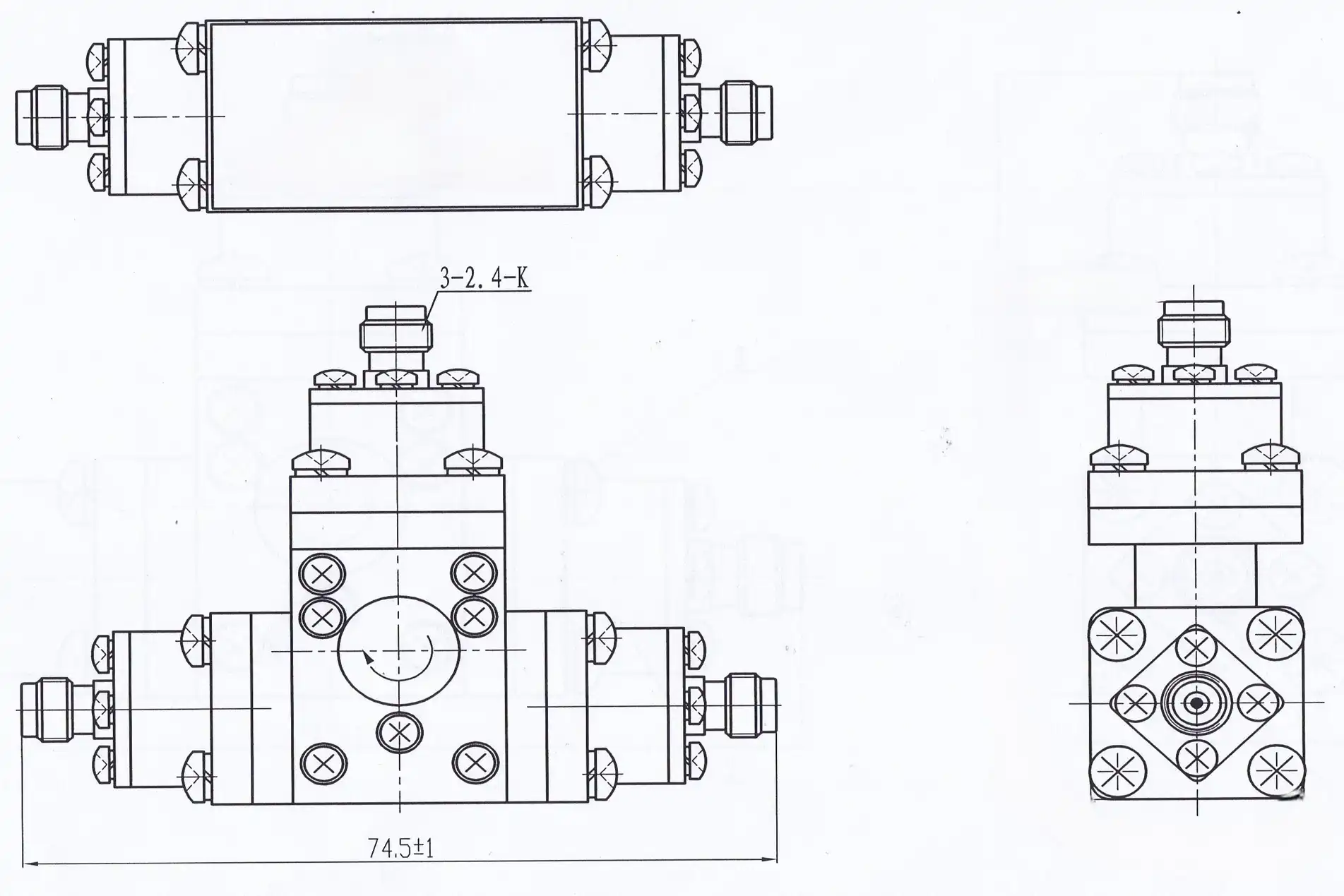
Practical Steps to Integrate Broadband Circulators into Your Project
Successful integration requires systematic planning, rigorous validation, and proactive maintenance strategies. These steps minimize risk and ensure optimal performance.
Specification Alignment and System Design
Map circulator parameters to RF system requirements. Verify frequency overlap, ensuring the device covers all operational bands with a margin. Calculate insertion loss budgets—each 0.5 dB degrades link margins in communication systems or reduces radar range. Check impedance matching (typically 50Ω) and connector compatibility (SMA, N-type, or custom flanges). Thermal analysis confirms heat dissipation adequacy in high-power applications.
Testing and Validation Protocols
Vector network analyzer (VNA) measurements validate S-parameters across the full frequency range. S21 quantifies insertion loss, S12 measures reverse isolation, and S11/S22 indicate return loss. Acceptable thresholds vary by application—telecommunications demand ≤0.5 dB loss and ≥20 dB isolation, while test equipment tolerates slightly relaxed specs. Power sweep tests verify linearity and thermal stability under rated continuous wave and peak power conditions.
Common Integration Pitfalls
Specification mismatches cause most failures. Using a 2-8 GHz circulator in a 6-18 GHz system results in complete signal blockage above 8 GHz. Insufficient power handling leads to ferrite saturation, creating non-linear distortion. Inadequate shielding allows external magnetic fields to detune the device. Careful documentation review and pre-integration bench testing catch these issues before expensive system-level debugging.
Long-Term Maintenance and Scalability
Monitor performance periodically using reference measurements to detect gradual degradation. Gold-plated connectors maintain low contact resistance for 10,000+ mating cycles, but contamination requires cleaning. Plan technology upgrades—5G evolution toward millimeter-wave frequencies may necessitate higher-frequency circulators. Maintain supplier relationships for obsolescence management and next-generation product roadmaps.
These methodical practices ensure broadband circulators deliver reliable performance throughout product lifecycles, protecting your investment and maintaining system specifications.
Conclusion
Selecting the right broadband circulator demands thorough evaluation of frequency coverage, power handling, environmental resilience, and supplier credentials. Wideband designs simplify RF architectures by covering multiple bands without switching, while advanced ferrite materials and precision manufacturing ensure low insertion loss and high isolation. Comparing alternatives clarifies when circulators outperform isolators or duplexers, and understanding quality certifications builds confidence in supplier partnerships. Rigorous integration testing validates specifications before deployment, while proactive maintenance sustains long-term performance. By aligning technical requirements with application demands and leveraging experienced manufacturers' expertise, procurement teams secure components that enhance system reliability and project success.
FAQ
1. What frequency ranges do 5G base stations typically require?
Sub-6 GHz 5G systems operate primarily in the 3.3-3.8 GHz and 4.4-5.0 GHz bands, requiring circulators with 2-6 GHz coverage. Millimeter-wave deployments use the 24-40 GHz spectrum, demanding specialized high-frequency components with precise thermal management to handle outdoor temperature extremes.
2. How do circulators differ from isolators in radar systems?
Circulators route signals between transmitter, antenna, and receiver in three-port configurations, enabling full-duplex operation. Isolators provide two-port unidirectional transmission by terminating the third port, protecting transmitters from antenna reflections but not supporting simultaneous TX/RX functionality required in pulse-Doppler radar.
3. What factors extend lead times for bulk orders?
Custom frequency bands, non-standard connectors, or enhanced environmental ratings require specialized tooling and testing, adding 4-8 weeks. Supply chain disruptions affecting ferrite materials or precision machining capacity also impact schedules. Early supplier engagement and flexible specifications mitigate delays.
Partner with ADM for Your Broadband Circulator Solutions
Advanced Microwave Technologies Co., Ltd delivers precision-engineered coaxial circulators covering DC to 40GHz with insertion loss as low as 0.3dB and isolation exceeding 20dB. Our ISO 9001:2015-certified manufacturing ensures rigorous quality control, while over 20 years of RF expertise supports custom designs tailored to defense, telecommunications, and aerospace applications. Whether you need prototypes for R&D validation or production volumes with competitive pricing, our team provides responsive technical consultation and global logistics support. Contact craig@admicrowave.com to discuss your project requirements with a trusted broadband circulator manufacturer and receive detailed specifications matched to your exact operational parameters.
References
1. Pozar, David M. Microwave Engineering, 4th Edition. Wiley, 2011.
2. Helszajn, Joseph. The Stripline Circulator: Theory and Practice. Wiley-IEEE Press, 2008.
3. Linkhart, Douglas K. Microwave Circulator Design, 2nd Edition. Artech House, 2014.
4. Ishii, T.K. Handbook of Microwave Technology: Components and Devices. Academic Press, 1995.
5. Sobol, Harold. "Applications of Integrated Circuit Technology to Microwave Frequencies." Proceedings of the IEEE, vol. 59, no. 8, 1971.
6. Adam, J.D., et al. "Ferrite Devices and Materials." IEEE Transactions on Microwave Theory and Techniques, vol. 50, no. 3, 2002.