Why Use a Dual Channel Coaxial Rotary Joint in RF Platforms?
Dual channel coaxial rotary joints are precise electrical parts that let RF signals travel continuously across two separate channels between assemblies that are still and assemblies that are moving. Adopting them in current RF systems solves important operating problems by preventing wire tangling, maintaining signal integrity during spinning, and allowing handling of multiple signals at the same time. In contrast to single-channel options, these devices keep channels very isolated (usually >50dB), which stops noise and allows for full 360-degree spinning. This feature is very important for radar systems that need different send and receive lines, satellite communication stations that deal with dual-polarization signals, and monitoring platforms that need data to move continuously.
Introduction
As operations get more complicated, modern RF systems need more complex ways to route signals. Coaxial rotor joints are essential for sending radio signals between parts that are still and parts that are moving without affecting performance. The move toward dual channel designs is due to the need for industries to send multiple signals at the same time with little crosstalk. This is very important for radar systems, satellite ground stations, and military spy equipment.
Over the past 20 years, Advanced Microwave Technologies Co., Ltd. has seen this shift in the aircraft, defense, and telecommunications industries. From what we've seen, procurement managers and tech teams are putting more and more emphasis on dual channel setups when they build the next generation of radio frequency (RF) systems. This change is due to real benefits in integrating systems, saving room, and making sure operations run smoothly.
To fully grasp dual channel coaxial rotary joint technology, one must look at both its basic working principles and its usefulness in real life. This guide tells procurement managers, system engineers, and OEM clients how to choose, get, and take care of these fine parts in a way that makes sense. We pay attention to technical factors that have a direct effect on how well a system works, buying strategies that lower the total cost of ownership, and servicing methods that guarantee long-term dependability in mission-critical settings.
Understanding Dual Channel Coaxial Rotary Joint Technology
Core Operating Principles
A two-channel coaxial rotary joint sends radio frequency signals through stacked or circular internal structures, keeping the electricity flowing even as the rotor spins around the stator. The center conductor manages one data line, and the outer conductor arrangement manages the second channel. Precise insulator materials separate the two channels. This setup lets signals travel freely without any mechanical interference, which fixes the issue of cables getting tangled up that comes with regular spinning connections.
Highly accurate ball bearings are used in the rotating gear, which can handle speeds ranging from 500 RPM to over 2000 RPM. To reduce dynamic contact resistance and get rid of rotating noise, contact surfaces are plated with valuable metals, most often gold on gold. This design makes sure that the phase and amplitude stay stable, which is very important for full-duplex transmission systems and phased array antennas.
Critical Performance Parameters
The operating capacity is determined by the frequency range. Most dual-channel rotary joints can handle DC to 18 GHz with SMA connections or up to 40 GHz with 2.92mm K-type interfaces. This range of frequencies covers both old and new transmission systems, as well as cutting-edge millimeter-wave uses, such as the infrastructure for 5G.
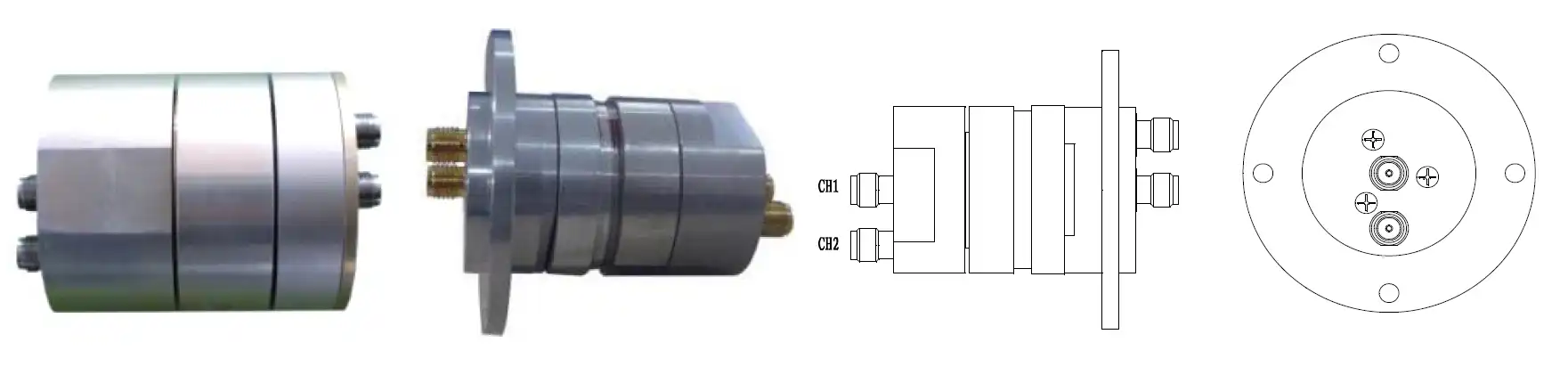
Insertion loss has a direct effect on how well a system works. Good units keep loss at <0.5 dB to <1.0 dB, based on the frequency. Lower insertion loss keeps the signal strength, which means less amplification is needed and less power is used overall. When the VSWR (Voltage Standing Wave Ratio) is less than 1.4:1, signal bounce is kept to a minimum. This lets the most power flow between the moving and stationary parts.
Channel isolation is one of the most important specifications because it guarantees that separate lines are at least 50dB to 80dB apart. This setting stops signal bleeding, which lets high-power radar bursts be sent on one channel while weak echo signals are received on the other without any problems. When buying, teams look at different sources, isolation performance is often what sets better products apart from good options.
Mechanical Design Considerations
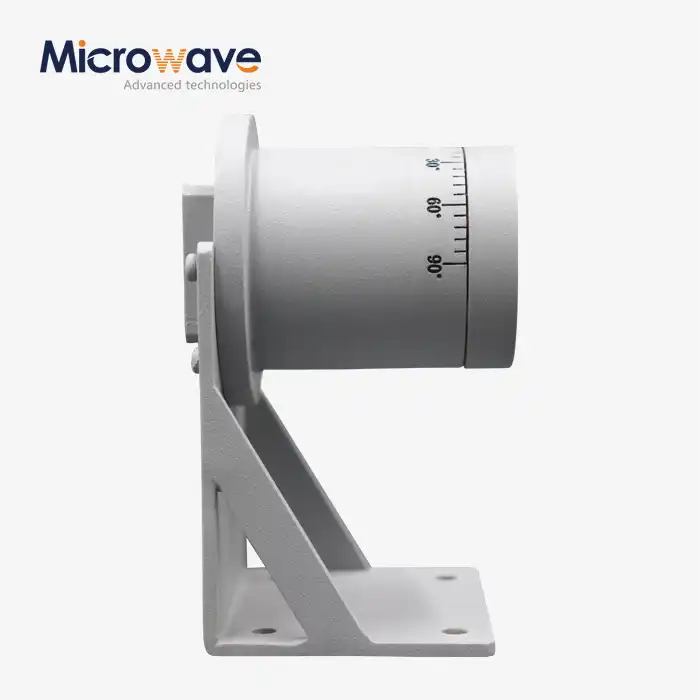
Housing sizes usually fall between 40mm and 100mm, which is a good mix between speed and simplicity. Construction from stainless steel or an aluminum alloy is electromagnetically compatible and can withstand tough weather conditions. Environmental sealing meets entry protection standards of IP65 or IP67, which is necessary for naval and outdoor radar systems.
The expected rotational life of the Dual Channel Coaxial Rotary Joint is more than 10 million turns under normal working conditions. This was proven by rapid life testing that checks the change in contact resistance. The "WOW" factor, which is the change in phase and amplitude during rotation, stays within ±3 degrees or ±0.05 dB for all 360-degree cycles. This makes sure that precision measurement systems and phased array beam guiding work reliably.
Advantages of Using Dual Channel Coaxial Rotary Joints in RF Platforms
Dual-channel coaxial rotating joints improve performance in a way that can be measured. This leads to practical benefits and cost savings in a wide range of RF uses. Their design solves some of the most important problems that current radio and transmission systems face.
Signal Integrity Preservation
Engineering difficulties are great when it comes to keeping data quality high during spinning. Due to precise cutting and improved impedance matching, dual channel rotating joints reduce insertion loss and keep signal strength over long periods of operation. Reflections that would lower system awareness and raise mistake rates in digital communication lines are less likely to happen when VSWR is low.
For phased array antennas and interferometric radar devices, phase steadiness during spinning is very important. Good rotating joints keep phase changes within very small ranges, which is necessary for handling coordinated signals that are needed for synthetic aperture radar and direction finding. This level of performance is good for advanced defense surveillance systems that count on signal phase stability for accurate target identification.
Enhanced Operational Reliability
Mechanical strength makes things last longer and requires less upkeep. Precision ball bearing kits spread out spinning loads evenly, which keeps wear to a minimum even when the radar is used 24 hours a day, seven days a week. Contact surfaces made of precious metals don't rust or corrode, so they keep their low contact resistance over the span of the component.
Environmental stress testing checks how well a product works in situations of high and low temperatures (-40°C to +85°C) and vibrations that are set out in MIL-STD-810 standards. This certification makes sure that mobile satellite communication stations on cars that drive over rough terrain and onboard radar systems that are always moving and being exposed to salt spray will work reliably.
Space and Cost Efficiency
When compared to using separate single-channel rotating joints, putting two signal lines into a single small box makes the mechanical size smaller. This makes it possible to specify smaller, less expensive drive motors because the rotary power needs are lower. Having fewer parts makes it easier to put the system together, which lowers the complexity of the setup and the number of possible failure spots.
The small dual-channel design is very important for electro-optical/infrared weapons that are used in robotic aerial vehicles or monitoring systems on the ground. Due to limited gimbal room, it is important to have as many functions as possible. This is why dual-channel rotary joints are the best technology for multi-sensor platforms that need both RF communication and data links within small mechanical envelopes.
Application Versatility
Dual-channel rotating joints can handle a variety of signal route setups. Air traffic control radar systems send out high-power questioning bursts on one channel and receive low-power tracker replies on the other. To keep receivers from becoming less sensitive, emitter leaks must be very well isolated. On-the-go satellite communication systems can handle both RHCP and LHCP signals, which doubles the amount of data that can be sent or provides link failover by switching polarizations as the car turns.
Defense surveillance systems can send video data from moving cameras and command/control RF lines at the same time through a Dual Channel Coaxial Rotary Joint. This is possible because they have separate channels that keep high-bandwidth streaming and time-critical information from interfering with each other. Because they can be used in different ways, dual-channel rotating joints can adapt to changing mission needs without having to rethink the hardware.
Comparison and Selection Criteria for Rotary Joint Technologies
Dual Channel Versus Single Channel Configurations
Single channel rotary joints suit applications requiring only one signal path, offering simpler construction and lower cost. However, systems needing simultaneous multi-signal handling face significant penalties when using multiple single-channel units. Installation complexity increases, mechanical reliability decreases due to additional rotating interfaces, and cumulative rotational torque rises.
Dual Channel Coaxial Rotary Joint dual channel designs consolidate functionality, reducing system complexity while improving reliability. The investment premium pays dividends in reduced maintenance, simplified procurement, and enhanced performance. For radar systems handling separate transmit/receive paths or communication platforms managing dual polarizations, dual channel rotary joints represent the optimal technical and economic choice.
Coaxial Versus Fiber Optic Alternatives
Fiber optic rotary joints offer advantages in bandwidth and immunity to electromagnetic interference, making them suitable for high-data-rate applications. However, coaxial rotary joints excel in applications requiring direct RF signal transmission without optical conversion, particularly in radar and communication systems operating at microwave frequencies.
Coaxial designs provide superior power handling capabilities essential for high-power radar transmitters, and avoid the complexity and cost of electro-optical converters required in fiber optic systems. For most traditional RF platforms, coaxial rotary joints deliver optimal performance at lower total system cost, with proven reliability in harsh environments.
Evaluating Manufacturer Capabilities
Selecting reliable rotary joint suppliers requires assessing technical competence, customization flexibility, and support infrastructure. Reputable manufacturers provide comprehensive specifications, including S-parameter data across operating frequency ranges, rotational variance test results demonstrating phase stability, and environmental qualification reports verifying performance under operational stress conditions.
Customization capabilities distinguish leading suppliers from commodity vendors. Complex RF platforms often require modified connector configurations, specialized frequency band optimization, or mechanical interface adaptations. Manufacturers offering engineering collaboration during design phases help ensure seamless integration and optimal performance.
After-sales support proves critical for long-term operational success. Suppliers providing detailed maintenance documentation, responsive technical assistance, and transparent warranty terms reduce the total cost of ownership. At Advanced Microwave Technologies Co., Ltd, our engineering team collaborates closely with clients throughout product lifecycles, from initial specification through field support for Dual Channel Coaxial Rotary Joint, ensuring sustained performance in demanding applications.
Conclusion
Dual channel coaxial rotary joints represent critical enabling technology for modern RF platforms requiring simultaneous multi-signal transmission during continuous rotation. Their ability to maintain superior signal integrity, provide exceptional channel isolation, and deliver reliable performance in demanding environments makes them indispensable in radar systems, satellite communications, and defense surveillance applications. Procurement teams and system engineers benefit from understanding technical parameters, comparing design alternatives, and implementing proper maintenance practices to optimize the total cost of ownership. The investment in high-quality dual-channel rotary joints delivers measurable returns through enhanced system performance, reduced maintenance burdens, and extended operational life.
FAQ
1. What frequency ranges do dual channel coaxial rotary joints typically support?
Standard dual channel rotary joints operate from DC to 18 GHz using SMA connectors, suitable for most communication and radar applications. Higher-frequency variants extend to 40 GHz using 2.92mm or K-type connectors, accommodating millimeter-wave systems including emerging 5G infrastructure and advanced radar platforms. Custom designs can address specialized frequency requirements outside these ranges.
2. Can dual channel rotary joints handle different frequency bands on each channel?
The channels operate independently with separate impedance matching, allowing optimization for different frequency bands. Channel 1 might handle X-band radar frequencies (8-12 GHz) while Channel 2 operates at L-band (1-2 GHz) for telemetry, providing design flexibility for multi-function platforms without performance compromise.
3. How does channel isolation affect system performance?
High isolation (>50dB standard, >70dB in premium units) prevents signal leakage between channels, critical in full-duplex systems where transmitters and receivers operate simultaneously. Insufficient isolation allows transmitter power to leak into receive paths, desensitizing receivers and degrading detection range or communication link quality.
4. What rotational life expectancy should procurement teams expect?
Quality dual channel rotary joints provide 10 to 50 million revolutions of service life under standard conditions, verified through accelerated life testing, monitoring contact resistance variation. Actual life depends on operating speed, environmental conditions, and maintenance quality. Harsh environments or high-speed operation may reduce life expectancy, requiring more frequent inspection and replacement.
Partner with Advanced Microwave Technologies Co., Ltd for Superior Rotary Joint Solutions
Advanced Microwave Technologies Co., Ltd combines over 20 years of microwave component expertise with comprehensive manufacturing capabilities to deliver precision dual channel coaxial rotary joint solutions. Our ISO 9001:2008 certified production facilities and advanced measurement laboratories equipped to 110 GHz ensure rigorous quality control throughout manufacturing. Whether your application requires standard catalog products or customized dual channel coaxial rotary joint configurations optimized for unique operational requirements, our engineering team provides expert technical support from specification development through field deployment.
We understand the critical role these components play in radar, satellite communication, and defense platforms, delivering products that meet demanding performance specifications while supporting long-term operational reliability. As an experienced dual channel coaxial rotary joint manufacturer serving global aerospace, defense, and telecommunications markets, we offer competitive pricing, flexible customization, and responsive technical support.
Contact our team today at craig@admicrowave.com to discuss your specific requirements. We provide detailed quotations, technical consultations, and prototype development services supporting your RF platform development.
References
1. Hansen, R.C. (2019). Microwave Rotary Joint Design and Applications. Boston: Artech House Publishers.
2. Pozar, D.M. (2021). Microwave Engineering, 5th Edition. New York: John Wiley & Sons.
3. Collin, R.E. (2018). Foundations for Microwave Engineering, 3rd Edition. Hoboken: IEEE Press.
4. Bahl, I.J. (2020). RF and Microwave Passive and Active Components. Cambridge: Cambridge University Press.
5. Maloratsky, L.G. (2017). Passive RF and Microwave Integrated Circuits. London: Elsevier Academic Press.
6. IEEE Standards Association (2022). IEEE Standard for RF Connectors and Rotary Joints in Microwave Systems. Piscataway: IEEE Press.