





How to Evaluate a Reliable Pyramid Antenna Manufacturer
Selecting a dependable pyramid antenna manufacturer requires systematic evaluation of technical capabilities, quality standards, and operational reliability. B2B procurement professionals must verify engineering precision, compliance certifications like ISO 9001 and RoHS, customization expertise, and post-delivery support. Analyzing manufacturer reputation through client testimonials, reviewing technical documentation, and assessing production infrastructure ensures partnerships that deliver consistent product quality and minimize supply chain disruptions across mission-critical applications.
Understanding the Core Challenges in Selecting a Pyramid Antenna Manufacturer
Getting their hands on specialized microwave parts is very hard for procurement teams. The most obvious problem is that product performance can vary. If makers don't follow strict testing procedures, pyramid antennas may show uneven gain patterns or frequency drift that puts whole communication systems at risk. We've seen cases where horn lens systems didn't have enough phase correction, which caused side-lobed interference during the deployment of 5G base stations. This led to expensive redesigns that slowed down network rollouts by several months.
Transparency Gaps in Technical Documentation
A lot of providers give out incomplete info on radiation patterns or don't show VSWR measurements across all operational bandwidths. This opacity makes it hard for engineering teams to correctly model how systems work together, especially in small antenna test areas where accurate measurements depend on the wavefront characteristics. If buyers don't get verified dielectric constant specs for lens materials or thorough tolerance ranges for waveguide measurements, they might not find compatibility problems until after making promises to manufacture.
Warranty Ambiguities and Support Limitations
When service agreements aren't clear, operational risks happen further down the line. When manufacturers give vague warranty coverage or limited geographic support structures, buyers are at risk when parts fail during important missions. Defense contractors and operators of satellite ground stations need technical help that is quick to respond and supply chains that can be tracked. Delays in getting replacement units or engineering talks have a direct effect on project deadlines and contractual responsibilities. Not having written quality control procedures makes it harder to find the root cause of performance problems.
Key Evaluation Criteria for Pyramid Antenna Manufacturers
Thoroughly checking out a manufacturer's skills protects the value of an investment and guarantees long-term business success. When making a purchase decision, technical specifications should be weighed against the level of production maturity and service infrastructure.
Technical Design Verification
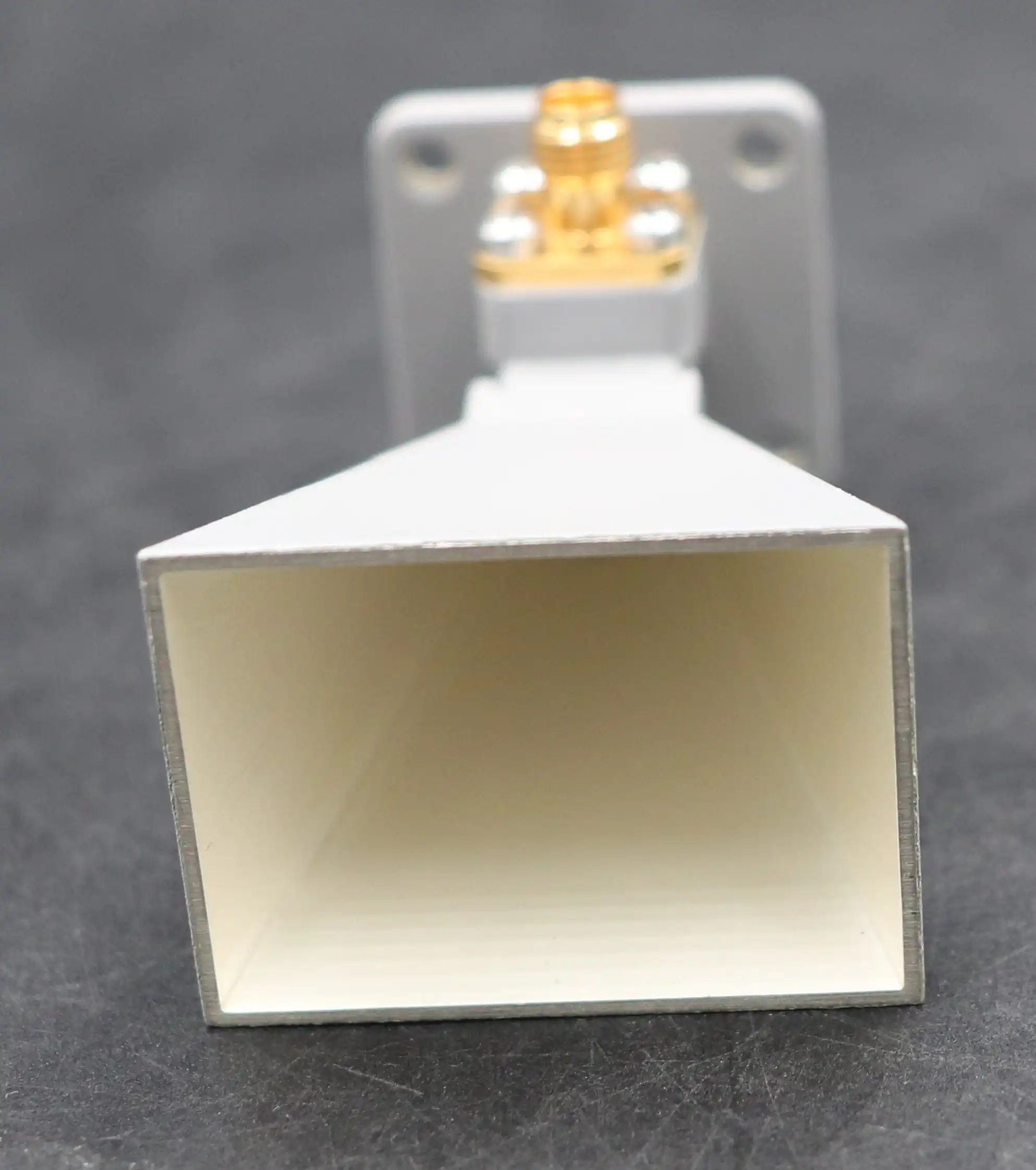
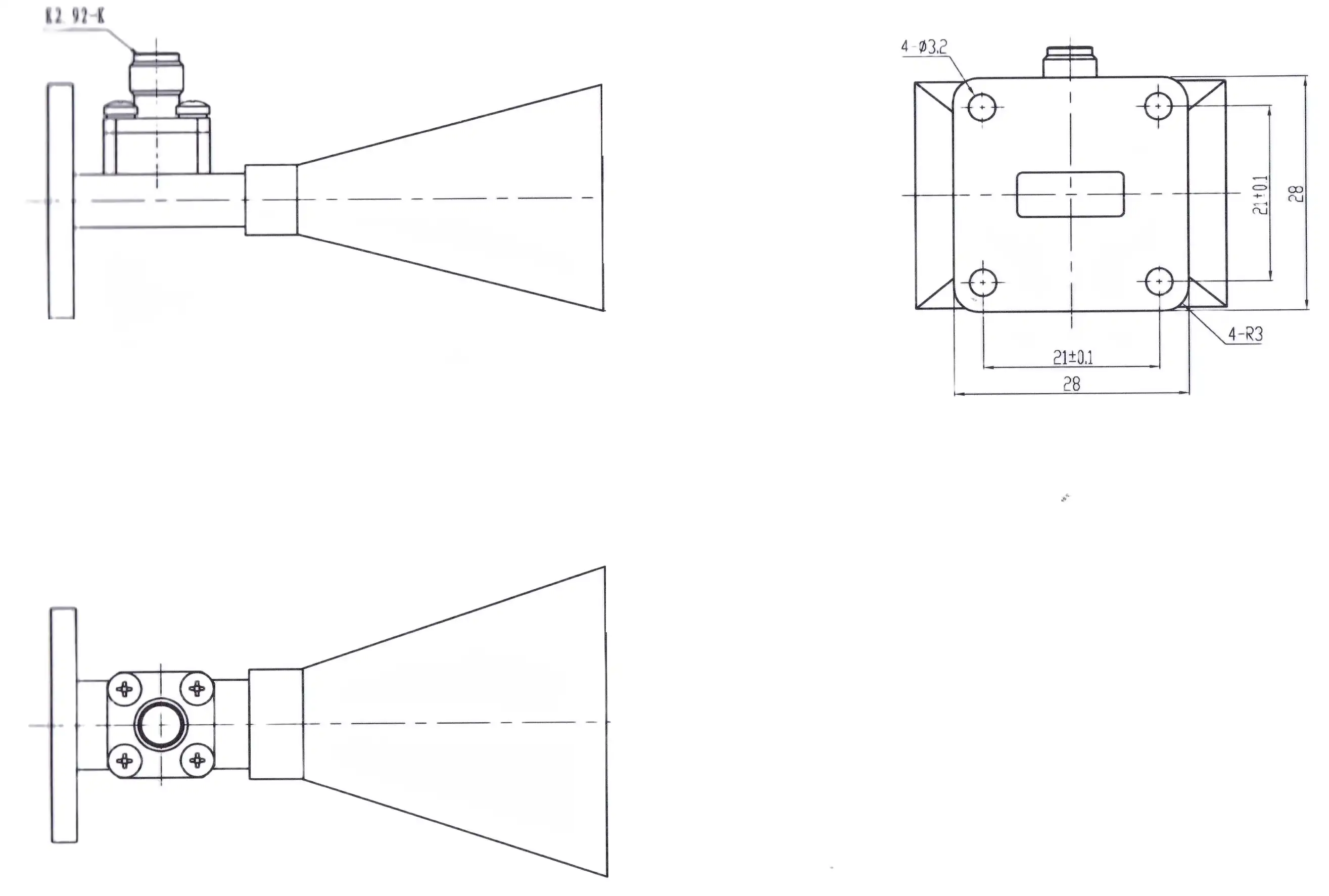
Precision engineering is needed for antennas to work well. Check to see if the manufacturers understand how to correct for phase errors. Pyramid horn lens antennas and pyramid antenna designs have better gain-to-size ratios because they have plano-convex lenses built in that change spherical wavefronts into flat distributions. Ask for specific radiation pattern data that shows side lobe reduction below -25 dB. This is a very important level for reducing interference in areas with a lot of spectrum. Gain numbers should be between 25 and 35 dBi, and readings should have been taken in approved anechoic chambers and be backed up by paperwork. Pay close attention to the frequency range; reputable providers offer a wide range of frequencies, from X-band to W-band (8–110 GHz), which can work with both old systems and new millimeter-wave uses.
Quality Standards and Compliance Frameworks
Following through on certification signals discipline in manufacturing. If a company has ISO 9001:2015 certification, it means that they handle quality in a planned way during the planning, production, and testing stages. Environmental protection through RoHS guidelines makes sure that parts follow limits on dangerous substances that are needed to get into foreign markets. Check to see if facilities follow the ISO 14001:2015 standards for environmental management and the ISO 45001:2018 standards for workplace safety. These standards show how mature an organization is and how consistently it runs its operations. When making parts for defense uses, manufacturers should include test reports that use IEEE Standard 149-1979 for antenna characterization and MIL-DTL specifications to show that the parts can handle changes in temperature, vibration, and humidity.
Customization Capabilities and Engineering Support
Off-the-shelf options don't usually meet specific needs. Check to see if the manufacturers can change the size of the aperture, the lens's curvature to meet specific phase correction needs, or the addition of custom waveguide interfaces. When using antennas in 77–81 GHz automotive radar calibration sets or satellite radiometry systems that need beam efficiency above 90%, production flexibility is very important. Problem-solving speed is determined by how quickly technical support responds. Suppliers should give dedicated engineering contacts who understand application contexts and can suggest design optimizations during purchase talks.
Analyzing Manufacturer Reputation and Market Presence
When looking at possible suppliers, brand credibility is a good way to figure out how risky they are. Companies that have been in business for a long time usually have stable supply chains and well-honed production processes. Case studies give you an idea of how things work in the real world. For example, upgrades to ground stations or successful deployments in 5G over-the-air testing facilities show that they can work in tough conditions.
Client Testimonials and Third-Party Validation
Independent feedback shows operational realities that go beyond what the marketing says. Ask buying teams at aerospace installers or telecommunications equipment makers for examples of their experience with a pyramid antenna. They can talk about how reliable delivery is, how good the support is after installation, and how consistent the product is across production runs. The strength of the distribution network shows how well it can handle large orders. Companies with global logistics partnerships can better handle foreign projects that need planned shipments to multiple sites.
Proven Application Experience
Manufacturers that work with a wide range of industries show that they are technically flexible. For 20 years, Advanced Microwave Technologies Co., Ltd. has been a good example of this by providing waveguide assemblies, coaxial components, and antenna systems to the navigation, defense aerospace, and satellite communications markets. Their microwave lab is 24 meters long and has far-field measurement capabilities up to 110 GHz. This is the equipment needed for thorough product validation. These kinds of tools make it possible to fully characterize antennas by checking their gain, polarization purity, and cross-polarization discrimination—measurements that can't be guaranteed by paper specs alone.
Comparing Pricing Models and Procurement Flexibility
Total ownership economics must be included in cost analysis, not just unit pricing. Manufacturers who are open about their costs list things like precision-machined housings, low-loss dielectric lenses made from PTFE or Rexolite, and protective radomes when they are needed. Payment terms that allow for staged deliveries or billing based on milestones work well for large purchases that span multiple fiscal periods.
Delivery Reliability and Logistics Infrastructure
To keep projects on track, production throughput must be reliable. Check to see if makers keep extra critical parts in stock and compare lead times for standard configurations and unique designs. Expertise in international shipping is needed for global deployments; sellers who know about export paperwork, customs processes, and temperature-controlled transport keep parts in good shape while they're in transit. Quick turnaround prototyping services let you test your design before committing to large quantities of production, which lowers the technical risk in new applications.
Warranty Structures and After-Sales Commitment
Professional manufacturers are different from transactional suppliers because they have comprehensive service agreements. Policies that are easy to understand should spell out how long service lasts, how to fix performance problems, and how to get expert help. Manufacturers that offer help with installation, fixing, and field service are a good way to protect against interruptions in operations. Being ready to work together to improve performance or make design changes shows that the relationship is more of a partnership than a business relationship.
Final Checklist: Making the Right Pyramid Antenna Manufacturer Choice
Structured prioritization is needed to turn review criteria into choices that can be put into action. The technical performance metrics that engineers should focus on the most are gain stability, side lobe suppression, and frequency bandwidth, all of which have a direct effect on how well the system works. When buying things, purchasing managers have to weigh the costs of meeting specifications against the stability of the supplier's finances. To help downstream customers, distributor partners focus on having flexible inventory and good technical documentation.
Clear communication is the first step to building good ties with suppliers. When you first start talking, be clear about the application requirements, the limitations of the environment, and the quality standards you expect, especially when sourcing specialized components such as a pyramid antenna. Set up rules for keeping an eye on performance, like acceptance testing and regular checks. Not giving detailed technical data sheets, not having certified test reports, not having complete quality control documentation, or not responding to pre-sales engineering support are all red flags that should be taken seriously right away. Manufacturers who are willing to let customers tour their facilities and work with them on product reviews usually offer better long-term value.
Conclusion
The technical excellence, quality certifications, market reputation, and service infrastructure of pyramid antenna manufacturers must all be carefully considered when evaluating them. To lower the risk, procurement professionals check the engineering skills of potential candidates through thorough specs, make sure they follow international standards, and check the operational experience of potential candidates through client recommendations. The evaluation system is completed by a clear price, flexible delivery terms, and strong help after the sale. Working with makers that have complete testing facilities, knowledge of customization, and quick-response technical teams is the best way to make sure that mission-critical communication systems in defense, aircraft, satellite, and telecommunications applications can be supported by reliable supply chains.
FAQ
1. What performance factors matter most when selecting pyramid antennas?
The operating success is based on the gain features, side lobe suppression levels, and frequency bandwidth. Components with a gain of 25 to 35 dBi and side lobes below -25 dB are good for high-density spectrum uses and small test areas. Check that VSWR stays below 1.5:1 across all operating bands to make sure that power is transferred efficiently and signals are reflected as little as possible.
2. How do pyramid horn lens antennas for millimeter-wave applications compare to standard horn designs?
Integrated dielectric lenses fix phase errors that happen naturally in pyramidal flares, making physically shorter assemblies with the same gain. This small size is helpful in installations with limited space and leads to better side-lobe performance. Standard horns need to be longer in order to have the same directivity, so versions with lenses are better for calibrating automotive radar and using as near-field measurement probes.
3. What customization options should manufacturers provide?
Reliable suppliers change the size of the aperture, change the curvature of the lens to match specific phase correction profiles, and add custom waveguide flanges that fit with the system's existing interfaces. Prototype development services let you test designs before committing to production, which lowers the technical risk of certain deployments.
Partner with ADM for Precision Pyramid Antenna Solutions
Advanced Microwave Technologies Co., Ltd has been making high-quality products for over 20 years and is a reliable choice for B2B buyers looking for pyramid antenna suppliers. Our production is ISO 9001:2015 certified and makes waveguide assemblies, horn lens antennas, and custom RF parts. These are tested in our advanced 24-meter darkroom, which can measure up to 110 GHz. We offer quick prototypes, full technical support, and OEM customization services for uses in defense, satellite communications, and telecommunications. Email our procurement specialists at craig@admicrowave.com to talk about your unique needs and get full catalogs of our products. Our engineering team is ready to help you find the best antenna configurations for your next launch. They will do this while following strict quality control methods that make sure all production batches perform the same.
References
1. Balanis, Constantine A. Antenna Theory: Analysis and Design. 4th ed. Hoboken: John Wiley & Sons, 2016.
2. IEEE Standards Association. IEEE Standard Test Procedures for Antennas (IEEE 149-1979). New York: Institute of Electrical and Electronics Engineers, 1979.
3. Kraus, John D., and Ronald J. Marhefka. Antennas: For All Applications. 3rd ed. New York: McGraw-Hill Education, 2002.
4. Milligan, Thomas A. Modern Antenna Design. 2nd ed. Hoboken: John Wiley & Sons, 2005.
5. Rao, Sudhakar, and Sembiam R. Rengarajan. Handbook of Reflector Antennas and Feed Systems Volume II: Feed Systems. Norwood: Artech House, 2013.
6. Silver, Samuel. Microwave Antenna Theory and Design. MIT Radiation Laboratory Series Volume 12. London: Institution of Engineering and Technology, 1949.
YOU MAY LIKE
 VIEW MOREFlexible Waveguide
 VIEW MOREcpw waveguide
 VIEW MORERight Angle Waveguide to Microstrip Adapter
 VIEW MOREHigh Power Waveguide Differential Phase Shift Circulator
 VIEW MOREWG Band Stop Filter
 VIEW MOREDouble Ridged Waveguide Calibration Kits
 VIEW MOREDouble Ridge Waveguide Transition
 VIEW MOREAntenna Near Field Measurement Probe