





How to Choose Waveguide Harmonic Filter for Workshop
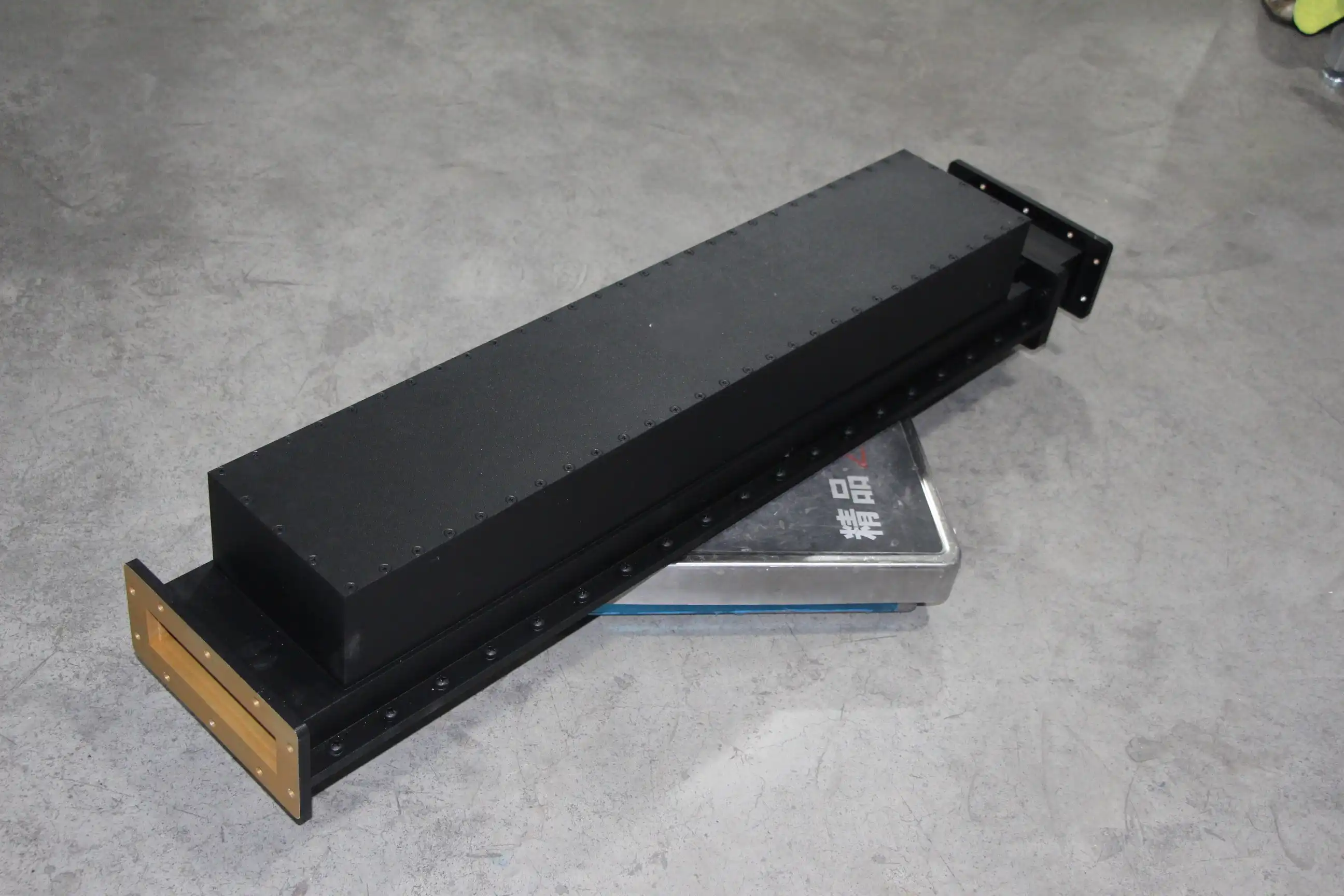
Choosing the right waveguide harmonic filter for your workshop is not as straightforward as picking a component off a shelf. A waveguide harmonic filter is a passive microwave device that suppresses unwanted harmonic frequencies — typically the 2nd, 3rd, and 4th harmonics — generated by high-power amplifiers like TWTAs and Klystrons, while allowing the fundamental signal to pass with minimal loss. Getting this selection wrong can mean spectral non-compliance, interference with adjacent bands, or damage to downstream equipment. This guide walks you through exactly what to consider before you buy.
Understanding Waveguide Harmonic Filters: Fundamentals and Principles
What These Filters Actually Do
The cutoff qualities of the waveguide structure itself are what make a waveguide harmonic filter work. Most of the time, "waffle-iron" or curved wall designs are used to make stopband regions that block harmonic energy while keeping passband insertion loss very low, usually below 0.1 dB. Because of this physical feature, waveguide filters are better than coaxial filters in high-power situations where dielectric breakdown is a real possibility.
Key Performance Metrics to Understand
It's important to know what the numbers mean before you compare goods. Most SATCOM and radar uses should have harmonic suppression above 60 dB. That is, VSWR in the passband should stay below 1.15:1 to keep power from being reflected back into the source amplifier. Power handling can be anywhere from a few watts to several thousand watts at its peak, depending on whether the system is in continuous wave (CW) mode or pulsed mode. In every datasheet, the first three things I look at are the rejection depth, VSWR, and power level.
How Waveguide Compares to Coaxial and Dielectric Filters
At low power levels, coaxial filters are smaller and cheaper, but they run the risk of dielectric breakdown above a certain power level. Dielectric resonator filters have very good selectivity and are small, but they can't be used in devices that are kilowatts or more. Waveguide harmonic filters, on the other hand, are made of metal all the way through. They don't have a risk of dielectric breakdown, can work in vacuum environments without Multipactor problems if they're built right, and stay mechanically stable over a wide range of temperatures. This makes them the usual choice for radar, SATCOM, and defense platforms.
Identifying Your Workshop's Needs: Decision Criteria for Choosing the Right Filter
Define Your Frequency Band and Application First
The waveguide size and gap standard are based on the frequency band you need to work in. Ku-Band systems use WR-75 flanges, while C-Band systems use CPR-137 flanges. Getting this wrong will mean that the filter won't fit with your transmission line. Your application is important, not just the band. To keep the link budget, a SATCOM earth station HPA placement needs very little insertion loss. To work during burst operation, a radar emitter needs to be able to handle a lot of peak power. For treatment accuracy, a medical linear accelerator needs frequency stability.
Evaluate Insertion Loss, VSWR, and Environmental Requirements
Make your evaluation criteria stricter once you know your band and application. Modern waveguide harmonic filters usually have insertion loss below 0.1 dB. Any number much higher than this will use a lot of power in your system. Your amp is safe as long as the VSWR is less than 1.15:1. If the place where the radar system will be installed has high humidity, salt air, or big changes in temperature, like on a ship or outside, you need to ask for filters made of 6061-T6 aluminum or copper that has been plated to prevent rust.
Procurement Factors: Lead Time, MOQ, and Customization
Performance in terms of technology is not the only thing that matters. Waveguide harmonic filters are fixed-frequency devices that are carefully made. They can't be tuned after they've been made, unlike combline filters, so the design specifications must be right before they're made. This makes it really important for suppliers to be responsive and offer engineering support. Ask your provider how long it takes to make prototypes, if they can support custom frequency plans, and what kind of paperwork they offer. For defense and SATCOM procurement, standard things to look for are S-parameter files, test reports, and CMM inspection records.
Comparing Waveguide Harmonic Filters With Alternative Solutions
Bandpass, Low-Pass, and Notch Filters
When you use a bandpass filter, only frequencies in a certain range can pass through. Low-pass filters stop all frequencies above a certain limit. They are often used to get rid of harmonics, but waveguide versions usually do a better job than coaxial versions in terms of rejection depth above 60 dB. It is best to use notch filters to get rid of interference rather than broad harmonic suppression because they only work on a single frequency. All of these are better than a custom-built waveguide harmonic filter when it comes to getting rid of harmonics in high-power systems.
Cavity and SAW Filters for Emerging Applications
Base station duplexers often use cavity filters because they are very selective and can handle a modest amount of power. Surface Acoustic Wave (SAW) filters are very small and cheap for mobile and IoT frequency bands, but they can only handle low power levels and can't handle the watt- or kilowatt-range power levels that radar or SATCOM emitters use. 5G millimeter-wave systems are moving into the 28 GHz and 39 GHz bands. Waveguide-based filtering is once again becoming the standard for high-power mmWave transmitter chains.
Reflective vs. Absorptive Harmonic Filter Designs
A lot of buyers don't understand how important this difference is. Because a reflective harmonic filter sends back harmonic energy that has been blocked, there needs to be an isolator or circulator between the amplifier and the filter to keep damage from happening. An absorptive filter, which is also known as a "leaky wall" filter, takes harmonic energy from the power source and turns it into heat inside the filter. Although absorptive designs are bigger, they protect the amplifier better, which is why high-value HPA setups choose them when the extra protection is worth the extra size.
Navigating Procurement: How to Source Quality Waveguide Harmonic Filters
What Reputable Suppliers Provide
Good suppliers don't just send a part; they also check all the S-parameters using a VNA to make sure that the S21 insertion loss, rejection bandwidth, and S11 return loss are correct compared to simulations. Multipactor and corona discharge testing in a thermal vacuum chamber is required for use in space or vacuum. It is not a choice. Checking the tolerances of the flanges with a CMM makes sure that the RF sealing is correct and stops leakage at high power. Ask the seller directly which of these tests are done as normal and if test reports are sent with the shipment when you're judging them.
Pricing, Lead Times, and Documentation Standards
Waveguide harmonic filters are precision parts that are custom-made, so the price depends on how complicated the design is, what material is chosen, and how many are ordered. Silver plating is common because it has low insertion loss. Gold plating, on the other hand, makes it more resistant to corrosion in harsh settings. Most test units from reliable manufacturers take between four and eight weeks to make. Full paperwork packages, which include material traceability, test data, and compliance standards like ISO 9001 and RoHS, are required for defense and SATCOM purchases and cannot be added on as an extra.
Why ADM Is a Manufacturer Worth Contacting
Advanced Microwave Technologies Co., Ltd. (ADM) has been making accurate waveguide parts for more than twenty years. They can measure things up to 110 GHz in their labs, which means they can test the things they make across almost any frequency band that is useful for current SATCOM, radar, or 5G uses. Their goods are certified by ISO 9001:2015 and RoHS, and their engineering team can help with custom frequency plans, OEM paperwork packages, and testing prototypes before placing full-scale orders. ADM is a supplier that mixes a lot of manufacturing experience with real technical help for workshops that need to find waveguide harmonic filter parts that have to meet strict performance standards.
Best Practices for Integrating Waveguide Harmonic Filters into Your Workshop Workflow
Proper Installation and Initial Verification
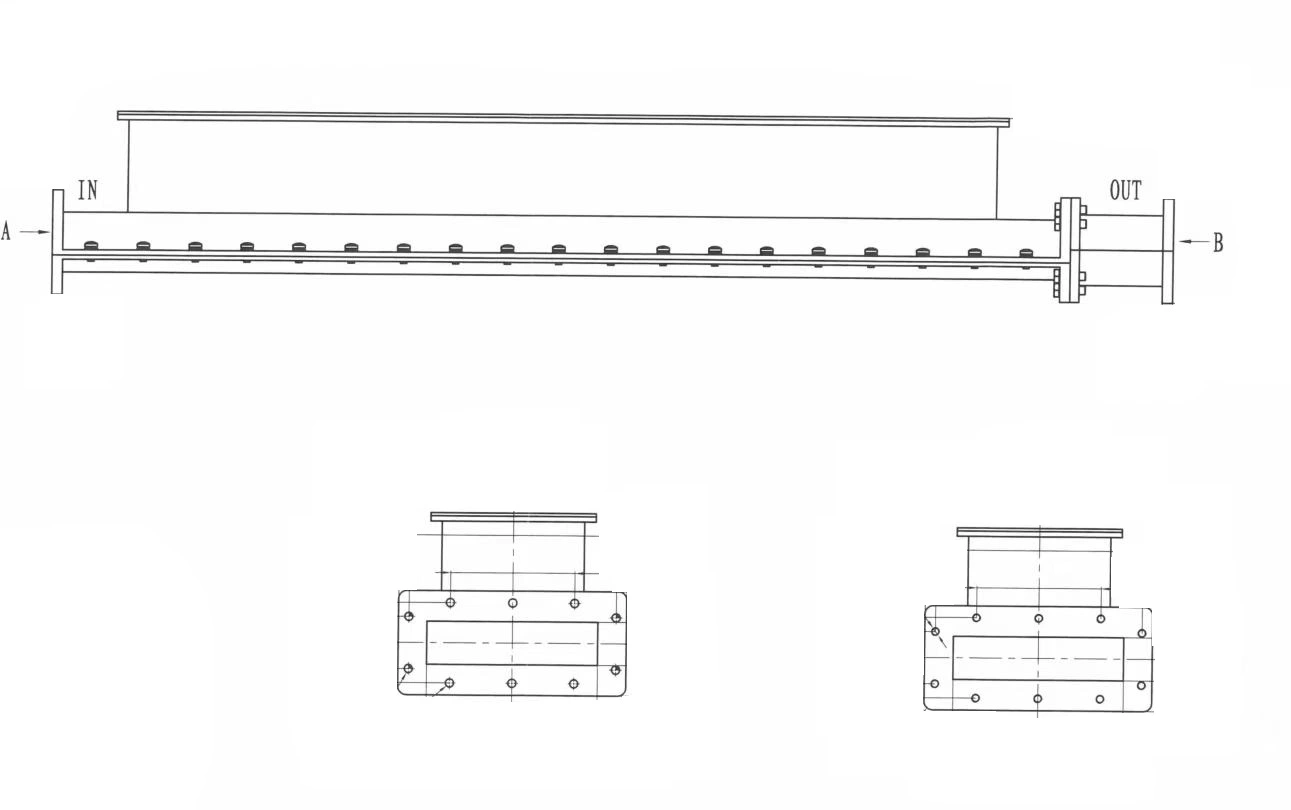
Most installation problems happen because the flanges are not lined up correctly. For high-power RF applications, use conductive gaskets. For situations where RF integrity is not as important, use silicone gaskets only. After setting up, use a VNA to compare S11 and S21 to the test data that was provided. If the return loss is off by more than 2 dB from the factory measurement, it means there is a problem with either the flange sealing or the connector torque. Both of these problems can be fixed before the system goes live.
Maintenance Routines That Extend Service Life
Waveguide harmonic filters are passive and don't need much upkeep, but there are a few things that can be done to make them last much longer. Check the sides of the flanges often for rust or mechanical damage, especially if they are installed outside or on a ship. Check that the cooling fins or liquid cooling ducts on kilowatt-class systems are not blocked. During any planned system breakdown, the integrity of the internal plating (silver or gold) should be checked. This is because plating decay raises insertion loss and can cause arcing at high power.
A Real-World Outcome: SATCOM Ground Station Case
Putting a properly designed waveguide harmonic filter between the TWTA and the antenna feed in a Ku-Band SATCOM ground station installation cut the level of unwanted emissions from around -40 dBc to below -80 dBc, making the system fully compliant with ITU spectral mask rules. To get this result, the amplifier only needed to have a filter with an 80 dB rejection depth and a 0.08 dB passband insertion loss added. The practical outcome was clear spectrum, compliance with ITU standards, and no interference with satellite spots next to it.
Conclusion
To choose the best waveguide harmonic filter for your workshop, you need to match your frequency band, power level, and environmental needs to a filter design that gives your system the rejection depth and insertion loss it needs. For high-power RF systems where coaxial and dielectric options don't work well, waveguide-based designs are still the norm. Start with the needs of your application, make sure the supplier's documentation standards are met, and ask for prototype units before agreeing to full production amounts. Taking an organized approach to this purchase choice will protect your investment and the performance of your system in the long run.
FAQ
What frequency ranges do waveguide harmonic filters cover?
Waveguide harmonic filters cover a wide range of frequencies, typically from L-Band (around 1 GHz) through Ka-Band (up to 40 GHz) and beyond for specialized millimeter-wave systems. The specific waveguide size — and associated flange standard — is determined by the operating frequency band. ADM's measurement capability extends to 110 GHz, which means they can support verification testing well into the millimeter-wave range.
When should I choose a waveguide filter over a coaxial harmonic filter?
Choose a waveguide design whenever your system operates above approximately 100 watts continuous power, operates in a vacuum environment, or requires harmonic rejection exceeding 60 dB. Below these thresholds, coaxial filters may offer adequate performance at lower cost. Above them, the all-metal waveguide structure eliminates dielectric breakdown risk and provides the mechanical stability that high-power and space-grade systems require.
Can waveguide harmonic filters be customized for non-standard frequency plans?
Yes. Because these filters are precision-machined fixed-frequency devices, the design is specific to your frequency plan from the outset. Manufacturers like ADM support custom frequency specifications, OEM documentation packages, and prototyping before full production. Buyers should provide their operating frequency, required rejection bands, power level, flange standard, and environmental specifications at the time of inquiry to receive an accurate technical proposal.
How do I prevent Multipactor effects in space-qualified units?
Specify filters with geometries designed to reduce electron resonance probability and secondary electron yield (SEY) suppression coatings. Ensure the unit is properly vented to prevent trapped gas pockets. Multipactor testing in a thermal vacuum chamber is a standard qualification requirement for space-grade waveguide components.
Request a Custom Waveguide Harmonic Filter Quote from ADM
ADM is a reliable company that has been making waveguide harmonic filters for over 20 years. They have ISO 9001:2015 and RoHS certifications, and they can measure up to 110 GHz in-house. The technical team at ADM is ready to help you with your project from the beginning to the end, whether you need a normal Ku-Band unit or a completely unique design for a defense radar platform. You can get a datasheet or manufacturing price from ADM by emailing craig@admicrowave.com.
References
1. Matthaei, G. L., Young, L., & Jones, E. M. T. — Microwave Filters, Impedance-Matching Networks, and Coupling Structures. Artech House, 1980.
2. Pozar, D. M. — Microwave Engineering, 4th Edition. Wiley, 2011.
3. Reed, J., & Wheeler, G. J. — "A Method of Analysis of Symmetrical Four-Port Networks." IRE Transactions on Microwave Theory and Techniques, 1956.
4. Cameron, R. J., Kudsia, C. M., & Mansour, R. R. — Microwave Filters for Communication Systems: Fundamentals, Design, and Applications. Wiley, 2007.
5. Levy, R., & Cohn, S. B. — "A History of Microwave Filter Research, Design, and Development." IEEE Transactions on Microwave Theory and Techniques, 1984.
6. Intertek — IEC 60068 Environmental Testing Standards for Electronic Components. Intertek Technical Report Series, 2019.
YOU MAY LIKE
 VIEW MOREWaveguide Horn Antennas
 VIEW MOREWaveguide E Bend
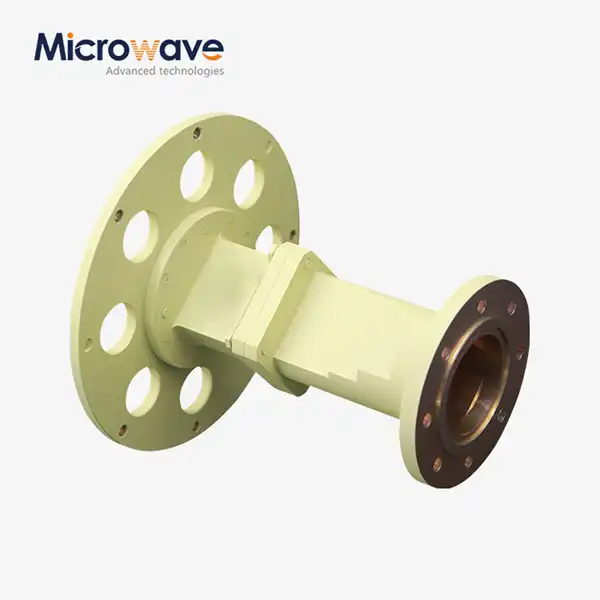 VIEW MORECircular Waveguide Transition
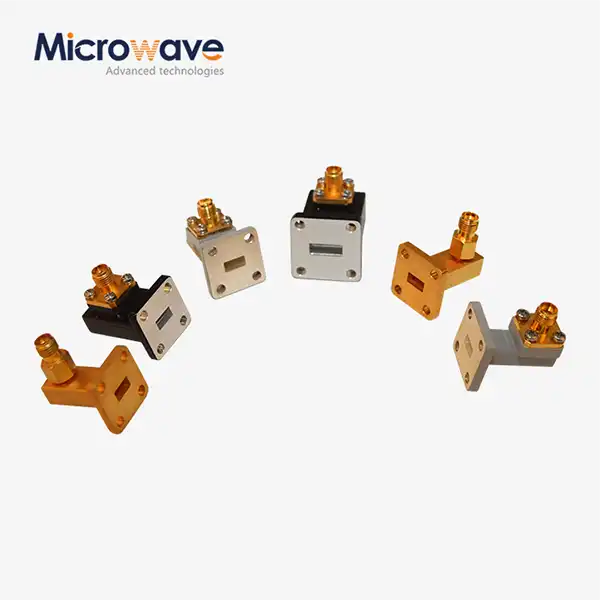 VIEW MORERight Angle Waveguide To Coaxial Adapter
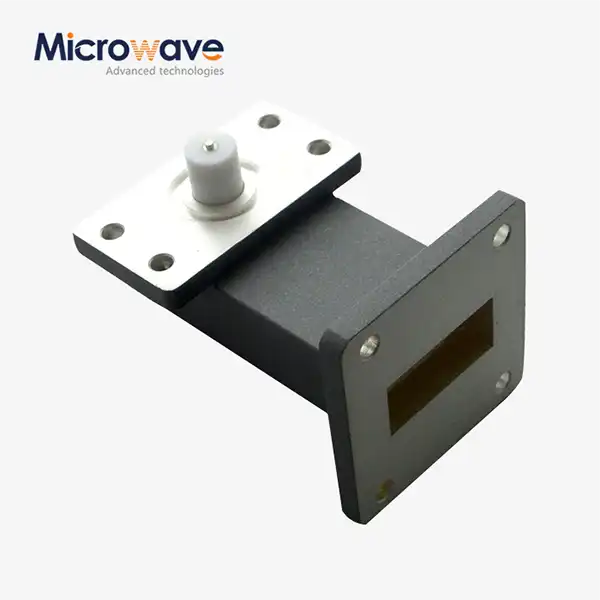 VIEW MORERight Angle Waveguide to Microstrip Adapter
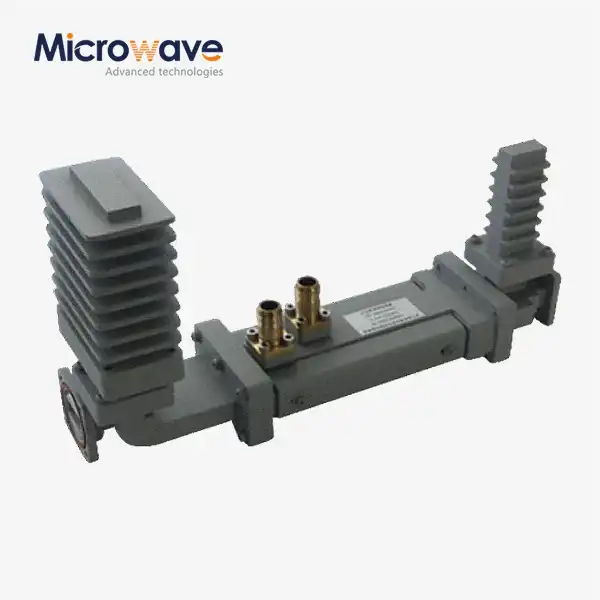 VIEW MOREHigh Power Waveguide Differential Phase Shift Isolator
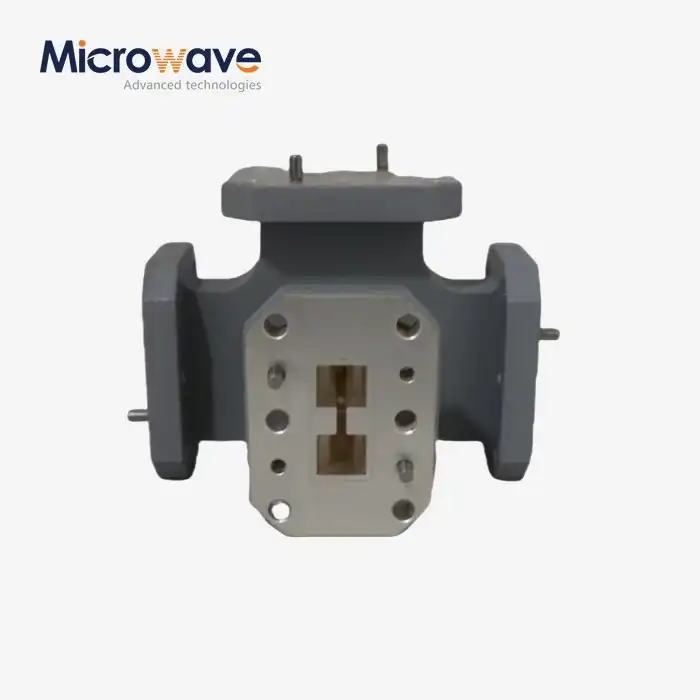 VIEW MOREDouble-Ridged Waveguide Magic Tee
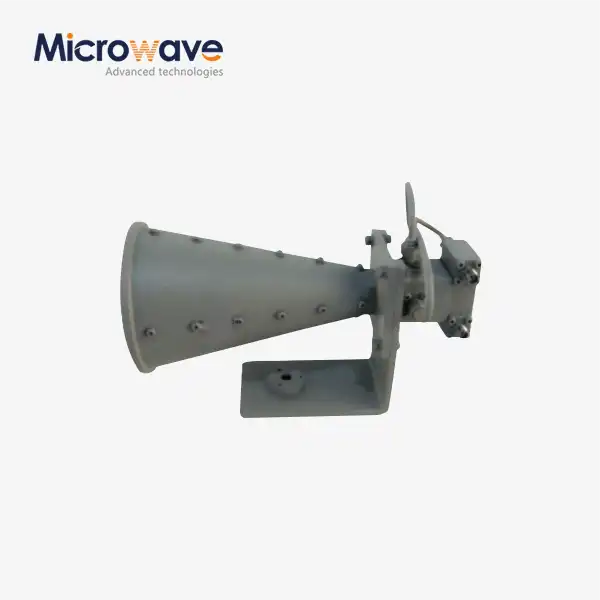 VIEW MOREDual Linear Broadband Dual Circular Polarization Horn Antenna
