




How Straight Waveguide Section Manufacturing Works
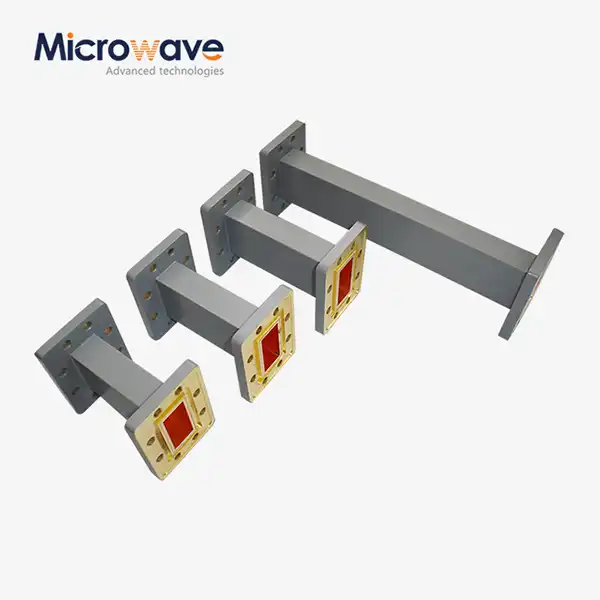
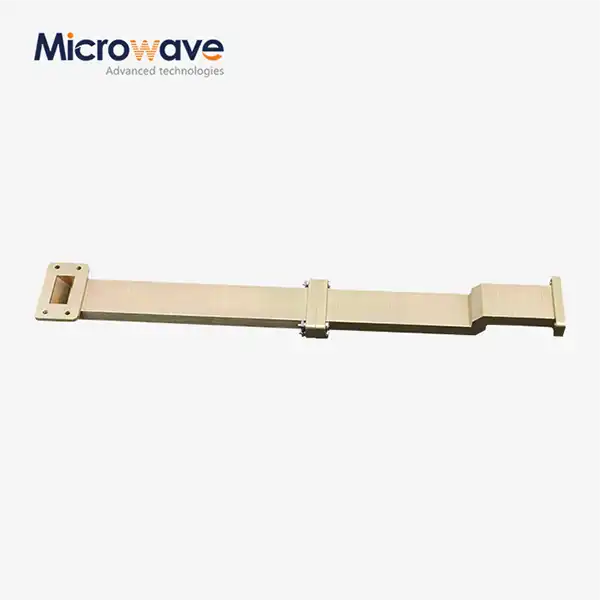
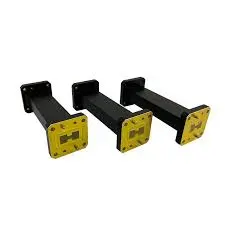
Manufacturing a straight waveguide section involves precision machining of hollow metallic tubes designed to transmit high-frequency electromagnetic waves with minimal attenuation. The process begins with selecting appropriate materials—commonly aluminum, copper, or brass—followed by extrusion or machining to achieve exact internal dimensions that determine operating frequency bands. Critical steps include precision milling to maintain tight tolerances, surface finishing through electroplating or polishing to reduce skin effect losses, flange integration for secure connections, and rigorous testing using Vector Network Analyzers to verify VSWR and insertion loss parameters across designated frequency ranges.
Introduction
Radar, satellite, and microwave applications employ straight waveguide sections to transmit electromagnetic waves rapidly and efficiently. Procurement managers, engineers, and OEMs must understand product manufacturing to identify high-quality parts that fulfil tight performance and durability criteria.
Making anything involves materials science, precise machining, electromagnetic testing, and quality assurance. Each stage influences product performance; therefore, supplier selection is crucial to system dependability and operating costs. This tutorial covers production basics, including materials, design, testing, and applications. This helps B2B customers choose technical and supply chain solutions. By studying how these parts are created, procurement teams may better evaluate vendors, clarify their needs, and ensure mission-critical product quality.
Understanding Straight Waveguide Sections: Fundamentals and Design
Waveguides work by using electromagnetic principles to direct and confine microwave energy within frequency bands that are set by their physical measurements. These hollow metal tubes don't have center conductors like coaxial cables do. Instead, they spread energy through internal wall reflections, which can support either TE (Transverse Electric) or TM (Transverse Magnetic) modes.
Design Parameters That Determine Performance
The cutoff frequency, below which signals can't travel, is directly related to the internal cross-sectional dimensions, especially the broad wall (a) and narrow wall (b) in rectangular waveguides. The WR (Waveguide Rectangular) numbering method makes these sizes consistent. The WR-90 supports X-band frequencies (8.2-12.4 GHz), and the WR-28 supports Ka-band frequencies (26.5-40 GHz). Length specifications affect how phases work together in system designs, while wall thickness gives the structure strength and the ability to remove heat.
Material Selection Impact on Electrical Properties
Aluminium 6061-T6 is lightweight, simple to work with, and conducts electricity effectively, making it suitable for commercial and aerospace applications that reduce weight. Labs and high-power radar systems that value signal integrity use OFHC copper because it has greater electrical performance and lower insertion loss. Brass is corrosion-resistant and cheap, making it suitable for corporate telecommunications equipment. Despite its greater losses, stainless steel performs best in harsh situations that need corrosion protection and long-lasting construction. Internal surface treatments like gold, silver, or electroless nickel cut skin depth resistance even further, improving conductivity over the base material.
Engineering and procurement teams may pick components that satisfy performance demands within budget and in the proper environment by understanding these fundamental design concepts.
The Manufacturing Process of Straight Waveguide Sections
Making precise waveguides requires careful work at several stages of fabrication, each of which affects the final electromagnetic and mechanical performance.
Raw Material Preparation and Initial Forming
Getting approved metal stock that meets purity and makeup standards is the first step in making something. Some makers start with solid billets that will be machined later, while extrusion methods make the first tubular shapes with similar internal dimensions. Material certification keeps track of the alloy's makeup and makes sure it meets military standards like MIL-DTL-85 or aerospace standards like AMS specs.
Precision Machining Operations
CNC (Computer Numerical Control) milling machines can make straight waveguide section parts with very tight tolerances on size—usually within 0.001 inches—that are needed for reliable electrical performance. To keep resistance from changing along the length, internal measurements must stay the same. If they don't, reflections and VSWR will happen. People pay extra attention to the corner angles of rectangular waveguides because sharp changes can concentrate currents and make losses higher. Surface roughness standards, which are usually kept below 63 micro-inches Ra, keep skin effect flaws from adding to the absorption.
Surface Treatment and Plating
Electroplating uses conductive layers that make the electrical performance better than what the base material can do. Silver plate, which can be anywhere from 0.0002 to 0.0005 inches thick, is very good at conducting electricity and soldering. Gold finishing is better at resisting rust, so it can be stored for a long time and used in damp places. To get even coverage and good adhesion, the plating process needs to be carefully cleaned up first, and the deposition rates need to be carefully controlled.
Flange Integration and Assembly
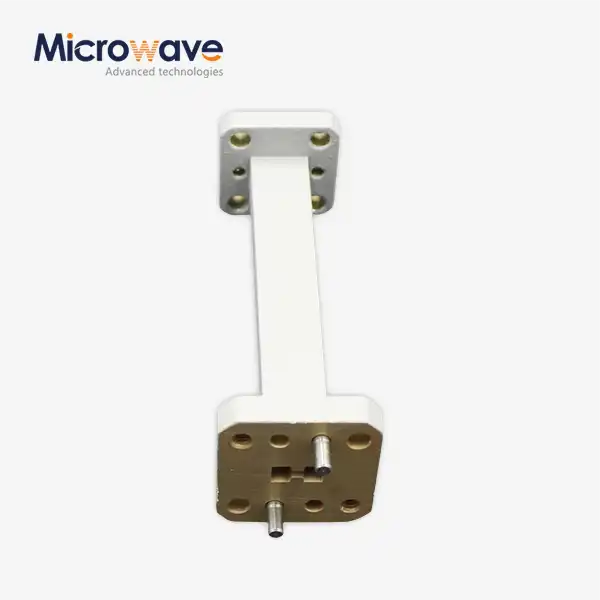
Depending on the needs of the application and the frequency of operation, precision brazing, TIG welding, or mechanical fastening can be used to attach the flange. Cover flanges with holes for O-ring seals allow for pressurization, which keeps moisture out and raises the dielectric breakdown limits to increase the amount of power that can be handled. Choke flanges have quarter-wave traps built in that keep the electricity flowing without metal-to-metal contact, which lowers the sensitivity of the assembly. For proper fitting and to stop RF leakage, the planarity of the flanges must stay within 0.001 inches.
Quality Verification Procedures
The Vector Network Analyzer tests across the chosen frequency range, checking for return loss, insertion loss, and phase issues. Coordinate Measuring Machines make sure that the inside measurements are the same as what was planned. Flange planarity gauges make sure that the fixing surface is flat. Pressurization leak tests show that hermetic sealing works for high-power or outdoor uses. These thorough quality control steps make sure that the waveguides that are supplied meet all the technical requirements. This lowers the risk of problems in the field or poor system integration. Within our ISO 9001:2015-certified facilities, ADM can test up to 110 GHz, and we provide written proof for every produced part.
Comparing Straight Waveguide Sections with Alternative Solutions
To choose the right transmission medium, you need to know how the performance of different technologies and waveguide configurations compares.
Waveguides Versus Coaxial Cables
Below 2 GHz, coaxial lines are the most common because they are flexible, easy to install, and have lower component costs. Dielectric losses, on the other hand, rise significantly with frequency, so waveguides are better than X-band. Waveguides can handle much higher power levels—often more than kilowatts constantly and megawatts in burst operation—without the risks of dielectric breakdown that come with coaxial designs. Since there are no center conductors, temperature cycling doesn't cause dielectric heating or VSWR degradation. Waveguides are better at shielding because they have a continuous metal cage that keeps electromagnetic interference out of RF environments on ships or planes.
Rigid Straight Sections Versus Flexible Alternatives
When placement restrictions mean that waveguides have to go around objects or let equipment move, they are flexible enough to do that. But this flexibility comes at a cost: higher insertion loss, less power handling, and less mechanical stability when the system is vibrating. Straight rigid sections give the best electrical performance with the least amount of loss. This makes them perfect for fixed systems where there are clear lines of sight between parts. System builders usually use hard sections for the main runs and flexible sections for connecting the final pieces of equipment or for tasks that need to be able to change their position.
Standard Versus Custom Cross-Sections
The EIA standard waveguide measurements cover most business and military uses, and the parts are easy to find and arrive on time. Custom cross-sections are useful when working with non-standard frequency bands, fitting into platforms with limited space, or getting the best mode propagation characteristics. The choice has to be made by weighing the benefits of improving performance against the costs of engineering, the length of wait times, and the possible problems in the supply chain that can come from relying on a single source.
These insights help the procurement and engineering teams choose the best solution by looking at things like installation limitations, frequency bands, environmental conditions, and power levels. This helps improve system performance while keeping costs and logistics in mind.
Procurement Considerations: How to Buy High-Quality Straight Waveguide Sections
To source effectively, you need to think about how to evaluate professional skills, quality systems, and business terms that fit the needs of the project and your company's buying rules.
Evaluating Supplier Technical Capabilities
Look at CNC machine age and accuracy ratings, plating bath controls, and testing devices to determine how sophisticated the production equipment is for a straight waveguide section. Check quality licenses like ISO 9001 for quality management systems, AS9100 for aircraft, and military certification. Check engineering support by checking at technical personnel credentials, design assistance, and speedy prototyping. Supplier measuring facilities should have calibrated and documented equipment that indicates measurement uncertainty throughout operational frequency ranges. ADM tests antennas and waveguides from 0.5 to 110 GHz in its 24-meter microwave darkroom. Vector Network Analysers and weather test rooms ensure performance in various temperatures and humidity.
Customization and Volume Considerations
Standard catalog items have shorter lead times and lower unit costs, but they might mean making some changes to how the system is designed. Custom designs, such as different widths, special flange types, or non-standard finishes, can meet specific integration needs but come with higher costs and longer delivery times. By dedicating production runs that spread out setup costs over bigger quantities, volume agreements can often open pricing benefits. Long-term contracts can keep prices stable and make sure that capacity is allocated correctly when the market is short. Prototype quantities before production commitments let you check the design and see if the supplier can meet your needs. This lowers the risks that come with large-scale deployments.
Documentation and Compliance Requirements
For defense and aerospace uses, traceability paperwork like material certifications, dimensional inspection reports, and test data packages is needed. Compliance with the International Traffic in Arms Regulations (ITAR) affects military sales and source rules around the world. RoHS compliance makes sure that dangerous chemicals are limited for European markets and groups that care about the environment. The REACH regulations add more requirements for chemical substance disclosure. Making sure that all the necessary paperwork is clear during the quote process avoids delays and extra costs during the completion of the order.
Geographic and Logistic Factors
Domestic suppliers provide shorter wait times, simpler interaction, and fewer geopolitical concerns, but they cost more. Chinese manufacturers have low prices and reliable quality processes. However, cultural and time zone variations need clear directions and communication. European suppliers are attractive to projects that value long-term connections and industrial legacy due to their quality and affordability. Delivery dates and risk management depend on shipping types. Air freight expedites crucial deliveries but costs more, whereas ocean freight saves money on big orders but takes longer. Consignment agreements, vendor-managed inventory, and backup stock maintenance facilitate just-in-time production. These methods prevent supply shortages.
Applications and Advantages of Straight Waveguide Sections in Communication Systems
These parts give important performance boosts in many high-frequency uses where dependability and signal integrity are key to system success.
Defense and Aerospace Radar Systems
Air traffic control, weather monitoring, and military spying all use high-power radar emitters that send megawatts of peak power from magnetron or klystron sources to phased array antennas. At these very high power levels, there is no chance of breakdown because there are no insulating materials present. Sections that are pressurized and filled with dry nitrogen or sulfur hexafluoride increase voltage standoff capacity even more. This is important for high-altitude aircraft and missile systems that work in low atmospheric pressure. Vibration, shock, and G-forces that happen on airborne platforms and shipboard installations can't damage rigid mechanical construction.
Satellite Ground Station Infrastructure
Low-loss waveguide runs are used to keep signal power high across Ku-band and Ka-band bands in uplinks from earth stations that connect High Power Amplifiers to large aperture antennas. Tens of meters separate the vertical tower route from the antenna feed assemblies. This is where link budgets and running costs are directly affected by the losses that build up. Hermetic sealing keeps out moisture that would otherwise cause corrosion and performance loss after years of being outside. Electrical properties stay the same even when the temperature changes throughout the day, from the sun's warmth to cooling at night.
Scientific and Industrial Applications
In particle accelerators, ultrahigh-vacuum copper waveguides carry RF energy into holes to accelerate. Maintaining a clean surface and outgassing qualities are crucial for maintaining a vacuum at 10-8 Torr. Industrial microwave heating systems use waveguides. They provide kilowatts of continuous power with uniform field distributions for chemical, food, and material processing. In research laboratories, electromagnetic tests need accurate waveguides for calibration and measurement cells, where dimensional precision directly affects experimental validity.
When engineers and procurement managers understand these applications, they realise how crucial it is to invest in dependable waveguide solutions that support communication infrastructure and technological growth. Quality waveguides are durable and low-maintenance. This makes the initial investment worthwhile since they save money and maintain the system.
Conclusion
Metallurgical science, mechanical engineering, and electromagnetic expertise are all needed to make precision straight waveguide sections that meet strict technical requirements. From choosing the raw materials to testing the finished product, every step in the production process affects performance traits that decide how reliable the system is and how well it works. If procurement professionals know about manufacturing processes, material trade-offs, and quality verification methods, they can choose suppliers in a way that meets both performance needs and budget constraints. As microwave systems keep moving into higher frequency bands for 5G infrastructure, satellite communications, and defense uses, the need for precise waveguide components made to exacting standards will only grow. This means that working with suppliers who have already shown they can do the job will become more valuable.
FAQ
What Factors Should I Prioritize When Selecting Materials?
The choice of material depends on the needs of your application. OFHC copper has very little insertion loss, which makes it perfect for tests in the lab and high-power radar where signal purity is very important. When compared to copper, aluminum 6061-T6 is about 70% lighter, which is important for applications in space and the air where mass is limited. Brass is a moderately priced metal that doesn't rust in salt water. Internal plating—silver for best conductivity and gold for resistance to oxidation—improves the qualities of the base material. When deciding between choices, you should think about the budget, working frequency, power levels, environmental exposure, and weight limits.
How Do Dimensional Tolerances Affect Performance?
Changes in internal dimensions have a direct effect on the impedance matching and cutoff frequency. Deviations of more than ±0.002 inches from the standard values can change the working bands and raise the VSWR, which causes signal reflections that lower the system's efficiency and could hurt sensitive transmitters. Flange planarity tolerances of less than 0.001 inches make sure that the connections make good electrical contact and stop RF leakage. In matching systems, phase relationships are changed by length accuracy. Coordinate Measuring Machines are used by reputable manufacturers to make sure that measurements meet standards. This provides proof that the dimensions are correct.
What Testing Validates Quality Before Delivery?
Vector Network Analyzer sweeps are used for thorough testing to measure return loss and insertion loss across full frequency bands. This shows any internal flaws or irregularities in the dimensions. Dimensional checks make sure that the cross-sections inside meet EIA guidelines. Measuring the flange's planarity confirms that the mounting surface is flat. Leak tests under 10-15 PSI of pressure prove that the seal is hermetic. Using borescopes to look at the inside of surfaces helps check the shine and find any contamination. ADM includes full test data packages with every shipment, which show how well the product met the requirements.
Partner with ADM for Precision Straight Waveguide Section Manufacturing
ADM is in a unique position to meet the special needs of procurement teams that need reliable waveguide components backed by proven production knowledge. Our ISO 9001:2015-certified production plants have been making microwave parts for 20 years and can test them at high frequencies up to 110 GHz. Our engineering team works closely with clients to make the best designs while balancing performance and cost goals. This is true whether they are looking for standard EIA configurations or making custom solutions for specific frequency bands.
As a reliable provider of straight waveguide sections, we keep large stockpiles of all the materials we need to make prototypes quickly and make production schedules that can be changed to fit changing project deadlines. Our high-quality documentation packages meet the strictest requirements for traceability in defense and aerospace applications. Competitive volume pricing and global logistics support will help you make sure that your purchasing goals are in line with your budget and delivery dates.
Get in touch with craig@admicrowave.com right away to talk to our technology experts about your waveguide needs. We'd love the chance to look over your specifications, give you detailed quotes, and show you how our manufacturing skills and focus on the customer can help your mission-critical communication systems.
References
1. Pozar, D. M. (2011). Microwave Engineering, Fourth Edition. Hoboken: John Wiley & Sons.
2. Saad, T. S. (1971). Handbook of Microwave Integrated Circuits. Norwood: Artech House.
3. Collin, R. E. (1992). Foundations for Microwave Engineering, Second Edition. New York: McGraw-Hill.
4. Montgomery, C. G., Dicke, R. H., & Purcell, E. M. (1948). Principles of Microwave Circuits. London: Peter Peregrinus Ltd.
5. Ramo, S., Whinnery, J. R., & Van Duzer, T. (1994). Fields and Waves in Communication Electronics, Third Edition. New York: John Wiley & Sons.
6. Marcuvitz, N. (1986). Waveguide Handbook. London: Institution of Engineering and Technology.