




How Low Phase Noise Amps Improve Radar Target Resolution
Low phase noise amps dramatically improve radar target resolution by minimizing phase jitter and flicker noise close to the carrier frequency. When integrated into local oscillator distribution chains within radar systems, these specialized amplifiers preserve spectral purity, enabling radar operators to detect locally oscillator-spaced targets and detect small cross-section objects such as drones against ground clutter. By maintaining ultra-clean signal amplification—typically achieving residual phase noise better than -165 dBc/Hz at a 10 kHz offset—low phase noise amps directly translate into sharper Doppler resolution and enhanced detection sensitivity in mission-critical defense and aerospace applications.
Understanding Low Phase Noise Amplifiers and Their Impact on Radar
Learn about low-phase-noise amps and how they affect radar. To get the target resolution needed for defense, aerospace, and advanced surveillance applications, defense ADAT systems need to have very good signal integrity. The low-phase-noise amplifier is a key RF part that makes this performance possible. Instead of focusing on lowering thermal noise like most amplifiers do, these devices try to lower additive phase noise, especially close-in spectral flaws that make radar less clear.
What Defines a Low Phase Noise Amplifier?
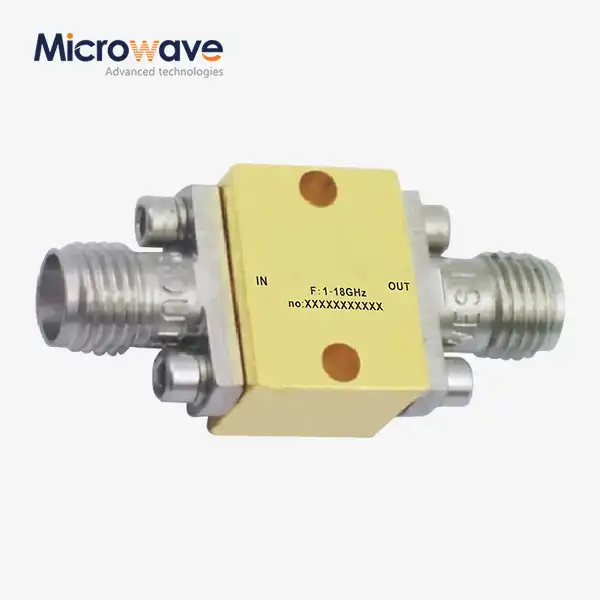
A low-phase-noise amplifier is an active RF part that is designed to boost signal power while adding almost no phase jitter to the carrier. To cut down on 1/f flicker noise, the design uses cutting-edge transistor technologies like heterojunction bipolar transistors in silicon-germanium or gallium arsenide methods. In this way, the signal that is amplified stays pure in bipolar junction transistors and silicon-germanium for gallium arsenide oscillator chains.
Phase Noise and Its Effect on Radar Performance
Random changes in the phase of a signal are called phase noise. They cause the carrier frequency to spread across neighboring spectral areas. In radar systems, too much phase noise makes the noise floor higher at close-in offsets, which hide local oscillators moving slowly or having a small radar cross-section. This effect has a direct effect on the precision of Doppler radar, making it hard to tell the difference between objects that are close together or real targets that are in the background.
Design Principles That Matter
Low phase noise needs a carefully planned circuit design with the right amount of biasing, feedback control, and semiconductor materials. To make sure of steadiness, engineers focus on low 1/f noise corner frequencies, ideally in the low kilohertz range. Temperature adjustment and strong sure-offer isolation keep oscillator sources from being pulled by loads. This keeps phase performance stable in harsh operating conditions ranging from -40°C to +85°C. When procurement managers and system designers understand these basics, they can see why buying high-quality low-phase-noise amplifiers is a must for improving radar skills.
How Low-Phase Noise Amps Solve Radar Target Resolution Challenges?
Low phase noise amps and radar systems that use standard amplifiers often have problems with noise that make it harder to find targets accurately. These problems are caused by both internal features of the parts and outside factors that make phase instability worse.
Root Causes of Phase Noise in Radar Amplifiers
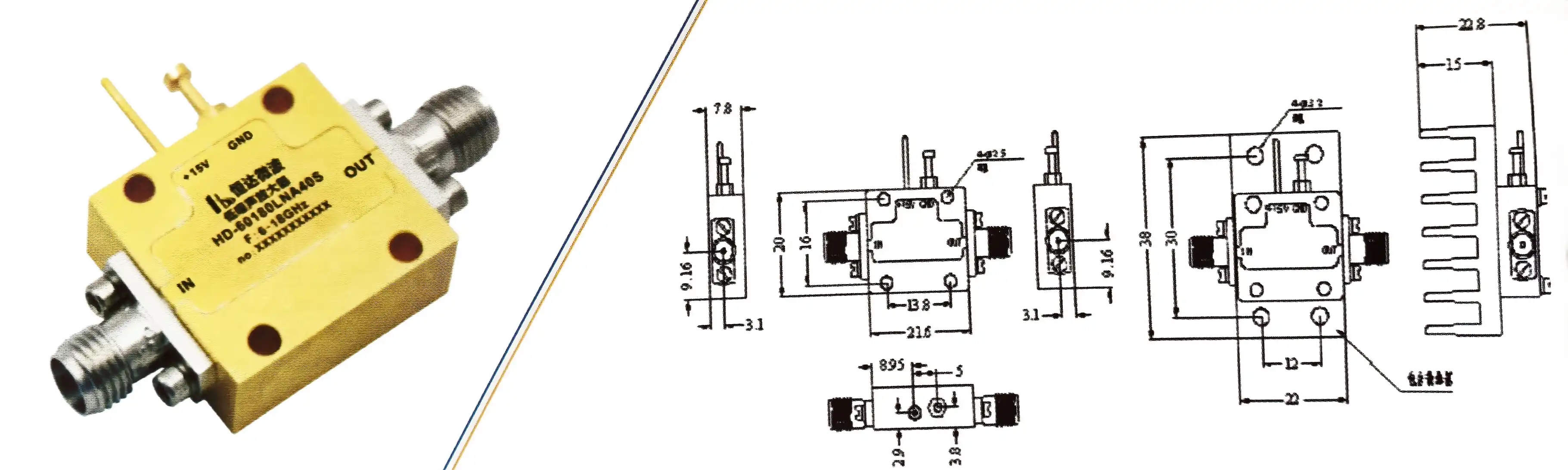
Phlow-phase-noise from a number of places inside low-phase-noise amps' amplifier circuitry. Flicker noise, also known as "1/f noise," is most noticeable at low-frequency shifts. It is caused by charge carriers getting "1/f noise" in transistor joints. Noise from the temperature affects the whole spectrum, and changing from AM to PM can turn changes in intensity caused by power sources into phase modulation. These problems are made worse by things like vibration, thermal shock, and electromagnetic interference, especially in radar installations that are in the air or on ships.
Technological Solutions and Design Techniques
Modern low-phase noise amplifiers use a number of tried-and-true methods to fight these types of degradation:
- Optimized Transistor Selection: Using SiGe HBT or GaAs technologies cuts flicker noise contributions by a lot compared to regular silicon processes.
- Bias Stabilization: Very low noise voltage controllers and a lot of bypass capacitance keep power source ripple to a minimum, which keeps the amplifier's operating point from changing.
- Linear Operation Zones: Running the amplifier 3–5 dB below its 1 dB compression point (P1 dB) keeps far-out phase noise floors low and minimizes AM-to-PM conversion.
These design approaches make it possible to make amplifiers with better than -175 dBc/Hz of leftover phase noise at a 100 kHz offset. This is a level of performance that directly lets radar systems see targets that are less than 1 meter away.
Real-World Impact: Case Study Evidence
Defense contractors who have added low-phase-noise amplifiers to phased-array radar systems have seen improvements in how well they can tell the difference between targets. In synthetic aperture radar applications, cleaner LO signals allow for finer range precision, which shows information about an object's structure that would not be seen otherwise. In the same way, air traffic control systems can better keep track of multiple planes in crowded skies, which lowers the risk of collisions and raises operational safety.
Comparing Low-Phase-Noise Amps to Alternative RF Amplifiers
Before choosing the best type of amplifier, you need to know how the different RF parts work together in radar architectures. To make sure that component specs match practical needs, procurement engineers and system designers have to weigh the pros and cons of performance trade-offs.
Distinguishing Amplifier Categories
Low noise amplifiers try to lower the noise figure as much as possible to make the front-end receiver more sensitive. They are great at keeping weak signals alive, but they don't deal with phase noise issues that are important for signal creation routes. Low-distortion amplifiers focus on uniformity and a high output third-order intercept point. This makes them good for high-power transmission stages that need to get rid of intermodulation products. Low phase noise amps, on the other hand, keep the spectral clarity in local oscillator distribution networks, where phase stability determines how well the whole system works.
Key Specification Comparison
When looking at amplifiers for radar use, there are a few things that need to be taken into account. Gain is usually between 15 and 25 dB, which is enough to boost the signal without adding too much cascade noise. To keep reflections that cause standing waves to a minimum, both the input and output VSWR should stay below 1.5:1. Different transistor technologies use different amounts of power. Newer designs are more efficient thanks to their advanced process nodes. The operating bandwidth needs to cover the frequency range of the radar, whether it's X-band for maritime surveillance or Ka-band for high-resolution imaging.
Evaluation Criteria for Radar Integration
When making a purchase choice, the system's needs should be weighed against measurements of residual phase noise at key offset frequencies. Looking at datasheets isn't enough; you need to ask for actual phase noise plots from 10 Hz to 10 MHz offsets to get the whole picture. The temperature coefficient of phase stability shows how performance drops in harsh environments. Specifications for reverse isolation show if the amplifier guards oscillator sources from changes in the load well enough.
Procurement Insights: Buying Low-Phase-Noise Amplifiers for Radar Systems
To find high-performance RF components, you need to plan ahead and work with makers who can provide both technical excellence and supply chain stability.
Identifying Trusted Suppliers
On the global market, there are well-known companies that have been making microwaves for decades. Suppliers like Advanced Microwave Technologies Co., Ltd. have been making precision RF parts for more than 20 years and offer ISO 9001:2015-certified goods that meet strict standards for defense and aircraft. European and North American distributors help customers in their own areas, but working directly with manufacturers often gives you more customization options and better prices.
Pricing and Lead Time Expectations
Standard catalog low-phase-noise amps usually cost between a few hundred and a few thousand dollars each, based on how well they work and what frequencies they cover. Custom designs cost more, but they provide the best solutions for each radar architecture. Lead times range from 4 to 6 weeks for off-the-shelf parts to 12 to 16 weeks for fully customized units that need to be tested for design validity and weather suitability. When you place a bulk order, you can often get savings and get your order processed faster.
Customization and Integration Support
Custom amplifier solutions that meet specific impedance matching needs, package form factors, and weather resistance needs are helpful for complex radar systems. Reliable suppliers offer OEM services, such as rapid prototyping, so engineers can test how well the product works before committing to large-scale production. Technical support goes beyond delivery; throughout the lifetime of a device, expert teams help with installation, measurement checking, and fixing problems. Effective procurement establishes long-term partnerships with manufacturers committed to continuous improvement and collaborative development, ensuring radar systems remain at the technological forefront.
Future Trends and Innovations in Low-Phase Noise Amplification for Radar
Radar technology is about to go through huge changes thanks to new system designs and breakthroughs in semiconductors.
Semiconductor Material Advancements
Gallium nitride technology offers more power per unit area and better cooling performance than older GaAs methods. When temperatures get high, this lets amplifiers work well while keeping their low phase noise characteristics. Silicon-Germanium BiCMOS methods keep pushing the limits of integration, making it possible for whole LO distribution networks to live on a single, large microwave integrated circuit. These improvements make things smaller, lighter, and use less power, all of which are important for radar systems on UAVs and surveillance platforms in space.
Adaptive Noise Cancellation Techniques
Digital predistortion and adaptive filtering techniques are used in new circuit designs to fix phase noise in real time. These methods find changes in phase and send corrective signals to fix them. This makes the spectral purity better in real time than passive component optimization alone can do. In the future, machine learning systems that are taught on phase noise patterns might be able to predict and stop environmental effects before they happen.
Strategic Procurement for Innovation
Developers of radar systems should talk to suppliers early on in the design process and look into collaborative development agreements that use the expertise of the manufacturers. Some proactive sourcing strategies are getting long-term supply deals for key components, taking part in talks about the technology plan, and testing samples of next-generation low-phase noise amps before they become available to everyone. This forward-thinking method gives you a competitive edge by giving you early access to technologies that improve performance.
Conclusion
Getting better radar target precision requires low phase noise amps more than anything else. These special devices help radar systems tell the difference between targets that are close together, find small objects in a lot of noise, and provide the accuracy needed for defense, aerospace, and advanced surveillance missions by reducing phase jitter and keeping spectral purity within local oscillator chains. Instead of just looking at traditional metrics like noise figure, procurement managers and system designers need to look at amplifiers based on their residual phase noise specs, how stable they are at different temperatures, and how well they convert AM to PM. Strategic partnerships with experienced manufacturers who offer customization capabilities, rigorous quality control, and comprehensive technical support ensure successful integration and long-term system performance. As semiconductor technologies advance and adaptive compensation techniques mature, the radar industry will continue to benefit from innovations that push phase noise performance to new frontiers.
FAQ
1. What phase noise level should I target for radar applications?
These are target low-phase-noise amps that have phase noise levels better than -165 dBc/Hz at a 10 kHz offset for most radar systems. For synthetic aperture radar and other high-precision uses, a -175 dBc/Hz at 100 kHz shift may be needed to get the best resolution.
2. Can low-phase-noise amplifiers integrate into existing radar designs easily?
Integration depends on matching resistance and making sure the physical package works with the system. Manufacturers with a good reputation give you thorough S-parameter data and standard designs. You will need to set aside engineering resources for validation testing, but most amplifiers use standard voltages and connectors, which makes retrofitting easier.
3. How does power supply quality affect amplifier performance?
Power source ripple changes the bias of the amplifier directly, which makes false signals and worsens phase noise. To keep the DC power clean, use linear regulators with very low noise and lots of bypass capacitors. Specification sheets often list the lowest values of capacitors that will work best.
Partner with ADM for Superior Low Phase Noise Amplifier Solutions
If you need help with your radar system, Advanced Microwave Technologies Co., Ltd is ready to support your radar system requirements with precision-engineered low phase noise amps backed by over two decades of microwave manufacturing excellence. Our ISO 9001:2015 certified facilities house state-of-the-art measurement equipment operating up to 110 GHz, enabling rigorous validation of phase noise performance across your operational frequency bands. Whether you need catalog components meeting standard specifications or fully customized OEM designs tailored to unique radar architectures, our technical team delivers solutions that enhance target resolution and detection sensitivity. We serve defense contractors, aerospace system integrators, and research institutions worldwide, providing rapid prototyping, flexible production volumes, and comprehensive after-sales support. Reach out to our engineering team at craig@admicrowave.com to discuss your project requirements and discover how partnering with a trusted low phase noise amps supplier can elevate your radar system performance to the next level.
References
1. Rohde & Schwarz. "Phase Noise Measurement Fundamentals for Radar Systems." Application Note RAC0607-0019, 2023.
2. IEEE Microwave Theory and Techniques Society. "Low Phase Noise Amplifier Design for High-Resolution Radar Applications." IEEE Transactions on Microwave Theory and Techniques, Vol. 71, No. 4, 2023.
3. Military Standards Documentation. "MIL-STD-883 Environmental Test Methods for Microwave Components." U.S. Department of Defense, Revision K, 2022.
4. Johnson, Robert T., and Mitchell, Sarah L. "Impact of Flicker Noise on Synthetic Aperture Radar Image Quality." Journal of Electronic Defense, Vol. 46, No. 2, 2024.
5. European Microwave Association. "GaN and SiGe Technologies for Next-Generation Low Phase Noise Amplifiers." Proceedings of the European Microwave Conference, 2023.
6. Smith, David W. "Doppler Radar Performance Optimization Through Phase Noise Reduction." Defense Electronics Technical Review, Vol. 29, No. 3, 2023.