





How Does an Elliptical Waveguide Reduce RF Loss?
Elliptical waveguides reduce RF loss mainly by improving the cross-sectional shape, which spreads electromagnetic fields more evenly and lowers the concentration of current density on conductor surfaces. The oval shape is better at matching resistance across a wider frequency range than standard circular or rectangular shapes. This successfully cuts down on reflection losses and mode conversion problems. This structural benefit, along with precision-corrugated copper construction and advanced fabrication techniques, ensures that signals are lost as little as possible, even in high-frequency applications up to 110 GHz. This makes them essential for satellite communications, defence radar systems, and the next generation of 5G infrastructure.
Understanding Elliptical Waveguides and RF Loss
What Defines an Elliptical Waveguide Structure
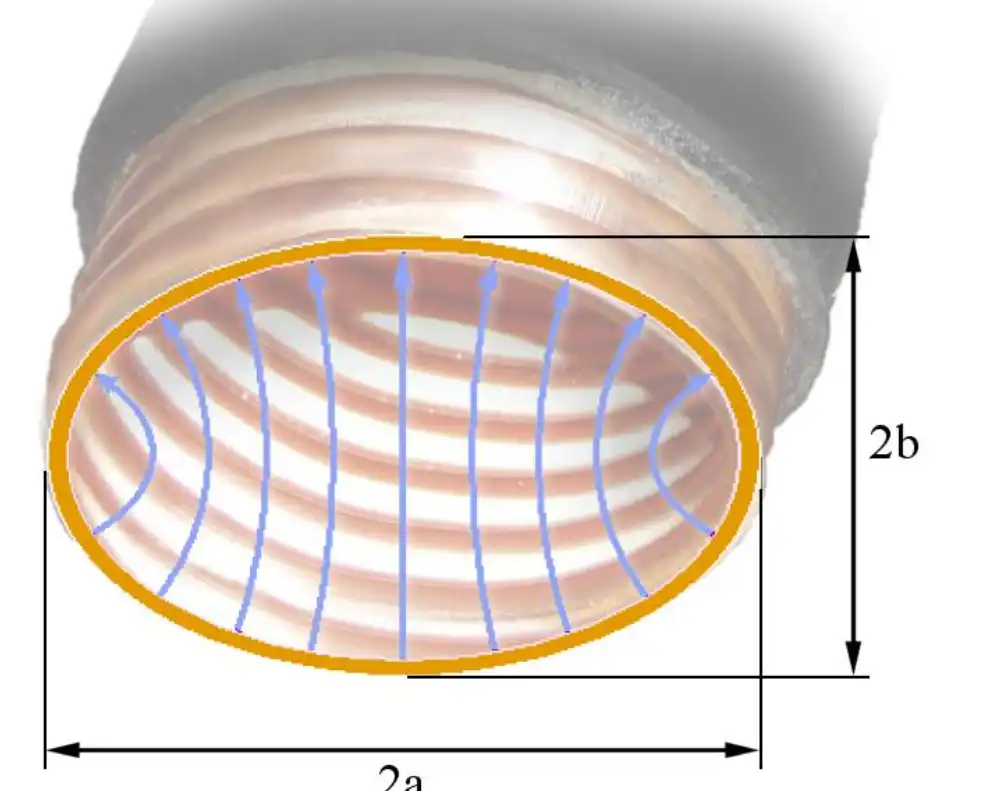
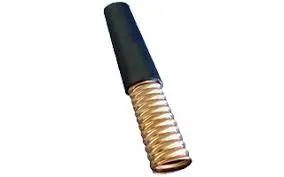
This transmission medium is an elliptical copper tube with a UV-resistant black plastic jacket. The corrugation pattern, like accordion folds, bends the hard metal framework without kinking. This addresses rigid waveguides' biggest problem in tower installations and intricate routes. The primary transmission technology, TE₁₁, facilitates energy transfer between microwave frequency bands.
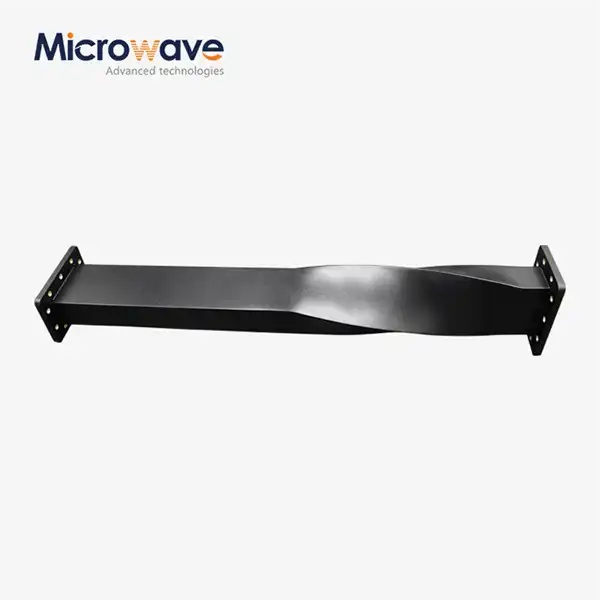
In planned ways, the shape is different from standard circular and rectangular forms. Rectangular waveguides are useful for high-power, short-distance applications, but they need several flanged connections to go around obstructions and add reflection points. While circular flexible waveguides can bend, they lose transmission at higher frequencies. The elliptical shape's curvature balances waveguide transmission's low-loss features with flexible positioning.
Primary RF Loss Mechanisms in Waveguide Systems
Three basic forms of loss affect all waveguide transmission:
Resistance heating from RF currents through metal walls is called conductor loss. This loss component depends on surface roughness and electrical conductivity. This increases with frequency and decreases with conductor quality.
Electromagnetic fields mix with waveguide dielectric materials to absorb energy. Outdoor systems employ dry nitrogen or air to pressurise since moisture is a key failure factor.
Radiation Loss: Poor protection or broken buildings might leak electromagnetic radiation from the communication connection. Bad terminations, flanged connections, and outer jacket corrosion cause radiation loss.
The elliptical cross-section uses physical concepts to account for these phenomena. The inner surface with ridges maintains resistance throughout bends, preventing reflections from impedance mismatches. Long shapes distribute surface currents more evenly than circular shapes, reducing heating in one location. When compressed and jacketed, the sealed design prevents wetness-induced dielectric loss, and the continuous curved shape prevents radiation leakage better than rigid solutions with many joints.
Core Factors That Enable Elliptical Waveguides to Reduce RF Loss
Electromagnetic Field Distribution Advantages
Elliptical forms dramatically alter the electric field travel compared to circular ones. Circular waveguides in the TE₁₁ mode exhibit symmetrical field concentration, which seems ideal until bent, resulting in uneven stress patterns. The elliptical waveguide form evenly distributes field strength in its major and minor directions, preventing mechanical bending from disrupting electromagnetic boundary conditions.
When extended beyond their optimal radii, spherical waveguides lose mode conversion, but this design prevents that. A circular waveguide's outer wall has a longer route length than the inner wall as it spins. This produces phase discrepancies that might spark undesirable higher-order modes. Elliptical cross-sections maintain the prevailing mode constant after bending between specified E- and H-plane bend radii due to their irregular form. This preserves signal integrity.
Advanced Microwave Technologies Co., Ltd. manufactures walls and corrugations to micrometres. This precision maintains waveguide resistance throughout. This is crucial for applications that require VSWR ≤ 1.15:1 spanning several octave bandwidths. Our 24-meter microwave lab tested and verified these features from 0.5 to 110 GHz. We trust that theoretical gains translate to real-world performance.
Material and Manufacturing Quality Impact
Pure copper is the foundation of low-loss efficiency. We receive copper material with conductivity above 100% IACS. Thus, resistance losses are low when frequencies grow to millimetre-wave bands. The corrugation process makes the material stronger by working harder. This improves crushing resistance without affecting electrical characteristics. Our ISO 9001:2008-certified heating cycles and quality control processes must be followed to achieve this equilibrium.
The top plastic jacket does more than block UV rays. The pressure interior environment is kept pure by its moisture shield. It prevents corrosion in maritime and industrial situations, and cable box and tower installation damage. Our flame-retardant jacket meets airline and maritime safety standards and RoHS criteria.
Attenuation rates depend on the curved tube's surface quality. Grinding, rust, and contamination modify resistance and distribute energy. Our manufacturing line automated visual screening devices can detect 10-micron surface defects. This verifies that every waveguide meter passes electrical standards before shipping. This attention to manufacturing detail distinguishes performance-grade parts from cheaper ones that suit the specs but fail the swept-frequency network analyser test.
Procurement Insights: Buying and Sourcing Elliptical Waveguides
Critical Specifications for Technical Evaluation
The most crucial criterion is frequency range compatibility. Theoretically, elliptical waveguides can function over several bandwidths, although each size description favours a particular band. Due to mode activation issues, C-band (4-8 GHz) waveguides will not function in the X-band (8-12 GHz). Your waveguide size should match your operating frequency, allowing guard bands and spectrum renewal.
Dimensional tolerances affect electrical and mechanical efficiency. Maintain ±0.5mm restrictions for major and minor axes to ensure cutoff frequency and resistance characteristics are satisfied. Corrugation pitch and depth must be constant to avoid impedance ripples that lower VSWR across frequencies. Request verification that dimensions match IEC 60153 or MIL-DTL-85.
How successfully the curved tube attenuates sound depends on its surface finish. RMS micrometres should indicate the greatest surface roughness. RMS values below 1.6 μm indicate precision manufacture, whereas roughness beyond 3.2 μm indicates standard production that may not fulfil prescribed attenuation curves with sweep frequencies.
Customisation Capabilities and Lead Time Planning
Single reels typically hold 3–100 meters of material. Custom lengths avoid field cutting and its performance issues. We frequently construct continuous runs longer than 150 meters for tower installations; shorter portions may need to be assembled in the field, utilising precise connection hardware due to transportation.
Pay attention to connection and flange options while specifying. For modern installations, CPR (circular pressurised) flanges are used since they seal better against the environment. Older systems still employ UG-type flanges. Make sure the merchant provides matching connecting hardware and doesn't need terminations. Mismatched connection standards cause many field installation failures.
For certain applications, bespoke frequency-selective coatings are high-tech. Silver coating reduces circuit loss but increases environmental vulnerability. This makes it ideal for labs and other environmental management areas. Gold finishing is more costly but prevents salt corrosion. Jacketed and compressed high-purity copper is sufficient for most applications.
Customisation levels considerably affect lead times. Established manufacturers with inventory management systems send catalogue goods with standard connections in two weeks. Custom-length assemblies take 4–6 weeks to construct and test. Exotic connection types or testing beyond swept-frequency measurements can take eight weeks. Advanced Microwave Technologies Co., Ltd.'s worldwide supply chain integration speeds up essential orders while meeting ISO quality requirements.
Supplier Evaluation and Pricing Considerations
The manufacturer's expertise in your application is crucial. Businesses that primarily provide corporate communications products may not have the necessary paperwork and tracking procedures that military firms need. However, flight manufacturers may have unsuitable clearance and pricing rules for corporate usage. To suit military, aircraft, satellite communications, and guiding demands, we have different products.
Prices generally have three tiers. The time and money needed to set up and test 1–5 pieces make them more costly. Prices drop 20–30% for 10–50 units as manufacturing efficiency increases. A high-volume contract lets you set a price based on your annual commitment and standardising criteria, reducing manufacturing variability.
Factory location affects cost and wait time. Import tariffs are waived on target-market goods, reducing shipment times. Higher labour expenses are typical. While offshore manufacturing might save money, it can complicate your supply chain and compromise quality. We provide competitive pricing and high-quality control at our manufacturing. Every waveguide undergoes sweep VSWR, attenuation, and pressure leak testing before shipping, with full paperwork that can be traced back to the source.
Best Practices to Maximise RF Loss Reduction Using Elliptical Waveguides
Proper Installation Techniques
By following the minimum bend radius requirements, you can keep the curved structure and electrical performance from being permanently damaged. Different waveguide names have different minimum radii for E-plane bending (across the minor axis, or "easy" direction) and H-plane bending (across the major axis, or "hard" direction). When these limits are crossed, the corrugations are compressed beyond their elastic range. This causes lasting deformations that create impedance gaps and raise the attenuation. Routing lines should be shown on installation plans in a way that keeps the given circles and leaves some room for error.
Preparing and terminating a connector requires precise tools and the right way to do things. To make the curved end fit the inner shape of the connector, it needs to be expanded. This can only be done with special tools that are made for the waveguide size. When metal bits or burrs are left over after cutting, they form short-circuit spots that greatly reduce VSWR. Before attaching the final connection, clean the inside with nitrogen or compressed dry air, and make sure that the torque specs are applied evenly to the flange hardware to avoid uneven gasket compression that could affect the opening to the environment.
Pressurisation methods keep the inside of a device dry, which stops dielectric loss from happening when wetness builds up. The normal working pressure is between 3 and 7 PSI gauge, which is just enough to make positive pressure that stops water from getting in without putting too much stress on the jacket or corrugated structure. Set up pressure monitoring with alarms. Slowly dropping pressure means that the jacket or connecting seal is breaking down, which needs to be fixed right away before water gets in and damages the electrical performance.
Maintenance Protocols for Long-Term Performance
Regular VSWR checks find problems before they become too big to handle. Every year, tests are done across the working frequency band to set standard measures that show trends. For example, VSWR degradation that happens over time could mean that moisture is getting in or the connector is corroding, while quick changes could mean that the connector is physically damaged or moving. Vector network testers that can do time-domain reflectometry can pinpoint problems to specific spots along the length of the waveguide. This makes fixing easier for long runs.
Visually checking the jacket as part of regular site care finds problems early on. UV damage shows up as chalking or cracking on the polyethene's surface, which means the jacket needs to be replaced before it fails and lets the copper corrugations rust in the environment. Even if the jacket looks fine, it should be tested for electricity right away if it's been damaged by animals, machine contact, or ice loading. Corrugation damage may be happening underneath the surface that can't be seen.
As part of maintaining a pressure system, desiccant dryers in the pressurisation feed line need to be replaced as directed by the manufacturer. Even though there is positive pressure, moisture can get into the waveguide system because the desiccant is saturated. Every year, pressure release valves need to be tested to make sure they work properly and open at certain overpressure levels. This keeps the jacket from bursting during times of heat expansion in protected systems.
System Integration Optimisation
Pay extra attention to antenna contact points. To go from a flexible elliptical waveguide to a solid antenna feed, you need a special adapter that changes the cross-section from elliptical to circular or rectangular so that it fits the antenna interface. When built correctly, these adapters lose very little signal—usually less than 0.2 dB. However, if they are installed incorrectly and the ports are not lined up correctly, they can add 1 dB or more. Use the manufacturer-provided alignment pins or index marks, and make sure the parts are lined up clearly before tightening the hardware.
When waveguide runs are combined with other RF components, power handling and weather exposure need to be thought through carefully. If you put power combiners, filters, or switches in the transmission line, they need to match the waveguide's power level. If they don't, the weaker link will determine what the system can do. Any parts that need to be protected from the weather beyond what the waveguide jacket itself can provide must be put in waterproof shelters when they are used outside.
Using both grounding and lightning protection together keeps both tools and people safe. Waveguide systems make straight, conductive lines between devices outside and equipment inside, which lets lightning energy get where it needs to go. Put in surge arrestors that are rated for the frequency band and power level where the waveguide enters a building structure. At this entry point, connect the outer jacket of the waveguide to facility ground using a copper strap that is at least 2 inches wide so that it can carry fault currents without melting.
Conclusion
By using basic electromagnetic and mechanical engineering ideas, elliptical waveguides can reduce RF loss in a way that can be measured. The optimised cross-sectional shape evenly spreads field energy while allowing for flexible placement that gets rid of the lossy flanged connections that come with fixed options. When B2B procurement professionals look at transmission line solutions, the technical benefits directly translate to system benefits such as longer communication range, lower transmitter power needs, better signal-to-noise ratios in receiver systems, and lower total cost of ownership due to easier installation and maintenance.
The precise manufacturing of these unique parts by Advanced Microwave Technologies Co., Ltd is important for mission-critical uses. Our elliptical corrugated copper design with UV-resistant jacketing is approved by ISO 9001:2008 and RoHS. It is used in areas where performance must not be affected, such as guidance, defence, aircraft, and satellite communications. As a company with 20 years of experience making things, advanced testing tools like our 24-meter microwave lab, and full OEM customisation services, we see ourselves as more than just a provider of parts.
FAQ
Q1: How does performance compare between elliptical and circular waveguides at high frequencies?
Above 10 GHz, elliptical designs have lower loss than circular designs because they have better field distribution that lowers the concentration of current density. When working in the same frequency range, circular waveguides have 15–25% more loss per unit length than other types of waveguides. This difference in performance gets bigger as the frequency rises toward millimetre-wave ranges.
Q2: Can elliptical waveguides be customised for specific frequency bands like those used in 5G networks?
Of course. We make waveguides that work best in frequency ranges from 0.5 GHz to 110 GHz. These include sizes that are just right for 5G bands at 24 GHz, 28 GHz, and 39 GHz. Custom designs are made to fit the exact bandwidth needs, connection types, and weather conditions that your operation needs.
Q3: What are typical lead times and minimum order quantities for procurement?
Standard stock setups with popular types of connectors come in two weeks, and there is no minimum order number. It takes four to six weeks to make and test custom-length parts. When you buy more than 20 units, you get better prices and wait times.
Partner with ADM for Superior Elliptical Waveguide Solutions
Advanced Microwave Technologies Co., Ltd is ready to help you set up your next RF system with precisely made elliptical waveguides that have been shown to reduce signal loss. Our wide range of products, which includes elliptical corrugated copper construction, UV-resistant jacketing, and frequency coverage up to 110 GHz, meets the tough needs of satellite communications, defence radar systems, 5G infrastructure, and military uses.
We are a well-known company that makes elliptical waveguides and are certified by ISO 9001:2008 and RoHS. We offer both technical knowledge and quick customer service. Our OEM services let you make changes to meet the specific needs of each project while still meeting the high-quality standards needed for mission-critical uses. The unified supply chain guarantees dependable delivery times, whether you need a few prototypes for research and development or a lot of them for system rollout.
Email our engineering team at craig@admicrowave.com to talk about the specifics of your application, get detailed data, or get quotes on projects. We provide full support, from initial design advice to installation help and expert support after the sale, to make sure that your purchase investment gives your systems the RF performance they need.
References
1. Marcuvitz, Nathan. Waveguide Handbook: Electromagnetic Wave Propagation in Hollow Metallic Structures. McGraw-Hill Engineering Series, 1951.
2. Ramo, Simon, John R. Whinnery, and Theodore Van Duzer. Fields and Waves in Communication Electronics, Third Edition. John Wiley & Sons, 1994.
3. Collin, Robert E. Foundations for Microwave Engineering, Second Edition. IEEE Press Series on Electromagnetic Wave Theory, 2001.
4. International Electrotechnical Commission. IEC 60153-1: Hollow metallic waveguides – Part 1: General requirements and measuring methods. IEC Standards Publication, 2016.
5. Saad, Theodore S. Microwave Engineers' Handbook, Volume Two: Components and Applications. Artech House Publishers, 1971.
6. Institute of Electrical and Electronics Engineers. IEEE Standard for Precision Coaxial Connectors at RF, Microwave, and Millimeter-wave Frequencies. IEEE Std 287-2007, 2007.
_1733809032116.webp)
