




How does a phase shifter work?
Phase shifters change the phase relationship between input and output waveforms by adding controlled delays or moving the signal time forward. A Digitally Controlled Phase Shifter (DCPS) is the most advanced device in this field. It uses digital logic to change between discrete phase states using switching delay lines, vector modulators, or high-pass/low-pass networks that are managed by TTL/CMOS interfaces. Digital phase shifters are much more accurate and repeatable than analogue ones, which can be affected by noise and temperature changes. This makes them essential for mission-critical uses in radar arrays, 5G beamforming systems, and satellite communications, where microsecond-level phase accuracy is crucial for system performance.
Understanding the Fundamentals of Digitally Controlled Phase Shifters
Core Operating Principles
A digitally controlled phase shifter works by carefully connecting different signal paths based on inputs that are represented as binary numbers. Each control bit is responsible for a different phase increment. These phase increments usually follow a binary weighted pattern. A 4-bit device has a resolution of 22.5° (360°/16 states), and a 6-bit system has a precision of 5.625°. GaAs or GaN FET switches are often used in the internal architecture. These switches send signals through calibrated delay elements that keep the phase accurate across the operational bandwidth. The switching process depends on very fast semiconductor switches that can go from one state to another in nanoseconds. When a digital command hits the device, the internal decoder turns on the right set of delay paths. This creates the phase shift that is needed while keeping the signal's integrity. This digital method gets rid of the need for constant tuning that comes with analogue systems. It gives stable, repeatable performance that stays the same even as temperatures change and the system ages.
Key Technical Variants and Specifications
There are several different technologies used in modern digital phase shifters, and each one is best for a certain frequency range and performance need. Vector modulator-based systems work really well in wide frequency ranges, from 500 MHz to 40 GHz, and have great phase linearity. Most high-frequency millimetre-wave applications use switched delay line architectures, which can work well up to 110 GHz while keeping insertion loss variation low. Phase resolution skills vary a lot between implementations. Standard 4-bit devices are accurate enough for many business uses, but 8-bit systems offer the very fine control that is needed for study and high-performance radar systems. A simple formula shows how bit count and phase precision are related: Phase Step = 360°/(2^n), where n is the number of control bits.
Signal Flow and System Integration
The signal that goes through a digital phase shifter starts with RF input filtering. This is where impedance matching networks make sure that the power transfer works as well as it can. The control interface gets digital orders in parallel or serial, and usually needs 3.3V or 5V logic levels that work with modern FPGA and microcontroller outputs. Internal timing circuits keep switching operations in line to reduce transient effects that could lower signal quality. Things to think about when integrating include the right way to ground the device, route control signals, and handle heat. The gadget needs a steady DC supply voltage, which is usually between +5V and +15V, but this depends on the technology. When the frequency goes above 10 GHz, even small parasitic elements can change the phase accuracy and cause unwanted reflections. This makes the Digitally Controlled Phase Shifter's PCB structure very important.
Advantages and Applications of Digitally Controlled Phase Shifters
Competitive Advantages Over Analog Solutions
Digital phase shifters are much better than analogue ones, especially when it comes to accuracy and integrating them into a system. Because digital control is separate, it doesn't have the drift and hysteresis effects that voltage-controlled devices do. Digital logic states don't change when the temperature does, which would change analogue control voltages. This makes temperature stability much better. System integration benefits include direct compatibility with digital control systems, which gets rid of the need for digital-to-analog converters and the calibration procedures that go with them. The fact that control signals are binary makes them easier to implement in software and lets you quickly switch between predefined setups. Digital devices also have better noise immunity and can keep correct phase states even in places with strong electromagnetic fields. Being able to operate them from afar is another big benefit. Digital control signals can travel long distances without losing their quality, which lets distributed phase shifter groups be controlled from one place. This feature is very useful in big phased array installations with hundreds of elements that need to be controlled together.
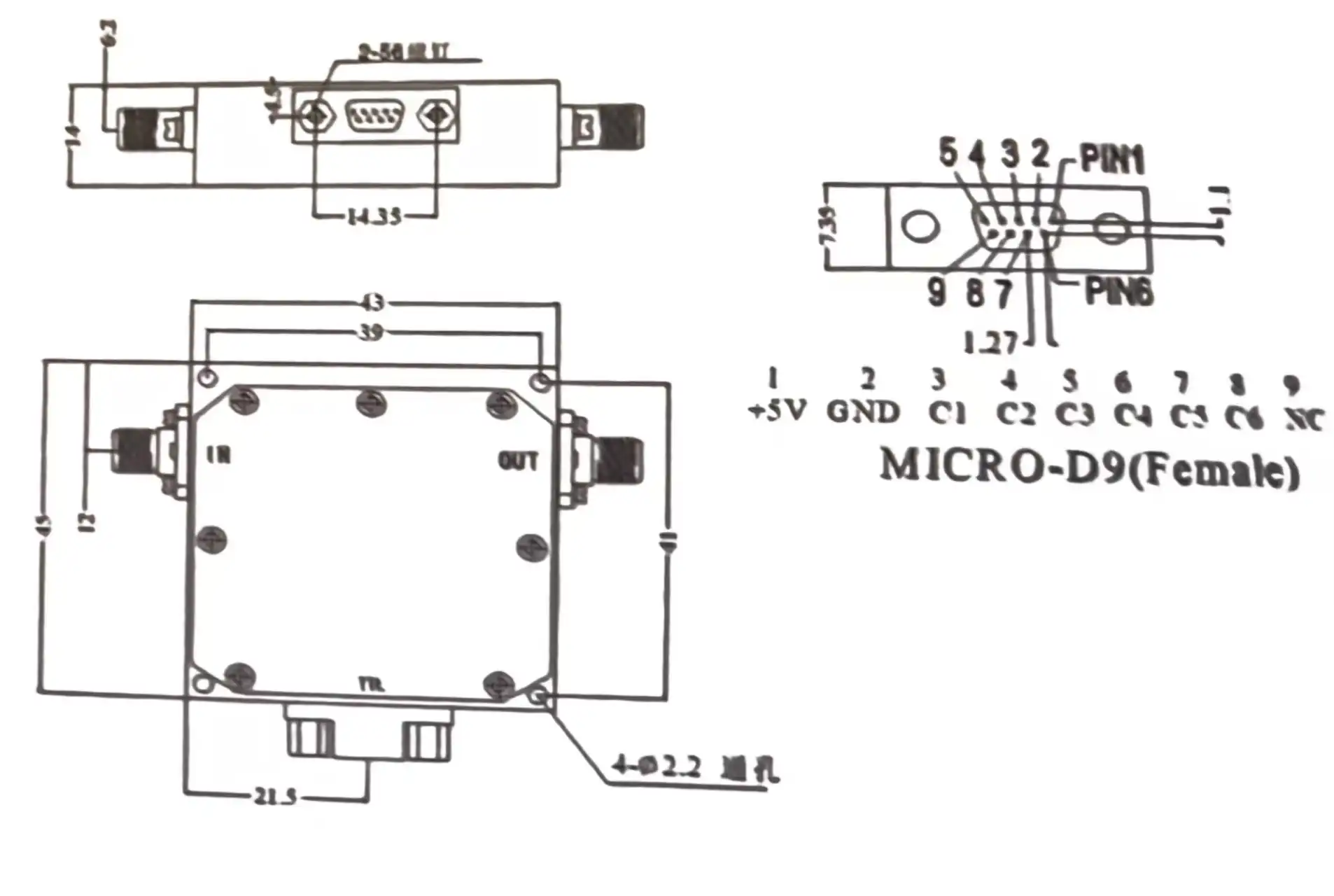
Real-World Industry Applications
The most difficult use for Digitally Controlled Phase Shifter technology is in Active Electronically Scanned Arrays (AESA). Today's radars use thousands of phase shifters to make beams that can be directed and can follow multiple targets at the same time. To keep the beams coherent and get the angular resolution needed for target separation in complex electromagnetic environments, each element needs precise phase control. For 5G massive MIMO implementations, telecommunications infrastructure depends more and more on digital phase shifters. Base stations use beamforming networks to send millimetre-wave energy directly to user devices. This makes the signal stronger while reducing interference. Digital phase shifters can quickly switch between functions, which lets dynamic beam steering adapt to moving users and traffic patterns in real time. Digital phase control is also used in satellite communication systems for its dependability and accuracy. To keep communication lines open with moving satellites, ground stations use phased arrays with digitally controlled parts. These arrays account for Doppler shifts and changes in orbital speed. Digital phase shifters work consistently over the long periods of time needed for business satellite services because they can be used over and over again.
Common Technical Challenges and Solutions
Loss of phase accuracy at very high and very low temperatures is the main problem in hard working conditions. To keep phase drift to a minimum, more advanced systems use materials with matched thermal coefficients and temperature compensation algorithms. The right thermal design, which includes heat sinking and managing airflow, helps keep working conditions stable. Changes in the amount of loss introduced between phase states can cause amplitude modulation that lowers the quality of the signal. To keep the insertion loss the same across all phase states, high-quality digital phase shifters carefully match the impedance and use compensation methods. Inclusion loss fluctuation is usually guaranteed to be within ±0.5 dB on specification sheets to make sure that the product works well in demanding situations.
Comparing Digital Phase Shifters: What B2B Buyers Need to Know
Cost-Efficiency Analysis and Performance Metrics
Digital phase shifters cost more than analogue ones, but the total cost of ownership usually works out better for digital options. Getting rid of the need for calibration makes the system simpler and lowers the cost of upkeep over the life of the product. Due to their naturally stable properties and lower susceptibility to component ageing effects, digital devices usually have longer operating lifespans. Performance metrics show significant advantages in key parameters. In the same settings, digital phase shifters keep the phase accuracy within ±3° RMS across their operational bandwidth, while analogue devices may show changes of up to 8°. Switching speeds of less than 100 nanoseconds make it possible for uses that need fast beam scanning or time-division multiplexing that would not be possible with slower analogue systems. Power consumption issues are very different depending on the implementation. Low-power designs that are best for battery-powered systems use less than 100mW when they're not in use, while high-performance versions may need several watts to run. Because digital control is discrete, it can be used with power management methods, such as a Digitally Controlled Phase Shifter, that turn off parts that aren't being used. This makes the system more efficient overall.
Leading Manufacturers and Quality Assurance
There are a number of well-known companies in the digital phase shifter market that have a track record of success in aerospace and defence uses. Companies that focus on GaAs semiconductor technology usually have the best performance specs and the widest frequency range. When looking at a manufacturer's credentials, you should look for things like ISO 9001 certification, the ability to test for MIL-STD compliance, and experience in relevant application areas. For Digitally Controlled Phase Shifters, quality assurance protocols include full S-parameter testing in all phase states. Measurements with a vector network analyser check the phase accuracy, uniformity of insertion loss, and performance of return loss. Environmental stress testing according to MIL-STD-883 standards makes sure that the product will work reliably in high-volume purchases where temperatures change quickly, and there is a lot of mechanical stress. Manufacturers that have been around for a while have strong inventory management systems and can give you accurate lead times for standard setups. Custom designs usually take 12 to 16 weeks to develop and qualify, so involving suppliers early on is important for keeping track of the project schedule.
Procurement Strategy and Volume Purchasing
Minimum order quantities vary significantly among suppliers, with standard catalogue items often available in single quantities while custom designs may require 50-100-piece minimums. Volume pricing typically becomes attractive at quantities above 100 pieces, with additional discounts available for annual purchase commitments or multi-year agreements. Lead time management requires careful coordination between design finalisation and procurement initiation. Standard products from established manufacturers typically ship within 2-4 weeks, while custom configurations may require 16-20 weeks, including design, prototyping, and qualification phases. Early supplier engagement during the design phase can significantly reduce overall project timelines.
Design and Selection Guide for Procurement Managers and Engineers
Critical Datasheet Parameters
Phase resolution stands as the most fundamental specification, determining the minimum achievable phase step size. Applications requiring precise beam steering typically demand 6-bit resolution (5.625° steps) or finer, while less critical applications may accept 4-bit devices (22.5° steps). The relationship between phase resolution and system performance should be evaluated against specific application requirements rather than simply maximising bit count. Insertion loss specifications require careful analysis beyond simple average values. The variation in insertion loss across phase states creates amplitude modulation that can degrade system performance. High-quality devices maintain insertion loss variation within ±0.3 dB, while acceptable devices may specify ±0.8 dB. Frequency-dependent insertion loss should also be evaluated across the entire operational bandwidth. Switching speed becomes critical in applications requiring rapid phase changes. Time-division duplex systems and frequency-hopping radars benefit from sub-50-nanosecond switching times. The switching transient characteristics should also be considered, as some devices exhibit temporary phase excursions during state transitions that could affect sensitive applications.
Integration Best Practices
In multi-element arrays, it's important to use the right grounding methods to keep the phase accurate and reduce crosstalk. Both RF signals and control currents should be able to return through ground planes with low resistance. When you separate the analogue and digital ground domains, switching transients can't get into the RF signal path. When directing control signals, you need to pay close attention to signal integrity principles. High-speed digital control signals can mess up sensitive RF systems by sending out electromagnetic waves. Control lines need to be properly shielded and filtered, especially in situations where they work above 10 GHz, and even small coupling can change the accuracy of the phase. The design of the power source needs to take into account both steady-state and transient current needs. When digital phase shifters are switching, they can have big current spikes, so they need enough bypass capacitance and stable voltage control. Complex devices may need more than one source voltage, which means they need to be carefully sequenced and watched over.
High-Frequency Design Considerations
Millimetre-wave applications above 20 GHz present unique challenges for Digitally Controlled Phase Shifter implementation. Parasitic elements become increasingly significant, requiring careful attention to package design and mounting techniques. Surface-mount packages with short lead lengths help minimise parasitic inductance that could degrade high-frequency performance. Thermal management assumes greater importance at high frequencies where device power dissipation increases. Proper heat sinking and thermal interface materials help maintain stable operating temperatures that preserve phase accuracy. Thermal cycling during operation can create phase drift that degrades system performance, making temperature stabilisation critical for precision applications.
Making the Purchase: From Inquiry to Delivery
Sourcing Strategies and Distribution Channels
For standard Digitally Controlled Phase Shifter configurations, online sites make it easy to find technical specs and pricing data. Major distributors keep a lot of famous devices in stock and can tell you right away if an item is available. For custom designs, however, you usually need to work directly with the maker to make sure that the right specifications are developed and that the right procedures are followed for qualification. Buying in bulk through wholesale channels has benefits, such as better pricing and priority allocation during supply shortages. By working with authorised distributors, you can get access to technical support tools and help with applications engineering. When fixing installation problems or making systems run better, these relationships are especially helpful. When planning a global buying strategy, it's important to think about export control laws and shipping rules between countries. Because they could be used in the military, many high-performance phase changers are restricted from being exported. For international shipments, the right paperwork, Digitally Controlled Phase Shifter and licensing processes are needed, which could add weeks to delivery times.
Current Market Trends and Cost Factors
The digital phase shifters market in 2024 will be very strong because of the deployment of 5G infrastructure and plans to modernise the defence industry. High-volume telecommunications uses are putting pressure on prices, which is leading to the creation of cost-optimised designs that keep performance levels high while lowering the cost of production. Standard 4-bit devices in commercial frequency ranges have stable prices, while specialised high-frequency variants continue to command higher prices. Phase shifter production is affected by supply chain constraints that affect the availability of semiconductors, especially for devices that need advanced GaAs or GaN processes. Lead times for custom designs have grown longer than they used to be, so early planning for buying is important for the success of the project. The prices of high-frequency packages are still affected by the cost of the precious metals used as raw materials. As technology improves, more high-integration solutions are being made that include multiple phase shifters and control circuits in a single package. For high-volume applications, these integrated solutions save money while making system design easier and taking up less boardroom.
Supplier Evaluation and Partnership Benefits
When judging a supplier, you should look at their technical skills, quality systems, and ability to stay in business in the long run. Companies with a lot of experience in aerospace and defence use usually have the strictest quality controls and testing methods. ISO 9001 certification is a basic guarantee of quality management systems, while AS9100 certification shows quality processes specific to aerospace. Technical support capabilities vary a lot between suppliers and can have a big effect on the success of a project. Having access to applications engineering experts during the planning process helps choose the best devices and integrate them in the best way. Ongoing technical support during the production and field deployment phases helps a lot with fixing problems when they happen. Advanced Microwave Technologies Co., Ltd is a great example of the kind of comprehensive support that sets top suppliers apart. With ISO 9001:2015 certification and more than 20 years of experience making microwave parts, ADM has the technical know-how and quality control needed for mission-critical uses. Our 24-meter microwave lab lets us test products accurately up to 110 GHz, making sure they meet the strictest requirements.
Conclusion
Digital phase shifters represent essential components in modern RF and microwave systems, delivering the precision and reliability required for advanced applications. The transition from analog to digital control provides substantial advantages in repeatability, noise immunity, and system integration capabilities. Understanding the technical specifications, application requirements, and procurement considerations enables informed selection of optimal solutions for specific projects. The investment in high-quality digital phase shifters pays dividends through improved system performance, reduced maintenance requirements, and enhanced operational reliability across diverse applications from telecommunications infrastructure to defence radar systems.
FAQ
1. What distinguishes digitally controlled phase shifters from analog variants?
Digitally Controlled Phase Shifter technology employs discrete logic states to control phase shifts, eliminating the drift and noise susceptibility inherent in analog voltage-controlled devices. Digital control provides superior repeatability and enables direct interface with modern digital control systems without requiring digital-to-analog conversion circuitry.
2. How does quantisation error affect system performance?
Quantisation error represents the difference between desired and achievable phase shifts due to discrete step limitations. Higher bit-count devices reduce quantisation error; a 6-bit shifter provides 5.625° resolution compared to 22.5° for 4-bit devices. Reduced quantisation error translates to improved beam pointing accuracy and lower sidelobe levels in array applications.
3. What switching speeds can be expected from modern devices?
Solid-state digital phase shifters typically achieve switching speeds between 20 and 500 nanoseconds, depending on the internal technology. GaAs FET-based devices generally provide faster switching than PIN diode implementations, making them suitable for time-critical applications like radar frequency hopping and time-division multiplexing systems.
4. Why is insertion loss variation critical for system design?
Insertion loss variation across phase states creates unwanted amplitude modulation that can degrade signal quality and require complex gain compensation circuits. High-quality devices maintain insertion loss variation within ±0.3 dB to preserve signal integrity and simplify system design requirements.
5. What are typical lead times for custom digital phase shifter orders?
Custom digital phase shifter projects typically require 12-16 weeks from specification finalisation through qualification completion. This timeline includes design development, prototype fabrication, testing, and qualification procedures necessary to ensure performance compliance with application-specific requirements.
Partner with ADM for Advanced Digitally Controlled Phase Shifter Solutions
Advanced Microwave Technologies Co., Ltd stands ready to support your critical RF projects with precision-engineered phase shifter solutions backed by over two decades of microwave expertise. Our comprehensive Digitally Controlled Phase Shifter portfolio addresses demanding applications across aerospace, defence, and telecommunications sectors. Contact our technical team at craig@admicrowave.com to discuss your specific requirements and receive competitive pricing for volume procurement. We invite procurement managers and engineers to experience our commitment to quality and technical excellence through sample evaluation and customised design consultation.
References
1. Pozar, David M. "Microwave Engineering: Phase Control Components and Systems Analysis." Academic Publishers, 2022.
2. Institute of Electrical and Electronics Engineers. "Digital Phase Shifter Design Standards for RF Applications." IEEE Transactions on Microwave Theory, 2023.
3. Robertson, James A. "Advanced Semiconductor Technologies in Modern Phase Control Systems." Microwave Technology Review, 2024.
4. Defence Systems Technology Board. "Phase Array Radar Components: Performance Requirements and Testing Standards." Military Technology Publications, 2023.
5. Telecommunications Industry Association. "5G Beamforming Components: Phase Shifter Specifications and Applications." Wireless Technology Standards, 2024.
6. Chen, Li Wei and Anderson, Mark R. "High-Frequency Phase Control: Design Principles and Implementation Strategies." RF Engineering Handbook, 2022.