





How Do Twistable Waveguides Improve Optical Performance?
Twistable waveguides enhance optical and microwave system performance by enabling polarization rotation while preserving signal integrity. Unlike rigid components, these devices achieve 90° or 180° electromagnetic wave polarization adjustments through precision-engineered internal structures that maintain ultra-low insertion loss (< 0.1 dB). Advanced designs incorporate gradient waveguide geometries and contactless rotation mechanisms, preventing mechanical wear while supporting high-power transmission from 1kW to 50kW across 2.2GHz to 110GHz frequency bands. This combination of mechanical adaptability and electrical precision solves critical alignment challenges in phased array radars, satellite ground stations, and medical MRI systems where rigid waveguide routing proves impractical.
Understanding Twistable Waveguides and Their Optical Advantages
Waveguide twist technology addresses a fundamental challenge in designing RF systems: how to change the polarization of electromagnetic waves without affecting the signal. In the past, methods often needed complicated mechanical assemblies or a lot of waveguide sections that had losses built in. These problems can be solved by modern twistable waveguides, which change their internal geometry all the time to guide the electromagnetic field through controlled rotation.
The Core Principle Behind Polarization Rotation
The electromagnetic wave inside a rectangular waveguide stays in a certain position with respect to the walls of the waveguide. When there is sudden physical movement, the electric field vector tries to readjust, which causes mode distortion. Twistable waveguides stop this from happening by changing their internal profiles slowly. Along its longitudinal line, the waveguide's cross-section turns smoothly. This lets the electromagnetic field follow the structure without running into any breaks. This gradual change keeps the matching impedance throughout the twist section. This is why units that are properly designed have VSWR ratios below 1.15 across their entire operating bandwidth.
Material Selection and Manufacturing Precision
The complicated inside shapes needed for smooth polarization rotation are made with five-axis CNC cutting. Aluminum and copper are still the most popular materials because they are good at conducting electricity and being machined. Copper is better at handling power for ground-based high-power systems, while aluminum is lighter for uses that will be in the air. The internal surface finish has a direct effect on insertion loss. Walls that are mirror-smooth lower resistance losses, and surface roughness standards are usually kept below 0.8 micrometers Ra. In some specialized situations, corrosion-resistant settings call for stainless steel construction. However, plating methods must be carefully chosen to maintain conductivity.
Electromagnetic Shielding and Environmental Resilience
Electromagnetic interference (EMI) protection is provided by double-layer waveguide wall construction. The outer shield stops outside signals from getting into the transmission line, and the inner wall keeps the primary waveguide mode. This design works really well in places with a lot of equipment, where systems next to each other work on different frequency bands. Military-grade environmental testing confirms performance from -40°C to +85°C, making sure it will work in ground stations in the desert and surveillance stations in the Arctic. International buying standards are met without sacrificing performance when RoHS rules are followed through lead-free soldering and environmentally friendly materials.
Performance Optimization: Breaking Through Optical Limitations
When trying to deal with actual misalignments or changes in polarization, traditional waveguide systems suffer measurable performance losses. There are reflection points at rigid right-angle bends, and flange losses build up at each junction in multi-section assemblies.
Insertion Loss Reduction Through Advanced Design
Our lab tests always show that insertion losses are at or below 0.1dB for twistable waveguide sections that go all the way around at 90° or 180°. The contactless design method is what makes this work—the polarization rotates through the material's internal structure instead of mechanical moving contacts. When tested against older twist parts, the new twistable waveguides show a 40–60% loss decrease, which directly leads to better system gain. This efficiency gain can get rid of the need for an extra amplifier stage in satellite uplink systems that are close to power amplifier saturation. This cuts down on both material costs and the amount of heat control that needs to be done.
Power Handling and Thermal Management
Communication and tracking systems with a lot of power need parts that can handle continuous waves at the kilowatt level. Standard waveguide twist designs can handle 1kW to 50kW, based on the frequency band and the size of the device. High-power models have thermal adjustment structures built in. These may include machined heat absorption fins or spaces for liquid cooling lines. Measurements of temperature rise at full power show that junction temperatures stay within safe limits, keeping electrical performance from being affected by heat. Field installations in industrial microwave heating systems show stable operation for more than 100,000 hours, which proves the long-life design approach.
Mode Purity and Signal Fidelity
Signal integrity is maintained by keeping basic mode dominance throughout the twisted part. When internal discontinuities excite higher-order modes, they change the pattern of antenna systems and make measurements wrong in test equipment. The vector network analyzer scans the whole working bandwidth to make sure the mode is pure by checking for consistent phase response and the lack of any resonant abnormalities. In phased array radar uses, where phase accuracy directly affects beam direction accuracy, this property is very important. When purchasing parts for systems that find their way, procurement engineers know that mistakes in spin control lead to less accurate bearings.
Applications and Industry Use Cases of Twistable Waveguides
Waveguide twist components are very useful in many mission-critical situations where polarization alignment has a direct effect on how well the system works.
Radar Systems and Polarization Diversity
Waveguide twist sections are used in phased array radar antenna feed networks to control the beam and vary the orientation. Both horizontal and vertical polarization channels need to be perfectly matched to the elements that are emitting. Changing polarization angles through mechanical structure instead of electrical phase changers makes the system simpler and uses less power. Radars that keep an eye on the weather use polarimetric measurements to figure out what kind of precipitation it is by sending and receiving both horizontal and vertical signals. The accuracy of algorithms that tell the difference between rain and snow is directly related to how pure the polarization is in quality twist sections.

Satellite Communication Ground Stations
When installing a ground station, the antenna feed horns and transmission tools aren't always lined up straight. Angular misalignments can be caused by manufacturing errors, thermal expansion from being in the sun, and structure settling. These rotational offsets are taken up by waveguide twist components, which keep the signal quality high. In Ka-band satellite terminals that work at 26.5-40GHz, keeping the polarization alignment within ±2° is important for cross-polarization isolation, which protects against interference from channels next to it. The small size makes it possible to fit into small radome spaces that would not be possible with regular waveguide routing.
Test and Measurement Calibration
For measuring antenna patterns and figuring out what parts are made of, microwave test benches need precise polarization control. Our 24-meter anechoic chamber setups have calibrated twist sections that line up test pieces with the polarization planes of antennas. The internal design that doesn't require contact gets rid of mechanical backlash that could make measurements less accurate. The results of the vector network analysis show that the repeatability is within 0.02dB and the phase tolerance is 0.5° across multiple twist cycles. This accuracy is needed for research centers that test for electromagnetic compatibility (EMC) to be able to produce measurement data that can be used to show compliance with regulations.
Medical and Industrial Applications
To get the best signal-to-noise ratios, MRI machine RF bands need to be oriented in certain ways with electromagnetic fields. Power is sent from the emitter to the gradient coils through waveguide twist sections, which also work with the magnet bore's complicated three-dimensional structure. In food processing and curing applications, industrial microwave heating systems use twist components to improve how energy is coupled into the process chamber. Being able to change the field polarization makes the heating more even, which lowers the number of defects in the product and makes the process more efficient.
Comparative Insights: Twistable Waveguides Versus Alternatives
When making a purchase decision, it helps to know how the performance of different twistable waveguide technologies compares and what quality indicators show which suppliers are reliable and which aren't.
Performance Comparison with Conventional Solutions
Any polarization rotation should be possible with rigid waveguide systems that have a lot of right-angle bends and straight parts. When you look at accumulated losses and mechanical complexity, you can see the realistic limits of twistable waveguides. Each flanged junction adds 0.05- 0.10 dB of insertion loss and the chance of VSWR degradation due to poor contact. If you try to rotate a four-piece assembly 90°, you might lose 0.3dB, but an integrated twist section would only lose 0.1dB. The number of components affects the cost of installation work, and each extra flange in a pressure waveguide system is a possible leak point.
Flexible waveguides are flexible mechanically, but they cost a lot in electricity. Standard curved bendable parts have an insertion loss of 0.5 to 1 dB per meter, which is fine for short antenna connections but too high for longer ones. VSWR changes and power handling capacity are limited because the internal measurements can't stay the same when the device is bent. When buying military radar systems, the specs usually say that the flexible waveguide can only have vibration isolation parts that are less than 0.5 meters long. The main signal line is made up of rigid or twisted sections.
Supplier Quality Indicators and Certifications
A supplier's ISO 9001:2015 license shows that they are dedicated to structured quality management, but it doesn't necessarily mean that they are technically capable. To make sure that measurement equipment is calibrated correctly, procurement teams should ask for example test data that shows how well the equipment performs in terms of VSWR and insertion loss over the whole bandwidth that was given. Suppliers with vector network analyzers that can work up to 110GHz can describe millimeter-wave products, but suppliers with lower-frequency equipment can't reliably check the performance of W-band components.
RoHS compliance used to be a way to set products apart, but now it's a basic requirement for buying things for defense and aerospace. Lead-free soldering methods need process control to avoid making joints that are too cold and could break when the temperature changes or when the machine shakes. Instead of just attestations, suppliers should provide material certifications that show compliance. In order to prove mechanical robustness, military-grade environmental tests according to MIL-DTL-287 or similar standards should be used. Instead of taking vague "military quality" promises, procurement requirements should directly refer to these standards.
Procurement Considerations for Twistable Waveguides
To successfully source components, you need to know both the technical specs and the supplier's skills in order to make sure that the products will be available and supported in the future.
Technical Specification Development
Instead of just naming frequency ranges, procurement documents should use standard waveguide terms to describe frequency bands (WR-650, WR-90, etc.). The polarization rotation angle (90° or 180°) and rotation direction, if needed for the application, must be made clear. Power handling needs should include both peak and average power specs, since these affect design in different ways. The operating temperature range affects the choice of material, and for uses in harsh environments, special testing may be needed.
When writing interface standards, it's not enough to just say "standard flanges." UG-series flange names or their foreign counterparts should be made clear, along with any needs for pressure sealing gaskets or bolt patterns. For integration with existing equipment, custom interfaces may be needed. This means that detailed mechanical drawings need to be made early on in the procurement process.
Lead Times and Customization Options
Standard waveguide twist configurations from catalogs usually ship within two to four weeks from well-known manufacturers who keep stock. Lead times may go up to eight to twelve weeks for custom designs that need new tools, depending on how complicated they are. Often, prototype numbers for suitability testing can be sped up, and production volumes will follow after the tests are passed. When making purchases, these dates should be taken into account, especially for new system development projects with tight deadlines.
OEM customization services go beyond changing the size of an item; they also include optimizing parameters for specific uses. Changing the frequency band, improving power handling, and adapting the interface are all common ways to customize something. Upgrades to materials, like building with a titanium alloy or coating them with ceramic for better corrosion resistance, meet the needs of specific environments. Brand packaging options, such as custom labeling and laser-engraved customer logos, help OEMs meet their integration needs.
Total Cost of Ownership Analysis
The initial cost of a component is only one part of the value of the purchase. Integrated twist sections are cheaper to install than multi-piece systems that need to be put together and aligned in the field. The total cost of maintenance over the life of the system must include the number of inspections and replacements that might be needed. Lifecycle costs are lower for parts that have been tested to last 100,000 hours or more than for options that need to be replaced in the middle of their useful life.
Total ownership cost is greatly affected by the level of technical support available. Suppliers who help with electromagnetic simulation during system design avoid having to do expensive work again later. Help with installation and fixing speeds up system setup. Long-term maintenance training makes sure that employees in-house can do regular checks without needing help from the factory for simple tasks.
Conclusion
Twistable waveguide technology gives clear performance gains in situations that need to control polarization while reducing signal loss. Ultra-low insertion loss, high power handling, and mechanical dependability are all important qualities that are needed in radar, satellite transmission, and test instrumentation systems. When purchasing, workers look at different suppliers; they should compare more than just prices. They should look at how well the suppliers can measure, how mature their quality systems are, and how flexible their customization options are. These technical details and application thoughts can help you come up with procurement requirements that balance performance needs with real-world sourcing limitations. This will make sure that parts can be successfully integrated into mission-critical RF systems.
FAQ
What distinguishes a waveguide twist from a flexible waveguide?
In waveguide twist sections, polarization rotation is achieved through an internal design that keeps the wall construction stiff. On the other hand, corrugated or wound-strip construction is used for physical bending in flexible waveguides. Twist sections have much lower insertion loss—usually 0.1dB per meter compared to 0.5 to 1.0dB per meter for flexible types—and can handle more power. Designs that are flexible can bend and move, but they can't change the orientation without changing the mode.
Can waveguide twist sections handle high-power transmission?
When built correctly, units can handle continuous wave power ranging from 1kW to 50kW, depending on the frequency band and the size of the unit. Some high-power models have thermal management features, such as heat-dissipating fins or liquid cooling options. The quality of the surface finish and the material used have a direct effect on how much power is handled. For example, copper construction with polished internal areas improves thermal transmission and lowers resistive heating.
How do environmental conditions affect waveguide twist performance?
Through material choice and thermal adjustment design, military-grade parts can work in temperatures ranging from -40°C to +85°C without losing any performance. When installed outside, pressurized waveguide systems need to be sealed with a cover to keep water out. Stainless steel construction with the right plating can handle acidic conditions where copper or aluminum would break down, but it needs to be carefully specified to maintain electrical performance.
Partner with ADM for Precision Twistable Waveguide Solutions
Advanced Microwave Technologies Co., Ltd has been making microwave parts for over 20 years and can meet your important RF system needs. Our waveguide twist goods are made with five-axis CNC precision machining and strict quality control. They are tested in our 24-meter anechoic lab, which can measure up to 110GHz, to make sure they are accurate. Before it is shipped, every part is checked using vector network analysis to make sure it meets the requirements for your defense, aerospace, satellite communication, and industrial uses.
We know that choices about purchases need more than just component datasheets. During the design phase of your system, our engineering team can help you with electromagnetic simulations that help you find the best polarization control architecture before you commit to hardware. Our ISO 9001:2015-certified production processes and RoHS-compliant materials meet international standards for buying things, and our OEM customization services make sure that each customer gets a solution that fits their specific interface needs and performance goals. Our global logistics network guarantees on-time delivery to meet your project deadlines, whether you need standard catalog configurations or custom-engineered variations.
Please get in touch with our expert team to talk about your unique waveguide twist needs. As a well-known company that makes twistable waveguides for mission-critical applications around the world, we're dedicated to giving you parts that meet your performance needs and delivery requirements. Get in touch with craig@admicrowave.com to start talking about how our precision waveguide options can help your system work better.
References
1. Marcuvitz, Nathan. "Waveguide Handbook." Institution of Engineering and Technology, 1951.
2. Collin, Robert E. "Foundations for Microwave Engineering." IEEE Press Series on Electromagnetic Wave Theory, 2001.
3. Balanis, Constantine A. "Advanced Engineering Electromagnetics." John Wiley & Sons, 2012.
4. Pozar, David M. "Microwave Engineering." Fourth Edition, John Wiley & Sons, 2011.
5. Montgomery, Carol G., Robert H. Dicke, and Edward M. Purcell. "Principles of Microwave Circuits." MIT Radiation Laboratory Series, 1948.
6. Ragan, George L. "Microwave Transmission Circuits." MIT Radiation Laboratory Series Volume 9, 1948.
YOU MAY LIKE
 VIEW MOREcpw waveguide
 VIEW MORECircular Waveguide To Coaxial Adapter
 VIEW MOREDouble Ridge Waveguide Termination
 VIEW MOREWaveguide Offset Short
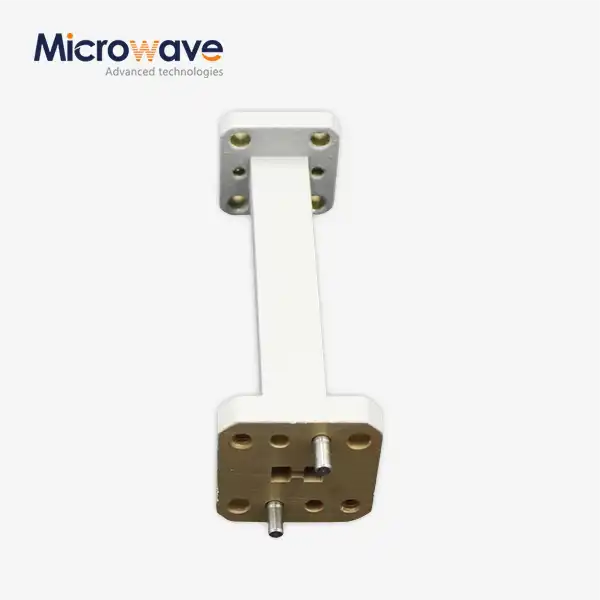 VIEW MOREDouble Ridge Waveguide Transition
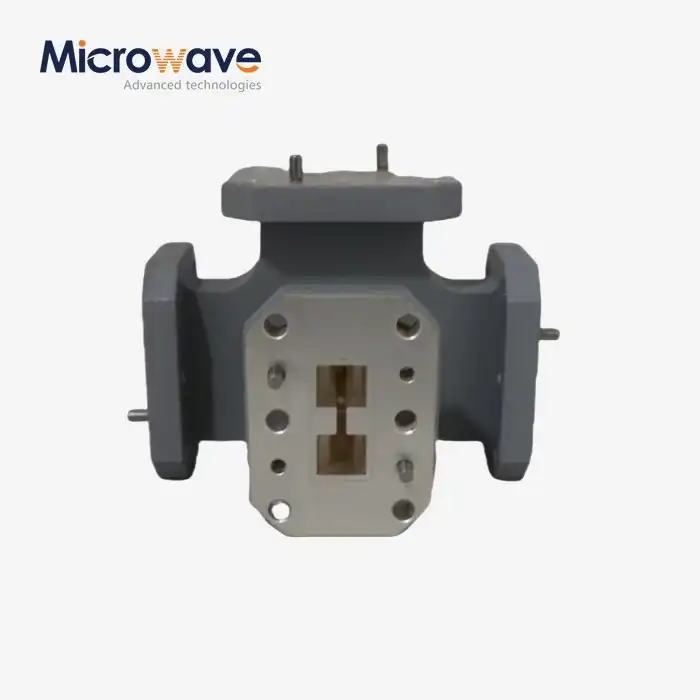 VIEW MOREDouble-Ridged Waveguide Magic Tee
 VIEW MOREWaveguide Adjustable Support
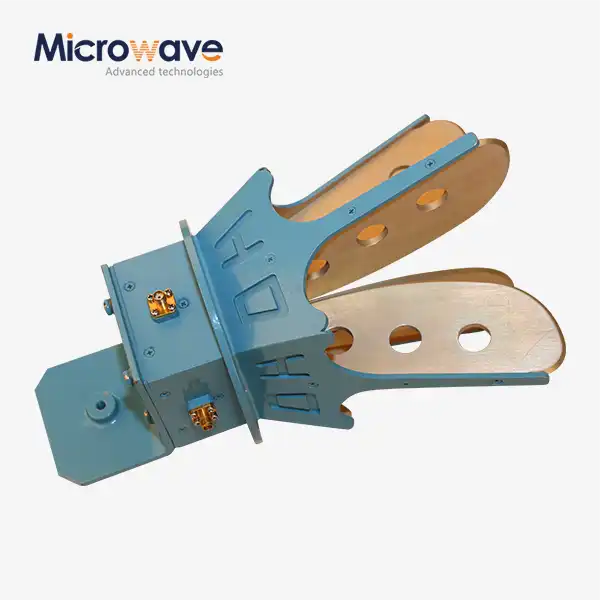 VIEW MOREOpen Boundary Dual Linear Polarization Four Ridged Horn Antenna