




Broadband RF Circulator: Key Specifications Explained
When sourcing RF components for mission-critical communication systems, understanding the performance parameters of a broadband RF circulator becomes essential. This non-reciprocal passive device enables unidirectional signal flow across wide frequency ranges—often spanning multiple octaves—while isolating reflections that could damage sensitive transmitters or degrade receiver sensitivity. Unlike narrowband designs optimized for single frequencies, broadband circulators utilize advanced ferrite materials and magnetic biasing architectures to maintain consistent insertion loss and isolation across expansive bandwidths. This capability makes them indispensable in applications where frequency agility and system simplification are paramount, from electronic warfare platforms to wideband radar installations.
Understanding Broadband RF Circulators
What Defines Broadband Operation
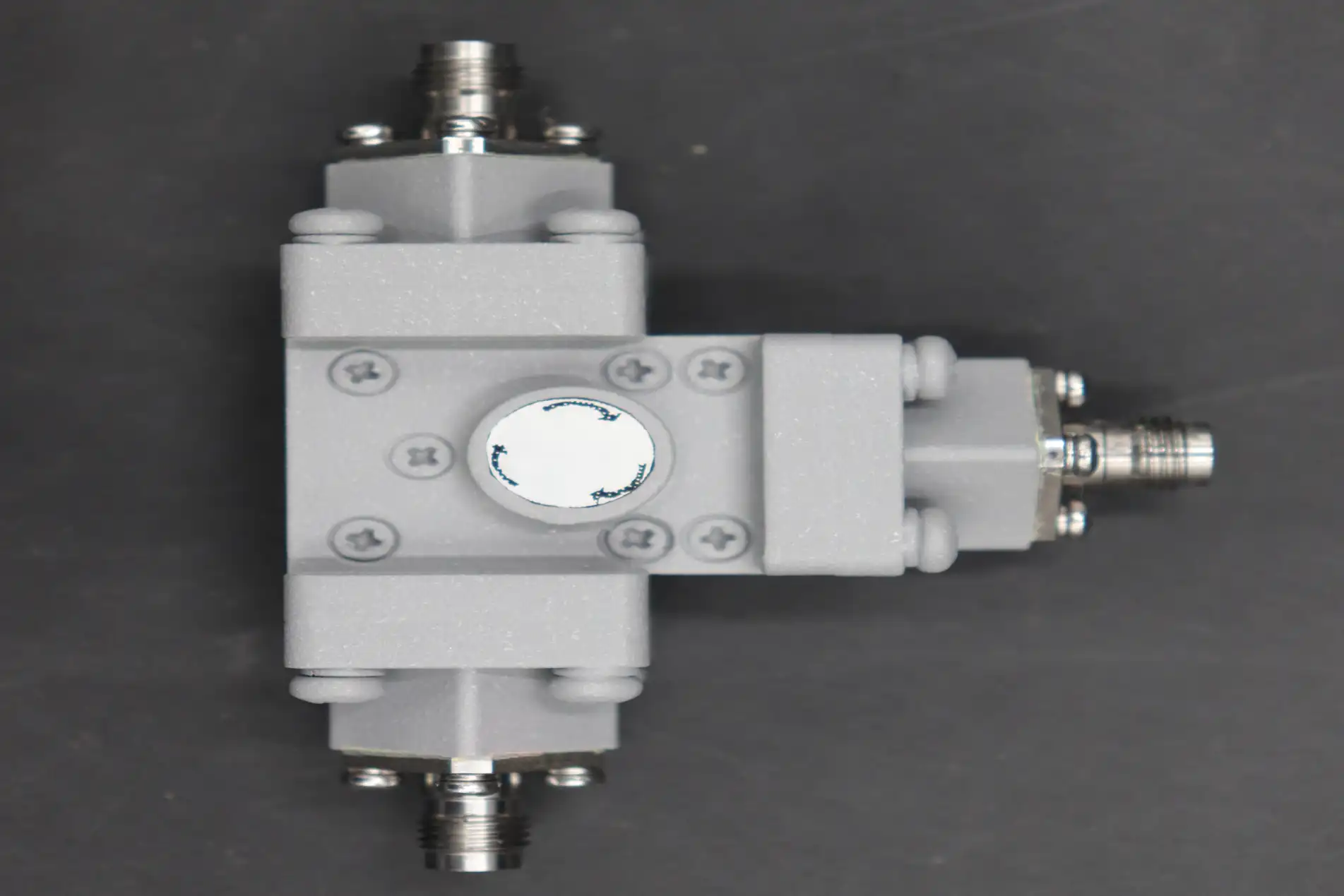
A broadband RF circulator works like a three-port junction: electromagnetic energy that comes in through Port 1 goes out through Port 2, and signals that come in through Port 2 go to Port 3. This one-way flow is kept going with little forward loss. The word "broadband" refers to its ability to work across frequency ranges greater than one octave, like 2-18 GHz or 6-18 GHz, without needing to be retuned. This is very different from narrowband versions that use resonant chambers that are designed for certain frequencies, which makes them less useful in multi-band situations.
Core Working Principles
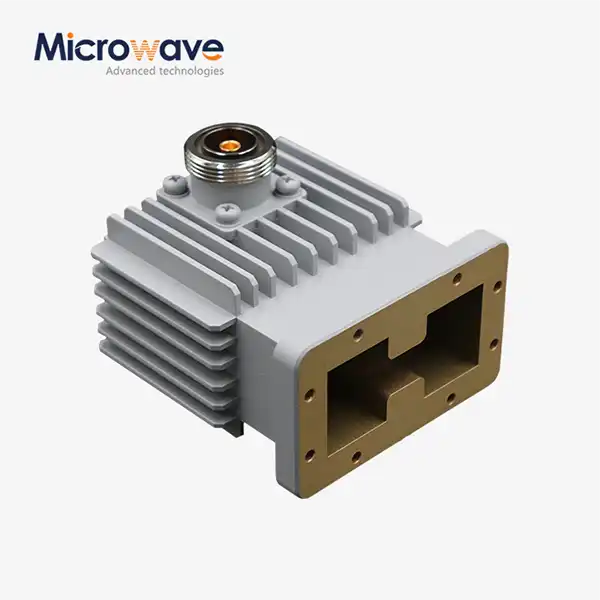
The gadget uses the unique non-reciprocal qualities of ferrite materials that are in a standing magnetic field. The Faraday rotation effect changes the phase of RF signals as they pass through magnetized ferrite junctions based on the direction of propagation. Complex impedance matching networks take into account how ferrites spread out over large bandwidths, keeping insertion loss flat and isolation stable. Our engineering team at Advanced Microwave Technologies Co., Ltd uses gradient impedance transitions and precise magnetic circuit design, like the ones used in our waveguide circulator product line, to get VSWR below 1.3 across all frequency ranges, from DC to 110 GHz.
Why Broadband Matters in Modern Systems
Frequency flexibility is becoming more and more important for transmission systems. For satellite ground stations that deal with both C-band and Ku-band signals, using a single broadband RF circulator instead of switched banks of narrowband units is better because it reduces the amount of insertion loss and the size of the station's footprint. Electronic countermeasures (ECCM) radar devices that use frequency-hopping methods need parts that can keep working even when the frequency changes quickly. Wideband circulators are used in defense applications, like SIGINT and electronic warfare, to keep high-power amplifiers safe while collecting messages across contested spectrum.
Key Specifications of Broadband RF Circulators Explained
When procurement experts look at RF circulators, they have to read and understand specification sheets that have a direct effect on how well and reliably the system works. Each measure describes how the part will work when it is under a lot of stress.
Frequency Range and Bandwidth Coverage
The component's operating area is set by the frequency range that was given. High-performance broadband RF circulator systems can work from 2 to 18 GHz or even from 0.5 to 40 GHz, so they can be used in a number of different communication bands without having to switch out parts. Bandwidth has an effect on buying strategy. More coverage makes inventory simpler, but peak performance measures may suffer as a result. At ADM, our devices cover frequencies from DC to 110 GHz, so they can be used with both old L-band systems and new millimeter-wave uses in 5G infrastructure.
Insertion Loss: The Efficiency Indicator
The amount of signal loss in the forward direction is measured by insertion loss, which is usually given in decibels. Broadband RF circulators usually have an insertion loss of 0.3 to 0.8 dB, but ultra-wideband versions can get as high as 1.2 dB because of their complicated matching networks. Each 0.5 dB loss is important in cascaded systems; three circulators with 0.8 dB loss each lower the power being sent by 2.4 dB, which is almost 50%. With ADM's high-purity ferrite materials and optimized waveguide cavity designs, insertion loss is less than 0.5 dB, which keeps the signal integrity in tough situations.
Isolation: Protection Against Reflections
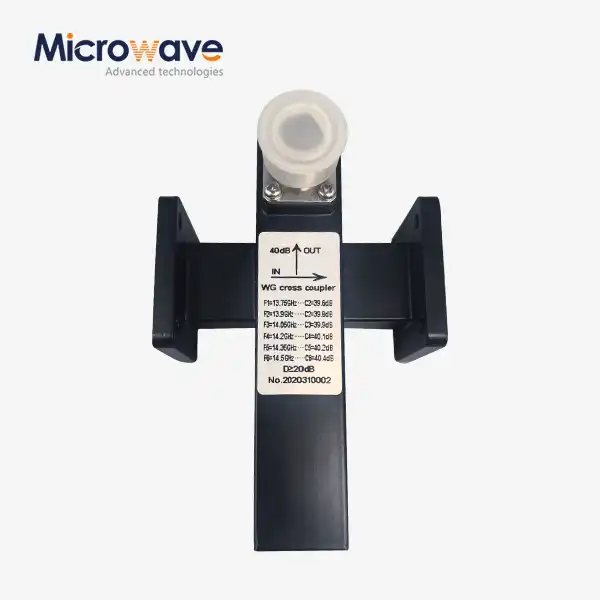
Isolation tests how well a device can block backward signals, which keeps emitters safe from antenna echoes and keeps receivers from getting too full. Broadband RF circulator units usually have specs between 18 and 25 dB, while narrowband units usually have specs of 30 dB or more. Higher separation means that the emitter is safer and there is less intermodulation confusion. Isolation levels higher than 20 dB are needed for applications with high-power amplifiers, like radar transmitters or satellite uplink systems, to keep expensive parts from breaking. Our advanced magnetic circuit design provides reverse isolation of ≥40 dB, which is higher than the standards set by the industry.
Power Handling Capacity
The thermal limits and voltage breakdown thresholds are set by the Continuous Wave (CW) and peak power ratings. Broadband RF circulators for communication systems can handle 10W to 50W of power on average, while high-power radar versions can handle 500W of power on average and peak powers over 10 kW. Power capacity is directly related to the material used for building, such as aluminum alloy or copper, with built-in heat sinks. Because they have better ways of getting rid of heat, ADM's high-power models can handle an average power of up to 500W and a peak power of up to 50 kW. This means they can be used for pulse-compression radar and high-power jamming.
VSWR and Return Loss
The Voltage Standing Wave Ratio (VSWR) shows how well the resistance matches. Broadband RF circulator designs usually get values below 1.5:1, and high-end units get 1.2:1 or better. Signal reflections from bad VSWR make the system less effective and cause measurement mistakes in test tools. Return loss, which is measured in decibels and is the opposite of VSWR, should be more than 14 dB across the working band. Through changes in gradient impedance, our broadband matching technology gets VSWR ≤1.2 at the input ports and ≤1.3 at the output ports.
Environmental and Physical Specifications
Setup environments are defined by the temperature ranges that allow them to work. Military-spec parts can handle temperatures from -55°C to +125°C, while commercial-grade parts can work in temperatures from -20°C to +70°C. Size and weight limits are important, especially in aircraft use, where optimizing SWaP (Size, Weight, and Power) is very important. Our products go through a lot of environmental testing, like thermal shock cycling, vibration testing according to MIL-STD-202, and sealed IP67/IP68 packaging for outdoor installations. This makes sure that they work reliably at all heights, temperatures, and shock levels, from satellite launches to shipboard radar systems.
Broadband RF Circulator vs Alternatives: Making the Right Choice
Circulators Versus Isolators
Isolators and broadband RF circulators both use ferrite non-reciprocity, but they do different things. An isolator is basically a circulator with Port 3 terminated into a matched load. It lets two ports send data only in one direction. When apps need to send and receive data at the same time on shared devices, like in radar and full-duplex communication, circulators are needed. Isolators are enough to keep amplifiers safe from load mismatches in test setups or to keep oscillators stable. Because circulators can do more than one thing, they are better for system architectures that need to do more than just isolate signals.
Narrowband Versus Broadband Trade-offs
When it comes to certain frequencies, narrowband circulators have better insertion loss (0.2–0.3 dB) and separation (30+ dB). This makes them perfect for fixed-frequency uses like single-channel satellite transponders. Broadband designs give up some performance to be able to change frequencies more easily, which makes system complexity lower in wideband receivers or frequency-hopping transmitters. When deciding what to buy, practical needs are very important. For example, if your radar works at a set X-band frequency with little tuning, narrowband units will work best. Systems that need to work on multiple bands at the same time or change frequencies quickly need broadband RF circulator solutions, even tho they have a little more insertion loss.
Comparative Performance Benchmarks
A recent study of the market shows that the top producers work in groups. Coaxial broadband RF circulators from well-known brands usually have 0.5 to 0.8 dB insertion loss and 20 dB separation across 2 to 18 GHz bands, and they can handle 20 to 50W of power on average. Waveguide-based systems have less loss (0.3 to 0.5 dB) and can handle more power (100W+ CW), but they take up more space. ADM's circulator portfolio combines the efficiency of waveguide architectures with miniaturized integration, making the footprint 30% smaller than traditional designs while still being able to handle power for military and satellite communication uses.
Procurement Considerations for Broadband RF Circulators
Aligning Specifications with Application Needs
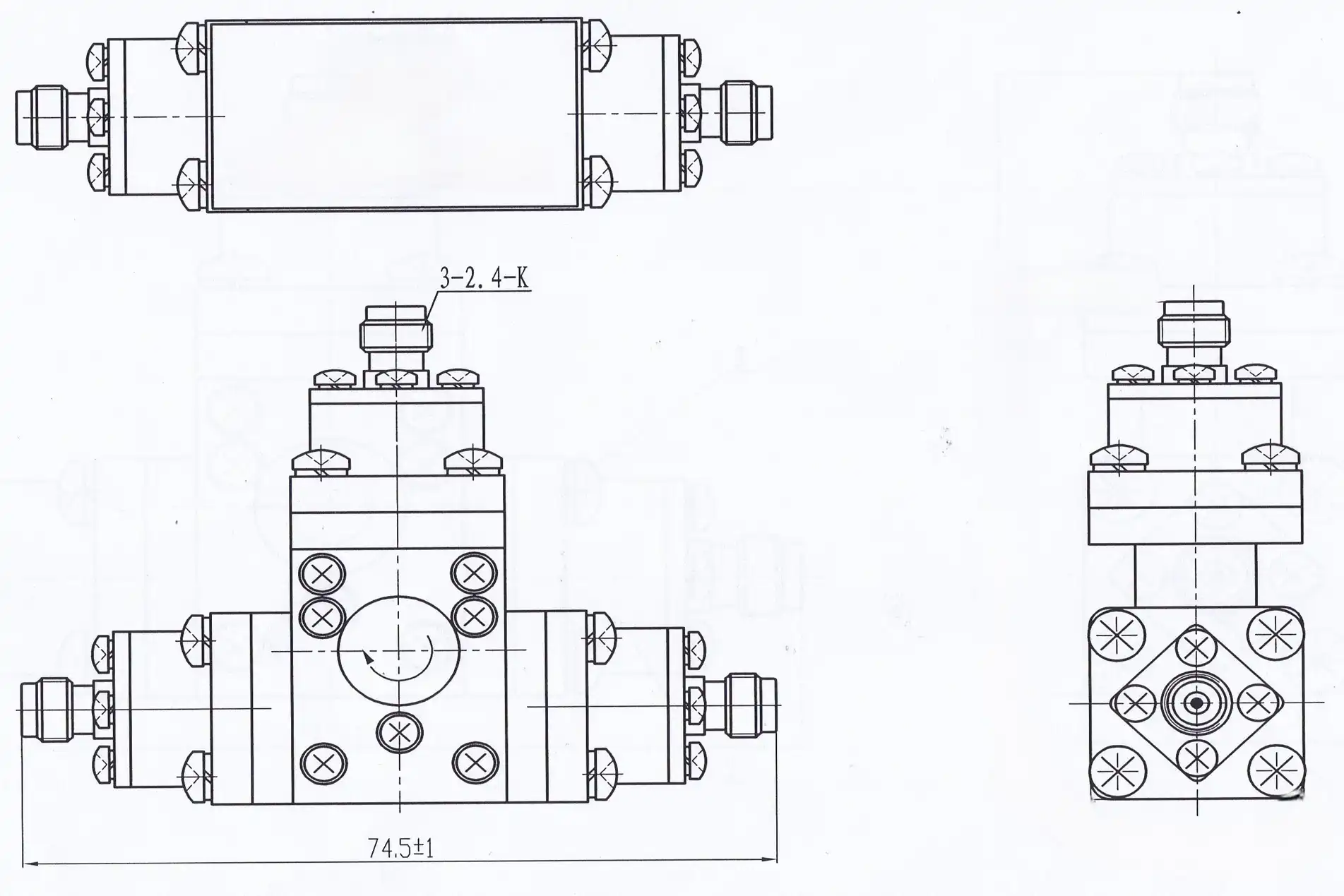
To start planning your purchases, make a map of the system requirements to the broadband RF circulator component specs. Find the important wavelengths for operation, the predicted power levels, and the environmental circumstances. Low insertion loss and Passive Intermodulation (PIM) performance below -150 dBc should be top priorities for communication systems that stress signal clarity. High-power radar installations need strong thermal management and peak power ratings that are 3–5 dB higher than operational pulses. UAVs and other flying platforms that don't have a lot of room need designs that are very small and meet strict requirements for shaking and altitude.
Supplier Certification and Quality Assurance
Reliable makers keep their ISO 9001:2015 certification up to date and offer full S-parameter test results across certain bands. Make sure that the Vector Network Analyzer (VNA) sweeps are done on production units as well as qualification samples. For military and space projects, materials must meet the requirements of MIL-STD-202 environmental tests and RoHS guidelines. ADM is certified by ISO 9001, ISO 14001, and ISO 45001, and our 24-meter microwave darkroom lets us test parts in-house up to 110 GHz, making sure that every shipped part meets documented performance criteria.
Cost Structures and Lead Time Management
The price of a broadband RF circulator depends on how complicated the design is and how much the materials cost. Commercial units cost a few hundred dollars, while high-power military-grade devices cost thousands of dollars. Quantity savings usually start at sales of 10 units, and NRE (Non-Recurring Engineering) charges apply to special designs. Lead times range from 6 to 12 weeks for normal catalog items and from 16 to 20 weeks for unique frequency bands or special packing. Early involvement with suppliers lets you test prototypes and plan production. For example, ADM's OEM services offer fast development with a turnaround time of 4 to 6 weeks, which lets you confirm the design before committing to large orders.
Custom Manufacturing and Technical Support
Off-the-shelf broadband RF circulators don't always meet specific needs for system interaction. Frequency band tailoring, connector type selection, mounting design, and weather protection should all be part of custom services. During integration, technical support is very important. Application engineers who know how your system is built can suggest the best port configurations and help with installation. Advanced Microwave Technologies Co., Ltd. has over 20 years of experience in satellite communications, military, and aerospace uses, so our team can help you directly from testing prototypes to putting them into production.
Troubleshooting and Maintenance of Broadband RF Circulators
Common Performance Issues
Over time, signal degradation shows up as more insertion loss or less isolation. Some of the reasons for this are ferrite demagnetization from too much power exposure, heat stress from changing temperatures over and over, or mechanical shocks that move internal magnetic parts. Connector wear and corrosion lower VSWR, especially in outdoor installations that aren't sealed against the weather. Passive Intermodulation (PIM) that shows up out of the blue in systems that were previously clean is usually a sign of contamination at the connector interfaces or ferrite non-linearity from overdrive conditions.
Diagnostic Approaches
To start fixing the problem, use calibrated VNA tools to take full two-port S-parameter readings. Check the recorded insertion loss and isolation against the specifications given in the datasheet across the whole frequency range for the broadband RF circulator. Look for frequency-dependent outliers that could mean that the matching networks are out of tune or the magnetic biasing has changed. By measuring VSWR at each port, you can find impedance differences caused by broken connections or problems inside the device. During operation, high-power systems should go through thermal imaging to find hot spots that mean they aren't losing enough heat or that the ferrite is saturated. ADM gives detailed datasheets with S-parameter plots and temperature curves that make it possible to do thorough diagnostics.
Extending Service Life
Controls over the environment have a big effect on reliability. Keep the working temperatures within the ranges given. Too much heat speeds up the aging and loss of magnetic properties of ferrite. Use calibrated torque wrenches to properly tighten RF connectors during installation. If you don't, you could damage the connector interfaces by overtightening them or cause contact to break intermittently by undertightening them. Plan regular checks that include looking at the connectors visually and taking standard S-parameter readings to find slow changes in performance before they become mission-critical. Checks for moisture ingress are needed on sealed units, especially after thermal cycling, which can damage gaskets.
Conclusion
Frequency range, insertion loss, separation performance, and power handling must all be carefully considered when choosing the best broadband RF circulator for your system. Specifications are important, but supplier knowledge and quality control processes are what really determine long-term dependability in tough defense, aerospace, and telecommunications uses. When you know the pros and cons of both broadband freedom and narrowband performance, you can make smart purchasing choices that improve both technical performance and total cost of ownership for radar installations, electronic warfare platforms, and satellite ground stations.
FAQ
What frequency ranges define broadband RF circulators?
Broadband RF circulators usually work over at least one octave of bandwidth. Common values are 2–18 GHz, 6–18 GHz, or 0.5–40 GHz. The word "broadband" sets these apart from "narrowband" systems that work within a 10–20% small bandwidth. Some ultra-wideband versions can work for more than a decade, but they don't work as well as narrowband versions.
How does insertion loss impact overall RF system efficiency?
Insertion loss lowers both the power that is sent and the sensitivity of the receiver. A 0.5 dB circulator in a 100W emitter sends only 89W to the receiver, since each decibel of loss cuts power by about 20%. When losses are added up, three devices with a loss of 0.8 dB each add up to 2.4 dB of total loss, which lowers the power to 57W. Link budgets are kept safe in satellite and aircraft systems with limited power by minimizing insertion loss.
Can broadband circulators replace isolators or switches?
When the third port ends in a matched load, a broadband RF circulator acts as an isolator, so it can be used for both transmitter protection and other tasks. But circulators can't be used instead of switches that need to be galvanically isolated or DC-blocked between routes. Which one to use depends on the function: circulators let you send and receive data at the same time on shared antennas, isolators provide simple one-way protection, and switches allow time-division multiplexing between different signal paths.
Partner with ADM for Precision Broadband RF Circulator Solutions
Advanced Microwave Technologies Co., Ltd has been creating and making high-performance circulators for over 20 years and has met the exact needs of defense contractors, satellite integrators, and telecommunications OEMs around the world. Our ISO 9001:2015-certified production facilities and 24-meter microwave lab allow full testing up to 110 GHz, which makes sure that every broadband RF circulator we send you exactly meets your needs. As a broadband RF circulator manufacturer, our technical team can help you with rapid prototyping, competitive volume pricing, and hands-on integration support from the beginning of the design process all the way through production deployment. Get in touch with craig@admicrowave.com right away to talk about your project needs and find out how our waveguide circulators, coaxial assemblies, and microwave parts can help you make your next-generation RF system work better.
References
1. Helszajn, J. (2008). The Stripline Circulator: Theory and Practice. Hoboken: Wiley-IEEE Press.
2. Linkhart, D. K. (2014). Microwave Circulator Design (2nd ed.). Boston: Artech House.
3. Pozar, D. M. (2011). Microwave Engineering (4th ed.). New York: John Wiley & Sons.
4. Baden Fuller, A. J. (1987). Ferrites at Microwave Frequencies. London: Peter Peregrinus Ltd.
5. IEEE Microwave Theory and Techniques Society (2019). "Broadband Ferrite Component Design for Next-Generation Radar Systems." IEEE MTT-S International Microwave Symposium Digest, 1245-1248.
6. U.S. Department of Defense (2016). MIL-STD-202G: Test Method Standard for Electronic and Electrical Component Parts. Washington, DC: Defense Standardization Program Office.