





High Power Waveguide Isolators for Radar and Microwave Networks
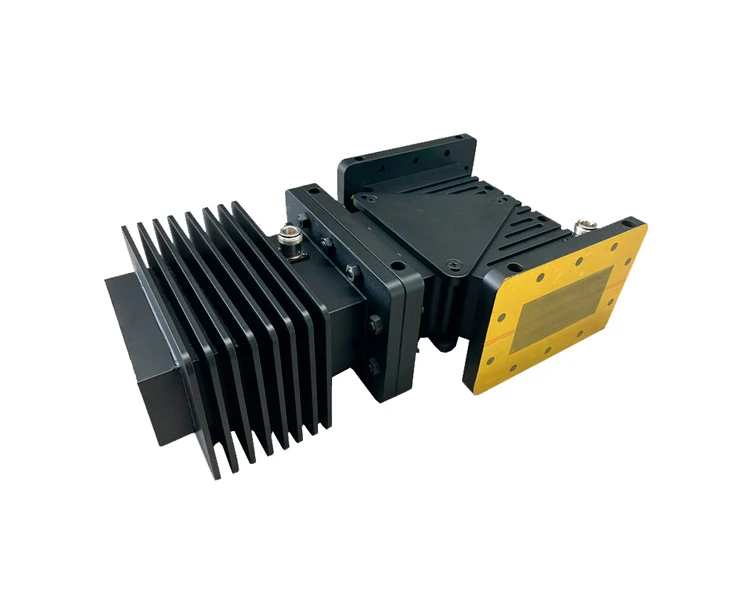
High-power waveguide isolators are passive microwave devices with two ports that don't work backwards or forwards. They are designed to send RF energy efficiently in one direction while collecting reflected energy in the other direction. These parts are very important for keeping sensitive high-power microwave sources like magnetrons, klystrons, travel wave tubes, and solid-state power amplifiers safe from signal reflection that can happen because of impedance gaps or load changes. These isolators make sure that radar, satellite communication, and military uses with power levels of kilowatts or even megawatts are always reliable by using ferrite materials that are pushed by constant magnetic fields inside waveguide housings.
Understanding High-Power Waveguide Isolators: Principles and Applications
The main thing that makes waveguide isolators work is that they don't transmit waves backwards and forwards. When radio waves move forward through the waveguide, they experience very little insertion loss, usually less than 0.3 dB in well-designed units. But any power that is mirrored and tries to go back to the source is blocked by a matching load, which is often more than 20 dB. This uneven behaviour is caused by the Faraday rotation effect in ferrite materials inside the waveguide that are pushed in by permanent magnets.
Operating Principles and Core Components
This technique is based on ferrite materials, which are at its core. These materials have non-reciprocal electromagnetic features that change the orientation of passing signals when they are magnetised by a constant magnetic field. Signals pass through with little loss in the forward direction. When signals are reflected, the polarisation changes, sending the energy into a closing resistance load. The energy then dissipates as heat, instead of going back to damage the source equipment. To support certain frequency bands and stop signal loss or unwanted mode transmission, the waveguide case must keep exact physical limits.
Thermal control is a very important part of design. Even a small 0.2 dB insertion loss at 10 kW input power makes the device heat up by about 450 watts. Without the right ways to get rid of heat, like cooling fans for low-power uses or active liquid cooling systems for high-power units, the ferrite can hit its Curie temperature, which will make it permanently less magnetic and cause the device to fail. In addition to ferrites, other materials that can be used include high-conductivity metals for waveguide walls and special dielectrics that keep working well at all temperatures.
Frequency Ranges and Performance Metrics
Commercial waveguide isolators work with frequencies ranging from L-band to Ka-band and beyond. X-band (8–12 GHz) and Ku-band (12–18 GHz) are the most common frequencies used in radar and satellites. For each frequency band, the waveguide size and ferrite formulations need to be just right. Some of the most important performance measures for procurement engineers are insertion loss (the amount of energy lost during forward transmission), isolation (the amount of energy lost during backwards attenuation), return loss (the quality of the impedance matching), and power handling capacity.
Pay close attention to peak power numbers. In pulsed radar uses, the immediate peak power can be many orders of magnitude higher than the average power handling, which can reach several kilowatts. Not enough peak power level can cause arcing, which is when the air or gas inside the waveguide breaks down electrically. To fix this, manufacturers pressurise the parts with nitrogen or SF₆ gas, which greatly raises the breaking point. Special designs that work in a vacuum keep outgassing and multipactor effects that would normally fail in low-pressure settings from happening in space uses.
Practical Applications Across Industries
Waveguide isolators are used a lot in radar receivers by the defence and military industries. They protect expensive high-power amplifiers from antenna mismatch and changes in the environment. Weather radars work nonstop for years, so dependability is very important. Waveguide isolators shorten the time between maintenance checks by keeping antennas from getting damaged by ice buildup or other sudden changes in resistance. These parts are used by satellite ground stations to keep the signals clean in the uplink and downstream tracks. This is important because even small reflections can stop data from being sent or lower the quality of voice and video.
For test setups to stay stable, research labs that use high-frequency measurement tools depend on isolators, specifically high-power waveguide isolators. When figuring out what antennas or RF parts are like, standing waves caused by mirrored signals can mess up readings. This problem can be fixed by putting a buffer between the signal source and the gadget being tested. This leads to better data and less measurement error. UAV communication systems benefit from small, light isolator designs that keep the link stable even when the antenna direction changes while the drone is in flight.
Comparing High-Power Waveguide Isolators: Making Informed Choices
Understanding the distinctions between various isolator types and competing technologies helps procurement teams make informed decisions aligned with system requirements and budget constraints.
High Power versus Low Power Configurations
The main difference between high- and low-power waveguide isolators is how well they handle heat and how strong their materials are. Passive air cooling with finned heat sinks is usually used in low-power units that can handle signal levels below 100 watts. For kilowatt-range uses, high-power versions have water or glycol cooling lines built right into the waveguide structure. This keeps the ferrite temperatures within safe working limits. This thermal engineering makes things bigger, heavier, and more complicated, but it has to be done to protect expensive sensors that are working at high power levels.
Material choices are very different between power classes. High-power isolators use ferrites that are more stable at higher temperatures and have higher Curie points. This makes sure that they work the same way even when they take in a lot of reflected power. In high-power systems, the waveguide walls have bigger cross-sections that better conduct heat so that it is spread out evenly. The ending loads that take in the mirrored power must also grow appropriately. High power loads use advanced cooling systems and materials like beryllium oxide that are good at conducting heat and electricity with little loss.
Isolators versus Circulators and Alternative Technologies
There are three closely similar devices called circulators. Signals that come in through port 1 leave through port 2, signals that come in through port 2 leave through port 3, and so on. An isolator is basically a circulator with a matching load connected to its third port. In this setup, the circulator's job of moving traffic becomes the isolator's job of protecting against mirrored power. When system designs need to route signals between several parts, circulators give you more options. If source security is the only goal, however, isolators are an easier and often more cost-effective option because they require only one port to be specified and integrated.
Similar safety tasks are performed by coaxial isolators, but they are used in coaxial transmission line systems instead of waveguide systems. They can handle less power and have higher insertion loss than waveguide versions. This means they can be used in sub-kilowatt situations where size and ease of integration are more important than raw performance. Ferrite isolators, which include both waveguide and coaxial types, all work in a non-reciprocal way based on ferrites, but they are not all the same in how they are built or how they handle power.
Manufacturer Comparison and Supplier Evaluation
The market for high-power waveguide isolators is dominated by a few well-known companies, each with its own strengths. MECA Electronics has a wide range of standard stock items and frequencies that work well for business and small military uses. The isolators that Advantest makes for labs have very low insertion loss and are used for precise measurement tasks. MCLI specialises in making ruggedised high-power radar parts that meet military standards for harsh environments. Pasternack offers fast stock items with clear prices, which are perfect for prototypes and small-scale production.
When purchasing goods such as high-power waveguide isolators, purchasing managers should check that the sellers have ISO 9001 quality certifications, follow RoHS rules for the environment, and offer full datasheets with all the important factors listed. Technical help is very important. Suppliers with experienced RF experts who can suggest the best setups and solve integration problems add a lot of value above and beyond the price of the components. For defence and aircraft uses that have to follow strict supply chain rules, it's necessary to keep track of paperwork like material licences and test results for each unit.
Procurement Guide: How to Source and Purchase High-Power Waveguide Isolators?
Acquiring waveguide isolators through efficient B2B procurement processes requires understanding where to source components, how to evaluate suppliers, and when custom solutions justify their added complexity.
Distribution Channels and Pricing Strategies
Online distributors like Digi-Key, Mouser, and Richardson RFPD stock standard waveguide isolators for immediate shipment, making them ideal for prototyping or emergency replacements. Pricing transparency on these platforms facilitates budget planning, though catalogue products may not perfectly match specialised requirements. Volume discounts become available at quantities of 10-25 units, with deeper savings on 100+ piece orders. Direct manufacturer relationships offer the best pricing for production quantities but require longer lead times and minimum order commitments.
Global sourcing introduces additional considerations. Manufacturers in North America and Europe typically offer shorter lead times for Western markets and more established support infrastructure, while Asian suppliers may provide cost advantages on volume orders. Shipping waveguide components requires careful packaging to prevent mechanical damage—factor in freight costs and import duties when comparing international sources. Lead times for standard catalogue items range from stock availability to 6-8 weeks, while custom designs discussed below require 12-16 weeks or longer.
Custom Solutions and Specification Requirements
Custom waveguide isolators become necessary when operating frequencies fall outside standard bands, when space constraints demand unique mechanical interfaces, or when extreme environmental conditions exceed catalogue specifications. The customisation process begins with a detailed specification submission: frequency range with tolerance, power handling (average and peak), insertion loss and isolation targets, operating temperature range, cooling method, and mechanical interface requirements, including flange type and orientation.
Lead times for custom isolators typically span 12-20 weeks, depending on design complexity and manufacturer workload. Expect engineering charges for truly novel designs, though modifications to existing platforms often incur minimal or no NRE fees. Prototyping allows validation before production commitment—request 2-3 evaluation units for testing in your actual system configuration. Documentation deliverables should include dimensional drawings, full RF performance data across temperature, power handling test reports, and thermal analysis showing safe operating margins.
Supplier Quality and Support Assessment
Beyond product specifications, supplier evaluation should examine certification credentials, technical support depth, and supply chain resilience. ISO 9001 certification indicates established quality management systems, while AS9100 adds aerospace-specific requirements crucial for avionics and satellite applications. Request sample datasheets to assess completeness—quality suppliers provide comprehensive parameter specifications, test conditions, and environmental ratings rather than sparse marketing information.
Technical support capabilities for high-power waveguide isolators separate exceptional suppliers from commodity vendors. Can their engineers assist with thermal analysis for your specific installation? Will they recommend alternative solutions if your initial specification proves impractical? Do they provide integration guidance for interfacing with your existing waveguide runs? Suppliers offering this consultative approach become true partners rather than mere component sources. Supply chain stability matters for production programmes—verify suppliers maintain adequate inventory, have multiple manufacturing sites for business continuity, and communicate proactively about potential delays or obsolescence issues.
Conclusion
Waveguide isolators serve as essential protective components in radar, satellite communication, and high-frequency measurement systems where reflected power threatens expensive sources and degrades performance. Their non-reciprocal transmission characteristics, achieved through magnetically biased ferrite materials, provide reliable signal isolation while maintaining low insertion loss in the forward direction. Procurement decisions should balance technical specifications like power handling and frequency coverage against practical factors, including supplier certifications, customisation capabilities, and total cost of ownership. Emerging materials and manufacturing technologies promise continued performance improvements that align with evolving system requirements in defence, aerospace, and telecommunications markets.
FAQ
1. What is the primary difference between a high-power waveguide isolator and a circulator?
A circulator functions as a three-port device directing signals sequentially from port to port. An isolator is essentially a circulator with the third port terminated by a matched high-power load to absorb reflected energy, converting the routing function into unidirectional protection.
2. How do you determine the cooling requirements for these isolators?
Cooling needs depend on reverse power handling ratings. Lower power units below 500W typically use passive air cooling with finned heat sinks. Multi-kilowatt applications require active liquid cooling using water or glycol to maintain ferrite temperatures below Curie points and prevent performance degradation.
3. What causes arcing in a waveguide isolator?
Arcing occurs when peak power levels exceed dielectric breakdown thresholds of the air or gas inside the waveguide. Manufacturers mitigate this by pressurising waveguides with nitrogen or SF₆ gas, significantly raising breakdown voltage and enabling higher peak power operation without damage.
4. Why is Insertion Loss a critical safety factor?
Even minimal insertion loss generates substantial heat at high power levels. A 0.2 dB loss at 10 kW input produces roughly 450 watts of thermal energy within the device. Without adequate heat dissipation, this internal heating can cause ferrite degradation, detuning, or catastrophic failure over time.
Partner with ADM for High-Reliability Waveguide Isolator Solutions
Advanced Microwave Technologies Co., Ltd brings over 20 years of specialised experience as a trusted high-power waveguide isolator manufacturer serving the defence, aerospace, and telecommunications sectors. Our ISO 9001:2015 certified manufacturing processes and RoHS-compliant products ensure quality and environmental responsibility across every component we deliver. Whether you need standard catalogue isolators for immediate deployment or fully customised solutions tailored to unique frequency bands and power levels, our experienced RF engineering team provides comprehensive support from specification development through production and integration.
Our state-of-the-art 24-meter microwave darkroom and measurement capabilities extending to 110 GHz enable thorough performance verification of every isolator before shipment. We understand the critical role these components play in protecting your expensive transmitters and maintaining mission-critical uplink reliability. Contact craig@admicrowave.com today to discuss your specific requirements and receive detailed technical proposals backed by decades of proven expertise in high-power microwave components for demanding applications.
References
1. Pozar, David M. Microwave Engineering, Fourth Edition. Wiley, 2011.
2. Baden Fuller, A.J. Ferrites at Microwave Frequencies. Institution of Engineering and Technology, 1987.
3. Helszajn, Joseph. Principles of Microwave Ferrite Engineering. Wiley-Interscience, 1969.
4. IEEE Standards Association. IEEE Standard for Waveguide and Coaxial Transmission Lines. IEEE Std 287-2007.
5. Collin, Robert E. Foundations for Microwave Engineering, Second Edition. Wiley-IEEE Press, 2001.
6. Harvey, A.F. Microwave Engineering Handbook: Volume 1, Microwave Components. Academic Press, 1963.
YOU MAY LIKE
 VIEW MOREMiter Bend Waveguide
 VIEW MOREInflatable Straight Waveguide
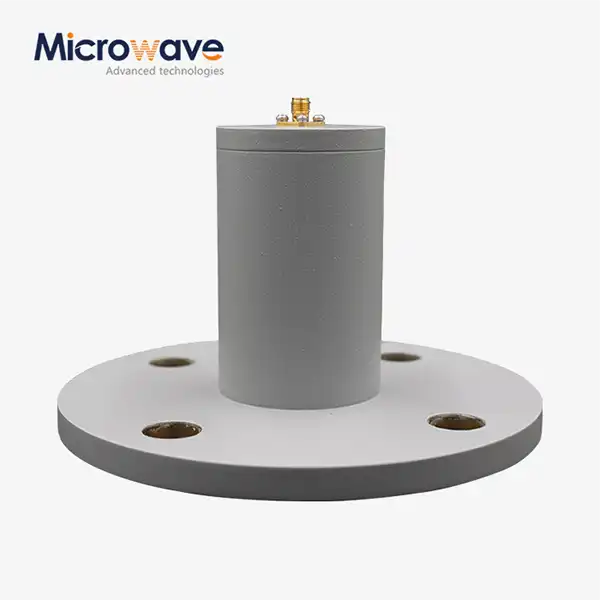 VIEW MORECircular Waveguide To Coaxial Adapter
 VIEW MOREWG Harmonic Filter
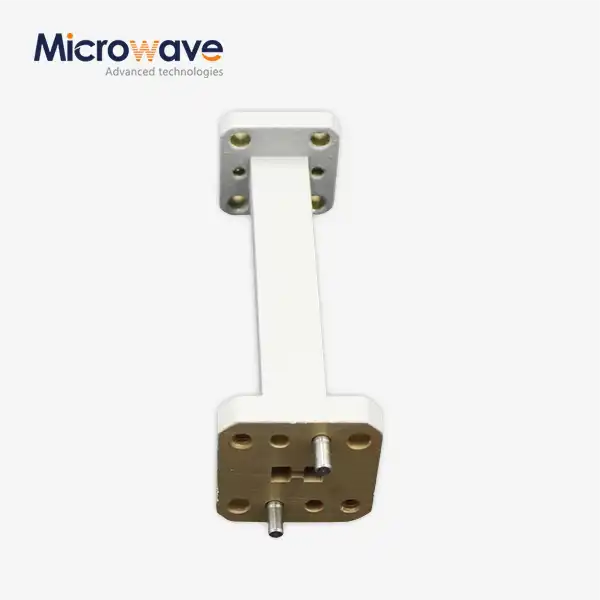 VIEW MOREDouble Ridge Waveguide Transition
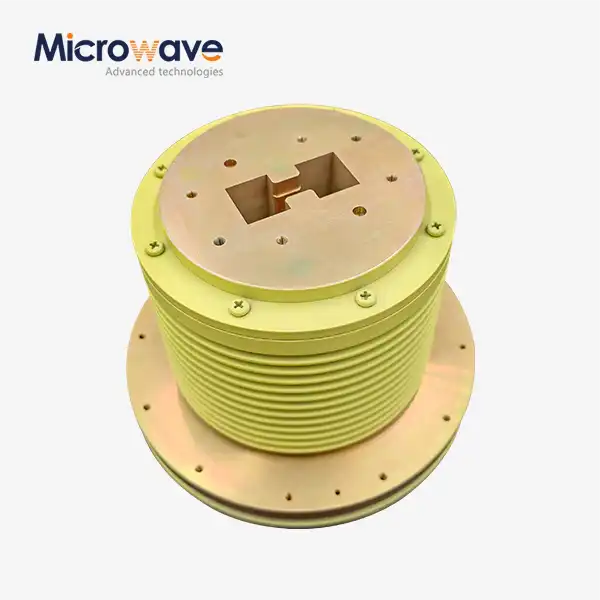 VIEW MOREDouble Ridge Waveguide Rotary Joint
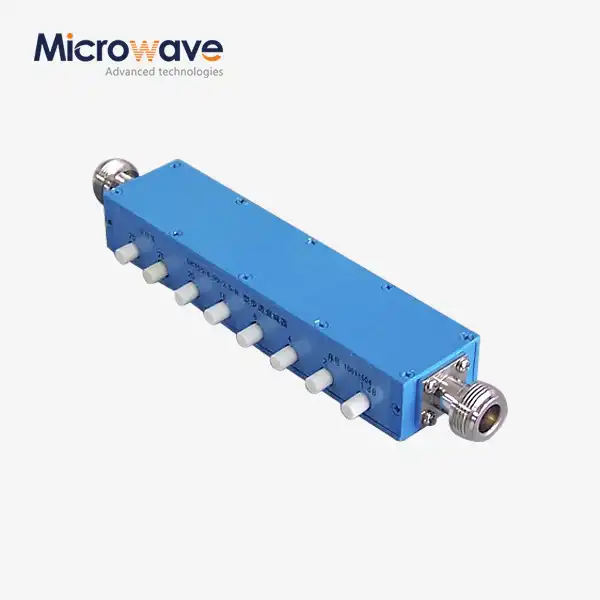 VIEW MORECoaxial Variable Attenuator
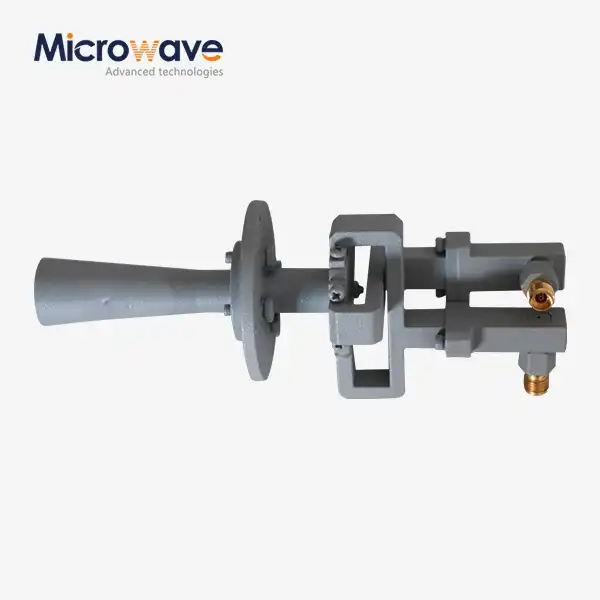 VIEW MOREConical Linear Polarization Horn Antenna