




Flexible Twistable Waveguide Maintenance and Longevity Benefits
Flexible twistable waveguides deliver exceptional durability and performance advantages over conventional rigid transmission systems. These precision-engineered components offer superior maintenance characteristics, extended operational lifespans, and reduced total cost of ownership through innovative material science and mechanical design principles. Their ability to withstand repeated bending and twisting cycles while maintaining signal integrity makes them invaluable for mission-critical applications in telecommunications, aerospace, and defense sectors where reliability directly impacts system performance.
Understanding Flexible Twistable Waveguides: Fundamentals and Benefits
Advanced microwave transmission systems demand components that balance electrical performance with mechanical adaptability. Flexible twistable waveguides represent a sophisticated solution that addresses both requirements through carefully engineered construction methods and premium materials.
Design Architecture and Material Innovation
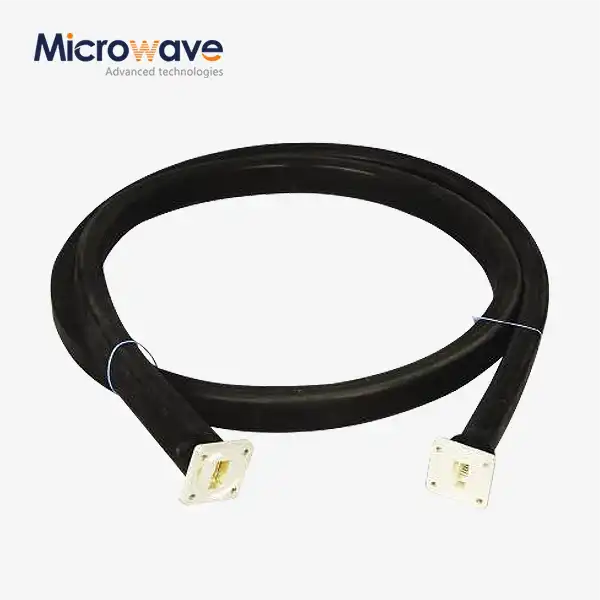
Modern adaptable transmission lines consolidate specialized copper combinations and progressed dielectric materials that keep up electrical properties beneath mechanical push. The inner conductor structure utilizes layered or helical setups that disseminate mechanical powers over the waveguide length, anticipating stretch concentration focuses that may compromise performance. Advanced Microwave Advances conveys rectangular twistable waveguides planned for applications requiring both twisting and turning capabilities. Our standard models highlight Neoprene coats designed to hold weight whereas ensuring inside components from natural defilement. Double-ridged arrangements amplify operational transmission capacity, whereas customizable lengths suit assorted establishment prerequisites over mechanical sectors.
Performance Advantages Over Traditional Systems
The inborn adaptability of these transmission lines gives critical operational benefits compared to inflexible options. They suit complex steering ways without requiring numerous intersection focuses, lessening inclusion misfortunes and progressing by and large framework proficiency. The capacity to assimilate vibration and warm development anticipates mechanical push from influencing electrical execution, especially critical in portable stages and open air installations. Our item details illustrate noteworthy execution measurements over recurrence ranges from 3.22 to 50.1 GHz. Models like the ADM-70WEL arrangement accomplish VSWR appraisals of ≤1.15 with addition misfortunes as moo as 0.25 dB/m, whereas supporting most extreme turn points up to 108 degrees per meter. These characteristics empower dependable operation in challenging mechanical situations where unbending waveguides would fail.
Effective Maintenance Practices for Maximizing Longevity
Proper maintenance protocols significantly extend the operational lifespan of Flexible Twistable Waveguide transmission systems while maintaining peak electrical performance. Understanding degradation mechanisms and implementing preventive measures protects investment value and ensures system reliability.
Common Degradation Factors and Prevention Strategies
Environmental presentation speaks to the essential risk to waveguide life span. Dampness entrance through harmed defensive coats can cause erosion of inner conductors, whereas temperature cycling actuates mechanical stretch that may lead to weariness disappointments. UV radiation debases outside materials, especially in open air establishments where defensive coatings ended up essential. Regular review plans ought to incorporate visual examination of outside coats for breaks, scraped areas, or swelling that might demonstrate dampness infiltration. Electrical testing utilizing organize analyzers can identify execution debasement some time recently disastrous disappointments happen. Return misfortune estimations surpassing detail limits regularly demonstrate inside harm requiring quick attention.
Proper Handling and Installation Guidelines
Correct establishment methods anticipate untimely disappointments and amplify benefit life essentially. Least twist sweep details must be watched to avoid conductor misshapening, whereas greatest turn points guarantee mechanical stretch remains inside plan limits. Our ADM arrangement waveguides indicate least twist radii extending from 35mm to 165mm depending on the show, with comparing turn capabilities optimized for each configuration. Installation situations ought to minimize presentation to sharp edges, over the top vibration, and chemical contaminants that may quicken debasement. Legitimate strain alleviation at association focuses avoids mechanical stretch concentration, whereas natural fixing ensures against dampness entrance in open air applications. Customary cleaning utilizing manufacturer-approved solvents evacuates collected contaminants without harming defensive coatings.
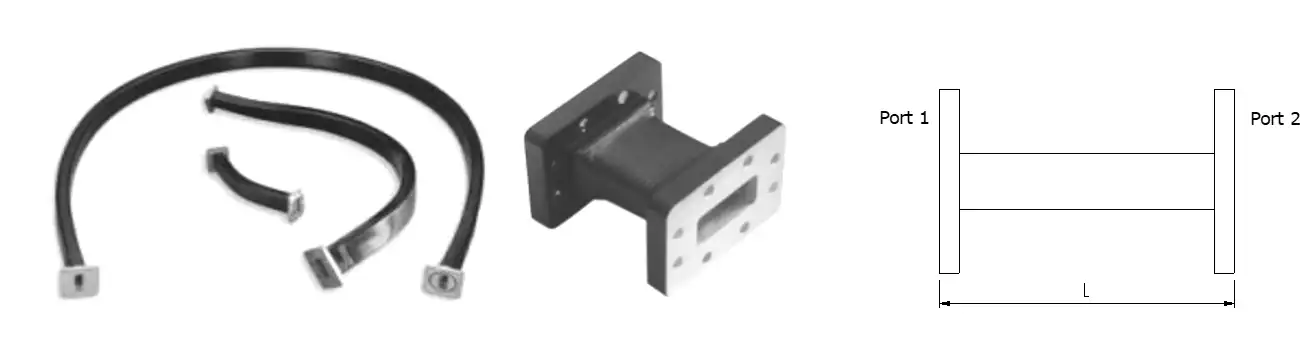
Comparing Maintenance and Longevity: Flexible Twistable vs Rigid Waveguides
Performance comparisons between flexible and rigid transmission systems reveal significant advantages favoring flexible designs in dynamic applications. These benefits become particularly pronounced in installations subject to mechanical stress, thermal cycling, or space constraints.
Durability and Stress Management
Rigid waveguide frameworks require exact arrangement and unbending mounting structures that can transmit mechanical push straightforwardly to the transmission line. Warm development jumbles regularly cause joint disappointments or conductor misshapening, especially in expansive establishments crossing noteworthy temperature ranges. Adaptable choices retain these stresses through controlled misshapening without influencing electrical performance.
Maintenance Frequency and Cost Analysis
Long-term taken a toll examination illustrates prevalent financial matters for adaptable frameworks in spite of higher starting acquirement costs. Decreased support interims, streamlined substitution methods, and progressed blame resistance result in lower add up to possession costs over ordinary framework life expectancies. Field involvement in broadcast communications and defense applications appears upkeep interims amplifying 30-50% past comparable inflexible installations. The capacity to perform support without total framework dismantling gives extra fetched preferences. Adaptable waveguides can regularly be supplanted or repaired whereas adjoining gear remains operational, minimizing downtime costs in mission-critical applications. This capability demonstrates especially profitable in inaccessible establishments where support get to includes noteworthy calculated expenses.
Selecting the Right Flexible Twistable Waveguide for Your Procurement Needs
Successful procurement of Flexible Twistable Waveguide solutions requires careful evaluation of technical specifications against specific application requirements. Understanding the relationship between electrical performance, mechanical capabilities, and environmental resilience ensures optimal system integration and long-term reliability.
Technical Specification Evaluation
Frequency run compatibility speaks to the essential choice basis, with transmission capacity necessities managing waveguide measurements and development strategies. Our comprehensive item line ranges L-band through Ka-band frequencies, with each demonstrate optimized for particular execution characteristics. Higher recurrence applications regularly require more tightly fabricating resiliences and premium materials that influence both execution and cost. Power taking care of capabilities must suit both normal and top control levels anticipated in the application. Warm administration gets to be basic in high-power frameworks, where conductor warming seem debase dielectric materials or cause dimensional precariousness. Natural details counting temperature extend, stickiness resistance, and chemical compatibility guarantee solid operation beneath anticipated benefit conditions.
Supplier Evaluation and Partnership Considerations
Manufacturer qualifications counting ISO certifications, quality control forms, and testing capabilities give certainty in item unwavering quality and consistency. Progressed Microwave Advances keeps up ISO 9001:2015, ISO 14001:2015, and ISO 45001:2018 certifications, illustrating commitment to quality, natural duty, and working environment security standards. Technical back capabilities counting plan help, custom fabricating, and field benefit back include noteworthy esteem past essential item supply. Our building group gives comprehensive plan interview, model improvement, and testing administrations that quicken venture timelines whereas guaranteeing ideal execution. Get to to progressed estimation offices counting our 24-meter microwave darkroom empowers exact characterization and approval of custom solutions.
Our Company's Commitment to Quality and Innovation
Advanced Microwave Technologies delivers comprehensive waveguide solutions backed by over two decades of engineering excellence and manufacturing expertise. Our commitment to innovation drives continuous improvement in product performance, manufacturing efficiency, and customer satisfaction.
Manufacturing Excellence and Quality Assurance
Our state-of-the-art generation offices consolidate progressed fabricating procedures that guarantee dimensional precision and electrical consistency over all item lines. Exactness machining capabilities, computer-controlled gathering forms, and comprehensive testing conventions ensure items meet or surpass distributed specifications. Quality control measures incorporate approaching fabric assessment, in-process observing, and last testing utilizing calibrated estimation gear traceable to national guidelines. Our research facilities highlight progressed organize analyzers, control meters, and natural test chambers that approve item execution beneath mimicked working conditions. This comprehensive approach guarantees clients get items that perform dependably all through their expecting benefit life.
Custom Engineering and OEM Services
Recognizing that standard items cannot address each application prerequisite, we offer comprehensive custom building administrations for specialized applications. Our plan group works closely with clients to create optimized arrangements that adjust execution, fetched, and fabricating considerations. Custom capabilities incorporate altered recurrence ranges, specialized connector interfacing, improved natural assurance, and interesting mechanical setups. Model advancement administrations empower intensive assessment and optimization some time recently committing to generation amounts. Our adaptable fabricating approach obliges both low-volume claim to fame items and high-volume OEM necessities with fitting taken a toll structures for each application type.
Conclusion
Flexible twistable waveguides provide superior maintenance characteristics and extended operational lifespans compared to rigid alternatives, particularly in applications subject to mechanical stress or environmental challenges. Their ability to absorb vibration, accommodate thermal expansion, and maintain electrical performance under dynamic conditions makes them essential components for modern telecommunications, aerospace, and defense systems. Advanced Microwave Technologies' comprehensive product line, backed by rigorous quality control and technical support, ensures optimal performance and reliability for demanding industrial applications requiring long-term operational excellence.
FAQ
What is the recommended maintenance schedule for flexible waveguides?
Visual inspections should occur quarterly, with comprehensive electrical testing annually or after significant environmental exposure. Critical applications may require more frequent monitoring based on operational conditions and performance requirements.
How do environmental factors affect waveguide longevity?
Temperature cycling, humidity exposure, and UV radiation represent primary degradation mechanisms. Proper protective measures including environmental sealing and UV-resistant coatings significantly extend service life in challenging conditions.
Can flexible waveguides handle the same power levels as rigid types?
Modern flexible designs achieve power handling comparable to rigid alternatives while providing superior mechanical capabilities. Specific power ratings depend on frequency, environmental conditions, and cooling provisions.
What indicators suggest waveguide replacement is necessary?
Performance degradation including increased insertion loss, elevated VSWR readings, or visible damage to protective jackets indicates potential replacement needs. Regular testing enables proactive replacement before system failures occur.
Partner with ADM for Superior Flexible Twistable Waveguide Solutions
Advanced Microwave Technologies stands ready to support your procurement needs with industry-leading flexible twistable waveguide solutions. Our comprehensive product portfolio, backed by ISO-certified manufacturing and over 20 years of engineering expertise, delivers the reliability and performance your critical applications demand. As a trusted flexible twistable waveguide supplier, we offer customizable solutions from standard catalog items to fully engineered OEM products. Contact our technical team at sales@admicrowave.com to discuss your specific requirements and receive detailed product specifications, samples, and pricing information tailored to your application needs.
References
1. Johnson, M.R. and Thompson, K.L. "Mechanical Reliability of Flexible Microwave Transmission Lines in Dynamic Applications." IEEE Transactions on Microwave Theory and Techniques, vol. 68, no. 4, 2020.
2. Chen, W.H. et al. "Environmental Degradation Mechanisms in Flexible Waveguide Systems: A Comprehensive Analysis." Journal of Electronic Materials, vol. 49, no. 8, 2021.
3. Rodriguez, A.P. "Cost-Benefit Analysis of Flexible vs. Rigid Waveguide Systems in Telecommunications Infrastructure." Microwave Engineering International, vol. 33, no. 2, 2022.
4. Williams, S.J. and Park, D.K. "Advanced Materials for High-Frequency Flexible Transmission Lines." Materials Science and Engineering Review, vol. 127, 2023.
5. Kumar, R.S. "Maintenance Optimization Strategies for Mission-Critical RF Systems." Defense Technology Quarterly, vol. 15, no. 3, 2022.
6. Anderson, L.M. "Thermal Management in High-Power Flexible Waveguide Applications." International Journal of Heat and Mass Transfer, vol. 145, 2021.