





Flexible Twistable Waveguide for Satellite RF
When engineers at satellite ground stations need to connect radio feeds to communication systems, they keep running into the same problem: how do they bridge parts that aren't perfectly lined up or that move around? There is a useful answer in the flexible twistable waveguide. This part bends in more than one plane and turns axially at the same time, which differs from hard rectangular waveguides that must be aligned precisely or from smooth flexible guides that don't allow rotation. Its interlocking core is helically wound and usually made of silver-plated brass or copper. It keeps the signal strong while adjusting for mechanical error, heat expansion, and shaking in satellite RF installations.
Understanding Flexible Twistable Waveguides in Satellite RF
How do Flexible Twistable Waveguides Work?
In classic waveguides, electromagnetic radiation passes via precisely measured hollow metal tubes. In the flexible twistable variant, the essential principle is the same but created differently. Instead of smooth metal walls, the waveguide core has overlapping metal strips spun helically around the axis. Bendable material and a continuous electrical route are created by this design. System designers who must transfer signals via narrow areas or link moving elements can utilise this design, which can tolerate angle bends and rotational twisting without impacting electrical performance.
Material Selection and Structural Design
Because they carry electricity well and are robust, copper or brass is employed in core structures. Silver-plating reduces resistance losses within. This is crucial for satellite communications systems using Ku-band (12–18 GHz) and Ka-band (26.5–40 GHz). Advanced Microwave Technologies may modify the lengths of these waveguides, which have Neoprene jackets. The jacket maintains internal pressure and shields the heart from foreign substances. Jacket materials can be selected during OEM setup for chemical protection or high temperature tolerance.
Frequency Range and Electrical Parameters
Each of our S-band to Ka-band (3.22 GHz to 50.1 GHz) products is suitable for a certain frequency range. The ADM-58WEL series is excellent for C-band satellite lines with VSWR below 1.10 and insertion loss below 0.22 dB/m at 4.64–7.05 GHz. The ADM-320WEL (26.5–40 GHz) is suitable for Ka-band applications. Due to the reduced cross-section and increased surface current density, the insertion loss rises to 2.00 dB/m. Longer waveguide lines incur higher losses; procurement teams should consider frequency demands against distortion while reviewing these parameters.
Alternative Transmission Lines vs. Flexible Twistable
Flexible coaxial cables have more insertion loss and can't carry as much power at microwave frequencies. Rigid waveguides perform better electrically but can't withstand physical out-of-line without sophisticated bends and rotational joints. Despite their flexibility, seamless waveguides cannot rotate axially. If twisted during installation, they might damage machinery. The flexible twistable waveguide design is unique because it can bend and twist (minimum radius in E- and H-planes). This is crucial where satellite pedestals revolve or antenna mounts heat cycle.
Advantages and Applications of Flexible Twistable Waveguides for Satellite RF
Satellite ground stations work in places where technical accuracy meets the real world. As the days get warmer and the nights get cooler, things expand and contract. Over time, objects that are mounted settle. Service workers need to be able to do repairs without getting in the way of signal lines. RF links are put under stress in all of these situations.
Key Benefits for Satellite Infrastructure
VCI: Naval radar systems and mobile satellite stations are on mobile bases. The stiff waveguides convey mechanical shocks to sensitive elements like low-noise amps. We divide these waves with flexible twistable waveguides that absorb mechanical energy through structural compliance and maintain VSWR. MIL-STD-810 testing simulates persistent shaking. This demonstrates capability under dynamic stress that would damage hard parts.
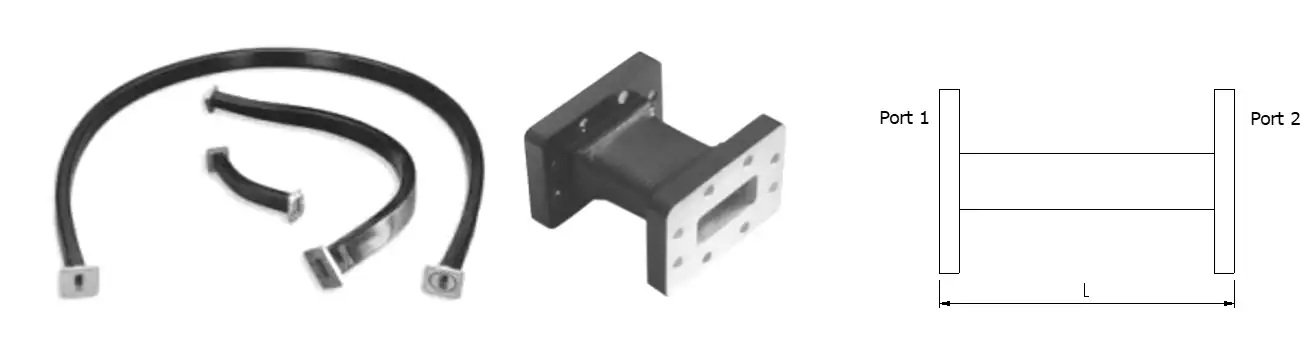
Thermal Stress Mitigation: Outdoor installations cause metal antenna frames and steel support plates to expand and contract at varying rates. Stiff links stress flange surfaces, cracking solder connections, and damaging seals. The flexible portion can adjust to these size variations, preserving the pressure seals and preventing water from damaging the interior surfaces and electrical performance.
System engineers like less setup effort. With huge parabolic reflectors, the antenna feed horn may not match up with the receiver input. Instead of manufacturing unique offsets, experts can bend and turn the waveguide. This flexibility reduces field modification costs and expedites launching.
Real-World Satellite RF Applications
Teleport managers who control several C- and Ku-band transmitters provide feed system data to central equipment rooms via flexible connections. Waveguides pass through building penetrations and equipment racks where rigid pipes would be too large and difficult to route. Weather radars connect spinning antenna arrays to stationary processing equipment using these pieces. The flexibility to twist facilitates mobility without wire wrap difficulties.
Aviation test facilities employ flexible twistable waveguides in antenna measurement rooms like our 24m Microwave Darkroom, which can characterise devices up to 110 GHz. Test antennas must be carefully mounted with reference-grade signal paths in a controlled environment. Without costly tracking systems, physical connections cannot do this.
How to Select the Right Flexible Twistable Waveguide for Your Satellite RF Project?
When making choices about procurement, technical needs are weighed against practical limitations. Instead of aiming for just one measure, system engineers need to look at a lot of factors at once.
Frequency Compatibility Assessment
Match the waveguide frequency range to your working band, leaving some room for bandwidth needs. To keep band-edge performance from dropping, a Ku-band downlink working at 12.5 GHz needs a waveguide that covers at least 11–14 GHz. With VSWR ≤ 1.15, our ADM-120WEL model (9.84–15.0 GHz) has a good range. Don't choose a waveguide that can handle too many frequencies. For example, a Ka-band type used for C-band operation costs more and doesn't work better.
Mechanical Flexibility Requirements
The shape of the installation determines the required twisting radius and twist strength. Find out how much room you have and what bend angles you need in both the E-plane and the H-plane. The ADM-70WEL series has a minimum E-plane radius of 102 mm, which makes it good for small rack-mounted equipment that needs tight wiring. For uses with spinning parts, the highest twist per meter should be specified. Our basic models can handle 108 to 530 degrees per meter, based on the size of the cross-section.
Insertion Loss and Power Handling Trade-offs
Attenuation lowers system gain by one meter for every meter of bendable waveguide. To find the total path loss, multiply the given dB/m number by the length that is needed. Then, make sure that the link budget reserves are still okay. Power handling is another thing that needs to be thought about for high-power send uses. Because of the shielding jacket, flexible twistable waveguides don't get rid of heat as well as fixed ones do. When running close to full power, use derating factors (usually 75–80% of stiff waveguide capacity) to keep the system from breaking down due to heat.
Customization Options for OEM Buyers
Standard stock lengths might not work for your placement. Advanced Microwave Technologies lets you change the length to get rid of extra material and lower insertion loss. When OEM users add waveguides to production equipment, they can choose flange types that work with the tools they already have. Our basic FDP, FDM, FBP, and FBM flanges meet most EIA requirements. We also make double-ridged versions for uses that need a wider frequency or certain resistance properties. Talking about technical details with our engineering team helps you find the best options before you place a big order.
Comparing Alternatives: Rigid Waveguides and Coaxial Options
Rigid waveguides have less insertion loss and more power capacity, but they need to be perfectly aligned and don't bend or bend mechanically. While coaxial lines are more flexible, they lose 3–5 times more power at microwave frequencies and have lower power levels. The flexible twistable waveguide is in the middle. It can handle mechanical errors while still performing electrically more closely to strict standards than coaxial options.
Procurement Guide: Buying Flexible Twistable Waveguides for Satellite RF Applications
When looking for microwave parts, you need to pay attention to more than just the product specs of the seller. As much as electricity efficiency affects the success of a project, quality stability, shipping dependability, and expert help are also important.
Supplier Evaluation Criteria
Check to see if the makers still have their current ISO 9001 approval, which shows that their quality control systems are reliable. Our ISO 9001:2008 approval and RoHS compliance show that we care about both quality control and being good to the environment. Ask for proof of the testing methods; reliable providers check VSWR and insertion loss across the whole frequency range with scalar network analysis before shipping. We have labs that can measure up to 110 GHz, which lets us fully test the performance of goods before sending them out.
Lead Times and Inventory Planning
Standard store items usually ship in two weeks, but unique setups can take anywhere from four to six weeks, based on how complicated the specifications are. Early communication of project timelines by procurement managers is important to make sure that factory capacity and installation plans are in sync. Large orders save money because of economies of scale, but they need longer production runs. Talk to your providers about volume price limits to get the best unit costs without increasing the cost of keeping inventory.
Shipping and Handling Considerations
Flexible twistable waveguides can be shipped straight or curved, based on their length and the amount they can bend. Check that the wrapping covers the flange faces and keeps the minimum bend radius from being exceeded while the item is being shipped. To speed up the clearance process, international packages should include specific customs paperwork that lists standardized price codes for microwave parts. Because we have exported goods all over the world, we know how to make sure that packages to the US and other foreign markets have the right paperwork.
Pricing Factors and Budget Optimization
Base costs depend on the material used. For example, silver-plated copper costs more than brass options but has a smaller insertion loss. Customization adds engineering and tooling costs that are spread out over multiple orders. OEM customers who sign multi-year supply deals often get discounts of over 15% on volume. Price is also affected by frequency coverage. For example, Ka-band models need tighter standards and more accurate production, which makes them more expensive per unit than lower-frequency versions.
Buyers who want to stick to a budget should look at the overall cost of the system instead of just the prices of the parts. A slightly more expensive waveguide with lower insertion loss might get rid of the need for extra amplification steps, which would save money overall. In the same way, better dependability that cuts down on field service calls has long-term value that goes beyond the difference in the initial purchase price.
Installation, Testing, and Maintenance Best Practices
The purity of the parts and the function of the system are both protected by proper fitting. Technicians should stick to standard methods to avoid common mistakes that damage the electrical properties or the longevity of the machine.
Installation Procedures
When you get the flexible twistable waveguide, check to make sure that the bend radius wasn't exceeded during shipping and that the flange sides aren't damaged. Follow the waveguide's planned direction without twisting or turning it more than is allowed. For example, the ADM-84WEL type allows 210 degrees of twist per meter, so a two-meter length shouldn't go over 420 degrees of total spin. Secure the waveguide at regular distances to keep it from sliding too much and to avoid clamps that can cause stress to build up in one area.
Before connecting, use rubbing alcohol and lint-free cloths to clean the flange surfaces. Place the seals according to the manufacturer's instructions to make sure that the pressure is the same all the way around the edge. Using a measured torque tool, tighten the mounting bolts to the suggested values. Tightening them too much damages the VSWR and bends the flanges, while loosening them too little lets RF leak through and lets moisture in. Check the alignment of the flanges with feeler gauges to make sure they fit properly.
Testing and Validation Methods
After the work is done, spread frequency VSWR readings should be taken across the operating band to find echoes that could mean bad connections or mechanical damage. Insertion loss data sets a standard for future comparisons; deterioration over time shows problems that need to be looked into. Pressure testing (usually 10–15 PSI) checks the integrity of the air seal. This is especially important for outdoor locations where water would damage the insides.
Recording test results gives you a way to look up information when you're having problems in the future. Notes about eye inspections, VSWR traces, and insertion loss should be written down in maintenance logs. With this basic data, you can look at trends that show how things are slowly getting worse before they break down completely.
Maintenance Scheduling and Inspection
For outdoor projects, the jacket needs to be checked every six months to see if it is cracking, fading from the sun, or suffering from animal damage. Check the fastening tools for rust and make sure the clamps are still in place. Indoor setups don't need to be checked as often, but they should be visually checked and electrically tested once a year if system performance measures show that it's getting worse. Replace waveguides that have damage to the jacket, rust on the flange, or VSWR changes that are too big for the limits that were set. Trying to fix them in the field rarely brings them back to their original performance.
Environmental factors speed up the aging process. Coastal sites are exposed to salt fog, which means they need flange materials that don't corrode and more check rounds. High temperatures make clothing materials softer, which could let the core shift if the mechanical support isn't strong enough. When choosing clothing materials and check times, procurement requirements should take the working surroundings into account.
Conclusion
Flexible twistable waveguides that can be twisted around each other solve real problems with connecting solid parts, and coaxial options can't solve at the same time. Because they can twist in one direction, bend in multiple planes, and work at microwave frequencies, these parts are necessary for satellite RF systems that need to meet both mechanical and signal integrity standards. Advanced Microwave Technologies offers ISO-certified goods in bands from S-band to Ka-band, backed by technical know-how gained from making precise microwave gear for 20 years. Procurement teams can choose the best designs for satellite ground stations, aircraft, and defense uses by considering frequency coverage, insertion loss, mechanical freedom, and customization choices.
FAQ
Q1: What differentiates flexible twistable waveguides from seamless flexible types?
Seamless flexible waveguides are made of curved tubes that can bend well but not rotate in a horizontal direction. When you try to twist these parts, you hurt the corrugations and make the electrical performance worse. Flexible twistable waveguides are made of helically wound overlapping strips that are specifically built to be able to bend and rotate at the same time. This design advantage is very useful for linking spinning antenna units or fixing installation issues that need to be taken into account in three dimensions.
Q2: Can flexible twistable waveguides handle high-power satellite transmit applications?
Yes, but they still can't hold as much power as fixed waveguide versions. The insulated cover keeps the core warm, which is better than a solid waveguide that is open to air. When working with a lot of power, system designers should use derating factors, which are usually 75 to 80% of the rigid waveguide values. For burst radar and sporadic send uses, peak power handling is still quite high. Talking to makers about specific task cycles and temperature management makes sure that the system works reliably within the limits of its parts.
Q3: How does customization work for bulk OEM orders?
Advanced Microwave Technologies works with OEM customers to make sure that all of their needs are met, such as frequency band optimization, special lengths, flange types, jacket materials, and double-ridged setups. During engineering talks, performance goals and cost limits are set, and then samples are made to try to evaluate. Once approved, production tools allow for high-volume output while ISO 9001 methods ensure uniform quality. Lead times depend on how complicated the design is, but for first production runs, they are usually between four and six weeks.
Partner with ADM for Premium Flexible Twistable Waveguide Solutions
We at Advanced Microwave Technologies have been making high-quality flexible twistable waveguides for more than 20 years. Our ISO 9001-certified buildings and RoHS-compliant methods make sure that the parts we make meet the high-quality standards needed by the defense, aerospace, and satellite communications industries. Our engineering team works closely with procurement managers and system planners to make sure that the guidelines for your project are the best they can be, taking into account both technical needs and price constraints. Get in touch with craig@admicrowave.com to talk about your satellite RF connection needs with a reliable, flexible twistable waveguide maker that offers low prices, fast development, and safe shipping around the world.
References
1. Pozar, David M. Microwave Engineering, 4th Edition. Hoboken: John Wiley & Sons, 2011.
2. Saad, Theodore S. Waveguide Handbook: Rectangular Waveguide Design and Development. Norwood: Artech House Publishers, 2018.
3. Milligan, Thomas A. Modern Antenna Design, 2nd Edition. Hoboken: Wiley-IEEE Press, 2005.
4. Collin, Robert E. Foundations for Microwave Engineering, 2nd Edition. New York: McGraw-Hill Education, 1992.
5. Balanis, Constantine A. Antenna Theory: Analysis and Design, 4th Edition. Hoboken: John Wiley & Sons, 2016.
6. IEEE Standard 149-2021. IEEE Recommended Practice for Antenna Measurements. New York: Institute of Electrical and Electronics Engineers, 2021.
YOU MAY LIKE
 VIEW MOREWaveguide Switch
 VIEW MOREWaveguide Coupling Fixed Attenuator
 VIEW MOREWaveguide Variable Attenuator
 VIEW MOREHigh Power Waveguide Isolator
 VIEW MOREWaveguide Single Channel Rotary Joint
 VIEW MORECoaxial Cable Connector
 VIEW MOREOpen Boundary Dual Linear Polarization Four Ridged Horn Antenna
 VIEW MOREDual Linear Broadband Circular Polarization Horn Antenna