





EMI waveguide gaskets: When and Why They're Your Best Choice
EMI waveguide gaskets are an important part of current RF and microwave devices that need to block electromagnetic interference and keep out the outside world. These unique parts use conductive elastomers and precise shapes to keep the purity of the signal and stop moisture, dust, and pressure from getting in at the waveguide flange interfaces. Waveguide-specific gaskets are better than regular EMI shielding tape or O-rings for shielding defence radar assemblies, satellite ground stations, or telecommunications infrastructure because they keep the electricity flowing and keep out outside noise at frequencies from 1 GHz to over 100 GHz.
Understanding EMI Waveguide Gaskets: Working Principles and Benefits
At their core, these gaskets fix the problem of joint irregularity that happens a lot in waveguide systems. Microscopic holes between metal plates act as slot antennas without meaning to, sending out valuable signal energy and making insertion loss performance worse. We found that surface flaws as small as 50 microns can raise VSWR by 15% at X-band frequencies in the lab.
How Waveguide Anti-Leak Gaskets Function
The working concept blends the study of electromagnetic waves and materials. There are conductive particles mixed in with a fluorosilicone or silicone rubber matrix. These particles are usually silver-plated aluminium or nickel-graphite mixtures. These particles make a lot of electrical paths when they are squished between waveguide flanges that meet WR-90 or WR-137 standards. This makes sure that the contact resistance is less than 0.010 ohm-cm. This low-impedance contact stops RF leaks, and the elastomer base makes it possible for the device to bend and expand with changes in temperature and vibration.
The seal also keeps the pressure inside the system, which is important for high-power uses. Defence companies that work on pulse radar systems often use dry nitrogen to pressurise waveguide runs and keep the voltage from dropping. Based on our experience, gaskets that are fitted correctly keep IP67-rated seals even when temperatures change from -55°C to +160°C, which is what MIL-STD-810 requires.
Material Composition and Electromagnetic Performance
Today's waveguide flange seals of EMI waveguide gaskets are made of engineered composites that are specifically made for frequency bands and weather stresses. More than 100 dB of shielding power is provided by silver-plated copper fillers at 10 GHz plane wave incidence, while nickel-graphite versions are cheaper and better for business telephony builds. Shore A hardness is usually between 65 and 85 durometers, which is the right amount of resistance to compression set while still allowing the material to bend enough to fit over polished flange surfaces.
The "anti-leak" label especially talks about protection against EMP and galvanic corrosion. In marine areas where satellite ground stations are used, operators like how proper seal metallurgy stops different metal reactions between aluminium waveguide flanges and stainless hardware. This makes the hardware last longer than 20 years in salt-fog conditions.
Core Design Parameters and Technical Specifications
When procurement experts look at waveguide gasket specs, they have to deal with a lot of variables that affect each other. The selection grid includes more than just dimensional matching. It also includes frequency response, compression deflection curves, and outgassing traits for space uses that need to be vacuum-rated.
Key Performance Metrics
The basic performance standard is the shielding efficiency recorded in decibels. Military radar systems usually need at least 90 dB of attenuation from 2 GHz to 18 GHz, while satellite tracker connections might need 110 dB to stop intermodulation products. We suggest that you ask for test results according to MIL-STD-461 or IEEE Std 299 instead of just using material volume resistivity numbers.
Compression force displacement graphs show how the thickness of the gasket changes when the bolt torque is increased. The best binding happens in a certain range of compression, which is usually 20% to 40% of the original thickness. When you squeeze something too much, the stress relaxes, and the material wears out faster than it should. Not compressing it enough leaves air gaps that make RF sealing and environmental stability less reliable.
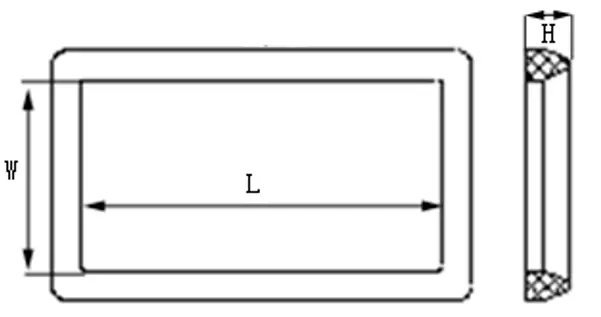
Distinguishing EMI Waveguide Gaskets from RF Gaskets
Buying teams that aren't familiar with microwave tech often get confused by the language. Broadband electromagnetic interference (EMI) protection for electronics cases that don't need the precise shapes needed for waveguide connections is what standard RF gaskets are for. Waveguide flange gaskets have exact cross-sectional shapes that match UG-flange or CMIL-flange standards. This keeps the gasket from sticking out into the waveguide hollow and messing up the field distribution.
Stability at different temperatures is another important factor that sets them apart from EMI waveguide gaskets. Fluorosilicone formulations must be able to keep their elasticity and conductivity across a 215°C temperature range for aerospace uses that go from stratospheric cold to re-entry heating. This is because commercial RF seals may only be certified to 125°C maximums.
Choosing the Right EMI Waveguide Gasket: A Decision Support Guide
Successful installations are distinguished from costly field fails by matching the features of the gasket to the needs of the application. The choice structure weighs the total cost of ownership, mechanical reliability, and electricity performance.
Application-Specific Material Selection
Aerospace and defence developers give more weight to materials that can handle vibration patterns according to MIL-STD-810 Method 514. When compared to normal silicone gaskets, metal-loaded fluorosilicone gaskets are more resilient under 20 Grms of random shaking. On the other hand, companies that make medical imaging tools focus on materials that are radiolucent and work well with MRIs. They tend to use nickel-graphite alloys that don't get ferromagnetic contamination.
Outdoor systems in telecommunications equipment have to deal with UV rays, ozone attacks, and changes in temperature. In this case, platinum-cured silicone grids and silver-plated aluminium fillers last for decades without getting hard or breaking. When research institutions make prototypes of trial antenna feeds, they can use our customisation options, which include changing the shore hardness and the conductive particle loading ratios to meet specific impedance needs.
Supply Chain and Procurement Considerations
Custom waveguide seals usually have lead times of 4 to 6 weeks, but this depends on where the materials come from and what tools are needed. Our production experience has taught us that involving providers in the design phase instead of when the product is ready for production cuts down on both development costs and time to market. When you buy more than 500 units, volume price models work out better, but you can test the concept with as few as 10 pieces before committing to the full run.
Different providers have very different minimum order amounts. Contract makers who put together RF modules like it when their partners offer flexible MOQs that work with their own production batches. This way, they don't have to pay extra to keep inventory on hand. We keep popular flange sizes like UG-39/U and UG-51/U in stock, so we can ship them the same week for immediate needs.
Installation and Application Best Practices
When basic rules aren't followed during fitting, even the best seals won't work. Our technical support team often fixes shielding problems that are caused by dirty contact surfaces or the wrong way of tightening the bolts.
Surface Preparation and Installation Techniques
Waveguide flange faces need to be as clean as semiconductor requirements. High-resistance contact points are made when machine grease, oxidation, or particulate pollution is left behind. We suggest cleaning with isopropyl alcohol and then wiping it down with a lint-free cloth right before putting the seal in place. When cleaning, don't use rough materials that can scratch the surfaces that you're cleaning. Finishes on surfaces should stay 32 microinch Ra or better.
Bolt pressure patterns have a big effect on how regular the seal is. Star-pattern tightening in three steps stops the gasket from coming out and makes sure that the force is spread out evenly. The required torque depends on the type of flange and the number of bolts. For example, aluminium flanges with six mounting holes usually need 40 to 60 inch-pounds of torque, while stainless steel flanges with 12 holes may need 80 inch-pounds. Digital torque wrenches take away the need to guess and provide proof for quality checks.
Maintenance and Longevity Optimization
The times between inspections should match up with the general maintenance plans for the system. Every year, satellite earth stations get their weather seals checked, which makes sense to include eye checks of the gaskets for compression set or material degradation. When gaskets permanently change shape beyond 30% of their original thickness or show surface cracks that can be seen under 10× magnification, they need to be replaced.
Monitoring the environment helps with forecast repair. Installations that have vibration frequencies close to gasket resonance points may need changes to the damper or higher grades of materials. Temperature logging shows how harsh thermal cycling is, which helps choose materials for future purchases that have the right glass transition temperatures.
Why EMI Waveguide Gaskets Are Your Best Choice for EMI Shielding
When it comes to the unique needs of waveguide systems of EMI waveguide gaskets, traditional protection methods fall short. When it comes to reliable flange sealing, conductive tapes don't have the right physical stability, and metallic fingerstock can't keep out moisture.
Performance Advantages in Mission-Critical Systems
When defence companies retrofitted phased array radar systems, they found that cross-polarization isolation was 12 dB better after precision waveguide gaskets were used instead of homemade protection. The controlled impedance link got rid of unwanted reflections that were messing up target detection methods before. In the same way, satellite operators said that intermodulation interference on busy transponder pipes went down by 40% after gasket improvements.
Innovations in materials keep pushing the limits of efficiency. New developments in carbon nanotube-enhanced elastomers promise shielding efficiency greater than 120 dB while lowering gasket weight by 30%. This is a huge benefit for space and air uses, where every gram counts. These next-generation materials keep their conductivity even after being compressed many times, which means they can be used for longer periods of time in places with a lot of shaking.
Future-Proofing Your EMI Management Strategy
As wireless spectrum licenses grow into millimeter-wave bands, regulatory settings change. 5G infrastructure and new 6G studies are pushing working frequencies toward 110 GHz, which is beyond the skin-depth capabilities of most shielding materials. Nanotechnology-based waveguide gasket formulas stay effective across these wider frequency bands, protecting infrastructure investments from becoming obsolete.
Working with aircraft system developers taught us that setting standards for high-performance gaskets during the early stages of design cuts costs throughout their life by 25% compared to fixing problems after they happen. When field repair calls and system downtime are avoided, the small unit cost premium goes away.
Conclusion
When signal purity and environmental resistance meet, EMI waveguide gaskets provide unmatched performance. The current standards for RF systems include electromagnetic shielding and hermetic seals, which are both met by these precise parts. To stay ahead of the competition, procurement workers need to know about the properties of materials, the best ways to place them, and the skills of suppliers that make good solutions stand out from great ones. Choosing the right gaskets is an investment that pays off in defence, aerospace, telecoms, and research uses where they improve system reliability, help with regulatory compliance, and lower the total cost of ownership.
FAQ
1. What frequency ranges do EMI waveguide gaskets effectively cover?
Modern EMI waveguide gaskets work well as shields from 1 GHz up to millimeter-wave frequencies above 100 GHz. The highest frequency that can be reached depends on the material used. Silver-plated copper formulations work best through the Ka-band (40 GHz), while advanced carbon nanotube composites improve performance into the W-band (110 GHz). Lower frequency limits depend more on the shape of the gasket than on the material used. This is because longer wavelengths need bigger sealing perimeters to stop leaking.
2. How do EMI waveguide gaskets differ from standard RF gaskets?
The distinction is based on physical accuracy and the use case. Standard RF seals protect electronics containers from general electromagnetic interference (EMI) without having to follow the specific size requirements of waveguides. Waveguide flange covers have exact cross-sectional shapes that match UG or CMIL flange standards. This makes sure that nothing sticks out into the waveguide cavity. They also mix electromagnetic shielding with sealing off the environment and keeping the pressure inside—needs that aren't usually present in RF shielding uses.
3. Can suppliers provide custom waveguide gasket configurations?
Well-known companies usually can meet unusual requests, like non-standard flange shapes, unique material mixes, and shore hardness levels that are right for the job. For customisation, technical drawings with dimensional tolerances, working frequency ranges, environmental exposure factors, and number estimates are usually needed. Lead times for prototypes range from 4 to 8 weeks, based on how complicated the tooling is. This lets validation testing happen before production promises are made.
Partner with ADM for Superior EMI Waveguide Gasket Solutions
Advanced Microwave Technologies Co., Ltd can help you with your waveguide assembly problems because they have been making precise products for over 20 years. We are a reliable provider of EMI waveguide gaskets because we use ISO 9001:2015 quality systems and have a lot of scientific knowledge from working with the defence, aerospace, and satellite communication industries. Our engineering team works closely with your purchasing and design teams to make sure that the seal materials, shapes, and performance characteristics meet all of your exact needs, whether you are developing antenna feeds for experiments or mass-producing them for telecommunications infrastructure.
We have low prices for large orders without lowering the quality standards needed for mission-critical uses. Our global logistics network makes sure that arrival times are reliable, and our specialised technical support team answers questions about installation and how to get the best performance. You can email craig@admicrowave.com to talk about your specific waveguide sealing needs, ask for material samples, or get full technical documentation that will help you make faster choices about what to buy.
References
1. Harper, C. A. (2002). Handbook of Materials for Product Design, Third Edition. McGraw-Hill Professional.
2. Kaiser, K. L. (2005). Electromagnetic Compatibility Handbook. CRC Press.
3. Military Standard MIL-STD-461G (2015). Requirements for the Control of Electromagnetic Interference Characteristics of Subsystems and Equipment. Department of Defense.
4. Saums, D. L. (1999). "Conductive Elastomer Gaskets: Their Role and Limitations in Shielding Applications," IEEE International Symposium on Electromagnetic Compatibility, pp. 442-447.
5. Schulz, R. B., Plantz, V. C., & Brush, D. R. (1988). "Shielding Theory and Practice," IEEE Transactions on Electromagnetic Compatibility, Vol. 30, No. 3, pp. 187-201.
6. White, D. R. J. (1980). A Handbook on Electromagnetic Shielding Materials and Performance. Don White Consultants, Inc.
YOU MAY LIKE
 VIEW MOREWaveguide Loop Coupler
 VIEW MOREDouble-bend Waveguide
 VIEW MOREWG Isolator
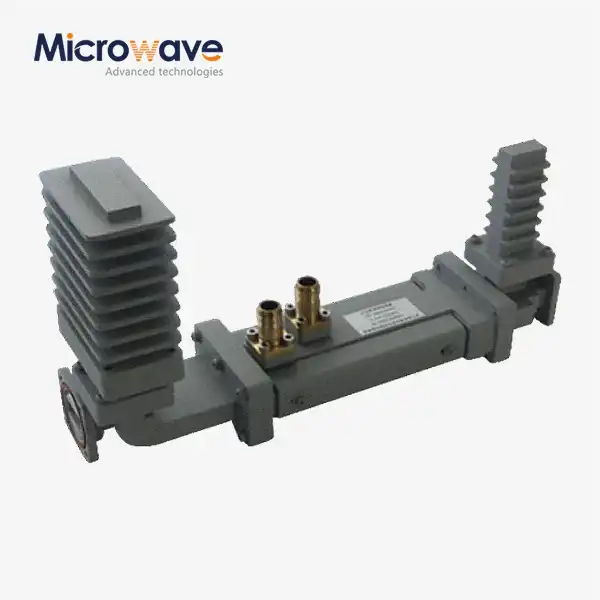 VIEW MOREHigh Power Waveguide Differential Phase Shift Isolator
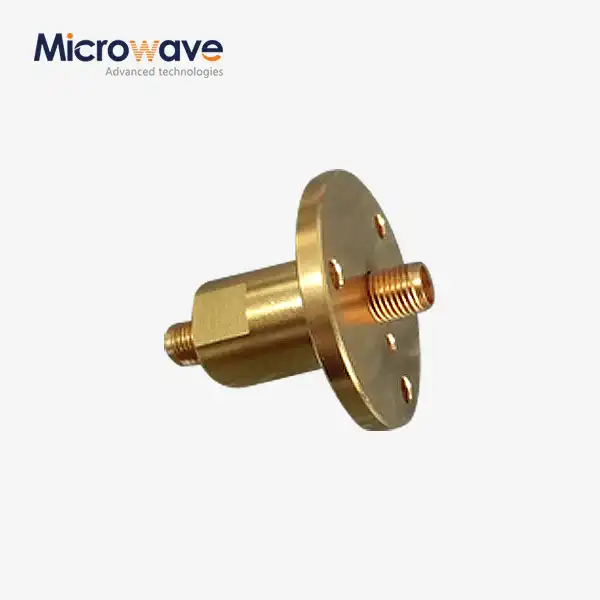 VIEW MORESingle Channel Coaxial Rotary Joint
 VIEW MORECoaxial Cable Assembly
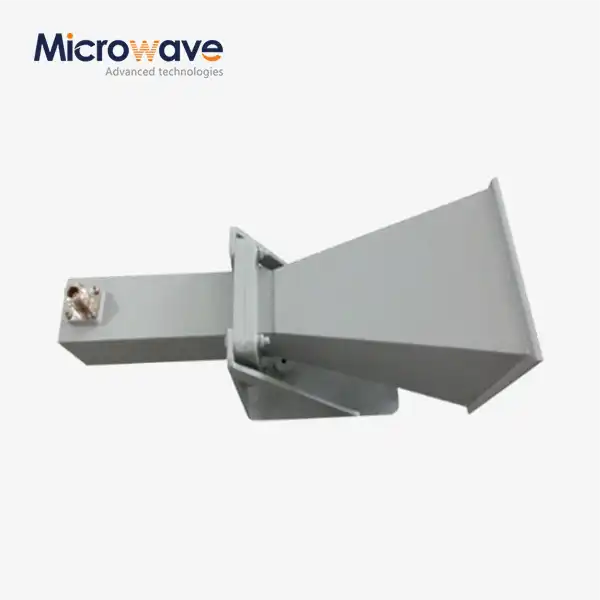 VIEW MORELadder Membrane Square Dual Circular Polarization Horn Antenna
 VIEW MOREAntenna Near Field Measurement Probe