




Does a 5G Antenna with Phase Shifter Outperform Fixed-Beam?
While looking at whether a 5G antenna with phase shifter works better than a fixed-beam option, the clear answer is yes in most mission-critical situations. Dynamic beamforming, which changes the signal direction in real time based on where the user is and what the network needs, is made possible by phase shifter technology. Fixed-beam transmitters send signals in a set direction. Phase shifter-equipped systems, on the other hand, maximise range, reduce interference, and greatly enhance spectral efficiency. Because they are so flexible, they are needed for defence radar, satellite ground stations, and high-density telecom infrastructure, all of which depend on accuracy and dependability to do their jobs well.
Understanding 5G Antennas with Phase Shifters
In current phased array antenna systems, phase shifters are an important part that changes things. These gadgets change the phase angle of radio frequency signals, which lets you fine-tune the beam direction without having to move the antenna itself. Phased arrays electrically steer beams by changing the timing of signals across multiple radiating elements. This makes coverage patterns that change quickly as network conditions do. To achieve optimal performance, choosing a high-quality 5G antenna with a phase shifter is essential for modern infrastructure.
How Phased Array Technology Works
Phased array systems are made up of many radio parts that are connected to separate phase shifters. When these elements' messages mix in space, constructive and destructive interference make a beam that points in a certain direction. Engineers can move this beam in a lot of different directions by changing the phase relationships between the parts. Applications ranging from aircraft radar systems to next-generation cell phone base stations are based on this idea. This technology gets rid of the problems that come with mechanical steering. This means that it can respond faster and be more reliable in tough settings where moving parts would break.
Analog vs Digital Phase Shifters
The market is mostly made up of two main designs. Using varactor diodes or ferrite materials, analogue phase shifters change the phase of a signal in the RF domain. They can handle high power levels and have low insertion loss, which makes them good for defence uses where toughness is important. Digital phase shifters, on the other hand, use binary logic to control precise phase states. They work great for mass production and are easy to connect to software-defined radio systems. Advanced Microwave Technologies is an expert in both methods and can tailor solutions to meet the particular needs of each client in terms of frequency range, phase resolution, and weather resistance.
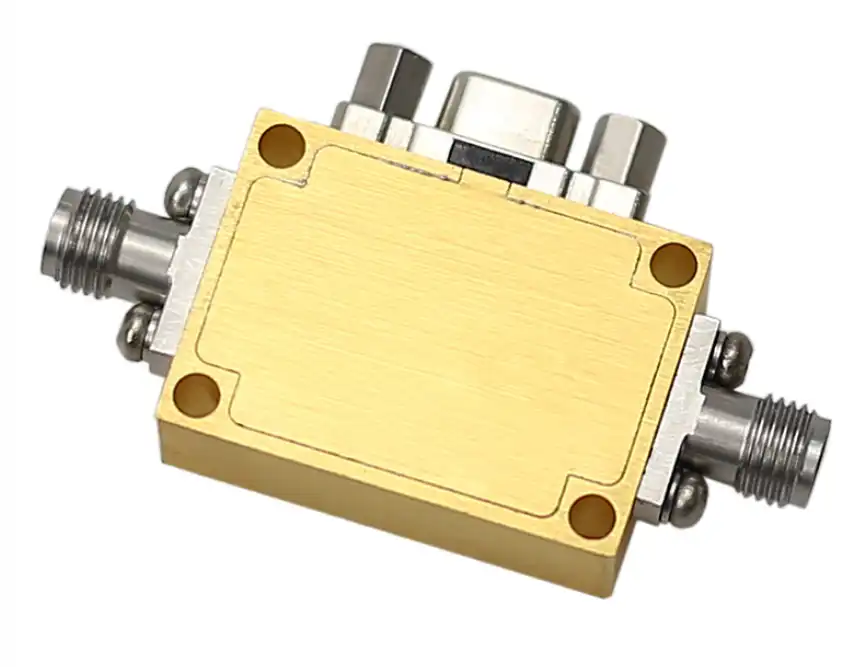
Passive and Active Phase Shifter Configurations
Passive phase shifters don't add much noise, but they can't make up for insertion loss, which is why they work best with high-gain amps. Active phase shifters have stages for amplification that keep the signal strength the same across the array, but they use more power and generate heat. Teams in charge of buying things have to weigh these trade-offs against the needs of the system. Passive designs are often used in X-band satellite ground stations because they are simple and don't change much when the temperature changes. On the other hand, dense urban small-cell deployments might gain from active integration to make up for cable losses and boost radiated power in small packages.
Performance Comparison: 5G Antennas with Phase Shifters vs Fixed-Beam Antennas
In the past, fixed-beam antennas have worked well for radar and telecommunications, but their static nature makes them very limited in settings that change quickly. These systems send out energy in set patterns that work best when they are first installed but can't be changed as conditions change. This inflexibility leads to coverage gaps, lost energy sent to areas with no users, and the possibility of interference from nearby cells or hostile jamming. Deploying a 5G antenna with phase shifter resolves these static limitations through active adjustment.
Dynamic Beamforming Capabilities
Adaptive beamforming lets antennas with phase shifters get around these problems. Real-time systems look at how users are spread out and how the channel is working, then change beam patterns to match. During rush hour, a base station that serves a highway route can extend its reach along the road, and in the evening, it can shift its capacity to domestic areas. Field tests by major telecom providers have shown that this flexibility increases user throughput by 40–60% compared to set configurations. Defence companies also gain because they can steer radar beams to keep an eye on all directions and watch multiple threats at the same time.
Technical Performance Metrics
Three factors decide how well a phase switch works. Phase precision is how well each element's signal lines up with the steering angle that was meant to be used. Deviations cause beam distortion and sidelobe rise. The beam steering range shows the range of angles that can be covered before the gain drops too low. Latency is the amount of time it takes to change beam patterns, which is very important in apps that need to be accurate to the millisecond, like contact between autonomous vehicles. The phase shifters made by Advanced Microwave Technologies can accurately change phases by up to 2 degrees across a frequency range of 0.5 to 110 GHz. They can also move beams by more than 60 degrees and can do so in less than 10 microseconds.
Real-World Validation
Our X-band feed networks were added by a European aerospace contractor to aircraft monitoring radar. This made it 35% better at finding targets than their old fixed-beam system. In hilly areas, the phased array's ability to block out ground clutter through adjustable null steering was very important. Similarly, a North American satellite operator improved ground stations with our custom phase shifter kits. This cut the time it took to get a signal during satellite handoffs by 70%. These results show real operational benefits that directly lead to being able to stand out from the competition and completing missions more effectively.
How to Choose the Right Phase Shifter for Your 5G Antenna Needs
To choose the right 5G antenna with phase shifter technology, you need to make sure that the technical requirements match up with the budget and practical goals. B2B buyers have a lot of choices, and each one is best for a certain situation. Understanding these differences keeps you from making expensive mistakes when matching the skills of components to the needs of the system.
Comparing Core Technologies
When high power handling and ongoing phase change are most important, analogue phase shifters shine. Their fine-tuning lets beams be placed precisely for tracking satellites and taking pictures with radar. Digital phase shifters make control logic easier to understand and work well on large groups, which makes them cost-effective for cellular infrastructure. In remote installations, passive setups keep things simple and reduce the need for upkeep, while active designs get the most power out of small spaces. When it comes to defence uses that need to work for a long time without repair, procurement engineers should focus on analogue passive designs.
Procurement Considerations
Besides technical requirements, economic factors also play a role in choosing a seller. Lead times are very different. Off-the-shelf parts can be shipped within weeks, but fully customised units need months to be designed, tested, and made. Volume price levels reward bigger promises but need accurate predictions of what people will want. Suppliers can change standard goods to fit different form factors, frequency bands, or environmental grades if they can customise them. Advanced Microwave Technologies keeps a stock of typical setups and has an in-house research and development team that can make a lot of changes to them. Our 24-metre microwave darkroom lets us try unique designs up to 110 GHz to make sure they meet the requirements before they are made on a large scale.
Matching Specifications to Antenna Arrays
The performance of the phase shifter needs to match the design of the antenna array. When using spatial combining in MIMO systems, the phases of all the parts must be able to match up to within a few degrees. Insertion loss builds up across components that are linked to each other, so a careful link budget study is needed. When sites are outside, and the temperature changes by more than 80°C, thermal stability is very important. During the design phase, our engineering team works with clients to go over system-level needs and suggest component types that balance cost and performance. This consultative method has helped defence contractors meet strict MIL-STD environmental requirements and telecom OEMs reach their price goals.
Benefits of Integrating Phase Shifters in 5G Networks for Enterprises
Adding a 5G antenna with phase shifter has long-term benefits beyond improving performance right away. Over the lifetime of a system, these benefits add up, which changes the total cost of ownership and the operating agility. This strategic investment ensures that network infrastructure remains robust as user demands increase.
Network Scalability and Flexibility
Base stations with phase shifters can change how capacity is used when the number of users changes, without having to make any hardware changes. A suburban cell site that suddenly gets a lot of traffic during events can briefly take capacity from areas that aren't being used, which keeps the quality of service high. This software-defined flexibility cuts down on the need to over-provision, which lowers the cost of capital. In the same way, defence networks become more adaptable; they can change the way communication lines are set up in response to threats like terrain masking or electronic warfare without having to move real assets.
Future-Proofing Technology Investments
5G standards are still changing. Release 18 and later add new features like shared sense and communication. These roadmaps can be supported by phase shifter designs by updating the software instead of replacing the hardware. As standards get better, an antenna system that is already in use can be changed to handle new waveforms and beamforming methods. This durability saves infrastructure investments over the 10–15 year decline cycles that are common in the defence and telecom sectors. Partnering with sellers who show they are always coming up with new ideas makes sure you can get these evolutionary upgrades.
Simplified Operations and Maintenance
Software-driven beam steering gets rid of the need for mechanical actuators that need to be oiled and replaced every so often. Remote tracking devices can tell when a phase shifter is wearing out before it stops working, which allows for planned repair. Network managers cut down on truck rolls and the labour costs that come with them. This is especially helpful for deployments that are spread out physically. We set up a network of satellite ground stations across North America. Compared to older systems with motorised mirrors, this network cut down on upkeep by 55% over three years. These operational savings add up to a lot over the life of a system.
Conclusion
5G antenna with phase shifter technology fundamentally changes how well antennas work by letting them shape beams in ways that fixed-beam systems can't. There is proof that coverage, capacity, and operating efficiency have all gotten better in defence, satellite, and telecom uses. To choose the right phase shifter architectures, you have to weigh technical requirements against buying factors like cost, lead time, and the need for customisation. With 20 years of knowledge and ISO-certified manufacturing, Advanced Microwave Technologies sets the stage for successful operations. Our 24-metre microwave lab and testing powers up to 110 GHz, making sure that our products are thoroughly tested.
FAQ
1. Why are phase shifters critical in 5G antennas compared to fixed-beam designs?
In 5G antennas with phase shifters, phase shifters allow beam direction that changes in real time based on user locations and network conditions, which improves coverage and spectral efficiency. Fixed-beam transmitters lose power by sending signals to empty spaces, and they can't change how they handle interference on the fly.
2. Should I choose digital or analogue phase shifters for my application?
For radar and satellite tracking, analogue phase shifters are perfect because they can handle high power and constant tuning. Digital versions make control easier and make it cheaper to use across big cellular arrays. Your choice will depend on whether a cost-effective mass rollout or precise beam placement is more important to you.
3. How does beamforming impact performance in dense urban environments?
Dynamic beamforming guides signals around physical obstacles and lowers interference between cells that are close to each other. Field tests show that these systems improve speed by 40–60% in high-rise areas compared to fixed-beam systems. This directly improves the user experience and the network's ability to make money.
Partner with Advanced Microwave Technologies for Superior 5G Antenna Solutions
Advanced Microwave Technologies makes antenna systems with cutting-edge 5G antennas with phase shifter technology that are precisely designed to meet your mission-critical needs. With more than 20 years of experience, we are a reliable provider of customised solutions that are backed by ISO 9001 certification and RoHS compliance. Our 24-metre microwave darkroom tests performance from 0.5 GHz to 110 GHz, making sure that defence, aircraft, and satellite uses can depend on it. Our expert team can help you with technical questions and give you competitive lead times, whether you need fast development or high-volume production. Contact craig@admicrowave.com to talk about your needs and find out how our flexible feed networks and antenna systems can help your next-generation infrastructure work better.
References
1. Andrews, J.G., et al. "What Will 5G Be?" IEEE Journal on Selected Areas in Communications, Vol. 32, No. 6, 2014.
2. Hansen, R.C. "Phased Array Antennas," 2nd Edition, John Wiley & Sons, 2009.
3. Rappaport, T.S., et al. "Millimeter Wave Mobile Communications for 5G Cellular: It Will Work!" IEEE Access, Vol. 1, 2013.
4. Mailloux, R.J. "Phased Array Antenna Handbook," 3rd Edition, Artech House, 2017.
5. Balanis, C.A. "Antenna Theory: Analysis and Design," 4th Edition, Wiley, 2016.
6. Ericsson White Paper. "5G Radio Access: Capabilities and Technologies," Ericsson AB, 2021.