





OEM Antenna Near Field Measurement Probe Solutions for R&D Labs
Research and development laboratories face a persistent challenge: how to accurately characterize antenna performance without the prohibitive cost and space requirements of far-field testing facilities. When your team is developing next-generation satellite communications systems or validating phased array designs for defense applications, measurement inaccuracies can derail entire projects, waste valuable time, and compromise product performance. The Antenna Near Field Measurement Probe has emerged as the solution that bridges the gap between laboratory constraints and precision requirements, enabling engineers to conduct comprehensive electromagnetic field analysis in compact, controlled environments while maintaining the accuracy demanded by modern applications.
Understanding Antenna Near Field Measurement Probe Technology
The Antenna Near Field Measurement Probe represents a sophisticated technological advancement in electromagnetic field characterization. These precision instruments operate by sampling the radiated electromagnetic field in the immediate vicinity of an antenna under test, capturing both amplitude and phase information that can be mathematically transformed to predict far-field behavior. Unlike traditional far-field measurements that require impractical separation distances—often tens or hundreds of meters for large antennas—near field probes function effectively at distances of just a few wavelengths from the antenna surface. The fundamental principle underlying near field measurement relies on the relationship between near-field and far-field electromagnetic behavior. When an Antenna Near Field Measurement Probe scans a planar, cylindrical, or spherical surface around an antenna under test, it collects comprehensive data about the electromagnetic field distribution. Advanced algorithms then transform this near-field data into far-field radiation patterns, enabling engineers to predict how the antenna will perform in real-world operational scenarios. This approach offers significant advantages for R&D laboratories, including reduced facility requirements, faster measurement cycles, and the ability to test larger antenna systems within standard laboratory spaces.
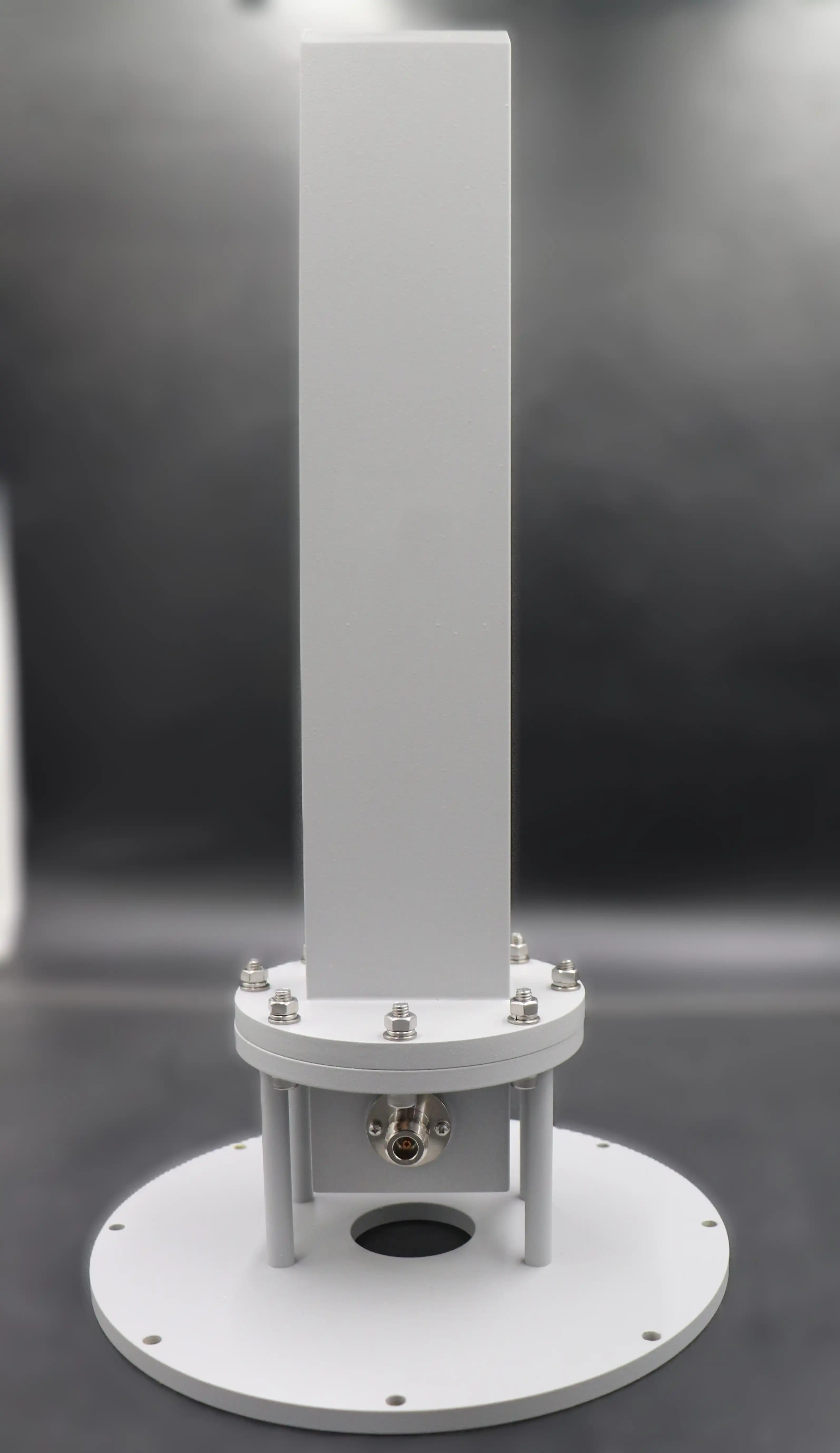
Modern Antenna Near Field Measurement Probe systems incorporate several critical design features. The probes themselves are typically constructed as open-ended waveguides or specialized dipole elements, carefully engineered to minimize field perturbation while maximizing measurement sensitivity. The probe's geometry and electromagnetic characteristics are precisely calibrated, allowing for accurate deconvolution of the probe's influence from the measured data. High-quality probes maintain excellent stability across their operational frequency range, ensuring consistent results over extended measurement campaigns. For R&D applications spanning from legacy communication bands to emerging millimeter-wave frequencies, probe performance across wide frequency ranges becomes absolutely critical.
Types of Near Field Measurement Systems
Research laboratories employ several distinct near field measurement geometries, each optimized for specific antenna characteristics and testing requirements. Planar near-field systems represent the most common configuration, particularly suitable for medium-to-high gain antennas such as phased arrays, reflector antennas, and microwave horns. In planar systems, the Antenna Near Field Measurement Probe scans a flat surface parallel to the antenna aperture, collecting electromagnetic field data across a rectangular grid. This geometry excels when the antenna's radiation is predominantly directed forward, as the planar surface can efficiently capture the majority of radiated energy within a limited scanning area. Cylindrical near-field measurement systems provide superior angular coverage compared to planar configurations, making them ideal for antennas requiring broader azimuthal characterization. The probe traces a cylindrical surface around the antenna under test, capturing radiation patterns across a full 360-degree azimuth range while sampling various elevation angles. This geometry proves particularly valuable for antennas used in direction-finding applications, base station systems, and navigation equipment where omnidirectional or wide-angle performance must be thoroughly evaluated. Advanced R&D laboratories often implement cylindrical systems when developing antennas for UAV applications, where radiation characteristics must be understood across diverse orientations.
Spherical near-field systems represent the most comprehensive measurement approach, essential when complete 4π steradian coverage is required. These systems employ an Antenna Near Field Measurement Probe that samples the electromagnetic field over a complete spherical surface surrounding the antenna under test. While spherical systems demand more complex mechanical positioning and longer measurement times, they provide unparalleled completeness in characterizing antenna radiation patterns, including backlobes, sidelobes, and cross-polarization behavior. For defense and aerospace applications where antenna performance must be known in all directions, spherical near-field measurement becomes indispensable. Modern spherical systems often incorporate robotic positioning to achieve the precision required for millimeter-wave frequencies, where even minor positioning errors can significantly impact measurement accuracy.
OEM Customization Options for Specialized Research Applications
Original equipment manufacturer services for Antenna Near Field Measurement Probe systems have become increasingly important as research laboratories pursue ever more demanding applications. Standard off-the-shelf probes may not adequately address the unique requirements of cutting-edge research programs, particularly those involving exotic frequency ranges, specialized antenna geometries, or challenging environmental conditions. OEM partnerships enable R&D teams to obtain probes precisely tailored to their measurement objectives, ensuring optimal performance and measurement fidelity. Frequency range customization stands as one of the most critical OEM considerations. While many commercial probes cover standard microwave bands, specialized research often demands extended frequency coverage. For instance, laboratories developing next-generation satellite communications systems operating at Q-band, V-band, or W-band frequencies require Antenna Near Field Measurement Probe solutions specifically designed for these millimeter-wave ranges. At Advanced Microwave Technologies Co., Ltd., our engineering team designs custom probes spanning from 10 MHz to 110 GHz, accommodating both legacy system validation and emerging technology development. The probe aperture dimensions, waveguide geometry, and connector specifications are optimized for the target frequency range, ensuring minimal loss, excellent VSWR performance, and stable measurement characteristics across the operational bandwidth.
Material selection and mechanical design represent another crucial customization dimension. Standard probes may employ conventional materials adequate for benign laboratory conditions, but specialized research applications often impose more demanding requirements. Probes destined for environmental testing chambers must withstand temperature extremes, humidity variations, and potentially corrosive atmospheres without performance degradation. Aerospace and defense R&D programs may require probes constructed from lightweight materials to minimize loading effects when integrated into scanning systems, or ruggedized designs capable of field deployment. Our OEM services include custom material specifications utilizing high-durability composites, temperature-stable ceramics, and specialized coatings that maintain measurement integrity under challenging operational conditions.
Probe Polarization and Measurement Accuracy
The polarization characteristics of an Antenna Near Field Measurement Probe fundamentally influence measurement capability and accuracy. Most near-field measurement applications require characterization of both co-polarized and cross-polarized antenna radiation. Achieving this demands either dual-polarized probes capable of simultaneous measurement of both polarization components, or single-polarized probes that must be mechanically rotated between measurement runs. Advanced R&D laboratories increasingly prefer dual-mode probe configurations that eliminate the time overhead and potential mechanical uncertainty associated with probe rotation, particularly critical when measurement time is constrained or when studying time-variant antenna behaviors. Measurement accuracy represents perhaps the single most important performance parameter for research-grade probes. Advanced Microwave Technologies Co., Ltd. designs Antenna Near Field Measurement Probe systems achieving measurement accuracy within ±0.5%, essential for discriminating subtle antenna performance variations and validating simulation models with high confidence. This accuracy level demands rigorous attention to probe design, manufacturing precision, and calibration procedures. Our pre-calibrated probes arrive with traceable calibration data, establishing the probe's electromagnetic characteristics through measurements against precisely known reference standards. The calibration process quantifies the probe's receiving pattern, coupling coefficients, and phase center location—parameters essential for accurate transformation from near-field measurements to far-field predictions.
Integration with Measurement Systems
Successful deployment of an Antenna Near Field Measurement Probe within an R&D laboratory requires seamless integration with the broader measurement infrastructure. The probe must interface mechanically with the positioning system—whether planar scanner, cylindrical rotator, or spherical positioner—while maintaining precise positioning and orientation throughout the measurement process. Electrical connectivity must provide low-loss signal transfer from the probe to the measurement receiver, typically through high-quality coaxial cables or, for millimeter-wave applications, waveguide runs. At frequencies above 40 GHz, cable flexure losses and phase stability become critical concerns, often necessitating specialized cable assemblies or direct waveguide connections. Modern Antenna Near Field Measurement Probe systems increasingly incorporate advanced positioning feedback mechanisms. Laser tracking systems, optical encoders, and precision GNSS receivers enable real-time position verification with submillimeter accuracy, essential when measuring at frequencies where wavelengths approach millimeter scales. Position accuracy requirements typically scale with frequency, with specifications demanding λ/50 or better positioning tolerance for accurate sidelobe characterization. For 110 GHz measurements where wavelength measures approximately 2.7 mm, this translates to positioning accuracy requirements below 60 micrometers—challenging even for high-precision mechanical systems. Our OEM solutions incorporate compatibility with leading positioning systems and can accommodate custom mounting interfaces when standard configurations prove inadequate.
Technical Specifications Critical for R&D Success
Research and development laboratories demand comprehensive technical specifications when evaluating Antenna Near Field Measurement Probe solutions. The frequency range specification fundamentally determines the probe's applicability to specific research programs. A probe designed for S-band radar development will prove entirely unsuitable for millimeter-wave 5G research. Advanced Microwave Technologies Co., Ltd. provides detailed frequency response data across the entire operational range, documenting gain flatness, return loss, and pattern stability. Our 10 MHz to 110 GHz frequency coverage accommodates virtually any contemporary research application, from HF propagation studies through emerging sub-terahertz communications research. Probe gain specification directly impacts measurement dynamic range and noise floor. Higher gain probes collect more signal power, improving signal-to-noise ratio and enabling characterization of weak sidelobe structures and subtle pattern features. However, excessively high gain can narrow the probe's beamwidth, potentially complicating near-field scanning by introducing rapid spatial variations in the coupling coefficient. The Antenna Near Field Measurement Probe designs from Advanced Microwave Technologies balance gain and beamwidth to optimize measurement fidelity. We offer multiple gain options—typically 10, 15, and 20 dB—allowing R&D teams to select the configuration best matching their measurement requirements. Lower gain probes with broader patterns suit applications emphasizing angular coverage, while higher gain options excel when measuring high-power transmitting antennas or capturing fine pattern details.
Return loss and VSWR specifications quantify how well the probe is matched to the measurement system's characteristic impedance. Poor matching creates standing waves on the connecting transmission line, introducing measurement errors through multiple reflections between the probe and receiver. High-quality research-grade probes maintain VSWR below 1.5:1 across their operational bandwidth, minimizing these error sources. Our Antenna Near Field Measurement Probe designs incorporate sophisticated matching networks and precision connector interfaces—available in SMA, N-Type, or custom configurations—ensuring excellent electrical performance. The connector type selection balances frequency capability, power handling, and mechanical robustness, with SMA connectors typically preferred for frequencies up to 40 GHz and specialized connectors required for higher frequency operation.
Application-Specific Performance Requirements
Different research applications impose distinct performance requirements on Antenna Near Field Measurement Probe systems. Satellite communications research demands probes capable of characterizing narrow-beam, high-gain antennas with exceptional sidelobe resolution. The probe must maintain stable phase response across extended scan areas, as phase errors accumulate during the near-field to far-field transformation, potentially corrupting the predicted far-field pattern. Military radar development requires probes supporting polarimetric measurements with excellent polarization purity—the ability to discriminate between co-polarized and cross-polarized signal components with high isolation. Cross-polarization discrimination better than 30 dB is often specified for defense applications where polarization behavior impacts target discrimination and clutter rejection. Aerospace applications introduce additional challenges, particularly when characterizing conformal antennas, phased arrays, or antennas integrated into complex platforms. These measurements may require custom probe positioning strategies, specialized reference antenna calibrations, and advanced signal processing to extract antenna performance from platform interactions. Our OEM services at Advanced Microwave Technologies Co., Ltd. include consultation on measurement methodology, helping R&D teams design optimal measurement approaches for challenging antenna configurations. We provide guidance on scan grid density, measurement distance, truncation criteria, and transformation algorithms, ensuring that the Antenna Near Field Measurement Probe system delivers results accurately representing antenna performance.
Telecommunications research, particularly for 5G and beyond, demands wide bandwidth probe performance and the ability to characterize beamforming antennas operating across multiple frequency bands simultaneously. The probe must capture complex beam patterns that vary with frequency, requiring measurement systems capable of rapid frequency switching or true wideband operation. Time-domain near-field measurement techniques, where the probe captures ultra-wideband pulse responses, represent an emerging approach particularly relevant to communications research. These systems demand probes with excellent impulse response characteristics and minimal dispersion across extremely wide bandwidths—sometimes spanning decade or greater frequency ranges.

Quality Assurance and Compliance Standards
Advanced Microwave Technologies Co., Ltd. maintains rigorous quality assurance programs ensuring that every Antenna Near Field Measurement Probe meets stringent performance specifications. Our ISO 9001:2015 certification reflects comprehensive quality management systems governing design, manufacturing, testing, and delivery processes. This certification provides R&D laboratories confidence that probe performance will consistently meet specifications, that manufacturing processes maintain tight tolerances, and that quality documentation accompanies every product delivery. For research programs where measurement traceability is essential—particularly defense contracts and regulatory compliance testing—our quality systems provide the necessary documentation framework. Environmental compliance represents another critical consideration for modern research instrumentation. Our Antenna Near Field Measurement Probe products maintain full RoHS compliance, restricting hazardous substances and supporting laboratories' environmental responsibility initiatives. For international R&D collaborations and export-controlled research, compliance with relevant regulations ensures that probe procurement and utilization proceed without regulatory complications. Our ISO 14001:2015 environmental management certification demonstrates commitment to minimizing environmental impact throughout the product lifecycle, from raw material sourcing through manufacturing, operation, and eventual disposal or recycling. Worker safety and laboratory safety represent paramount concerns addressed through our ISO 45001:2018 occupational health and safety management systems. While Antenna Near Field Measurement Probe systems typically involve relatively low RF power levels, comprehensive safety practices ensure that all products support safe laboratory operations. Our probes incorporate appropriate safety features, clear operational guidelines, and comprehensive documentation addressing potential hazards. For R&D laboratories subject to institutional safety reviews or government safety standards, our commitment to workplace safety facilitates smooth procurement and deployment processes.
Calibration and Measurement Traceability
Calibration procedures establish the Antenna Near Field Measurement Probe's electromagnetic characteristics with traceable accuracy, essential for research-grade measurements. Our probes arrive pre-calibrated with comprehensive documentation detailing the calibration methodology, reference standards employed, and measurement uncertainty analysis. The calibration process typically involves measuring the probe's radiation pattern in a precision antenna range, determining its coupling to known reference antennas, and characterizing its phase center location. These calibration data enable the measurement software to accurately compensate for the probe's influence, extracting the true antenna-under-test characteristics from the raw measurement data. Calibration traceability to national or international standards provides research measurements with recognized authority. Our calibration procedures trace to standards maintained by national metrology institutes, ensuring that measurement results carry recognized validity for publication, regulatory submission, or contractual compliance. Periodic recalibration maintains measurement integrity over the probe's operational lifetime, accounting for potential drift in probe characteristics or mechanical degradation. We provide recalibration services supporting long-term measurement programs, with recommended recalibration intervals based on frequency of use, operational environment, and measurement accuracy requirements.
Conclusion
OEM Antenna Near Field Measurement Probe solutions from Advanced Microwave Technologies Co., Ltd. deliver the precision, customization, and reliability that R&D laboratories demand for advancing next-generation wireless technologies and electromagnetic systems.
Cooperate with Advanced Microwave Technologies Co., Ltd.
Advanced Microwave Technologies Co., Ltd. stands as your ideal China Antenna Near Field Measurement Probe manufacturer and China Antenna Near Field Measurement Probe supplier, offering High Quality Antenna Near Field Measurement Probe solutions with competitive Antenna Near Field Measurement Probe price points for global markets. Our China Antenna Near Field Measurement Probe factory delivers OEM services with rapid prototyping, technical support, and quick turnaround for Antenna Near Field Measurement Probe for sale worldwide. As a leading China Antenna Near Field Measurement Probe wholesale provider with over 20 years of microwave expertise, our 24m Microwave Darkroom and ISO-certified facilities ensure superior product quality. Contact craig@admicrowave.com today to discuss your custom probe requirements and discover how our advanced measurement solutions can accelerate your research breakthroughs. Bookmark this resource for ongoing reference to antenna measurement best practices and technical insights.
References
1. Yaghjian, Arthur D. "An Overview of Near-Field Antenna Measurements." IEEE Transactions on Antennas and Propagation, Vol. 34, No. 1, Institute of Electrical and Electronics Engineers, January 1986.
2. Hansen, Jesper E. "Spherical Near-Field Antenna Measurements." IET Electromagnetic Waves Series, Institution of Engineering and Technology, London, 1988.
3. Balanis, Constantine A. "Antenna Theory: Analysis and Design, Fourth Edition." John Wiley & Sons, Hoboken, New Jersey, 2016.
4. Joy, Edward B. and Paris, Denton T. "Spatial Sampling and Filtering in Near-Field Measurements." IEEE Transactions on Antennas and Propagation, Vol. 20, No. 3, March 1972.
5. Gillespie, E.S., Editor. "Special Issue on Near-Field Scanning Techniques." IEEE Transactions on Antennas and Propagation, Vol. 36, No. 6, Institute of Electrical and Electronics Engineers, June 1988.
YOU MAY LIKE
 VIEW MOREBroadwall Directional Coupler
 VIEW MOREWG Circulator
 VIEW MOREHigh Power Waveguide Differential Phase Shift Circulator
 VIEW MOREWaveguide Coupling Fixed Attenuator
 VIEW MOREWG Isolator
 VIEW MOREHigh Power Waveguide Differential Phase Shift Isolator
 VIEW MOREWG Band Stop Filter
 VIEW MOREWG Low Pass Filter