




Dual Channel Coaxial Rotary Joint Selection and Design Factors
To choose the best dual channel coaxial rotary joint, you need to weigh the electrical performance, the mechanical longevity, and the needs of the application. These precise parts are needed for radar systems, satellite ground stations, and defense platforms because they allow continuous RF signal transfer across spinning surfaces without wire bending. We look at important factors like frequency range, insertion loss, channel separation, and expected rotating life. Choice of material, quality of bearings, and covering against the environment all have a direct effect on how reliable something is in mission-critical situations. By knowing these design factors, sourcing engineers can choose parts that will work consistently in tough operating situations and meet strict quality and safety standards.
Understanding Dual Channel Coaxial Rotary Joints
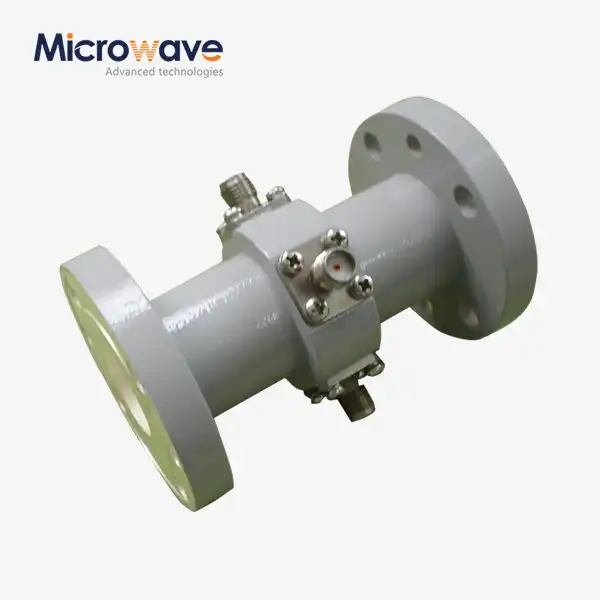
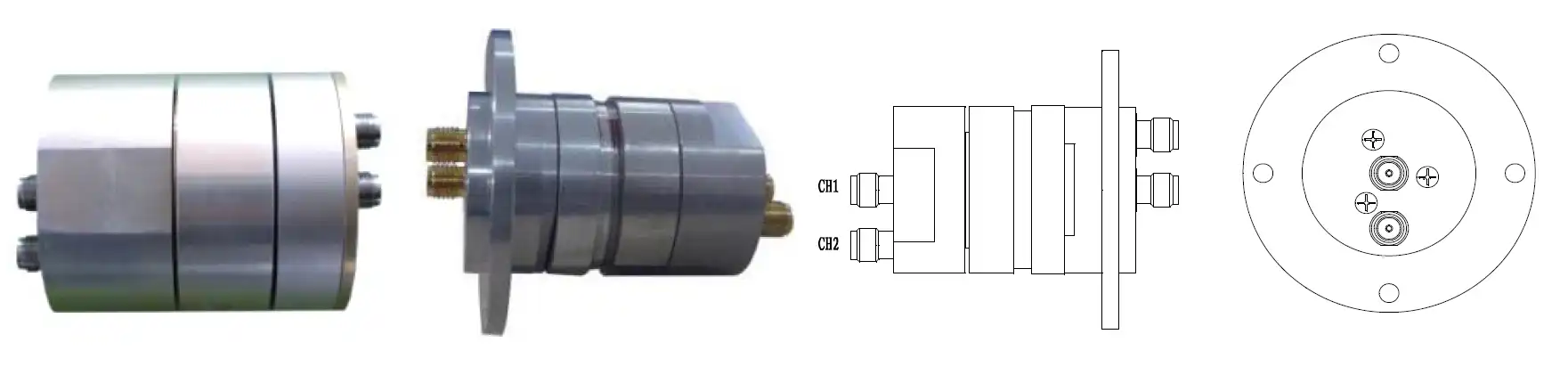
A dual-channel coaxial rotary joint is a special kind of electromechanical device that lets two separate RF or microwave signals be sent at the same time between assemblies that are still and assemblies that are moving. The internal structure usually uses circular wire lines with precise dielectric separation. This lets the device rotate continuously in a circle of 360 degrees while keeping the signal integrity across both channels. This setup solves one of the biggest problems with spinning platforms: it keeps cables from getting tangled up while still meeting the needs of complex signals.
When you look at how well channel separation works, the technical advantage becomes clear. High-quality rotor joints keep more than 50 dB of space between channels, which stops signal loss and noise that could make the system less accurate. In full-duplex radar systems, where the send and receive routes must work at the same time without any problems, this separation feature is very important.
Understanding the Core Working Principle
Signals are sent through the rotary joint using moving contacts or electrostatic coupling mechanisms that were carefully designed. At the heart of the design are precisely polished conductive areas that keep the electricity flowing even as the rotor spins around the stator. Some types of ball bearing systems can last more than 50 million turns, which means they can support smooth spinning while minimizing mechanical wear.
Gold-on-gold contact surfaces are used in modern units to ensure stable electrical lines and low dynamic contact resistance. The shape has to keep impedance matching stable throughout the spin cycle, with VSWR values usually falling below 1.4:1. Signal bounce would hurt system performance in critical areas like phased array antennas or satellite communication ports, but this level of accuracy stops that from happening.
Real-World Application Examples
In radar systems used for air traffic control, these rotating joints send high-power pulses on one channel and receive low-power echoes on the other channel at the same time. The device can work 24 hours a day, seven days a week in open, outdoor areas, and it can handle high power levels without arcing or signal loss. Weather tracking systems use dual-channel joints to handle dual-polarization signals. This essentially doubles the amount of data that can be collected while the antenna scans all 360 degrees.
There is a lot of need for satellite-on-the-move (SOTM) devices. For these mobile platforms to work, they need rotary joints that can handle both right-hand and left-hand circular polarization signals and keep the link stable when the ground is shaking. Using different single-channel units would make the mechanical design more complicated, but the small dual-channel design saves important room in the gimbal parts.
Critical Technical Specifications for Evaluation
Several electrical factors need to be carefully thought through when rotary joints are being considered for purchase. The operating bandwidth is determined by the frequency range. Standard units have SMA connections that work from DC to 18 GHz, while high-frequency versions have 2.92 mm precise connectors that work from DC to 40 GHz. Losses during insertion have a direct effect on the signal budget. Good components keep losses below 0.5 dB at lower frequencies and below 1.0 dB at higher bands.
It turns out that mechanical specs are just as important. Different models can rotate at different speeds, ranging from 500 RPM for normal models to over 2000 RPM for high-speed models. The "WOW" factor, which is the change in insertion loss and phase during spin, needs to be tightly managed, usually within ±0.05 dB for amplitude and ±3 degrees for phase shift. These factors make sure phase stability is very important for phased array radar uses, where even small changes can affect how accurately the beam is steered.
System integration difficulty is affected by the size and shape of the parts and how they are mounted, including dual-channel coaxial rotary joint applications. The sizes of the housings are usually between 40 mm and 100 mm, and they are made of passivated stainless steel or conductive aluminum metals that block electromagnetic waves and can withstand being exposed to the elements. To avoid having to pay a lot of money to remake things, connector types, flange mounting choices, and shaft configurations must all work with the way things are already connected mechanically.
Key Factors in Selecting a Dual-Channel Coaxial Rotary Joint
Procurement choices depend on matching component capabilities to application needs across technical dimensions. Electrical performance, mechanical working conditions, and long-term dependability under certain environmental stresses are analyzed during selection.
Electrical Performance Requirements
Selection is based on frequency compatibility. System designers must provide the operational frequency range with enough margin for signal bandwidth and growth. An X-band marine radar system runs at 8-12 GHz, whereas a Ku-band satellite ground station needs 12-18 GHz rotary joints. Designers may optimize L-band telemetry on one way and X-band data transfer on the other, since each channel supports various frequency bands.
System transmission levels must be considered while assessing power handling. High-power radar applications may need dielectric materials and thermal control for kilowatt peak pulse power. Unlike power handling, receive-only pathways emphasize minimal insertion loss and good return loss. Whether the application uses continuous wave or pulsed transmission influences material and contact design.
Insertion loss levels affect system link budgets. Satellite communication lines near the noise floors value every tenth of a decibel. Setting maximum permissible insertion loss maintains signal levels for reliable demodulation. Also, return loss standards prevent reflected energy from impacting transmitter stability or upstream components.
Mechanical and Operational Considerations
Bearing and contact design depend on rotational speed. Mechanical strains vary greatly between 15-RPM surveillance radar platforms and 500-RPM drone gimbals. Bearing preload, lubrication, and contact pressure mechanisms must support the planned speed range and rotational life.
Starting torque impacts the drive motor and power budget size. High-quality rotary joints reduce rotational resistance with precise bearings and optimum contact geometry. Torque increases power consumption, mount structure vibration, and mechanical noise.
Environmental sealing is essential for exterior installations. In maritime or desert installations with dust penetration, IP65 or IP67 ingress protection ratings exclude moisture and contaminants. The operating temperature range of military-grade devices must include -40°C to +85°C or more.
Comparing Technology Options
Space-constrained applications benefit from dual-channel rotary joints over single-channel ones. One integrated component instead of two minimizes mechanical footprint, simplifies installation, and reduces drive system rotational torque loading. System-level advantages usually justify the dual-channel cost.
Coaxial rotary joints have benefits over fiber optics in certain situations. Direct coaxial RF solutions eliminate RF-to-optical conversion complexity and delay. High-bandwidth applications or situations with strong electromagnetic interference benefit from fiber optic rotary joints. Understanding signal format and bandwidth requirements informs technology selection.
Manufacturer Selection and Supply Chain Factors
Assessing technological skills, quality certifications, and support infrastructure helps choose reliable manufacturers. Established vendors use ISO 9001 quality management systems and give test data, including S-parameter measurements over the frequency range and 360-degree rotation cycles. The verification data is crucial for system validation and acceptability testing.
When buying catalog items or custom-engineered solutions, including Dual Channel Coaxial Rotary Joint products, delivery lead times vary greatly. Standard configurations arrive in weeks, while custom designs with connection types, frequency optimizations, or environmental hardening take longer to create and manufacture. Early supplier involvement in design permits parallel development, reducing project timescales.
Design factors affecting dual-channel coaxial rotary joint performance
Choose materials, building methods, and environmental protection initiatives to ensure component life and RF performance. These considerations affect whether a rotary joint lasts its specified service life or has to be replaced due to wear or environmental damage.
Material Choice and Construction Quality
Electrical and mechanical performance depend on conductor materials. Beryllium copper alloys have low electrical resistance and good contact element springs. Gold plating on contact surfaces minimizes oxidation and maintains electrical channels during mechanical engagement. Passivated stainless steel protects the environment, while aluminum alloys minimize bulk in weight-sensitive systems.
Dielectric materials separating concentric conductors must have a low loss tangent over the operational frequency range and survive rotation and temperature cycling. While PTFE-based materials have good electrical characteristics and temperature stability, careful mechanical design prevents cold flow under continuous compressive strain. Minimizing interface reflections requires fine dielectric geometry impedance control, usually 50 ohms.
Bandwidth and Frequency Range
Operating frequency influences internal geometry and tolerances. As wavelength declines, higher frequency applications need tighter manufacturing tolerances, which generate severe impedance discontinuities at Ka-band yet are tolerable at L-band. Multi-octave bandwidth designs need careful impedance taper to maintain VSWR over the range.
High-frequency bands with strict dimensional tolerances have worse channel isolation performance. Specifying isolation criteria at the maximum working frequency assures band-wide performance. Advanced designs employ shielding between channels to preserve isolation in demanding situations where high-power transmission on one channel might interfere with the neighboring connection.
Dimensions, weight, and integration
In electro-optical turrets and tiny gimbal systems, space limits rotary joint choices. Dual-channel systems save space due to their concentric topology, but engineers must consider the connection backshell size and cable bend radius when calculating envelope dimensions. Reducing unit weight helps mobile platforms and aerial applications, where mass influences fuel consumption and payload.
Installation difficulty and mechanical alignment depend on mounting interface options. Installing flange-mount designs requires careful concentricity control but provides firm attachment and accurate alignment. Via-bore arrangements simplify system architecture on complicated platforms by sending power, control signals, and fiber optics via the rotating joint axis.
Environmental Protection and Durability
Extreme temperatures impair electrical and mechanical performance. Conductor expansion coefficients must match to avoid contact misalignment during temperature changes. Synthetic lubricants provide longer operating ranges than petroleum-based alternatives, balancing low-temperature fluidity and high-temperature stability. Thermal cycling to MIL-STD-810 requirements verifies performance across temperature envelopes.
Vibration and shock resistance are crucial for mobile platforms in rugged terrain or flight. Strong mechanical construction with preloaded bearings and tight contact retention eliminates intermittent connections during vibration. In challenging applications, MIL-STD-167 (shipboard vibration) or MIL-STD-810 (general environmental) testing gives assurance.
Moisture increases corrosion and creates dielectric breakdown channels in dual-channel coaxial rotary joint systems. Quality rotary joints include IP65 or IP67 protection ratings and O-ring seals at housing interfaces and shaft penetrations. MIL-STD-810 salt fog testing proves maritime corrosion resistance. Internal assembly conformal coating protects against extreme environments.
Conclusion
Selecting appropriate dual-channel coaxial rotary joints demands careful analysis of electrical specifications, mechanical requirements, and environmental conditions specific to each application. These precision components enable critical functionality in radar systems, satellite communications, and defense platforms where reliable signal transmission across rotating interfaces proves essential. Understanding the interplay between frequency range, insertion loss, channel isolation, and mechanical durability allows procurement engineers to specify solutions delivering long-term reliability. Material quality, manufacturing precision, and environmental protection directly influence service life and maintenance requirements. Strategic supplier selection emphasizing quality certifications, technical support, and customization capabilities ensures access to components meeting mission-critical performance standards throughout demanding operational environments.
FAQ
1. What frequency ranges do dual-channel rotary joints typically support?
Standard configurations operate from DC to 18 GHz using SMA connectors, suitable for most radar and communication applications. High-frequency variants extend coverage to 40 GHz through 2.92mm precision connectors, accommodating Ka-band satellite systems. Custom designs can address specific bands with optimized electrical performance. Each channel operates independently, allowing different frequency ranges—one channel handling L-band telemetry while the other manages X-band data transmission.
2. How does dual-channel design improve system performance compared to single-channel joints?
Dual-channel rotary joints enable simultaneous transmission of independent signals like transmit/receive paths in full-duplex radar or orthogonal polarizations in satellite communications. This eliminates the need for two separate mechanical assemblies, reducing system weight, complexity, and cumulative rotational torque on drive mechanisms. Channel isolation exceeding 50 dB prevents crosstalk, maintaining signal integrity in demanding applications where separate signal paths must coexist without interference.
3. Can rotary joints be customized for specific OEM applications?
Customization addresses unique connector types, mounting interfaces, frequency optimizations, and environmental protection levels. OEM collaboration during design phases allows integration of specific mechanical interfaces and electrical characteristics aligned with system requirements. Prototyping services enable testing and validation before committing to production. Custom solutions require extended lead times compared to catalog products but deliver optimized performance for specialized applications.
Partner with ADM for Reliable Dual-Channel Coaxial Rotary Joint Solutions
Advanced Microwave Technologies Co., Ltd. brings over 20 years of manufacturing expertise, delivering precision rotary joints that meet the demanding requirements of defense, aerospace, and telecommunications applications. Our dual-channel coaxial rotary joint designs undergo rigorous testing in our advanced 24-meter microwave darkroom, equipped with measurement capabilities extending to 110 GHz. This verification infrastructure ensures every component meets published specifications before shipment to your facility.
We understand that procurement decisions involve balancing technical performance, delivery timelines, and total cost of ownership. Our engineering team collaborates with your technical staff to specify optimal configurations addressing your specific frequency ranges, power handling requirements, and environmental conditions. Whether you need standard catalog products for rapid deployment or custom-engineered solutions tailored to unique platform constraints, we provide comprehensive support throughout the procurement and integration process.
As an established dual channel coaxial rotary joint manufacturer maintaining ISO 9001 certification and RoHS compliance, we deliver components meeting international quality standards demanded by mission-critical applications. Our global supply chain capabilities ensure reliable delivery schedules, while our technical support team remains accessible through craig@admicrowave.com to address installation questions and performance optimization needs.
References
1. Microwave Journal Editorial Staff. "RF Rotary Joint Design Considerations for Aerospace Applications." Microwave Journal, Volume 64, Issue 3, March 2021, pp. 44-58.
2. Chen, W. and Thompson, R. "Performance Characterization of Multi-Channel Rotary Joints in Radar Systems." IEEE Transactions on Microwave Theory and Techniques, Volume 68, Number 9, September 2020, pp. 3847-3859.
3. Satellite Communications Technical Committee. "Ground Station RF Component Selection Guidelines." International Telecommunication Union Radiocommunication Sector, Report ITU-R S.2345, Geneva, 2019.
4. Defense Standardization Program Office. "Requirements for Rotary RF Devices in Military Systems." MIL-PRF-83528D Performance Specification, U.S. Department of Defense, August 2018.
5. Anderson, P. and Martinez, J. "Maintenance Strategies for Rotating RF Components in Critical Infrastructure." Journal of Telecommunications Management, Volume 15, Issue 2, June 2021, pp. 112-127.
6. European Space Agency Engineering Standards Division. "Passive RF Component Reliability Assessment for Satellite Ground Segment Equipment." ESA-ESTEC Technical Memorandum TEC-QEC/2020/148, Noordwijk, Netherlands, April 2020.