





Broadband Circulator Applications in Communication Equipment
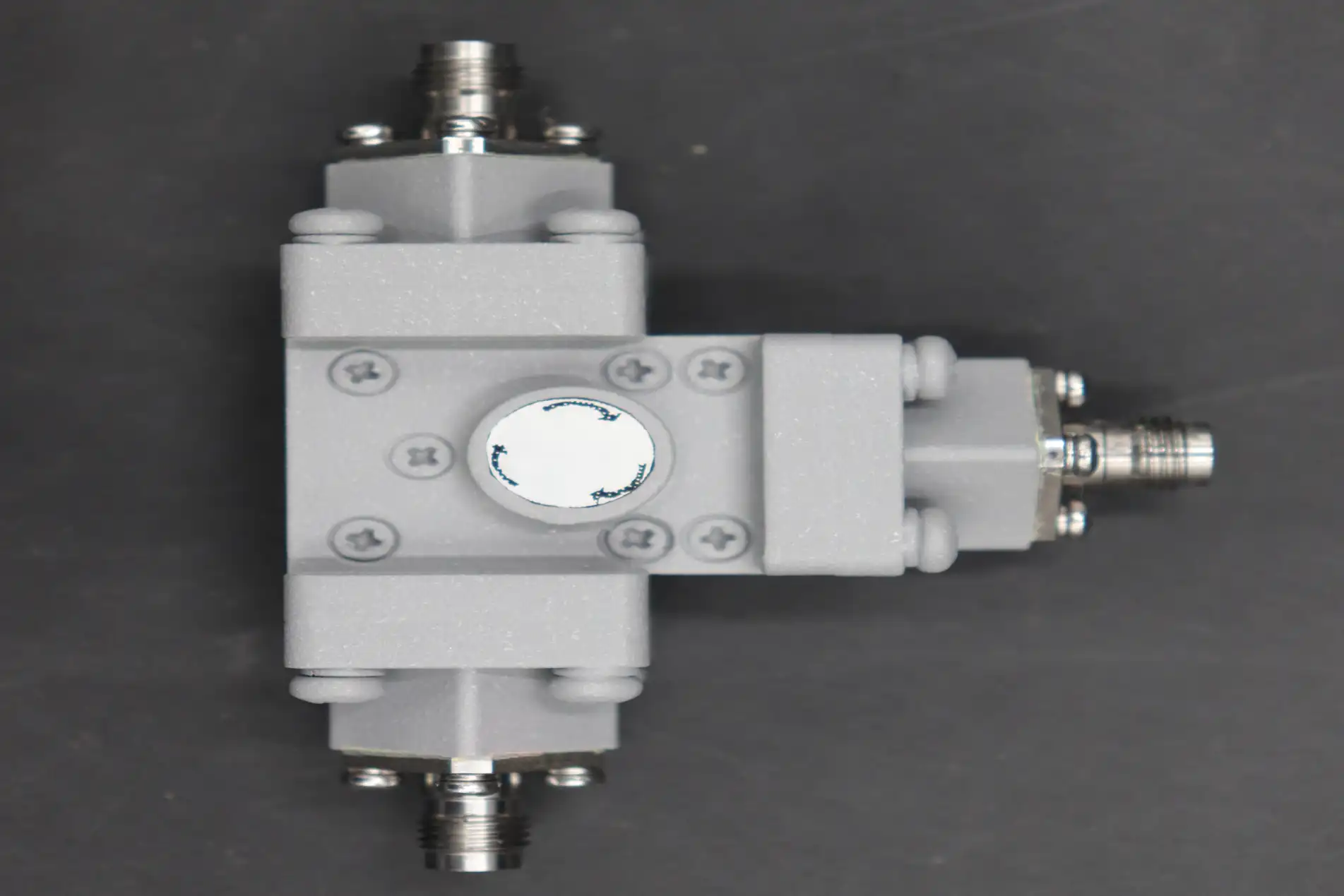
Broadband circulators serve as indispensable passive components in modern RF and microwave communication systems, directing signals unidirectionally through multiple ports while maintaining exceptional isolation between channels. These non-reciprocal devices leverage advanced ferrite material technology to enable simultaneous transmission and reception across wide frequency ranges—from DC to 40 GHz—without the interference that typically plagues traditional signal routing methods. By allowing signals to flow from Port 1 to Port 2, Port 2 to Port 3, and Port 3 back to Port 1, while blocking reverse pathways, broadband circulators protect sensitive receiver components from high-power transmit signals and optimise spectrum efficiency in mission-critical applications spanning defence radar, satellite ground stations, 5G base stations, and industrial IoT networks.
Understanding Broadband Circulators in Communication Systems
At the heart of every high-performance communication system lies the challenge of managing signal flow without compromising integrity. Broadband circulators address this through their unique non-reciprocal behaviour, achieved by integrating precision-engineered ferrite cores within optimised coaxial or waveguide cavities. Unlike narrowband alternatives that operate effectively only within limited frequency windows, these devices maintain consistent performance across multiple octaves.
Fundamental Operating Principles
The operational magic stems from ferromagnetic resonance within the ferrite material, which responds differently to electromagnetic waves based on their direction of travel. When a permanent magnet biases the ferrite core, it creates an asymmetric magnetic field that rotates the polarisation of passing RF energy. This rotation ensures signals entering one port exit the next sequential port with minimal attenuation, while signals attempting reverse travel encounter high impedance and get absorbed or reflected. Advanced Microwave Technologies Co., Ltd engineers our broadband coaxial circulators using low-loss, high-saturation magnetic flux density ferrite cores combined with precise magnetic field calibration to achieve stable electrical performance across DC to 40 GHz ranges.
Critical Performance Specifications
Procurement professionals evaluating these components focus on three primary metrics. Insertion loss quantifies signal attenuation in the forward direction—our devices achieve ≤0.3 dB from DC to 10GHz, ≤0.5dB from 10 to 20 GHz, and ≤0.8 dB from 20 to 40 GHz. Isolation measures reverse signal suppression, with our products delivering ≥20dB across the operational bandwidth. Return loss, or VSWR, indicates impedance matching quality, crucial for preventing standing waves that degrade system efficiency. These specifications directly impact communication range, receiver sensitivity, and overall link budget in deployed systems.
Advantages Over Traditional Signal Management
The ultra-wide frequency coverage eliminates the need to maintain inventories of multiple narrowband units, reducing procurement complexity and system downtime during frequency reconfigurations. Our devices handle power levels from 0.5W in sensitive receiver protection applications to 500W in high-power radar transmitters, offering unprecedented versatility. Temperature-compensated permanent magnet assemblies maintain stable isolation and insertion loss from -45°C to +85°C, meeting aerospace and outdoor infrastructure requirements. The oxygen-free copper cavity construction minimises conductor losses, while RoHS-compliant manufacturing ensures global regulatory compliance.
Core Applications of Broadband Circulators in Communication Equipment
The versatility of broadband circulators makes them foundational components across diverse communication architectures. Their ability to separate transmit and receive paths while maintaining signal fidelity has proved invaluable as systems demand higher data rates and more efficient spectrum utilisation.
Radar and Satellite Communication Systems
In phased array radar installations, these devices protect low-noise amplifiers from kilowatt-level transmit pulses while routing weak echo returns to sensitive receivers. Satellite ground stations leverage circulators to enable full-duplex communication through a single antenna aperture, simultaneously uploading commands at high power and downloading telemetry at microvolt levels. The broadband capability proves essential for multi-band satellite terminals serving C-band, X-band, and Ka-band frequencies without hardware reconfiguration. Our devices' high-power heat dissipation technology, featuring integrated copper heat sinks and ceramic thermal layers, prevents performance degradation during continuous operation.
5G Base Station RF Front-Ends
Modern massive MIMO base stations require compact, low-loss components to maximise spectral efficiency across sub-6GHz and millimetre-wave bands. Broadband circulators isolate transmit chains from receive arrays, preventing transmitter noise from desensitising receivers and enabling carrier aggregation across non-contiguous frequency blocks. The inline coaxial form factor integrates seamlessly with tower-mounted amplifiers, while surface-mount variants support densely packed remote radio heads. EMI shielding designs reduce electromagnetic interference in high-noise cell site environments where dozens of active transmitters operate simultaneously.
Test and Measurement Infrastructure
RF characterisation laboratories depend on circulators to separate incident and reflected signals when measuring antenna impedance, amplifier gain compression, and passive component insertion loss. The benchtop configuration provides convenient port access for reconfigurable test setups, while the DC-40GHz range supports emerging millimetre-wave device validation. Passive intermodulation levels below -150 dBc ensure measurement accuracy isn't compromised by distortion products generated within the test fixture itself. Researchers evaluating next-generation wireless protocols benefit from the frequency agility that eliminates test equipment changeovers between band sweeps.
Industrial and Medical RF Systems
Microwave plasma generators for semiconductor processing and industrial heating applications use circulators to protect expensive solid-state power sources from load impedance variations. Medical RF ablation equipment isolates therapeutic power delivery from diagnostic monitoring circuits, preventing signal crosstalk that could compromise patient safety. The long service life—exceeding 10,000 hours through gold-plated contact pins and corrosion-resistant construction—reduces maintenance intervals in 24/7 industrial operations. Compliance with medical device manufacturing standards positions these components for integration into FDA-regulated equipment.
Comparing Broadband Circulators with Alternative Components
Selecting the optimal signal routing solution requires understanding the distinct characteristics and trade-offs among available RF components. While broadband circulators excel in many scenarios, competing technologies may prove more suitable depending on application constraints.
Broadband Circulators vs. Isolators
An isolator functions as a two-port device that passes signals in one direction while absorbing reverse energy. Technically, it's a three-port circulator with the third port terminated into a matched load. Isolators offer simpler integration when unidirectional protection suffices, such as stabilising oscillator output or preventing amplifier damage from antenna mismatch. Circulators provide greater flexibility by exposing all three ports, enabling applications like antenna sharing between transmitter and receiver. The power handling limitation in isolators stems from the terminating load's thermal capacity, whereas circulators distribute reflected energy to a subsequent port rather than dissipating it as heat.
Narrowband vs. Broadband Architectures
Narrowband circulators achieve superior insertion loss (often <0.2dB) and isolation (>25dB) within their design bandwidth, making them ideal for fixed-frequency applications like point-to-point microwave backhaul at licensed frequencies. Broadband designs sacrifice marginal performance to cover multiple octaves, serving frequency-agile systems including electronic warfare receivers, wideband software-defined radios, and multi-standard base stations. The impedance matching complexity increases substantially with bandwidth—our engineers utilise sophisticated network synthesis algorithms to flatten insertion loss curves across 40 GHz spans while maintaining acceptable VSWR at band edges.
Ferrite Circulators vs. Hybrid Couplers
Hybrid couplers split input signals equally between two output ports with a 90-degree phase difference, enabling balanced transmit-receive isolation through destructive interference. They offer broader bandwidth and lower cost but require perfectly balanced loads and provide only 20-30dB isolation compared to a circulator's potential 30-40 dB. Ferrite circulators tolerate moderate load mismatches without isolation degradation, crucial when antenna VSWR varies with environmental conditions. The non-reciprocal ferrite behaviour also enables true unilateral signal flow, impossible with reciprocal passive networks like couplers or splitters.
How to Choose the Best Broadband Circulator for Your Communication Equipment?
Successful component selection balances technical requirements against procurement realities, including cost, availability, and vendor support. A systematic evaluation process prevents costly mismatches between device capabilities and application demands.
Defining Technical Requirements
Start by establishing the operational frequency range with an adequate margin beyond nominal system bandwidth to accommodate manufacturing tolerances and temperature drift. Power handling must account for peak envelope power in pulsed systems, not just average power, as ferrite saturation occurs instantaneously. Calculate acceptable insertion loss budgets—each 0.5 dB of circulator loss directly reduces system gain and receiver sensitivity. Isolation requirements depend on transmit-receive power differential; 20dB suffices when transmit power exceeds receive signals by 100:1, but satellite transponders with 200dB dynamic range may need >30dB isolation supplemented by additional filtering.
Environmental and Physical Constraints
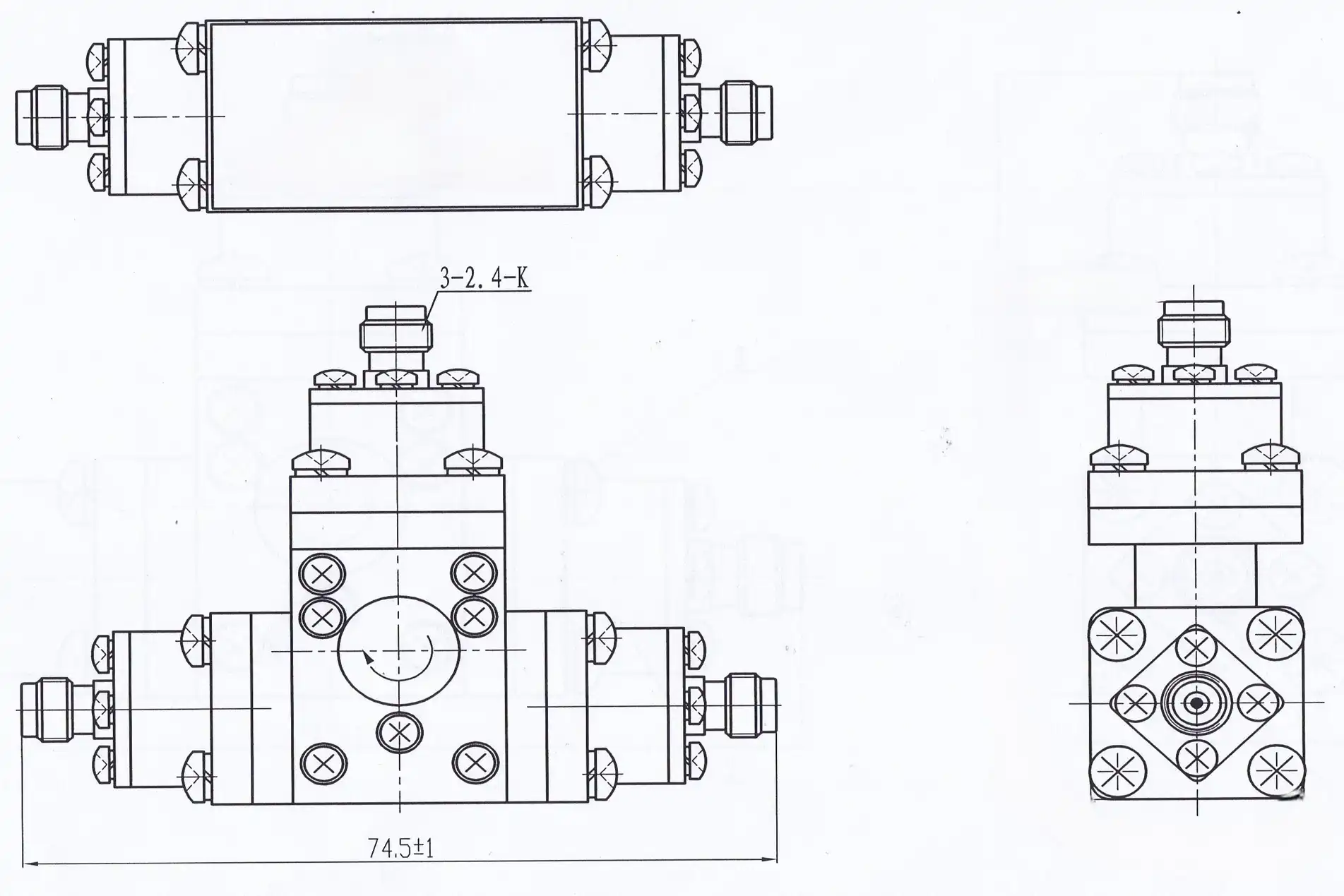
Operating temperature range affects broadband circulator ferrite magnetic properties and cavity thermal expansion. Military and aerospace applications demanding -55°C to +125°C operation require specially formulated ferrite compositions with temperature compensation. Shock and vibration specifications for mobile or vehicular installations necessitate reinforced housing and adhesive-bonded ferrite assemblies rather than mechanical retention. Connector types must match existing cabling infrastructure—SMA for laboratory use, N-type for high power, or surface-mount footprints for board-level integration. Altitude ratings matter for unpressurised aircraft and satellite payloads where voltage breakdown limits differ from sea-level conditions.
Supplier Evaluation and Procurement Strategy
Beyond component specifications, assess manufacturer credentials, including ISO 9001 quality certification, traceability documentation, and test data provision. Advanced Microwave Technologies Co., Ltd maintains over 20 years of production experience with in-house measurement capabilities extending to 110 GHz, ensuring specification compliance verification before shipment. Lead times vary from stock items shipping within days to custom designs requiring 8-12 weeks for prototype fabrication. Minimum order quantities often decrease with standardised configurations versus bespoke frequency ranges or power ratings. Warranty terms should cover both infant mortality and long-term degradation, with clear policies for handling field failures and performance drift outside published specifications.
Leading Broadband Circulator Brands and Procurement Options
The global RF component market offers numerous suppliers with varying specialisations, geographic presence, and service models. Understanding vendor positioning helps buyers identify optimal sources for their specific procurement requirements.
Established manufacturers like Pasternack maintain extensive standard product catalogues with same-day shipping for common configurations, ideal for prototyping and rapid deployment projects. Mini-Circuits focuses on miniaturised surface-mount devices serving commercial wireless infrastructure and consumer electronics, offering aggressive pricing for volume purchases. Marki Microwave specialises in ultra-wideband designs covering 2-40 GHz in single units, reducing bill-of-material complexity for multi-band systems. Regional distributors provide local inventory and applications support, though pricing may include a markup over direct factory purchases.
At Advanced Microwave Technologies Co., Ltd, we combine manufacturing flexibility with technical depth accumulated across two decades serving defence, satellite communications, and aerospace customers. Our 24-metre microwave darkroom enables comprehensive antenna and component characterisation from 0.5 to 110 GHz, validating performance in customer-representative conditions before shipment. Direct factory sales eliminate distributor margins while preserving access to engineering expertise for custom modifications. OEM partnership programmes support co-development of optimised solutions with joint IP protection and volume pricing commitments. Lead times average 4-6 weeks for catalogue products and 10-14 weeks for custom designs, with expedited options available for urgent requirements.
Procurement channels include authorised distributors for smaller quantities with local payment terms, direct manufacturer engagement for projects exceeding $50K annually, and online marketplaces for commodity variants and broadband circulator products with standardised specifications. After-sales support varies significantly—verify technical hotline availability, documentation quality, including S-parameter files and 3D models, and willingness to provide application notes addressing integration challenges. Warranty periods typically span 1-3 years, with premier suppliers offering extended coverage and advanced replacement programmes minimising downtime.
Conclusion
Broadband circulators have evolved from specialised laboratory instruments into essential building blocks enabling modern communication infrastructure. Their unique combination of wide frequency coverage, low insertion loss, and high isolation solves critical signal management challenges across radar, satellite, 5G, and industrial RF systems. Selecting the appropriate device requires balancing technical specifications against environmental demands and procurement constraints. Partnering with experienced manufacturers offering comprehensive testing capabilities, customisation flexibility, and responsive technical support ensures project success. As wireless systems push towards millimetre-wave frequencies and higher data rates, the role of precision-engineered broadband circulators will only intensify.
FAQ
1. What frequency ranges do broadband circulators typically cover?
Modern broadband coaxial circulators span DC to 40GHz in ultra-wideband designs, though more common variants cover specific octaves like 2-18 GHz or 6-40GHz. The ferrite material's magnetic resonance characteristics fundamentally limit bandwidth—achieving multiple octaves requires complex impedance matching networks that balance insertion loss flatness against bandwidth. Waveguide circulators often provide narrower bandwidths than coaxial types but handle higher power levels.
2. Can I use a broadband circulator as an isolator?
Absolutely. Terminating the third port with a precision 50-ohm load converts any circulator into an isolator. Signals entering Port 1 exit Port 2 normally, while reflections from Port 2 route to Port 3, where the load absorbs them, protecting the source. Ensure the terminating load's power rating exceeds the expected reflected power to prevent thermal failure.
3. What are typical lead times for custom broadband circulator orders?
Standard catalogue items ship within 1-2 weeks, while customised frequency ranges, power ratings, or connector types require 8-12 weeks for prototype fabrication and testing. High-volume production orders benefit from dedicated manufacturing runs with a 4-6 week turnaround after prototype approval. Expedited services can reduce timelines by 30-50% with premium pricing.
Partner with ADM for Your Broadband Circulator Requirements
Advanced Microwave Technologies Co., Ltd stands ready to support your communication system development with precision-engineered broadband circulators manufactured to aerospace and defence quality standards. Our ISO 9001:2015 certified production facilities and advanced measurement laboratories ensure every component meets published specifications across its operational lifetime. Whether sourcing standard 3-port units for 5G infrastructure or developing custom high-power variants for radar applications, our engineering team provides technical consultation from initial specification review through integration support. As a trusted broadband circulator manufacturer with global export capabilities, we offer competitive volume pricing, flexible MOQs, and rapid prototyping services. Contact craig@admicrowave.com today to discuss your project requirements and discover how our 20+ years of microwave expertise can accelerate your product development timeline while ensuring uncompromising performance and reliability.
References
1. Bosma, H. (1964). "On Stripline Y-Circulation at UHF." IEEE Transactions on Microwave Theory and Techniques, Vol. 12, pp. 61-72.
2. Helszajn, J. (2008). "The Stripline Circulator: Theory and Practice." Wiley-IEEE Press, Hoboken, New Jersey.
3. Linkhart, D.K. (1989). "Microwave Circulator Design." Artech House Microwave Library, Norwood, Massachusetts.
4. Pozar, D.M. (2011). "Microwave Engineering, 4th Edition." John Wiley & Sons, Hoboken, New Jersey, Chapter 9: Nonreciprocal Devices.
5. Adam, J.D., Davis, L.E., Dionne, G.F., Schloemann, E.F., and Stitzer, S.N. (2002). "Ferrite Devices and Materials." IEEE Transactions on Microwave Theory and Techniques, Vol. 50, No. 3, pp. 721-737.
6. Schloemann, E. (2000). "Advances in Ferrite Microwave Materials and Devices." Journal of Magnetism and Magnetic Materials, Vol. 209, pp. 15-20.
YOU MAY LIKE
 VIEW MOREIndustrial Microwave Sliding Short
 VIEW MOREWaveguide H Bend
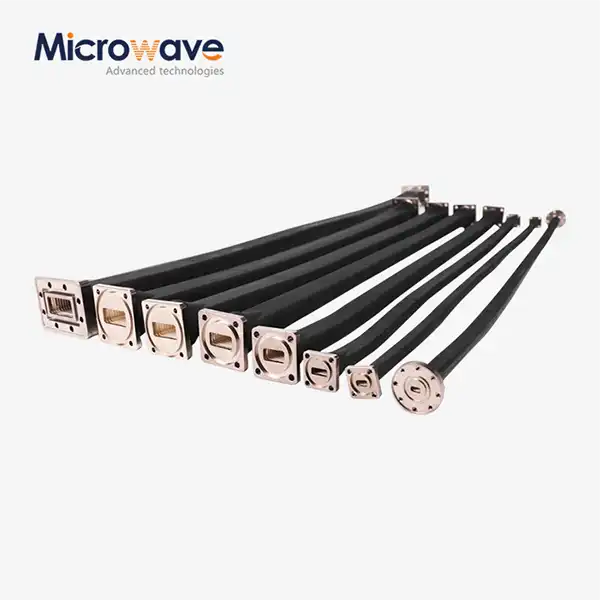 VIEW MOREFlexible Twistable Waveguide
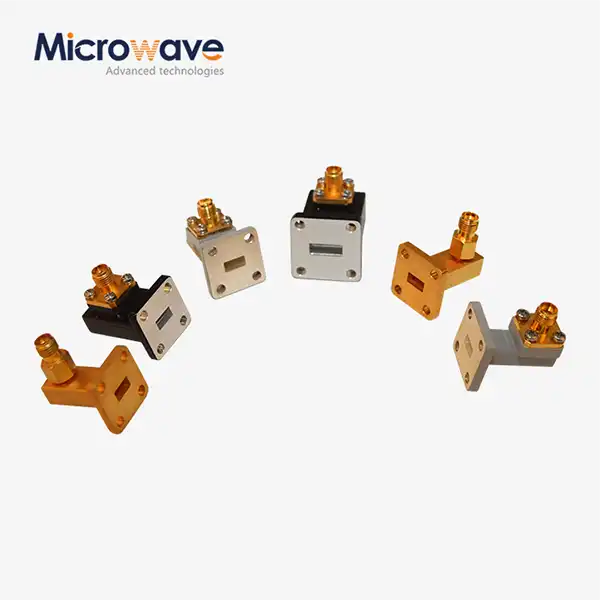 VIEW MORERight Angle Waveguide To Coaxial Adapter
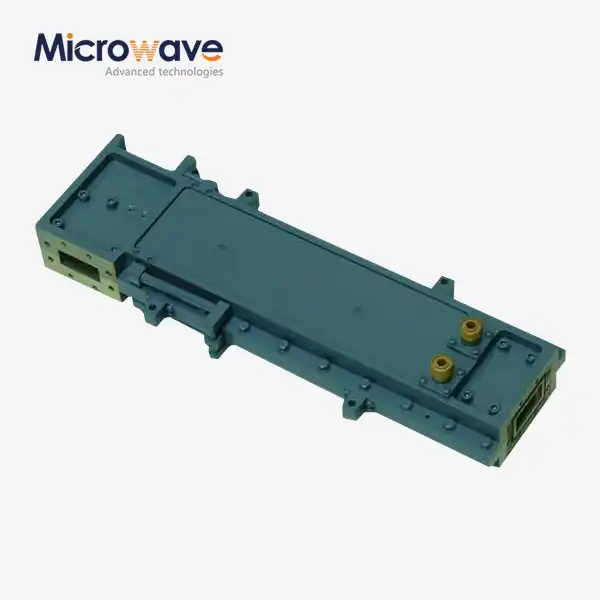 VIEW MOREHigh Power Waveguide Differential Phase Shift Circulator
 VIEW MOREWG Harmonic Filter
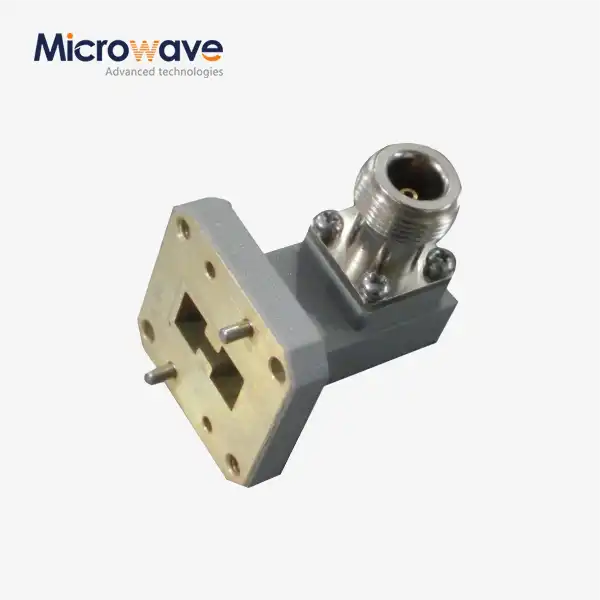 VIEW MOREDouble Ridged WG To Coaxial Adapter
 VIEW MORECoaxial Variable Attenuator